


I’ll talk about how cryptocurrency is changing international payments in this post. Because of banks, middlemen, and currency changes, traditional overseas transfers are frequently difficult, expensive, and sluggish.
This is changing because to cryptocurrencies and blockchain technology, which make international transactions quicker, less expensive, and safer. Crypto is changing how money travels across borders globally, from business payments to remittances.
What is Cross-Border Payments?
Financial transactions in which the payer and the recipient are located in separate nations are referred to as cross-border payments.
These payments, which can be made by people, companies, or organizations, frequently entail currency changes, foreign banks, and a number of middlemen.
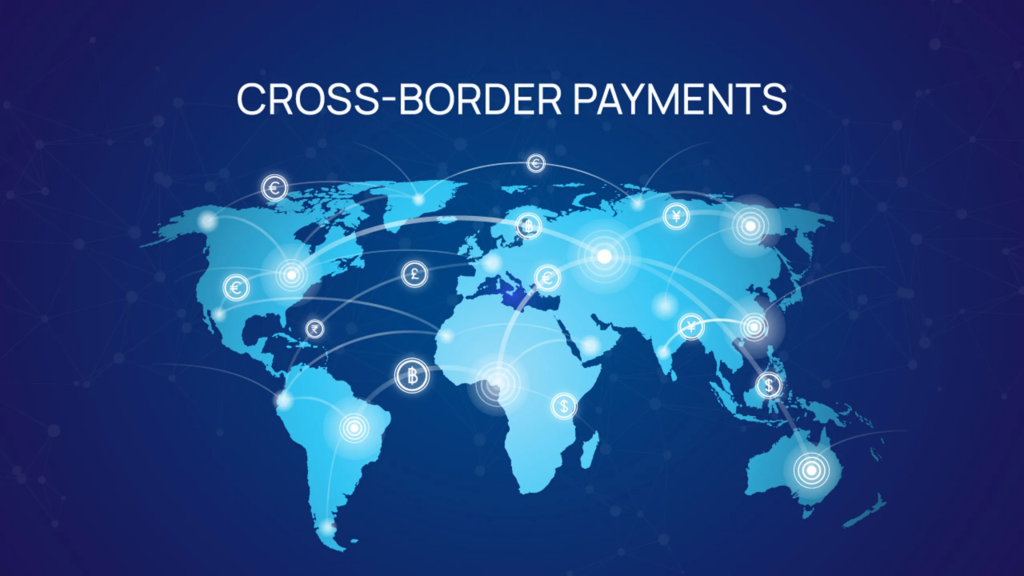
Due to bank fees, correspondent banking networks, and foreign exchange costs, traditional cross-border transfers are usually delayed, requiring several days to settle.
They are necessary for worldwide e-commerce, remittances, and global trade. However, the need for quicker, less expensive, and more secure substitutes like cryptocurrencies and blockchain-based payment systems has been fueled by these systems’ complexity, expense, and lack of transparency.
How Crypto Is Transforming Cross-Border Payments

Example: Sending Money from USA to India In Cryptocurrency
Step 1: Choosing the Crypto Platform
- John is in the USA and wants to send money to his family in India, which is about $1,000.
- His choice for a crypto wallet or exchange to facilitate the transfer is Coinbase or Binance.
Step 2: Changing to Cryptocurrency
- John changes $1,000 to a stable cryptocurrency called USDC. A stablecoin is a cryptocurrency that is pegged to the USD to avoid volatility.
Step 3: Starting the Cross-Border Transfer
- The family member’s crypto wallet address in India is inputted.
- The transaction is confirmed, and the payment is broadcasted to the entire network.
Step 4: The Blockchain Authenticates the Transaction
- The transaction is authenticated and recorded on a public ledger in a matter of a few minutes.
- The entire process took place without the interference of banks or any middlemen.
Step 5: Crypto is Received by the Recipient
- USDC is received by John’s family directly in their crypto wallet.
step 6: The Local Currency Is Converted
- USDC is converted to Indian Rupees (INR) through a crypto exchange or wallet.
- The money is quickly and easily available in their bank account, usually for a very small fee.
Problems with Traditional Cross-Border Payments
High Transaction Fees
Involved banks and intermediaries raise costs.
Slow Processing Times
Payments settle in 2–5 business days.
Currency Conversion Issues
Exchange rates and hidden conversion fees cost more.
Limited Accessibility
Sending and receiving funds may be difficult in underbanked areas.
Lack of Transparency
The payment status is difficult to track.
Risk of Errors
Delays and mistakes are more likely with manual systems.
Regulatory Barriers
International transfers can be complex when different countries’ regulations are involved.
Advantages Over Traditional Methods
Transacting Speed: Payments are completed in minutes rather than days.
Transactional Fees: Payments are completed with little to no hidden fees.
Operational Flexibility: Payments can be made and received at any hour of the day, regardless of typical banking hours.
Payment Certainty: All payments made are immutable and have a permanent record of the payment made.
Internet Banking Flexibility: All payments are made in a way that anyone can send or receive payments at anytime.
Fraud Prevention: Payments are encrypted and cannot be manipulated, thus reducing the risk of fraud.
Payment Certainty: All payments are made in a way that anyone can send or receive payments at anytime.
Key Technologies Enabling Crypto Payments
Blockchain Technology
A permanent and transparent way of decentralized record keeping of transactions and therefore eliminating the need of a middleman.
Stablecoins
Cryptocurrencies linked to a fiat currency (like USDC or USDT) which lowers the volatility of the currency and makes transfers predictable.
Payment Protocols
Technologies that allow cheap and instant transfers like the Lightning Network for Bitcoin or smart contracts on Ethereum.
Digital Wallet
An application that allows for safe storage of crypto, as well as the ease of sending, receiving, and managing of funds.
Crypto Payment Gateways
Services that allow businesses and e-commerce to accept crypto payments and convert them to the local currency automatically.
Cross-Chain Bridges
Services that let users transfer value across different blockchains and thus, increase the usability of crypto payments around the world.
Challenges and Risks
Regulatory Uncertainty
Each country has different rules for the use of crypto which can affect the legality and compliance of things.
Price Volatility
There will be a fluctuation in the price of cryptocurrencies unless stable coins are used.
Security Risks
There are hacks, scams, and phishing, to name a few, that can affect crypto wallets and exchanges.
Technological Barriers
There can be technical knowledge required for the user to manage the wallets and perform the transactions in a safe way.
Limited Adoption
There will be limitations in the practical use of crypto since not all merchants or recipients accept it.
Irreversible Transactions
There will always be a risk of an error since once the ledgers of the transactions are confirmed, the will be no chance of reversing it.
Network Congestion
Some block chains have an increase in the fees and a decrease of the speed in the processing times due to the high volumes of transactions.
Real-World Use Cases
International Remittances
Instead of using standard banking systems, migrant workers are able to use USDC or Bitcoin to send money home, thereby using a system with less fees and a quicker transaction time.
Cross-Border E-Commerce
Crypto payments, unlike traditional banking systems, do not incur delays. This is why online retailers are accepting cryptocurrency.
B2B International Transactions
Through the use of traditional banking systems, businesses are subjected to currency conversion and banking fees. However, cross-border payments are instant and free of the aforementioned fees, as traditional banking systems are avoided.
Freelancer Payments
Countries have a currency system where delays can occur. However, with the use of cryptocurrency, clients and freelancers are able to transact without hindrance.
Partnerships with Banks & Fintechs
International settlements have been able to be completed in shorter time periods due to the integration of crypto rails.
Micropayments & Streaming Services
The crypto system makes small, cross-border payments cost effective.
Future Outlook
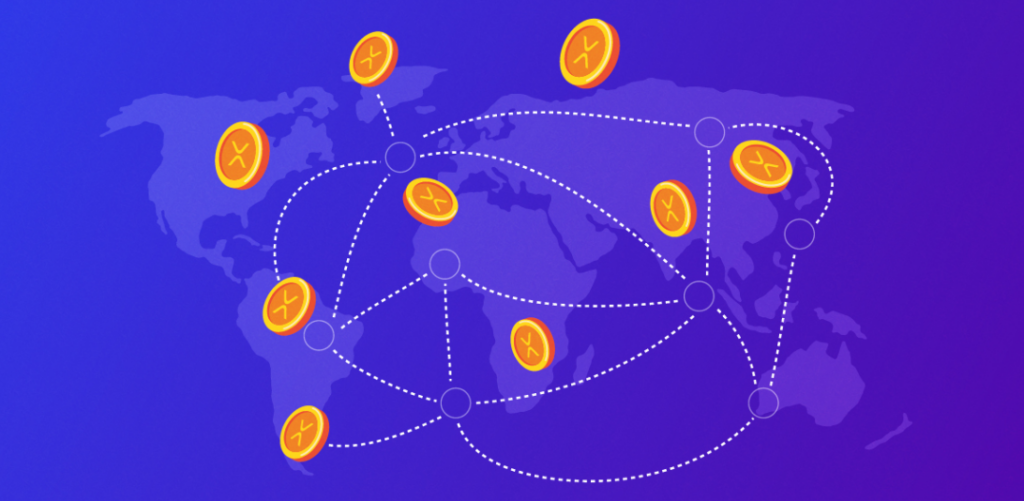
With the continued global adoption of cryptocurrency, cross-border payments appear to have a bright future. It is anticipated that blockchain technology and cryptocurrencies would reduce reliance on conventional banking institutions while increasing the speed, affordability, and security of international transactions.
Stablecoins and Central Bank Digital Currencies (CBDCs) have the potential to standardize digital payments and reduce volatility, making cryptocurrency more useful for daily use.
Fintech firms and financial institutions are progressively incorporating cryptocurrency solutions, improving accessibility for both individuals and corporations. Crypto is expected to transform international payments and promote financial inclusion globally with continued technological breakthroughs and regulatory clarity.
Pros & Cons
| Pros | Cons / Challenges |
|---|---|
| Faster Transactions – Payments settle in minutes, not days. | Regulatory Uncertainty – Different countries have varying crypto laws. |
| Lower Fees – Fewer intermediaries and no hidden charges. | Price Volatility – Cryptocurrency values can fluctuate unless using stablecoins. |
| 24/7 Availability – Transactions can happen anytime, unlike bank hours. | Security Risks – Wallets and exchanges can be hacked or targeted by scams. |
| Transparency – Every transaction is recorded on the blockchain. | Technological Barriers – Users need some technical knowledge to manage wallets safely. |
| Global Accessibility – Anyone with an internet connection can send/receive funds. | Limited Adoption – Not all merchants or recipients accept crypto. |
| Financial Inclusion – Reaches unbanked and underbanked populations. | Irreversible Transactions – Mistakes cannot be undone. |
Conclusion
By making transactions quicker, less expensive, and more secure than with traditional banking systems, cryptocurrency is quickly revolutionizing cross-border payments.
Stablecoins, digital wallets, and blockchain technology let people and companies to transfer and receive money internationally without the need for middlemen, cutting costs and delays.
Growing acceptance by fintech companies, banks, and users worldwide indicates a shift toward more effective, transparent, and inclusive global payments, even though security issues and regulatory uncertainties continue to be obstacles.
Crypto has the potential to completely change how international financial transactions are conducted in the future as technology advances and regulations become more transparent.
FAQ
What are cross-border payments?
Cross-border payments are financial transactions where the sender and recipient are in different countries, often involving banks, currency conversions, and multiple intermediaries.
How does crypto make cross-border payments faster?
Crypto uses blockchain technology to process transactions directly between sender and receiver, often settling in minutes instead of days.
Are crypto cross-border payments cheaper than traditional methods?
Yes. By eliminating intermediaries and reducing transaction fees, crypto payments are usually much more cost-effective.
Which cryptocurrencies are commonly used for international payments?
Stablecoins like USDC or USDT, Bitcoin, and Ethereum are widely used for cross-border transactions due to stability and liquidity.
Is it safe to use crypto for international transfers?
Crypto payments are secure and tamper-proof on the blockchain, but users must protect wallets and private keys to avoid hacks or scams.