


In this article, I will discuss Best Web 3 Social Media Services. These platforms place importance on decentralization, user control, and blockchain rewards, presenting new possibilities for creators and communities.
If it is about privacy, monetization, or censorship resistance, this guide looks at the leading Web 3 social networking platforms that will shape the future of human communication.
Key Point & Best Web 3 Social Media Services List
| Platform | Key Point |
|---|---|
| Steemit | Rewards users with cryptocurrency for content creation. |
| LifeToken | Focuses on user-owned content with NFT-based rewards. |
| Minds | Open-source platform promoting free speech and privacy. |
| Audius | Decentralized music streaming powered by blockchain. |
| Chingari | Indian short-video app with blockchain rewards system. |
| Mastodon | Federated, decentralized social network with community control. |
| Bluesky | Twitter-backed decentralized social protocol in development. |
| Mirror | Web3 publishing platform enabling crypto-backed writing. |
| Odysee | Decentralized video platform built on the LBRY protocol. |
| Diamond App | Web3 social app integrating NFTs, DeFi, and content sharing. |
1.Steemit
One of the top Web 3 social media services, Steemit, stands out from the rest due to its unique feature of integrating social networking with blockchain rewards. Users are rewarded in cryptocurrency for creating, curating, and interacting with content which, in turn, adds some value to their efforts online.
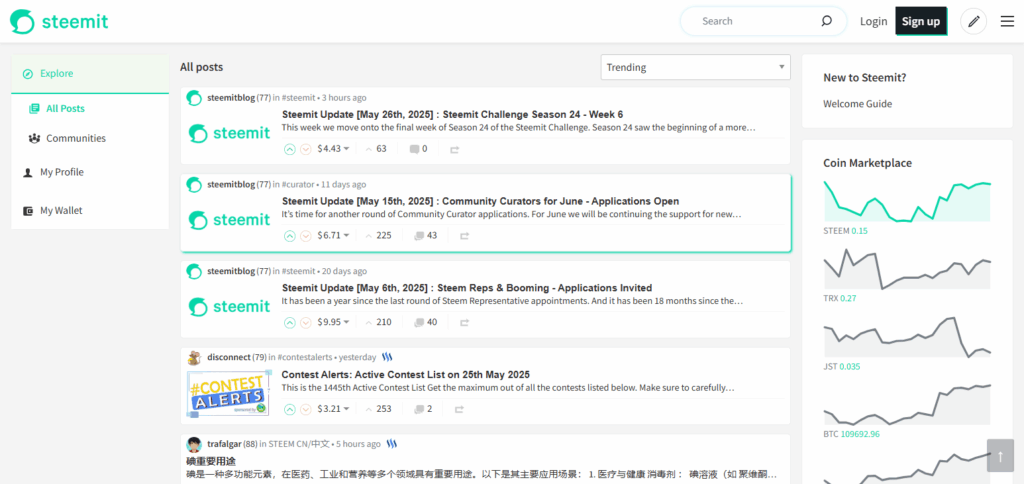
This system gives power back to the people as it eliminates externally controlled systems, allowing for greater transparency and community governance. The motivation bug on Steemit practically guarantees the creation of quality content and therefore makes it a truly pioneering platform in the Web 3 era aligned with user demands.
Features
- Content-Based Rewards – Subscribers gain STEEM tokens for curating content, posting or commenting on it.
- Decentralized Publishing – Censorship resistant and transparent. Built on Steem blockchain.
- Community Governance – Users govern the platform by voting on its evolution and how rewards are allocated.
2.LifeToken
LifeToken features at the top of Web 3 social media services as it enables users to own and monetize their content using blockchain technology. Its novel NFT-centered approach allows creators to tokenize their posts, thus transforming social engagements into precious digital commodities.
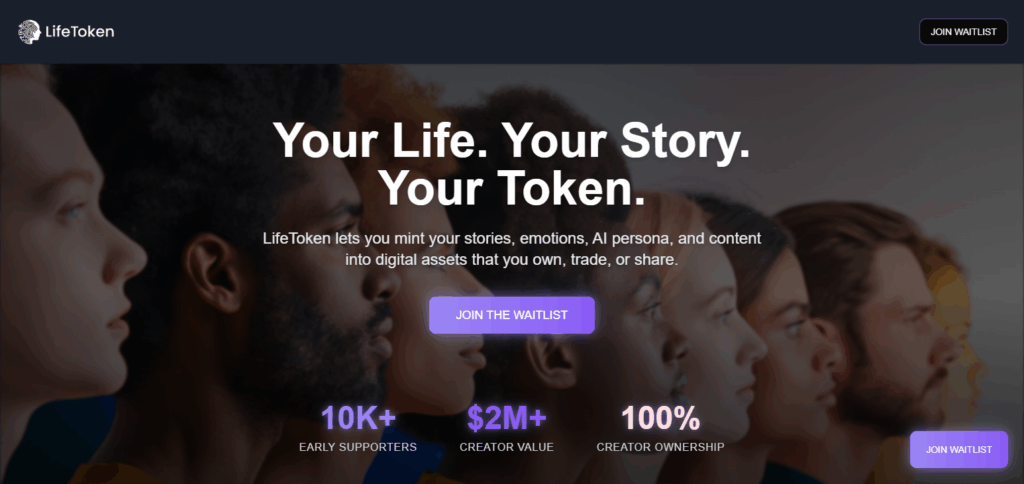
This enhances users’ control over their data and income in a transparent ecosystem while promoting active participation. As a pioneer in the Web 3 world, LifeToken stands out with its disruptive combination of social networking and DeFi.
Features
- NFT Social Interactions – Posts, media and content can be tokenized into NFTs, turning media into tradeable items.
- Crypto Rewards – Involvement in a LifeToken media ecosystem grants the users LifeTokens.
- Data Ownership – Users control pieces of their content and personal data without third party influencing.
3.Minds
Minds distinguishes itself from traditional services as a Web 3 social media since it supports free speech and user privacy with an open-source, decentralized framework.
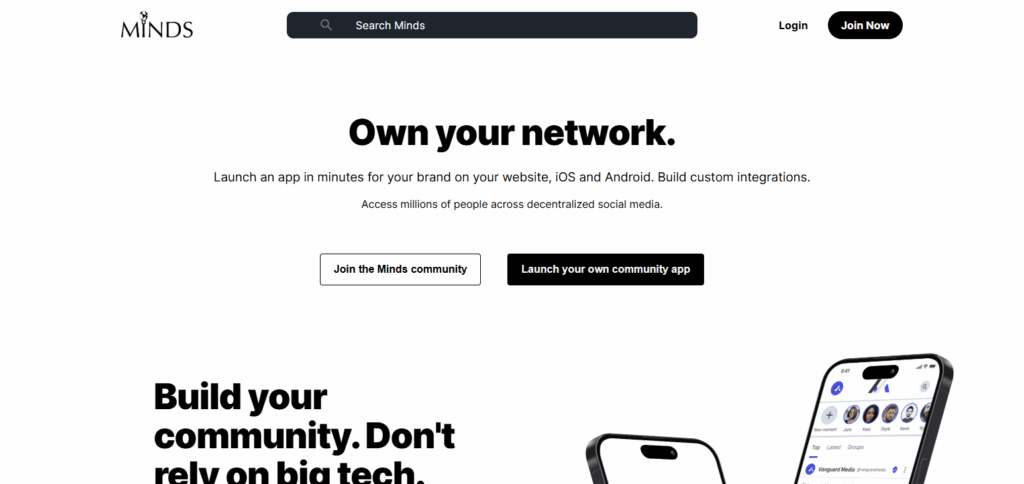
Unlike traditional networks, Minds facilitates users retaining control of their content and data, monetizing their engagement with cryptocurrency tokens.
Censorship resistance makes it ideal for communities looking to foster real connections divorced from corporate welfare alongside authentic dialogue. The combination of blockchain reward structures and privacy to user features places Minds at the forefront of Web 3 social media ф.
Features
- Open-Source Platform – The code enables independent builders and enhances community trust.
- Token Incentives – Encouragement to engage with posts and premium features leads to tokens for users.
- Privacy-Focused Design – Absence of aggressive tracking and ensuring user data is intact.
4.Audius
Audius is one of the greatest Web 3 social media platforms since it transforms music streaming into a decentralized system where artists have full ownership of their work. Elimination of intermediaries allows musicians to get better rewards and connect directly with fans.
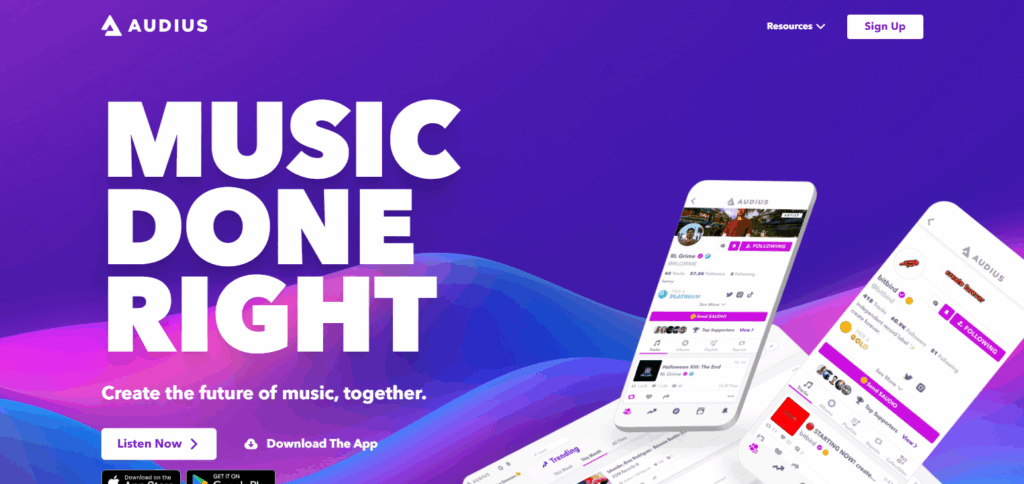
Through its blockchain technology, Audius decentralizes streaming which enables fairer payment to be honest transparent to both the fans and the artists. Its governance is community-based and, so creators retain their rights and revenue which makes them more innovative and independent. This makes it easier for musicians to obtain the support they need which is ideal in the Web 3 ecosystem.
Features
- Artist-Centric Model – Musicians are freely able to upload music and stream boasting zero fees.
- Token Economy (AUDIO) – Tokens are awarded to users and creators that actively contribute and engage with the platform.
- Decentralized Storage – Users running nodes guarantee complete transparency for the platform, storing content.
5.Chingari
As a leader in Web 3 social media services, Chingari harnesses the virality of short-video content alongside blockchain rewards. It provides specialized payment systems through its cryptocurrency, allowing creators and users to earn passively from their interactions.
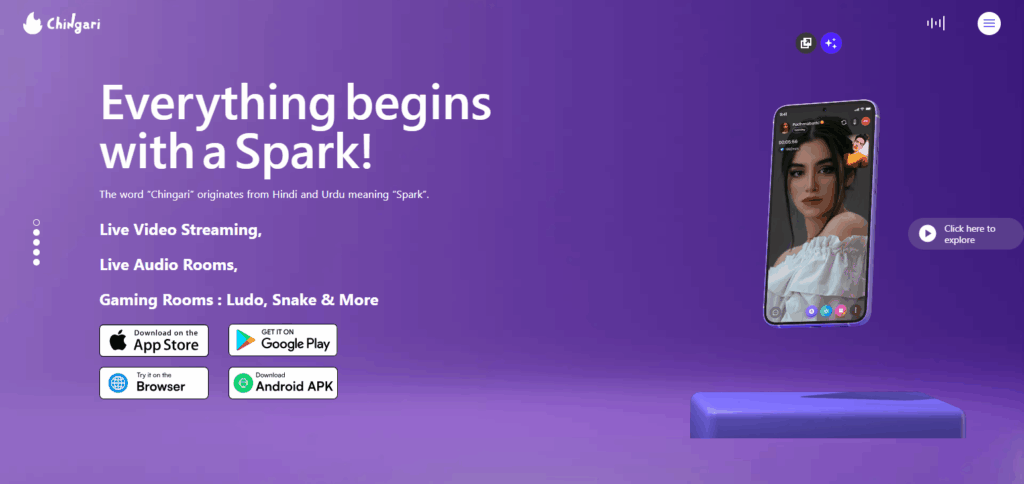
Users are fully empowered over their data which allows this reward system to operate without restrictions and assure high quality content. Chingari is integrated with entertainment and decentralized finance which sets it apart in the world of social media in Web 3.
Features
- Short-Video Blockchain App – Incorporates TikTok features with monetization through blockchain technology.
- GARI Token Rewards – Users are compensated with tokens proportional to views and interactions on their videos.
- Integrated Crypto Wallet – Enables creators to freely manage, earn, and spend tokens within the application.
6.Mastodon
Mastodon is a top Web 3 social media service as it has a federated, decentralized network that allows users to control their data and communities.
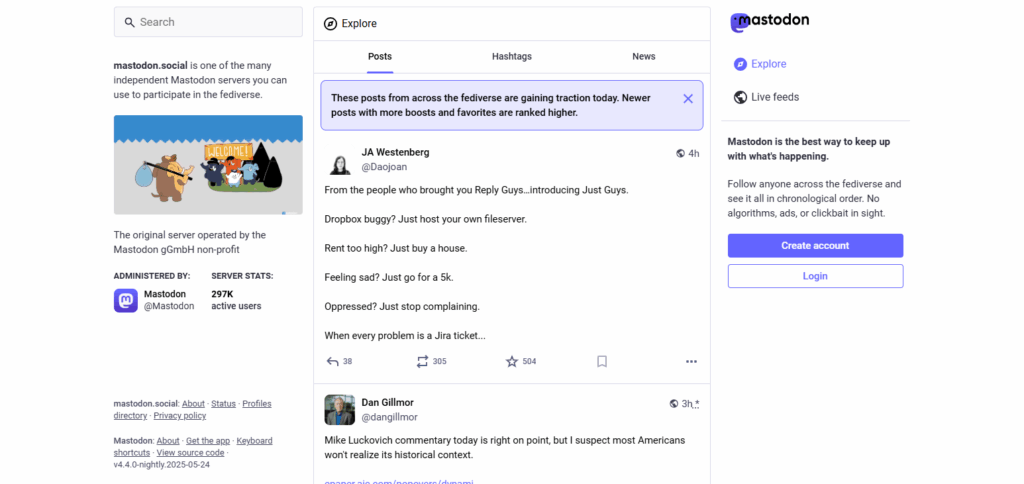
Unlike centralized systems, Mastodon enables the creation of independent servers which communicate with one another, helping bring about diverse, censorship-resistant spaces.
Its open-source policy enables social interaction more democratically with regards to transparency and user control. This system gives priority to privacy, community self-management, and freedom which makes Mastodon distinctive as a pioneering and trustable platform in the world of Web 3 social media.
Features
- Federated Servers – Users can join or create their own private independent servers (instances) that are interconnected.
- No Central Control – All instances have their own set of rules and moderation policies.
- Open Protocol (ActivityPub) – Allows interoperability with other decentralized services.
7.Bluesky
Bluesky is incorporating a social media service on Web 3 through it’s newly developed decentralized social protocol which seeks to give autonomy to users through control of their data and content.
With support from Twitter co-founders, Bluesky is focused on building an environment where different social networks can operate together without a singular authority.
This approach fosters innovation, autonomy for users by reducing censorship to make it a prospective platform that has the potential to transform social media in the decentralized Web 3 period.
Features
- AT Protocol – Social network protocol that is decentralized and enables the development of multiple apps on a single ecosystem.
- Custom Algorithms – Users are able to design their own computer algorithms for content curation.
- Account Portability – Users are able to shift between services without losing their identity and following.
8.Mirror
Mirror is regarded as one of the better Web 3 social media services because of how publishing is done on the platform. It allows creators to publish content as NFTs which cannot be changed and owned, meaning they can be monetized directly without third parties.
This unique structure allows for writers and readers to receive crypto rewards which cultivates a transparent and decentralized publishing ecosystem.
Content creators can now participate in new blockchain powered economies, courtesy of web 3. Creators can engage with their audience and profit in a fair manner while adapting to new changes in evolving ecosystems.
Features
- Web3 Publishing Tool – Authors directly monetize their work by publishing articles as NFTs.
- Crowdfunded Projects – Built-in tools enable authors to fund their creative projects using cryptocurrency.
- Decentralized Identity – Easily login using an Ethereum wallet, providing user-controlled access.
9.Odysee
Odysee gets attention as a Web 3 social media service due to its unique offering of a video-sharing platform on blockchain technology. Content creators are also given middlemen-free options as they can directly earn cryptocurrency from their content.
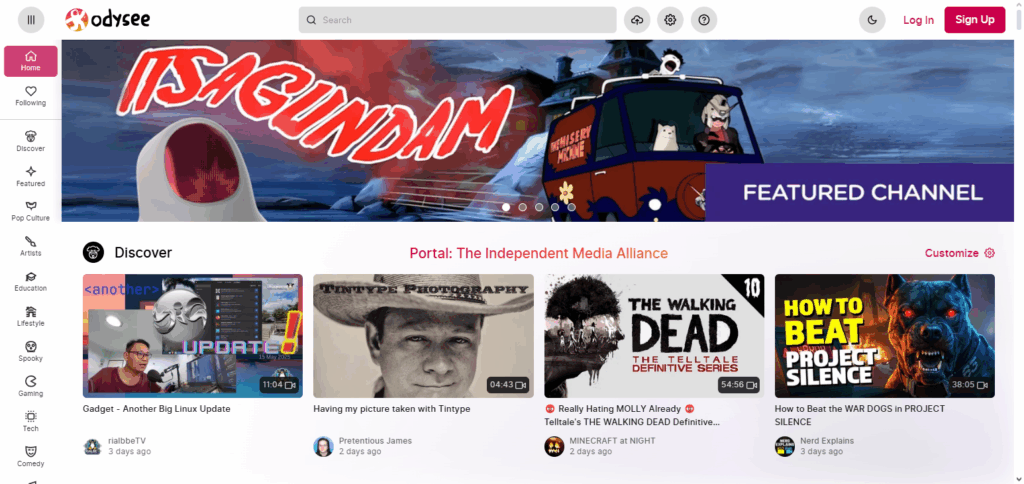
Due to Odysee’s model, expression, freedom from censorship, and monetization without barriers have more guarantee. Odysee strengthens the position of users over the content while hosting it on a video-sharing platform and transforms the traditional video-sharing service model making it a leader in social media 3.0 services.
Features
- Blockchain Video Hosting – Content is published on the LBRY blockchain, permanently securing videos.
- Incorporation of the LBC Token – Both viewers and creators are rewarded by earning tokens for their active participation.
- Prioritization of Free Speech – Freedom of sharing various content types with little interference from centralized authorities is encouraged.
10.Diamond App
Diamond App is one of the best social Web 3 platforms since it merges social media with NFTs and DeFi giving users rare opportunities to develop, publish, and monetize content.
The platform is rewarding as users can be paid for content posting, participating in the community, and interacting with NFTs while retaining total control of their data.
The combination of social media, crypto rewards, and blockchain technology makes Diamond App a forefront, user-centric platform in the Web 3 space.
Features
- Running on DeSo Blockchain – Allows interaction and storage of social media content in a completely decentralized manner.
- TIP and NFT Post Features – Users have the ability to create NFTs out of their posts and tip them with cryptocurrency as well.
- Tokenization of Profiles – Profiles of users are treated as an asset and are tokenized, creating an intersection between personal image and income generation.
Conclusion
In conclusion, the top Web 3 social media services are revolutionizing user interaction, content creation, and sharing through user ownership, decentralization, and clear rewards. Services like Steemit, LifeToken, Minds, and Audius grant users privacy, control, and incentivize them with cryptocurrencies.
Newer services like Bluesky, Mirror, and Diamond App are pioneering the integration of social interaction with blockchain technology. These Web 3 platforms are working towards redefining social media for accessible, controlled, fairly distributed, and user-first integrated ecosystems.