

I’ll go over What Is Restaking, a developing trend in the cryptocurrency space, in this post. By using their previously staked tokens across several DeFi protocols, investors can maximize returns and win extra prizes through restaking.
This method is becoming more and more popular among long-term investors and cryptocurrency fans since it combines flexibility, innovation, and the possibility of increased yields.
What Is Restaking?
A sophisticated DeFi tactic that enables cryptocurrency investors to optimize the potential of their staked assets is restaking.
Restaking allows users to “stake again” or utilize the same staked tokens across several platforms, in contrast to traditional staking, where tokens are locked in a single protocol to earn rewards.

Through this mechanism, investors can earn a variety of yields without having to input additional cash, such as staking rewards, liquidity incentives, or protocol-specific bonuses.
Restaking increases prospects for passive income while preserving exposure to the initial investment by effectively using the same assets. However, there are hazards associated with it, like as market volatility and smart contract vulnerabilities.
Why Crypto Investors Are Loving It
Maximized Returns: Restaking creates the potential for a large boost in profit because the same tokens are able to earn multiple yields as opposed to the usual single yield in traditional staking.
Efficient Capital Utilization: Investors are able to utilize their tokens more efficiently as they create the potential to earn additional rewards without the need to invest more.
Restaking Flexibility: Since a multitude of DeFi restaking protocols exist, investors are provided the ability to determine their rewards and the strategies they utilize.
Increased Passive Income: Investors have the potential for a steady, increased, passive income from the layered rewards.
DeFi Innovations: Restaking tends to attract crypto investors that are more technologically advanced as they gravitate towards yield-focused innovations.
How Restaking Works
Restaking is the process where users stake the same underlying asset on multiple blockchains in a manner that is intended to earn the user multiple rewards. Restaking works as follows:
Primary Staking
Users stake their coins on a certain protocol, for example, Ethereum 2.0, Lido, Aave, etc, and they earn “first level” staking rewards.
Minting
Some protocols allow users to get a “minted” version of the staked coin, for example, Lido gives users stETH, and users can do other things with their stETH.
Tertiary Staking
The minted coins that are staked can be “restaked” in other DeFi protocols to earn other yields.
Rewards Incentives
Users can earn additional rewards in other forms, as they can either earn staking rewards, liquidity rewards, or protocol specific rewards.
Yield Incentives
over time, the yields combined with the yields that are provided in the form to liquidity rewards can be compounded to earn the user much more passive income than they would have earned had they only staked their coins.
Benefits of Restaking for Investors
Increased Yield: Restaking allows for the same staked assets to accrue rewards multiple times. This yields a higher return than simply staking the assets.
Effective Use of Resources: Additional funds don’t have to be committed to create new earning opportunities.
Platform Interoperability: Staked assets can be employed across multiple DeFi protocols, creating the opportunity to earn in a number of different ways.
Rewards Growth: Because rewards are earned in layers, the total amount of passive income earned will increase over time.
Access to New DeFi Strategies: Tech-forward investors will appreciate restaking for its access to new and innovative strategies to optimize returns.
Top Crypto Platforms for Restaking
Aave
One of the top DeFi lending and staking platforms, Aave provides a wide range of restaking alternatives. To earn interest, investors can stake assets like Ethereum or stablecoins on Aave.
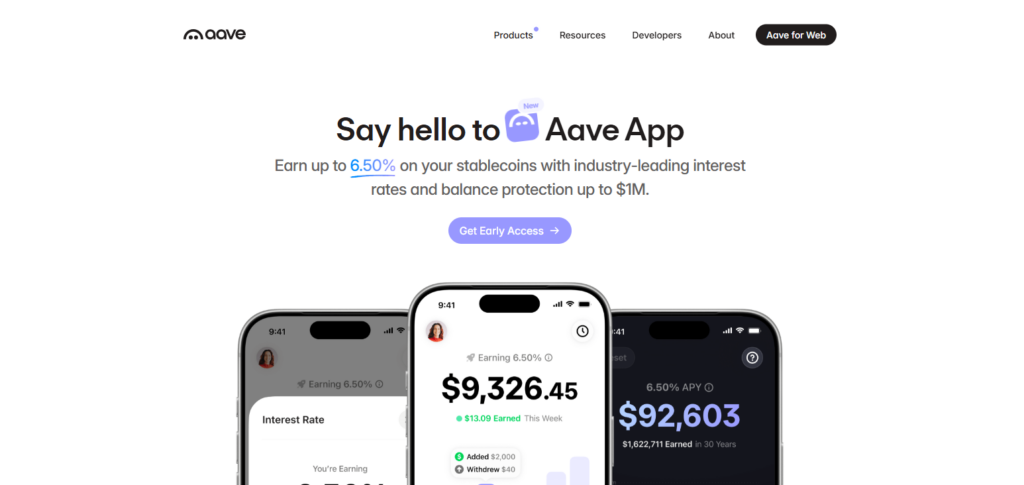
Tokenized representations of these staked assets can then be used in other protocols to generate further yields. Users can optimize their rewards based on market conditions thanks to the platform’s support for varied staking periods.
Investor risk is reduced by its significant emphasis on security, which includes insurance alternatives and certified smart contracts. Aave is a top option for people looking to maximize returns through restaking tactics because of its integration with various DeFi ecosystems.
Aave Features, Pros & Cons
Features:
- Users can restake any of the numerous supported assets.
- There are tokenized staking assets, which can be used in DeFi.
- Other protocols can be used to yield stack.
- There is insurance coverage, and smart contracts are audited.
- Governance and community for protocol decisions is active.
Pros:
- There is better contract security, risk is decreased, and audits are done.
- Other DeFi platforms can be used.
- Layered rewards provide passive income.
- Community and governance can make decisions.
Cons:
- There is exposure to smart contract vulnerabilities.
- The value of the assets being staked may not be consistent due to market volatility.
- Some DeFi knowledge is required in order to yield optimally.
- The liquidity of tokenized assets may be limited.
- Platform-specific changes can impact returns.
Lido
Investors can maintain liquidity by staking Ethereum and other compatible tokens on Lido, a well-known liquid staking platform. Tokenized representations, such as stETH, are obtained by users who stake their assets on Lido.
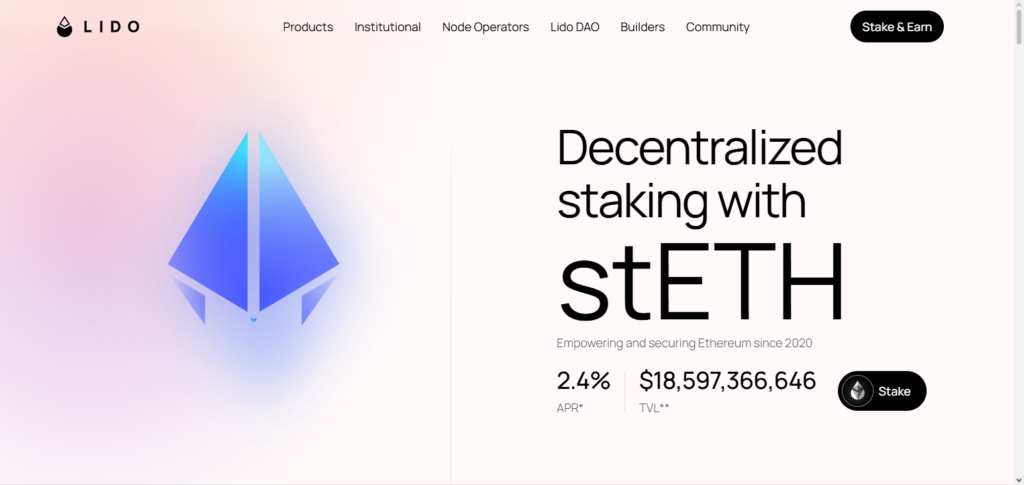
These representations can be utilized in other DeFi protocols to restake and earn extra yields. Investors can optimize returns using this liquid staking technique without completely locking their assets.
Lido is a safe and adaptable choice for investors wishing to layer rewards and maximize passive income through restaking since its smart contracts are audited and supported by a decentralized network of skilled node operators.
Lido Features, Pros & Cons
Features:
- Liquid staking for ETH and other assets.
- Tokenized representation (stETH) for flexibility.
- Allows restaking in other DeFi protocols.
- Decentralized network of node operators.
- Regular audits and strong security protocols.
Pros:
- Provides liquidity while staking.
- Enables multiple yield opportunities.
- Secure, decentralized, and transparent operations.
- Accessible for small and large investors.
- Integrated with DeFi ecosystem.
Cons:
- Smart contract risk.
- StETH value may decrease versus ETH.
- Beginner restaking is complex.
- Node operator’s reliability.
- Protocol fees reduce returns.
Rocket Pool
Investors can safely stake Ethereum while taking part in a community-driven network of node operators using Rocket Pool, a decentralized Ethereum staking platform. Users can earn additional yields by restaking rETH, a tokenized representation of their staked assets, in different DeFi protocols after depositing ETH.

By reducing reliance on a single operator, Rocket Pool’s decentralized concept improves security and transparency. Additionally, it democratizes access by enabling staking with modest sums, which benefits smaller investors.
For investors looking for secure, high-yield restaking opportunities, Rocket Pool is a great alternative because of its robust smart contract audits and integration options across DeFi platforms.
Rocket Pool Features, Pros & Cons
Features:
- Staking Ethereum in a decentralized way.
- Restaking (rETH) as a tokenized asset.
- Node operator network is community-based.
- Staking is possible in small and large amounts.
- Smart contracts are audited.
Pros:
- Staking is possible for small investors.
- Greater transparency due to decentralization.
- rETH provides additional yield in DeFi.
- Less dependence on central okay validators.
- Community governance provides the best customer support.
Cons:
- Returns may be impacted by market conditions.
- Tokenized assets are sometimes illiquid.
- Restaking is a manual effort.
- Technical know-how is required.
- Node operator issues may cause a decrease in return.
Risks and Considerations
Smart Contract Risks
Restaking incorporates a myriad of different DeFi protocols, each presenting their own potential shortcomings, bugs, or exploits in their respective smart contracts.
Market Risk
The value of the staked asset can be affected regardless of the rewards earned, and the return from staking can be minimal due to the market risk (crypto price fluctuations).
Liquidity Risk
Access to liquidity may be restricted because the staked assets (stETH or rETH) that have been tokenized may not be readily redeemable for the original tokens.
Per-Platform Risks
Each platform has its own unique risks, whether due to the failure of a node operator or due to the results of governance in a way that alters the yield.
Maintaining Complexity
There exists complexity of maintaining higher or multiple staking rewards, and there exists risks of doing this incorrectly to avoid a loss in returns.
Future of Restaking

As DeFi develops more and more protocols incorporate tokenized staking assets, restaking appears to have a bright future. Innovations in cross-chain staking and layer-2 solutions may enable investors to leverage their holdings across several ecosystems, increasing yields even more.
Restaking will be safer and more accessible to a wider audience thanks to improved security measures, insurance procedures, and decentralized governance.
Furthermore, yield optimization may be made simpler by automated restaking tools and portfolio management systems, drawing in both institutional and retail investors.
In the world of cryptocurrency investing, restaking is set to become a common tactic for optimizing passive income as awareness and usage increase.
Conclusion
How cryptocurrency investors optimize the potential of their digital assets is being revolutionized by restaking. It provides increased returns, effective capital utilization, and exposure to cutting-edge DeFi methods by enabling staked tokens to earn numerous rewards across many protocols.
Platforms such as Aave, Lido, and Rocket Pool offer safe and adaptable ways to layer incentives without sacrificing liquidity.
But there are hazards associated with it as well, like platform-specific difficulties, market volatility, and smart contract weaknesses. Restaking is a potent tool for increasing passive income and optimizing long-term cryptocurrency investing plans for investors who are prepared to handle these risks.
FAQ
What is restaking in crypto?
Restaking is the process of using already staked crypto assets to earn additional rewards across multiple protocols, maximizing yields without adding extra funds.
How does restaking differ from traditional staking?
Traditional staking locks tokens in one protocol for rewards, while restaking allows those same staked tokens to earn layered rewards in other DeFi platforms.
Is restaking safe?
While generally secure on audited platforms like Aave, Lido, and Rocket Pool, restaking carries risks including smart contract vulnerabilities, market volatility, and liquidity issues.
Who can participate in restaking?
Any investor with stakable crypto assets can participate, though some platforms may require minimum staking amounts.
Why are investors attracted to restaking?
Investors love restaking for higher potential returns, efficient capital use, flexible staking options, and exposure to innovative DeFi strategies.