

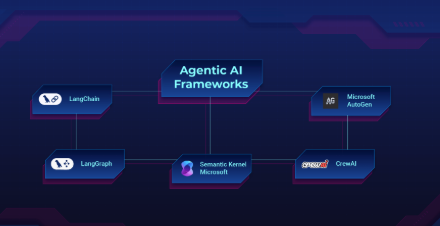
The Best AI Agent Frameworks for Web3 Apps will be covered in this post, with an emphasis on systems that allow decentralized automation, smart contract interaction, autonomous decision-making, and real-time security monitoring.
By fusing blockchain technology with artificial intelligence for increased productivity, security, and creativity, these frameworks assist developers in creating scalable, intelligent Web3 apps.
What is AI Agent Frameworks?
Software platforms known as AI Agent Frameworks allow developers to create, oversee, and implement autonomous or semi-autonomous AI agents that can reason, make decisions, and carry out activities with little assistance from humans.
These frameworks enable AI agents to communicate with databases, APIs, smart contracts, and blockchain networks by offering capabilities for memory, planning, tool usage, communication, and workflow orchestration.
AI agent frameworks are used in Web3 and enterprise environments to automate tasks like data analysis, security monitoring, governance, and decentralized application administration, increasing the intelligence, scalability, and efficiency of systems.
Why Use AI Agent Frameworks for Web3 Apps
Autonomous Decision Making – AI agents communicate with smart contract systems and decentralized systems to perform automated tasks. This increases the efficiency and reliability of the process.
Increased Safety – AI frameworks, such as Forta Network or OpenZeppelin Defender AI, provide real-time monitoring and protection of DeFi and NFT systems from anomalies, fraud, and suspicious behavior.
Actionable Insights – AI agents can analyze and provide insights of on-chain and off-chain data for governance, trading, and protocol optimization.
Automation at Scale – Frameworks such as Crew AI and AutoGen are capable of operating in parallel to perform large-scale operations, providing an ease of use for decentralized applications.
Improved Governance and Risk Management – Frameworks like Gauntlet AI provide simulations of various market conditions, tokenomics optimization, and data-based recommendations for decision making to DAOs.
Improved Development Speed – Pre-built functionality of agent orchestration, memory management, task management, and automation of processes are provided by tools such as LangGraph, LlamaIndex, and Agno, enabling faster development of Web3 apps.
Adaptive & Intelligent Systems – Incorporating AI agents creates intelligent systems that learn from previous encounters and devise innovative responses to dynamic blockchain scenarios.
Key Point & Best AI Agent Frameworks for Web3 Apps List
| Platform / Framework | Key Point |
|---|---|
| LangGraph | Enables stateful, multi-step AI agent workflows using graph-based execution, ideal for complex decision trees. |
| LlamaIndex | Specializes in connecting AI agents to structured and unstructured data for accurate retrieval-augmented generation (RAG). |
| CrewAI | Allows multiple AI agents to collaborate as a team with role-based task delegation and shared memory. |
| AutoGen | Focuses on conversational AI agents that communicate with each other to autonomously solve complex tasks. |
| PydanticAI | Provides strict data validation and type-safe AI agent outputs, reducing hallucinations in production systems. |
| Forta Network | Decentralized AI-powered monitoring network that detects real-time threats and anomalies in blockchain transactions. |
| Gauntlet AI Agent Framework | Uses simulation-driven AI agents to model risk, stress-test protocols, and optimize DeFi parameters. |
| OpenZeppelin Defender AI | Combines AI automation with smart contract security for real-time monitoring, alerts, and incident response. |
| Semantic Kernel (Microsoft) | Integrates AI agents with enterprise software using planners, plugins, and memory orchestration. |
| Agno | Lightweight AI agent framework focused on fast deployment, modular tools, and autonomous task execution. |
1. LangGraph
LangGraph can be a highly advanced AI agent framework that simplifies the development of stateful, multi-step workflows using graph-based logic. It gives the developers the tools to create sophisticated AI decision-making workflows, including the ability to loop, branch, pause, and execute memory-aware resumes.
LangGraph is also especially invaluable to Web3 developers, specifically for fully automated solutions such as the automation of DAO governance , smart contract monitoring, and on-chain analytics. For modern decentralized development stacks, LangGraph is among the Best AI Agent Frameworks for Web3 Apps for its ability to manage and process long-running systems and workflows.
LangGraph Features, Pros & Cons
Features
- Integration of AI agents with graph-based workflow
- Stateful memory management is task-based
- Supports looping, branching, and retries
- Seamless LLM integration
- Ideal for long-running autonomous processes
Pros
- Excellent for complex Web3 logic flows
- Reliable handling of multi-step decisions
- High flexibility in agent control
- Strong production-readiness
- Scales well for autonomous systems
Cons
- Requires understanding of graph logic
- Steeper learning curve for beginners
- Less plug-and-play
- Limited UI tooling
- Needs careful state design
2. LlamaIndex
LlamaIndex specializes in the integration of AI agents with blockchain data, documents, APIs, and off-chain knowledge sources via retrieval-augmented generation (RAG).
It enables Web3 developers to create sophisticated agents that are capable of smart contract querying, on-chain data indexing, and whitepaper or governance proposal analysis.
LlamaIndex is vital for Web3 automation, specifically knowledge-driven automation, such as AI crypto research assistants and decision support tools for DAOs.
It is awarded one of the Best AI Agent Frameworks for Web3 Apps for its ability to provide AI agents with contextualized and decentralized data. Its modular architecture fosters scalability and real-time blockchain data intelligence, accuracy, and dynamism.
LlamaIndex Features, Pros & Cons
Features
- Retrieval-Augmented Generation (RAG) engine.
- On-chain and off-chain data indexing.
- API and document ingestion.
- Query optimization for LLMs.
- Modular data connectors.
Pros
- Excellent for Web3 data intelligence.
- Improves AI accuracy and context.
- Easy integration with blockchains.
- Strong developer ecosystem.
- Scales with large datasets.
Cons
- Not a full agent orchestrator.
- Requires data preparation.
- Performance tuning needed at scale.
- Dependency on data freshness.
- Limited autonomous execution.
3. CrewAI
CrewAI engages multiple AI agents in a cooperative endeavor within the CrewAI framework, emphasizing collaboration. CrewAI is useful in the Web3 ecosystem for agent-based multi-strategy trading, auditing protocols, and managing operations in a decentralized manner.
Agents possess the ability to share a collective memory, assign and manage tasks, and work in unison to resolve intricate challenges that exceed the capacity of a lone agent.
CrewAI stands out among the Best AI Agent Frameworks for Web3 Apps because it imitates real-world business structures and processes using AI.
Its unique ability to integrate human reasoning and collaboration through role-based orchestration is especially beneficial for DAOs, DeFi risk assessment, and Web3 services that are automated.
CrewAI Features, Pros & Cons
Features
- System for collaboration using multiple agents
- Agents designed based on differing roles
- Memory of the same tasks across different agents
- Logic for task delegation
- Teamwork Simulation that Mimics Human Behavior
Pros
- Perfect for DAOs
- Seamless reasoning across multiple agents
- Role separation comes easy
- Ideal for complicated issue resolution
- Supports improved quality of decisions
Cons
- Added overhead for straightforward activities
- Needs careful role structuring
- Complexity of memory alignment
- Troubleshooting multiple agents is complicated
- Security is not a concern
4. AutoGen
AutoGen focuses on dialogue-based AI systems, including an AI agent that has the ability to converse, plan, reason, and autonomously take action. With the ability to engage in multi-agent dialogues, agents can evaluate, critique, and improve a proposed solution.
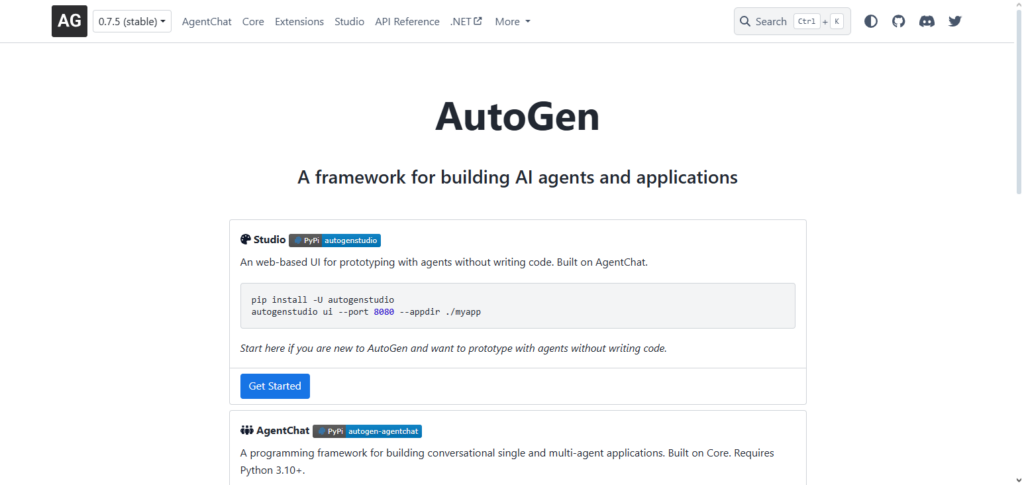
AutoGen is especially useful for the Web3 ecosystem for developing smart contracts, simulating protocols, and automating the discussion of governance. AutoGen is among the Best AI Agent Frameworks for Web3 Apps and is particularly suited for environments where self-correction and iterative reasoning are required.
The ability to communicate agent-to-agent offers a flexible system, which enables developers to build responsive systems that adapt to various parameters including blockchain, market conditions, and inputs from decentralized users.
AutoGen Features, Pros & Cons
Features
- Framework for multiple agents that can converse
- Communication between agents
- Loops of reasoning that are iterative
- Self-assessment and self-improvement
- Variable definitions for agents
Pros
- Reasoning that is fully autonomous is robust
- Very good for tasks that require multiple iterations
- Useful for designing the logic of smart contracts
- Decision-making on the fly is adaptable
- The framework supports research
Cons
- Outputs that are less deterministic
- In production, supervision is required
- Real-time security is not built for
- Very complicated conversation flows
- The compute required is higher
5. PydanticAI
PydanticAI describes the reliability, structure, and validation of the data contained in the output of the AI agent, which is important in the Web3 environment, as the cost of mistakes can be high.
Strict schemas, the type-safe responses of the AI, and the Pydantic framework reduce the risk of hallucination and erratic behavior of the AI in autonomous agents.
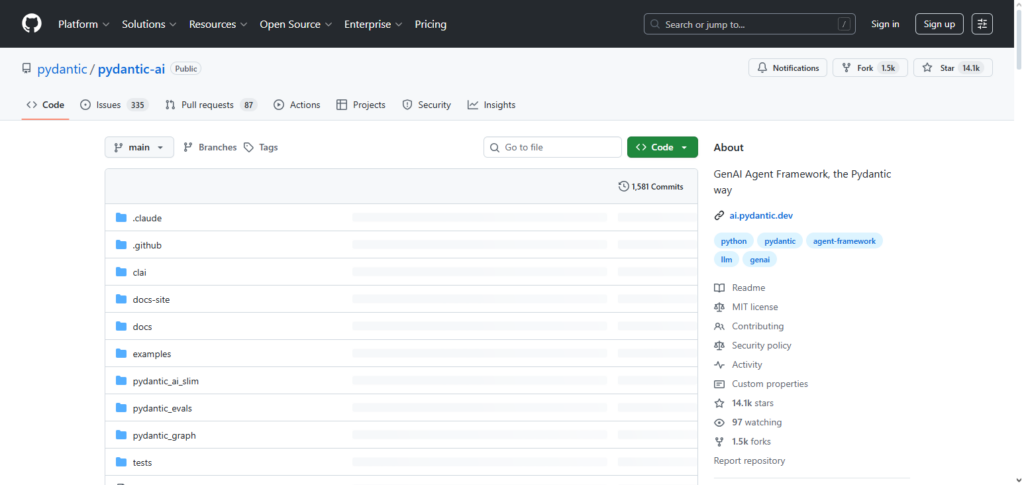
Such frameworks are useful for the automation of Decentralized Finance (DeFi), interaction with smart contracts, and in conjunction with blockchain technology where compliance is critical.
PydanticAI being in the Best AI Agent Frameworks for Web3 Apps category, aligns with the frameworks guideline of ensuring that the AI’s decisions are within the specified boundaries of the rules.
Its high emphasis on validation and correctness allows it to be placed as a fundamental framework for the production systems that require a high level of trust, security, and determinism in the output.
PydanticAI Features, Pros & Cons
Features
- AI validation based on schemas
- Type safety of agent outputs
- Guarantee of a structured response
- Control over error handling
- An API that is friendly to developers
Pros
- AI hallucinations are minimized
- Automation of DeFi is perfect for this
- Reliability that is production-grade
- The data consistency is strong
- Simple to integrate with Python
Cons
- Generally, less autonomous
- The design of a schema is necessary
- Limited orchestration of agents
- Concentrating on one agent is not the focus
- There is less adaptability and more driven logic
6. Forta Network
Forta Network is a decentralized AI-based security that provides a suite of services for the monitoring and recording of blockchain activities where threats, exploits, and anomalies of the blockchain can be discovered.
The system is based on autonomous bots for performing the activities, and they are distributed over the network of contributors, and that makes it extremely resilient and scalable. For Web3 security, it is one of the major players.
It protects decentralized finance (DeFi) protocols from attacks via Flash Loans, manipulation of governance, and rogue transactiFortada Blockchains. Among the Best AI Agent Frameworks for Web3 Apps,
Forta is one of the few that provides real-time threat intelligence and a decentralized monitoring framework. The alert systems that are driven by AI are used to respond to blockchain incidents in a timely manner, which preserves the trust and stability of the systems that use the blockchain.
Forta Network Features, Pros & Cons
Features
- AI security bots more advanced than competitors
- Maintenance of real-time blockchain
- Spotting threats and out of the ordinary activities
- Community intelligence
- Support for multiple blockchains
Pros
- Web3 security out of the competitors, the best
- Detection of exploits and hacks in real-time
- A network that scales greatly
- Used by leading DeFi protocols
- Resilient and decentralized
Cons
- Concentrated primarily on security
- Do not create a framework for a general AI agent
- Development of bots is needed
- Tuning of alerts is required
- Less ideal for tasks that do not involve security
7. Gauntlet AI Agent Framework
The Gauntlet AI Agent Framework focuses on economic analysis and risk-modelling using simulation techniques for DeFi protocols. It employs self-governing agents to evaluate and stress-test tokenomics and other liquidity and incentive parameters across a spectrum of market conditions.

This methodology assists Web3 clientele in pre-deployment systemic risk mitigation and improving protocol design.
Acknowledged as one of the Best AI Agent Frameworks for Web3 Apps, Gauntlet’s agent-based simulation frameworks are a significant aspect of most DeFi projects for the sustainability, resilience, and economic security of the decentralized finance ecosystem.
Gauntlet AI Agent Framework Features, Pros & Cons
Features
- modeling risk based on simulations
- testing the efficiency of the economy under distress
- Optimization of parameters autonomously
- analysis of market scenarios
- Support for decisions on Governance
Pros
- Great for managing risk in DeFi
- Insight for Governance based on data
- Stops instability of protocols
- Top projects in DeFi have utilized it
- Enhances the sustainability in the long run
Cons
- Specialized use case
- Limited general automation
- Expertise in economics is required
- Open-ended agent design doesn’t exist
- Smaller projects are not the best fit
8. OpenZeppelin Defender AI
The blending of smart contract security and automation powered by AI for monitoring, alerting, and incident response has crafted a brand-new product called OpenZeppelin Defender AI.
Web3 developers are now able to automatically identify malicious activities on the contract, administer upgrades, and perform escalation steps without any manual actions. This framework works best for applications that are built on a blockchain that needs to be secure and compliant.
Among the most Best AI Agent Frameworks for Web3 Apps, OpenZeppelin Defender AI works best on top of other smart contracts and other security tools. With a focus on monitoring, the solution drives down risk and the potential for downtime, which is why it is trusted for enterprise-grade DeFi and Web3 solutions.
OpenZeppelin Defender AI Features, Pros & Cons
Features
- Monitoring of smart contracts
- Automated alerts with actions
- Management of upgrades and administrative tasks
- Detection of anomalies with AI
- Workflows for execution that are secure
Pros
- Enterprise-level security for Web3
- Security of the OpenZeppelin ecosystem
- Integration of smart contracts is simple
- Less work for people involved
- Strong compliance assistance
Cons
- Mainly focused on security
- Scaling employs paid features
- Less flexibility with AI
- Smart contract understanding required
- Not multi-agent oriented
9. Semantic Kernel (Microsoft)
Semantic Kernel serves as an AI orchestration framework that combines LLMs (Large Language Models) with plugins, memory, and planners to create intelligent agents.

This is the first example of enterprise-grade AI applications, touching on Web3 applications that interface with cloud services, APIs, and blockchain data. Semantic Kernel enables AI agents to reason, plan, and perform actions within both distributed and traditional systems.
As exhibited in the Best AI Agent Frameworks for Web3 Apps, it effectively combines enterprise blockchain and software. Semantic Kernel’s structured planning and extensibility attributes make it suitable for large-scale Web3 platforms that need reliability, interoperability, and AI-driven automation.
Semantic Kernel (Microsoft) Features, Pros & Cons
Features
- AI planning and orchestration
- Plugin-based design
- Context and memory management
- Integration with enterprise systems
- Support for multi-model LLM
Pros
- Framework for enterprises
- Strong reliability with planning
- Great integrations with APIs
- Suitable for hybrid Web2–Web3 applications
- Microsoft supports it
Cons
- Heavier to set up
- Less Web3-native tools
- Higher difficulty
- Small projects can be overkill
- Need for architectural design
10. Agno
Agno is a lightweight and modular AI agent framework that prioritizes speed, simplicity, and autonomy. It permits the rapid deployment of AI agents with minimal configuration on the developer’s side, making it a great fit for startups and provisional Web3 projects.
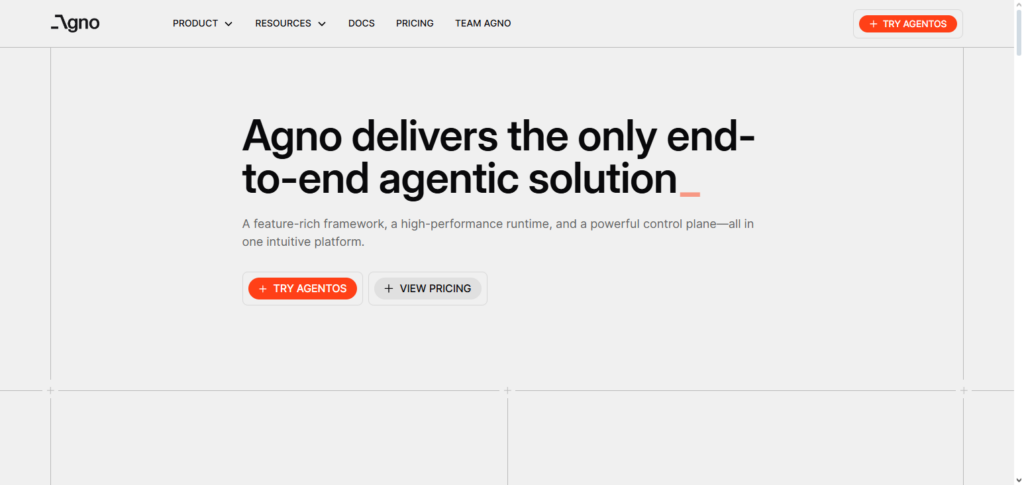
Agno requires low infrastructural overhead. Within the Best AI Agent Frameworks for Web3 Apps, Agno is a standout as a result of its rapid design for developers and speed of iteration.
It is invaluable for the creation of MVPs (minimum viable products), autonomous bots, and decentralized services in situations where flexibility and speed of deployment are essential, rather than intricate orchestration.
Agno Features, Pros & Cons
Features
- Lightweight AI agent framework
- Fast deployment setup
- Modular tool usage
- Autonomous task execution
- Minimalist infrastructure
Pros
- Great for beginners
- Perfect for MVP
- Rapid testing for ideas
- Flexible and easy
- Reduced operational costs
Cons
- Advanced orchestration is limited
- Not focused on enterprises
- Lack of built-in features to promote safety
- Insufficient community support
- Custom work can be needed for scaling
Conclusion
The development, security, and scalability of decentralized applications are changing due to the emergence of autonomous intelligence. The Web3 ecosystem’s essential requirements are met by the Best AI Agent Frameworks for Web3 Apps, which include LangGraph, LlamaIndex, CrewAI, AutoGen, PydanticAI, Forta Network, Gauntlet AI Agent Framework, OpenZeppelin Defender AI, Semantic Kernel, and Agno.
These frameworks enable developers to build more intelligent and robust decentralized systems, from data-driven decision-making and multi-agent collaboration to safe smart contract monitoring and DeFi risk modeling.
Use cases like security, automation, governance, and scalability influence the choice of framework, but taken as a whole, they provide the basis for intelligent, self-governing Web3 applications in the future.
FAQ
AI agent frameworks in Web3 are platforms that enable autonomous or semi-autonomous AI agents to interact with blockchain networks, smart contracts, and decentralized data. They help automate tasks such as trading, security monitoring, governance, analytics, and protocol optimization.
Web3 applications operate in real-time, trust-minimized environments where manual intervention is risky and inefficient. The Best AI Agent Frameworks for Web3 Apps improve scalability, reduce human error, enhance security, and enable continuous on-chain decision-making.
Forta Network and OpenZeppelin Defender AI are best suited for Web3 security. They provide real-time threat detection, automated alerts, and incident response for smart contracts and DeFi protocols.
Gauntlet AI Agent Framework is ideal for DeFi risk management due to its simulation-driven approach that stress-tests tokenomics, liquidity, and protocol parameters under various market conditions.