

In this article, I will discuss the Best Crypto Ecosystems For Builders Beyond Ethereum. Because of Ethereum’s constant problems with scalability and high gas fees, a lot of Ethereum developers are shifting to other blockchain platforms.
These ecosystems have their own distinguishing characteristics such as quicker transactions, cheaper costs, and more room for adjustment which are perfect for developing new dapps on the blockchain.
Key Point & Best Crypto Ecosystems For Builders Beyond Ethereum List
| Blockchain | Key Point |
|---|---|
| Solana | High scalability with fast transaction speeds and low fees. |
| Avalanche | Focuses on high throughput and low latency with customizable blockchain networks. |
| Polkadot | Enables interoperability between multiple blockchains with shared security. |
| Cosmos | Aims for blockchain interoperability with a modular framework for scalability. |
| Near Protocol | Developer-friendly platform with high performance and low transaction costs. |
| Algorand | Focuses on speed and decentralization, using a unique consensus mechanism. |
| Cardano | Research-driven blockchain known for its proof-of-stake consensus algorithm. |
| Flow | Optimized for high-performance decentralized apps and digital assets. |
| Tezos | Self-amending blockchain that evolves without hard forks through on-chain governance. |
| Fantom | High-speed blockchain for decentralized finance (DeFi) applications with low fees. |
1.Solana
Beneath Ethereum, Solana is listed as one of the best crypto ecosystems for builders. It’s notable for its incredibly scalable, high-speed and low-cost transactions which also makes it an outstanding platform for decentralized applications (dApps).
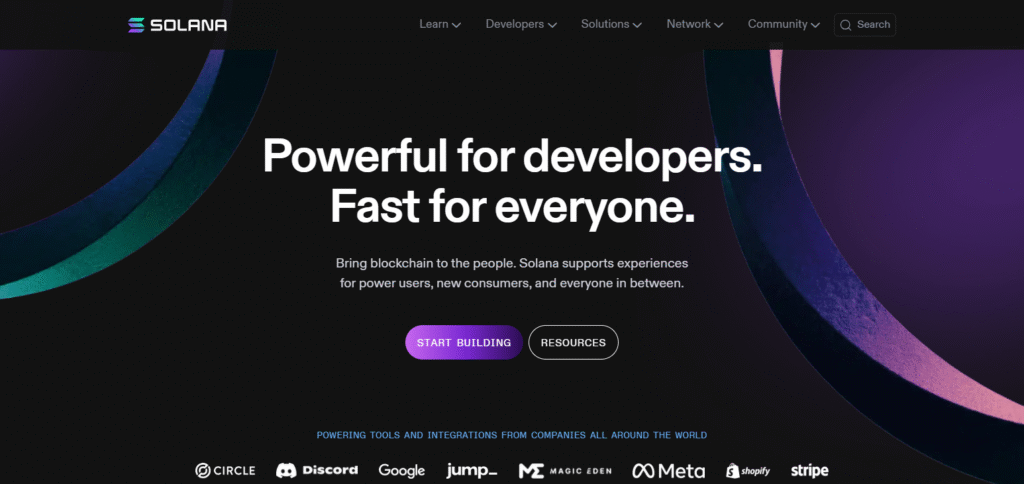
Further, its unique Proof-of-History (PoH) consensus mechanism provides even more speed on accelerated transaction processing than traditional blockchains and reduce costs associated with building and solving issues congested on Ethereum.
Solana Features
- High Scalability: The blockchains that use Solana can process thousands of transactions a second through PoH’s fast transaction processing.
- Low Fees: Developers looking to build dApps that will require many transactions to be processed will enjoy low fees.
- Developer Friendly Tools: Developers can easily build on Solana because they are provided with adequate SDKs and other tools that aid in dApp creation.
2.Avalanche
Avalanche is one of the fastest-growing ecosystems attracting developers who are looking for an alternative to Ethereum due to its unmatched speed and low fees.
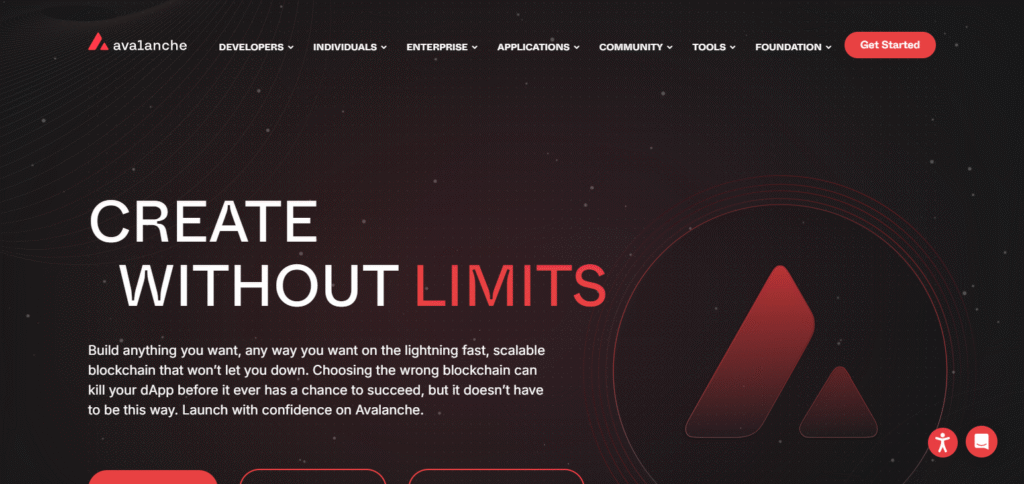
It supports the processing of thousands of transactions simultaneously without losing the decentralization which is vital for developing scalable dApps.
Furthermore, it also allows the design of custom blockchains, enabling developers to incorporate different ecosystems which optimizes security and efficiency for development.
Avalanche Features
- High Throughput: Avalanche has a cap of hundreds to thousands of transactions per second, allowing the construction of highly performant decentralized applications.
- Customizable Blockchains: The ability to design custom governed blockchains (subnets) gives developers the utmost flexibility.
- Low Transaction Fees: Avalanche is an economical platform, especially for developers and users, because having low costs will benefit a lot of people.
3.Polkadot
Polkadot stands out among Ethereum alternatives for its focus on interoperability across many blockchains. Its relay chain framework permits secure info exchange between different blockchain systems, permitting developers to build decentralized applications that can communicate with other platforms.
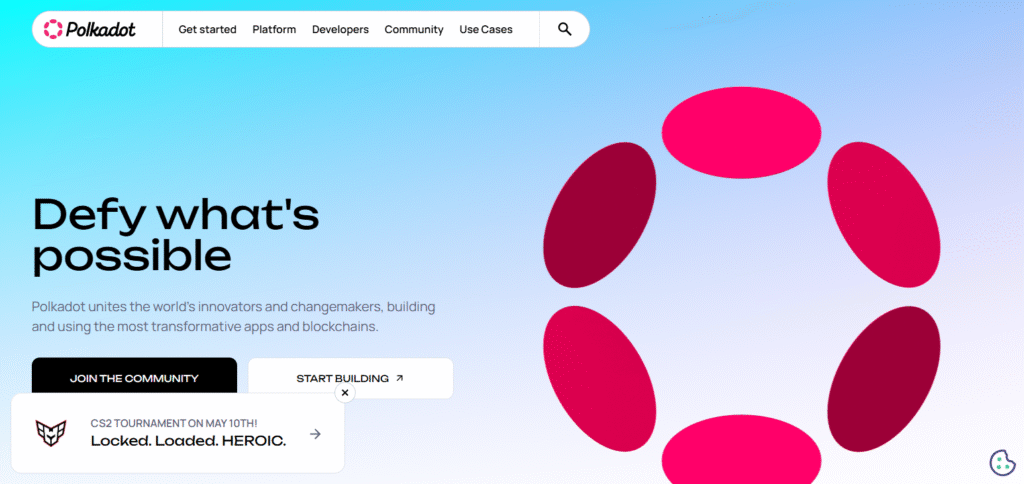
By offering a structure for developing adjustable blockchains (parachains), Polkadot guarantees scalability, flexibility, and shared security. This creates a conducive ecosystem where developers can advance and innovate the decentralized web devoid of Ethreum’s constraints.
Polkadot Features
- Interoperability: Developers wishing to build cross-chain dApps will find it easier to use Polka dot because blockchains can now talk to each other and share data.
- Shared Security: All the connected blockchains (parachains) that rely on the relay chain for their security will benefit from a scalable ecosystem.
- Customization: Tailored decentralized applications can be created through custom parachains, granting unique flexibility.
4.Cosmos
Cosmos is one of the best crypto ecosystems for builders after Ethereum due to its focus on scalability and interoperability.
Through its modular framework, developers easily create independent blockchains which communicate with each other through the Cosmos Hub. This, in turn, allows data and asset exchange between disparate networks.
Furthermore, the Cosmos SDK provides a simple environment for the creation of tailored blockchains, allowing developers to highly scale decentralized applications without the restrictions of Ethereum.
Cosmos Features
- Blockchain Interoperability: Independent blockchains can communicate with one another, offering secure Cosmos-based interactions within a decentralized network.
- Modular Framework: Developers are able to create specific governance structures and features in new blockchains they build through the Cosmos SDK.
- Scalability: High transaction volumes can be supported due to the Cosmos’ consensus algorithm with inter-blockchain communication (IBC), allowing it to scale highly.
5.Near Protocol
Near Protocol is a unique blockchain for developers looking for an alternative to Ethereum because of the user and developer experience it offers.
It stands out as an ideal platform for decentralized applications due to its sharding technology which offers high scalability and low transaction costs.
Near’s straightforward architecture that is friendly to developers and strong support for smart contracts and interfacing with existing web technologies allows for rapid deployment of decentralized and effective systems. These features enhance the power of the ecosystem and foster innovation with the ease of use.
Near Protocol Features
- Sharding Technology: Near Protocol utilizes dynamic sharding to scale efficiently, maintaining speed and decentralization.
- Low Transaction Fees: Large-scale decentralized applications (dApps) and DeFi projects become more accessible due to the low transaction costs offered by Near.
- Developer-Friendly: Easy-to-use SDKs and widely used programming languages lower the barrier to entry for developers, making it a friendly platform.
6.Algorand
Algorand is one of the best blockchains for developers who want to move away from Ethereum due to its strong focus on scalability and decentralization.
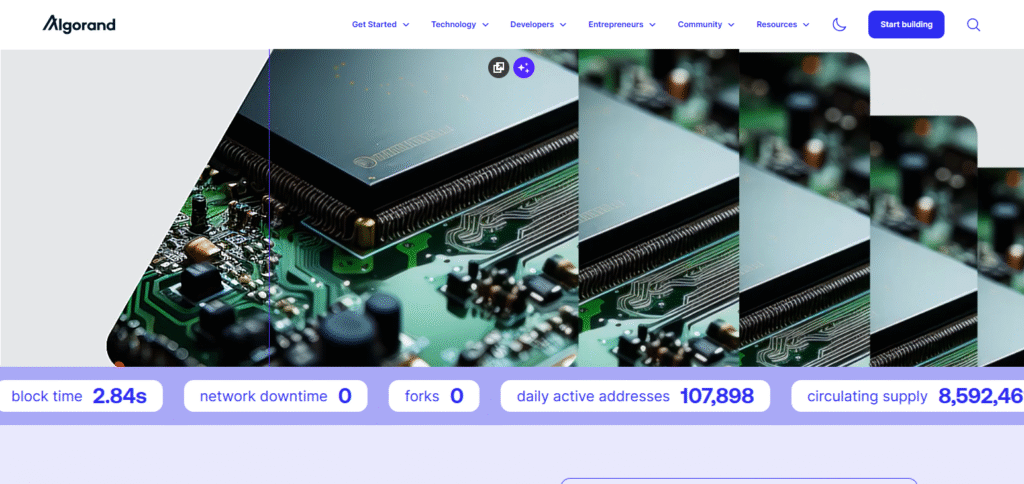
It maintains high security standards alongside fast transaction speeds and low fees due to its unique Pure Proof of Stake (PPoS) consensus mechanism.
Its paper Optimal Algorithm Design for the Blockchain Models outlines the security requirements of the blockchain-based systems. With Algorand, low operational costs are easy to combine with high demand and performance which makes it easier to foster projects in blockchain technology.
Algorand Features
- Pure Proof of Stake (PPoS): Fast transaction finality makes PPoS sought after for security, decentralization, and efficiency in blockchain technology.
- Low Energy Consumption: Compared to energy demanding blockchains, this platform offers lower energy consumption, making it more sustainable.
- Scalability: The consensus of Algorand ensures high transaction throughput, sustaining the scalability of decentralized applications.
7.Cardano
Cardano’s blockchain offers an exceptional alternative for developers looking for options besides Ethereum because it emphasizes sustainability, security, and scalability.
Its Ouroboros proof or stake protocol guarantees energy efficiency and a secured space for building decentralized applications.
The formal verification and peer-reviewed research ensure that developers have a strong foundation for creating reliable and enduring solutions. This novel approach also enhances innovativeness, making Cardano a trustworthy ecosystem for scalable secure projects.
Cardano Features
- Ouroboros Protocol: Cardano’s Proof-of-Stake consensus algorithm, Ouroboros, secures energy-efficient operations for the blockchain ecosystem.
- Formal Verification: Developers are able to design highly secure applications with minimal errors because Cardano emphasizes formal verification.
- Scalability and Sustainability: Scalability and sustainability are two features of Cardano that aid in the long-term advancement and stability of decentralized applications.
8.Flow
Flow serves as a beyond-Ethereum option for builders, focusing on creating highly scaled performant applications and digital assets.
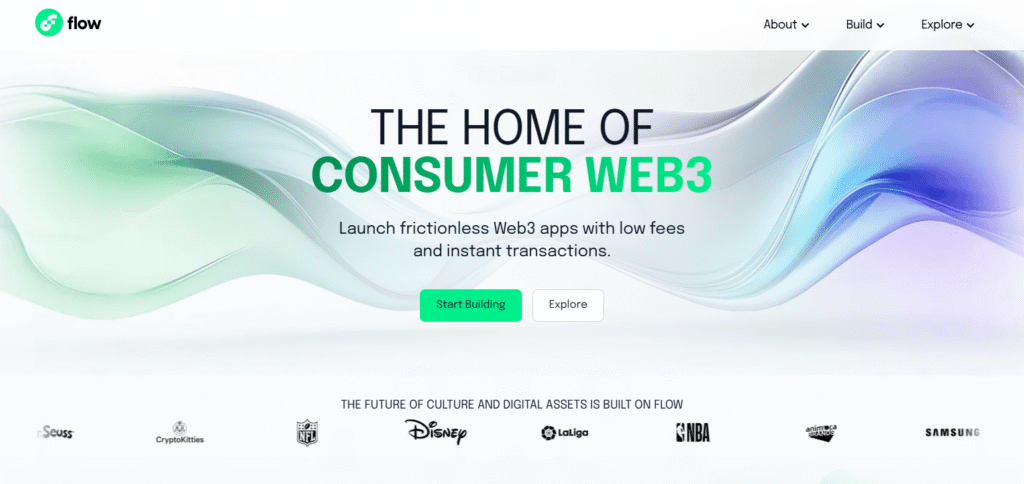
The Flow blockchain is optimistically structured for scalability while maintaining a decentralized network, enabling the construction of sophisticated dApps and NFT marketplaces.
Flow’s highly efficient transaction processing along with streamlined development tools allows innovative solutions to be crafted with ease. Builders aiming to effortlessly construct complex decentralized applications will find Flow to be very appealing.
Flow Features
- Optimized for NFTs: Flow is specialized for high-performance decentralized applications, especially for NFTs and digital collectibles.
- Scalability: The multi-node architecture of Flow allows for the highest level of scalability without hindering decentralization and security.
- Developer-Friendly: Flow provides simple and accessible tools that enable developers to construct, deploy, and scale decentralized applications seamlessly.
9.Tezos
Tezos is among the leading ecosystems for developers apart from Ethereum due to its self-amending blockchain.
This self-governing feature permits Tezos to evolve and upgrade without the need for hard forks, ensuring sustainability and adaptability for a duration of time.
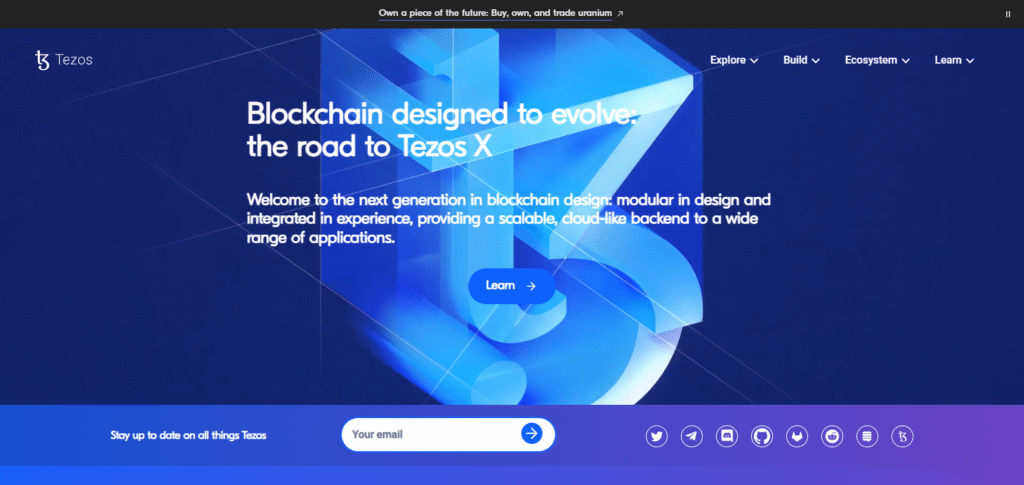
Its on-chain governance model allows the community to propose and implement protocol changes effortlessly.
While focusing on the security, scalability and energy prudence, Tezos establishes a sustainable blockchain infrastructure for developers to construct decentralized applications, which can grow and adapt over time.
Tezos Features
- Self-Amending Blockchain: The on-chain governance characteristic of Tezos allows the blockchain to upgrade and evolve without the need for hard forks.
- Smart Contract Security: The focus of Tezos on smart contracts provides formal verification which enhances the security of decentralized applications.
- Scalability: With an efficient consensus algorithm, Tezos achieves scalability while maintaining decentralization or security.
10.Fantom
Fantum’s Lachesis protocol makes it one of the fastest blockchain ecosystems with low transaction fees. Developers seeking other options to Ethereum are easily pulled into Fantum because of their near-instant transaction time and application finality which is crucial for decentralized applications that are agile and efficient.
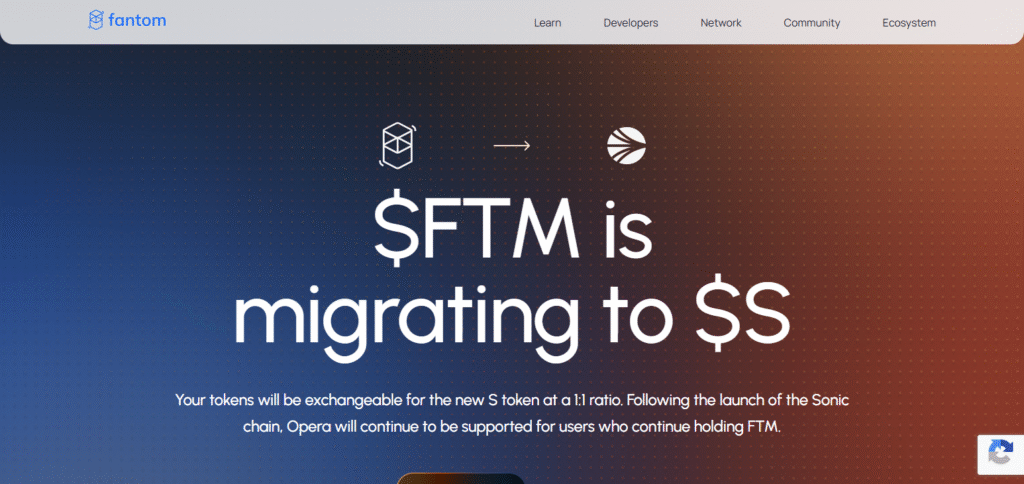
Fantum’s scalability guarantees that applications are able to expand seamlessly without hitting constraints on performance. These features in conjunction with being developer-friendly make it the ultimate ecosystem for decentralized finance (DeFi) projects.
Fantom Features
- Lachesis Consensus Protocol: Fantom’s protocol Lachesis sets high standards for throughput and fast transaction finality which are essential for DeFi applications.
- Minimal Costs: Transaction costs on Fantom are very low, which makes it suitable for affordable dApp development. This in turn makes it an attractive option for developers.
- Cross-Chain Compatibility: Fantom has interoperability features that enable developers to create cross-chain applications, expanding the ecosystem.
Conclusion
Summing up, Ethereum blockchain platform continues to be the frontrunner; however, other ecosystems such as Solana, Avalanche, Polkadot, Cosmos, Near Protocol, Algorand, Cardano, Flow, Tezos, and Fantom have also emerged with distinct benefits for developers.
These ecosystems enable the expansion of decentralized applications due to their low transaction costs, customizability, and heightened scalability.
With an emphasis on speed, security, and flexibility, these ecosystems create a bountiful setting for developers who look to go beyond Ethereum and build unparalleled blockchain solutions.