

The top ten Bitcoin Layer-2 projects that are growing the BTC ecosystem and improving its scalability, speed, and usefulness will be covered in this article.
These cutting-edge initiatives, including as Lightning Network, Stacks, Rootstock, and Liquid Network, facilitate decentralized finance, improve transaction efficiency, and enable smart contracts.
We can comprehend how these Layer-2 solutions are promoting Bitcoin adoption and ecosystem expansion by investigating them.
Why Use Best Bitcoin Layer-2 Projects Expanding BTC Ecosystem
Quick Transactions – Noise payments that linger for forever, no payment will be made using the main chain due to the long confirming times of the paving systems.
Affordable – Bitcoin projects possibilities each day Bitcoin will be used on something like, a small purchase.
Smart Contracts – Giant projects like Ethereum will be affected because of the small people in the Ethereum contracts broken apart from Bitcoin.
More Privacy – Investors, transactors, and people of all sorts are shielded against Bitcoin.
More Transactions – Larger projects such as Litecoin, Sytem and Zagic all work as 1 to cover the chain to add more.
Create Tokens & DeFi – Mint Layer and Portal finance gives structured to borrow, lend, and other things such that they can keep and center the
More Businesses – Plug systems that support other systems will allow large and small systems to function and confirm payments every time.
More Uses – New systems will allow Portals to attach themselves as bridges using other loops of blocks.
Ecosystem Expansion – Projects on layer-2 attract developers and companies, driving creativity and capturing new ways to adopt Bitcoin on a global scale.
Security Maintenance – All these projects secure their anchoring to the Bitcoin network to provide enhanced services, thereby giving clients a safe and secure network.
Best Bitcoin Layer-2 Projects Expanding BTC Ecosystem Points
| Project | Key Point |
|---|---|
| Lightning Network | A Layer-2 solution for instant, low-fee BTC payments, improving scalability and microtransactions. |
| Stacks (STX) | Brings smart contracts and DeFi to Bitcoin without altering BTC’s base layer, enabling dApps. |
| Rootstock (RSK) | Bitcoin-powered smart contract platform with Ethereum-compatible functionality for DeFi apps. |
| Liquid Network | Sidechain for fast, confidential BTC transactions between exchanges and traders. |
| Fedimint | Federated mint protocol enhancing Bitcoin privacy and easier multi-user custodial setups. |
| Botanix Protocol | Layer-2 scaling solution aiming to improve Bitcoin transaction efficiency and DeFi integration. |
| MintLayer | Enables tokenization and DeFi services on Bitcoin, bridging traditional finance with BTC. |
| Portal Finance | Layer-2 infrastructure facilitating cross-chain swaps and decentralized finance on Bitcoin. |
| Ark Protocol | Scalable Bitcoin Layer-2 network focusing on microtransactions and DeFi applications. |
| OpenNode | BTC payment processor integrating Lightning Network for instant, low-cost merchant payments. |
1. Lightning Network
Lightning Network is the first Bitcoin Layer-2 solution designed to tackle the scalability issue of Bitcoin. It does so by facilitating fast and cheap transactions. The way it does so is by opening off-chain payment channels (for payment channels to work, they have to be opened to payment channels).
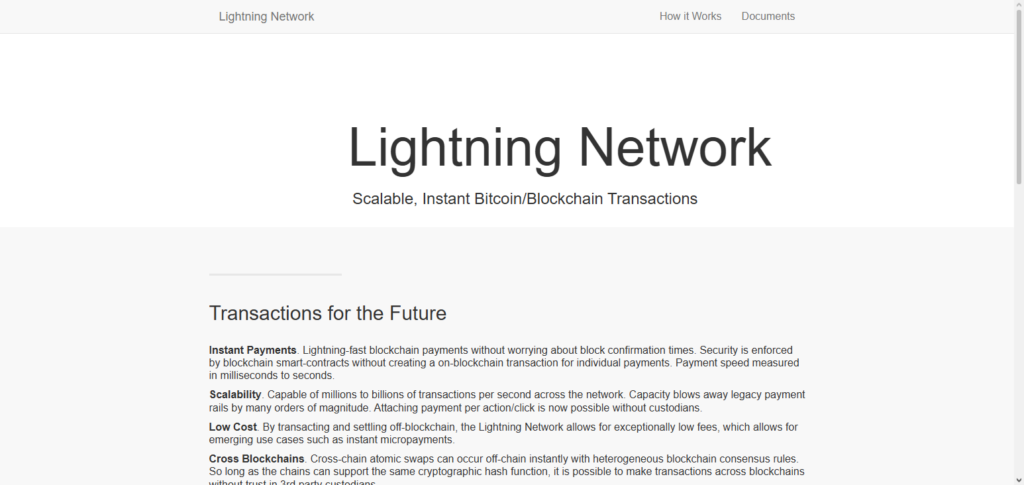
This development primarily solves the blockchain congestion problem. This development is of great importance. because it allows microtransactions to be made and day-to-day payments to be contributed.
Lightning Network is rapidly being integrated in the bitcoin world and is on its way to being a cornerstone of Layer 2 transactions, expanding the use of Lightning Network for global (Bitcoin) payments.
Lightning Network Features
- Instant transfers of Bitcoin using off-chain channel payments.
- Almost free microtransactions.
- Without clogging the primary Bitcoin chain, there is excellent scalability.
- Facilitates multi-hop payments across channel networks.
- Universally compatible with wallets and merchant payment networks.
Lightning Network Advantages & Disadvantages
| Advantages | Disadvantages |
|---|---|
| Instant BTC payments for microtransactions. | Requires users to lock BTC in payment channels. |
| Extremely low transaction fees. | Limited liquidity in smaller channels can cause payment failures. |
| Reduces congestion on main Bitcoin chain. | Network routing can be complex for some users. |
| Supports multi-hop payments. | Offline users cannot receive payments until connected. |
| Widely supported by wallets and merchants. | Vulnerable to certain routing attacks if not properly secured. |
2. Stacks (STX)
Stacks (STX) is another example of Layer-2 solutions that build additional features on top of the Bitcoin mainnet. Stacks is able to enable Bitcoin smart contracts and deploy more sophisticated DApps by using its own smart contracts called Clarity.
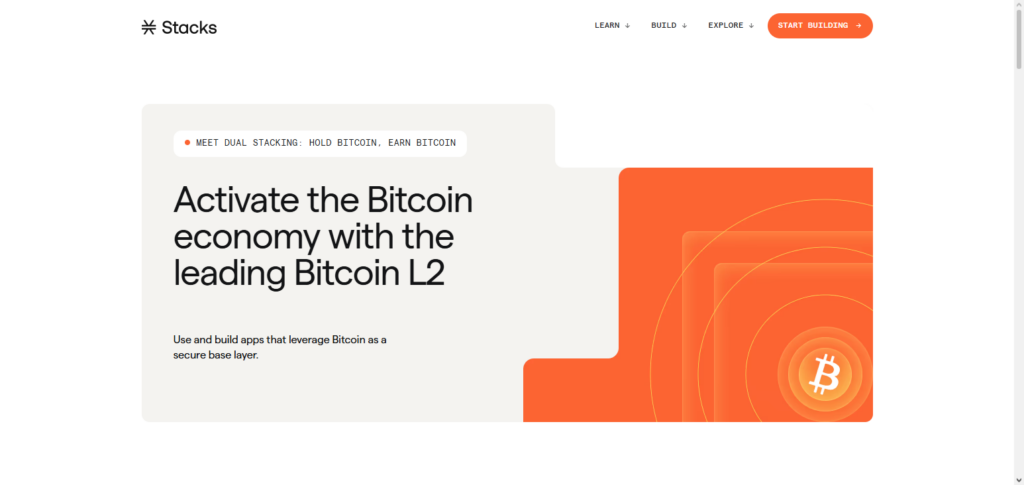
With its smart contract and DApp capabilities, developers can build more sophisticated use cases like DeFi and NFTs that leverage Bitcoin’s unparalleled security.
Stacks is able to provide revenue generating opportunities for its users and decentralized financial solutions on the Bitcoin network, regarded as one of the most secure and scalable networks. For these reasons, Stacks is regarded as one of the Best Bitcoin Layer-2 Projects Expanding BTC Ecosystem.
Stacks (STX) Features
- With the use of the Clarity language, it introduces smart contracts and decentralized applications (dApps) to Bitcoin.
- It fuels Bitcoin (BTC) Decentralized Finance (DeFi) protocols and non-fungible tokens (NFTs).
- Bitcoin is used to anchor (BTC) the blockchain’s security.
- Decentralized governance and the issuance of tokens are possible.
- It connects Bitcoin to Web3 applications, increasing its use.
Stacks (STX) Advantages & Disadvantages
| Advantages | Disadvantages |
|---|---|
| Enables smart contracts and dApps on Bitcoin. | Clarity language may have a learning curve for developers. |
| Supports NFTs and DeFi applications. | Dependent on Bitcoin’s confirmation times for certain operations. |
| Anchors security to Bitcoin blockchain. | Smaller ecosystem compared to Ethereum. |
| Decentralized token issuance and governance. | Limited developer tools compared to larger Layer-1 platforms. |
| Bridges Bitcoin with Web3 applications. | Adoption still growing; fewer active projects. |
3. Rootstock (RSK)
Rootstock (RSK) is another example of Best Bitcoin Layer-2 Projects Expanding BTC Ecosystem. RSK is a Bitcoin sidechain that is able to provide the Bitcoin network with Ethereum-compatible smart contracts, as well as a fully functional DeFi ecosystem.
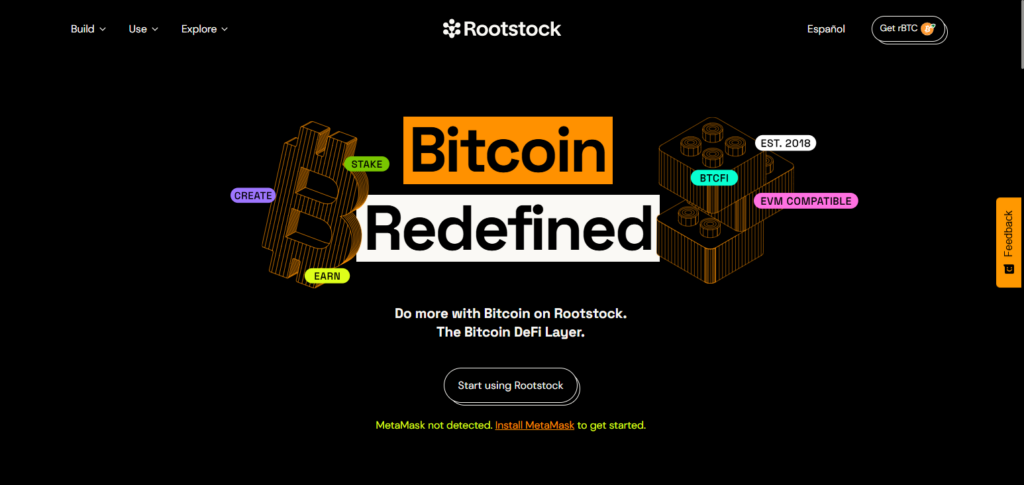
RSK is also able to provide these features while using merge-mining, which is one of the biggest selling points of RSK’s offering. With RSK, developers can create and issue DApps and stablecoins using Bitcoin because RSK’s cross-chain capabilities allow for Bitcoin to be used as collateral.
For these reasons, RSK is able to decentralize and secure the lending, payments, and dex (decentralized exchanges) capabilities of the Bitcoin network. RSK is able to do all of these things while still maintaining the characteristic that has made Bitcoin the most used cryptocurrency: its decentralization and security.
Rootstock (RSK) Features
- It is the first smart contract platform on Bitcoin that is also compatible with Ethereum.
- It employs merge-mining for increased security on Bitcoin.
- It assists decentralized finance (DeFi) applications.
- It allows the creation of stablecoins and tokenized assets.
- It connects Bitcoin to Ethereum-style decentralized applications (dApps) and ecosystems.
Rootstock (RSK) Advantages & Disadvantages
| Advantages | Disadvantages |
|---|---|
| Ethereum-compatible smart contracts on Bitcoin. | Requires BTC to move to RSK sidechain, adding complexity. |
| Secured via merge-mining with Bitcoin. | Slightly slower finality compared to main Bitcoin chain. |
| Supports DeFi applications. | Network adoption smaller than Ethereum Layer-2s. |
| Allows tokenized assets and stablecoins. | Limited number of dApps compared to Ethereum. |
| Bridges BTC with Ethereum-style ecosystem. | Sidechain dependency introduces additional risk. |
4. Liquid Network
Liquid Network is a bitcoin sidechain that prioritizes quick and confidential transactions, especially for exchanges and traders. Liquid improves large-scale BTC transactions by providing instantaneous settlement, token issuance, and privacy.
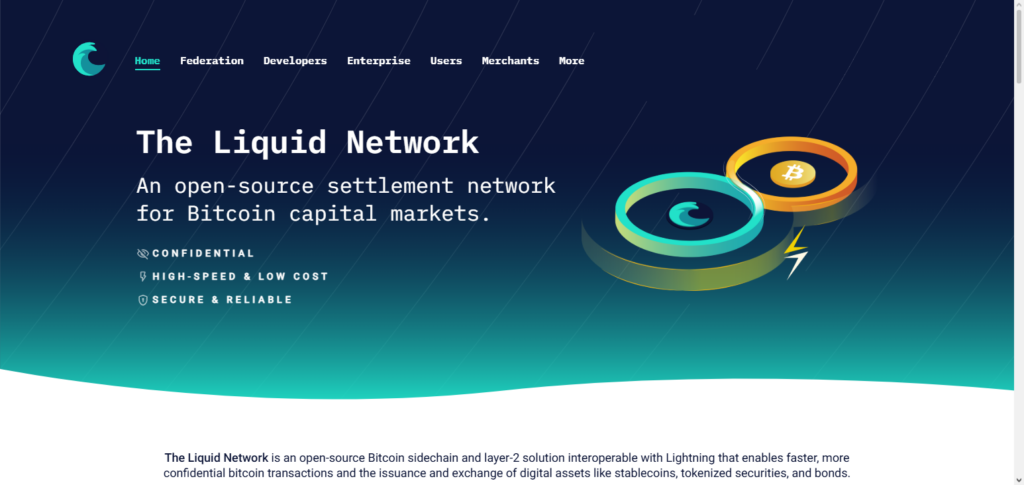
This also allows for quicker transaction times and better liquidity. It is listed among the Best Bitcoin Layer-2 Projects Expanding BTC Ecosystem, and since its inception, it has allowed its users to transfer assets from the main chain and keep their decentralization.
Liquid also allows traders and financial institutions to create tokenized assets that are BTC-collateralized, integrating traditional finance and blockchain, and making Bitcoin more usable for professional trading.
Liquid Network Features
- It is a Bitcoin sidechain that allows rapid and private transactions.
- It assists in the quick settlement of trades and exchanges.
- It allows the creation of digital assets and tokenized securities.
- It improves privacy using Confidential Transactions (CT).
- It enhances interoperability among exchanges for better liquidity.
Liquid Network Advantages & Disadvantages
| Advantages | Disadvantages |
|---|---|
| Fast and confidential BTC transactions. | Only accessible via Liquid-compatible wallets and exchanges. |
| Supports issuance of digital assets. | Requires trust in federation nodes for security. |
| Improves liquidity for exchanges. | Less decentralized than main Bitcoin chain. |
| Reduces settlement time for large transfers. | Complexity in moving BTC between Liquid and mainnet. |
| Enhances privacy using Confidential Transactions. | Smaller community adoption compared to Bitcoin mainnet. |
5. Fedimint
Fedimint is a federated mint protocol that builds on the Bitcoin ecosystem to better maintain Bitcoin privacy and multi-user custodial solution.
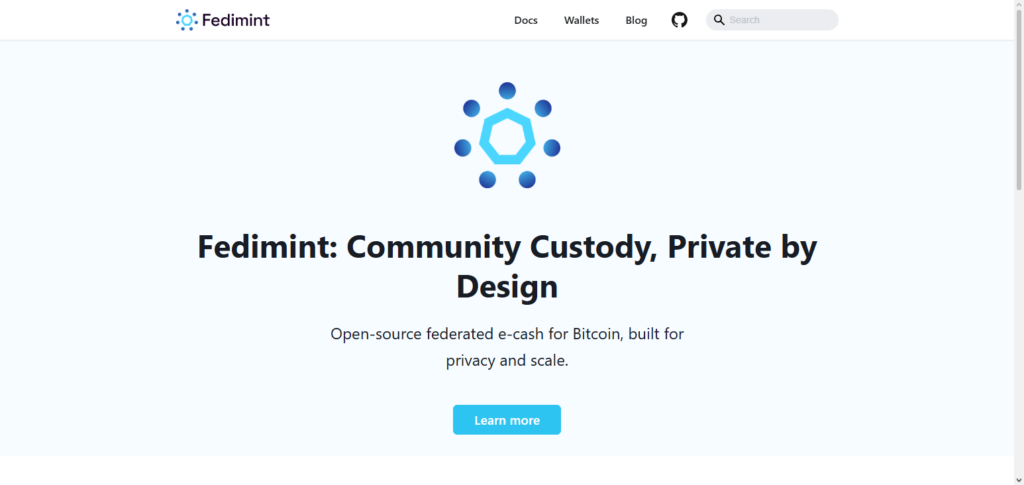
Users, through trusted federations, can pool their resources and achieve a collective solution that offers scalability, lower fees, and anonymity, while still preserving the security of Bitcoin’s network. Fedimint is also regarded as one of the Best Bitcoin Layer-2 Projects Expanding BTC Ecosystem since it enables self-custody of BTC for community and organizational users without central intermediaries.
Its design allows for more sophisticated privacy control, allowing users to make transactions that are more private, making it ideal for individuals and organizations that want a more secure and scalable alternative, all while broadening the scope of the Bitcoin ecosystem to more real and practical use cases.
Fedimint Features
- Facilitates pooled BTC custody via federated mint protocol.
- Increases transaction anonymity and user privacy.
- Improves scalability and lessens txn costs.
- Empowers BTC management at the community/organization level.
- Provides simpler multi-user configurations while securing Bitcoin.
Fedimint Advantages & Disadvantages
| Advantages | Disadvantages |
|---|---|
| Enhanced privacy for pooled BTC custody. | Dependent on federations for operation. |
| Lower transaction fees and scalable. | Users must trust federation to some extent. |
| Supports multi-user community setups. | Limited adoption currently. |
| Maintains Bitcoin’s security. | Still in experimental or early-stage implementation. |
| Simplifies custodial management for groups. | Requires technical understanding for setup. |
6. Botanix Protocol
Botanix Protocol is a Layer-2 scaling solution designed to enhance the efficiency of Bitcoin transactions and the incorporation of decentralized finance (DeFi) functionality. The protocol improves the mechanisms of the Bitcoin network by increasing transaction throughput and reducing congestion.
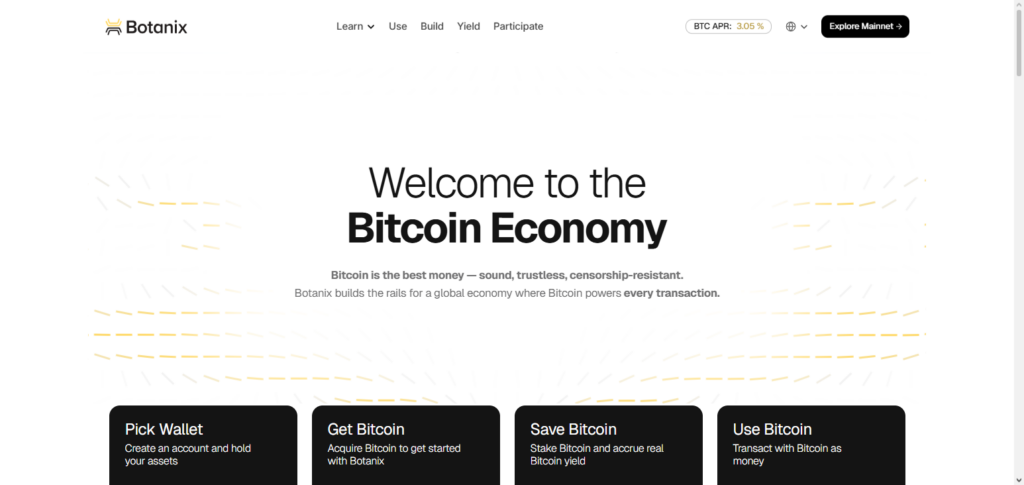
This creates a more optimal user experience. Considered one of the Best Bitcoin Layer-2 Projects Expanding BTC Ecosystem, Botanix is centered on the bridging of Bitcoin with innovative DeFi solutions, allowing BTC holders to engage in yield farming, lending and cross-chain activities.
With the merge of speed and security, the decentralized finance component of Botanix enriches the Bitcoin ecosystem. Thus, drawing in eager developers and users looking to obtain advanced capabilities without losing the core principles of the Bitcoin network.
Botanix Protocol Features
- BTC transactions that are quick and scalable are developed via layer-2 solutions.
- Bitcoin-based decentralized finance (DeFi) functionalities integrated.
- Lessens main-chain congestion and associated costs.
- Interoperability for tokenized assets and cross-chain functionalities.
- Enhanced usability of BTC for user-developers.
Botanix Protocol Advantages & Disadvantages
| Advantages | Disadvantages |
|---|---|
| Faster Bitcoin transactions on Layer-2. | Adoption still low; limited awareness. |
| Integrates DeFi features on BTC. | May rely on centralized components initially. |
| Reduces congestion on main chain. | Limited ecosystem support currently. |
| Supports cross-chain interactions. | Security depends on proper Layer-2 implementation. |
| Enhances BTC usability for developers. | Early-stage project; risk of bugs or vulnerabilities. |
7. MintLayer
MintLayer helps implement tokenization and financial services on Bitcoin. This Intersects traditional and blockchain finance. MintLayer tokenizes financial services and decentralized exchanges on top of Bitcoin.
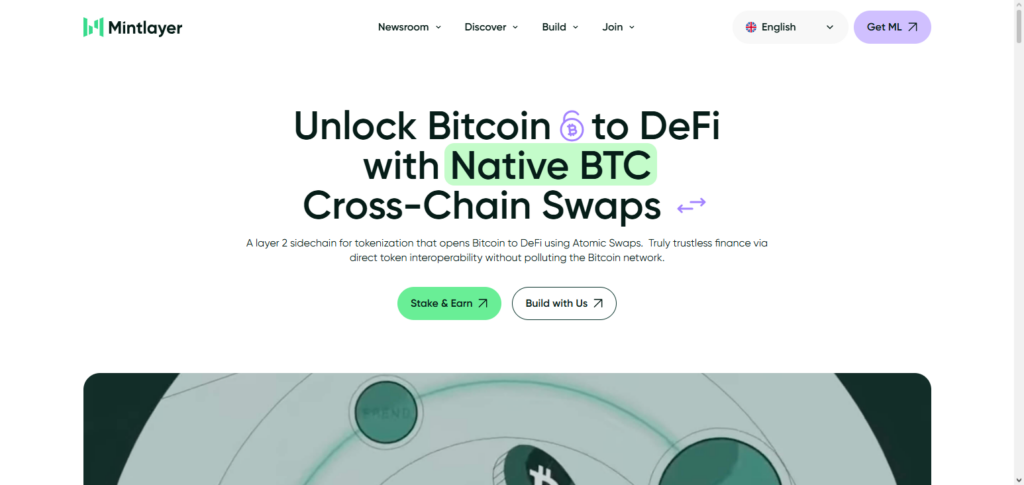
MintLayer is one of the Best Bitcoin Layer-2 Projects Expanding BTC Ecosystem because it strengthens position of Bitcoin beyond being a digital store of value. MintLayer is the best positioned Bitcoin Layer-2 for tokenization and financial services.
It is a position to foster use case development and/or broaden adoption on the Bitcoin blockchain. With tokenization of financial services MintLayer helps broaden the scope of what they can offer developers on top of Bitcoin.
MintLayer Features
- Bitcoin assets are now fully tokenized.
- Decentralized exchanges and DeFi solutions.
- Bitcoin network security is always guaranteed.
- Financial services with scalable systems.
- Traditional finance and Bitcoin-based systems have a new bridge.
MintLayer Advantages & Disadvantages
| Advantages | Disadvantages |
|---|---|
| Tokenization of assets on Bitcoin. | Complexity for non-technical users. |
| Supports DeFi and decentralized exchanges. | Smaller developer community compared to Ethereum. |
| Maintains security anchored to Bitcoin. | Layer-2 dependency introduces additional risks. |
| Scalable infrastructure for financial services. | Limited adoption and ecosystem support. |
| Bridges traditional finance with BTC ecosystem. | Cross-chain functionality may face technical limitations. |
8. Portal Finance
Portal Finance is a project developing infrastructure on Bitcoin’s Layer-2 that supports cross-chain swaps and DeFi applications. Portal Finance makes Bitcoin more accessible in DeFi by providing a way to seamlessly bridge Bitcoin with other blockchains.
It has been awarded one of the Best Bitcoin Layer-2 Projects Expanding the BTC Ecosystem as it allows holders of BTC to lend, borrow, and trade without having to move their assets from the secure BTC network.
The Portal Finance design is secure and scalable, enabling fast transactions with the added benefit of decentralized governance. Therefore, Portal Finance is an important piece in Bitcoin’s growing financial ecosystem, increasing functionality of BTC for retail and institutional users.
Portal Finance Features
- Interoperability and cross-chain swaps are enabled.
- Decentralized lending/borrowing via Bitcoin.
- Off-chain BTC movement for DeFi apps are supported.
- Transactions are secure and rapid on Layer-2.
- More of Bitcoin’s utility and ecosystem is financial.
Portal Finance Advantages & Disadvantages
| Advantages | Disadvantages |
|---|---|
| Facilitates cross-chain swaps and DeFi. | Complexity in handling multiple chains securely. |
| Enables decentralized lending and borrowing. | Relatively new; ecosystem still growing. |
| Fast and secure Layer-2 transactions. | Dependence on smart contract security. |
| Expands BTC’s financial utility. | Limited user adoption initially. |
| Supports decentralized applications. | Risk of bugs in early-stage protocols. |
9. Ark Protocol
Ark Protocol is a layer-2 protocol for scalable microtransactions and DeFi on Bitcoin. Ark improves transaction speed and lowers fees on BTC for smaller every day payments.
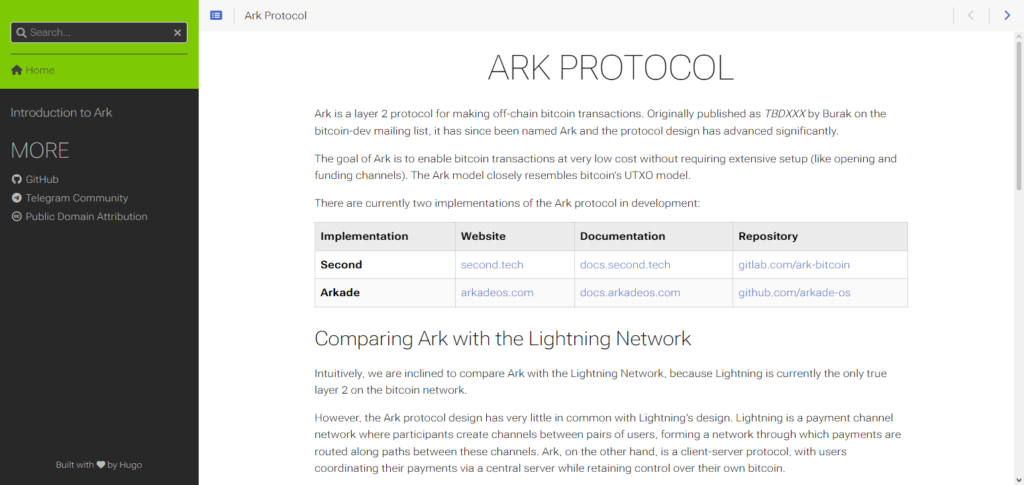
As one of the Best Bitcoin Layer-2 Projects Expanding the BTC Ecosystem, Ark Protocol expands utility for commerce and decntralized applications for Bitcoin.
Ark’s infrastructure for fast and low-cost payments makes it the perfect compromise between Bitcoin’s security and the fast pased digital payment economy. Ark Protocol creates new possibilities for developers and enterprises to build on Bitcoin and broadens the ecosystem for the world’s digital payment economy.
Ark Protocol Features
- Bitcoin microtransactions are optimized.
- Increased txn throughput and reduced costs.
- DeFi and decentralized apps are supported.
- Commerce is provided with low-latency payments.
- Increases Bitcoin’s functionality for daily transactions.
Ark Protocol Advantages & Disadvantages
| Advantages | Disadvantages |
|---|---|
| Optimized for microtransactions on Bitcoin. | Smaller adoption compared to other Layer-2s. |
| Low transaction fees. | Relatively new; early-stage ecosystem. |
| Supports DeFi and dApps. | Requires developers to learn Ark’s tools. |
| Enables low-latency payments for commerce. | Less liquidity compared to larger networks. |
| Enhances BTC usability in daily transactions. | Risk of technical vulnerabilities in early deployment. |
10. OpenNode
A Bitcoin payment processor called OpenNode uses the Lightning Network to facilitate quick, inexpensive merchant payments. It lessens dependency on conventional payment methods by enabling businesses to accept Bitcoin effectively.
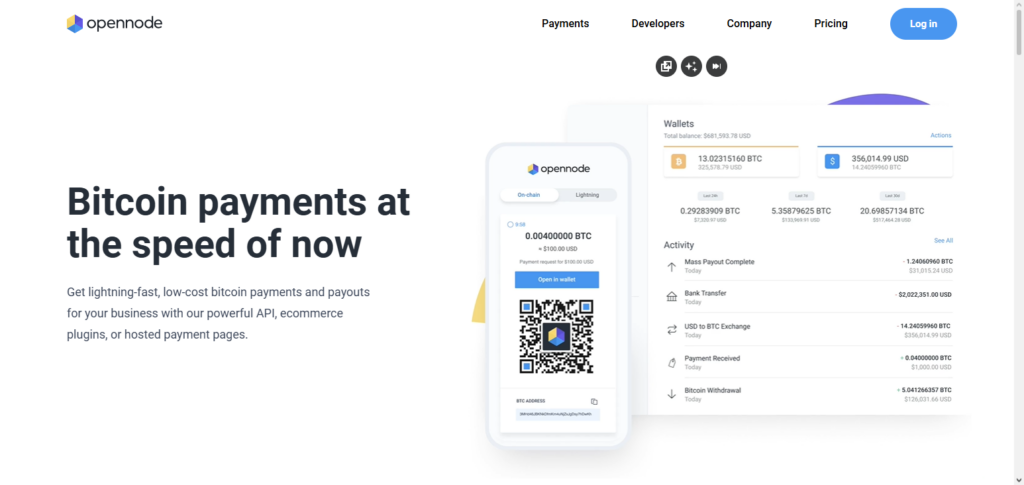
Acknowledged as One of the Top Layer-2 Bitcoin Projects By making payments easier for both customers and businesses, OpenNode’s expanding BTC ecosystem promotes the widespread use of Bitcoin.
Its infrastructure facilitates easy interaction with current financial platforms, increasing the usefulness of Bitcoin as a means of trade. OpenNode is essential to the ecosystem’s growth since it connects regular commerce with Bitcoin, promoting its widespread acceptance and useful application in actual transactions.
OpenNode Features
- OpenNode processes Bitcoin payments using the Lightning Network.
- Provides merchants with the ability to receive BTC payments instantly and at a low cost.
- Offers simple integration to e-commerce and point-of-sale systems.
- Facilitates safe payments worldwide to support the adoption of Bitcoin by merchants.
- Combines Bitcoin with traditional payment systems.
OpenNode Advantages & Disadvantages
| Advantages | Disadvantages |
|---|---|
| Bitcoin payment processor using Lightning Network. | Requires merchants to adopt Lightning-compatible systems. |
| Enables instant, low-fee BTC payments. | Dependent on Lightning Network adoption and liquidity. |
| Easy integration with e-commerce platforms. | Limited support for complex financial applications. |
| Expands BTC merchant adoption globally. | Transaction routing can occasionally fail. |
| Bridges traditional payment systems with BTC. | Fees may fluctuate based on network activity. |
Conclusion
Finally, the Top Bitcoin Layer-2 Projects Bitcoin is evolving from a store of value into a highly functional, scalable, and adaptable network thanks to its expanding ecosystem. While initiatives like Liquid Network, Fedimint, and OpenNode improve privacy, scalability, and merchant adoption, solutions like Lightning Network, Stacks, and Rootstock boost transaction speed, smart contract capabilities, and DeFi integration.
When taken as a whole, these Layer-2 developments are propelling Bitcoin into widespread use, connecting decentralized technology and traditional finance, and opening the door to a new era of financial applications. These initiatives will keep bolstering and growing the global Bitcoin ecosystem as use rises.
FAQ
What are Bitcoin Layer-2 projects?
Bitcoin Layer-2 projects are protocols built on top of the Bitcoin blockchain to improve scalability, speed, and functionality. They allow faster transactions, lower fees, and advanced features like smart contracts and DeFi applications without altering Bitcoin’s base layer.
Why are Layer-2 solutions important for Bitcoin?
Layer-2 solutions address Bitcoin’s scalability limitations, enabling instant payments, microtransactions, and decentralized applications. They expand the BTC ecosystem by making it practical for everyday use, commerce, and finance while maintaining security.
Which are the top Bitcoin Layer-2 projects?
Some of the best projects include Lightning Network, Stacks (STX), Rootstock (RSK), Liquid Network, Fedimint, Botanix Protocol, MintLayer, Portal Finance, Ark Protocol, and OpenNode. These projects focus on speed, privacy, DeFi, tokenization, and merchant adoption.
How does Lightning Network enhance Bitcoin?
Lightning Network allows off-chain payment channels for instant, low-fee BTC transactions. It’s ideal for micropayments and everyday use, improving Bitcoin’s usability while keeping the network secure.
Can Layer-2 projects support smart contracts on Bitcoin?
Yes. Projects like Stacks (STX) and Rootstock (RSK) enable Ethereum-compatible smart contracts on Bitcoin. This allows developers to create decentralized applications, NFTs, and DeFi protocols using BTC as the underlying asset.