

I’ll talk about whether Layer 2 networks are centralizing Ethereum in this post. By using fewer sequencers or validators, these solutions raise the possibility of centralization even while their goals are to grow Ethereum, lower costs, and expedite transactions.
We’ll look at how L2s operate, their advantages, disadvantages, and the safeguards put in place to keep Ethereum decentralized.
Understanding Layer 2 Networks
Secondary frameworks known as Layer 2 (L2) networks are constructed on top of the Ethereum blockchain in order to increase scalability, speed, and lower transaction costs.
L2 solutions reduce network congestion and user gas costs by managing transactions off the main Ethereum chain (Layer 1) and only settling on it occasionally.
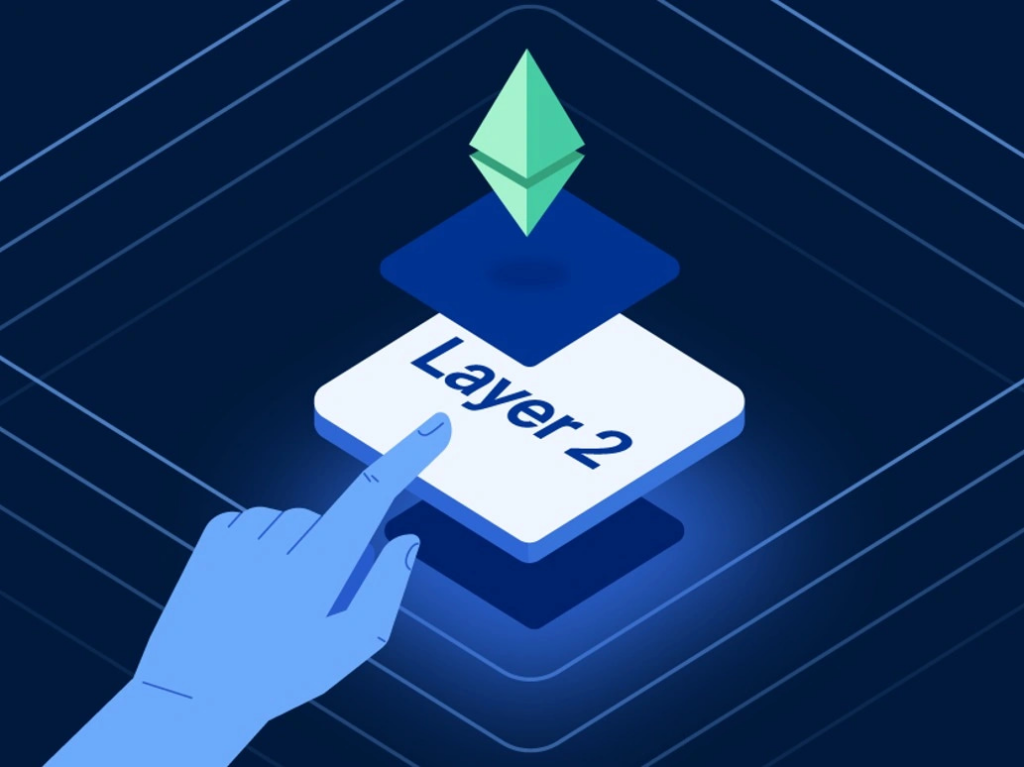
State channels, which permit off-chain interactions between parties, sidechains with their own consensus procedures, and rollups, such as Optimistic and zk-Rollups, which batch several transactions into a single proof, are common varieties.
L2s improve Ethereum’s usability for DeFi platforms and decentralized apps (dApps), but they also come with trade-offs, including the possibility of centralization problems due to dependency on off-chain infrastructure, bridge security, and validator or sequencer control.
Are Layer 2 Networks Centralizing Ethereum?

The scaling of Ethereum and making it cheaper to use may introduce other risks, especially those related to centralization. Layer 1 has Ethereum mainnet which uses a wide range of decentralized validators.
Layer 2 (L2) solutions, however, use off-chain transaction processors from a smaller number of decentralized sequencers and operators. For instance, Optimistic Rollups and certain sidechains have a few central entities who determine and authenticate transactions, which creates centralization.
This can cause censorship and delayed finality if these entities behave unpleasantly. Nevertheless, it is expected that L2 networks will implement some form of decentralization, e.g. distributed sequencers, and in the end, the security will lie on Ethereum’s L1.
Therefore, L2s may help with risk and usability, but users and developers should still demand a balance between decentralized design principles and most of all, abstracting the need for trust.
Benefits of Layer 2 Networks
Increased Scalability
Because Layer 2 Networks perform transactions outside of Ethereum’s mainnet, they Improve network congestion and increase throughput.
Reduced Transaction Costs
Because transactions are processed outside of Ethereum’s mainnet, L2 Networks dApps and users save on gas fees.
Rapid Confirmations
Confirmations occur at Layer 2 Networks much faster, thereby improving user experience for payments, DeFi, and NFTs.
Overall Improved User Experience
L2 Networks Integrations with dApps are simplified because users are not burdened with fees or wait times that are excessive.
Advancement of Ethereum Based Projects
The implementation of L2 Networks allows Ethereum’s mainnet to be used without over usage, which increases the number of users and projects as well as the innovation within the network.
Centralization Concerns with Layer 2s
Limited Validator or Sequencer Control
Multiple L2s depend on a few single sequencer or validator controls to determine how to process transactions in the network.
Transaction Censorship Risk
Centralized operators are able to slow, reorder, or completely censor transactions and go against the trustlessness principle of Ethereum.
Dependence on Off-Chain Infrastructure
Centralized entities may control the off-chain systems of L2s and the bridges tied to them.
Delayed Decentralization
L2s are presently centralized and users are subjected to short-term centralized risk control until a long-term plan is in place to decentralize the system.
Bridge Vulnerabilities
The bridges required for transferring assets to Ethereum Layer 2 networks are liable to centralized control and single point of failures.
Mitigation Mechanisms
Validators and Sequencers that are Decentralized
Decentralization of some of the L2 networks’ single points of control through the reduction of multi-party sequencer models and validator rotations.
Settlement on the Ethereum L1 Occurs at Intervals
Periodic settlement of all L2 transactions on the Ethereum mainnet, which keeps security and finality decentralized.
Bridges that are More Secure
The implementation of secure multi-signature trust-minimized bridges for L2 to L1 and L2 asset transfers.
Governance Models that are Open
L2s adopting community governance and/or token-based voting systems to control the governance of protocol modifications and operational decisions.
Roadmaps for Decentralization that are Progressive
L2 developers often centralize their control for their own efficiency, and then implement gradual decentralization through system updates and validator participation incentives.
Real-World Examples
Optimism
Centralization concerns were raised with Optimism’s first approach of using a single sequencer to order transactions. They have a roadmap for decentralized sequencers and distributing control to multiple operators over time.
Arbitrum
In terms of decentralization and efficiency, Arbitrum has a single sequencer model, but permits fraud proofs to Ethereum L1. This means that state updates can be challenged by anyone.
zkSync
With decentralization, zkSync plans to gradually increase this. Their design reduces the reliance on a single operator, and off-chain, batching transactions for zk-Rollups, and submitting cryptographic proofs to Ethereum L1.
Polygon (PoS & zkEVM)
Entailing some centralization through trade-offs, the sidechains of Polygon offer faster transactions with a certain set of validators. Their zkEVM implementation provides Ethereum-level security and is focused on scaling the throughput.
Expert Opinions and Debates
Vitalik Buterin (Ethereum Co-Founder)
Vitalik states that L2s are important to scaling Ethereum however, centralized sequencers or validators could pose short-term risks. He mentions decentralization and strong L1 settlement trustless.
L2 Developers
The teams of Optimism, Arbitrum and zkSync defend that centralization at inception is justifiable for efficiency, security, and usability. They mention commitments towards decentralized sequencers and rotation of validators.
Blockchain Researchers
Some scholars state that L2s have to sacrifice a level of decentralization for scalability but the final settlement on Ethereum L1 covers the most bad ends. They have also pointed out the risks of bridging and off-chain dependencies.
Community Debate
There is a large dialogue among Ethereum users and DeFi participants centred around desires of high/decreasing utility contrasted against outright decentralization. There are assertions that temporary centralization is disruptive to the anti Ethereum ethos.
Future Outlook
Finding a balance between scalability, efficiency, and Ethereum’s fundamental decentralized philosophy is the main goal for Layer 2 networks in the future. It is anticipated that L2 solutions would use community governance and token-incentivized participation to further decentralize sequencers and validator systems.
While preserving high transaction throughput, innovations like zk-Rollups and sophisticated fraud-proof procedures will further lessen dependency on centralized operators. By reducing the risks associated with off-chain dependencies, bridges and interoperability standards will enhance security.
L2 networks will be used by more dApps, DeFi platforms, and NFT initiatives, allowing Ethereum’s ecosystem to expand without overtaxing the mainnet. In the end, L2 networks’ capacity to scale Ethereum while maintaining trustlessness—which keeps decentralization at the core of the blockchain—will determine how successful they are.
Conclusion
In order to scale Ethereum, lower fees, and speed up transactions, Layer 2 networks are essential. Although they provide certain centralization issues, such as dependence on a small number of sequencers, validators, or bridges, Ethereum’s Layer 1 security, decentralization roadmaps, and developing governance mechanisms help to reduce these risks.
The majority of L2s begin with temporary centralization for efficiency but are progressively shifting toward more dispersed control, as seen by real-world examples such as Optimism, Arbitrum, and zkSync.
Essentially, Layer 2 alternatives improve Ethereum’s usability without seriously undermining its trustless nature—as long as developers and the community continue to place a high priority on decentralization as these networks expand. The future of Ethereum’s ecosystem will be shaped by the delicate trade-off between scalability and decentralization that L2 adoption represents.
FAQ
What is a Layer 2 network?
A Layer 2 network is a secondary framework built on top of Ethereum (Layer 1) to increase transaction throughput, reduce gas fees, and improve scalability while settling final results on the mainnet.
Why do Layer 2 networks raise centralization concerns?
Many L2s rely on a small set of sequencers or validators to process off-chain transactions, creating potential control points that could lead to censorship or delays.
How do L2 networks maintain Ethereum’s security?
Transactions on L2 are ultimately settled on Ethereum’s Layer 1, which provides decentralized finality and fraud-proof mechanisms, reducing critical centralization risks.
Are all Layer 2 networks centralized?
No. Some L2s, like zkSync and Polygon zkEVM, are designed with decentralization in mind and plan gradual distribution of sequencer and validator control.
What is the future of L2 decentralization?
L2 networks are evolving with decentralized sequencers, validator rotations, and community governance, aiming to scale Ethereum without compromising its trustless, decentralized nature.