


This article outlines the Best Bitcoin APIs for making developers’ lives easier when building innovative and secure scalable crypto applications.
With the power of development tools, real-time data, and compliance resources made available with these APIs, devs will be able to create substantial solutions that address the needs of the growing Bitcoin market. These APIs cover trading, analytics, and blockchain infrastructure.
What is Bitcoin APIs?
Bitcoin APIs allow developers to embed Bitcoin-based functionalities into applications without needing to create an entire blockchain infrastructure.
These APIs provide Bitcoin wallet management, payment processing, and transaction processing along with blockchain data, address creation, balance checking, and market data. APIs are primarily used to track transactions, automate crypto functions, and facilitate crypto business processes.
These APIs streamline the interaction with the Bitcoin network, all while reducing the time taken to develop applications and services that use Bitcoin, along with increasing the reliability, scalability, and functionality of the services.
Benefits Of Bitcoin APIs
Easy Bitcoin Involvement – Developers using Bitcoin APIs can build payment and wallet/blockchain features without the need for intricate blockchain constructions.
Shorter Timeframes – Less lines of code equates to a shorter development cycle. The faster the development cycle, the faster the business gets its crypto features.
Transaction Safety – APIs build in a level of transactional and data security that fortifies the Bitcoin transactional and user data.
Up-to-date Blockchain Access – Developers using APIs are privy to the most current transactional data, wallet data, block data, and network data.
Transaction Automation – Bitcoin transactional addresses generation and automated transaction verification are all facilitated by Bitcoin API use.
Simplified Wallets – The construction, monitoring, and management of Bitcoin wallets is simplified using APIs.
Flexible Design – APIs are built with an elastic design that is able to expand and contract.
Reduced Costs – The use of a dependable Bitcoin API sharply decreases the construction and upkeep costs of full Bitcoin nodes.
Worldwide Access – Using Bitcoin APIs expands the customer base to every possible customer.
Simplified System Integration – Using an API also simplifies integration with business systems since they usually offer comprehensive documentation and multiple language support.
Key Features Of Bitcoin APIs
Bitcoin Payment Processing – Use web/mobile online apps to safely process payment requests to and from BTC.
Wallet Management – Manage BTC Wallets. View balance and transaction details.
Real-Time Blockchain Data – Access current block data, transaction data, confirmations and network data.
Transaction Monitoring – Monitor BTC transaction details. Receive status confirmations.
Address Generation – Generate BTC wallet addresses for requests or users.
Balance Lookup – View BTC wallet balance.
Access a Blockchain Explorer – Access API endpoints to search block data, wallet addresses, transaction data, and network data.
Price and Market Data – Access current BTC prices and historical market data and trades.
Webhooks and Notifications – Get alerts for transactions that have been confirmed, initiated or completed.
SDK Support for Many Languages – SDKs and libraries are provided for many coding languages (Python, JavaScript, Java, PHP, Go) for simple integration.
High Security – Data and Transactions are secured with multiple layered API security methods.
Scalable Infrastructure – Designed to utilize rapid performance for high volume of BTC transactions for all users (startups/enterprises).
Multi-Network Support – Many APIs offer support for both the BTC mainnet and the testnet. (Production and development).
Developer-Friendly Documentation – API integration is simplified with sample code and detailed documentation.
Compliance and Monitoring Tools – Certain Bitcoin APIs provide transaction screening and risk monitoring features to assist businesses with compliance requirements.
Key Point & Best Bitcoin APIs
| API | Key Points |
|---|---|
| Coinbase API | Offers REST and WebSocket endpoints, strong security, fiat on/off ramps, and institutional-grade trading features. |
| Kraken API | Advanced trading, margin and futures support, robust documentation, and high liquidity for developers. |
| Binance API | Largest exchange API, supports spot, futures, margin, staking, and extensive developer tools. |
| OKX API | Multi-product API with spot, futures, options, DeFi integration, and strong scalability. |
| Bybit API | Derivatives-focused API, fast execution, advanced risk management, and institutional-grade reliability. |
| Messari API | Market intelligence API, deep crypto data, on-chain metrics, and research-grade analytics. |
| Nomics API | Transparent crypto market data, historical OHLCV, and developer-friendly endpoints. |
| BlockCypher API | Blockchain infrastructure API, supports Bitcoin and altcoins, transaction monitoring, and wallet services. |
| Gemini API | Secure trading API, regulated exchange, institutional custody, and compliance-focused endpoints. |
| Bitstamp API | Long-standing exchange API, reliable spot trading, fiat integration, and strong regulatory compliance. |
1. Coinbase API
One of the most well-known Bitcoin APIs is the Coinbase API. Developers can use it to access trading, wallets, and payment integrations. It uses REST and WebSocket endpoints, so it can be used in real time.
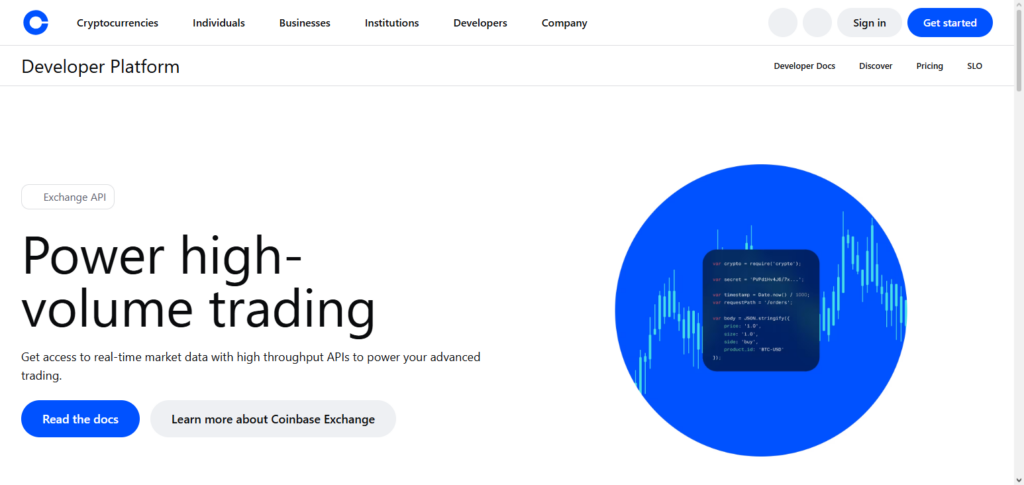
Coinbase also focuses on comprehensive authentication, custody, and on/off ramps for fiat and real-time data. For those developers who wish to have a more flexible infrastructure for interoperability of crypto applications in complex markets and trading, the Coinbase API is easily one of the Best Bitcoin APIs.
Coinbase API Features, Pros & Cons
Features:
- REST & WebSocket support
- Wallets
- Fiat on/off ramps
- Custody
- Authentication
Pros:
- Simple integration
- Good regulatory standing
- Smooth fiat support
- Good community support
- Data streams available
Cons:
- Basic trading support
- Relatively high fees
- Limited regions
- Rate limiting (free tier)
- Not ideal for derivatives
2. Kraken API
The Kraken API provides developers with advanced features to create and manage trading on spot, margin, and futures markets. Professional traders prefer Kraken because of great liquidity and a reasonable and transparent fee structure.
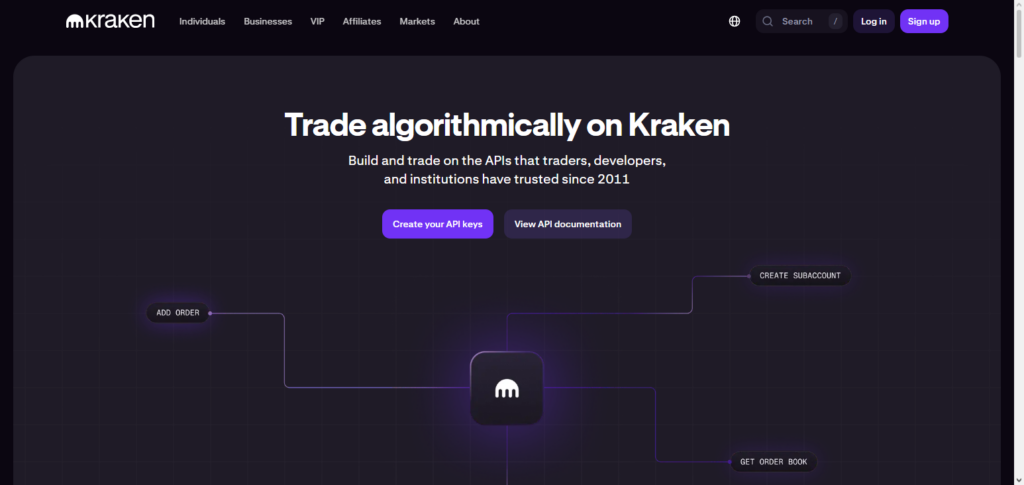
The Kraken API provides REST and WebSocket connections for fast and reliable data delivery. Kraken’s API is regarded as one of the Best Bitcoin APIs because of its institutional‑grade security and comprehensive documentation, but even more so for its support of complex trading strategies. Because of this, developers building sophisticated crypto platforms prefer using this API.
Kraken API Features, Pros & Cons
Features:
- Spot, margin, and futures trading
- REST & WebSocket support
- More order types
- Liquid markets
- Transparent fees
Pros:
- Thorough trading layer security
- Institutional grade trading
- Good documentation
- Many assets available
- Great fees
Cons:
- Advanced integration (not for beginners)
- Limited fiat onboarding
- Limited availability during high volatility
- UI is not user friendly
- Slower support
3. Binance API
The Binance API supports nearly all Bitcoin trading products and services, including spot, futures, and margin trades, staking, and NFTs. As such, it is the largest and most comprehensive Bitcoin API. Developers enjoy a broad range of endpoints, high throughput, and the liquidity of the entire world. The API’s WebSocket streams offer instant data, and the REST endpoints facilitate trading and account-related tasks.
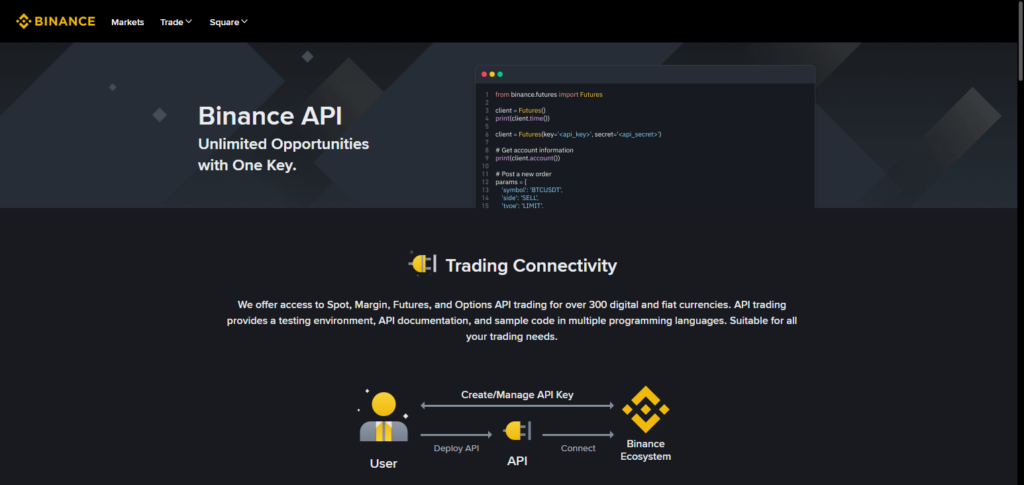
The Binance API is one of the most scalable Bitcoin APIs in the market. The API aids developers and extends its ecosystem. Combined, these features make the Binance API the best choice for developers building performance critical crypto applications for a range of products.
Binance API Features, Pros & Cons
Features:
- Spot, futures, and margin trading
- REST & WebSocket streams
- Staking, liquidity, and NFT products
- Robust API with global liquidity
Pros:
- Largest crypto exchange API
- Extensive offerings for developers
- Good support for real-time data
- Good ecosystem support
- Rapid growing infrastructures
Cons:
- Regulatory issues in some regions
- Complex API (for new developers)
- High learning curve
- Unstable API
- Limited clarity on listings
4. OKX API
The OKX API supports a diverse array of products such as spot, futures, options, and decentralized finance products. Part of what makes the OKX API stand out is its ability to scale. High frequency traders, don’t worry the OKX API has you covered. Traders can also take advantage of several advanced risk management techniques, for those extra cautious.
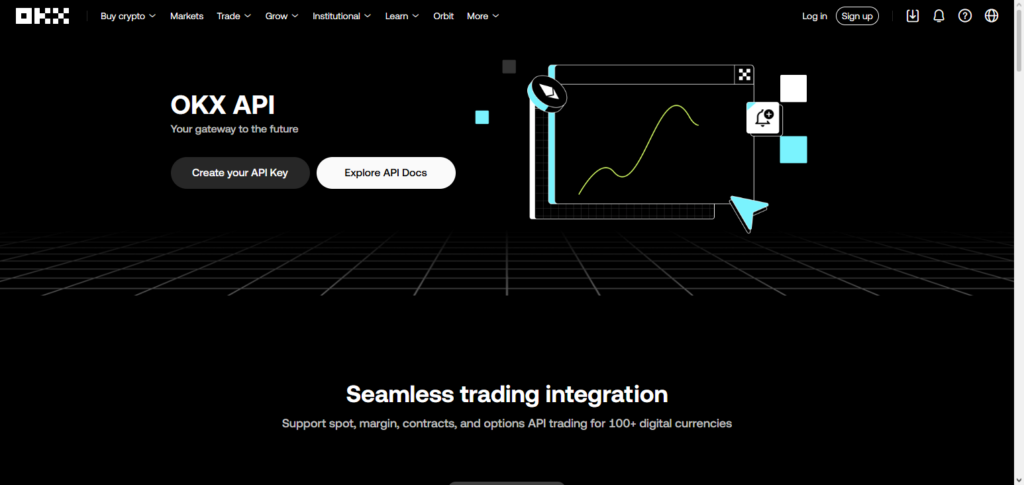
Developers can choose either REST or WebSocket endpoints to ensure a smooth data flow. Coming in halfway of what its capable of, the OKX API is no stranger to the awards, as it has won awards for the Best Bitcoin APIs for its creative products, robust developer documentation, and most significantly for its ability to merge decentralized finance and traditional finance. That is why the OKX API is a preferred API for crypto developers.
OKX API Features, Pros & Cons
Features:
- Spot, futures, and options trading
- REST & WebSocket support
- DeFi integrated
- Advanced risk management
- High-frequency trading support
Pros:
- Multi-product ecosystem
- Strong scalability
- Innovative DeFi Features
- Reliable Infrastructure
- Competitive Liquidity
Cons
- Less Beginner-Friendly
- Complex Documentation
- Limited Fiat Support
- Regional Restrictions
- Occasional Latency Issues
5. Bybit API
The Bybit API provides tools for fast execution and advanced risk management, specifically for derivatives trading. As such, this API is most effective for building trading bots and institutional trading platforms.

Developers can use Bybit’s REST and WebSocket endpoints to ensure low latency and reliability. Bybit’s API is among the Best Bitcoin APIs. It allows developers to build trading solutions in the derivatives market with strong infrastructure, good liquidity, and excellent documentation.
Bybit API Features, Pros & Cons
Features:
- Derivatives trading
- REST & WebSockets
- Perpetual contracts
- Risk tools
- Low latency
Pros:
- Fast execution
- Derivatives trading
- Very reliable
- Good documentation
- Good liquidity
Cons:
- Very limited spots
- High risk
- Limited by region
- Complex margin requirements
- Poor fiat integration
6. Messari API
The Messari API is another API for building Cryptocurrency related software. Messari takes a different approach from others. Rather than providing only market data, Messari provides project profiles and on-chain governance data.
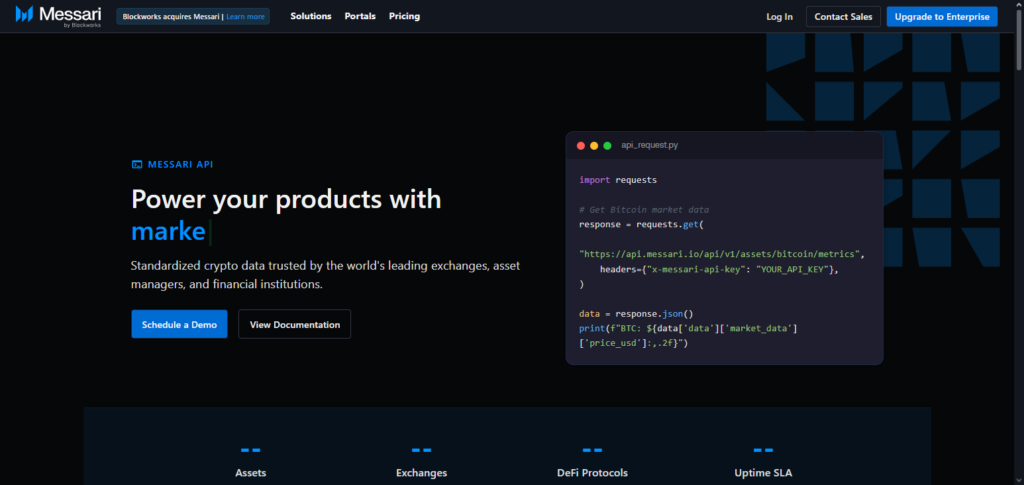
Additionally, Messari offers a plethora of research and analytics tools. Messari API is great for researching and building analytics. For these reasons, and many more, Messari API is said to be one of the best APIs for Bitcoin. Messari provides arguably the best intelligence and data analytics for Bitcoins and Developers.
Messari API Features, Pros & Cons
Features:
- Market data
- On‑chain data
- Analytics
- Governance
- Data sets
Pros:
- Deep data
- Good data
- Good for analysts
- Good for institutions
- Good data
Cons:
- Poor trading data
- Subscription
- Complicated data
- Not beginner friendly
- Analytics focus only
7. Nomics API
The Nomics API offers transparency in crypto market data, OHLCV, and aggregated exchange history with developer‑friendly endpoints. Nomics enables the building of price trackers, portfolio apps, and analytics dashboards.

Since response times are fast and documentation is clear, Nomics offers easy integration. Placed midway in its offerings, the Nomics API ranks among the Best Bitcoin APIs with the reliable transparent data developers need to confidently and constructively build crypto apps.
Nomics API Features, Pros & Cons
Features:
- Market data
- OHLCV data (Historical)
- Data from Exchanges
- REST API
- Developer focus
Pros:
- Good data
- Good data (pricing)
- Fast data
- Good data (historical)
- Good community
Cons:
- Limited trading
- Subscription required
- Not focused on institutions
- Limited ecosystem
- Poor fiat integration
8. BlockCypher API
BlockCypher API is a blockchain infrastructure API that supports Bitcoin and other alt-coins. It helps developers building blockchain applications via transaction monitoring, micropayment channels, and wallet services.
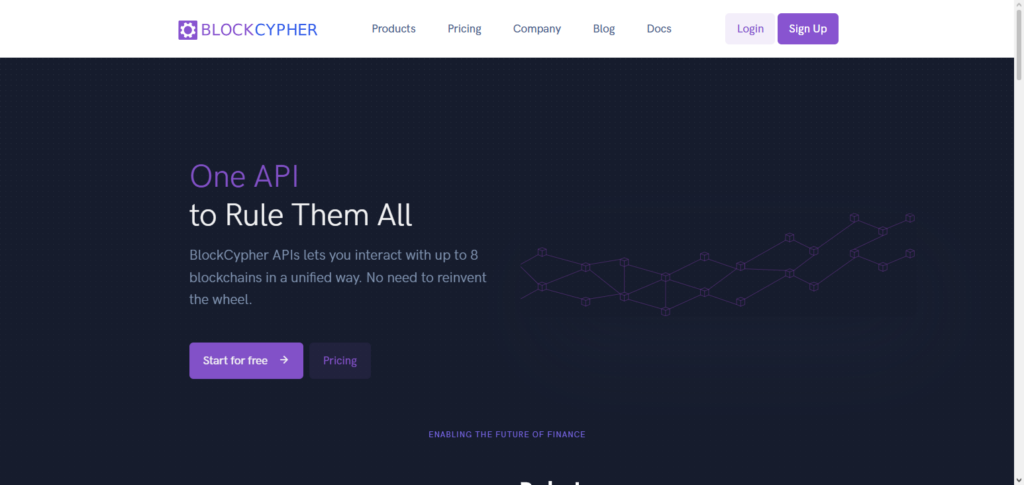
Its simple REST endpoints allow developers to integrate the fully functioning API quickly. Around the middle of its features, unarguably BlockCypher API is one of the Best Bitcoin APIs that allow developers to interact with blockchain networks, monitor transactions, and implement scalable crypto payment solutions.
BlockCypher API Features, Pros & Cons
Features:
- Bitcoin & altcoins
- Monitoring
- Wallets
- Micro payments
Pros:
- Support for multiple blockchains
- Easy wallet integration
- Reliable transaction monitoring
- Developer‑friendly REST API
- Scalable infrastructure
Cons:
- Limited trading features
- Focused on infrastructure only
- Subscription costs for scale
- Smaller ecosystem
- Less suited for analytics
9. Gemini API
The Gemini API trades on a regulated exchange. It has compliant trading and custody endpoints and secure trading. It supports REST and WebSockets. Developers can make applications for real-time market data and trading. Representatives from a robust institution back the API.
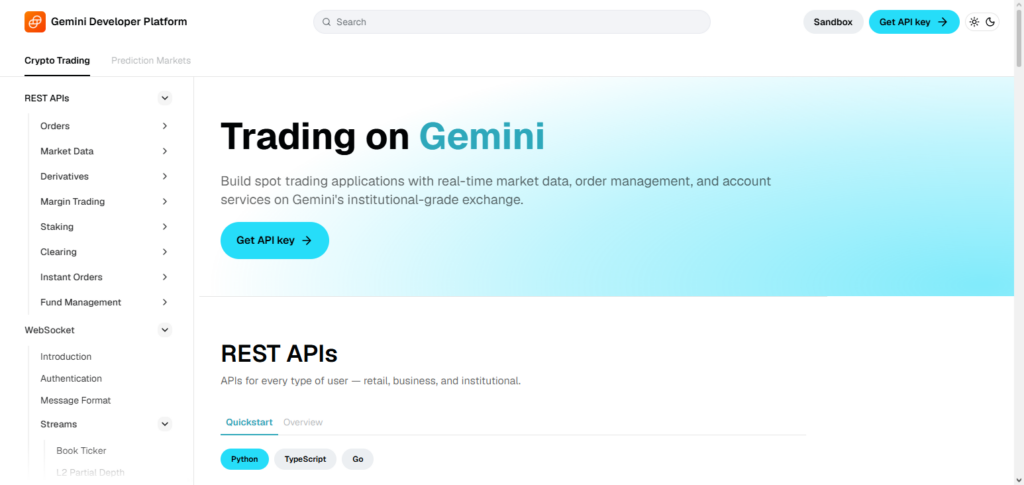
Gemini has a firm reputation and is trusted by many. Currently, the Gemini API is considered to be among the Best Bitcoin APIs. It has generated a lot of attention from developers as it is secure, compliant, and, unlike other APIs, gives developers the freedom to integrate crypto trading services into applications without compromise.
Gemini API Features, Pros & Cons
Features:
- Secure trading endpoints
- REST & WebSocket support
- Institutional custody
- Compliance‑focused design
- Real‑time market data
Pros:
- Strong regulatory compliance
- Secure infrastructure
- Institutional‑grade custody
- Reliable performance
- Transparent fee structure
Cons:
- Limited global reach
- Higher fees than peers
- Smaller asset selection
- Less liquidity than Binance
- Complex onboarding
10. Bitstamp API
Bitstamp API has been around for a long time and is considered reliable. Because it offers spot trading and fiat integration and is compliant with regulations, Bitstamp API is also a preferred option among developers. Because Bitstamp API offers stable endpoints and a reliable infrastructure, developers value this API. Also,
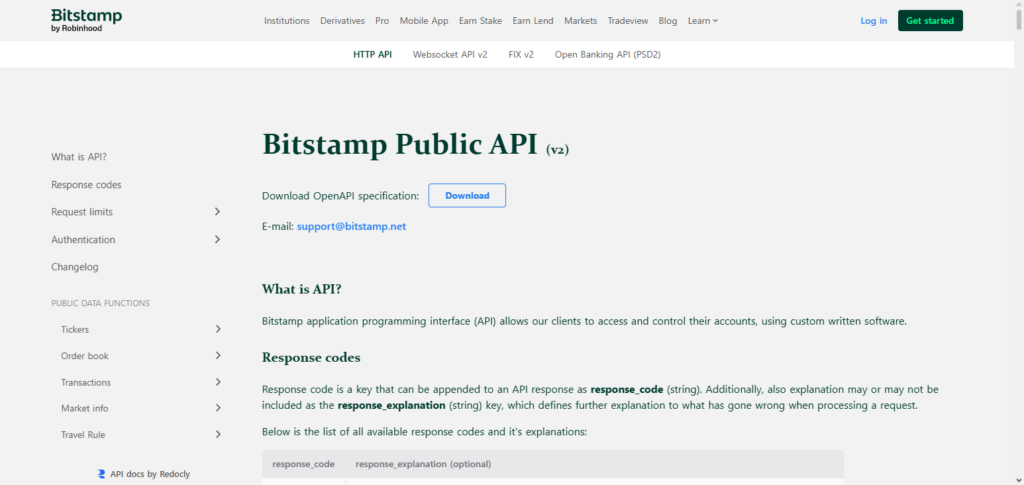
Bitstamp API supports REST and WebSocket connections, which ensures a smooth data flow. The Bitstamp API is recognized as a Best Bitcoin API, protecting developers by giving them a platform for building secure APIs compliant with regulations and providing other reliable services.
Bitstamp API Features, Pros & Cons
Features:
- Spot trading endpoints
- REST & WebSocket support
- Fiat integration
- Regulatory compliance
- Stable infrastructure
Pros:
- Long‑standing trusted exchange
- Strong regulatory oversight
- Reliable fiat support
- Stable API performance
- Transparent fee structure
Cons:
- Limited advanced trading tools
- Smaller liquidity pool
- Fewer supported assets
- Less innovation compared to peers
- Slower feature rollout
Conclusion
Determining the ideal Bitcoin API is contingent on the type of application or infrastructure you are developing – whether it is a trading application, an analytics dashboard, or apps that build on the blockchain infrastructure.
Coinbase API and Gemini API are excellent options when security and compliance are necessary. In contrast, Kraken API and Binance API excel when trading functionality and liquidity are paramount. When developing a solution that is focused on derivatives and on a multi-product framework,
you will likely go with Bybit API and OKX API. Messari API and Nomics API dominate the market when looking for a solid API for analytics and data. BlockCypher API provides infrastructure to build on blockchain, and Bitstamp API is an excellent option if you require a reliable API with fiat integration.
Overall, if you were to combine all these APIs, then you would have the best collection of APIs for developers in 2026, because of the balanced security, liquidity, analytics, and innovation that has been developed in the Bitcoin space.
FAQ
What is a Bitcoin API?
A Bitcoin API is a set of endpoints that allow developers to interact with Bitcoin networks, exchanges, and data providers. It enables trading, wallet management, analytics, and blockchain monitoring.
Which Bitcoin API is best for beginners?
The Coinbase API is often recommended for beginners due to its simple integration, strong documentation, and fiat support. It’s user‑friendly and ideal for basic crypto applications.
Which Bitcoin API offers advanced trading features?
The Kraken API and Binance API are considered the best for advanced trading. They support margin, futures, and complex order types with high liquidity and robust infrastructure.
Which Bitcoin API is best for analytics and research?
The Messari API and Nomics API are excellent for analytics. They provide transparent market data, on‑chain metrics, and research‑grade insights for dashboards and institutional tools.