


I’ll talk about whether self-custody is safe in light of recent cryptocurrency wallet hacks in this post.
Self-custody wallets provide users complete control over their money, but recent attacks have sparked worries about security as cryptocurrency adoption grows.
We’ll go over the dangers, the latest wallet hacks, and the best ways to keep your cryptocurrency safe while retaining full control.
Understanding Self-Custody
Self-custody is the practice of people managing and retaining their own cryptocurrency assets independently of exchanges or third-party custodians.
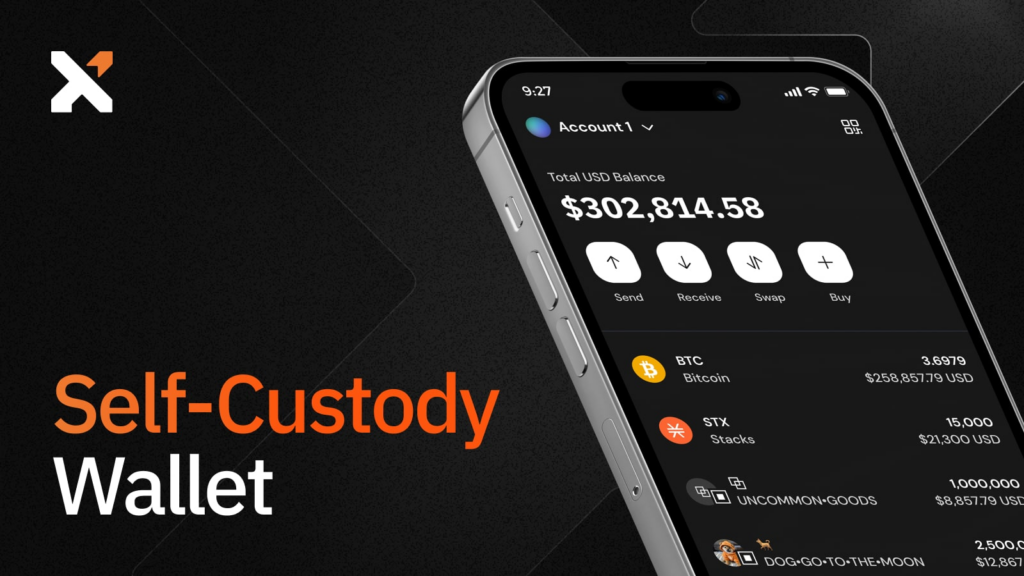
Self-custody offers users complete control over their money, improving security, privacy, and autonomy in contrast to custodial wallets, where a platform looks after users’ private keys. With hardware wallets, software wallets, or multi-signature configurations, this method gives users the ability to directly manage their assets.
Full responsibility, however, accompanies complete control; misplacing private keys or falling for phishing scams can lead to irreversible financial loss. A fundamental component of decentralized finance, self-custody emphasizes individual security and ownership.
Is Self-Custody Safe After Recent Crypto Wallet Hacks?
One of the safest methods to manage your cryptocurrency is still self-custody, but there are obligations involved. Self-custody is only as safe as the user’s procedures, as demonstrated by recent wallet hacks that revealed flaws like as phishing attempts, software errors, and compromised private keys.
Risks can be considerably decreased by taking the right precautions, such as employing hardware wallets, multi-signature setups, safe backups, and being alert for frauds.
Even if no system is impenetrable, self-custody nevertheless offers greater privacy and control than custodial options. In the end, users are safe as long as they implement strong security measures and continue to take proactive steps to safeguard their assets.
Best Practices to Protect Self-Custody Wallets
Use Hardware Wallets
Storing your private keys with Online wallets exposes you to hacking. Use offline wallets such as Ledger or Trezor.
Multi-Signature Wallets
Require multiple approvals to execute a transaction. This reduces the risk of a single point of failure.
Backups
If you ever need to recover your funds, you will need to have backups of your seed phrases stored in many locations.
Updates
Vulnerabilities in any wallet app or firmware are fixed with software updates. If updates are available, don’t ignore them.
Phishing
Do not click on links. If you are going to sign a transaction, check the URL first.
Password and 2FA
Use stronger passwords and two-factor authentication if wallet apps provide the options.
Send test transactions
Always send a small amount first and not your entire transfer. Verify your wallet.
Risks of Self-Custody
Private key loss
Losing your seed phrase means losing your money permanently.
Phishing
Scammers might trick people into giving away their keys or signing an undesired transaction.
Malware/Hacking
Ill-intentioned software may infect your device, and even if your wallet is safe, it can compromise your wallet.
Human error
Entering the wrong address, sending funds to the wrong network, or mismanaging your backups can result in losses.
Smart contracts
Self-custody exposes users to an even bigger risk of exploits when using DeFi protocols or smart contracts.
No recovery/recovery options
Self-custody wallets provide no insurance or recovery options if your funds are stolen, unlike custodial wallets.
What are the best ways to protect a self-custody wallet?
Use a Hardware Wallet – Attacks are prevented by keeping private keys offline on devices like Ledger or Trezor.
Enable Multi-Signature (Multi-Sig) Wallets – By requiring a number of different approvals for transactions, the risk of single-point-of-failure is mitigated.
Secure Backups of Seed Phrases – Digitally backing up seed phrases, and cloud storage is not recommended. Backups should only be stored offline in cloud and secure locations.
Regular Software and Firmware Updates – Updates should be done on wallets to improve and patch vulnerabilities.
Stay Vigilant Against Phishing & Malware – Clicking of suspicious links should be avoided. Requests for transactions should be double-checked. Malware should be scanned if phishing is suspected.
Test Small Transactions First – Small amounts should be sent to a new address or smart contract to confirm its safety.
Use Strong Passwords & Two-Factor Authentication (2FA) – Protection on self custody wallets should be increased wherever the option is given.
Comparing Self-Custody vs Custodial Wallets Post-Hacks
| Feature / Aspect | Self-Custody Wallets | Custodial Wallets |
|---|---|---|
| Control over Funds | Full control; user manages private keys | Platform controls funds; user relies on custodian |
| Security Responsibility | Entirely on the user | Platform handles security, updates, and backups |
| Risk of Hacks | Vulnerable to user errors, phishing, malware | Vulnerable if platform is hacked or mismanaged |
| Recovery Options | No insurance or recovery if keys are lost | Some platforms offer insurance or fund recovery |
| Privacy | High privacy; no KYC required | Low privacy; KYC and data sharing required |
| Convenience | Less convenient; requires technical knowledge | Highly convenient; easy onboarding and transactions |
| Resilience Post-Hacks | Safe if best practices followed; user responsibility | Depends on platform’s security measures and response |
Is self-custody worth the risk?
Self-custody may be worth the potential risks. It all comes down to how much you value control over your crypto, privacy, and the ability to manage your assets without reliance on a third party. Self-custody may also mean unrecoverable losses from losing keys, phishing attacks, and improper backups.
If you follow best practices, such as the use of hardware wallets, multisig, and backups, as well as in general remaining secure, self-custody can provide you a lot of control as well as a lot of security. Effectively, you are taking on some risk, but you are getting more control.
Future of Self-Custody Security
Self-custody is changing quickly in the future to address the threats brought to light by recent wallet attacks. The goal of emerging solutions like social recovery wallets and multi-party computation (MPC) is to minimize single points of failure while preserving user control.
With improved encryption and biometric identification, hardware wallets are evolving. Exploits in DeFi interactions are being prevented by regular smart contract audits and decentralized security protocols.
As consumers are more conscious of operational and phishing dangers, education also becomes increasingly important. For the upcoming generation of cryptocurrency users, self-custody is becoming more robust, secure, and useful despite the fact that no system is 100% infallible thanks to these advancements and proactive security measures.
Conclusion
To sum up, self-custody is still a strong and secure method of managing your bitcoin, but it calls for responsibility and hard work.
The significance of strong security procedures, like as hardware wallets, multi-signature configurations, safe backups, and vigilance against phishing, is underscored by recent wallet attacks.
Self-custody offers unparalleled control, privacy, and liberty, but it also exposes users to dangers that custodial wallets might absorb.
Users can greatly reduce risks by implementing best practices and keeping up with new security developments, which will make self-custody not only feasible but also more safe in the rapidly changing crypto scene. Individual accountability is essential.
FAQ
What is self-custody in crypto?
Self-custody means you hold and manage your own crypto private keys, giving you full control over your assets without relying on a third-party custodian.
Are self-custody wallets safe after recent hacks?
Yes, but only if best practices are followed. Using hardware wallets, multi-signature setups, secure backups, and avoiding phishing attacks greatly reduces risk.
How do self-custody wallets get hacked?
Common vulnerabilities include phishing, malware, lost or stolen private keys, and exploits in smart contracts or wallet software.
Should I switch to a custodial wallet?
Custodial wallets offer convenience and recovery options but sacrifice privacy and full control. Self-custody is safer for users committed to security best practices.
Can I recover funds if my self-custody wallet is hacked?
Generally no. Unlike custodial wallets, self-custody provides no insurance, so backups and multi-signature setups are crucial for recovery.