


This article details the best PayFi protocols for line-of-business liquidity, highlighting disruptive solutions to payment, cash flow and working capital management.
Leveraging blockchain, stablecoins, and DeFi to radically speed the settlement process while providing superior access to liquidity for treasury management, these protocols represent the best tools for business use cases across payment automation and cross-border payment facilitation.
Why Choose PayFi Protocols for Real-Time Corporate Liquidity
Rapid Settlements – Transaction times for many banking solutions can take hours or days. PayFi Protocols can facilitate almost instant transactions.
Real-Time Cash Flow – PayFi Protocols can help businesses optimize their cash flow through real-time access to working capital.
Corporate Liquidity – The PayFi Protocols can help businesses access the liquidity of digital assets, invoices, and receivables with minimal process delays.
Cost of Payment – Payment Protocols built on Blockchain technology decrease the payment versus traditional cross-border payment costs.
Around the Clock Availability – PayFi Protocols can help businesses maximize their liquidity outside of traditional banking hours.
Efficiency of Payment – Payment Protocols can help businesses transfer payment through a streamlined and direct process.
Treasury Management – Payment Protocols help eliminate the barriers of manual administration and facilitate the automation of payment and settlement management.
Financial Clarity – Due to the nature of Blockchain technology, the immutable record of transactions enhances financial clarity and auditability.
Decentralized Financing – PayFi Protocols facilitate decentralized markets for businesses to access liquidity to lend or borrow without relying on banking systems.
Scalable to Enterprise – PayFi Protocols are an agile solution that can be tailored to facilitate a high volume of transactions to support the scalability of an enterprise.
Stablecoin Stabilization – The use of Stablecoins helps facilitate efficient, low latency transactions with minimal volatility.
Optimized Capital – Access to PayFi Protocols helps businesses eliminate idle assets and maximize the returns on the treasury.
Counterparty Risk – Automated settlement and payments help mitigate the risk of non or late payments.
Global Accessibility – Payment services and liquidity are now accessible to organizations regardless of their location.
Future-Ready Financial Infrastructure – PayFi merges payments and DeFi, allowing businesses to innovate and create more with the next evolution of digital finance.
Key Point & Best PayFi Protocols for Real-Time Corporate Liquidity
| PayFi Protocol | Key Trading & Liquidity Feature | Best For | Why Businesses Choose It |
|---|---|---|---|
| PolyFlow | Tokenized invoice financing and on-chain payment settlement | SMEs and supply-chain finance | Converts receivables into instant working capital with faster settlements. |
| Credible Insights PayFi | Data-driven liquidity management and payment analytics | Enterprise treasury teams | Improves cash-flow visibility and liquidity forecasting in real time. |
| Circle PayFi | USDC-powered instant payments and cross-border settlements | Global businesses and fintechs | Provides stablecoin liquidity with near-instant settlement and low transaction costs. |
| Stellar PayFi | Fast, low-cost global payment infrastructure | International payroll and remittances | Enables efficient cross-border transactions with minimal fees. |
| Ripple RLUSD | Enterprise-grade stablecoin liquidity and payment rails | Corporations handling global transfers | Supports real-time settlement and improved treasury efficiency across markets. |
| MakerDAO PayFi | Decentralized liquidity through DAI-backed financing | Businesses seeking DeFi funding | Offers permissionless access to stable liquidity without traditional intermediaries. |
| Aave PayFi | On-demand borrowing and lending markets | Treasury managers and DeFi-native firms | Unlocks instant liquidity using digital assets as collateral. |
| Algorand PayFi | High-speed payments with low transaction costs | Large-scale payment networks | Delivers scalable and efficient payment processing for enterprises. |
| Ethereum PayFi | Smart-contract-powered financial automation | Enterprises building custom payment solutions | Supports programmable payments, settlements, and liquidity workflows. |
| Celo PayFi | Mobile-first payment infrastructure and stablecoin transfers | Emerging-market businesses | Enables accessible, low-cost payments and financial inclusion globally. |
1. PolyFlow
PolyFlow is a PayFi-centered protocol that connects legacy payment rails with DeFi systems. PolyFlow allows companies to tokenize their invoices, automate payment processing, and liberate working capital tied to accounts receivable without burdensome banking requirements.
PolyFlow uses blockchain rails to reduce settlement times and optimize cash flow. From our list of the Best PayFi Protocols for Real-Time Corporate Liquidity,
PolyFlow is a leading solution for making future receivables available as present working capital. Supply chain companies, exporters, and SMEs benefit from the constant liquidity for operational, payroll, and growth funding, while also improving the integrity of their financial records.
PolyFlow Features, Pros & Cons
Features
- Tokenization of invoices enables quick financing
- Instant payment settlement
- Automated payments via smart contracts
- Liquidity optimization in the supply chain
- On-chain transactions are clear and visible
Pros
- Better access to working capital
- Less delay in payment processing
- Greater financial transparency
- Particularly beneficial for SMEs and suppliers
- Simplifies automation
Cons
- Lacks widespread usage
- Blockchain knowledge might be needed
- Dependent on the growth of the ecosystem
- Some jurisdictions have unknown regulations
- Legacy systems will be difficult to integrate
2. Credible Insights PayFi
Credible Insights PayFi delivers sophisticated liquidity and payment solutions to streamline enterprise operations. This PayFi protocol integrates financial insights and real-time transaction surveillance with blockchain settlement to allow users to make better decisions on liquidity.
Companies can track payments and receivables on multiple payment methods instantly. Credible Insights PayFi is on the list of Best PayFi Protocols for Real-Time Corporate Liquidity because it enables treasury departments to better estimate cash-flow needs and limit liquidity exposure.
Its technology combines operational and transactional efficiency by improving payment timeliness, an essential capability for corporations that engage in frequent transactions across multiple markets and payment systems.
Credible Insights PayFi Features, Pros & Cons
Features
- Liquidity analytics in real-time
- Cash flow forecasting
- Payment tracking
- Treasury management
- Financial reports for enterprises
Pros
- Higher visibility of liquidity
- Enhanced financial forecasting
- Better cash flow management
- Large enterprises can benefit
- Lower cash flow uncertainty
Cons
- High cash flow risk might need complex features
- New users may need to learn
- Dependent on the quality of the data
- Minimal DeFi capabilities
- System integration will be needed
3. Circle PayFi
Circle PayFi utilizes the USDC stablecoin for seamless, instant payments, cross-border settlements, and corporate treasury offerings. Circle PayFi is one of the Best PayFi Protocols for Real-Time Corporate Liquidity because it allows businesses to make instant value transfers without the delays of traditional banking.
Circle PayFi provides businesses programmable money, the ability to automate payment workflows, and the ability to maintain liquid assets in a stable digital format. Circle PayFi focuses on compliance and has a high adoption rate of USDC, which makes the service popular with businesses that operate in multiple countries, including corporate, fintech, and payment businesses.
Circle PayFi Features, Pros & Cons
Features
- Payment rails using USDC
- Payments across borders
- Settlements via Stablecoin
- Treasury management
- Payments that can be programmed
Pros
- Quick payments around the world
- Great liquidity for Stablecoins
- Lower settlement costs
- Business oriented
- High cross-market adoption
Cons
- Depends on the USDC ecosystem
- USDC for payments will have to comply with regulations
- Stablecoin abandon will be detrimental
- Minimal yield opportunities
- Blockchain may still require gas fees
4. Stellar PayFi
Stellar PayFi is one of the Best PayFi Protocols for Real-Time Corporate Liquidity because it has a highly efficient method to perform low-cost near instantaneous financial transactions (especially cross-border payments) using the Stellar blockchain. Stellar PayFi is very useful for businesses that have high volume payroll or remittance payments.
Stellar PayFi connects traditional banking infrastructure and blockchain settlement systems. Stellar PayFi also has low operational costs which helps businesses that have a high volume of payments.
PayFi Protocols help businesses improve liquidity, lower transactional costs and shorten the duration to access funds. Stellar PayFi’s global payment system helps businesses improve the efficiency of their financial operations across multiple countries and currencies.
Stellar PayFi Features, Pros & Cons
Features
- Global payments at a low cost
- Quick confirmation
- Support for multiple currencies
- Cross-border payments between banks
- Integration with banks and financial institutions
Pros
- Low cost transactions
- Fast settlement times
- Payment networks can grow easily
- Great for sending money internationally
- Less energy spent on the network
Cons
- Less powerful DeFi network
- Fewer tools for businesses
- Less developers than on Ethereum
- Harder to get people to use
- Less liquidity based products
5. Ripple RLUSD
Ripple RLUSD integrates Ripple’s enterprise payment solution with a stablecoin liquidity tool tailored for institutional clientele. The product is designed to ease cross-border payment challenges by providing access to stable liquidity while reducing exposure to volatility.
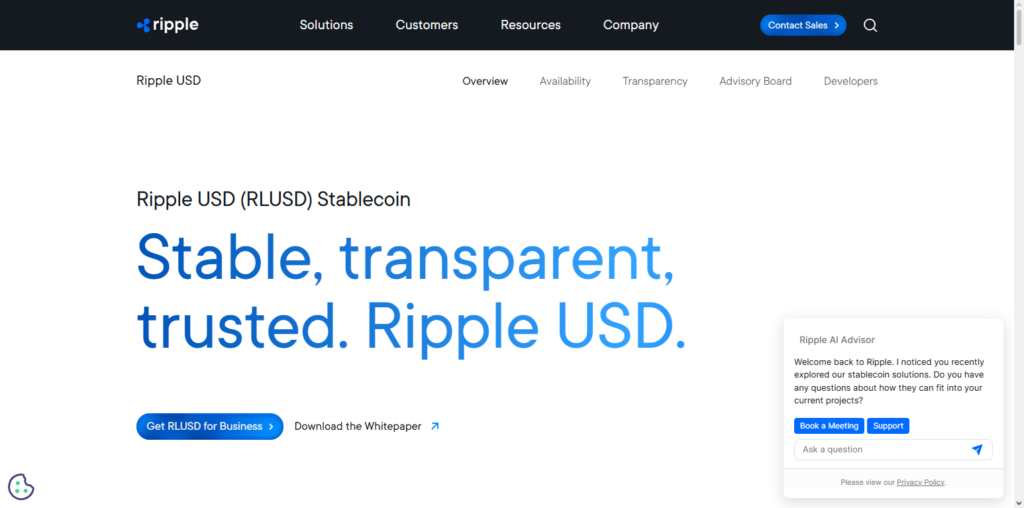
Ripple’s payment product is used to transfer funds between markets and financial institutions. Ripple RLUSD is one of the Best PayFi Protocols for Real-Time Corporate Liquidity because it processes payments in real time and optimizes treasury and payment operations.
International businesses experience the efficiency of reduced costs and improved transparency of cross-border payments. Ripple RLUSD is the preferred product for businesses with a need for effective liquidity management.
Ripple RLUSD Features, Pros & Cons
Features
- Stablecoin based liquidity
- Business payment systems
- Global money transfer system
- Strong systems for institutions
- Instant transactions
Pros
- Fast transactions around the world
- Good for businesses
- Lower costs for sending money
- Savings can be managed better
- Liquidity is always there
Cons
- Worry about regulations
- Have to use Ripple system
- Less connection to DeFi
- People need to use it more
- Competing with stablecoins
6. MakerDAO PayFi
MakerDAO PayFi provides businesses with access to on-demand liquidity in the DAI stablecoin ecosystem, utilizing a decentralized approach. Businesses can now collateralize tokenized assets to obtain stable liquidity, eliminating the need to rely on lending institutions.
This self-custody financing solution increases transparency and decreases the liquidity friction gap. MakerDAO PayFi ranks among the Best PayFi Protocols for Real-Time Corporate Liquidity because it provides liquidity to businesses by liberating digital assets.
MakerDAO PayFi is an innovative solution within the open financial system business infrastructure and is especially useful for blockchain businesses and those matrices of treasury operations that are decentralized.
MakerDAO PayFi Features, Pros & Cons
Features
- Use DAI stablecoin
- Borrowing without central authority
- Liquidity with collateral
- Governance through voting
- No permission needed
Pros
- No need for bank
- Easy access to liquidity
- Operations clear to all
- Accessible to everyone
- High reputation in DeFi
Cons
- Need to over-collateralize
- Smart contracts can fail
- Peg can lose value
- Complex system for new users
- DeFi has instability
7. Aave PayFi
Aave PayFi integrates seamlessly with decentralized lending and borrowing for corporate liquidity management. Aave liquidity pools give businesses the ability to access funds by locking digital assets as collateral and simultaneously earning yield on idle capital.
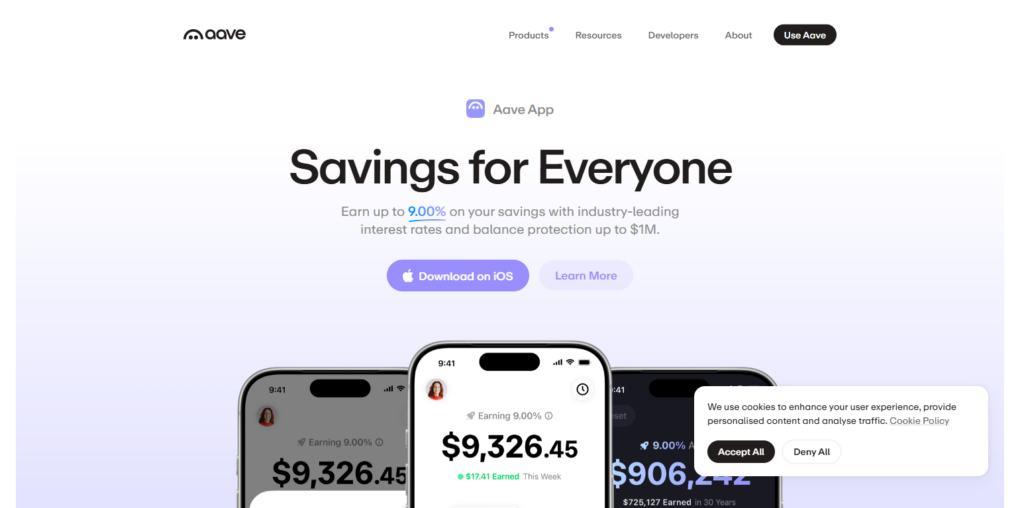
This provides the ability to adjust liquidity to best suit operational needs. Among the Best PayFi Protocols for Real-Time Corporate Liquidity, Aave PayFi is lauded for its flexibility, automated lending, and optimal capital efficiency.
Organizations can easily manage their treasuries with on-demand liquidity and minimal financing op-verhead, and easily respond to rapidly changing business needs with pay-as-you-go financing.
Aave PayFi Features, Pros & Cons
Features
- High-speed blockchain transactions
- Low-cost payment processing
- Instant transaction finality
- Enterprise-grade scalability
- Tokenized asset support
Pros
- Fast settlement speeds
- Very low transaction fees
- Energy-efficient network
- Strong scalability
- Reliable performance
Cons
- Smaller ecosystem than Ethereum
- Limited DeFi opportunities
- Lower market visibility
- Fewer enterprise integrations
- Adoption still growing
8. Algorand PayFi
Algorand PayFi uses the Algorand blockchain’s fast and affordable infrastructure for payment and liquidity solutions for business enterprises. Algorand PayFi makes doing business easy by facilitating the fast, secure, and scalable processing of transactions.

Rapid finality allows for payments that settle almost instantaneously, thus removing cash-flow cycle delays. As one of the Best PayFi Protocols for Real-Time Corporate Liquidity, Algorand PayFi helps digital asset tokenization, payment processing, and automation of finance and payment functions for businesses of all sizes.
Algorand is an excellent choice for businesses looking to optimize their payment systems because it predictable fees for transactions, improved cash liquidity and the agility of their business operations.
Algorand PayFi Features, Pros & Cons
Features
- High-speed blockchain transactions
- Low-cost payment processing
- Instant transaction finality
- Enterprise-grade scalability
- Tokenized asset support
Pros
- Fast settlement speeds
- Very low transaction fees
- Energy-efficient network
- Strong scalability
- Reliable performance
Cons
- Smaller ecosystem than Ethereum
- Limited DeFi opportunities
- Lower market visibility
- Fewer enterprise integrations
- Adoption still growing
9. Ethereum PayFi
Ethereum PayFi uses the largest smart contract ecosystem to deliver enterprise programmable payments and liquidity solutions. With Ethereum, enterprises have the capability to automate business processes such as invoicing and settlements, as well as payroll and treasury activities, using decentralized applications.
With its vast developer community and wide market adoption, Ethereum is the most flexible platform for financial innovation. As one of the Best PayFi Protocols for Real-Time Corporate Liquidity, Ethereum PayFi is flexible and offers multiple integration options to decentralized finance. Through Ethereum PayFi, enterprises have access to financial automation and liquidity solutions.
Ethereum PayFi Features, Pros & Cons
Features
- Smart contract automation
- Large DeFi ecosystem
- Tokenized asset management
- Programmable financial services
- Extensive developer support
Pros
- Largest blockchain ecosystem
- Strong liquidity availability
- Extensive integrations
- Continuous innovation
- High institutional interest
Cons
- Higher transaction fees
- Network congestion periods
- Complex implementation
- Smart contract risks
- Scalability challenges on mainnet
10. Celo PayFi
Celo PayFi wants to make larger financial services and digital payments accessible via a mobile-focussed technology. Celo’s focus on design and affordability allows enterprises to disburse payments and manage liquidity and transactions across both developed and developing markets.
Celo offers payment services as a low volatility payment solution. Celo PayFi is one of the Best PayFi Protocols for Real-Time Corporate Liquidity and offers enterprises liquidity and payment solutions that streamline financial services and integrate near real-time payment services. Of particular use is its mobile-focussed design in regions with limited formal banking.
Celo PayFi Features, Pros & Cons
- Mobile-first payment platform
- Stablecoin payment support
- Low-cost transfers
- Financial inclusion focus
- Cross-border payment capabilities
Pros
- User-friendly experience
- Fast and affordable transactions
- Strong mobile accessibility
- Ideal for emerging markets
- Supports financial inclusion
Cons
- Smaller ecosystem size
- Limited enterprise adoption
- Lower liquidity than major networks
- Fewer DeFi applications
- Market competition from larger blockchains
Conclusion
The burgeoning demand from businesses for swifter settlements, advanced cash-flow optimization, and seamless access to working capital represents the beginning of a new era in corporate finance, bolstered by PayFi protocols. Among the top PayFi protocols for corporate liquidity in real time,
such as PolyFlow, Circle PayFi, Stellar PayFi, Ripple RLUSD, and MakerDAO PayFi, are various networked solutions that creatively combine the use of blockchain and the latest payment technology.
Instantaneous cross-border transactions, decentralized lending, and programmable treasury management are all ways that these solutions can help businesses manage their liquidity with minimal operational friction. The growing popularity of PayFi protocols means that these protocols are the most likely to drive innovation in the corporate finance space in real time.
FAQ
What is a PayFi protocol?
A PayFi (Payment Finance) protocol combines payment infrastructure with decentralized finance technologies to enable faster settlements, improved liquidity management, and more efficient financial operations for businesses and institutions.
Why are PayFi protocols important for corporate liquidity?
PayFi protocols help companies access and move capital in real time, reducing settlement delays and improving cash-flow management. This allows businesses to optimize working capital and respond quickly to operational needs.
Which PayFi protocol is best for cross-border payments?
Circle PayFi, Stellar PayFi, and Ripple RLUSD are among the strongest options for cross-border payments because they offer fast transaction speeds, lower fees, and near-instant global settlements.
Can businesses use PayFi protocols to access financing?
Yes. Platforms such as MakerDAO PayFi, Aave PayFi, and PolyFlow allow businesses to unlock liquidity through decentralized lending, collateralized borrowing, or invoice-based financing solutions.