


This article covers the Best Embedded Finance APIs for Stock & Crypto Triggers beginning to disrupt the fintech industry and related Web3 applications.
These APIs provide embedded automated trading and/or crypto buy and sell and/or investment trigger capabilities to third-party applications without the need for elaborate backend support.
Ranging from Stripe Treasury, Circle API, Alpaca, Binance, to Fireblocks, this lot of APIs and Fintech solutions will help you build scalable, secure, and real-time financial products.
What is Embedded Finance APIs?
Embedded Finance APIs let developers add financial services like payments, banking, lending, and crypto services to other applications without constructing the financial services infrastructure.
With these APIs, non-financial companies, such as fintech applications, eCommerce applications, and Web3-related applications, can build financial services and provide the users with the ability to automatically invest, buy crypto, or pay in real time at any moment.
Embedded Finance APIs link users with regulated financial institutions so that banking and other financial services can be embedded into digital products and scaled while optimizing the user experience and minimizing operational cost and complexity.
Why Use Embedded Finance APIs for Stock & Crypto Triggers
Easy Fintech Apps – Developers can easily embed stock trading and crypto purchasing with the payment and wallet API. Developers don’t have to create the entire payment infrastructure.
Automated Transactions – Users can set automated buy/sell actions when certain conditions (balance, price, event, etc.) are met.
Time Efficiency – APIs allow instantaneous trades and transactions, enabling automation and even faster execution.
Supports All Assets – Many APIs allow integration of all assets, including some traditional stock APIs that allow support for crypto.
Better UX – Users can trade in the same app (fintech, e-commerce, Web3, etc.) without having to switch focus.
Global Scalability – Companies can globally scale the financial aspect of their business without the need to hire brokers, set up exchanges, or develop payment systems.
Risk Averse APIs – The best APIs have a built-in payment infrastructure with KYC, AML, and encryption and compliance automation.
Financial Innovations – APIs allow integration of Mesh Networks to create automation for trades and enrich the financial aspect of your business or automate wealth management.
Key Point & Best Embedded Finance APIs for Stock & Crypto Triggers
| API Platform | Key Points |
|---|---|
| Stripe Treasury + Crypto APIs | Combines banking, payments, and crypto functionality in one ecosystem; supports embedded financial services; scalable infrastructure; strong compliance tools; ideal for fintech app integration. |
| Circle Trigger API (USDC) | Enables automated USDC payment and transfer triggers; supports programmable stablecoin transactions; fast settlement; blockchain-native infrastructure; enterprise-grade security. |
| Fireblocks Trigger API | Automates digital asset workflows and trading actions; institutional-grade custody; supports multiple blockchains; advanced security controls; ideal for crypto enterprises. |
| Alpaca Trading API | Commission-free stock and crypto trading API; supports automated trading triggers; real-time market data; developer-friendly documentation; suitable for investing apps. |
| Robinhood Embedded API | Integrates stock and crypto investing into third-party applications; streamlined onboarding; user-friendly experience; supports fractional investing; designed for consumer-facing platforms. |
| Binance API Pro | High-performance crypto trading API; supports advanced order types; real-time market feeds; global liquidity access; suitable for algorithmic trading applications. |
| Coinbase Commerce API | Enables crypto payment acceptance and transaction triggers; supports multiple cryptocurrencies; easy merchant integration; secure payment processing; global accessibility. |
| Tradier Brokerage API | Brokerage-as-a-service platform for stock trading; supports options and equities; automated trade execution; real-time market access; flexible developer tools. |
| Fidelity Embedded API | Enterprise-grade investment infrastructure; integrates brokerage and wealth management features; strong regulatory compliance; trusted financial brand; suitable for institutional applications. |
| Marqeta Trigger API | Supports programmable card issuance and payment triggers; real-time transaction controls; flexible embedded finance capabilities; modern API architecture; ideal for fintech products. |
1. Stripe Treasury + Crypto APIs
Stripe Treasury + Crypto APIs offer developers an effective way to embed banking, payments, and crypto capabilities into their apps. It allows businesses to build custom financial products across a unified ecosystem to manage accounts, move funds, process payments, and trade crypto.
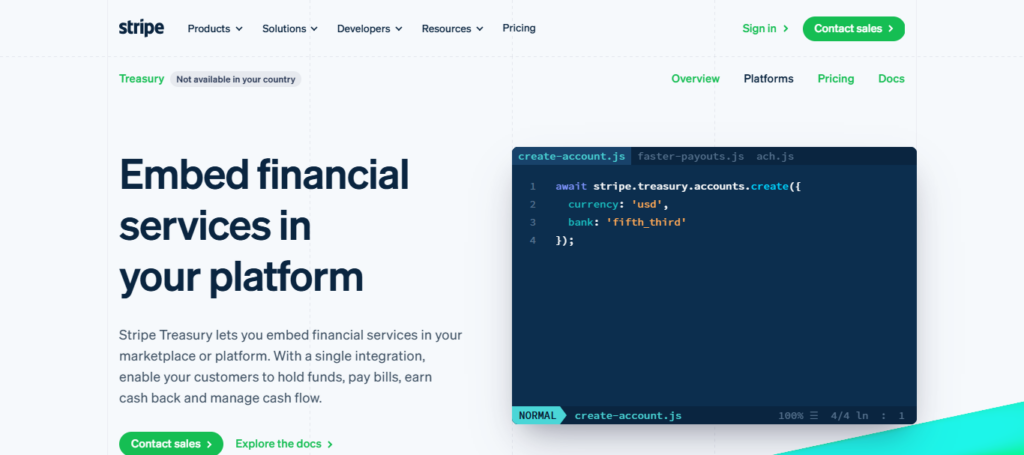
One of the Best Embedded Finance APIs for Stock & Crypto Triggers, Stripe provides a way for businesses to implement automated investment actions for their users based on custom event, transaction, and portfolio criteria.
Coupled with a strong regulatory compliance and fraud prevention framework, and the ability to process payments globally, Stripe’s Treasury + Crypto APIs’ modular design makes them the perfect solution for fintech, trading, and other financial services companies looking to embed both traditional and crypto services globally.
Stripe Treasury + Crypto APIs Features, Pros & Cons
| Features (5 Points) | Pros (5 Points) | Cons (5 Points) |
|---|---|---|
| Banking-as-a-Service infrastructure | Highly scalable global system | Complex onboarding process |
| Crypto + fiat wallet integration | Strong regulatory compliance | Higher enterprise cost |
| Payments + treasury management tools | Easy fintech integration | Limited direct trading features |
| API-based financial automation | Secure and fraud-protected system | Not fully crypto-native |
| Real-time fund movement & settlement | Trusted global brand ecosystem | Developer dependency on Stripe stack |
2. Circle Trigger API (USDC)
Circle Trigger API allows businesses to seamlessly automate financial workflows based on USDC stablecoin transactions. Using the API, developers can design actions that respond to automated triggers based on specific payment, wallet, or blockchain events.
One of the Best Embedded Finance APIs for Stock & Crypto Triggers, Circle enables applications to fund, settle, invest, and automate corporate treasury activities using programmable money. Automated, real-time transaction monitoring, blockchain settlement, and audit trails are key features of the API.
USDC’s stable value provides businesses with the confidence to transact and manage digital assets on the global scale via blockchain while significantly reducing the exposure to the volatility of other digital currencies.
Circle Trigger API (USDC) Features, Pros & Cons
| Features (5 Points) | Pros (5 Points) | Cons (5 Points) |
|---|---|---|
| USDC stablecoin payment automation | Fast transaction settlement | Limited to USDC ecosystem |
| Blockchain-based trigger execution | Low volatility due to stablecoin | Dependent on blockchain networks |
| Programmable wallet interactions | High transparency & traceability | No traditional stock support |
| API for treasury automation | Strong enterprise reliability | Limited financial product variety |
| Cross-border crypto payments | Reduced transfer costs | Regulatory restrictions in some regions |
3. Fireblocks Trigger API
Digitals assets offer financial innovation to a new degree. It can do even more when integrated. Secure systems are needed to bring digital assets closer to businesses. Fireblocks offers this service with their Trigger API.
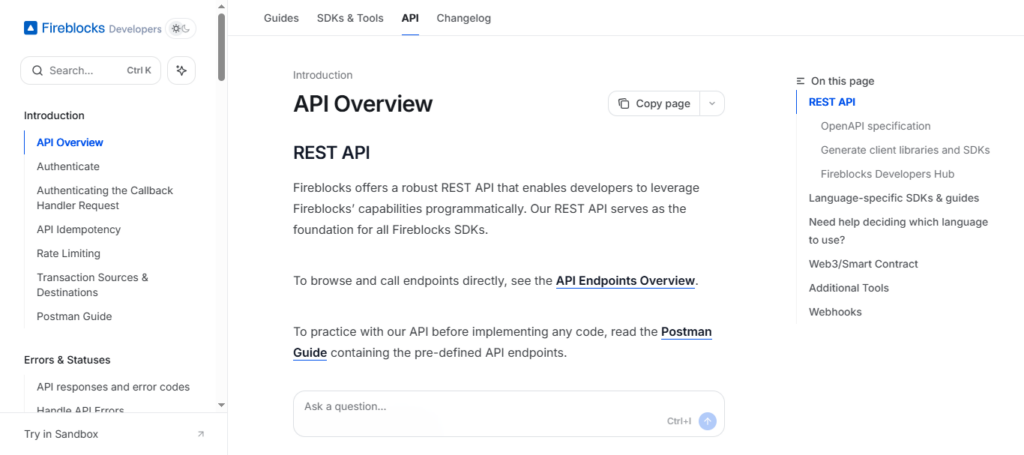
It lets businesses set digital assets to execute actions when certain conditions are met. Fireblocks is heavily concerned with the security of the system using their proprietary risk management systems and multi-party computation (MPC) governance controls.
This means businesses can set transactions to occur without the need of constantly monitoring the digital assets or worrying that the system will be hacked. Fireblocks is designed to be used on a large scale and is actively used by banks and exchanges.
Fireblocks Trigger API Features, Pros & Cons
| Features (5 Points) | Pros (5 Points) | Cons (5 Points) |
|---|---|---|
| Institutional crypto custody system | Extremely high security (MPC tech) | High cost for small businesses |
| Automated digital asset workflows | Enterprise-grade compliance tools | Complex integration setup |
| Multi-chain support | Strong risk management controls | Crypto-focused only |
| Trading & transfer automation triggers | Scalable for large institutions | Requires technical expertise |
| API-based treasury management | Trusted by banks & hedge funds | Not beginner-friendly |
4. Alpaca Trading API
Alpaca is another trading API that allows users to automate the buying and selling of both stocks and cryptocurrencies. Their system is border-free and offers commission-free trading.

Alpaca also offers the ability to integrate real-time data to manage portfolios. Alpaca is focused on making the users experience better and more efficient.
They allow their users to design a system where tasks can be triggered based on predetermined conditions. The simplicity of their API documentation and the smooth integration process is a large reason that finance companies are readily using this API.
Alpaca Trading API Features, Pros & Cons
| Features (5 Points) | Pros (5 Points) | Cons (5 Points) |
|---|---|---|
| Commission-free stock trading API | Easy developer integration | Limited global market access |
| Crypto + equities support | Real-time market execution | Mostly US-focused brokerage |
| Automated trading triggers | Strong for algorithmic trading | Fewer advanced wealth tools |
| Real-time market data access | Beginner-friendly documentation | Limited institutional features |
| Portfolio management tools | Good for fintech startups | Dependency on Alpaca brokerage system |
5. Robinhood Embedded API
Robinhood Embedded API offers third-party apps a way to integrate stock and crypto investing directly to their apps. This option allows companies to provide a trading solution to customers without going through the lengthy and laborious steps of building the brokerage infrastructure themselves.
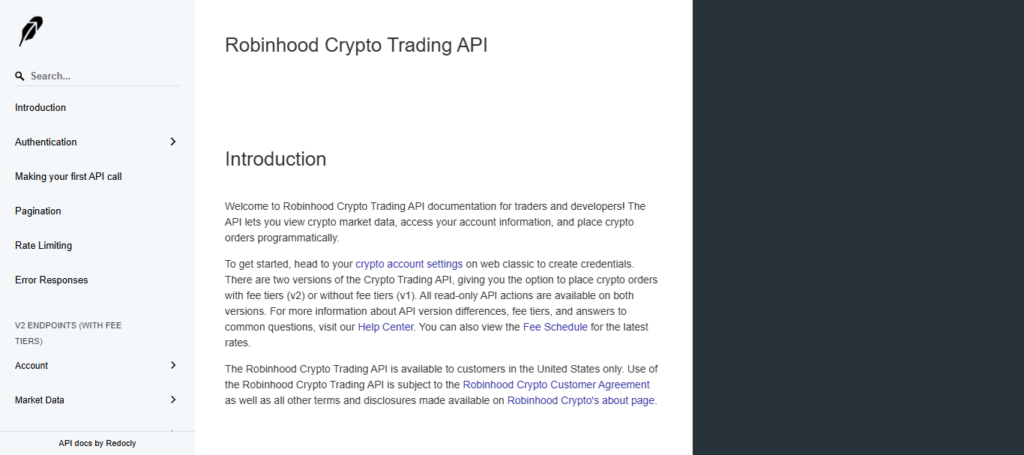
Robinhood is ranked as one of the Best Embedded Finance APIs for Stock & Crypto Triggers for its support of users’ automated investments, management of accounts and the onboarding process.
Developers can build apps to initiate investment purchases and automated actions based on financial events or user actions. The focus on user experience and accessibility makes the Robinhood API a great tool for consumer focused fintech apps that want to integrate investing functionality.
Robinhood Embedded API Features, Pros & Cons
| Features (5 Points) | Pros (5 Points) | Cons (5 Points) |
|---|---|---|
| Embedded stock & crypto investing | Simple and user-friendly UX | Limited customization options |
| Fractional share investing support | Strong consumer adoption | Restricted enterprise flexibility |
| Automated investment triggers | Fast onboarding experience | Regulatory limitations |
| Account creation & management APIs | Good mobile-first design | Limited developer openness |
| Integrated trading infrastructure | Beginner-focused investing tools | Less control for advanced traders |
6. Binance API Pro
Binance API Pro offers one of the most sophisticated high-speed trading APIs to access one of the largest cryptocurrency exchanges. The API is designed to support many advanced trading features and strategies, including automated trading, portfolio management, and real-time analytics.

Binance API Pro is listed among the Best Embedded Finance APIs for Stock & Crypto Triggers for its ability to allow apps to dynamically control crypto purchases, sales and portfolio management.
Developers gain access to deep levels of liquidity, advanced order types, and almost every crypto on the market. This API and trading infrastructure is particularly beneficial for embedded finance crypto trading apps, corporate clients, algorithmic trading systems, and institutions.
Binance API Pro Features, Pros & Cons
| Features (5 Points) | Pros (5 Points) | Cons (5 Points) |
|---|---|---|
| Advanced crypto trading engine | Massive global liquidity | Regulatory issues in some countries |
| Real-time order execution system | Very low trading fees | Complex for beginners |
| Multiple order types support | High-speed execution | High volatility exposure |
| Market data streaming APIs | Strong algorithmic trading support | Compliance varies by region |
| Portfolio & risk tools | Wide crypto asset selection | Limited fiat integration |
7. Coinbase Commerce API
Coinbase Commerce API allows businesses the ability to facilitate the acceptance of cryptocurrency for payment and manage digital assets on the application layer. With the ability to support and process multiple cryptocurrencies, the Coinbase Commerce API provides a secure cryptocurrency payment processor that is also embedded with finance systems.
Listed as one of the Best Embedded Finance APIs for Stock & Crypto Triggers, Coinbase Commerce gives developers the ability to create payment event, account funding, and transaction based triggers that would execute relevant investment actions. This API provides businesses the ability to utilize blockchain technology and provide customers an intuitive payment solution.
With secure, flexible, and easy integration of cryptocurrency transaction, Coinbase Commerce API is a great solution for digital marketplace and platforms looking to embed cryptocurrency payment and investment features.
Coinbase Commerce API Features, Pros & Cons
| Features (5 Points) | Pros (5 Points) | Cons (5 Points) |
|---|---|---|
| Crypto payment acceptance system | Trusted global brand | Limited to crypto payments only |
| Multi-currency support | Easy merchant integration | Transaction fees apply |
| Payment automation triggers | High security standards | No stock trading support |
| E-commerce checkout integration | Global accessibility | Limited advanced financial tools |
| Wallet-based payment processing | Simple API structure | Crypto market volatility risk |
8. Tradier Brokerage API
Tradier Brokerage API provides the ability to embed trading for stocks, ETFs, and options directly into the applications of Fintech companies and beyond. With a flexible API layer, Tradier Brokerage provides all the necessary elements that combine to form a complete trading system.
Known as one of the Best Embedded Finance APIs for Stock & Crypto Triggers, Tradier Brokerage API allows the fulfillment of automated investment workflows based on user defined conditions, market events, and financial milestones.
Tradier Brokerage API is a game changing brokerage API for Fintech Startups, Robo-Advisors and Wealth Management because of its easy implementation automated trading and market access.
Tradier Brokerage API Features, Pros & Cons
| Features (5 Points) | Pros (5 Points) | Cons (5 Points) |
|---|---|---|
| Brokerage-as-a-Service platform | Strong options trading support | US market dependency |
| Stock & options trading APIs | Flexible API structure | Limited crypto integration |
| Real-time market data feeds | Good for fintech platforms | Requires brokerage compliance setup |
| Automated trading execution | Reliable execution system | Complex regulatory requirements |
| Portfolio tracking tools | Developer-friendly ecosystem | Less global scalability |
9. Fidelity Embedded API
Fidelity Embedded API connects users to secure APIs for investment and wealth management services tailored to institutions. Fidelity’s Embedded API combines features for Automated Investment Management and facilitates the design of customer engagement and portfolio management workflows.
As one of the Best Embedded Finance APIs for Stock & Crypto Triggers, Fidelity’s API ecosystem allows enterprises to design complex and tailored investment experiences in a secure environment. Fidelity’s API ecosystem focuses on regulatory standards and the protection of investors and promises a significant level of operational reliability.
Fidelity Embedded API Features, Pros & Cons
| Features (5 Points) | Pros (5 Points) | Cons (5 Points) |
|---|---|---|
| Institutional investment APIs | Extremely trusted financial brand | Limited public access for developers |
| Wealth management integration | Strong compliance framework | Slow onboarding process |
| Brokerage & portfolio tools | High security & reliability | Less flexible for startups |
| Retirement & investment services | Long-term stability | Higher operational complexity |
| Enterprise financial infrastructure | Strong investor protection | Not crypto-focused |
10. Marqeta Trigger API
Marqeta Trigger API provides a solid basis for real-time finance embedding thanks to programmable payments and card issuing APIs. Marqeta’s API allows the design of automated financial workflows that trigger the execution of business rules, payment transactions, funding, investment, and related activities.

Marqeta ranks among the Best Embedded Finance APIs for Stock & Crypto Triggers due to its unique blend of transactional controls, an API framework that balances automation and elasticity, and a modern and robust infrastructure. Additionally, Marqeta’s API design allows the embedding of financial services on a variety of digital banking, fintech, and finance-focused application platforms.
Marqeta Trigger API Features, Pros & Cons
| Features (5 Points) | Pros (5 Points) | Cons (5 Points) |
|---|---|---|
| Programmable card issuing system | Highly customizable payment rules | Not designed for stock trading |
| Real-time transaction triggers | Strong fintech ecosystem adoption | Requires partner integrations |
| Payment automation workflows | Flexible API architecture | Complex setup for beginners |
| Spending control mechanisms | Real-time financial controls | Limited investment features |
| Digital wallet integration support | Scalable infrastructure | Dependency on card networks |
Comparison Table
| API | Focus Area | Key Strength | Best Use Case | Limitation |
|---|---|---|---|---|
| Stripe Treasury + Crypto APIs | Banking + Crypto + Payments | Full fintech infrastructure + compliance | All-in-one fintech platforms | Complex setup & cost |
| Circle Trigger API (USDC) | Stablecoin automation | Fast USDC settlement | Cross-border crypto payments | USDC-only ecosystem |
| Fireblocks Trigger API | Crypto custody + security | Institutional-grade MPC security | Large crypto enterprises | Expensive & complex |
| Alpaca Trading API | Stocks + Crypto trading | Easy API + real-time trading | Trading apps & robo-advisors | US-focused market |
| Robinhood Embedded API | Retail investing | Simple UX + fractional investing | Consumer fintech apps | Limited customization |
| Binance API Pro | Crypto trading | Deep liquidity + low fees | Algorithmic crypto trading | Regulatory restrictions |
| Coinbase Commerce API | Crypto payments | Easy merchant integration | E-commerce crypto payments | No stock trading |
| Tradier Brokerage API | Stocks + options trading | Strong brokerage API | Trading + options platforms | Limited crypto support |
| Fidelity Embedded API | Institutional investing | High trust + compliance | Enterprise wealth platforms | Limited developer access |
| Marqeta Trigger API | Payment automation | Card issuing + real-time triggers | Fintech payment systems | Not a trading API |
Conclusion
The advancement of the Best Embedded Finance APIs for Stock & Crypto Triggers will redefine modern fintech application design. The APIs support automation for investing, payment, and digital asset workflows.
Services such as Stripe Treasury, Circle, Fireblocks, and Marqeta offer programmable money infrastructure, coupled with trigger-based finance workflows, while Alpaca, Tradier, and Robinhood Embedded API APIs focus democratization initiatives for stock and crypto trading.
For crypto liquidity and payment APIs, Binance API Pro, Coinbase Commerce, and Fidelity Embedded API offer enterprise-level trust and compliance. These APIs provide developers with the resources to cultivate comprehensive finance systems, where real-time reactions will trigger the purchase of both stock and crypto.
The integration of these APIs will serve as the backbone infrastructure for the design and development of the latest embedded finance digital innovations.
FAQ
What are Embedded Finance APIs for stock and crypto triggers?
Embedded Finance APIs allow developers to integrate financial services like stock trading, crypto purchases, payments, and wallets directly into third-party applications. These APIs enable automated triggers that execute buy/sell actions based on predefined conditions such as price changes, user activity, or market events.
Which are the best Embedded Finance APIs for stock and crypto triggers?
Some of the best APIs include Stripe Treasury + Crypto APIs, Circle Trigger API (USDC), Fireblocks Trigger API, Alpaca Trading API, Robinhood Embedded API, Binance API Pro, Coinbase Commerce API, Tradier Brokerage API, Fidelity Embedded API, and Marqeta Trigger API.
How do trigger-based investment APIs work?
Trigger-based APIs work by setting predefined rules (e.g., “buy Bitcoin if price drops 5%” or “invest in stocks when balance exceeds $500”). When the condition is met, the API automatically executes the transaction in real time without manual intervention.
Are these APIs safe for financial transactions?
Yes, most top providers like Fireblocks, Stripe, and Fidelity use enterprise-grade security, including encryption, compliance frameworks, multi-signature authorization, and fraud detection systems to ensure safe financial operations.
Can I use these APIs for both stocks and crypto in one platform?
Yes, some platforms like Stripe Treasury, Alpaca, and Fireblocks support multi-asset integration, allowing developers to manage both traditional stock trading and cryptocurrency transactions within a single ecosystem.