

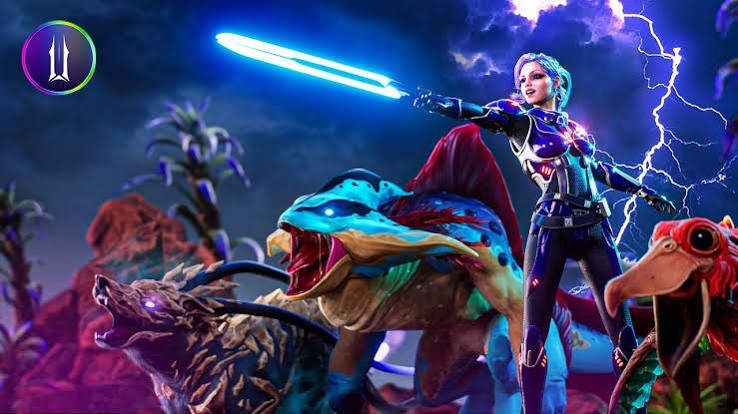
In this article, I am going to discuss the Best Crypto Games With Player-Governed Worlds and Community Economies in 2026. With these blockchain games, players can vote on game decisions, own digital resources, participate in DAO governance, and contribute to virtual economies. We will explore their governance models, native tokens, community ownership, blockchain infrastructure, and unique gameplay experiences.
What’s the Point of Playing Crypto Games With Player-Governed Worlds and Community Economies?
Community Governance: Players can participate in governance proposals and voting systems, helping to determine important game decisions, development priorities, ecosystem policies, and future improvements.
**Ownership of Digital Assets: ** Blockchain technology enables players to own supported digital resources such as virtual land, characters, collectibles, equipment, and other in-game items.
Player-Driven Economies These games promote trading, crafting, resource production, and marketplace activity, enabling communities to directly participate in virtual economic growth.
Decentralized Governance DAO systems offer opportunities for eligible token holders to engage in ecosystem management, treasury decisions, and community development initiatives.
Community-Creation Content: Players can create their own experiences, virtual worlds, game mods and creative content, helping to expand the gaming universe beyond developer provided content.
Transparent Transactions: Supported transactions and asset ownership are all on the blockchain infrastructure, enabling players to verify transfers, marketplace activities, and some economic interactions. 7.
Multiple Participation Opportunities: Players can participate as gamers, traders, creators, virtual landowners, resource managers, and community members in interconnected gaming ecosystems.
Long-Term Community Development: Player involvement, collaborative economic endeavors, and community suggestions can aid in the ongoing growth of ecosystems and give players a more active role in shaping gaming experiences.
Key Points
| Game | Governance Model | Player Governance Features |
|---|---|---|
| Decentraland | DAO Governance | MANA, LAND, and NAME holders can vote on proposals affecting the virtual world. |
| The Sandbox | Sandbox DAO | SAND holders and LAND owners can submit and vote on ecosystem proposals. |
| Axie Infinity | Axie Governance Portal | AXS stakers vote on ecosystem proposals, treasury decisions, and governance matters. |
| Star Atlas | Star Atlas DAO | POLIS holders participate in governance affecting the metaverse economy and policies. |
| Realms: Eternum | Bibliotheca DAO Ecosystem | Community-driven on-chain world with alliances, territorial control, and economic governance |
| Influence | Decentralized Player Economy | Players build civilization, operate markets, and shape the asteroid-belt economy. |
| Illuvium | ILV Governance | ILV token holders participate in governance through the Illuvium ecosystem. |
| Pirate Nation | Player Ownership Model | Built around player ownership, decentralization, and fully on-chain game infrastructure. |
| Dark Forest | Decentralized On-Chain Strategy World | Players collectively shape the evolving universe through fully decentralized gameplay. [ |
| Sky Strife | Fully On-Chain RTS Economy | Open-source on-chain RTS where matches, economics, and rewards are executed on-chain. |
1. Decentraland
Decentraland is a blockchain-based virtual world. Players can own digital land, create experiences, organize events and participate in community-driven development. Governance Model: The DAO enables eligible MANA, LAND and NAME holders to propose and vote on platform decisions, community grants and ecosystem policies.
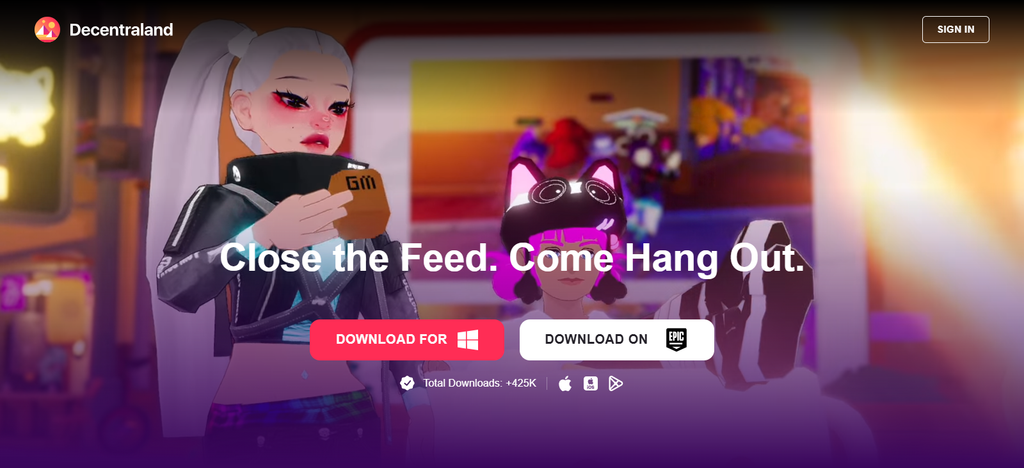
Community Ownership: Players own land, wearables, names, and other digital possessions through blockchain-based ownership. Native Token: MANA is the main utility and exchange token, with additional governance voting power from LAND and NAME assets.
Blockchain Infrastructure: Decentraland’s virtual economy is underpinned by Ethereum smart contract technology, wallet-based identity and distributed Catalyst infrastructure.
Best For
- Players that want governance and community voting on the DAO.
- Users who want to own virtual LAND, and digital resources
- Creators who build interactive 3D virtual experiences.
- Communities that host online events and social gatherings.
- Digital artists showing galleries and wearable collectibles.
- Users exploring the ownership of decentralized virtual worlds.
- MANA holders who want to be involved in the governance of the ecosystem.
- Community and venue builders and entrepreneurs in virtual spaces.
II. The Sandbox
The Sandbox is a community-driven metaverse where players build virtual experiences, create digital worlds, trade assets and establish creator-led businesses. Governance Model: The Sandbox DAO’s governance system allows qualified SAND and LAND holders to participate in proposals, discussions, voting and delegation.
Community Ownership: Players own virtual LAND, avatars, equipment and user-generated assets, which allows them to create and monetize experiences. Native Token: SAND is the ERC-20 utility token of the ecosystem, used to pay for transactions, stake and participate in governance.
Blockchain infrastructure The ecosystem has been built on Ethereum and Polygon, enabling digital ownership, marketplace transactions and smoother player and creator interactions.
Best For
- Creators creating voxel-based gaming experiences.
- Players who want to explore user-generated virtual worlds.
- Developers building interactive blockchain powered games.
- Creators / sellers of voxel assets (digital artists).
- Entrepreneurs building virtual businesses and branded experiences
- LAND owners creating community-driven environments.
- SAND holders interested in participation in the ecosystem.
- Players explore creator-driven economies and digital marketplaces.
3. Axie Infinity
Axie Infinity is a blockchain gaming ecosystem focused on collectible creatures called Axies, competitive battles, breeding and player-driven digital asset trading. Governance Model: * The voting portal considers staked AXS and Axie Score to calculate voting power, and AXS holders can participate in ecosystem governance.
Community proposals are about game improvements, elections, and treasury decisions. Community Ownership: Players own Axie NFTs and other supported digital resources, which can be used in the ecosystem economy.
Native Token: AXS is used for governance and staking while SLP is used for breeding and gameplay related economic activities. Blockchain Infrastructure: Axie is primarily run on Ronin, its own gaming-centric blockchain ecosystem.
Best For
- For players who want to collect creatures and fight competitively.- Gamers who like to breed and grow digital creatures.
- Collectors interested in blockchain-powered gaming NFTs.
- AXS holders who participate in ecosystem governance.
- Players can explore player-run NFT marketplaces.
- Communities with an interest in the competitive gaming eco-systems.
- Fans of strategy who like team-building mechanics.
- Users who are exploring blockchain gaming on Ronin.
4. Star Atlas
Star Atlas is a space-faring blockchain gaming metaverse where players can explore territories, build fleets, gather resources, form organizations, and engage in an emergent player-driven economy. Governance model Its Star Atlas DAO enables participants to shape the ecosystem, vote POLIS, discuss proposals and govern the treasury.
Players stake POLIS to acquire POLIS Voting Power (PVP). The voting power is proportional to the amount staked and the duration of the commitment. Community Ownership: Players can own ships, structures, resources and other blockchain-based game assets.
Native Token: POLIS supports governance, ATLAS is the main in-game economic currency. Blockchain Infrastructure: Star Atlas is on Solana.
Best For
- Gamers who love space travel and science fiction themes.
- Fleet and interstellar resource managers. Strategy gamers.
- DAO governance participation for POLIS token holders.
- Players explore factional community organizations.
- Collectors of digital materials focusing on ships and space equipment.
- Traders working in player driven resource economies.- Gamers who enjoy expanding territory and forming strategic alliances.
- Gamers looking for a sophisticated gaming ecosystem on Solana.
5. Eternum Domains
Realms: Eternum is an on-chain strategy game where players build settlements, expand territories, manage resources, build armies and fight for control of valuable locations. **Governance Structure: ** The wider Realms ecosystem is coordinated by the Bibliotheca DAO, with participation and community governance from Realms driving ecosystem development.
Community Ownership Players own in-game assets and steer the economy by building settlements, producing resources, making diplomacy and trading choices. Native Token LORDS is the native token for the broader Realms economy, including ecosystem engagement and in-game rewards.
Blockchain Infrastructure: Eternum is built on Starknet, an Ethereum Layer 2 network, and every gameplay action and economic transaction is recorded on-chain. It has a player-driven economy, so resource management and strategic cooperation are important.
Best For
- Strategy gamers looking to expand their territory.
- Settling and resource production by gamers.
- People who like diplomacy and forging strategic alliances.
- Community members who are interested in governing the Realms ecosystem.
- Players who want to trade in resource based economies.- Players interested in full on chain strategy mechanics.
- Competitive gamers controlling army and territory.
- Starknet fans experimenting with blockchain-native gaming.
6. Influence
Influence is a sandbox space strategy MMO set in the asteroid belt of the fictional Adalia system. Players build settlements, mine resources, manufacture goods and develop trade networks. Governance Model: This model of influence is built around a gradual ownership of the community and the governance structure is designed to evolve beyond the initial developer control, through community engagement.
Community Ownership: Player Owned Game Assets (POGAs) are important game assets, and asteroid owners have the ability to control access and marketplace activity.
Native Token SWAY is the primary currency of the game, used for market transactions, fees and trading of resources. Blockchain Infrastructure: Influence runs on Starknet, tapping into Ethereum infrastructure for its on-chain economy and player-owned assets.
Best For
- Gamers who are interested in economic space simulations.
- Players manage asteroid settlements and resources.
- Entrepreneurs building player-driven trade businesses.
- Players experimenting with manufacturing and resource generation.
- Blockchain based property owners looking for digital property.
- Strategy nerds who run supply chains and logistics.
- Traders operating in resource-based economies.
- Players who care about persistent on-chain virtual economies.
7. Illuvium
Illuvium is a blockchain gaming ecosystem that includes creature collection, exploration, competitive battles, and multiple interconnected gaming experiences: Overworld, Arena, Zero, and Beyond. Governance Model: Illuvium is a DAO, and ILV holders participate in the governance via the Illuvinati Main Council.
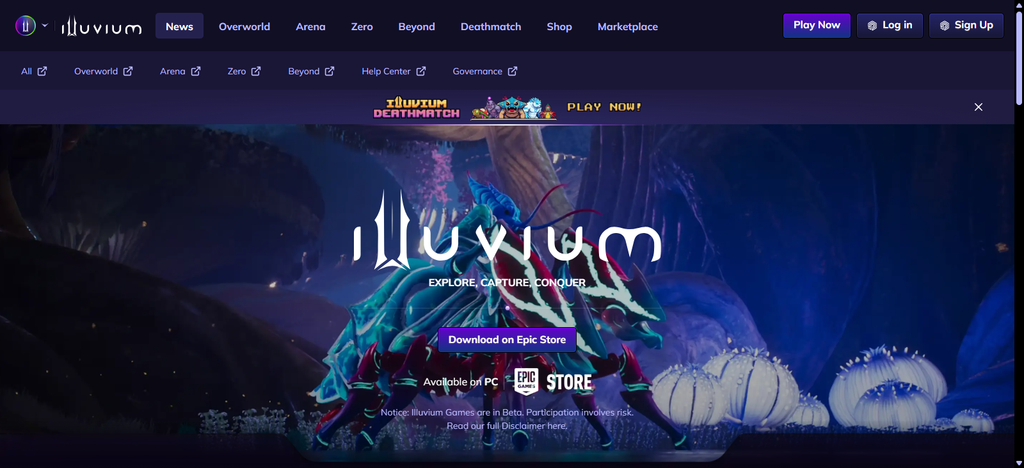
Elected representatives review proposals, discuss ecosystem changes, and direct development decisions. Community Ownership: Players can collect, trade and manage Illuvials and other supported digital game assets.
Native Token ILV provides governance and staking utility and other game-related assets and currencies are used in the ecosystem. Blockchain Infrastructure: ILV is an ERC-20 token on the Ethereum blockchain. Illuvium’s gaming ecosystem runs on Immutable’s blockchain infrastructure.
Best For
- Players who like to collect and explore creatures.
- RPG fans who want strategic progression systems.
- Competitive auto-battler experience players.
- Collectors who are interested in Illuvial digital objects.
- Governance of DAO by ILV holder
- Players engaging in inter-connected blockchain gaming experiences.
- Strategy fans creating competitive creature teams.
- Gamers with an interest in Ethereum-based gaming ecosystems.
8. Pirates Nation
Pirate Nation is a fully on-chain pirate adventure game where players can collect pirates, go on expeditions, gather resources, craft items and progress within the game. Model of Governance:** It is a community-oriented model that revolves around player ownership and ecosystem participation, but $PIRATE is not a formal DAO governance token.
Community Ownership: Players own the supported digital items. Pirates, ships, resources and equipment are represented by blockchain-based assets.
Native Token: PIRATE has utility within the ecosystem, and Pirate Gold (PGLD) is used for in-game economic activities. Infrastructure for blockchain: The game runs on Ethereum and Proof of Play’s Apex blockchain and additional multichain infrastructure.
Best For
- Gamers who enjoy pirate-themed adventure games.
- Players who like expeditions and gathering resources.
- Players creating ships and pirate characters.
- Players looking for gaming assets on the blockchain.
- Players delving into crafting and resource economies.
- Gaming events were held in communities and players were present.
- Gamers looking to get into fully on-chain game mechanics.
- Web3 fans exploring the Proof of Play infrastructure.
9. Dark Forest
Dark Forest is a fully on-chain multiplayer strategy game where players explore an uncharted universe, discover planets, build up territories and battle other civilizations. Modelo de gobierno Instead of a traditional DAO voting structure, Dark Forest is focused on permissionless participation and experimentation in community. It does not have a native governance token listed.
Community Ownership: Planets are created by players, who control strategic points and test community-made plugins and alternative game interfaces. Native Token The game has no native governance token; network currencies are used for blockchain transactions.
Blockchain Infrastructure: The original playable versions were built on Ethereum-compatible xDAI infrastructure (now called the Gnosis Chain) and used zkSNARK technology to allow for privacy-preserving gameplay.
Best For
- Players who want all-on-chain strategy games.
- Gamers who enjoy exploration and expansion of their territory.
- Strategy fans battle using hidden-information mechanics.
- Developers are testing the technology for blockchain gaming.
- Developers who want to build zero-knowledge proof applications.
- Communities creating custom game modifications.
- Gamers navigating permissionless multiplayer worlds.- Web3 developers interested in open source gaming experiments.
10. Sky Strife
Sky Strife is a fully on-chain real time strategy game where players battle each other in multiplayer combat, manage units, capture territories and develop tactical strategies. Modelo de Gobernanza: There’s no formal, documented DAO governance structure, but the game is open source and community-driven, so you can experiment.
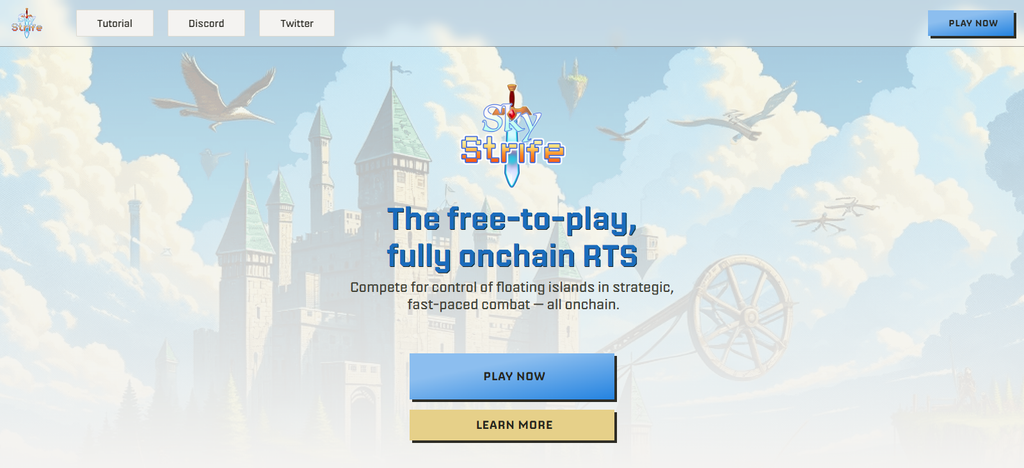
Community Ownership: Players interact with match systems built on the blockchain and can participate in an open ecosystem that allows for extensions and game modifications.
Native Token: Orb is the game’s in-game resource used to create matches and distribute gameplay-related rewards, not to be confused with a governance token. Blockchain infrastructure: Sky Strife is built on the MUD framework and runs on Redstone, an on-chain gaming blockchain.
Best For
- Players interested in real time strategy competitions.
- Gamers that play tactical multiplayer battles.
- Strategy fans managing units and territories.
- Developers fiddling with fully on-chain gaming.
- Enthusiasts of the open source game ecosystem.
- Communities looking into tailor-made gameplay experiences.
- Web3 enthusiasts interested in MUD based game building.
Players looking for Redstone blockchain gaming infrastructure.
Comparison Table: 10 Best Crypto Games With Player-Governed Worlds and Community Economies
| Game Name | Governance Model | Native Token | Blockchain | Community Economy |
|---|---|---|---|---|
| Decentraland | DAO Governance | MANA | Ethereum | LAND, wearables, marketplace |
| The Sandbox | DAO Governance | SAND | Ethereum, Polygon | LAND, digital assets, creator economy |
| Axie Infinity | Token-Based Governance | AXS, SLP | Ronin | Axies, breeding, NFT trading |
| Star Atlas | DAO Governance | POLIS, ATLAS | Solana | Ships, resources, trading |
| Realms: Eternum | Community/DAO Ecosystem | LORDS | Starknet | Land, resources, settlements |
| Influence | Community-Oriented Governance | SWAY | Starknet | Mining, manufacturing, trading |
| Illuvium | DAO Governance | ILV | Ethereum, Immutable infrastructure | Illuvials, digital assets, marketplace |
| Pirate Nation | Community Participation | PIRATE, PGLD | Apex, Ethereum ecosystem | Crafting, resources, collectibles |
| Dark Forest | Permissionless Community Participation | No dedicated native token | Gnosis Chain (original versions) | Planet exploration, territory development |
| Sky Strife | Open-Source Community Participation | ORB (in-game resource) | Redstone | Matches, gameplay resources |
Conclusion
Crypto games with player-governed worlds are changing the way the players interact with blockchain gaming, with community voting, digital ownership, decentralized economies and player-driven development. Games such as Decentraland, The Sandbox, Axie Infinity, Star Atlas and Realms: Eternum offer different versions of governance, asset ownership and economic participation.
At the same time, Influence, Illuvium, Pirate Nation, Dark Forest and Sky Strife provide more opportunities through on-chain gameplay, resource management and community experimentation. Before deciding to find an ecosystem that matches their interests, players should assess the real governance rights, utility of native tokens, blockchain infrastructure, ownership of assets, and economic sustainability of a game.
FAQ
What Are Crypto Games With Player-Governed Worlds?
Crypto games with player-governed worlds are blockchain-based games where players can influence game development, vote on proposals, own digital assets, and participate in community-driven economic activities.
Which Crypto Games Offer DAO-Based Governance?
Decentraland, The Sandbox, Star Atlas, Axie Infinity, and Illuvium offer different forms of DAO or token-holder governance, allowing eligible community members to participate in ecosystem decisions.
How Do Community Economies Work in Crypto Games?
Popular examples include MANA in Decentraland, SAND in The Sandbox, AXS in Axie Infinity, POLIS in Star Atlas, and ILV in Illuvium. Their utilities differ across ecosystems.
Can Players Own Digital Assets in These Crypto Games?
Yes. Many blockchain games allow players to own NFTs representing virtual land, characters, ships, equipment, collectibles, and other supported in-game assets.