


This article discusses the best crypto exchanges for DeFi traders. DeFi exchanges provide secure trading and decentralized solutions. Many of these crypto exchanges support multiple blockchains.
These trading platforms offer traders access to a variety of DeFi services such as token swaps, liquidity pools, derivatives, and other DeFi trading services.
I will cover the typical features and supported trading options, the advantages of crypto trading on each platform, and how each service helps users with crypto trading.
What is Crypto Exchanges?
Crypto exchanges are digital services for managing the purchase, sale, and trade of cryptocurrencies. Such services exist for the major coins, like Bitcoin and Ethereum, and others. Such services create buying/selling markets for users and facilitate the exchange of currency, whether it be digital or fiat.
Crypto exchanges may be centralized (CEX), meaning a single company handles the transactions and safety of the exchange, or decentralized (DEX), where users trade directly through smart contracts on the blockchain.
Crypto exchanges provide features like spot trading, futures trading and staking, and provide liquidity pools and wallet services. Crypto exchanges are the primary means users access the cryptocurrency systems.
Criteria of Crypto Exchanges for DeFi Traders
Security of Smart Contracts
The most vital aspect of a crypto exchange when it comes to DeFi trading is security. DeFi trading platforms should offer smart contract audits, wallet security, protection for transactions, and a history of no security incidents on the DeFi trading platform. DeFi exchanges build covered user assets through audited protocols, decentralized infrastructure, and advanced encryption methods.
Level of Decentralization
DeFi exchanges should promote fully decentralized trading features in which users keep full control of their funds. The use of non-custodial wallets, permissionless transactions, and smart contracts on the blockchain, lowers reliance on centralized structures and increases transparency to the users.
Available Blockchain Networks
DeFi trading platforms should use multiple available blockchain networks to trade. To participate, users would benefit from a DeFi trading platform that supports multiple networks. DeFi exchanges which support Ethereum, Polygon, Arbitrum, BNB Chain, Avalanche, and Optimism provide access to many tradeable tokens, liquidity pools, and DeFi applications.
Liquidity
DeFi trading relies on liquidity exchanges to provide participants fair pricing. Slippage and failed transactions are a consequence of insufficient liquidity. Users are encouraged to participate in DeFi exchanges with ample liquidity and high trading volume.
Fees and Gas Costs
Optimized gas costs and trading fees affect how DeFi traders interact with the exchange. Frequent participants that perform multiple trades benefit from exchanges that have low trading fees and efficient gas costs.
Variety of Trading Options
The best crypto exchanges offer different ways of trading like token swaps, liquidity pools, staking, yield farming, and trading of perpetual contracts and derivatives. Different features allow users to adopt different strategies to manage their investments.
User Experience and Interface
A well designed interface greatly aids users, both experienced and inexperienced, in DeFi trading. Exchanges should allow easy connection to wallets, easy viewing of transaction and portfolio details, and seamless navigation of trading options.
Liquidity Pools and Yield Farming
DeFi traders prefer platforms that allow them to earn by providing liquidity or participating in yield farming. Exchanges that have alluring incentives, staking, and liquidity that can be withdrawn at any time, offer traders more ways to earn while they hold crypto.
Token and Trading Pair Availability
A good crypto exchange offers numerous cryptocurrencies and trading pairs. Availability of the more popular tokens and trading pairs, stablecoins, governance tokens, and newer DeFi assets, allow users to take more advantage of the market.
Transparency and Trust
Factors such as the track record of the platform, feedback from the community, governance, audit reports, and overall trustworthiness of the platform are important when selecting a DeFi exchange, as traders will have to place their digital assets in to the exchange.
Key Point & Best Crypto Exchanges for DeFi Traders
| Crypto Exchange | Type | Key Features | Best For | Supported Trading |
|---|---|---|---|---|
| Uniswap | Decentralized Exchange (DEX) | Automated market maker (AMM), permissionless token swaps, liquidity pools, yield opportunities, multi-chain support | DeFi traders seeking decentralized and non-custodial trading | Token swaps, liquidity providing, DeFi assets |
| Curve Finance | Decentralized Exchange (DEX) | Optimized stablecoin trading, low fees, high liquidity pools, efficient swaps, liquidity rewards | Stablecoin traders and liquidity providers | Stablecoins, crypto swaps, liquidity farming |
| dYdX | Decentralized Derivatives Exchange | Perpetual futures trading, advanced order types, leverage trading, decentralized infrastructure | Professional traders and derivatives users | Perpetual contracts, margin trading |
| SushiSwap | Decentralized Exchange (DEX) | AMM trading, staking rewards, liquidity mining, cross-chain support, community governance | DeFi users looking for farming and token swaps | Token swaps, staking, liquidity pools |
| Balancer | Decentralized Portfolio Manager & DEX | Customizable liquidity pools, multi-token pools, automated portfolio management, flexible weights | Investors managing diversified DeFi portfolios | Token swaps, liquidity pools, yield strategies |
| PancakeSwap | Decentralized Exchange (DEX) | Built on BNB Chain, low trading fees, farming rewards, NFT marketplace, lottery features | Retail DeFi traders and BNB ecosystem users | Token swaps, staking, yield farming |
| 1inch | Decentralized Exchange Aggregator | Finds best swap rates across multiple DEXs, low slippage, gas optimization, multi-chain support | Traders seeking the best prices across DeFi markets | Token swaps, aggregation, limit orders |
| GMX | Decentralized Perpetual Exchange | On-chain leverage trading, low fees, liquidity provider rewards, decentralized derivatives | Advanced traders wanting perpetual contracts | Perpetual futures, spot trading |
| Binance | Centralized Exchange (CEX) | High liquidity, large crypto selection, advanced trading tools, staking, futures, security features | Beginners and professional crypto traders | Spot, futures, margin, staking |
| Coinbase | Centralized Exchange (CEX) | User-friendly interface, strong security, regulatory compliance, institutional services, fiat support | Beginners and long-term crypto investors | Spot trading, staking, crypto purchases |
1. Uniswap
Uniswap is a popular decentralized exchange (DEX) built on the Ethereum blockchain, operating since 2018. Uniswap pioneered the automated market maker (AMM) system.
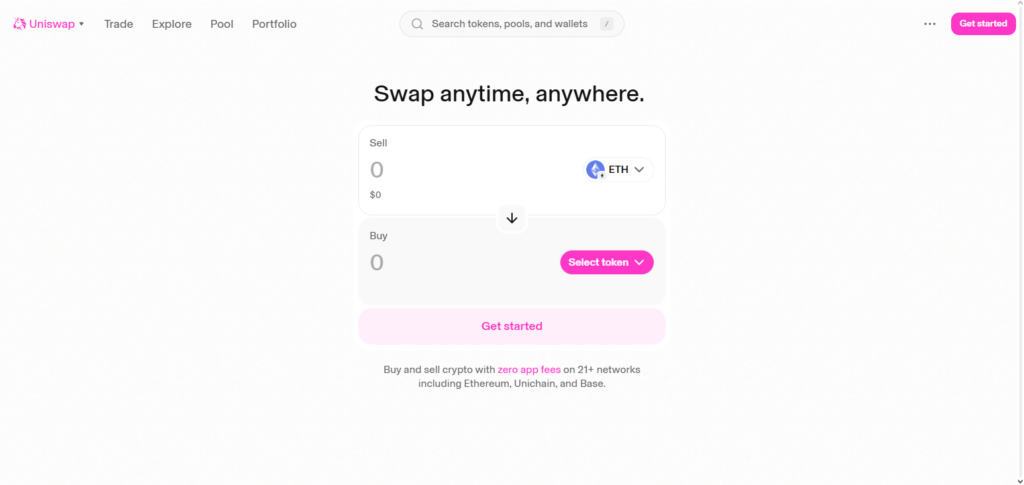
With AMM, trading can occur without order books. Uniswap-like DEXs offer decentralized liquidity pools to permit users to swap tokens and farm yield. Users earn fees for providing liquidity. Uniswap accommodates Ethereum, Polygon, Arbitrum, Optimism, Base, and more network tokens.
Uniswap permits the swapping of any ERC-20 tokens, the farming of liquidity, the trading of governance tokens, and DeFi investments. The peace of mind that comes with trading on Uniswap’s DEX is attributed to its transparency and non-custodial system.
Features of Uniswap
| Feature | Details |
|---|---|
| Founded Year | 2018 |
| Exchange Type | Decentralized Exchange (DEX) |
| Blockchain Support | Ethereum, Polygon, Arbitrum, Optimism, Base, BNB Chain |
| Trading Model | Automated Market Maker (AMM) |
| Supported Trading | ERC-20 token swaps, liquidity pools, DeFi assets |
| Key Feature | Permissionless trading without intermediaries |
| Liquidity Features | Users can provide liquidity and earn transaction fees |
| Security | Non-custodial wallet support and smart contract transparency |
| Token | UNI governance token |
| Best For | DeFi traders looking for decentralized token swaps |
2. Curve Finance
Curve Finance is a DeFi platform established in 2020 for users to trade stablecoins. It is a decentralized exchange. Because of its design, there is little slippage on trades. This is advantageous to users because it makes trades substantially cheaper. Curve Finance is a favored selection on lists of which decentralized exchanges to use. This is primarily due to its liquidity pools for stablecoins.
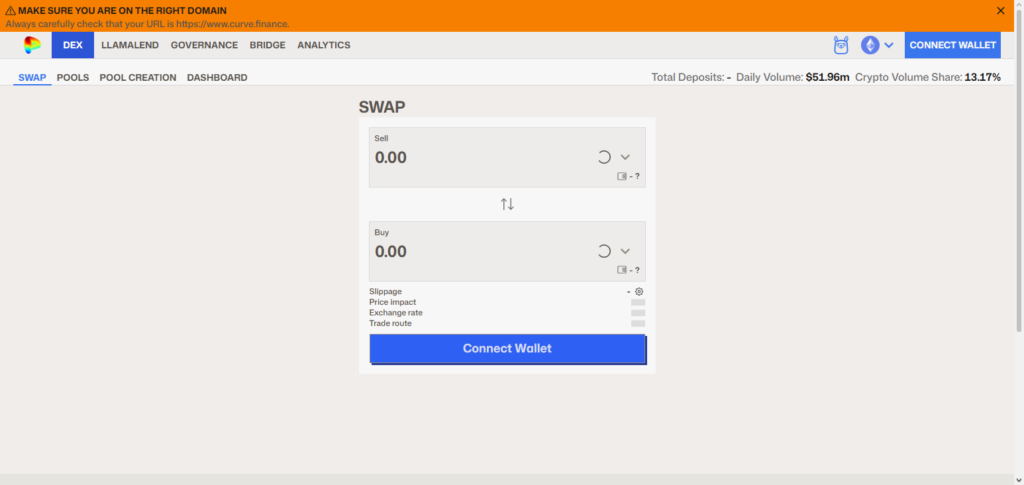
A few of the notable pools are for USDT, USDC, DAI, and other stablecoins. Because of the offerings of Curve Finance, DeFi users can stake to earn incentives and participate in liquidity farming. Curve Finance functions on many networks. It operates on Ethereum, Arbitrum, Polygon, and Avalanche. Users can also swap tokens, participate in liquidity pools, and execute yield farming strategies.
Features of Curve Finance
| Feature | Details |
|---|---|
| Founded Year | 2020 |
| Exchange Type | Decentralized Exchange (DEX) |
| Blockchain Support | Ethereum, Arbitrum, Polygon, Avalanche, Optimism |
| Trading Model | Stablecoin-focused Automated Market Maker |
| Supported Trading | Stablecoins, wrapped assets, low-slippage swaps |
| Key Feature | Efficient trading for similar-value assets |
| Liquidity Features | Stablecoin pools, liquidity rewards, yield farming |
| Security | Non-custodial DeFi protocol with audited smart contracts |
| Token | CRV governance token |
| Best For | Stablecoin traders and liquidity providers |
3. dYdX
The decentralized derivatives trading platform, dYdX, launched in 2017. Based on advanced crypto trading products, this platform provides trading tools that include perpetual contracts, margin trading, and leverage options. dYdX is the best crypto exchange for DeFi traders, allowing users to trade derivatives without using centralized intermediaries.
Its own blockchain infrastructure supports fast transactions, and complex order types are also available on dYdX. Perpetual futures, leveraged trading, crypto derivatives, and spot trading are the available options for dYdX users. Professional trading and decentralized futures is what dYdX users prefer.
Features of dYdX
| Feature | Details |
|---|---|
| Founded Year | 2017 |
| Exchange Type | Decentralized Derivatives Exchange |
| Blockchain Support | Ethereum Layer-2 and dYdX Chain |
| Trading Model | Order book-based decentralized trading |
| Supported Trading | Perpetual futures, derivatives, margin trading |
| Key Feature | Advanced leverage trading tools |
| Liquidity Features | Professional trading liquidity and market depth |
| Security | Users maintain control through decentralized infrastructure |
| Token | DYDX governance token |
| Best For | Professional DeFi traders and derivatives users |
4. SushiSwap
SushiSwap, established in 2020, is a multi-chain DeFi platform that started as a Ethereum-based automated market maker (AMM) and is now a fully fledged marketplace. Users can swap tokens, add liquidity to pools, and enter yield farming to earn rewards.
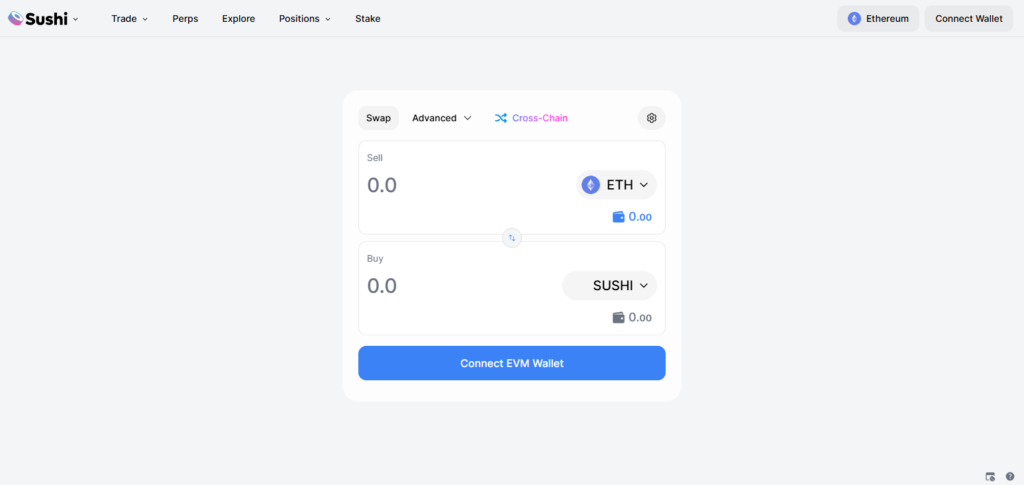
SushiSwap provides its community governance through the SUSHI token and is one of the most popular crypto exchanges for DeFi. SushiSwap is a prime multi-chain platform. SushiSwap’s farming can be done across Ethereum, Polygon, Arbitrum, BNB Chain, and Avalanche networks.
Traditional DeFi trading and staking are also among the offerings of SushiSwap. SushiSwap is used by those DeFi traders that are looking for convenience and flexible options for liquidity and earning opportunities.
Features of SushiSwap
| Feature | Details |
|---|---|
| Founded Year | 2020 |
| Exchange Type | Decentralized Exchange (DEX) |
| Blockchain Support | Ethereum, Polygon, Arbitrum, BNB Chain, Avalanche |
| Trading Model | Automated Market Maker (AMM) |
| Supported Trading | Token swaps, liquidity pools, staking |
| Key Feature | Multi-chain DeFi ecosystem |
| Liquidity Features | Yield farming, liquidity mining, rewards programs |
| Security | Smart contract-based decentralized trading |
| Token | SUSHI governance token |
| Best For | Users interested in swaps and DeFi earning opportunities |
5. Balancer
Founded in 2020, Balancer is a DEX and automated portfolio management software (APMS). Balancer allows users to create customizable liquidity pools. Unlike standard AMMs, Balancer lets users utilize multiple tokens with multiple configurations of weight, meaning that sophisticated strategies for more advanced portfolios can be built.
Balancer is valid as an especially good DEX for DeFi traders as it provides trading and liquidity management as well as automated investing. Balancer’s platform uses Ethereum and other L2s as backends.
Also, users are able to utilize token swaps, multi-asset pools, yield generation, and portfolio balancing. Balancer is a great DEX for investors that desire more control for their liquidity strategies and also for decentralized management of assets.
Features of Balancer
| Feature | Details |
|---|---|
| Founded Year | 2020 |
| Exchange Type | Decentralized Exchange and Portfolio Manager |
| Blockchain Support | Ethereum, Polygon, Arbitrum, Optimism |
| Trading Model | Customizable Automated Market Maker |
| Supported Trading | Multi-token swaps and liquidity pools |
| Key Feature | Flexible pool creation with different asset ratios |
| Liquidity Features | Smart pools, liquidity incentives, yield strategies |
| Security | Decentralized governance and audited contracts |
| Token | BAL governance token |
| Best For | Investors managing diversified DeFi portfolios |
6. PancakeSwap
PancakeSwap is a large decentralized exchange mainly on the BNB Chain. It was started in 2020 and operates fast with lots of DeFi services. Being a BnB Chain Exchange, it has low fees and is a great exchange for DeFi traders.
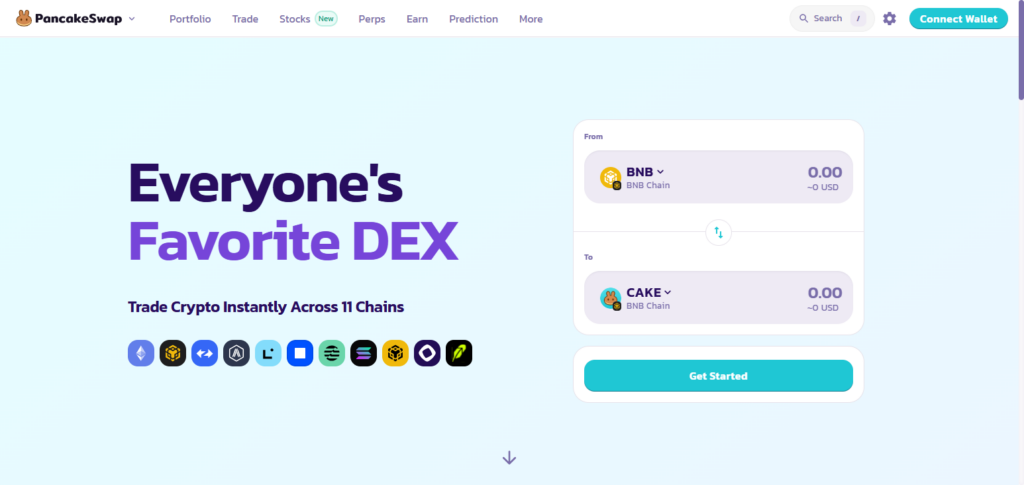
It offers many services like trading the automated way, liquidity farming, and staking. Because it is easy to use and supports many chains, it is becoming more popular.
In total, PancakeSwap supports trading for BEP-20 tokens, ERC-20 tokens, liquidity pools, yield farming, staking, NFTs, and other chains beyond BnB like Ethereum, Arbitrum, Base, and more. DeFi users looking for low costs and high potential earnings are using PancakeSwap the most.
Features of PancakeSwap
| Feature | Details |
|---|---|
| Founded Year | 2020 |
| Exchange Type | Decentralized Exchange (DEX) |
| Blockchain Support | BNB Chain, Ethereum, Arbitrum, Base |
| Trading Model | Automated Market Maker (AMM) |
| Supported Trading | BEP-20 tokens, ERC-20 tokens, swaps |
| Key Feature | Low-cost DeFi trading ecosystem |
| Liquidity Features | Farming, staking, liquidity pools, rewards |
| Security | Smart contract security and decentralized governance |
| Token | CAKE governance token |
| Best For | Retail DeFi traders seeking low fees |
7. 1inch
1inch, founded in 2019, is a decentralized exchange (DEX) aggregator. It runs its own algorithms across a number of DEXs to give its users the best price. Instead of using only one exchange, it combines several liquidity sources to improve slippage and efficiency of swaps.
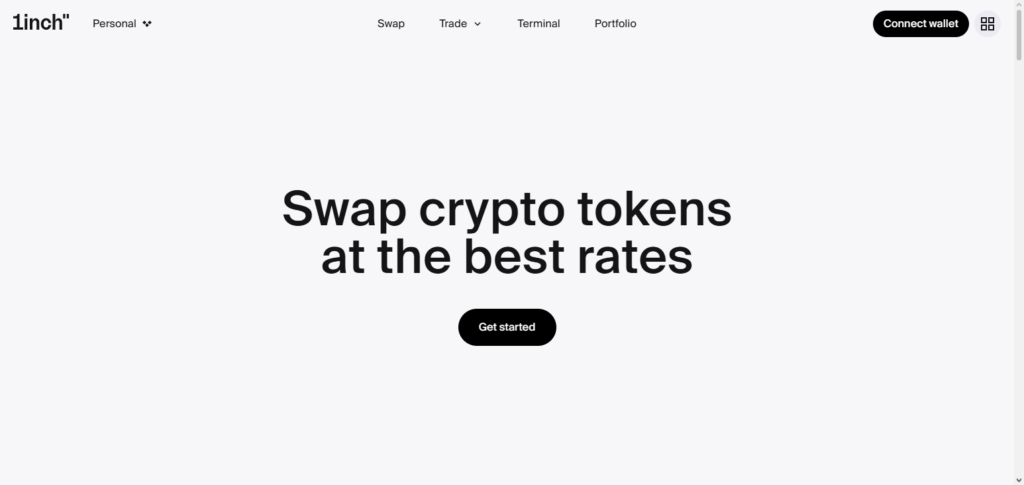
1inches and other similar platforms use smart routing to optimize trades for users in a multi-chain DeFi world. The DEX aggregator supports Ethereum, BNB Chain, Polygon, Arbitrum, Optimism and others when it comes to trading limits, liquidity, and DEX aggregation. 1inch is known and loved by a wide audience to trade with a better price and lower fees.
Features of 1inch
| Feature | Details |
|---|---|
| Founded Year | 2019 |
| Exchange Type | Decentralized Exchange Aggregator |
| Blockchain Support | Ethereum, BNB Chain, Polygon, Arbitrum, Optimism |
| Trading Model | DEX liquidity aggregation |
| Supported Trading | Token swaps, limit orders, multi-chain trading |
| Key Feature | Finds best prices across multiple DEXs |
| Liquidity Features | Aggregates liquidity from various exchanges |
| Security | Non-custodial trading with smart contract technology |
| Token | 1INCH governance token |
| Best For | Traders seeking low slippage and optimized swaps |
8. GMX
Launched in 2021, GMX provides users with a secure, inexpensive, and highly efficient way to conduct leveraged crypto trading. At the core of GMX are trading derivatives (e.g. perpetual contracts) and liquidity pools.
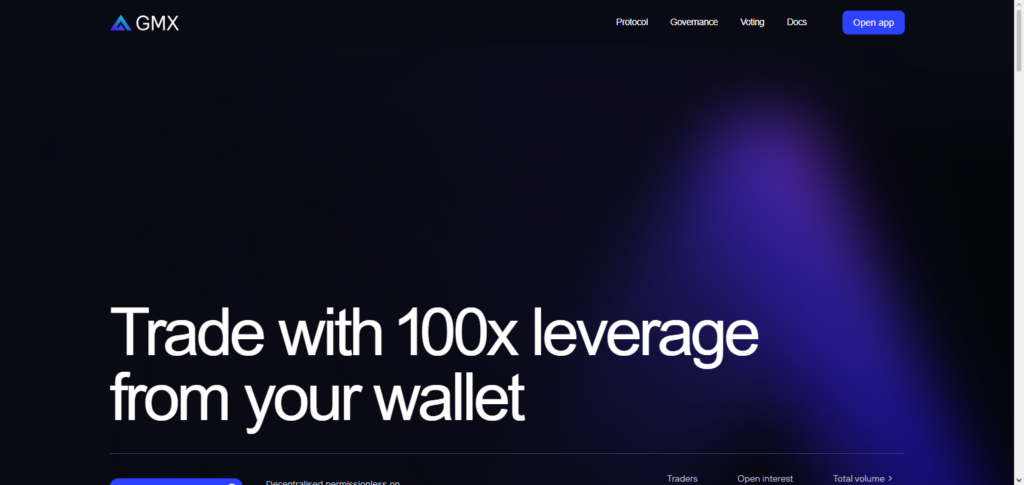
Leveraged trading occurs faster and cheaper due to a unique liquidity pool structure. Trade providers earn rewards from trading activity.
Given the perpetual nature of GMX trading derivatives, it is no surprise that GMX integrates spot swaps, perpetual futures, leveraged trading, and liquidity further/ deeper into its infrastructure. GMX, also, remains a perpetually popular trading platform among traders who are more skilled at trade, because GMX provides a decentralized derivatives market.
Features of GMX
| Feature | Details |
|---|---|
| Founded Year | 2021 |
| Exchange Type | Decentralized Spot and Perpetual Exchange |
| Blockchain Support | Arbitrum and Avalanche |
| Trading Model | Decentralized liquidity pool model |
| Supported Trading | Spot trading, perpetual futures, leverage trading |
| Key Feature | Low-fee decentralized derivatives trading |
| Liquidity Features | GLP liquidity pool rewards |
| Security | Non-custodial trading with transparent transactions |
| Token | GMX governance token |
| Best For | Advanced traders seeking decentralized leverage trading |
9. Binance
Binance, founded in 2017 and now among the largest centralized cryptocurrency trading companies, offers trading options with high levels of liquidity.
Although Binance is not fully decentralized, DeFi traders often use Binance to enter the cryptocurrency markets before transferring to decentralized applications.
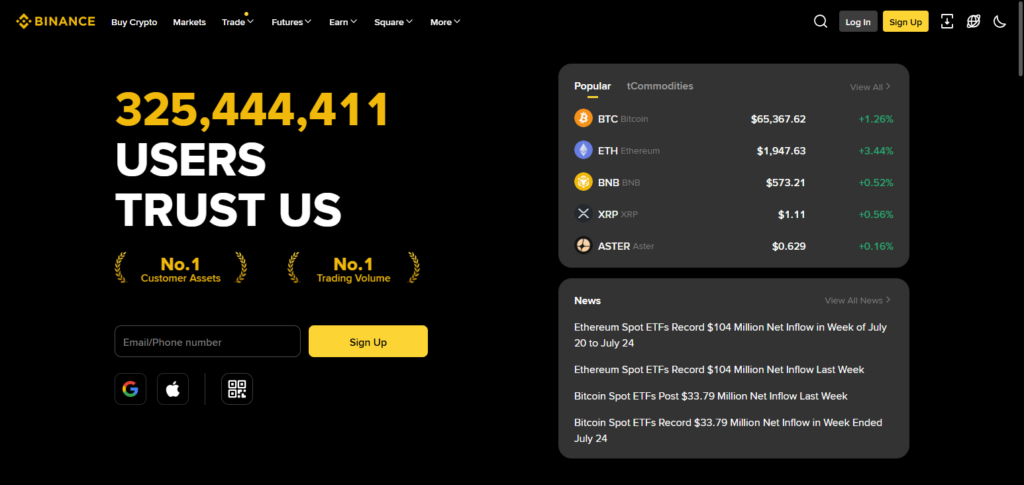
Binance is one of the Best Crypto Exchanges for DeFi Traders that has the most advanced trading options, offers competitive fees, and supports the highest number of cryptocurrencies.
Spot, futures and margin trading, staking, P2P trading, and crypto lending are all supported. Binance has thousands of trading pairs, and has services for beginner and advanced cryptocurrency users across the globe.
Features of Binance
| Feature | Details |
|---|---|
| Founded Year | 2017 |
| Exchange Type | Centralized Cryptocurrency Exchange (CEX) |
| Blockchain Support | Binance ecosystem and multiple blockchain networks |
| Trading Model | Centralized order book system |
| Supported Trading | Spot, futures, margin, staking, P2P trading |
| Key Feature | High liquidity and large crypto selection |
| Liquidity Features | Deep market liquidity across thousands of pairs |
| Security | Two-factor authentication, cold storage, security systems |
| Token | BNB utility token |
| Best For | Beginners, professional traders, and institutional users |
10. Coinbase
Established in 2012, Coinbase is known for being a safe and regulated centralized cryptocurrency exchange, as well as being easy to use. Their platform is simple for their users to buy, sell, and control their digital assets, but they also provide their users access to Web3 and DeFi applications through Coinbase Wallet.
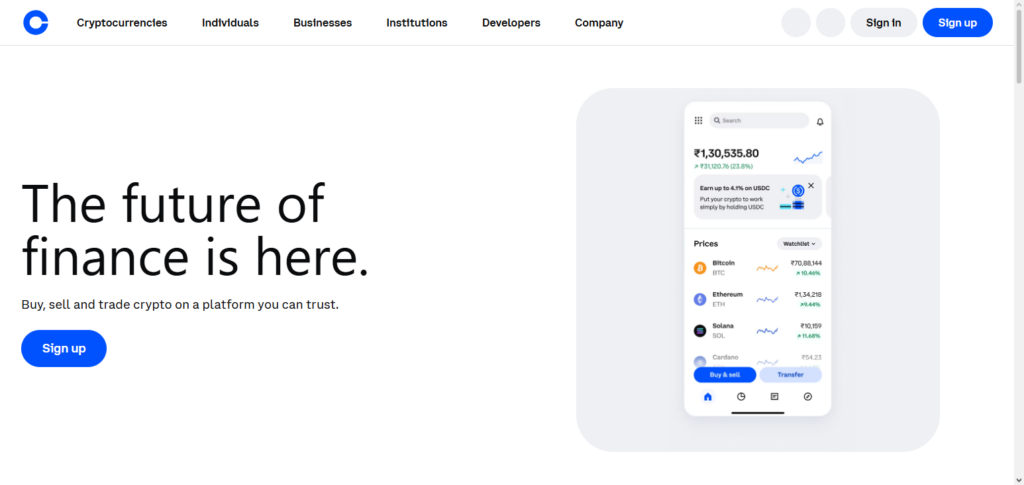
Coinbase is one of the best Crypto Exchanges for DeFi traders, and supports spot crypto trading, staking, recurring purchases, institutional trading, and transactions to Web3 wallets. Coinbase is a top choiceexchange for ease of use, especially for users who appreciate a centralized and regulated crypto service, such as beginners and institutional users.
Features of Coinbase
| Feature | Details |
|---|---|
| Founded Year | 2012 |
| Exchange Type | Centralized Cryptocurrency Exchange (CEX) |
| Blockchain Support | Multiple blockchain networks through Coinbase Wallet |
| Trading Model | Centralized trading platform |
| Supported Trading | Spot trading, staking, crypto purchases, Web3 assets |
| Key Feature | Strong security and regulatory compliance |
| Liquidity Features | Institutional-grade liquidity services |
| Security | Insurance coverage, cold storage, compliance standards |
| Token | No native exchange token |
| Best For | Beginners, institutions, and secure crypto investing |
Conclusion
Selecting optimal crypto exchanges as a DeFi trader is based on their goals, safety requirements, charges and the characteristics they value. Several platforms like Uniswap, Curve Finance, dYdX, SushiSwap, Balancer, PancakeSwap, 1inch and GMX have decentralized trading and liquidity provisions and offer a high level of DeFi. Whereas, Binance and Coinbase have excellent liquidity,
security, and ease of access to crypto markets. Comparing the features differentiating trading channels, fees, risk and supported networks is critical before selecting the most suitable platform for a trader’s DeFi strategies.
FAQ
. What are the Best Crypto Exchanges for DeFi Traders?
The Best Crypto Exchanges for DeFi Traders include Uniswap, Curve Finance, dYdX, SushiSwap, Balancer, PancakeSwap, 1inch, GMX, Binance, and Coinbase. These platforms offer different features such as decentralized swaps, liquidity pools, derivatives trading, and secure crypto transactions.
Which DeFi exchange is best for beginners?
Uniswap and Coinbase are suitable for beginners because they provide simple interfaces, easy crypto swapping, and strong security features. Coinbase is better for beginners who prefer regulated services, while Uniswap is ideal for learning decentralized trading.
Are DeFi exchanges safer than centralized exchanges?
DeFi exchanges provide users with control over their funds through non-custodial wallets, but they may involve smart contract risks. Centralized exchanges like Binance and Coinbase offer additional security measures but require users to trust the platform.
Which DeFi exchange has the lowest trading fees?
PancakeSwap and Curve Finance are known for lower transaction costs, especially on networks with cheaper gas fees. Curve is particularly efficient for stablecoin trading, while PancakeSwap offers affordable swaps on BNB Chain.
Can I earn rewards on DeFi exchanges?
Yes, many DeFi exchanges allow users to earn rewards through liquidity pools, staking, and yield farming. Platforms like Uniswap, SushiSwap, Curve Finance, and Balancer provide opportunities for liquidity providers.