


This article lists the Best Crypto Exchanges for Futures Trading. The exchanges featured have high liquidity and low trading fees. They offer leverage and advanced features and tools and are secure.
The exchanges allow traders to easily access the crypto derivatives market and provide tools to manage risk and the trading environment to easily support professional futures trading, catered to beginners and advanced traders alike.
What is Crypto Exchanges?
Crypto exchanges are web-based platforms that let users handle digital assets like Bitcoin and Ethereum; purchase, sell, trade and manage. Digital assets have trading functionalities that connect user purchasing and selling capabilities and include spot, futures, and margin trading along with staking.
Crypto exchanges have price charts, order types, security features, and trading wallets and other resources to assist in the management and trading of digital assets.
Key Point & Best Crypto Exchanges for Futures Trading
- Bybit – Popular derivatives exchange with strong perpetual contracts and copy trading features.
- OKX – Advanced futures and options platform with deep liquidity and Web3 ecosystem integration.
- Kraken Futures – Regulated US‑based exchange offering crypto futures with strong compliance and security.
- KuCoin Futures – Accessible futures trading with leverage options and a wide altcoin selection.
- Gate.io Futures – Known for extensive token listings and futures contracts across niche markets.
- Bitget – Derivatives‑focused exchange with copy trading and competitive fee structures.
- Huobi Futures – Established Asian exchange offering perpetual swaps and futures with high liquidity.
- MEXC Futures – Fast‑growing platform with wide futures coverage and flexible leverage.
- Binance – World’s largest crypto exchange with robust spot, futures, and options markets.
- Coinbase – US‑regulated exchange focused on spot trading, with limited derivatives exposure.
10 Best Crypto Exchanges for Futures Trading in 2026
1. Bybit
Launched in 2018 in Dubai, Bybit is a derivatives-centric exchange. Blockchain traders enjoy 100x leverage across 578+ futures offered for 726+ cryptocurrencies. Bybit charges 0.1% on spot trades. For futures, the platform charges 0.02% for makers and 0.055% for takers.
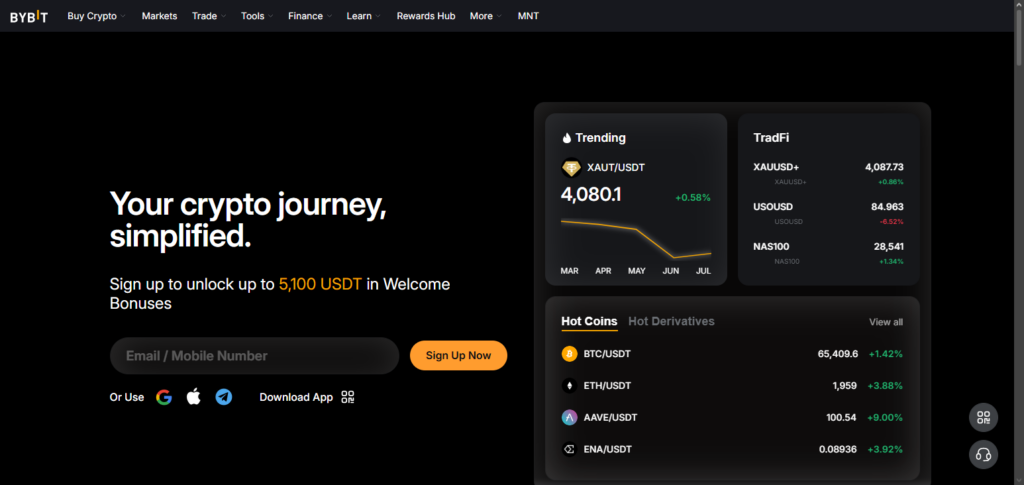
The exchange also offers features for copy trading, and advanced order types, along with proof-of-reserves audits, conducted on a regular basis. In 2025, a $1.4B exploit was registered on the platform, and even then,
Bybit’s reimbursement of all customers boosted confidence on the platform. The combination of competitive pricing and deep liquidity shows up in Bybit’s regular listing on the top crypto exchanges for futures trading.
| Feature | Details |
|---|---|
| Founded | 2018, Dubai |
| Supported Assets | 700+ cryptocurrencies |
| Futures Contracts | 578+ perpetual pairs |
| Leverage | Up to 100x |
| Fees | Spot: 0.1%; Futures: 0.02% maker / 0.055% taker |
Bybit
Pros:
- Liquidity supports fast execution for futures trades.
- Offers advanced futures products with high levels of leverage.
- Includes professional trading tools and indicators.
- Advanced trading made easier with copy trading.
- Assets are secured with strong protections.
Cons:
- High leverage increases loss risk.
- Regulatory concerns differ by country.
- Complex interface due to feature bloat.
- DTN impacts withdrawal costs.
- Limited fiat pairings.
2. OKX
Established in 2017 and managed by Star Xu, OKX is based in Seychelles and has over 50 million global customers. It has over 350 cryptocurrencies listed and more than 100 perpetual contracts with a leverage of 125x. With OKX, you spot trade as a maker at 0.08% and as a taker at 0.10%.
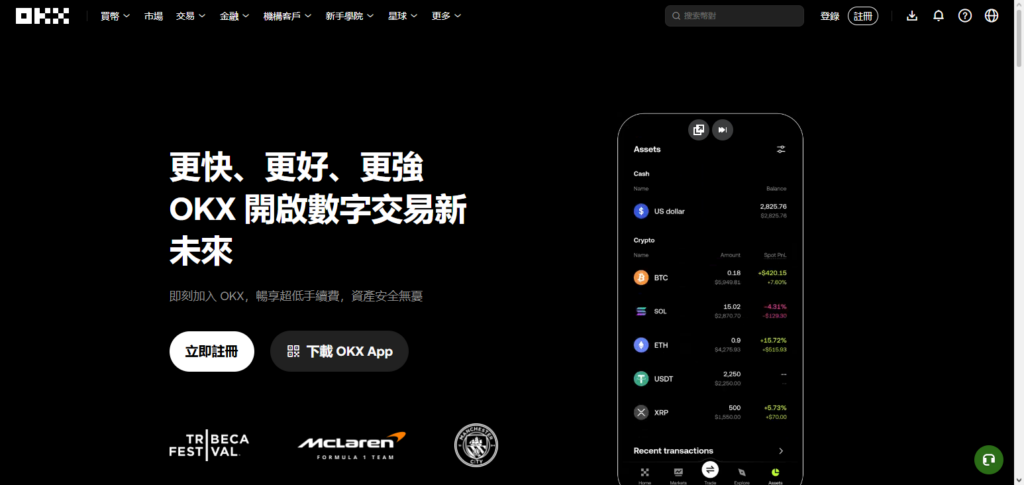
Futures contracts are charged at 0.02% and 0.05% for makers and takers, respectively. The fees are further subsidized for OKB token holders.
Amongst other crypto exchanges, OKX is notable for being one of the first to offer a Web3 wallet and DeFi, but also places a strong focus on regulations with a MiCA license in the EU. When trading crypto futures, OKX is one of the top options.
| Feature | Details |
|---|---|
| Founded | 2017, Seychelles |
| Supported Assets | 350+ cryptocurrencies |
| Futures Contracts | 100+ perpetual pairs |
| Leverage | Up to 125x |
| Fees | Spot: 0.08% maker / 0.10% taker; Futures: 0.02% maker / 0.05% taker |
OKX
Pros:
- Comprehensive suite of futures and derivatives.
- Low fees for frequent trading.
- Advanced features and automation.
- Cross-chain and Web3 support.
- Great liquidity for most pairs.
Cons:
- Complex for beginners.
- Region-based service restrictions.
- Extensive verification.
- Inconsistent support.
- Advanced features require a learning curve.
3. Kraken Futures
Kraken was founded in San Francisco in 2011 by Jesse Powell. It is one of the oldest, yet safest, exchanges on the market. In total, 723 spot assets and 324 futures contracts (which have 50x leverage) are supported by Kraken. Spot fees for Kraken are 0.25% for makers and 0.40% for takers, and for futures, they are 0.02% for makers and 0.05% for takers.
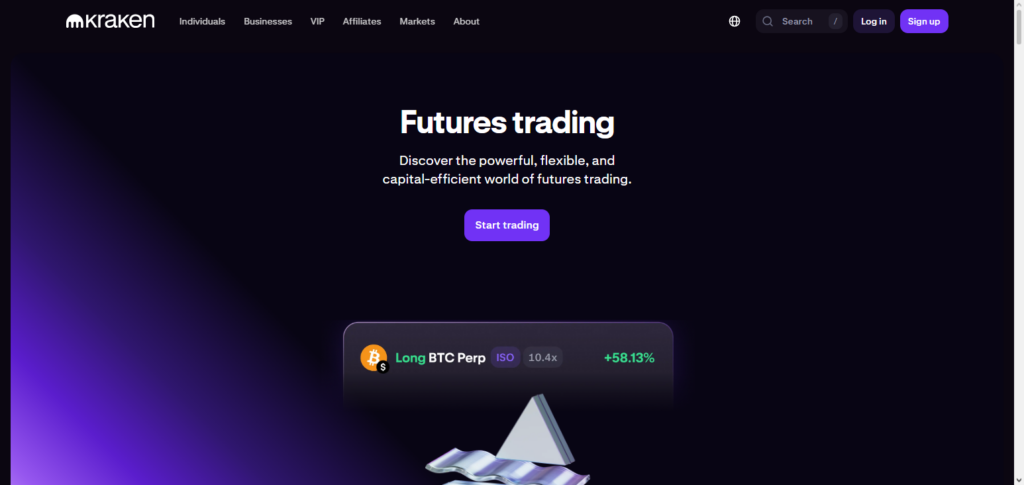
Kraken is known for its security since there have not been any customer fund losses as a result of hacks. Their futures offerings and CFTC regulated security also add to Kraken’s safety. Overall, Kraken is a great exchange for futures trading.
| Feature | Details |
|---|---|
| Founded | 2011, San Francisco |
| Supported Assets | 723 spot assets |
| Futures Contracts | 324+ pairs |
| Leverage | Up to 50x |
| Fees | Spot: 0.25% maker / 0.40% taker; Futures: 0.02% maker / 0.05% taker |
Kraken Futures
Pros:
- Excellent security and regulatory compliance.
- Professional level futures trading tools.
- A reasonable fee structure for larger traders.
- The platform does not experience issues with high trading volume.
- Supports trading with multiple larger cryptocurrencies futures.
Cons:
- Fewer trading futures compared to other larger exchanges.
- Not available in all countries.
- Users need to have some trading experience to navigate.
- Some competitors provide options with higher leverage.
- Compared to derivatives-focused platforms, there are fewer functions for trading.
4. KuCoin Futures
Founded in 2017, KuCoin launched KuMEX (now KuCoin Futures) in 2019. KuCoin Futures offers KuCoin users futures contracts for 1,000+ assets and 250+ futures contracts with perpetual trading. KuCoin Futures offers users leverage trading options with up to 100x leverage.
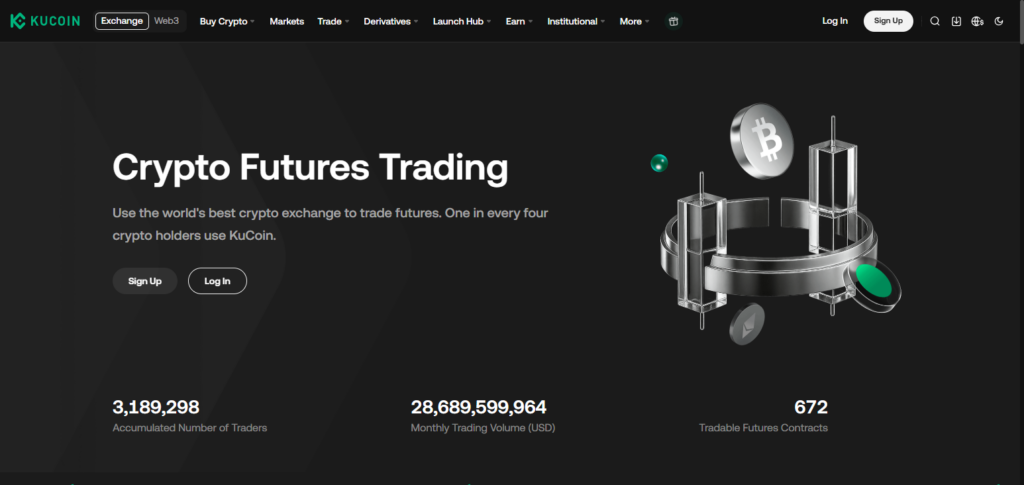
KuCoin Futures has a Maker/Taker fee schedule that starts from 0.02% and 0.06% respectively. KuCoin Futures, like many other KuCoin services, offers its users multiple tiers of service. KuCoin is globally active, but has removed its services from the US market as of 2024.
KuCoin has positioned itself as one of the strongest competitors in trading futures contracts by balancing high levels of innovation with high levels of liquidity.
| Feature | Details |
|---|---|
| Founded | 2017, Singapore |
| Supported Assets | 1,000+ cryptocurrencies |
| Futures Contracts | 250+ perpetual pairs |
| Leverage | Up to 100x |
| Fees | Futures: 0.02% maker / 0.06% taker |
KuCoin Futures
Pros:
- A wide variety of futures contracts for trading crypto.
- High options for leverage.
- Provision of trading bots with automated tools.
- Fees are favorable for users with high trading volume.
- Many futures of altcoins are easily accessible.
Cons:
- Some jurisdictions have concerns regarding regulation.
- Security has some negative reputation from past events.
- May be more difficult for beginners to use.
- Smaller futures pairs may not be as liquid.
- Support quality can be variable.
5. Gate.io Futures
Gate.io was founded in 2013 and was rebranded as Bter. Gate.io has undergone a second rebranding in 2025, and is named Gate.com. The exchange site hosts 1,600 + cryptocurrencies, and 600 + futures contracts with leverage reaching 200 times.
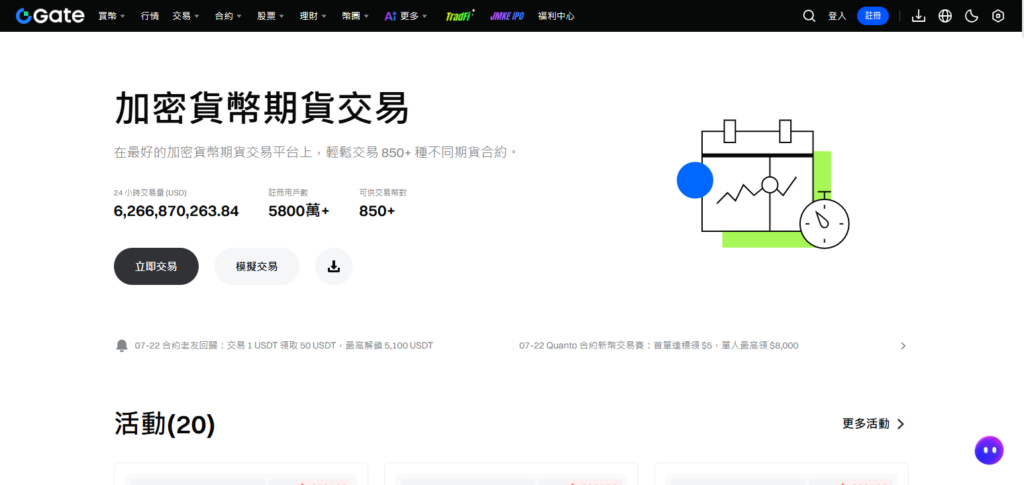
Spot and futures fees come to 0.20% and 0.02% maker, 0.05% taker, respectively. Gate.io is famous for adding tradable tokens faster than its competition, and offers features for copy trading, staking, and Web3. It is also one of the top crypto exchanges for ease in futures trading because of its altcoin futures coverage.
| Feature | Details |
|---|---|
| Founded | 2013 (Bter), rebranded 2017 |
| Supported Assets | 1,600+ cryptocurrencies |
| Futures Contracts | 600+ perpetual pairs |
| Leverage | Up to 200x |
| Fees | Spot: 0.20%; Futures: 0.02% maker / 0.05% taker |
Gate.io Futures
Pros:
- Hundreds of futures trading pairs.
- Trading tools and orders at a more advanced level are supported.
- Offers copy trading and copy trading strategies.
- Fees are favorable for futures trading.
- Strong trading coverage for altcoins.
Cons:
- Can be complex for beginners.
- Some trading pairs may not be liquid.
- Regulation for trading may be available in some areas and not in others.
- May be confusing due to the features.
- Copy trading offers and customer service has a variable response time.
6. Bitget
Founded in 2018 in the Seychelles, Bitget is most recognized for their copy trading feature. With 800+ cryptocurrencies available and support for 312 different futures markets, Bitget offers leverage as high as 125x. While the spot trading fees are 0.1%, futures fees are 0.02% for makers and 0.06% for takers.
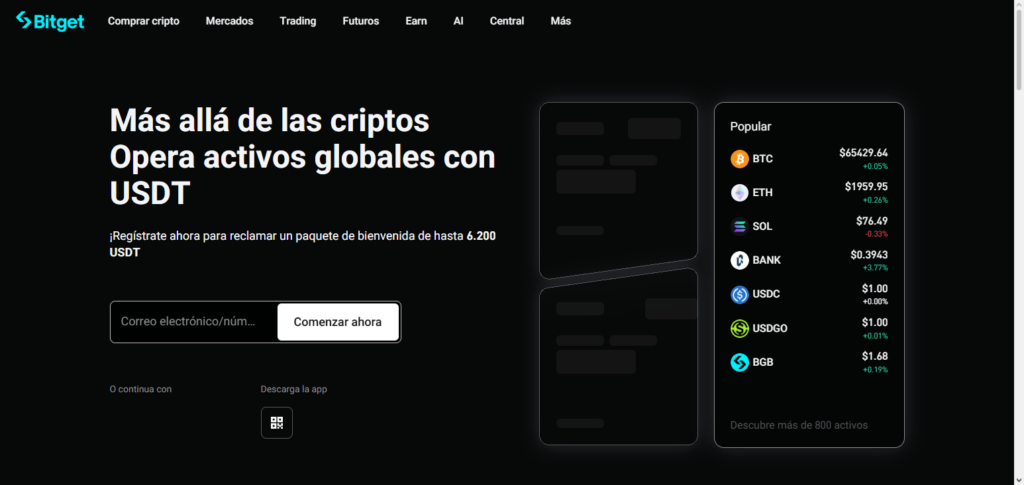
Users also receive discounts for holding BGB tokens. The exchange also features a Protection Fund with more than $300 million and conducts a proof of reserve each month. With effective social trading tools and liquidity for derivatives, Bitget is the top crypto exchange for futures trading.
| Feature | Details |
|---|---|
| Founded | 2018, Seychelles |
| Supported Assets | 800+ cryptocurrencies |
| Futures Contracts | 312+ perpetual pairs |
| Leverage | Up to 125x |
| Fees | Spot: 0.1%; Futures: 0.02% maker / 0.06% taker |
Bitget
Pros:
- Popular for crypto futures and copy trading.
- User-friendly for trading futures.
- Offers great pricing and promotions.
- Supports a wide variety of crypto trading pairs.
- Offers AI for trading.
Cons:
- More limited in some countries.
- High leverage can be dangerous for beginners.
- Not as established as older exchanges.
- Some features more advanced.
- Less fiat options than other exchanges.
7. Huobi Futures
HTX (formerly known as Huobi) was established in 2013, and rebranded in 2023. Huobi was founded by Leon Li. HTX supports more than 700 cryptocurrencies, as well as more than 127 perpetual contracts, offering 200x leverage. Futures fees consist of a 0.02% fee for being a maker of a trade and a 0.06% fee for being a taker of a trade.
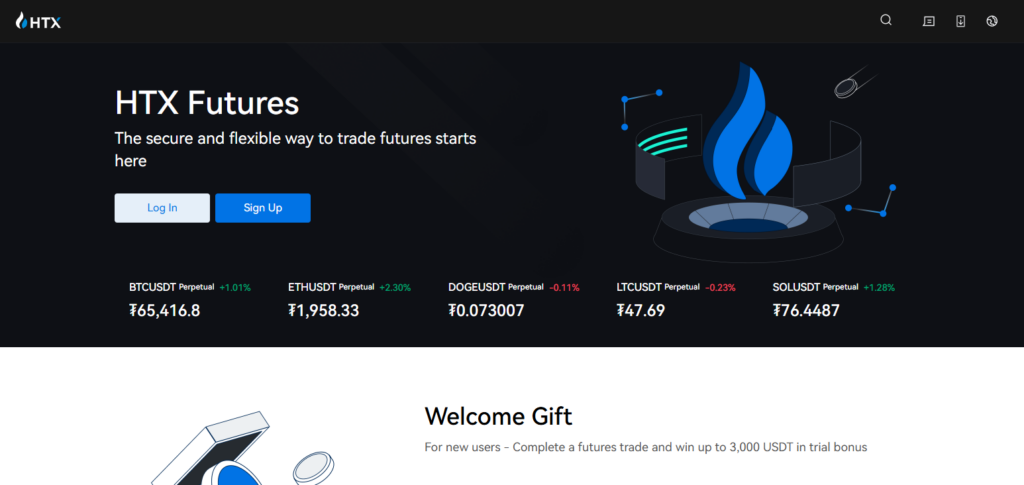
There are fee discounts for HT/ TRX token holders. HTX focuses on the Asian market, and offers copy trading, bots and staking services. At the moment, it remains one of the best trading platforms to trade futures contracts and offers high liquidity, despite limited regulations in the US and EU.
| Feature | Details |
|---|---|
| Founded | 2013, Beijing (later HTX rebrand) |
| Supported Assets | 700+ cryptocurrencies |
| Futures Contracts | 127+ perpetual pairs |
| Leverage | Up to 200x |
| Fees | Futures: 0.02% maker / 0.06% taker |
Huobi Futures (HTX Futures)
Pros:
- Multiple products offered for crypto futures and derivatives.
- Advanced features facilitated through margin trading.
- Many trading strategies can be utilized.
- Active traders would benefit from the reduced fees.
- A long history of trading in the crypto sector.
Cons:
- Some areas have transactional obstacles.
- The reputation of the brand has changed with a switch in management.
- A steep learning curve exists as the complexity of the system increases.
- Trading pair liquidity may be inconsistent.
- Presence in markets is not global.
8. MEXC Futures
Launched in Singapore in 2018, MEXC offers 3,100+ cryptocurrencies and 880+ futures contracts with leverage reaching 500x, the most of any major exchange.
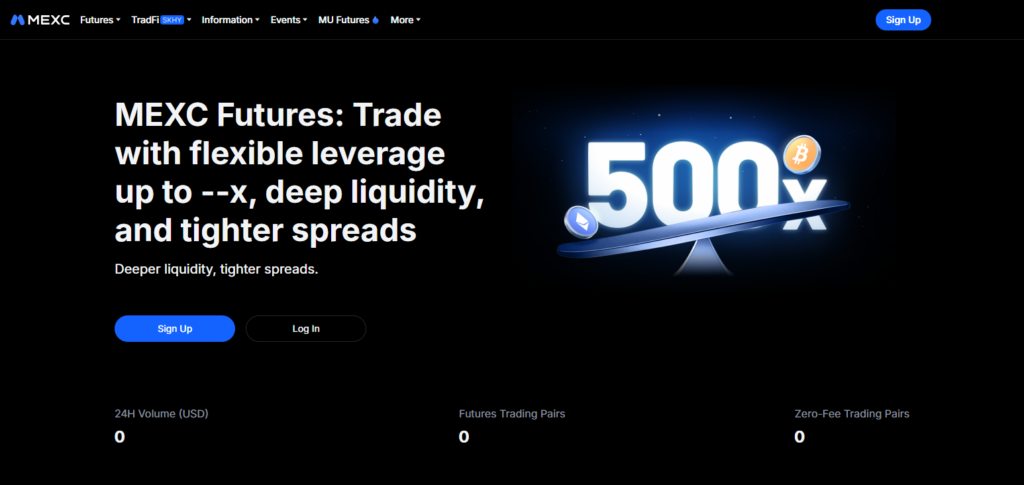
MEXC’s futures fees offer 0% maker and 0.02% taker fees. MEXC offers 40M+ users access to a trading system that features low fees, deep liquidity, and a wealth of altcoins. Therefore, MEXC has secured a position for itself as the best platform for futures trading.
| Feature | Details |
|---|---|
| Founded | 2018, Singapore |
| Supported Assets | 3,100+ cryptocurrencies |
| Futures Contracts | 880+ perpetual pairs |
| Leverage | Up to 500x |
| Fees | Futures: 0% maker / 0.02% taker |
MEXC Futures
Pros:
- A massive number of futures trading pairs are available.
- Higher leverage is provided.
- Futures trading comes with low fees.
- An easy to use, yet highly functional, trading interface is presented.
- Supports a wider array of emerging markets for crypto.
Cons:
- The legality of trading differs from nation to nation.
- Less liquidity in some smaller futures contracts.
- High leverage may result in liquidation.
- Less satisfactory customer service.
- The level of complexity associated with futures, may deter beginners.
9. Binance
Starting at 2017 and with more than 420 cryptocurrencies at the moment, Binance is the greatest exchange with 210M+ users. Changpeng Zhao opened it and it offers futures that can be leveraged to 125x. Spot problems are 0.1%, and futures problems are 0.02% for the maker and 0.04% for the taker, but with BNB, there are discounts.
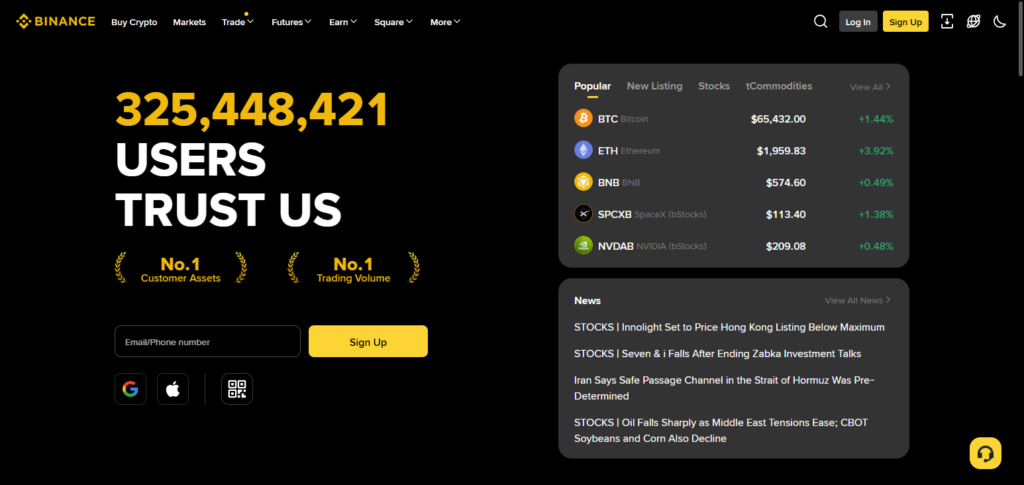
Binance also operates a $1B SAFU fund for user protection. It is the best of the crypto futures trading exchanges and the leading one for all of the problems with its breadth and liquidity.
| Feature | Details |
|---|---|
| Founded | 2017, Cayman Islands |
| Supported Assets | 420+ cryptocurrencies |
| Futures Contracts | Dozens of perpetual & quarterly contracts |
| Leverage | Up to 125x |
| Fees | Spot: 0.1%; Futures: 0.02% maker / 0.04% taker |
Binance
Pros:
- The largest crypto exchange with the highest liquidity.
- Provided advanced trading tools/analytics with low fees.
- Many contracts are available.
- An expansive and diverse ecosystem.
Cons:
- Many locations have pressing regulations.
- Limited access in certain locations.
- Complexity may overwhelm beginners.
- High risk products.
10. Coinbase
Coinbase was founded in 2012 by Brian Armstrong and Fred Ehrsam and is now a publicly traded company on the NASDAQ.
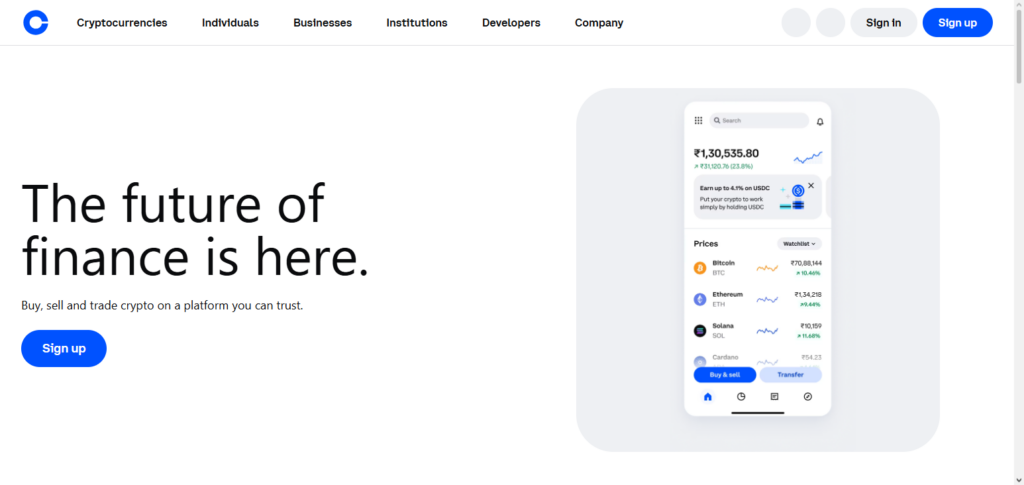
Coinbase has supported 384+ assets and has a standard trading fee of 0.40% for a maker and 0.60% for a taker. (0.05% for a maker and 0.10% for a taker for Advanced Trade) Coinbase is primarily a spot exchange and trades futures contracts, also Coinbase is considered a regulated exchange.
As of now, Coinbase holds $294 billion in customer assets and has a reputation for compliance and concern for their customers. Coinbase is a popular and one of the best crypto exchange trading platforms for futures trading.
| Feature | Details |
|---|---|
| Founded | 2012, San Francisco |
| Supported Assets | 384+ cryptocurrencies |
| Futures Contracts | Limited regulated futures pairs |
| Leverage | Up to 20x (regulated US offering) |
| Fees | Spot: 0.40% maker / 0.60% taker; Advanced Trade: 0.05% / 0.10% |
Coinbase
Pros:
- Highly secure and compliant.
- Easy to use interface for beginners.
- Supplies regulated futures in certain markets.
- Excellent trading infrastructure.
- Strong institutional trading support.
Cons:
- Compared to global competitors, futures are limited.
- Fees may be higher than some other exchanges.
- Limited futures pairs
- Some trading tools may be perceived as limited.
- Services vary significantly by location.
Conclusion
When examining the best cryptocurrency exchanges for futures trading, the strengths of different exchanges are clear. Advanced features, liquidity, and pricing lead to Bybit and OKX being the preferred exchanges of most traders. For those trading on the futures market, Kraken and Coinbase are favorable due to their market positions on compliance and regulation.
For those who favor trading altcoins, KuCoin, Gate.io, and MEXC are the exchanges of choice given their listings and customization on leverage. Bitget and Huobi Futures focus on regional dominance and copy trading. Trading on the futures market, Binance offers the most liquidity and flexibility, and is the undisputed global leader.
FAQ
What are crypto futures?
Crypto futures are contracts that allow traders to speculate on the future price of cryptocurrencies without owning the underlying asset. They enable leverage, hedging, and directional bets.
Which exchanges are best for futures trading?
The leading platforms include Bybit, OKX, Kraken Futures, KuCoin Futures, Gate.io Futures, Bitget, Huobi Futures, MEXC Futures, Binance, and Coinbase. Each offers unique strengths in liquidity, regulation, fees, and supported assets.
Which exchange has the lowest fees?
MEXC Futures: 0% maker / 0.02% taker
Bybit & OKX: ~0.02% maker / 0.05% taker
Binance: 0.02% maker / 0.04% taker These are among the cheapest options for active futures traders.
Which exchange is most regulated?
Kraken Futures (CFTC oversight in the US)
Coinbase (NASDAQ-listed, regulated in the US) These are the safest choices for compliance-focused traders.