

This article reviews the top Data Providers for Financial Institutions and will analyze the companies that offer reliable compliance solutions, widespread historical datasets, and extensive on-chain datasets. These providers: Chainalysis, Kaiko, Coin Metrics, Messari, Glassnode, CryptoCompare, Nomics, Amberdata, Lukka, and Santiment, offer services, that work together to provide transparency and security to banks, asset managers, and regulators, in their efforts to obtain accurate crypto market data. Their services provide financial institutions the ability to analyze risks, compliance frameworks, and create informed investment intelligence in the quickly developing digital asset economy.
What is Digital Asset Data Providers for Financial Institutions?
Digital Asset Data Providers for Financial Institutions equip banks, asset managers, custodians, and regulators with the data they need for taking part in the crypto market and blockchain industry. These services combine data from multiple disparate sources like blockchains, decentralized finance protocols (DeFi), and exchanges to guarantee accuracy and compliance with global standards such as Anti Money Laundering (AML) and Know Your Customer (KYC), and International Financial Reporting Standards (IFRS).
The service provides clients with real-time pricing information, liquidity stats, derivatives analytics, and other detailed historical datasets. The services help clients perform risk management, portfolio valuation, and end-to-end compliance with the required regulatory reporting. The service offers safe APIs and audit-proof data to connect the decentralized markets with traditional finance while maintaining the compliance and trust required for institutional adoption of digital assets.
Key Points
| Provider | Core Focus | Key Features | Best For |
|---|---|---|---|
| Chainalysis | Blockchain analytics | AML/KYC APIs, transaction monitoring | Banks & regulators |
| Kaiko | Market data feeds | Institutional pricing, liquidity metrics | Asset managers |
| Coin Metrics | On‑chain + market data | Network health, indexes, benchmarks | Institutional investors |
| Messari | Research + analytics | Asset profiles, compliance data | Funds & research desks |
| Glassnode | On‑chain intelligence | Wallet flows, liquidity signals | Hedge funds & traders |
| CryptoCompare | Pricing & indices | FCA‑regulated benchmarks, exchange data | ETFs & structured products |
| Nomics | Transparent pricing | Exchange‑verified data feeds | Retail + institutional apps |
| Amberdata | Institutional DeFi data | Yield curves, derivatives analytics | Banks & asset managers |
| Lukka | Tax + accounting data | Institutional pricing, audit‑ready feeds | Funds & custodians |
| Santiment | Behavioral analytics | Social sentiment, token metrics | Traders & quant funds |
1. Chainalysis
Created in 2014, Chainalysis is a company that focuses on blockchain data and compliance tools. They have an enterprise pricing model and their security and compliance measures include SOC 2 certification and compliance with AML/KYC. Chainalysis has deep historical data on Bitcoin starting at genesis and has comprehensive multi-chain data across Ethereum and stablecoins, and additional blockchains.
Chainalysis has one of the best on-chain data coverage of the market and has the capability to monitor transactions and conduct risk assessments and forensic analysis. They have APIs which satisfy a real-time compliance screening and are therefore a leading and most trusted provider for regulators and organizations for this market.
Chainalysis Features, Pros & Cons
| Feature | Pros | Cons |
|---|---|---|
| Founded 2014 | Early mover, trusted globally | Competition has caught up |
| Pricing Model | Enterprise tiered | Expensive for small firms |
| Security | SOC 2 certified | Limited transparency on audits |
| Compliance | AML/KYC integrated | Focused mainly on institutions |
| Historical Data | Bitcoin back to inception | Limited coverage of niche chains |
| On‑Chain Coverage | Multi‑chain forensic depth | Not strong in off‑chain feeds |
| APIs | Real‑time screening | Complex integration |
| Clients | Regulators, banks, exchanges | Less accessible to retail |
| Risk Scoring | Widely adopted | Proprietary methodology |
| Global Reach | Used in 70+ countries | Regional pricing differences |
2. Kaiko
Founded in 2014, Kaiko is a trusted source of highly reliable crypto market data. They have a subscription-based pricing model customized to exchanges, asset managers, and enterprises. Security and compliance are taken care of by their GDPR compliance and highly secure data handling.
Kaiko has deep historical data that includes tick level trade data and order books and indices on thousands of assets. On-chain coverage is limited, however, Kaiko has superior off-chain market data, liquidity measures, benchmarking, and pricing.
Their APIs offer high performance and satisfy an integration demand for risk management and compliance for institution customers. Kaiko is a leading provider for analytics, trading, and audits for institutions.
Kaiko Features, Pros & Cons
| Feature | Pros | Cons |
|---|---|---|
| Founded 2014 | Long history in market data | Less focus on compliance |
| Pricing Model | Subscription tiers | Premium costs for full datasets |
| Security | GDPR compliant | No forensic certifications |
| Compliance | Supports reporting | Limited AML/KYC tools |
| Historical Data | Tick‑level depth | Storage heavy |
| On‑Chain Coverage | Limited | Focused on off‑chain feeds |
| APIs | High‑performance | Requires technical expertise |
| Clients | Asset managers, exchanges | Niche institutional focus |
| Liquidity Metrics | Detailed | Not forensic‑grade |
| Benchmark Indices | Widely used | Limited transparency in methodology |
3. Coin Metrics
Founded in 2017, Coin Metrics offers crypto financial intel and network data. Their client-tiered pricing, starting with a subscription, provides easy access to premium data. An emphasis on security and compliance provides assurance to clients through SOC 2 certification and obedience to financial data standards.
Coin Metrics records and preserves comprehensive historical data on major blockchains with focus on transaction volumes, market cap, and network state metrics. Their on-chain coverage includes crypto assets like Bitcoin and Ethereum, and stablecoins, and extends to over 30 other crypto networks.
Coin Metrics’ APIs are designed for easy use of their data in risk and compliance practices as well as valuation. Coin Metrics provides crypto data to asset managers, custodians, and regulators for use in their practices.
Coin Metrics Features, Pros & Cons
| Feature | Pros | Cons |
|---|---|---|
| Founded 2017 | Modern, innovative | Younger than competitors |
| Pricing Model | Subscription | Premium datasets costly |
| Security | SOC 2 certified | Limited public audit info |
| Compliance | Financial data standards | Not AML/KYC focused |
| Historical Data | Deep network metrics | Limited niche tokens |
| On‑Chain Coverage | Bitcoin, Ethereum, stablecoins | Smaller chains less covered |
| APIs | Reliable | Requires enterprise integration |
| Clients | Custodians, regulators | Less retail access |
| Transparency | Standardized metrics | Proprietary indices |
| Adoption | Widely trusted | Competition from Glassnode |
4. Messari
Messari was founded in 2018 and offers a crypto data aggregator and research platform. Their pricing model offers free access to basic analytics and subscription-based access to institutional research.
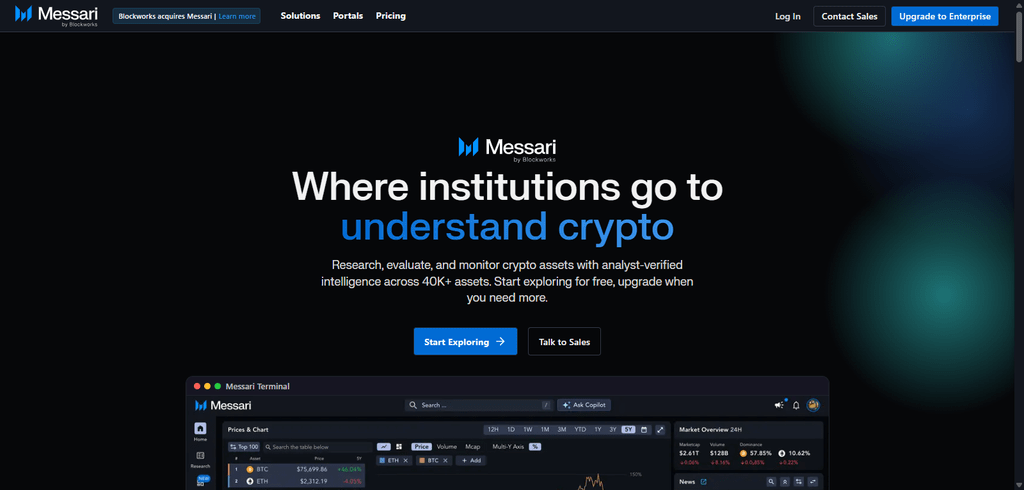
Data security and compliance rely on adherence to financial research reporting and data governance. Messari provides historical data on crypto metrics and market performance. Their coverage of on-chain data is focused on major crypto assets of Bitcoin and Ethereum and other assets of the DeFi ecosystem.
Their APIs and dashboards focus on compliance disclosures and token fundamentals and risk monitoring. Messari’s platform is a popular tool used by investors, analysts, and other organizations for thorough assessment of crypto assets, compliance, and regulatory practices transparency.
Messari Features, Pros & Cons
| Feature | Pros | Cons |
|---|---|---|
| Founded 2018 | Strong research focus | Newer entrant |
| Pricing Model | Free + premium | Premium costly |
| Security | Data governance | No SOC certifications |
| Compliance | Governance disclosures | Limited AML tools |
| Historical Data | Token metrics depth | Not forensic‑grade |
| On‑Chain Coverage | Major assets | Limited smaller chains |
| APIs | Easy dashboards | Less customizable |
| Clients | Investors, analysts | Not regulator‑focused |
| Research | Institutional quality | Paywall limits access |
| Transparency | Governance insights | Limited forensic analytics |
5. Glassnode
Founded in 2018, Glassnode provides data as a service (DaaS) through market intelligence and on-chain analysis. Glassnode’s pricing is tiered from public to private access at varying subscription levels. Glassnode’s infrastructure is designed with data pipelines that are encrypted toward security and compliance with GDPR.
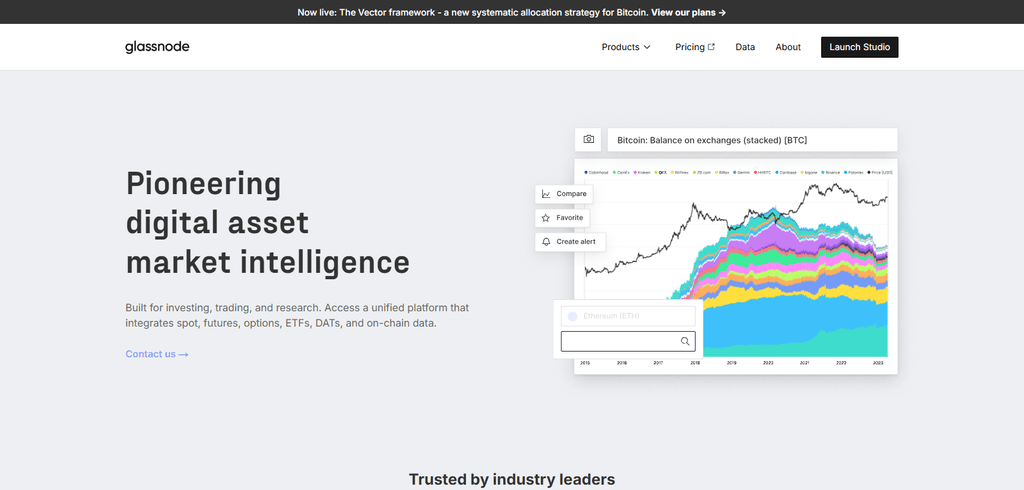
Glassnode’s services allow users to dive into the depth of on-chain activity, liquidity, and network status. On-chain analysis spans most widely used cryptocurrencies such as Bitcoin and Ethereum, stablecoins, and the DeFi ecosystem. Because of its range in advanced analytics, such as its HODL and Exchange inflow/outflow analytics, Glassnode’s offering is geared to serving institutional clients.
Glassnode Features, Pros & Cons
| Feature | Pros | Cons |
|---|---|---|
| Founded 2018 | On‑chain analytics leader | Younger than Chainalysis |
| Pricing Model | Free + premium | Institutional tier costly |
| Security | GDPR compliant | No SOC certifications |
| Compliance | Risk monitoring | Not AML/KYC focused |
| Historical Data | Wallet activity depth | Limited niche tokens |
| On‑Chain Coverage | BTC, ETH, DeFi | Smaller chains less covered |
| APIs | High‑performance | Requires expertise |
| Clients | Traders, researchers | Less regulator adoption |
| Indicators | Advanced metrics | Proprietary formulas |
| Community | Widely followed | Premium limits access |
6. CryptoCompare
Like Glassnode, CryptoCompare was founded in 2014. CryptoCompare provides institutional quality market data, offering clients custom enterprise solutions at varying pricing levels. CryptoCompare is ISO certified to ensure security and compliance along with the adherence to financial data standards. CryptoCompare has the most compelling pricing and order book data of all the vendors.
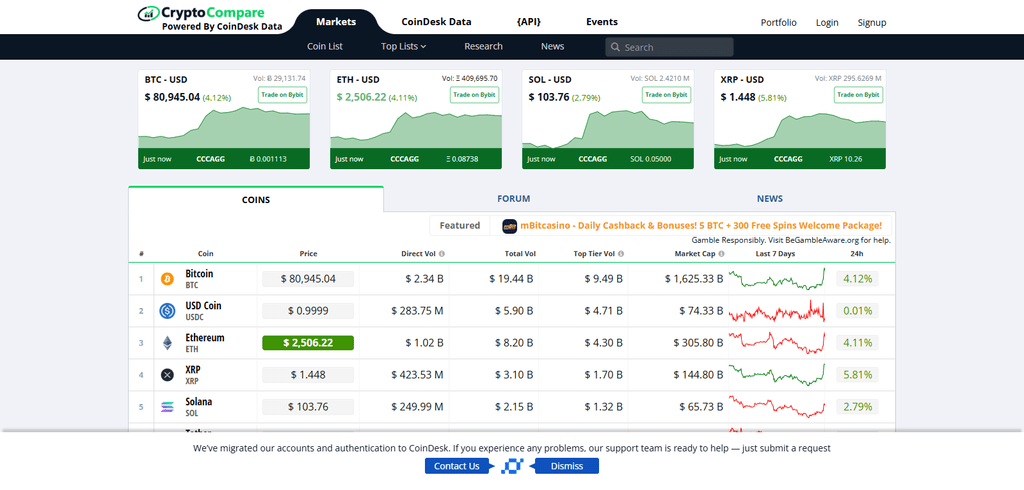
While on-chain data and analytics are more robust elsewhere, CryptoCompare offers time-tested off-chain markets data and offers clients market data indices. CryptoCompare’s APIs support a variety of compliance functions and risk management. CryptoCompare is primarily used by institutional clients for standardized market analytics.
CryptoCompare Features, Pros & Cons
| Feature | Pros | Cons |
|---|---|---|
| Founded 2014 | Established | Competition from Kaiko |
| Pricing Model | Subscription | Premium costly |
| Security | ISO certified | Limited forensic focus |
| Compliance | Financial reporting | Not AML/KYC |
| Historical Data | Trade volumes depth | Limited niche assets |
| On‑Chain Coverage | Limited | Focused off‑chain |
| APIs | Reliable | Requires integration |
| Clients | Exchanges, regulators | Less retail focus |
| Indices | Widely adopted | Proprietary methodology |
| Transparency | Standardized | Limited forensic analytics |
7. Nomics
Nomics was started in 2017 and is a provider of crypto market data that focuses on transparency. With a freemium model, Nomics offers free API access with pricing tiers for higherlevel data. Security and compliance are addressed by Nomics with data validation and adherence to financial reporting standards.
Nomics offers excellent depth in historical data of pricing, volumes, and exchange activities. Nomics’ offering of on-chain data is limited as their focus is more on providing a market feed off-chain. APIs provided by Nomics help developers, traders, and other institutional customers create high-speed integrations.
Due to its focus on transparent exchange data, Nomics is a relied upon provider for tracking market activity, compliance, and portfolio analysis.
Nomics Features, Pros & Cons
| Feature | Pros | Cons |
|---|---|---|
| Founded 2017 | Transparent exchange data | Younger |
| Pricing Model | Free + premium | Premium costly |
| Security | Data validation | No SOC certifications |
| Compliance | Reporting standards | Not AML/KYC |
| Historical Data | Pricing depth | Limited forensic |
| On‑Chain Coverage | Limited | Focused off‑chain |
| APIs | Developer‑friendly | Less institutional |
| Clients | Developers, traders | Not regulator‑focused |
| Transparency | Emphasis on clean data | Limited forensic |
| Accessibility | Free API | Limited advanced datasets |
8. Amberdata
Digital asset data infrastructure from Amberdata, another 2017 startup, provides a similar enterprise pricing model with subscription tiers focusing on financial services and crypto business customers. Amberdata’s security and compliance are addressed with SOC 2 and AML/KYC frameworks.
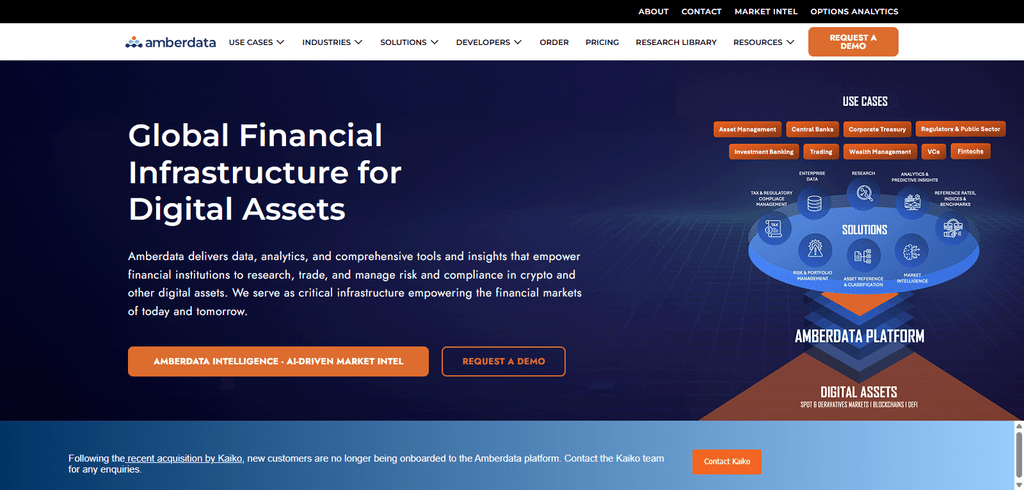
Amberdata offers a wealth of historical data with pricing, derivatives, and on-chain data. Amberdata offers a depth and breadth of coverage on an on-chain basis and includes Bitcoin, Ethereum, stablecoins, and DeFi protocols.
Their high performance APIs help customers address trading, compliance, and risk management. Due to their comprehensive data coverage, Amberdata is trusted leaders for institutional crypto data infrastructure and are used heavily by banks, asset managers, and crypto custodians.
Amberdata Features, Pros & Cons
| Feature | Pros | Cons |
|---|---|---|
| Founded 2017 | Institutional infrastructure | Younger |
| Pricing Model | Enterprise | Costly |
| Security | SOC 2 certified | Limited public audits |
| Compliance | AML/KYC | Focused on institutions |
| Historical Data | Pricing + derivatives | Storage heavy |
| On‑Chain Coverage | BTC, ETH, DeFi | Smaller chains less covered |
| APIs | High‑performance | Complex integration |
| Clients | Banks, custodians | Less retail |
| Coverage | Unified feeds | Proprietary |
| Adoption | Widely trusted | Competition from Chainalysis |
9. Lukka
Lukka was created in 2014 with a focus on crypto tax, accounting, and data. Their pricing model is enterprise specific and caters to auditors, funds and regulators. Security and compliance are very important to them, and as a result, Lukka has SOC 1 and SOC 2 compliance along with adherence to the GAAP and IFRS frameworks.
Lukka has good historical depth in pricing, transactions, and valuations data. There is moderate on-chain coverage and they focus on large blockchains and assets that are relevant to accounting workflow.
Lukka’s APIs and software easily integrate with enterprise systems to aid in compliance, audit and tax reporting. Lukka has built a client base of regulators, auditors, and Fortune 500 firms for their standardized and compliant crypto financial data.
Lukka Features, Pros & Cons
| Feature | Pros | Cons |
|---|---|---|
| Founded 2014 | Accounting/tax focus | Niche |
| Pricing Model | Enterprise | Costly |
| Security | SOC 1 & SOC 2 | Limited transparency |
| Compliance | GAAP/IFRS | Not forensic |
| Historical Data | Pricing + valuation | Limited niche tokens |
| On‑Chain Coverage | Major chains | Smaller chains less covered |
| APIs | Enterprise integration | Complex setup |
| Clients | Auditors, regulators | Not retail |
| Adoption | Fortune 500 trusted | Limited analytics |
| Transparency | Accounting standards | Not trading‑focused |
10. Santiment
Santiment was founded in 2016 with a focus on behavioral and on-chain data for crypto. There is community access offered for free and advanced analytics can be accessed with a premium subscription. Security and compliance are addressed through data encryption, and they also follow GDPR. Santiment offers historical data for social sentiment, developer data, and on-chain data. Their on-chain coverage is for Bitcoin, Ethereum, stablecoins and the DeFi ecosystem.
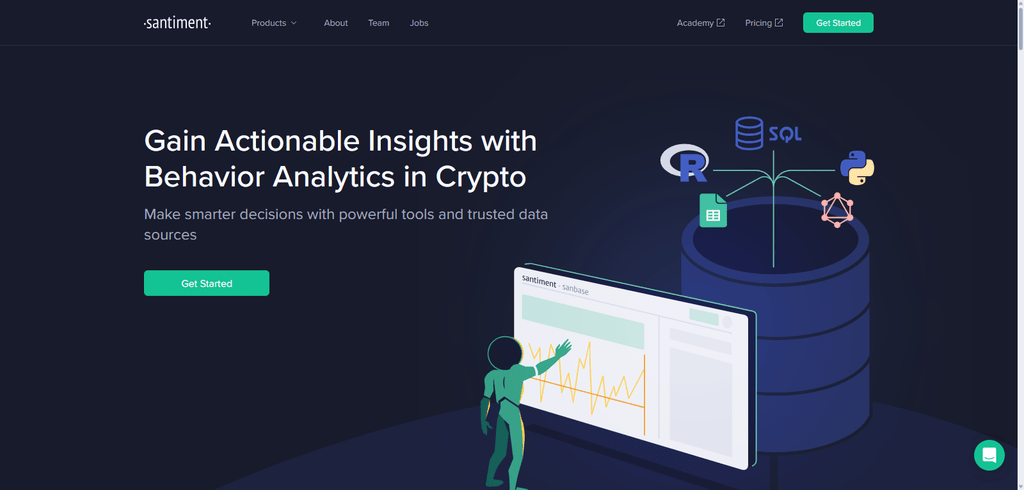
They have APIs providing insights for market psychology, big money movement, and token fundamentals. There is high demand for Santiment from traders, analysts, and institutions who use behavioral data and on-chain data to supplement traditional market data to assist with their analysis and decision-making.
Santiment Features, Pros & Cons
| Feature | Pros | Cons |
|---|---|---|
| Founded 2016 | Behavioral analytics | Niche |
| Pricing Model | Free + premium | Premium costly |
| Security | GDPR compliant | No SOC certifications |
| Compliance | Data governance | Not AML/KYC |
| Historical Data | Sentiment depth | Limited forensic |
| On‑Chain Coverage | BTC, ETH, DeFi | Smaller chains less covered |
| APIs | Insights delivery | Less enterprise focus |
| Clients | Traders, analysts | Not regulator‑focused |
| Indicators | Whale tracking | Proprietary |
| Community | Strong following | Limited institutional adoption |
Crypto Data Providers Comparison
| Provider | Founded Year | Pricing Model | Security & Compliance | Historical Data Depth | On‑Chain Coverage |
|---|---|---|---|---|---|
| Chainalysis | 2014 | Enterprise tiered | SOC 2, AML/KYC | Bitcoin inception + multi‑chain | Extensive forensic coverage |
| Kaiko | 2014 | Subscription tiers | GDPR compliant | Tick‑level trades, order books | Limited (focus on off‑chain) |
| Coin Metrics | 2017 | Subscription | SOC 2, financial standards | Deep network + market metrics | BTC, ETH, stablecoins, major chains |
| Messari | 2018 | Free + premium | Data governance | Token metrics, governance history | Major assets, DeFi protocols |
| Glassnode | 2018 | Free + premium | GDPR compliant | Wallet activity, liquidity flows | BTC, ETH, stablecoins, DeFi |
| CryptoCompare | 2014 | Subscription | ISO certified | Trade volumes, indices | Limited (off‑chain focus) |
| Nomics | 2017 | Free + premium | Data validation | Pricing, volumes, exchange activity | Limited (transparent off‑chain feeds) |
| Amberdata | 2017 | Enterprise | SOC 2, AML/KYC | Pricing, derivatives, on‑chain | BTC, ETH, stablecoins, DeFi |
| Lukka | 2014 | Enterprise | SOC 1 & SOC 2, GAAP/IFRS | Pricing, valuation, accounting records | Major chains (accounting focus) |
| Santiment | 2016 | Free + premium | GDPR compliant | Sentiment, developer activity | BTC, ETH, stablecoins, DeFi |
Conclusion
In summary, the crypto data space has a variety of options that address the diverse demands of institutions and analysts. Tier one data providers specialize across different areas. For instance, Amberdata and Chainalysis would be suitable for forensic and compliance requirements. Meanwhile, Kaiko and CryptoCompare are more suitable for market feeds and pricing.
Coin Metrics and Glassnode specialize in on-chain data. Meanwhile, Messari and Santiment have a focus on sentiment analysis and behavioral data. Nomics is transparent about its exchange data, and Lukka caters to services at the intersection of crypto and accounting and tax services.
While each firm specializes in a different area of market data, together they provide the necessary pillars of data for the industry. Investors and regulators have access to comprehensive historical data and secure data systems, while different price tiers of service fulfill the needs for complexity and transparency that tailored data demand spawns.
FAQ
Which provider is best for compliance?
Platforms like Chainalysis and Amberdata are strongest in compliance, offering AML/KYC tools, SOC certifications, and forensic transaction monitoring.
Who offers the deepest historical data?
Kaiko, CryptoCompare, and Coin Metrics excel in historical depth, with tick‑level trade data, order books, and network health metrics dating back to Bitcoin’s inception.
Which platforms focus on on‑chain analytics?
Glassnode, Coin Metrics, and Santiment provide extensive on‑chain coverage, including wallet activity, liquidity flows, and behavioral sentiment indicators.
Who specializes in research and transparency?
Messari delivers institutional research and governance insights, while Nomics emphasizes transparent exchange data and pricing feeds.
Which provider is tailored for accounting and tax?
Lukka is designed for enterprise accounting, tax compliance, and audit workflows, integrating with GAAP/IFRS standards.