

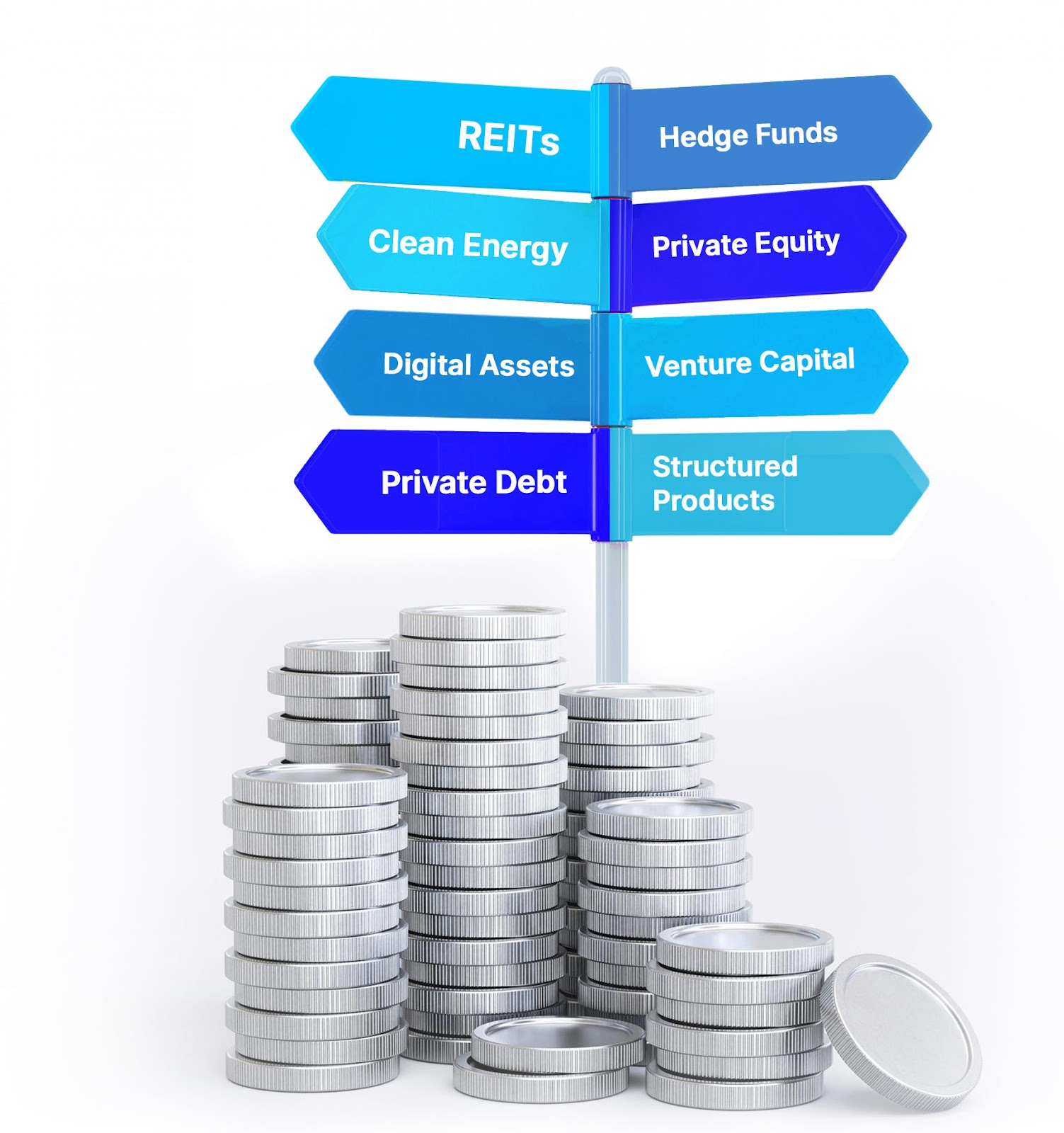
I’ll talk about the Best Africa-Focused Alternative Investment Assets in this post, emphasizing how the continent’s fast economic development, expanding population, and growing need for energy, infrastructure, and technology make for attractive long-term investment opportunities outside of traditional markets.
How Choose Africa-Focused Alternative Investment Assets
Understand Country/Regional Risk: Scope out the African nations for political risk, and evaluate how stable the politics are, the regulatory framework, the strength of the currency, and the ease of doing business.
Focus on Sectors with Growth Potential: Do not hedge your bets with sectors that do not have strong structural demand and focus on sectors like renewable energy, agribusiness, fintech, infrastructure, healthcare, and affordable housing.
Consider Risk Return Correlation: Make sure that the expected return on each asset as well as the volatility and time horizon, correctly align with your investment goals and risk tolerance.
Work with Experienced Local Managers: Investing in funds and works that are managed by people with on-the-ground expertise and strong networks in the area is highly recommended.
Spread Investments Across Assets and Locations: Spread your investments to mitigate concentration risk across different industries, nations, and stages of the projects.
Assess Governance and Transparency: Make sure that you align with the investors and managers in tracking reporting standards, ESG policies, and the interests at stake.
Consider Currency Risk and Exit Plan: Determine if there is a reasonable amount of foreign exchange risk and hedging strategies you have, as well as a way to exit through trade sales, IPOs, or income distributions.
Use Multilateral and ESG Support: Target investments that development banks back or are within ESG frameworks to provide more stability and better risk control.
Key Point & Best Africa-Focused Alternative Investment Assets List
| Investment Asset | Key Point |
|---|---|
| Agricultural Land & Agribusiness Funds | Benefit from rising food demand, export growth, and improved agritech adoption across Africa’s fertile but undercapitalized farmland. |
| Renewable Energy Projects (Solar, Wind, Hydro) | Address power shortages while leveraging abundant natural resources and strong government support for clean energy expansion. |
| Infrastructure Bonds & PPP Projects | Offer stable, long-term returns backed by governments through investments in roads, ports, power, and water infrastructure. |
| Private Equity Funds (Africa SMEs & Growth) | Capitalize on underpenetrated SME markets with high growth potential driven by urbanization and rising consumer demand. |
| Venture Capital (Tech & Fintech Hubs) | Target fast-scaling startups solving payments, lending, and digital access challenges in Africa’s mobile-first economies. |
| Real Estate (Affordable Housing & Commercial) | Benefit from rapid urban population growth and housing shortages in major African cities. |
| African Real Estate Investment Trusts (REITs) | Provide diversified real estate exposure with liquidity and income through listed property portfolios. |
| Mining & Critical Minerals (Lithium, Cobalt, Rare Earths) | Gain exposure to global energy transition demand, as Africa holds significant reserves of battery and clean-tech minerals. |
| Impact & ESG Funds | Generate financial returns while addressing social, environmental, and sustainability challenges aligned with SDGs. |
| Timberland & Forestry Investments | Offer inflation protection and carbon-credit potential through sustainable forestry and rising global timber demand. |
1. Agricultural Land & Agribusiness Funds
An allocation to Agricultural Land & Agribusiness Funds is a long-term bet on Africa’s enormous swathes of cultivable land, burgeoning population, and growing food consumption.
Africa contains over 60% of the world’s uncultivated farmland, and there is massive potential to modernize farming, irrigation, and agritech. Investments in food processing, crop and animal husbandry, and export-oriented agribusinesses.
These funds are among the Best Africa-Focused Alternative Investment Assets for their defensive characteristics and growing inflation pressures. The main risks include climate and logistical. However, the long-term volatility is manageable with appropriate regional and crop diversification.
Agricultural Land & Agribusiness Funds – Key Features
| Feature | Explanation |
|---|---|
| Large Arable Land Base | Africa holds vast underutilized farmland suitable for scalable food production. |
| Food Security Demand | Population growth drives long-term demand for crops and livestock. |
| Agritech Integration | Use of irrigation, mechanization, and data improves yields. |
| Export-Oriented Growth | Strong links to global food and commodity markets. |
| Inflation Hedge | Agricultural returns often rise with food prices. |
Agricultural Land & Agribusiness Funds Pros & Cons
Pros
- Population increase creates demand along with food security requirements.
- There is entry into large amounts of crude and underused cultivable land.
- Inflation protection through commodity-supported returns.
- There are strong possibilities for the global food market.
- There is support from the government and development banks.
Cons
- There are climate hazards, including floods and droughts.
- Rural areas have poor infrastructure and logistics.
- There are issues with land tenure and ownership.
- There is price volatility with regard to commodities.
- It takes much longer to see the returns.
2. Renewable Energy Projects (Solar, Wind, Hydro)
Solar, wind, and hydro energy project renewables are important in mitigating chronic power shortages in Africa. Africa is the most renewable continent with its strong wind corridors, abundant sunlight, and lots of major river systems.

These project receive power purchase agreements (PPAs) from governments and utilities providing stable and long term cash flows. As renewable energy is ranked among the Best Africa-Focused Alternative Investment Assets, it benefits from international climate finance, multilateral funding, and ESG capital flows.
Renewable energy projects do suffer from regulatory and grid-infrastructure risks and while there is demand for dependable electricity in households across industries, there remains sustained attractive risks as well as returns.
Renewable Energy Projects (Solar, Wind, Hydro) – Key Features
| Feature | Explanation |
|---|---|
| Abundant Natural Resources | High solar irradiation, wind corridors, and hydro capacity. |
| Long-Term Power Contracts | Stable cash flows through PPAs with utilities or governments. |
| Energy Access Focus | Supports electrification in underserved regions. |
| ESG Alignment | Strong support from climate and green finance institutions. |
| Scalable Projects | Suitable for both utility-scale and decentralized solutions. |
Renewable Energy Projects (Solar, Wind, Hydro) Pros & Cons
Pros
- There is huge and unfilled demand for electricity.
- The natural resources are abundant and renewable.
- There is cash flow for the long term that is guaranteed through contracts (PPAs).
- There is strong support for ESG and climate finance.
- There is reduced dependence on fossil fuels.
Cons
- Uncertainty regarding tariffs and regulations.
- The grid has reliability issues, as well as transmission problems.
- There is a large amount of capital that is required up-front.
- There is political risk if utilities fail to make payments.
- There are delays with regard to developing the project.
3. Infrastructure Bonds & PPP Projects
Infrastructure Bonds and Public – Private Partnership (PPP) Projects finance vital public assets (roads, ports, airports, electricity power plants, and water systems). Furthermore, Africa’s infrastructure gap exceeds trillions and therefore creates an immense pipeline of long-term investment opportunities.
These instruments provide stream income, mostly predictable, and also contain government guarantees and user fees. These are also considered infrastructure investments which are characterized as defensive investment with inflation-linked returns, low correlation with public equities, and also ranks as the Best Africa-Focused Alternative Investment Assets.
Execution and political risks do exist, however, improved regulatory frameworks and with the involvement of multilateral development banks, the credit quality and investor confidence for a great many of Africa’s markets will receive a boost. This translates to a bigger and brighter future for investors.
Infrastructure Bonds & PPP Projects – Key Features
| Feature | Explanation |
|---|---|
| Essential Asset Focus | Roads, ports, energy, water, and transport infrastructure. |
| Government Backing | Revenue often supported by sovereign or municipal guarantees. |
| Long-Term Income | Predictable cash flows over extended concession periods. |
| Inflation Linkage | Tariffs and usage fees often adjust with inflation. |
| Economic Multiplier Effect | Infrastructure boosts productivity and trade. |
Infrastructure Bonds & PPP Projects Pros & Cons
Pros
- There are steady and long-term income streams.
- There is a government for backing or concession-based revenues.
- There are cash flows that are linked to inflation.
- There is little correlation with stocks and equity.
- It is essential for the development of the economy.
Cons
- There is a risk regarding politics and policies.
- There are long periods of lock-in.
- There is a risk involving execution and construction.
- There may be a mismatch in currency for foreign investors.
- There are complicated structures involving the law.
4. Private Equity Funds (Africa SMEs & Growth)
Funds concentrating on African SMEs and growth-stage companies are targeting one of the most dynamic but undercapitalized sections of the continent.

These funds invest in the consumer goods, healthcare, logistics, education and financial services sectors that are gaining from urbanization and rising incomes. Value creation comes from Operational improvements, expanded market reach and professional management.
African Private Equity is one of the Best Africa-Focused Alternative Investment Assets and has a potential for higher returns, unlike most developed markets. Key risks are related to timing of exits and currency volatility. However, improving capital markets and interests from strategic buyers enhance the long-term exit.
Private Equity Funds (Africa SMEs & Growth) – Key Features
| Feature | Explanation |
|---|---|
| SME Market Exposure | Targets undercapitalized but high-growth businesses. |
| Active Value Creation | Operational improvements and governance upgrades. |
| Consumer Growth Themes | Benefits from rising incomes and urban demand. |
| Sector Diversification | Investments across healthcare, logistics, FMCG, and services. |
| High Return Potential | Less competition compared to developed markets. |
Private Equity Funds (Africa SMEs & Growth) Pros & Cons
Pros
- Emerging Areas offer considerable expansion opportunities.
- Operational improvements can make greater enhancements.
- There is a growing demand from consumers and from the middle class.
- There is a little competition so the return potential is iii Increased.
- It is easier to make a strategic exit from investments.
Cons
- Investments cannot be sold and managed need a long commitment to I to the fund.
- Currency and transfer risks
- Uncertainty around exit timing.
- Risks around governance and management.
- More participation is necessary from the operational side.
5. Venture Capital (Tech & Fintech hubs)
With a focus on payments, lending, and insurance as well as logistics and digital access, venture capital around Africa’s tech and fintech hubs involves investing in rapidly growing startups. The continent’s mobile first, population, and the low bank penetration, sets an ideal environment for scalable innovation.

Increasing global capital is attracted to leading hubs like Lagos, Nairobi, Cape Town, and Cairo. Venture Capital has a potential for high growth and is one of the Best Africa-Focused Alternative Investment Assets, but is riskier. Successful exits through IPOs and acquisitions are on the rise as the market experiences digital growth, increased regional integration and. Global investors gain more interest in Africa’s technology ecosystem.
Venture Capital (Tech & Fintech Hubs) – Key Features
| Feature | Explanation |
|---|---|
| Mobile-First Economies | Strong adoption of digital and mobile solutions. |
| Fintech Innovation | Payments, lending, and digital banking solutions dominate. |
| Scalable Business Models | Technology enables rapid regional expansion. |
| Growing Startup Ecosystems | Hubs in Lagos, Nairobi, Cairo, and Cape Town. |
| High Growth Upside | Early-stage exposure to transformative companies. |
Venture Capital (Tech & Fintech Hubs) Pros & Cons
Pros
- Rapid increase in digital technology and mobile technology.
- There is strong innovation in the technology and financial technology areas.
- There is growing interest from investors.
- There is the potential for excessive return on Investment.
Cons
- A large number of start-up companies fail.
- There can be large changes in the value of a company.
- Fintech can be uncertain in regulations.
- There is little to no market in people and companies to exit.
- Investment in the company has to be made and it has to be made over a long period of time.
6. Real Estate (Affordable Housing & Commercial)
Real Estate investment in affordable housing and commercial properties mitigatesthe impacts of rapid urbanization in Africa and housing shortages. Urban centers attract job seekers and die to this, new homes are required annually. For commercial assets like offices, retail centers and industrial warehouses, active trade and consumer markets are beneficial.

African real estate is among the Best Africa-Focused Alternative Investment Assets thanks to the huge potential to derive tangible asset value and incremental value appreciation over time with additional benefits like rental income.
Despite potential risks like financing constraints and regulatory challenges, working with local developers and creating demand for the investments mitigates risks and enhance positive long-term investment outcomes.
Real Estate (Affordable Housing & Commercial) – Key Features
| Feature | Explanation |
|---|---|
| Urbanization Demand | Rapid migration to cities fuels housing needs. |
| Affordable Housing Gap | Large supply deficit creates sustained demand. |
| Commercial Expansion | Growth in offices, retail, and industrial spaces. |
| Tangible Asset Base | Physical assets provide capital preservation. |
| Rental Income Streams | Generates steady cash flow potential. |
Real Estate (Affordable Housing & Commercial) Pros & Cons
Pros
- There is a huge need for affordable housing for many people in urban areas.
- More and more people are moving to urban areas.
- There is rising income from rentals and value of the assets increases.
- There is protection from large losses.
- There is a growing demand in commercial activities.
Cons
- There are very high costs of building and financing.
- There can be a lot of time taken in deciding on the rules and getting permits to build.
- Risks to currency from depreciation.
- Less available and less information on the market.
- There is a reliance on local companies to manage and build the projects.
7. African Real Estate Investment Trusts (REITs)
African REITs are vehicles the provide investors with diversified exposure to income-generating real estate. These vehicles are in listed and unlisted structures and typically invest in real estate like office buildings, shopping malls, logistics parks, and hospitality assets spanning major cities in the region.

Other benefits of REITs include periodic liabilities, professional management, and enhanced liquidity. REITs are positioned withing Best Africa-Focused Alternative Investment Assets since they relieve investors of property ownership constraints.
Although the market maturity is different in every country, REIT markets are undergoing rapid development, largely in South Africa, Kenya, Nigeria, and Morocco, driven by regulatory reforms and active participation by pension funds.—
African Real Estate Investment Trusts (REITs) – Key Features
| Feature | Explanation |
|---|---|
| Diversified Property Exposure | Access to multiple property types and locations. |
| Dividend Income | Regular income from rental earnings. |
| Listed Structure | Improved liquidity compared to direct property. |
| Professional Management | Assets managed by experienced real estate teams. |
| Regulatory Frameworks | Growing REIT regulations across key markets. |
African Real Estate Investment Trusts (REITs) Pros & Cons
Pros
- African Real Estate Investment Trusts would provide investors the chance to get a fraction of a diversified institutional level real estate.
- Receiving dividends regularly is an advantage.
- Better liquidity than direct property.
- Professional property management.
- Increasingly favorable laws.
Cons
- Highly topics in few nations.
- Sensitive to interest rates.
- Some markets are shallower.
- Involved in currencies.
- Real estate market is cyclical.
8. Mining & Critical Minerals (Lithium, Cobalt, Rare Earths)
Mining and Critical Minerals investments concentrate on the pillars of the electric vehicle supply chain, battery industries and renewable energy technologies. Africa is a strategically important mining jurisdiction in the global energy transition because of the continent’s substantial reserves of lithium, cobalt, graphite and other rare earth elements.

These assets are part of the Best Africa-Focused Alternative Investment Assets given the strong, long-term demand coupled with supply constraints. The major risks include commodity price wear, fluctuating governance within Africa, and the likelihood of political disorders, but these obstacles are being mitigated through governance and ESG (Environmental, social, and governance) improvement, along with international investments on compatible partnerships which are making mining jurisdictions more attractive from an investment standpoint.
Mining & Critical Minerals – Key Features
| Feature | Explanation |
|---|---|
| Strategic Mineral Reserves | Africa holds lithium, cobalt, and rare earth resources. |
| Energy Transition Demand | Essential for EVs, batteries, and renewables. |
| Long-Term Supply Constraints | Limited global alternatives increase value. |
| Export-Oriented Revenues | Strong demand from global manufacturers. |
| Technological Importance | Critical to clean energy supply chains. |
Mining & Critical Minerals (Lithium, Cobalt, Rare Earths) Pros & Cons
Pros
- Increasing strong demand due to energy transition.
- Large mineral reserves in africa
- Potential for high prices in the long-run
- Important for battery supply chains
- More partnerships at the global level
Cons
- Price of goods can be very volatile.
- Risks of Politics and regulations.
- Social challenges and environmental.
- Projects requiring lots of capital.
- Extended deadlines for development.
9. Impact & ESG Funds
Impact and ESG Funds seek to provide capital protection while generating measurable positive social and/or environmental outcomes. Impact and ESG investing covers a wide spectrum of sectors, including, but not limited to, renewable energy, health care systems, education, social & affordable housing, and financial inclusion.

These investments impact sectors relevant to global sustainability frameworks and are active in Development Finance Institutions (DFIs) and ESG capital resources. Impact investing within Africa is demographically positive, and lacks basic social infrastructure, making it a continent with one of the most attractive opportunities to invest in impact-focused assets, positioning it as one of the Best Africa-Focused Alternative Investment Assets.
Impact measurement, along with the regulatory environment, tends to be complicated, but the use of blended finance is improving from a regulatory standpoint, making it possible to increase positive outcomes.
Impact & ESG Funds – Key Features
| Feature | Explanation |
|---|---|
| Dual Return Objective | Combines financial returns with social impact. |
| SDG Alignment | Focus on education, health, energy, and inclusion. |
| Blended Finance Structures | Risk-sharing with development institutions. |
| ESG Compliance | Strong governance and sustainability standards. |
| Developmental Impact | Supports inclusive economic growth. |
Impact & ESG Funds Pros these funds Pros & Cons
- Financial and social impact are combined.
- Concessional and blended money can be accessed.
- Strong relationship with SDGs.
- More ESG capital is flowing globally.
- Lower risks on reputation.
Cons
- Measurement of impact is complex.
- Some funds may have lower returns.
- Regulative inconstancy.
- Reporting standards are limited.
- Deal sizes are small.
10. Timberland & Forestry Investments
Investments in forestry and timberland concentrate on sustainable plantation forestry and timber manufacturing with carbon sequestration projects. Africa’s climatic conditions allow for the cultivation of type tree species with excellent biological growth rates.

Such investments allow for protection against inflation, diversification, and income from carbon credits. Forestry investments are ranked asone of the Best Africa-Focused Alternative Investment Assets as it meets the ever rising demand for diverse sustainable timber and climate solutions.
Key risks include inadequate environmental management and land tenure issues, but the certification standards and responsible forestry practices help support institutional investors’ long term value and sustainability.
Timberland & Forestry Investments – Key Features
| Feature | Explanation |
|---|---|
| Biological Growth | Tree growth adds intrinsic value over time. |
| Carbon Credit Potential | Supports climate mitigation strategies. |
| Sustainable Timber Demand | Rising global demand for certified wood. |
| Inflation Protection | Timber prices tend to rise over time. |
| Land Appreciation | Long-term value of forestry land increases. |
Timberland & Forestry Investments Pros & Cons
Pros
- Inflation is is protected due to biological growth
- Demand growth for sustainable timber
- ESG and carbon credits
- Not correlated with financial markets
- Appreciation of long-term value in land
Cons
- Lengthy periods of investment
- Risks related to climate and fire
- Ownership of land and legal matters
- Lack of liquidity
- Need for ongoing ecological stewardship
Risks & Challenges of Africa-Focused Alternative Assets
Political & Regulatory Risk
There are changes in the government, lack of policies, weak legal enforcement, and regulations that are not consistent, all of which may lead to instability in the investments and affect the protection investors are given.
Currency & FX Volatility
There are changes in the value of African currencies, which may lead to a decrease in the USD or EUR-denominated returns and increase the risk of repatriation.
Infrastructure & Logistics Gaps
There are limited transport, energy, and storage facilities that may increase operational costs and delays in the execution of projects in the various sectors.
Liquidity Constraints
Africa’s Alternative Investments has limited markets, fewer exit alternatives, and a longer holding period as compared to the developed markets.
Governance & Transparency Issues
Problems in corporate governance, lack of financial data, and sporadic reports can complicate due diligence.
Operational & Execution Risk
There are possible delays in projects due to lack of land, lack of required skills, disruptions in the supply chain, or poor performance of local partners.
Legal & Contract Enforcement Risk
There may be a delay in resolution of disputes and a risk of loss of rights by investors due to slow judicial process and a dispute of a contract.
Conclusion
Investors can find a compelling mix of long-term growth, diversification, and impact potential in the Best Africa-Focused Alternative Investment Assets. Africa offers special prospects in the fields of agriculture, renewable energy, infrastructure, private equity, real estate, and vital minerals due to the continent’s fast population expansion, urbanization, digital adoption, and global energy shift.
Disciplined due diligence, local relationships, and diversified portfolios can effectively manage risks like political unpredictability, currency volatility, and liquidity constraints. Africa-focused alternative assets can improve portfolio resilience, provide appealing risk-adjusted returns, and significantly contribute to sustainable economic development throughout the continent for long-term investors with a higher risk tolerance.
FAQ
Africa-focused alternative investment assets include non-traditional investments such as private equity, infrastructure, renewable energy, agribusiness, real estate, venture capital, mining, and impact funds operating across African markets.
Investors are attracted by high long-term growth potential driven by population expansion, urbanization, digital adoption, and infrastructure development, along with portfolio diversification benefits.
Most Africa-focused alternative investments require a long-term horizon, usually between 7 to 15 years, due to development timelines, operational scaling, and limited liquidity.
Yes, they generally carry higher risk than developed markets due to political, currency, and operational challenges, but also offer higher return potential when risks are well managed.
High-growth sectors include renewable energy, agribusiness, fintech, infrastructure, affordable housing, healthcare, and critical minerals supporting the global energy transition.