


I’ll talk about the top blockchain gaming engines for developers in this post. Developers may construct NFT-powered games, play-to-earn systems, and decentralized in-game economies thanks to the seamless integration of these engines and Web3 plugins with Unreal Engine.
These tools offer the performance, scalability, and blockchain capabilities required for contemporary game creation, whether you are creating tokenized assets or multiplayer experiences.
Key Point & Best Blockchain Gaming Engines for Developers List
| Web3 Plugin / SDK | Key Features |
|---|---|
| Enjin Engine | Enables blockchain-based in-game assets, NFT integration, and tokenized economies within Unreal Engine. |
| Immutable zkEVM SDK | Supports zero-knowledge rollups for scalable NFT and gaming transactions with low gas fees. |
| Gala Games Engine | Integrates Gala Games ecosystem for blockchain games, NFT rewards, and decentralized gameplay. |
| Ultra.io SDK | Provides game distribution, NFT marketplace integration, and Web3 monetization tools. |
| Solana Game Engine SDKs | High-performance SDKs for Solana blockchain, enabling fast transactions and NFT integration in games. |
| Algorand Gaming SDK | Lightweight SDK for Algorand blockchain gaming, including NFTs and in-game assets. |
| Polygon Gaming SDK | Easy integration of Polygon blockchain, supporting NFTs, low-cost transactions, and play-to-earn features. |
| NEAR Protocol SDK | Developer-friendly SDK for NEAR blockchain, enabling NFT creation, in-game tokens, and smart contracts. |
| Chromia Gaming Engine | Combines relational blockchain technology with Unreal Engine for scalable multiplayer games and NFT support. |
1. Unreal Engine + Web3 Plugins
A top platform for game production, Unreal Engine provides developers with powerful tools and high-fidelity graphics. It makes blockchain-based features like NFT ownership, play-to-earn mechanisms, and decentralized marketplaces possible by integrating Web3 plugins.
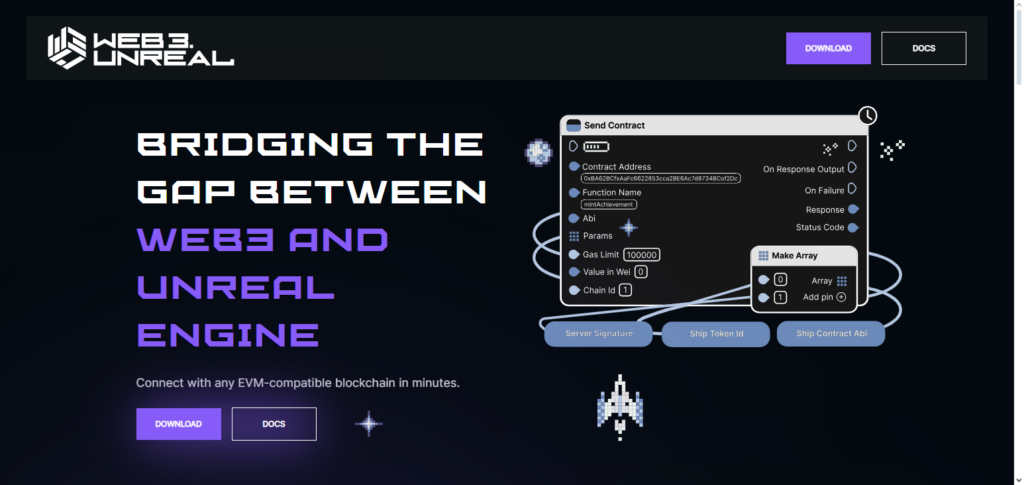
In the middle, these plugins provide smooth communication with Ethereum, Solana, or Polygon, connecting blockchain technology with conventional game creation. Fast prototyping is made possible by developers utilizing Unreal Engine’s blueprint technology in conjunction with smart contract connectivity.
It is perfect for studios looking to produce aesthetically beautiful blockchain games while upholding safe, decentralized asset management because of its scalability, real-time rendering, and vibrant developer community.
| Feature/Aspect | Details |
|---|---|
| Engine Name | Unreal Engine + Web3 Plugins |
| Blockchain Integration | Supports Ethereum, Solana, Polygon, and other EVM-compatible chains |
| Web3 Features | NFT minting, in-game tokenization, decentralized marketplaces, play-to-earn mechanics |
| KYC Requirements | Minimal KYC needed; wallet-based identity often sufficient for transactions and asset ownership |
| Development Tools | Blueprint visual scripting, C++ programming, Web3 SDKs integration |
| Scalability | High – capable of AAA-quality games with decentralized features |
| Player Asset Ownership | Full blockchain-based ownership of in-game items, NFTs, and tokens |
| Marketplace Support | Compatible with third-party NFT marketplaces and custom in-game trading systems |
| Use Case | High-end AAA games, NFT-enabled games, play-to-earn ecosystems |
| Advantages | Combines high-fidelity graphics with blockchain functionality; easy integration via plugins |
2. Enjin Engine
Having the best Web3 Plugin for Unreal Engine, Enjin Engine lets developers incorporate blockchain assets into their games easily. With Enjin, developers can give players true ownership of their items through transferrable NFTs that can be traded across multiple games.
Developers can also build virtual economies, distribute game rewards using ERC-1155 tokens, and create player-driven marketplaces. While some developers may find the blockchain technology intimidating,
Enjin Engine’s smart contracts do most of the work and eliminate worries of security issues. Enjin Engine is one of the \”Best Blockchain Gaming Engines for Developers for its user-friendly interface, and highly functional NFT features for users of Unreal Engine.
| Feature/Aspect | Details |
|---|---|
| Engine Name | Enjin Engine |
| Blockchain Integration | Ethereum-based blockchain, compatible with EVM chains |
| Web3 Features | NFT minting, in-game item tokenization, decentralized marketplaces, play-to-earn models |
| KYC Requirements | Minimal KYC; wallet-based authentication sufficient for asset ownership and trading |
| Development Tools | Enjin SDKs (Java, C#, Unity, Unreal), APIs for asset management and smart contracts |
| Scalability | High – supports large-scale multiplayer games and multiple NFT assets |
| Player Asset Ownership | Full control and ownership of NFTs and in-game items |
| Marketplace Support | Enjin Marketplace integration for trading NFTs and in-game assets |
| Use Case | NFT-based games, play-to-earn ecosystems, cross-game asset interoperability |
| Advantages | Easy NFT integration, cross-platform support, secure blockchain infrastructure |
3. Immutable zkEVM SDK
Immutable zkEVM SDK allows for the first time the integration of zero-knowledge proof technology with Unreal Engine and provides scalable solutions for blockchain-based gaming. Developers can create NFT-based games and enjoy the benefits of fast and cheap transactions.
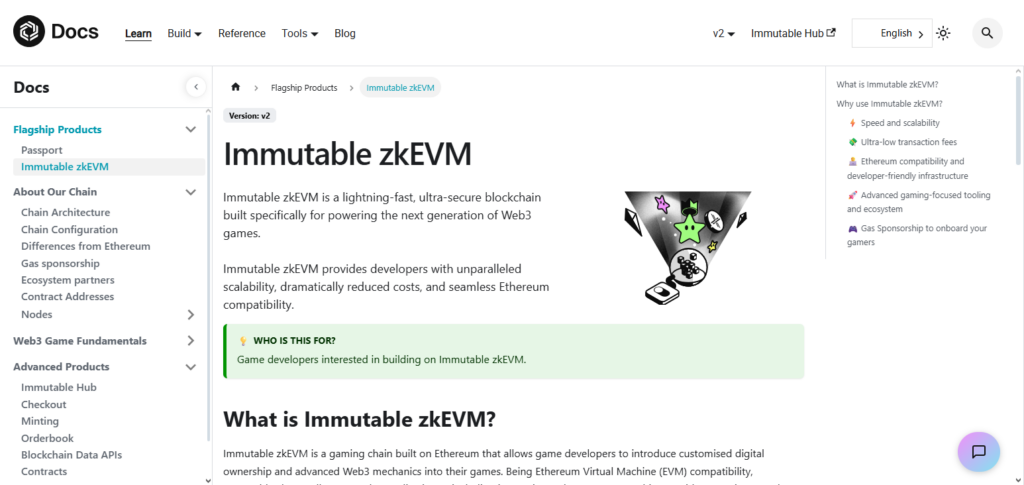
Immutable zkEVM tackles the main problems of security, net congestion and transaction delays of the Ethereum blockchain. With this SDK, developers can easily introduce play-to-earn features, asset trading and tokenized rewards.
The zk-rollup approach keeps costs down and performance high, which makes it one of the most reliable and best blockchain gaming engines for developers using Unreal Engine.
| Feature/Aspect | Details |
|---|---|
| Engine/SDK Name | Immutable zkEVM SDK |
| Blockchain Integration | Ethereum-compatible blockchain using zero-knowledge proofs (ZK) |
| Web3 Features | NFT minting, in-game tokenization, play-to-earn mechanics, low-cost transactions |
| KYC Requirements | Minimal KYC; wallet-based authentication sufficient for transactions and asset management |
| Development Tools | SDKs for smart contracts, APIs for NFT and token integration |
| Scalability | High – supports large-scale games with fast, low-cost transactions |
| Player Asset Ownership | Full blockchain-based ownership of in-game assets and NFTs |
| Marketplace Support | Compatible with Ethereum-based NFT marketplaces |
| Use Case | High-volume blockchain games, play-to-earn ecosystems, NFT-based game economies |
| Advantages | Low gas fees, fast transactions, secure and scalable Ethereum-compatible infrastructure |
4. Gala Games Engine
Gala Games Engine provides the integration of the Gala ecosystem into Unreal Engine and allows for the creation of blockchain-based games. Within this blockchain infrastructure, developers can create NFT rewards, decentralized gameplay, and tokenized economies for games.
They can implement play-to-earn models and collectibles that are integrated with Gala tools. Gala Games values and promotes player economies which in turn enhances community participation and enhances the gaming experience.
The focus on decentralization and the support for complex smart contracts and game-agnostic assets makes it one of the best blockchain gaming engines for developers. Especially for those who want to implement innovative NFTs in Unreal Engine.
| Feature/Aspect | Details |
|---|---|
| Engine Name | Gala Games Engine |
| Blockchain Integration | Proprietary Gala blockchain with Ethereum interoperability |
| Web3 Features | NFT minting, in-game asset ownership, decentralized marketplaces, play-to-earn mechanics |
| KYC Requirements | Minimal KYC; wallet-based authentication is sufficient for asset management and trading |
| Development Tools | SDKs, APIs, and developer tools for integrating NFTs, tokens, and game logic |
| Scalability | High – supports multiplayer games and large-scale in-game economies |
| Player Asset Ownership | Full ownership of NFTs and in-game assets |
| Marketplace Support | Integrated Gala Marketplace for trading NFTs and in-game assets |
| Use Case | NFT-enabled games, play-to-earn ecosystems, community-driven games |
| Advantages | Easy blockchain integration, player ownership, decentralized game governance |
5. Ultra.io SDK
Ultra.io SDK assists developers in incorporating their Unreal Engine games into Ultra’s multi-faceted ecosystem for blockchain distribution and monetization. Collaborating with Ultra.io lets developers efficiently create NFT marketplaces and reward systems, and tokenize in-game assets.
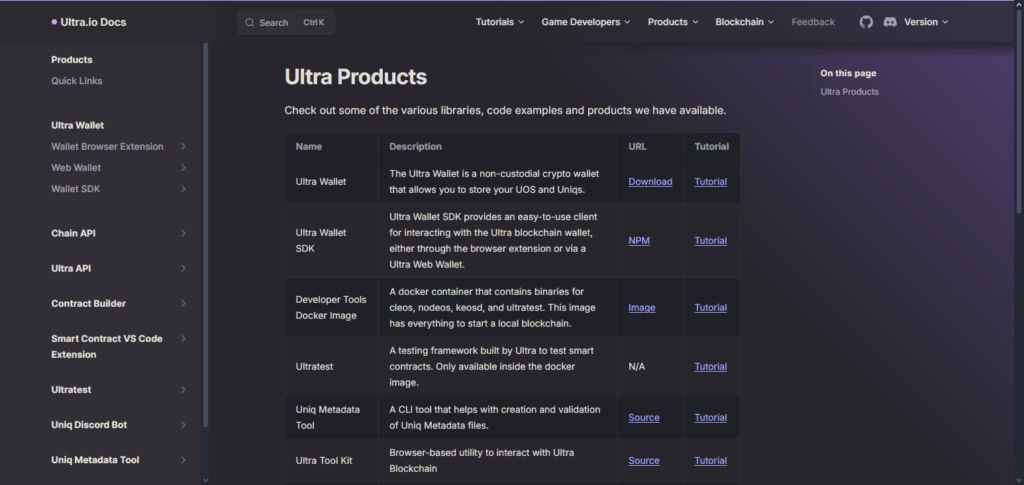
Ultra.io APIs streamline the blockchain complexity for account management, payment, and secure trading. The Ultra.io SDK can be utilized in single and multiplayer titles. Unreal Engine developers can build NFT and monetized games with relative ease because Ultra.io SDK provides the critical components.
No Other platform offers the monetization, distribution, and economy management making Ultra.io one of the most comprehensive blockchain gaming engines.
| Feature/Aspect | Details |
|---|---|
| Engine/SDK Name | Ultra.io SDK |
| Blockchain Integration | Multi-chain support including Ethereum and Polygon |
| Web3 Features | NFT minting, in-game asset tokenization, decentralized marketplaces, play-to-earn mechanics |
| KYC Requirements | Minimal KYC; wallet-based authentication sufficient for transactions and asset ownership |
| Development Tools | SDKs, APIs, and developer tools for NFT integration, wallet management, and smart contracts |
| Scalability | High – optimized for large-scale multiplayer and asset-intensive games |
| Player Asset Ownership | Full control over NFTs and in-game assets |
| Marketplace Support | Integrated and third-party NFT marketplace support |
| Use Case | NFT-enabled games, play-to-earn ecosystems, cross-game asset trading |
| Advantages | Low transaction fees, fast settlements, multi-chain support, easy NFT integration |
6. Solana Game Engine SDKs
Developers may create scalable blockchain games with high-performance tools thanks to Solana Game Engine SDKs. Real-time interactions and smooth play-to-earn experiences are made possible by Solana’s high-throughput and low-latency network.
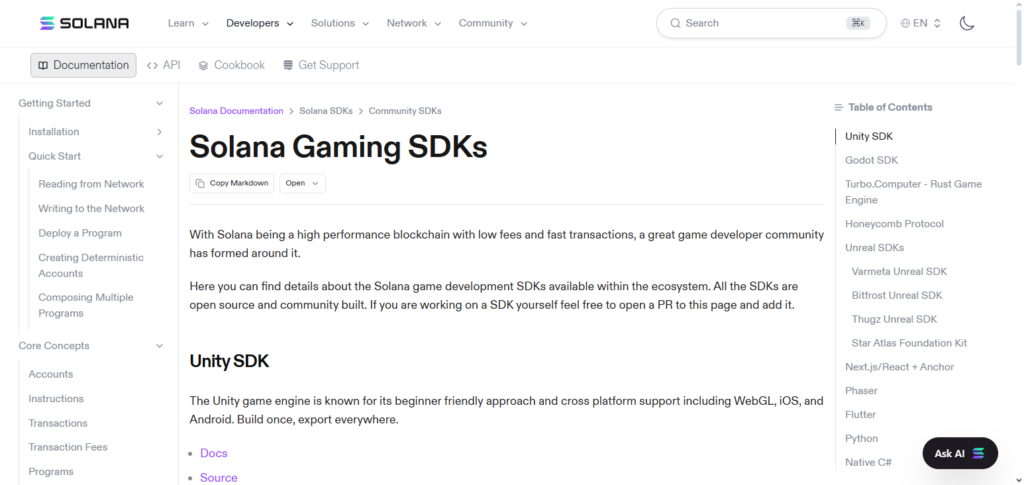
Midway, developers can use the SDKs to directly incorporate marketplaces, tokenomics, and NFT assets into games. Both blockchain-native and conventional developers can use it because to its Rust and JavaScript-based APIs.
Efficiency is given top priority by Solana Game Engine SDKs, which lower expenses and allow microtransactions—which are essential for in-game economies. These SDKs are perfect for multiplayer and mobile blockchain games that need quick, dependable, and decentralized infrastructure because of their speed, security, and compatibility.
| Feature/Aspect | Details |
|---|---|
| Engine/SDK Name | Solana Game Engine SDKs |
| Blockchain Integration | Solana blockchain, known for high throughput and low latency |
| Web3 Features | NFT minting, in-game asset tokenization, play-to-earn mechanics, fast microtransactions |
| KYC Requirements | Minimal KYC; wallet-based authentication sufficient for transactions and asset management |
| Development Tools | SDKs, APIs, Rust and JavaScript support for smart contracts and asset integration |
| Scalability | Very high – supports large-scale multiplayer and high-frequency transactions |
| Player Asset Ownership | Full control over NFTs and in-game assets |
| Marketplace Support | Compatible with Solana-based NFT marketplaces |
| Use Case | Multiplayer blockchain games, play-to-earn ecosystems, NFT-enabled game economies |
| Advantages | Extremely fast transactions, low fees, scalable architecture, strong developer support |
7. Algorand Gaming SDK
Algorand Gaming SDK equips developers with blockchain functionalities specifically for Unreal Engine. Users can create and integrate NFTs and tokenized assets, and structure a decentralized economy for the game.
Algorand’s fast and efficient consensus mechanism keeps transaction costs low and handles a high volume of transactions, making it perfect for games with fast-paced action. Developers can also integrate smart contracts to the game.
These can be used to create game features like staking and rewards for innovative gameplay. Algorand Gaming SDK is one of the best blockchain gaming engines for developers for its blockchain reliability and simplicity, and is preferred foremost by developers of Unreal Engine for its advanced functionalities.
| Feature/Aspect | Details |
|---|---|
| Engine/SDK Name | Algorand Gaming SDK |
| Blockchain Integration | Algorand blockchain, known for fast finality and low-cost transactions |
| Web3 Features | NFT minting, in-game asset tokenization, play-to-earn mechanics, smart contract support |
| KYC Requirements | Minimal KYC; wallet-based authentication sufficient for asset management and trading |
| Development Tools | SDKs, APIs, support for Python, JavaScript, and Go for smart contract and NFT integration |
| Scalability | High – supports large-scale games with multiple assets and high transaction volumes |
| Player Asset Ownership | Full blockchain-based ownership of NFTs and in-game items |
| Marketplace Support | Compatible with Algorand NFT marketplaces |
| Use Case | NFT-based games, play-to-earn ecosystems, blockchain game economies |
| Advantages | Fast transactions, low fees, scalable infrastructure, easy NFT and token integration |
8. Polygon Gaming SDK
Using the Polygon Gaming SDK, Unreal Engine developers can incorporate the scalability of blockchain technology into their games. Developers can create tokenized assets, play-to-earn game ecosystems, and in-game NFT marketplaces.
The Polygon network allows for rapid, low-cost transactions. Since Polygon is EVM compatible, Ethereum-based smart contracts can be used with little hassle. However, this SDK is ideal for large multiplayer games for its low-cost transactions, rapid processing, and great overall performance.
For these reasons, Polygon Gaming SDK is regarded as one of the best blockchain gaming engines for developers. It makes the deployment of Web3 gaming apps in Unreal Engine seamless and economically efficient.—
| Feature/Aspect | Details |
|---|---|
| Engine/SDK Name | Polygon Gaming SDK |
| Blockchain Integration | Polygon blockchain (Ethereum-compatible Layer 2 solution) |
| Web3 Features | NFT minting, in-game asset tokenization, play-to-earn mechanics, cross-chain support |
| KYC Requirements | Minimal KYC; wallet-based authentication sufficient for transactions and asset ownership |
| Development Tools | SDKs, APIs, smart contract deployment tools, support for Solidity and JavaScript |
| Scalability | High – low transaction fees and fast confirmations make it ideal for large-scale games |
| Player Asset Ownership | Full blockchain-based ownership of NFTs and in-game assets |
| Marketplace Support | Compatible with Ethereum and Polygon NFT marketplaces |
| Use Case | NFT-enabled games, play-to-earn ecosystems, cross-chain gaming projects |
| Advantages | Low fees, fast transactions, scalable infrastructure, seamless Ethereum compatibility |
9. NEAR Protocol SDK
NEAR Protocol SDK allows Unreal Engine developers to integrate scalable smart contracts and NFTs into games built on blockchain technology. With NEAR, developers have a variety of customizable and user-friendly SDKs to pick from.
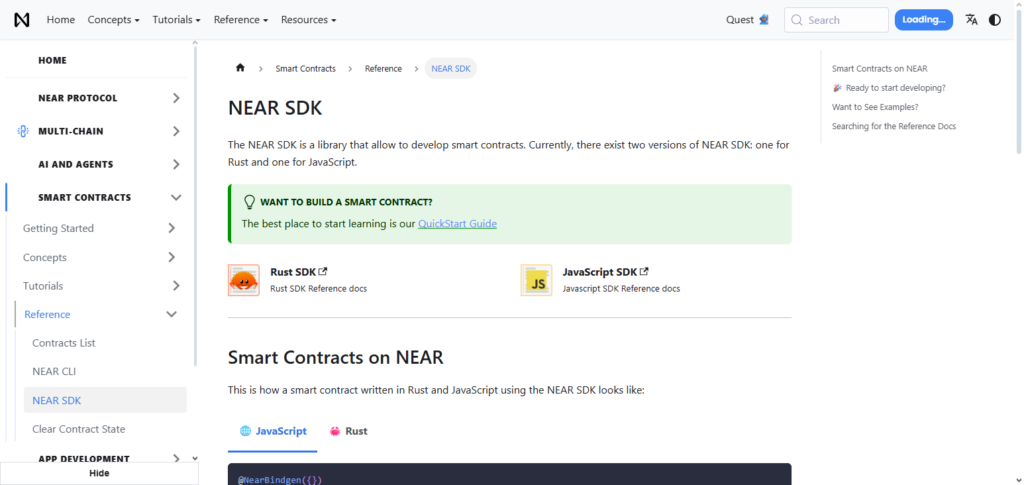
Users can easily create a custodial wallet, own tokens, and complete transactions during gameplay, as NEAR Protocol seamlessly handles blockchain interactions from the backend. Thanks to NEAR’s sharded architecture, games built using the Protocol have the ability to remain stable and low-cost, even with thousands of players online at the same time.
Developers can effortlessly add play-to-earn mechanics to their games, as well as NFT marketplaces and user-generated content. NEAR Protocol is one of the top blockchain SDKs for gaming for Unreal Engine developers looking for accessible protocols that provide top-tier efficiency and usability.
| Feature/Aspect | Details |
|---|---|
| Engine/SDK Name | NEAR Protocol SDK |
| Blockchain Integration | NEAR Protocol blockchain, known for sharding and fast, low-cost transactions |
| Web3 Features | NFT minting, in-game asset tokenization, play-to-earn mechanics, smart contract support |
| KYC Requirements | Minimal KYC; wallet-based authentication sufficient for asset management and trading |
| Development Tools | SDKs, APIs, support for Rust and AssemblyScript for smart contract and asset integration |
| Scalability | High – supports large-scale multiplayer games and high transaction throughput |
| Player Asset Ownership | Full blockchain-based ownership of NFTs and in-game assets |
| Marketplace Support | Compatible with NEAR-based NFT marketplaces |
| Use Case | NFT-based games, play-to-earn ecosystems, large-scale decentralized gaming |
| Advantages | Fast transactions, low fees, scalable architecture, easy onboarding for developers |
10. Chromia Gaming Engine
Chromia Gaming Engine provides developers with an ideal NFT monetization solution. It interfaces with Unreal Engine and blockchain technology to create systems with flexible economies, tokenization, and digital asset marketplaces.
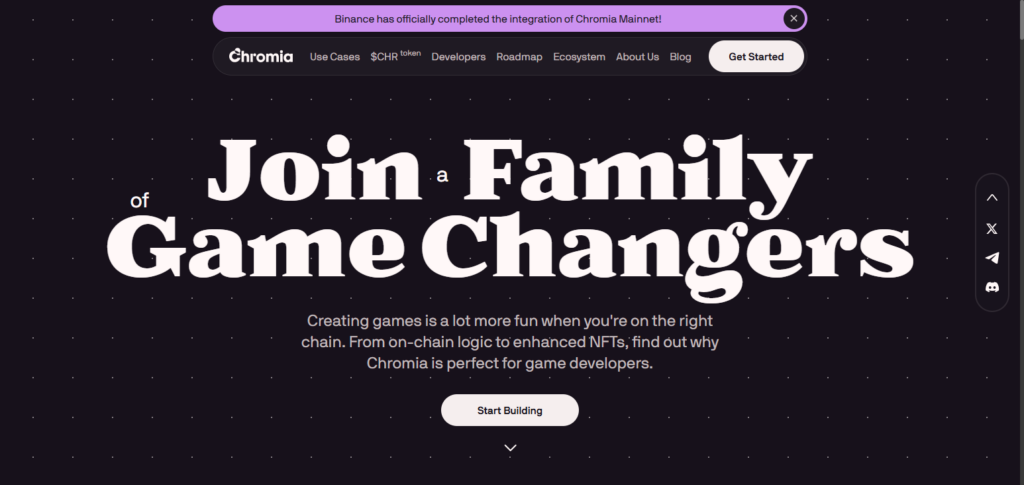
Unlike many other blockchain integrations, however, Chromia offers relational data models that minimize the friction associated with data queries. Large-scale multiplayer games and economies with persistent assets require heavy data queries, so Chromia’s model is well-suited for such games.
Furthermore, Chromia supports in-game asset and currency management, task and reward distribution, and other important player engagement functions through integrated smart contracts. At this point, this makes the Chromia engine the most scalable and flexible blockchain solution for Unreal Engine developers.
| Feature/Aspect | Details |
|---|---|
| Engine Name | Chromia Gaming Engine |
| Blockchain Integration | Chromia relational blockchain, optimized for complex game logic and large-scale economies |
| Web3 Features | NFT minting, in-game asset tokenization, play-to-earn mechanics, smart contract support |
| KYC Requirements | Minimal KYC; wallet-based authentication sufficient for asset management and trading |
| Development Tools | SDKs, APIs, and developer tools for relational blockchain integration and asset management |
| Scalability | High – supports multiplayer and strategy games with complex economies |
| Player Asset Ownership | Full ownership and control over NFTs and in-game assets |
| Marketplace Support | Compatible with Chromia-based NFT marketplaces |
| Use Case | NFT-enabled games, decentralized game economies, multiplayer strategy games |
| Advantages | Efficient relational database model, scalable, secure, supports complex game logic |
Conclusion
In conclusion, creators have never-before-seen potential to create immersive, blockchain-powered games with Unreal Engine and various Web3 plugins and SDKs.
Each solution meets specific development objectives, from the NFT-focused features of Enjin Engine to the scalable transactions of Immutable zkEVM, and from the decentralized ecosystem of Gala Games Engine to the high-performance networks of Polygon and Solana.
With their strong marketplaces, play-to-earn features, and safe smart contract integration, Ultra.io, NEAR, Algorand, and Chromia further increase opportunities.
These technologies are among the top blockchain gaming engines for developers in today’s changing Web3 ecosystem because they enable developers to construct captivating, scalable, and profitable blockchain games.
FAQ
Blockchain gaming engines are development frameworks or SDKs that allow game developers to integrate blockchain technology into their games. They enable features like NFT-based assets, play-to-earn mechanics, tokenized in-game economies, and secure smart contracts, enhancing ownership and monetization opportunities for players and developers alike.
Unreal Engine provides advanced graphics, physics, and multiplayer support. Combining it with Web3 plugins allows developers to integrate blockchain functionalities, such as NFTs, tokenized assets, and decentralized marketplaces, without compromising game performance.
Enjin Engine is widely recognized for seamless NFT integration, allowing developers to tokenize in-game assets and enable cross-game ownership. Immutable zkEVM and Polygon SDKs also provide strong NFT support with low-cost transactions.
Yes. Engines like Chromia Gaming Engine, Solana Game Engine SDKs, and Polygon Gaming SDK are optimized for high-performance multiplayer environments, ensuring smooth gameplay and scalable blockchain interactions.
Plugins like NEAR Protocol SDK, Ultra.io SDK, and Algorand Gaming SDK are developer-friendly and provide simplified APIs, making them suitable for developers who are new to blockchain integration in Unreal Engine.