

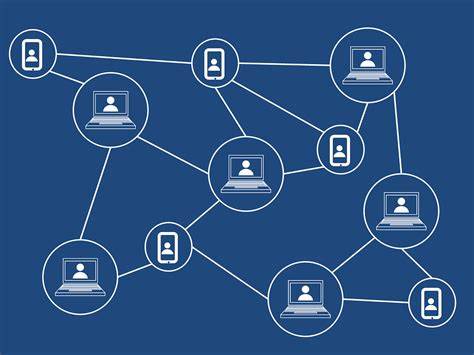
In this article, I will talk about the Best Blockchain For Fast Transactions. For technologies like DeFi or NFTs to be integrated in real-time, the blockchain must be efficient.
Some blockchains are known to provide distinct solutions that facilitate low fee and rapid transaction processing. Let me highlight some of the best blockchains noted for their performance speed and dependability.
Key Point & Best Blockchain For Fast Transactions List
| Blockchain | Key Point |
|---|---|
| Solana | Known for ultra-fast transactions and low fees, ideal for DeFi and NFTs. |
| ICP (Internet Computer) | Focuses on decentralizing the web with smart contracts running at web speed. |
| Avalanche | High throughput and custom blockchain support with low latency. |
| Polygon | Ethereum Layer 2 scaling solution offering low-cost and fast transactions. |
| Fantom | Uses DAG-based consensus for fast, cheap, and scalable dApps. |
| Binance Smart Chain | Popular for its low fees and large ecosystem of DeFi apps. |
| Algorand | Offers fast, secure, and scalable blockchain with pure proof-of-stake. |
| EOS | High performance with zero-fee transactions, but governance is debated. |
| Near Protocol | Developer-friendly and scalable with sharding-based infrastructure. |
| Zilliqa | First blockchain with sharding; focuses on high throughput and speed. |
1.Solana
Solana is regarded as one of the best blockchains for rapid transactions because of its unique Proof of History (PoH) mechanism and Proof of Stake (PoS) system. Using this model, Solana is able to achieve more than 65,000 transactions every minute with very low confirmation delays and costs.
Unlike other chains which depend on external consensus mechanisms, Solana relies on internal timestamping for transactions which cuts down confirmation time significantly. It continues to be the best option for realtime dApps and DeFi because of its unmatched speed, scalability, and an expanding developer community.
Features
- High Throughput: Processes over 65,000 transactions per second (TPS), which is extremely fast.
- Proof of History (PoH): Unique transaction ordering using timestamps for speedy and effective processing.
- Low Latency: Near-instant finality with an average block time of 400 milliseconds.
2.ICP (Internet Computer)
Internet Computer ( ICP ) is one of the fastest blockchains in transaction processing as it runs smart contracts at web speed with near-instant finality. ICP’s unique Chain Key Technology dApp update and interaction facilitates updates and interaction in milliseconds. Unlike traditional blockchains which have to rely on centralized cloud services,
ICP eliminates these services and executes them directly on chain. This makes ICP ideal for fast and scalable performance required in building real time web applications, enterprise systems and DeFi platforms that don’t need third party infrastructur.
Features
- Chain Key Technology: Instant transaction finality along with high operations scalability.
- Decentralized Internet: Smart contracts are executed at web-speed which benefits end-users.
- Scalable Network Nervous System: Automatically adjusts node management for optimal speed.
3.Avalanche
Avalanche enables quick transactions because of the blockchain’s unique method called Avalanche consensus protocol which finalizes transactions in under a second. Avalanche’s unique architecture enables high throughput along with low latency due to the parallel running of multiple interoperable blockchains which avalanche supports.
Developers can create custom blockchains with specific rules which boosts speed and efficiency. Avalanche’s near instant confirmation time makes it ideal for DeFi, NFTs, and enterprise level blockchain applications.
Features
- Consensus Protocol: Fast finality of under 2 seconds using Avalanche consensus.
- High Scalability: Sub-second latency with thousands of TPS.
- Custom Blockchains: Creation of subnets designed for high speed and throughput.
4.Polygon
Polygon is among the most efficient blockchains for quick transaction handling because of its Ethereum Layer 2 scaling solution which significantly minimizes congestion and reduces gas fees. Its distinctive design employs sidechains and rollups to process thousands of transactions per second in parallel with the Ethereum mainnet.
Developers are able to construct dApps with great performance without compromising on security or decentralization. Because of its unparalleled efficiency, speed, and low-cost transactions, Polygon is the go-to blockchain for the DeFi sector, gaming, and large scale NFT projects.
Features
- Layer 2 Solution: Operates on Ethereum but uses sidechains for quicker, lower-cost transactions.
- Plasma Chains & PoS: Increases speed by combining Plasma framework and Proof of Stake.
- Low Fees: Ideal for dApps due to low cost fast transactions.
5.Fantom
Fantom is among the top blockchains with a reputation for fast transaction speeds, using the Lachesis consensus protocol which is an asynchronous Byzantine Fault Tolerant (aBFT) mechanism. With this system, transactions can be confirmed in under two seconds with almost zero fees.
Fantom does not function like a traditional blockchain. It works as a DAG (Directed Acyclic Graph) which allows for high scalability and parallel processing of transactions. This structure enables rapid finality and smooth performance, which is essential for real-time DeFi applications and smart contract deployment.
Features
- Lachesis Consensus: An asynchronous Byzantine Fault Tolerant (aBFT) protocol enabling near-instant finality.
- High TPS: Can process around 3,000+ TPS with 1-2 second confirmation time.
- EVM Compatible: Supports Ethereum tools with faster transaction speeds.
6.Binance Smart Chain (BSC)
Binance Smart Chain (BSC) is well-known for its fast transactions because of its blockchain PoSA, or Proof of Staked Authority, consensus model. This approach achieves a balance between staking and selecting validators which results in block times of three seconds.
This ensures that transactions are confirmed quickly. Additionally, BSC is EVM compatible which makes it possible to deploy Ethereum-based dApps at a fraction of the cost. Because of BSC’s extensive developer ecosystem, its speed and efficiency, it is perfect for advanced DeFi platforms, gaming applications, and NFT marketplaces.
Features
- Dual Chain Architecture: Operates parallel to Binance Chain for faster transactions and smart contracts.
- Short Block Time: Approximately 3-second block times for speedy confirmations.
- Delegated Proof of Stake (DPoS): Efficient consensus mechanism to ensure high throughput.
7.Algorand
Algorand stands out as a top blockchain for its speed, enabled by the quick finality achieved through the Pure Proof of Stake (PPoS) algorithm. Block transactions on Algorand are completed within a few seconds, requiring very little computation, and essentially no forks.
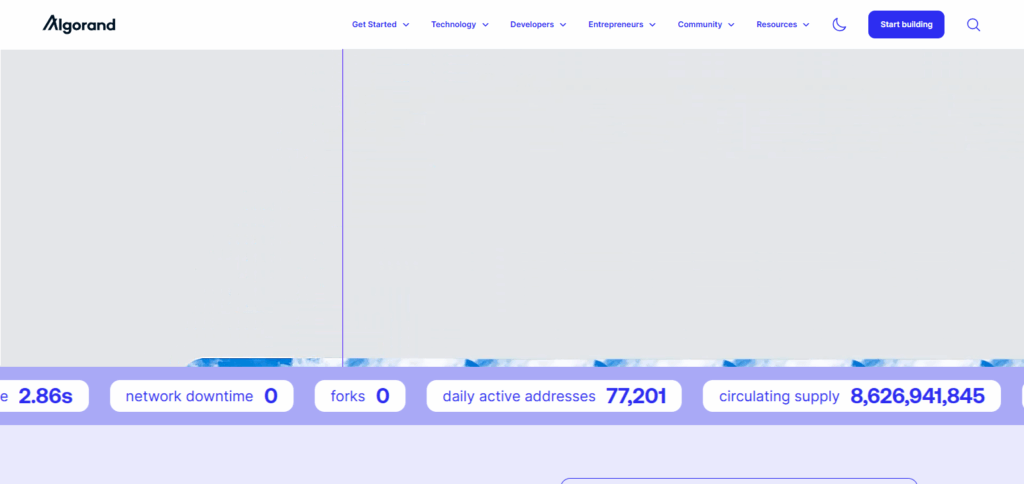
Algorand’s most notable characteristic is that it sustains decentralization while maintaining speed which is ideal for the use in financial matters, tokenized assets, and cross-border remittances where speed and trust is critical.
Features
- Pure Proof of Stake (PPoS): Fast, secure, and scalable consensus with block finality in under 5 seconds.
- High TPS: Supports over 1,000 TPS with immediate transaction finality.
- Low Fees: Transactions cost a fraction of a cent, enabling fast, affordable transfers.
8.EOS
EOS is one of the best blockchains for fast transactions as it utilizes the Delegated Proof of Stake (DPoS) consensus model, which allows block producers to confirm transactions in under one second. This greatly lowers latency and increases throughput, allowing EOS to process thousands of transactions per second.
Its architecture eliminates transaction fees and supports parallel processing, providing developers working on scalable dApps, particularly in gaming, social media, and finance, a hassle-free experience.
Features
- DPoS Consensus: Delegated Proof of Stake enables fast block production every 0.5 seconds.
- High Throughput: Can handle thousands of TPS with near-instant confirmation.
- Free Transactions: No direct transaction fees, improving usability and speed.
9.Near Protocol
Near Protocol is known for being one of the fastest blockchains in the world. Its unique form of sharding, Nightshade sharding splits the network into parallel shards, enabling efficient processing and quick transaction finality, typically taking less than two seconds.
While some blockchains sacrifice decentralization, Near’s unique design ensures that there is no compromise on security or decentralization. Near’s scalability allows the blockchain to manage heavy network demand without any slowdowns, making it efficient for real world real time decentralized applications (dApps), DeFi, NFT platforms.
Features
- Nightshade Sharding: Dynamically splits the network to increase throughput and lower latency.
- Fast Finality: Transactions finalized in 1-2 seconds.
- Developer Friendly: Offers fast transactions for different languages.
10.Zilliqa
Zilliqa is one of the fastest blockchains to have ever existed because it was the first to implement practical sharding on a public blockchain. Zilliqa splits the network into smaller shards which allows it to process several transactions in parallel, increasing throughput while decreasing latency.
This approach enables Zilliqa to handle thousands of transactions each second, with quick completion. The unique blend of security and speed makes Zilliqa perfect for high demand applications such as gaming, advertising, and decentralized finance, where fast and effective services are a necessity.
Features
- Sharding Technology: Network sharding allows for parallel transaction processing boosting TPS.
- High Throughput: Can process more than 2800 TPS.
- Scalable: Increased number of shards boosts speed while maintaining security.
Conclusion
To wrap this up, the most efficient blockchains for fast transactions tend to have a competitive structure like Solana’s, with an innovation of history proof layered on top of it, and Near Protocol’s sharding architecture, alongside low fees and high scalability solving block congestion, which all offer unparalleled performance.
Other platforms like Avalanche with their unique technology of sharding offer swift processing of transactions which are secure on a larger scale too. In both DeFi and NFT transactions, and even for dApps of larger layers, these blockchains are unmatched for developers and users as they provide unquestionable speed and efficiency in their service.
