

In this post, I’ll go over the top token-powered creator economy platforms that are revolutionizing the way content producers make money and interact with viewers.
These Web3 systems provide sustainable revenue and community development by empowering artists with actual ownership, token-based rewards, and NFT integration.
The future of the creative economy is being redefined by token-powered platforms, such as NFT marketplaces and decentralized social networks.
Key Point & Best Creator Economy Platforms Powered by Tokens List
| Platform | Key Features / Highlights |
|---|---|
| Lens Protocol | Decentralized social graph; NFT-based profiles; supports composable social apps. |
| Farcaster | Open social network; Ethereum-based identity; censorship-resistant messaging. |
| CyberConnect | Web3 social graph; cross-platform identity; incentivizes engagement with crypto rewards. |
| Minds (Web3 upgrade) | Hybrid Web2/Web3 platform; token-based rewards; privacy-focused social features. |
| Soclly | Web3 social media; NFT integration; content monetization for creators. |
| Mask Network | Enables encrypted social messaging; crypto payments on social platforms; Web3 gateway tools. |
| Stars Arena (Avalanche) | GameFi social platform; NFT-based community; built on Avalanche for fast transactions. |
| DeSo (Decentralized Social) | Fully decentralized blockchain for social apps; creator monetization via crypto; open ecosystem. |
| 4ARTechnologies | Tokenization of art; NFT marketplace integration; social engagement around digital art. |
| Chingari (Web3 evolution) | Indian short-video platform; blockchain rewards for creators; NFT and crypto-enabled features. |
1. Lens Protocol
Lens Protocol is the decentralized social graph that gives creators the ability to truly own their social media profiles and content. As deployed on Polygon, creators are able to mint NFT profiles and posts, which can be monetized and moved across dApps.
The ability to be composable enables developers to create custom social experiences and allow creators to earn through interactions. This is why Lens is one of the top technologies in the creator economy that offer tokenized systems, providing creators with monetization, audience engagement, and ownership in a censorship resistant ecosystem.
Pros & Cons Lens Protocol
Pros:
- True content ownership with a decentralized social graph.
- Creation of NFTs with customizable profiles for creators to earn revenue on their posts and interactions.
- Growth through integration with several dApps due to composable architecture.
Cons:
- Some beginners may find Web3 wallets challenging.
- Adoption of Lens Protocol is less than other social media.
- Small transactions may be affected by gas fees on certain blockchains.
2. Farcaster
Farcaster is a social networking site with a focus on decentralized identity. Farcaster users get to keep their data via accounts on Ethereum while allowable monetization for content creators is possible via tokens. Farcaster’s ecosystem favors transparency and censorship resistance while supporting multiple applications.
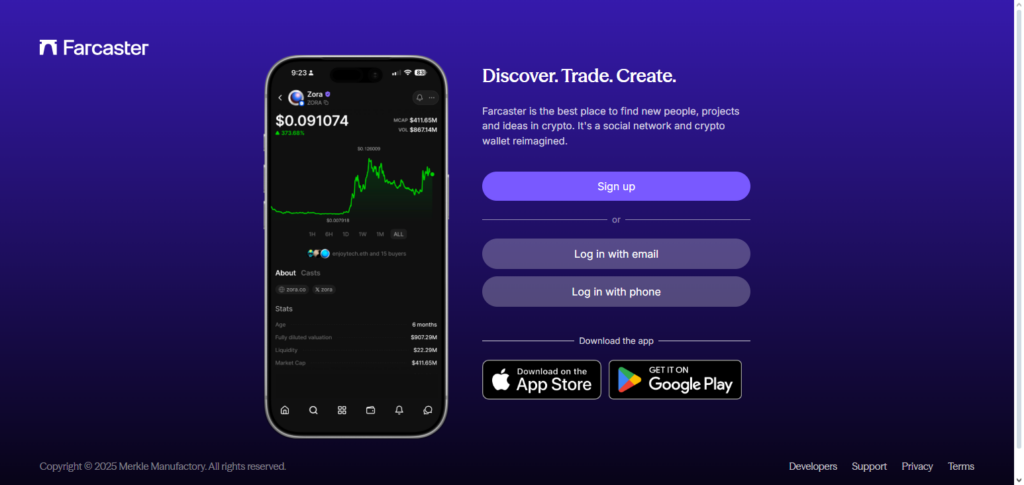
The ability for developers to build on Farcaster supports the ecosystem’s pods for monetization via tokens. It is for these reasons Farcaster is one of the best creator economy platforms powered by tokens where creators inspire and engage their fans through different applications while earning monetized social activity in crypto and supporting social interaction via monetization on a different social blockchain.
Pros & Cons Farcaster
Pros:
- Reduction of censorship risk as it is open-source and decentralized.
- Secure and portable accounts through Ethereum-based identity.
- Allows creators and communities to monetize by tokenizing interactions.
Cons:
- They have a smaller user base than other Web2 social networks.
- They are a less multimedia focused platform.
- Adoption of crypto is required for mainstream users.
3. CyberConnect
CyberConnect is a creator economy platform that brings monetization via tokens to social graphs. It is a social protocol for Web3 with a token that encourages users to engage with the platform.
On this platform, creators can host decentralized communities, reward followers and use a portable social identity with decentralized subs across the social graph. With seamless social handovers, it becomes easier for creators to expand their follower bases.
The social token and NFTs for followers and users of the ecosystem make it one of the best creator economy platforms powered by tokens as it offers creators financial reward while they create a community around their ecosystem that has their social identity and content in Web3.
Pros & Cons CyberConnect
Pros:
- Allows creators to keep their identity with a cross-platform social graph.
- Engagement incentivization through token rewards.
- Provides NFT and crypto community incentive support.
Cons:
- Adoption of the platform is still low with many communities.
- Fluctuation of token value may be a problem for creator monetization.
- Some users may find it complex and too technical for their liking.
4. Minds (Web3 upgrade)
Minds has merged standard social media platforms with Web3 functionality. Its token-based rewards system allow users to create, share and engage with content for crypto. Acknowledged for its privacy and transparency, and for empowering users to create genuine connections, and monetizes those connections.
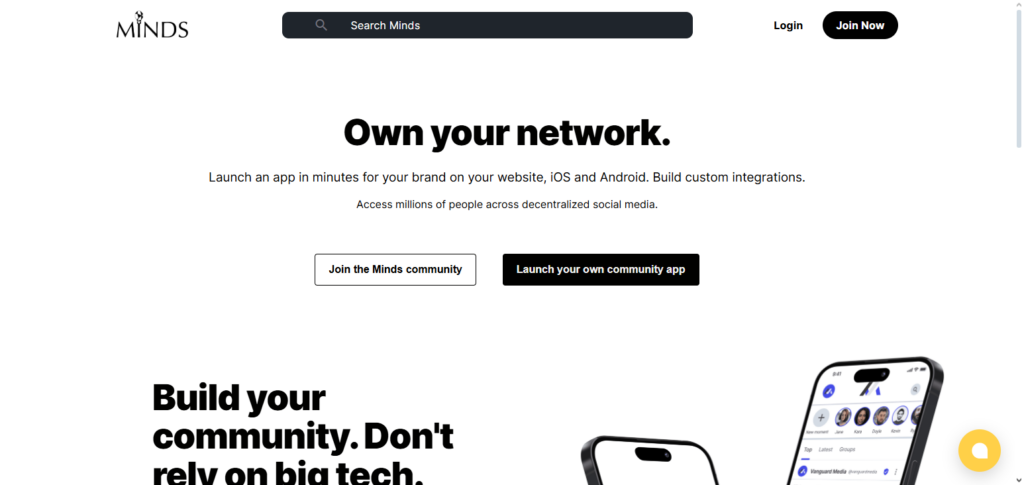
Minds being Web3 allows users to create and own their content and utilize decentralized tools to engage with their audience. Minds is one of the best creator economy platforms powered by tokens for offering users unique and innovative monetization methods while allowing users to reward their communities and establish a digital presence independent of central platforms.
Pros & Cons Minds (Web3 Upgrade)
Pros:
- It is easier to onboard new users as the platform is hybrid Web2/Web3.
- There is an incentive for content creation because of the token-based reward system.
- Creators who are more security conscious will appreciate the privacy features.
Cons:
- There are token rewards. because of the possibility of being reward-less the users may become frustrated.
- There is not much of a mainstream reach.
- More advanced features may require Web3 because of the need of knowledge.
5. Soclly
Soclly is a Web3 social platform that incorporates NFTs and tokenized rewards paired with social actions. Users can monetize their content, create unique experiences, and grow their communities with blockchain tools.
The platform is identity agnostic and pays users with crypto for their engagement, ensuring all interactions with the audience are incentivized. Their NFTs let users sell digital assets that are tied to the content.
For these reasons, Soclly is one of the best creator economy platforms powered by tokens, with a unique system that allows creators true ownership over their content, audience driven monetization and participation in a social network.
Pros & Cons Soclly
Pros:
- You are able to monetize your content because of the NFT integration.
- There is increase in audience retention because of the active engagement.
- There is assistance of decentralized identity and cross-platform visibility.
Cons:
- Compared to other more established platforms, the user base is much smaller.
- There is a need to learn about NFTs and wallets.
- The casual user may be worse off.
6. Mask Network
Mask Network integrates Web3 functionalities, such as cryptocurrency payments, content monetization, and encrypted messaging, with Web2 social media platforms. With Mask Network, content creators can post NFTs and other monetized tokens so their followers can provide direct support.
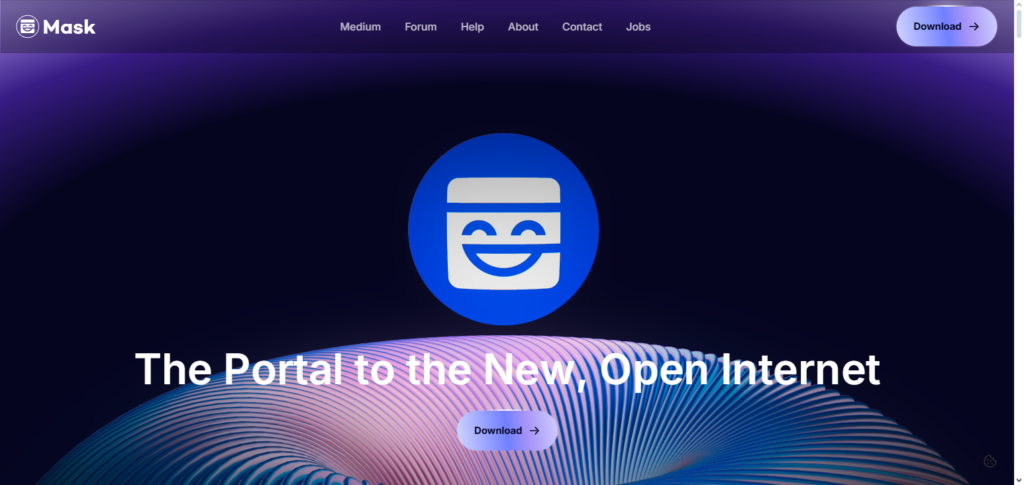
Mask Network allows these creators to build and control their digital identities, automate audience engagement, and monetize their blockchain assets seamlessly.
Most creators can run cryptocurrency tokenized social media accounts and monetize their audience with Mask Networks. Mask Network is arguably one of the most seamless Web2 to Web3 platform transitions and is one of the best creator economy platforms powered by tokens.
Pros & Cons Mask Network
Pros:
- It is able to bridge Web2 and Web3, and can allow payments across digital platforms.
- There are value able NFTs and tokens for creators.
- Encrypted messages can be used for communication.
Cons:
- There can be integration trouble with traditional Social Media.
- Innate audience is more limited than compared to other Web3 platforms.
- Users need crypto wallets for full functionality.
7. Stars Arena (Avalanche)
Stars Arena is a social gambling, GameFi, and social platform. It is built on the Avalanche blockchain and allows users to integrate social features, gaming, and NFT monetization. Stars Arena promotes a sustainable creator economy by engaging users with cryptocurrency for gaming and content creation.
It is one of the best creator economy platforms powered by tokens with features promoting the earning of digital assets through the creation of interactive content. It allows gamers and creators to use Avalanche blockchain to improve their social experience by removing transaction limits and introducing low-cost transactions.
Pros & Cons Stars Arena (Avalanche)
Pros:
- Combines GameFi with social engagement for creators.
- NFT-based rewards for community participation.
- Fast and low-cost transactions on Avalanche blockchain.
Cons:
- For a broader audience of creators, the concentration on gaming is a limiting factor.
- Platform engagement and game outcomes inform the earning of token rewards.
- Steeper learning curve than just gaming and crypto.
8. DeSo (Decentralized Social)
DeSo is a blockchain that enables the creation of fully decentralized social applications where users are given control over the content they create, as well as tools they can use for monetization. Monetization can be achieved through the use of virtual currencies (crypto rewards) and NFTs (non-fungible tokens).
Users can earn money through community engagement, and active participation in post interactions. Developers can build applications that are centered around monetizing content and enhancing engagement.
One of the most tokenized creator economy platforms is DeSo due to its unprecedented dedication to decentralization that allows users to bypass middlemen for fully sustained ownership of their digital products. Users can build communities around the tokens, redefining social interactions on a decentral web.
Pros & Cons DeSo
Pros:
- Being fully decentralized means creators have guaranteed ongoing ownership of every piece of content.
- There is the possibility of direct crypto monetization and NFT sales.
- Developers are free to build any social applications and tools they want.
Cons:
- Though growing, the number of active users is significantly less than on mainstream social platforms.
- Rewards for participation are at the mercy of the crypto market.
- Learning curve is considerable for those without a background in blockchain.
9. 4ARTechnologies
4ARTechnologies is focused on tokenizing luxury artworks and collectibles, allowing creators (especially artists) to earn monetization through NFTs designed for digital and physical art pieces. Artists can use the platform to engage their collectors and track the ownership history.
They can also receive royalties on the secondary sales, all thanks to blockchain technology. With the social features and tokenized asset management systems, 4ARTechnologies is a flourishing creator economy which is designed to integrate engagement for value creation.
4ARTechnologies is also on the list of the best creator economy platforms powered by tokens which give artists the freedom to monetize their art, grow their collector audience, and engage freely in a token economy. Artists can craft their artwork freely without the burden of losing ownership and authenticity.
Pros & Cons 4ARTechnologies
Pros:
- Creators can tokenize their art and collectibles and maintain ongoing ownership.
- Integration of NFTs is guaranteed to provide provenance and track royalties.
- Monetization support is for digital and physical art.
Cons:
- Less relevant for content creators outside the realm of art.
- Earnings are possibly impaired by market swings in the NFT space.
- There is a learning curve for those who wish to understand the tokenization of art through a blockchain.
10. Chingari (Web3 evolution)
Chingari is an Indian short-video platform that has developed into a Web3 enabled ecosystem, allowing users to earn crypto tokens as a form of engagement and incentive to content creation.
It uses NFT and blockchain technology to empower users economically while building community. Creators earn money from content, engage in contests and earn tokens, and receive tips from community members.
This growth to Chingari’s platform has made it one of the top platforms in the economy of creation/chains in the ecosystem of Web3 to build entertainment with money. It allows creators to develop audiences around their content and earn an income (crypto) in a sustainable way.
Pros & Cons Chingari
Pros:
- Creators can earn rewards in the form of tokens.
- Integration of NFTs and incentives to the community to grow on a blockchain.
- A growing number of users outside of India are attracted to the platform.
Cons:
- There is a primary emphasis on short videos, and considerable narrowing of content is also a factor.
- The earnings associated with the tokens may be at the mercy of the market.
- Certain users might encounter difficulties in adjusting to the characteristics of Web3.
Conclusion
The emergence of Web3 has revolutionized the ways in which creators engage with communities, make money off of their work, and retain ownership of digital property.
By offering decentralized social networks and tokenized rewards, platforms such as Lens Protocol, Farcaster, CyberConnect, and DeSo enable creators to profit directly from their audience without the need for middlemen. Others, including 4ARTechnologies, Soclly, and Chingari, combine blockchain incentives with NFTs to transform innovation into real value.
These platforms guarantee equitable remuneration, community involvement, and long-term expansion by utilizing token economies. All things considered, the top token-powered creator economy platforms are revolutionizing the future of digital content by providing artists with autonomy, authority, and new sources of income in the Web3 era.
FAQ
Creator economy platforms powered by tokens are Web3-based platforms that allow content creators to monetize their work using cryptocurrency or blockchain-based tokens. These platforms provide direct rewards, NFT-based ownership, and tokenized incentives for engagement, ensuring creators earn fairly from their content while maintaining control over their digital assets.
Unlike traditional platforms, token-powered platforms give creators ownership of their content, direct monetization opportunities, and access to decentralized communities. They reduce dependency on intermediaries, provide transparency in revenue distribution, and enable new engagement models like NFT drops, staking, or crypto rewards.
Some of the leading platforms include Lens Protocol, Farcaster, CyberConnect, Minds (Web3 upgrade), Soclly, Mask Network, Stars Arena (Avalanche), DeSo, 4ARTechnologies, and Chingari (Web3 evolution). Each platform offers unique features such as NFT integration, crypto rewards, decentralized identity, or GameFi elements to empower creators.