

The focus of this paper will be the functionalities of the Best Decentralised Perpetuals Exchanges deleting the need of middlemen while allowing traders to access contracts in a safe and swift manner.
Complete custodial-less trading, smart contracts with clear on-chain verification, and advanced leverage. The unique trading space features, the advantages and the reason why they are exceptional in decentralized trading will be discussed.
What is Decentralised Perpetuals Exchanges?
Decentralized perpetual exchanges enable users to trade perpetuals contracts from their wallets without an intermediary or central authority. Tradable perpetuals contracts are derivative instruments without an expiry date.
In contrast to centralized exchanges, these exchanges function on smart contracts in a decentralized network, ensuring trustless, transparent, and more control over funds. Traders are able to take short or long positions on various cryptocurrencies with leverage, real-time settlement, and automated liquidation.
Users also maintain custody of their assets which significantly reduces counterparty risk. In addition, perpetual exchanges are decentralized exchanges with lower barriers to entry, providing global access to advanced trading.
How To Choose Decentralised Perpetuals Exchanges
Security & Audits: The firm should get a proper audit to ensure the smart contracts can’t be hacked and breached.
Liquidity: While trading, slippage is the most stressful, so it is best to have adequate liquidity.
Supported Assets: The cryptocurrency and perpetual contracts available for trading on the platform.
Leverage Options: The maximum leverage should match the risk you are willing to take.
User Interface & Experience: The need to enhance smoother, easier, and stylish layouts to encourage trading.
Fees & Funding Rates: Make sure the trading, funding, and withdrawal costs are not exorbitantly set.
Level of Decentralization: Do the components and level of control of the platform affect it’s being micro and macro decentralization.
Community & Governance: Support from the micro-communities and a structural governance pair makes the platform credible.
Cross-Chain Compatibility: More trading opportunities are available on platforms that enable operations on various blockchains.
Client Support & Documentation: Decentralized platforms in particular require proper FAQs, support, and guides.
Key Point & Best Decentralised Perpetuals Exchanges List
| Exchange Name | Key Points |
|---|---|
| Hyperliquid | Offers low-fee perpetual trading, high liquidity, and cross-chain support. |
| ApeX | Focused on decentralized derivatives with flexible leverage and non-custodial trading. |
| dYdX (v4) | Layer-2 protocol on Ethereum, high performance, low fees, and robust governance. |
| Drift Protocol | Solana-based, low latency, auto-liquidation, and scalable decentralized perpetuals. |
| MUX Protocol | Offers perpetual swaps with on-chain margin and efficient capital utilization. |
| Perpetual Protocol v2 | AMM-based perpetuals, multiple assets, leverage options, and audited smart contracts. |
| Helix (Injective) | Cross-chain derivatives, decentralized order book, and zero gas fees for traders. |
| Kwenta | Built on Synthetix, supports synthetic assets, non-custodial perpetual trading. |
| Level Finance | Layer-2 optimized, low fees, non-custodial perpetual swaps, and high-speed settlement. |
1. Hyperliquid
Hyperliquid is among the top decentralized perpetual exchanges due to its speed, security, and affordability. As a part of Hyperliquid’s user-centered DeFi approach, traders can execute and manage perpetual contracts directly without any intermediaries.
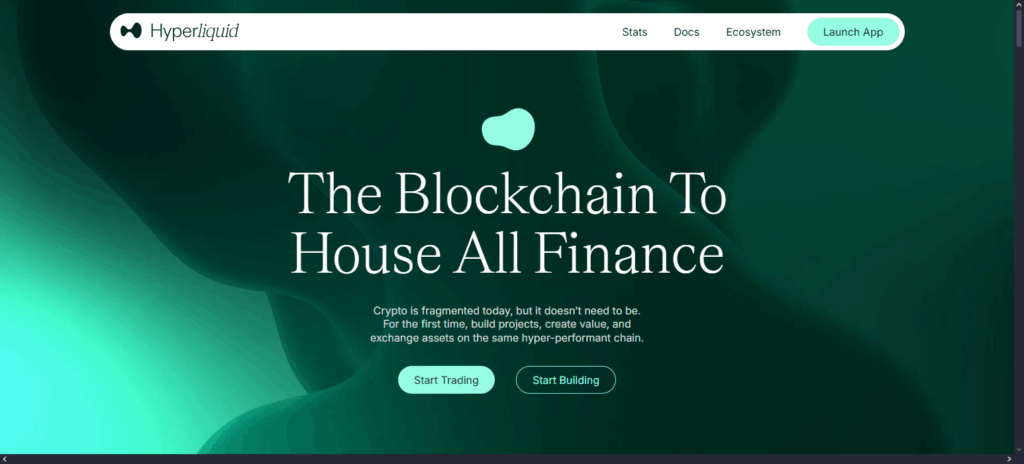
It keeps full custody of their funds, which is another unique benefit. The platform’s most distinguishing feature is its cross-chain liquidity that enables broader access to multiple blockchain networks which minimises slippage and deepens the market. Hyperliquid’s proprietary smart contracts ultrafast settlement at low costs.
It is among the most advanced in the industry due to its robust governance, transparency led risk management systems, and active participant risk management tools. Hyperliquid’s approach serves the needs of both active and retail traders.
Hyperliquid Features
- Ultra-Liquidity Pools: Hyperliquid collects the liquidity from various DEXs, which guarantees negligible slippage and instantaneous execution for massive perpetual trades.
- Cross-Chain Support: Flexible users can seamlessly trade perpetuals on Ethereum, Binance Smart Chain, and other linked blockchains.
- Decentralized Governance: Holders of tokens have the right to vote on upgrades to protocols, new trading pairs, and the structure of fees.
2. ApeX
ApeX stands among the best decentralized perpetual exchanges for the fully non-custodial security combined with sophisticated derivatives trading. It is the only exchange with a flexible leverage system which enables traders to adjust the positions according to their strategy while retaining full control of their funds.
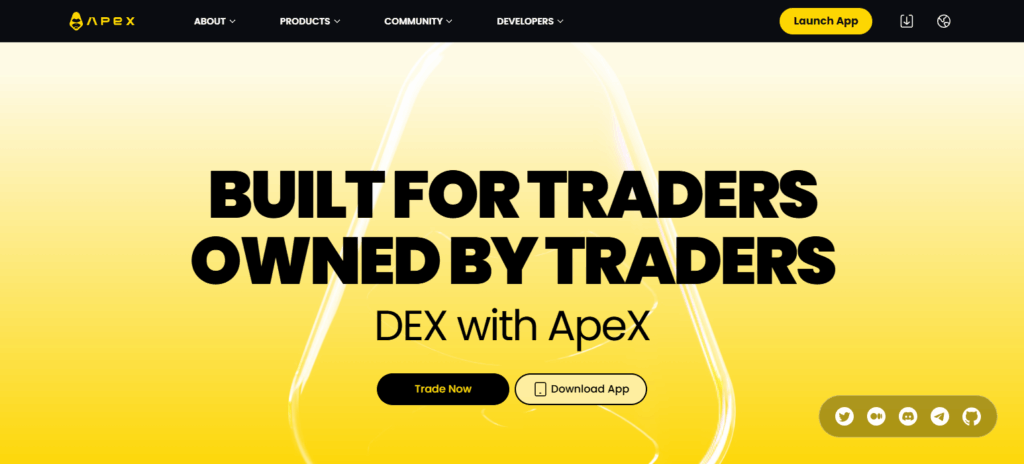
It is also the only exchange which operates on a sophisticated and highly efficient protocol with low latency which guarantees rapid execution of trades with minimal slippage, which is crucial during times of high volatility.
Other than these, ApeX also recommended for its transparent governance which allows the community to participate in platform decisions, and strong risk management systems which protect traders’ assets. All the above qualities make ApeX a safe and inventive perpetual trading platform.
ApeX Features
- Low Fees: Highly cost-effective for frequent traders due to the minimal trading and funding fees that ApeX offers.
- High Leverage: Able to enjoy up to 20x leverage on selected perpetual contracts.
- Secure Smart Contracts: Developed using audited smart contracts to guarantee the secure
3. dYdX (v4)
dYdX (v4) is considered as one of the best decentralized perpetual exchanges thanks to its Layer-2 Ethereum framework which allows fast transactions with low fees and full decentralization.
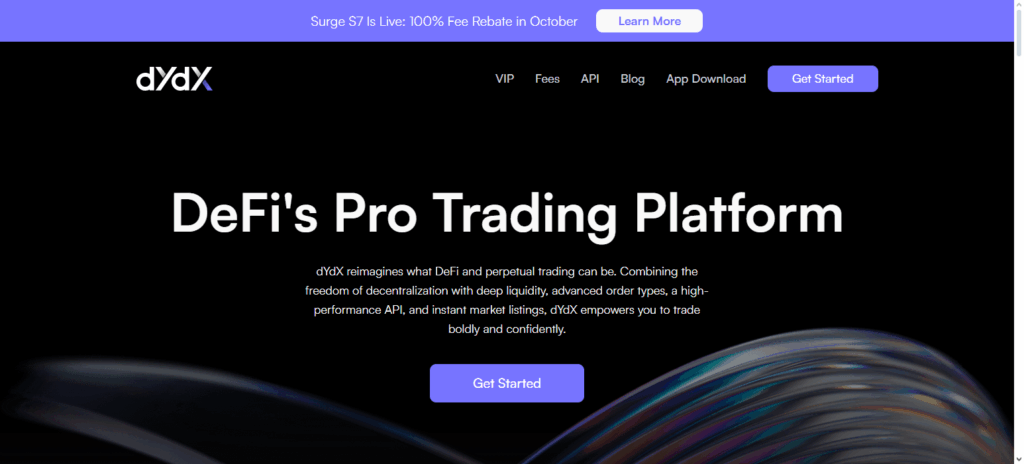
The platform’s unconventional order book allows users to take secure long and short positions with high leverage. The platform also emphasizes governance as token holders have the right to vote on changes to the protocol and features.
dYdX (v4) also offers seamless trading to retail and professional traders due to advanced risk management, high liquidity, and non-custodial trading. The platform also has advanced features like fast and secure trading which makes dYdX (v4) one of the best decentralized perpetual trading platforms.
dYdX (v4) Features
- Order Book Model: Features a dYdX v4 which utilizes a sophisticated decentralized order book for more efficient matching and less slippage.
- Layer-2 Scaling: Operates on StakWare Layer-2 which results to almost zero gas fees and swift transaction confirmations.
- Cross-Margin Trading: Traders enjoy increased flexibility since several assets can be used to collateralize the positions.
4. Drift Protocol
Drift Protocol is among the leaders of decentralized perpetual exchanges due to its rapid trading and scalable on-chain Solana solutions.
Their unique differentiation is ultra-low latency automated liquidation, which allows for the instant execution of high-reduced risk leveraged positions.
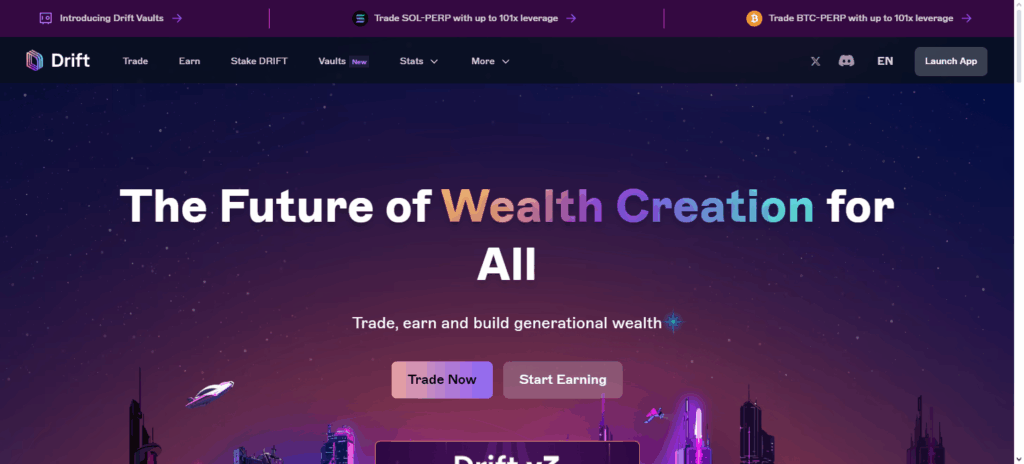
Traders on the Drift Protocol enjoy deep liquidity pools and a fully non-custodial environment, ensuring total asset ownership.
Tailored for professional and retail traders, its modular design accommodates versatile margins and positions. Drift Protocol’s transparent governance and effective capital utilization is remarkable for decentralized perpetual exchanges.
Drift Protocol Features
- Perpetual Swaps: Has the ability to maintain liquid positions and perform funding changes to the Perpetual Swaps and funding rate changes.
- Isolated & Cross Margin: It allows the use of both isolated and cross-margin positions for the purposes of managing risk.
- On-Chain Risk Engine: All trades and margin computations are done on-chain to ensure all transactions are captured.
5. MUX Protocol
MUX Protocol is one of the fastest and most reliable decentralized perpetual exchanges because of its unique on-chain margin-locked collateral efficiencies, allowing traders to maximize leverages with minimal margins.
While supporting non-custodial trading with full control over assets to reduce counterparty risk, the smart contracts of MUX Protocol are engineered to facilitate quick and cost-effective trades, even under extreme market conditions.
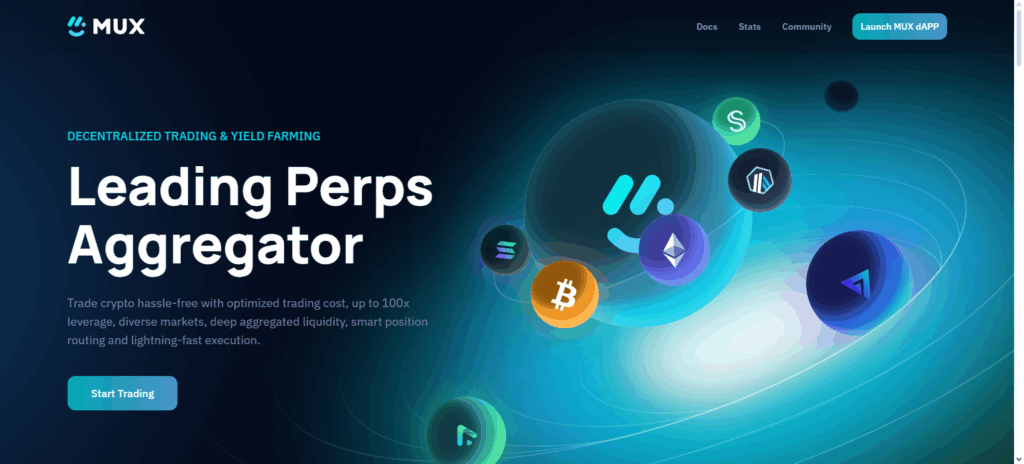
MUX Protocol is unique in that it is fully decentralized, allowing for community-led development and transparent governance over structural and feature set updates.
MUX Protocol is outstanding in its amalgamation of comprehensive risk consideration, advanced trading architecture, and pooled liquidity, providing the user with a sensitive and reliable perpetual trading experience.
MUX Protocol Features
- Capital Efficiency: Utilizes liquidity for larger positions to be opened with smaller amounts of collateral.
- AMM + Order Book Hybrid: Merges automated market maker and order book for better execution.
- Low Slippage: Pricing algorithms are designed to minimize slippage during transactions, even in large volume trades.
6. Perpetual Protocol v2
Pervetual Protocol v2 is one of the best perpetual dout exchanges mainly because of the AMM-based model trading which provides liquidity for all traders and reduces slippage.Multi-agent systems in economics.
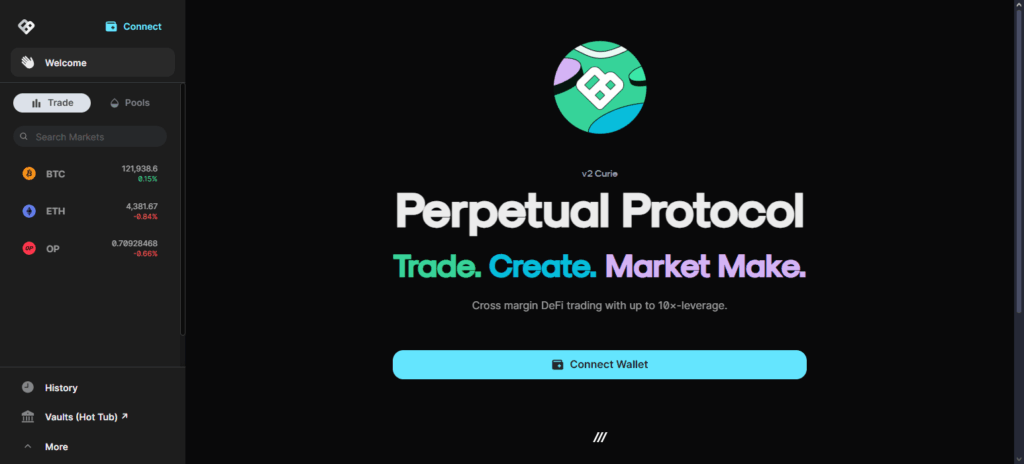
Its upgrade over v1 also makes trading cheaper and easier with faster settlements and increased capital efficiency and also more custody trading. Users can control all their assets since it is fully non custodially operated.
Extreme market volatility is also taken care of by robust risk management. Fully protecting users from their assets and multiple other advantages. Audit smart contracts and transparent governance also helps Perpetual protocol v2 in trading effortlessly.
Perpetual Protocol v2 Features
- Virtual AMM (vAMM): The unique design of the AMM allows for deep liquidity without the involvement of many counterparties.
- High Leverage Trading: Up to 20x leverage on popular crypto pairs.
- Cross-Chain Expansion: Available on multiple chains including Ethereum, Arbitrum, and Optimism.
7. Helix (Injective)
Helix (Injective) is a top contender among decentralized perpetual exchanges due to its fully decentralized order book which facilitates seamless middleware free access to multiple blockchains.
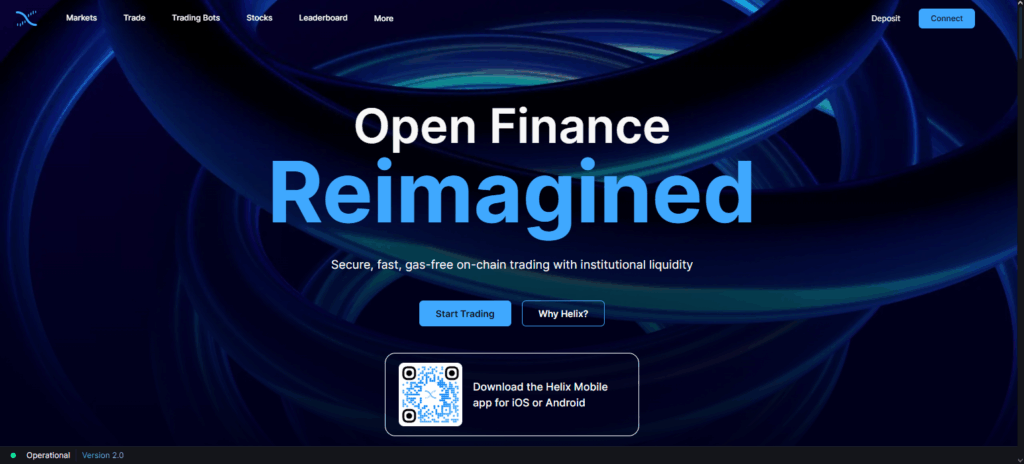
What sets Helix apart is the zero gas fees for trading which lowers the cost of high-frequency transactions and allows trading to be done at a lightning speed. Maintainance of control over the assets is ensured by Helix’s deep liquidity, non custodial leverage, and custody free trading.
Coupled with active execution, its sophisticated risk control, transparent governance, and strong liquidity serve the needs of both retail and institutional investors. Helix’s sophisticated cross-chain architecture with a focus on cost-effective infrastructure is the reason why it’s among the top options for decentralized perpetual trading.
Helix (Injective) Features
- Full Decentralization: Fully decentralized and trustless trading is done through Injective’s Layer-2 protocol.
- Derivatives Marketplace: Offers perpetuals, futures, and options trading with reasonable fees.
- Cross-Chain Interoperability: Helix can work with assets from multiple blockchains without additional processes.
8. Kwenta
Kwenta has some of the most competitive perpetual exchanges due to its utilization of the Synthetix Protocol which allows traders to freely trade synthetic assets with Synthetix having non-custodial control.
Kwenta’s perpetual advantage comes from its unique ability to interface with a multitude of synthetic assets which provides traders with exposure to various cryptocurrencies, commodities, and indexes without leaving the blockchain.
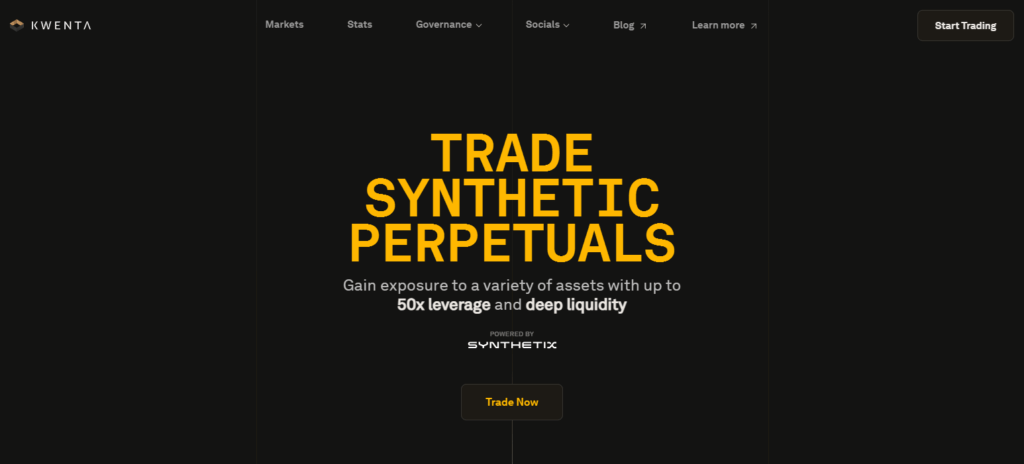
Its AMM-based infrastructure offers traded with low fees, fast execution, and adequate liquidity while also protecting their privacy due to their transparent, audited smart contracts.
Kwenta’s unique risk community governance, advanced risk community interface, and robust management provides traders professional and efficient perpetual trading. Both retail and sophiscated traders can take advantage of its accessible and advanced features.
Kwenta Features
- Synthetic Assets: Enables the trading of perpetuals on synthetic crypto, commodities, and indices.
- Fast Execution: Optimism Layer-2 allows for transactions to be done in real-time at a low fee.
- Governance Token: Holders of SNX are able to join protocol governance and vote on new markets within the protocol.
9. Level Finance
As one of the top decentralized perpetual exchanges, Level Finance merges Layer-2 optimization with non-custodial perpetual swaps, allowing fast and inexpensive trading with enhanced security.
This, Level Finance’s most distinguishing characteristic, offers rapid settlement speeds, which greatly reduces slippage in and out of positions within fast moving markets. These features make Level Finance ideal for both retail and professional traders.
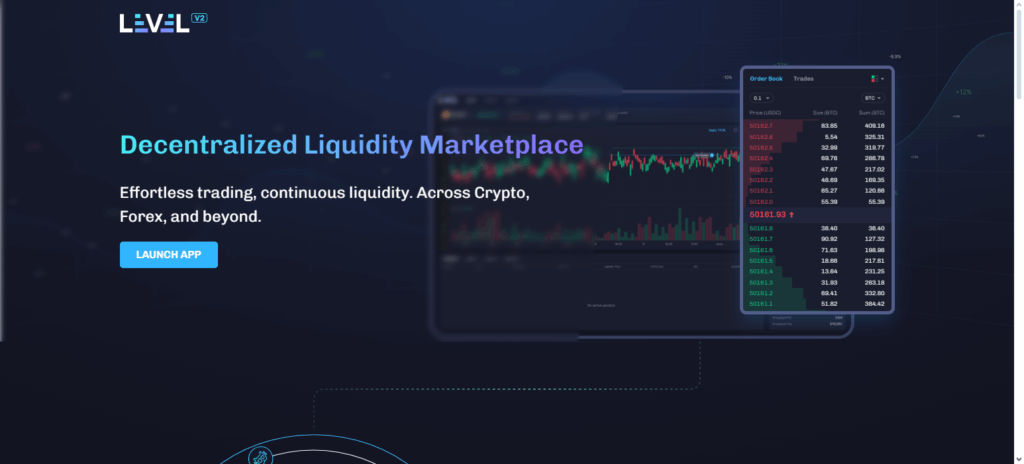
Beyond the full control over funds with reduced counterparty risk offered, users also benefit from Level Finance’s flexible leverage, deep liquidity, and transparent smart contracts.
Level Finance’s unmatched liquidity coupled with flexible leverage also serves to enhance the community driven, governed advanced risk management offered. This contributes to Level Finance’s efficient, reliable, and secure platform, making it a top choice for enthusiasts of perpetual trading.
Level Finance Features
- Multi-Asset Perpetuals: Enables the decentralized trading of an extensive range of crypto assets.
- High Capital Efficiency: Pooled liquidity is used to optimize leverage and minimize capital needed.
- User Friendly Interface: Provides an intuitive UI/UX along with comprehensive charting and trading capabilities to all levels of traders.
Pros & Cons
Pros:
- Non-custodial trading – No counterparty risk and traders have complete control over their assets.
- Transparency – Trades and smart contracts are recorded on a blockchain and can be publicly verified.
- Global access – Wallet holders can trade freely regardless of location and platform KYC policies.
- Lower fees – Centralized exchanges are typically more expensive, particularly when lacking layer 2 services.
- Reduced counterparty risk – There’s no central body holding the funds that could potentially be frozen and stolen.
- Community governance – Several platforms let users vote on proposed changes for platform improvements.
Cons:
- Lower liquidity – Decentralized exchanges typically have lower liquidity than the leading central exchanges.
- Complex – The mechanics of trading and the overall platform design can be overwhelming for new users.
- Limited customer support – Most community-run support is not available 24/7.
- Smart contract risk – Allocating funds for trading can be risky if the smart contracts are regularly exploited.
- Greater slippage during volatility – Slippage is more on AMM platforms with smaller liquidity pools.
- Regulatory uncertainty – Regulations tend to be more restrictive for decentralized derivatives.
Conclusion
To sum up, decentralized purchasing exchanges combined with advanced trading features support transparency, non-custodial control, and security, which makes them the future of derivative trading. It includes dYdX (v4), Drift Protocol, MUX Protocol, Perpetual Protocol v2, Kwenta, Level Finance, and others.
They provide unique advantages such as cross-chain liquidity, flexible low- leverage, low fees, and fast-execution trading. Decentralized exchanges offer community governance, full asset control, and global accessibility, which make them suitable for professional and retail traders.
They also support smart contracts which enable direct trading without any interference. Decentralized Perpetual exchanges also offer secure and efficient trading which diminish the impact of regulatory uncertainty.
FAQ
Unlike centralized exchanges, decentralized platforms are non-custodial, meaning users retain full control of their funds. They operate on smart contracts, have transparent governance, and typically offer lower fees and global accessibility.
They are generally secure, but risks exist, such as smart contract vulnerabilities and lower liquidity. Choosing audited platforms like dYdX, Perpetual Protocol v2, or Helix reduces these risks.
Most platforms allow trading cryptocurrencies as perpetual contracts. Some, like Kwenta, support synthetic assets, while others, like Hyperliquid and Helix, enable cross-chain trading.
