

In this article, I will discuss the Which Blockchains Have Built-in Privacy Features by design. Privacy is one of the foundational elements of blockchain technology, as it provides confidentiality for transactions and user information.
I will cover some of the most prominent blockchains with privacy features, their characteristics, and analyze how they safeguard users’ identity and transaction information in a world where transparency is growing at an unprecedented rate.
What is Blockchains?
A blockchain is a type of distributed ledger technology (DLT) that serves as a digital record for transactions and is composed of sequential blocks of linked data. Blockains differ from typical databases because they use cryptographical systems to ensure linkage between data blocks forming a chain which allows for transparency and unchanging records.
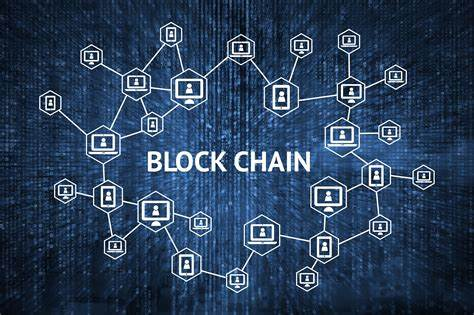
Each block is made up of a particular set of transaction data, a certain timestamp, and a unique identifier called hash. This system allows direct interactions between users without the need for third parties incurring trust, thus making it popular for cryptocurrencies, smart contracts and many others that require secure data management.
Top 5 Blockchains with Built-in Privacy Features
1.Monero (XMR)
Monero (XMR) is one of the few blockchains that offers built-in privacy features as it focuses on transaction anonymity.
Unlike most block chains where privacy is an option, Monero employs complex cryptography with ring signatures, stealth addresses, and RingCT to hide the sender, receiver, and the amount transacted.
Every transaction is private and untraceable which is why Monero is so trusted by users that value financial privacy while retaining decentralization and security.
Features
- Default Privacy: Every transaction that takes place is private by default; concealing the sender, the receiver, and the amount sent.
- Ring Signatures: A user’s transaction is mixed with other users’ transactions to hide the true sender.
- Stealth Addresses: Issues the recipient unique, one-time addresses per transaction, safeguarding their anonymity.
2.Zcash (ZEC)
Zcash (ZEC) is one of the few block chains where privacy is offered as a feature and its users can opt for private or transparent transactions. It uses zero-knowledge proof technologies called zk-SNARKs which lets confirming payment information without exposing the sensitive data.
This makes Zcash a handy option for users wishing for strong cryptographic privacy, as it allows private transactions when the need arises but public transactions too, if one wishes to make them.
Features
- zk-SNARKs Technology: A transaction can be verified without further explanation provided due to advanced technologies.
- Selective Transparency: Users have the option of choosing between shielded (private) and transparent transactions.
- Strong Cryptographic Privacy: Guarantees substantial protection over the disclosed details дар cryptography while maintaining them private if wished.
3.Secret Network (SCRT)
Secret Network (SCRT) is among the leaders in privacy blockchains. It integrates privacy within smart contracts which allows for encrypted computation on secret data, on-chain. Most blockchains leak data during contract execution, however, Secret Network safeguards the information.
This allows for developers to create dApps that ensure user privacy automatically. The distinct nature of Secret Network is that it combines privacy with programmability making it one of the first and advanced platforms for developing secure, privacy-preserving blockchain applications.
Features
- Privacy-Preserving Smart Contracts: Engages in contract execution with encrypted inputs and outputs.
- Data Confidentiality: User data remains confidential even during the execution of contracts.
- Decentralized and Secure: Merges trustless nature of blockchain with protection to render transactions untraceable.
4.Dash (DASH)
DASH (DASH) is considered one of the leading privacy cryptos with its unique feature PrivateSend that enhances the anonymity of transactions through coin mixing. PrivateSend makes its nearly impossible to track the source of funds by merging coins from several users.
Instead of offering fully private blockchains, Dash gives the user the option to have privacy which provides flexibility along low transaction latency coupled with high reliability which makes it popular for everyday private and secure payments.
Features
- PrivateSend Mixing: Augments privacy by mixing coins from several users.
- Optional Privacy: Offers users the choice between utilizing a private transaction or a standard transaction.
- Fast and Secure: Incorporates privacy features without sacrificing the speed of transactions.
5.Oasis Network (ROSE)
Oasis Network (ROSE) is notable among privacy blockchains for its distinct architecture which combines high scalability with data privacy. Its unique architecture enables data to be kept confidential during computation.
This separation of consensus and computation layers enables smart contracts to process sensitive information without revealing it.
Thus, robust applications that require stringent confidentiality safeguards can be developed for healthcare, finance, and other sensitive domains, positioning Oasis Network as a top-tier privacy blockhain focused on user data protection.
Features
- Confidential Smart Contracts: Executes an obligation through the use of encrypted data without exposing confidential information.
- Layered Architecture: Separation of consensus and computation enhances scalability and privacy.
- Focus on Data Privacy: Applications in the healthcare and finance sectors needing strong data protection are ideal.
Challenges and Criticisms of Privacy Blockchains
Regulatory Concerns: Privacy blockchains are under the watchful eye of regulators who are concerned with its use in nefarious activities such as money laundering and tax evasion.
Limited Adoption: Privacy features that are too complex can slow down adoption from developers and the mainstream public.
Technical Complexity: The use of advanced cryptography increases the demand for network resources making development more difficult.
Transparency Trade-offs: With stronger privacy comes reduced transparency which makes auditing and compliance more difficult.
Potential for Misuse: Full anonymity of transactions bring about the potential for unsavory things to be done, making privacy blockchains a center of negative focus.
Future of Privacy in Blockchain Technology
Extensions for Zero-Knowledge Proofs: Innovations such as zk-STARKs will increase transaction privacy scale and efficiency.
Integrating Blockchain with Confidential Computing: Merging blockchain technology with confidential computing which protects data during processing.
Public Blockchains with Privacy Layers: More blockchains will implement optional privacy functionalities that let users manage their privacy.
Solutions of Private Decentralized Identities: Users will maintain control over their data privacy across platforms.
Wider Adoption Across Various Industries: The use of privacy technology will advance of finance to include healthcare, supply chains, and the Internet of Things (IoT).
Balance Regulated by Compliance: Constructing frameworks to safeguard privacy while observing documented requirements and openness.
Conclusion
To summarize, different user requirements are provided for by various blockchains with integrated privacy features. Transaction anonymity on networks such as Monero and Zcash is extremely cryptographically secure by default. On the other hand, Oasis and Secret Network offer smart contract functionality while incorporating privacy.
Dash gives everyday users optional privacy on their transactions, providing a balance between speed and privacy. With privacy becoming a greater concern, these blockchains are leading the frontier on user data protection and safe sensitive transaction handling in the modern digital age.