


In this article, I will discuss the Best Undergraduate Business Programs by examining the most prestigious institutions that offer a balanced blend of education, practical work, and employment opportunities.
These practitioners tailor their approaches to equip learners with the requisite capabilities, ensuring their seamless transition into diverse sectors such as technological innovation, entrepreneurial ventures, financial consultancy, and more.
Key Point & Best Undergraduate Business Programs List
| University | Key Point |
|---|---|
| University of Pennsylvania | Known for finance, leadership, and a vast alumni network. |
| Massachusetts Institute of Technology | Strong in analytics, entrepreneurship, and tech innovation. |
| University of California, Berkeley | Emphasizes innovation, sustainability, and social responsibility. |
| University of Michigan | Focus on action-based learning and global business experience. |
| New York University | Strength in finance, located in the heart of NYC. |
| Carnegie Mellon University | Renowned for quantitative analysis and data-driven decision making. |
| University of Texas at Austin | Strong ties to energy and tech sectors; collaborative culture. |
| Cornell University | Focuses on applied economics, management, and sustainability. |
| Indiana University | Offers a flexible curriculum and strong career services. |
| University of Southern California | Known for global business and entertainment industry connections. |
1.University of Pennsylvania (Wharton)
The University of Pennsylvania’s Wharton School is distinguished for being the best business school because of the unparalleled academic and practical opportunities offered to students.
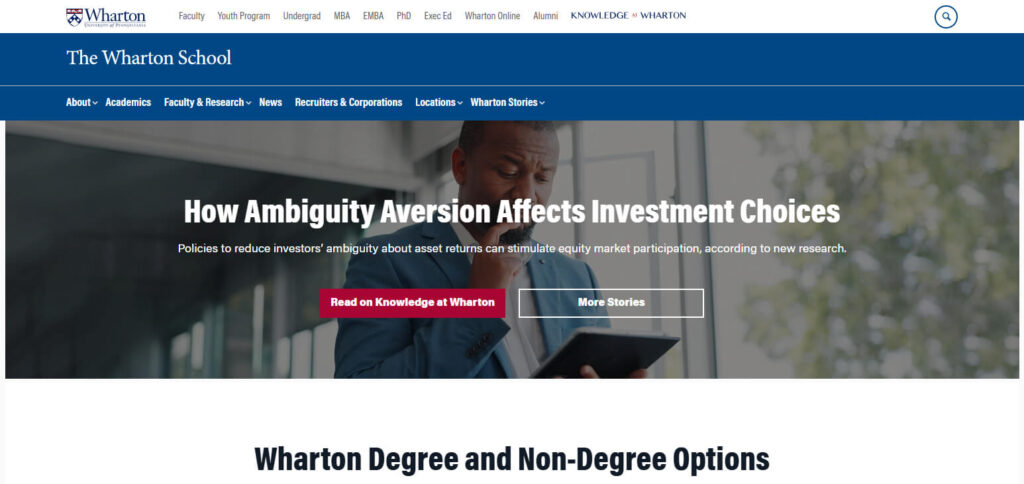
What truly distinguishes Wharton is its custom curriculum that allows a student to study business together with liberal arts, technology, or global studies. This flexibility allows students to carve out unique career trajectories from an early age.
Unlike other institutions, Wharton arms its students with world-renowned faculty, leadership training from the onset, and an unmatched entrepreneurial spirit – ensuring they excel in any business setting.
University of Pennsylvania (Wharton) Pros & Cons
Pros :
- Excellent reputation with strong emphasis on finance and management.
- Inter disciplinary nature of business enables integration of other subjects.
- Numerous opportunities around the world professionaly, in addition to the expansive alumni network.
Cons:
- Admission is highly competitive and selective.
- High academic work pressure and stress.
- The university is located in Philadelphia making living and tuition expensive.
2.Massachusetts Institute of Technology (Sloan) (tie)
Sloan is one of the best business schools at the undergraduate level courtesy of the straddling relationship that it has with technoscience due to its parent institute, the Massachusetts Institute of Technology.

What makes Sloan powerful is its active participation in the solution of actual problems using data, innovation, systems thinking, and hands-on creativity. Students begin to think as both engineers and leaders at the same time.
This cross-pollinational approach enables learners to become accomplished in globally multi-faceted problems with precise techniques and immense confidence.
Massachusetts Institute of Technology (Sloan) (tie) Pros & Cons
Pros :
- Effective fusion of business technologies with analytics.
- Experiential learning through case competitions.
- Ability to leverage MIT’s ecosystem and research-driven innovation.
Cons:
- Balance of business electives is less than other schools.
- Competitive academic culture.
- Integrated STEM leaves students with a smaller business community.
3.University of California, Berkeley (Haas) (tie)
Haas School of Business at the University of California, Berkeley, is one of the top undergraduate business programs in the country due to its commitment to values-based leadership and innovation.
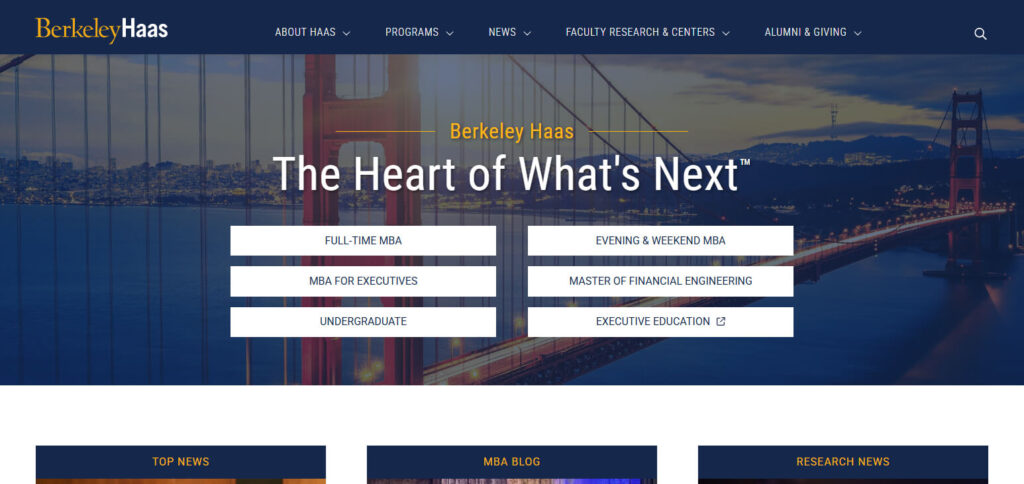
The school’s unique slogan that results in “leadership through questioning the status quo” and “confident no attitude” sets it apart.
These values motivate students to become purposeful leaders who drive change. Along with close proximity to Silicon Valley, an entrepreneurial culture allows Haas to prepare students for transformation within the context of a growing global economy.
University of California, Berkeley (Haas) (tie) Pros & Cons
Pros :
- Importance in promoting innovation and values-driven leadership.
- Access to Silicon Valley means great exposure to technology and startups.
- Good scholarly reputation with a selective business program.
Cons:
- Usually, the program’s admission is granted in the 3rd year.
- There is a stiff competition for the internal transfer from other UC Berkeley students.
- Aiming to provide services to a huge public university system may compromise individual attention.
4.University of Michigan (Ross)
The Ross School of the University of Michigan is one of the top undergraduate programs because of its emphasis on action-based learning. What sets Ross apart is the hands-on experiences, particularly through the signature MAP (Multidisciplinary Action Projects) program that facilitates problem solving for actual businesses.
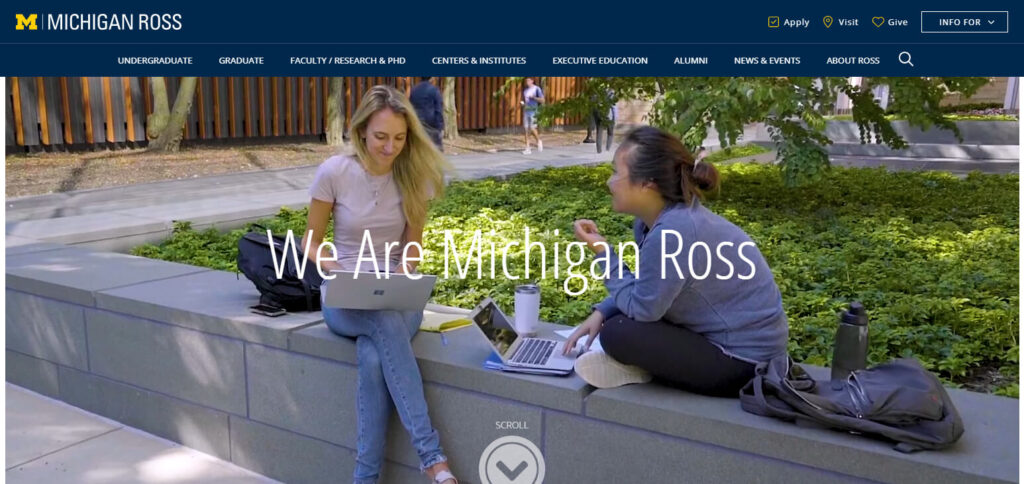
Such practical learning enhances constructive criticism and collaboration from an early age. Ross provides a great place to start with its collaborative culture and allows students to develop leadership skills, adaptability, and real-world experience through various opportunities.
University of Michigan (Ross) Pros & Cons
Pros :
- Policy and Action based learning like Program on Negotiation at MAP.
- Outstanding career services and connections with employers.
- Cooperative student environment with many opportunities.
Cons:
- Some core classes have large lecture sections.
- Harsh winter conditions are unappealing to some.
- Tuition is high compared to other state schools for non-residents.
5.New York University (Stern)
New York University’s Stern School of Business is at the top of the list for best undergraduate business programs because of its location and international outlook.
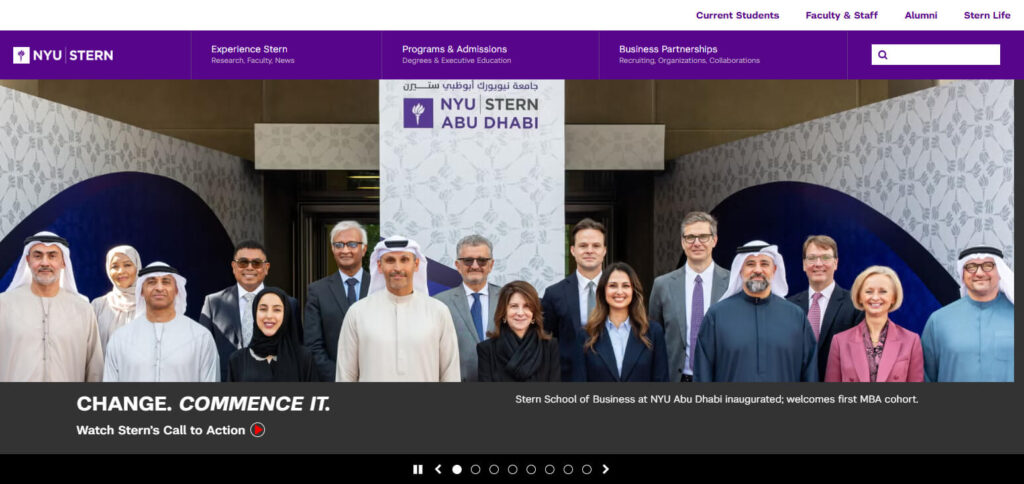
Stern’s distinct value proposition is its alignment with the fast-paced city of New York and its unparalleled access to top companies and internships.
It is a focus on international business that enables students to go on exchange programs to study in different countries. The comprehensive exposure to the city and international travel while studying promotes success in Stern graduates in varying demanding careers around the world.
New York University (Stern) Pros & Cons
Pros :
- Access to major firms and internships due to the prime location in NYC.
- Considerable concentration on finance alongside global business.
- Options for offshore study and networking abound.
Cons:
- Expensive living costs for students staying in New York City.
- Heightened competition for academic achievement.
- Fragments of the traditional campus experience.
6.Carnegie Mellon University (Tepper) (tie)
Carnegie Mellon University’s Tepper School of Business earns its place among the best undergraduate busines programs through its distinctive fusion of business and analytics.
With its strong focus on decision making, a student’s education is deeply centered on integration of quantitative reasoning and management, and students learn how to think strategically.
The syllabus promotes interfacing with the engineering and computer science departments, creating an interdisciplinary business culture. This enables graduates to take up leadership positions in industries that are highly precise, innovative, and technologically advanced.
Carnegie Mellon University (Tepper) (tie) Pros & Cons
Pros :
- Stresses the importance of data analytics and other quantitative skills.
- Works alongside some of the best STEM departments in the country.
- Provides a conducive atmosphere with small class sizes for better guidance and interaction.
Cons:
- Over-reliance on complex numbers may be too challenging for some students.
- Compared to other large, more public universities, there is less of a social life here.
- Complex coursework can be very challenging from an academic standpoint.
7.University of Texas at Austin (McCombs) (tie)
The McCombs School of Business at the University of Texas at Austin differentiates itself at the industry’s best strata owing its strong integration with industry and entrepreneurship focus.

With bold integration to Austin’s dynamic startup and tech ecosystem, what makes McCombs special is its unparalleled access to cutting edge companies and constant business challenges.
The culture of strong mentorship coupled with diverse learning opportunities prepares the students to integrate into the systems or to create their own. At McCombs, entrepreneurial spirit and leadership skills are cultivated.
University of Texas at Austin (McCombs) (tie) Pros & Cons
Pros :
- Austin’s emerging technology and startup ecosystem has excellent connections.
- In-state students benefit from inexpensive tuition costs.
- An abundant list of business fields and other educational materials.
Cons:
- The huge student body size might be too much for some students.
- High competition for internal transfers out of pre-business major.
- Other non-profit institutions have a better reputation than us nationally.
8.Cornell University (Dyson) (tie)
Cornell University’s Dyson School offers one of the best undergraduate business programs due to the combination of business education with applied economics through the lens of sustainability.
What distinguishes Dyson is its cross-functional placement in both SC Johnson College of Business and the College of Agriculture and Life Sciences.
Both mold the students into well-versed professionals who understand the impacts of business on society and the environment so that they can lead from an economically responsible, insight-focused, sustainable, and humane approach.
Cornell University (Dyson) (tie) Pros & Cons
Pros :
- International focus and trans-disciplinary integration of business, economics and sustainability.
- Access to Cornell’s extensive academic and research facilities.
- Integrative approach surveying business with strong consciousness of social as well as environmental issues.
Cons:
- The more remote, rural location may result in less direct industry access.
- Great amount of work with high intellectual demand academically.
- Smaller, more intimate style programs may have less networking opportunities than bigger institutions.
9.Indiana University (Kelley) (tie)
Indiana University’s Kelley School of Business has received accolades as one of the best undergraduate business programs for its emphasis on customized education and employability.
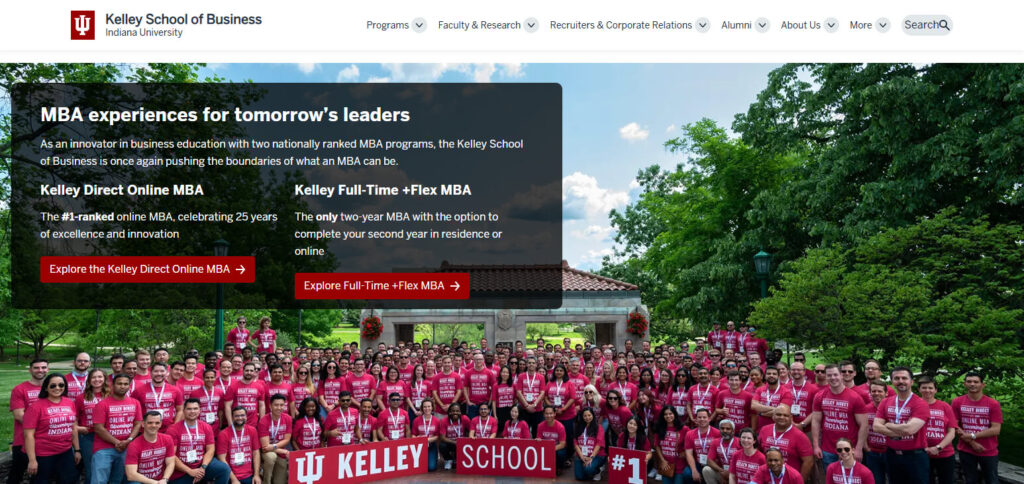
Kelley’s innovative Me, Inc. program is what sets it apart; it allows students to clinically construct personally tailored advanced career strategies by honing their leadership skills and identifying their strengths from the very beginning.
With its caring community, robust corporate connections, and hands-on approach to business education, Kelley prepares students for successful transitions from the classroom to the business world.
Indiana University (Kelley) (tie) Pros & Cons
Pros :
- Interesting advancements in one’s career through the Me, Inc. program.
- Active business placement opportunities and relationships with companies.
- Reasonable tuition costs, particularly for local students.
Cons:
- Lesser known nationally and perceived as less elite than Ivy League counterparts.
- Some first-level courses can be quite crowded.
- Less exposure to international markets than other more globally-minded programs.
10.University of Southern California (Marshall) (tie)
The University of Southern California’s Marshall School of Business is well known as one of the best rated undergraduate programs because of its synergy with Southern California’s diverse economy, and for it’s global scope.
Marshall’s unique strength comes from its innovative World Bachelor in Business (WBB) program which allows students to study across three continents.
The international travel along with access to entertainment, tech, and real estate industries in Los Angeles helps these students prepare to assume leadership positions in diverse cultures and around the world.
University of Southern California (Marshall) (tie) Pros & Cons
Pros :
- The World Bachelor in Business (WBB) Global Programs.
- Excellent connections to various industries, particularly in Los Angeles.
- Different cultures represented on campus create a lively atmosphere.
Cons:
- Expensive tuition and cost of living.
- Selective admission.
- Under-classmen courses are taught in big classes.
Conclusion
To summarize, the top undergraduate business programs differentiate themselves with innovative teaching methods, international opportunities, and robust ties to industry.
Wharton, Sloan, Haas, Ross, Stern, Tepper, McCombs, Dyson, Kelley, and Marshall have them do offer unique advantages which sharpen students for leadership roles in the constantly changing business environment.
These programs integrate quality education with hands-on practice to produce graduates who are versatile and insightful professionals prepared to create positive change in any field they enter.