

I will cover Is Polygon Still Profitable in 2025? by examining its market performance, ecosystem development, and profit potential through staking and yield farming.
With growing use and minimal fees, Polygon continues to be one of the major players in the cryptocurrency world. But does it still stand as a good investment? Let’s look at the details first.
What is Polygon (MATIC)?
Polygon (MATIC) is an Ethereum Layer 2 scaling solution focused on improving its ecosystem through faster transaction processing and reduced fee structures. It functions as a sidechain which enables better user experience and scalability for developers building decentralized applications (dApps).
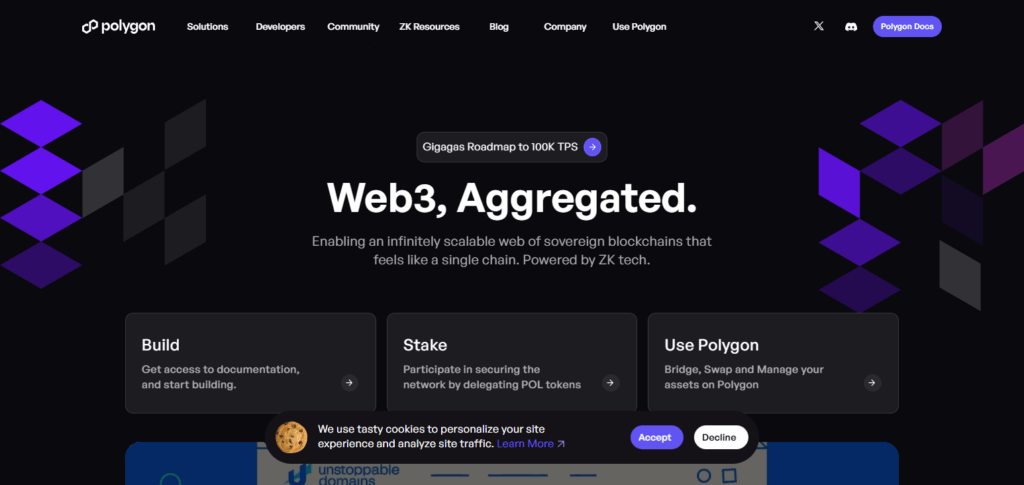
Polygon supports diverse use cases such as DeFi platforms, NFTs, and gaming applications. Due to its expanding ecosystem and robust developer backing, Polygon is increasingly preferred by projects looking for cost-effective solutions while still leveraging Ethereum’s security and decentralization.
Is Polygon Still Profitable

Strong Ecosystem Growth: Adoption of the Polygon network is skyrocketing as DeFi, NFTs, and gaming dApps are actively being built on it.
Low Transaction Fees: Polygon’s gas fees are cheaper than Ethereum’s, allowing for a greater influx of users and developers.
Staking Rewards: MATIC holders continue to passively earn decent annual yields by staking on different platforms.
Partnerships and Integrations: Deals with big companies and organizations enhance trust and increase usefulness for it in the long run.
Market Volatility: In common with other cryptocurrencies, MATIC’s short-term profitability will always be influenced by price changes.
Layer 2 Competition: Other emerging Layer 2s could prove competitive and erode some of Polygon’s market share, but it still has a strong position in the space.
Developer Activity: High development activity is positive as it shows the range is 다Innovative and can enhance value in the future.
Price Performance Overview
| Period | Min Price (USD) | Max Price (USD) | Avg or Current (USD) |
|---|---|---|---|
| 2021 (All‑time high) | — | ≈ 2.93 | — (Bitscreener) |
| Early 2024 | 0.0174 | — | 0.0174 (end‑2020), ramped in 2021 |
| 2024 Forecast | 0.28 | 0.45 | ~ 0.40 (average) |
| 2025 Forecasts | 0.47–1.02 (low) | Up to 1.55 (high) | ~ 0.55–1.27 (varies by model) |
| Jun–Jul 2025 (recent) | ≈ 0.164–0.291 | — | ~ 0.19–0.24 daily range |
Factors Influencing Polygon’s Profitability
Network Adoption: The adoption of DeFi, NFTs, GameFi, and Enterprise apps on Polygon drives up transaction numbers and overall long-term usage.
Transaction Fees and Speed: Users and developers are greatly attracted to Polygon because of its lower fees and faster transaction confirmations when compared to Ethereum.
Ecosystem Growth: More user-engaging dApps, other bridges, and Layer 3 integrations are coming which increases the demand for MATIC tokens as well.
Staking and Yield Opportunities: Through staking and yield farming, users can passively earn income and this is available on Polygon-based platforms.
Strategic Partnerships: Gaining strategic partnerships increases credibility and potential growth which is shown through their partnerships with companies like Disney, Reddit, and Starbucks.
Layer 2 Competition: Polygon’s market share and developer loyalty may be adversely affected by competing solutions like Arbitrum, Optimism, and zkSync.
Regulatory Landscape: The classification, listings on exchanges, or staking opportunities for MATIC could be influenced by global crypto regulations.
Market Sentiment: Overall trends in the crypto market, Bitcoin’s performance, and investor confidence will affect profitability.
Risks and Considerations
Market Movement
The price of MATIC is vulnerable to sudden changes in sentiment, news, or macroeconomic trends.
Layer 2 Rivals
Other scaling solutions, such as Arbitrum, Optimism, and zkSync pose stronger competition and may affect adoption and profitability of Polygon.
Smart Contract Risks
Loss of funds or hacks due to vulnerabilities in Polygon’s smart contracts or dApps create risks for all DeFi platforms.
Regulatory Uncertainty
Polygon’s operations, staking opportunities, or the status of MATIC as a security can be influenced by changing regulations in major jurisdictions.
Inflated Tokens
If demand does not match token emissions, a high total supply MATIC may lead to downward pressure on its price.
Technical Challenges
Congested networks, bugs, or protocol upgrades have the potential to service interruptions which could lead to user dissatisfaction.
Real Value Versus Investor Hype
Price surges based on insufficient speculation can result in unsustainable price increases followed by devastating collapses.
Pros & Cons
| Pros | Cons |
|---|---|
| Low Transaction Fees – Cheaper than Ethereum | High Volatility – MATIC price fluctuates frequently |
| Fast Transactions – Near-instant confirmation | Layer 2 Competition – Faces rivals like Arbitrum |
| Active Ecosystem – DeFi, NFTs, and GameFi dApps | Smart Contract Risks – Vulnerable to exploits |
| Staking Opportunities – Earn passive income | Regulatory Risk – Legal uncertainty around crypto |
| Strong Partnerships – Collaborations with major brands | Token Inflation – Large supply may limit price growth |
| Ethereum Compatible – Leverages Ethereum security | Network Congestion Possible – During peak usage |
Conclusion
Polygon (MATIC) can prove to be a good investment in the year 2025. This is more beneficial for those who make use of staking, yield farming and low-fee transactions.
Polygon’s active developer community, wide-ranging partnerships and strong ecosystem add to value in the long run. That said, profitability could vary with changes in the economy, regulations, or competition from other Layer 2 solutions.
Although there is risk from short-term fluctuations, participants will likely be able to obtain decent returns through exercising the network’s utility and opportunities. Maintaining careful research and risk management, as always is critical.
FAQ
Is Polygon (MATIC) a good investment in 2025?
Polygon remains a solid option for long-term investors due to its strong ecosystem, low fees, and growing adoption. However, it’s still subject to market risks and competition.
How can I earn with Polygon in 2025?
You can earn with Polygon by staking MATIC, yield farming on Polygon-based DeFi platforms, or providing liquidity on decentralized exchanges (DEXs).
Is staking MATIC still profitable?
Yes, staking MATIC offers passive income with annual returns ranging from 4% to 10%, depending on the platform and network conditions.