

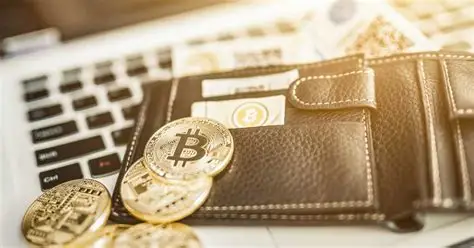
In this article, I will talk about Which Crypto Wallet Is Most Secure and how to use various methods to adequately protect your digital assets.
Due to the increasing use of cryptocurrencies, the necessity of finding a wallet that incorporates safety as well, becomes of utmost importance.
We will consider the best wallets, their security features, and what steps users can actively take to ensure their crypto remains protected from hacks, theft, and loss.
What is Crypto Wallet?
A crypto wallet refers to the digital application which users can use to store, send, and receive cryptocurrencies. Unlike the conventional wallets, crypto wallets do not hold coins physically, but rather, store private keys which are the cryptographic codes which allow access to the cryptocurrencies stored in the blockchain.
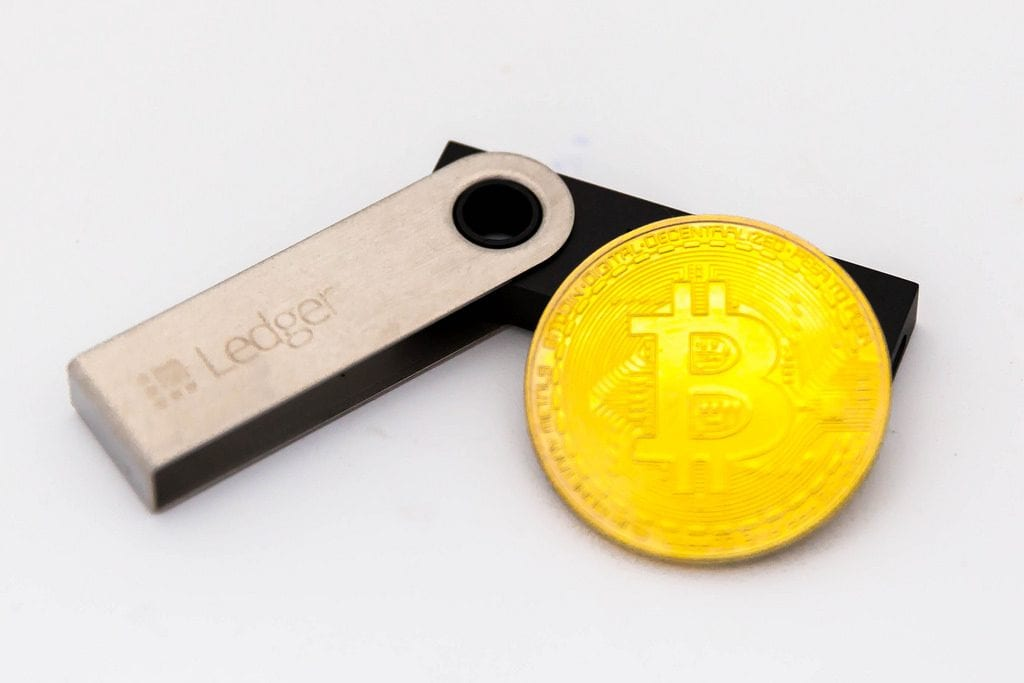
Crypto wallets can take the form of hardware wallets like USB crypto wallets or software wallets in the form of mobile applications, desktop applications, or web apps.
They offer transaction histories, balance information, and connections to some dApps. Ideal wallets are those that provide adequate security, are easy to use, and offer viable backup solutions to mitigate the loss or theft of the digital currencies stored in the wallet.
What Makes a Crypto Wallet Secure?
Private Key Control
- Private keys should only be accessed by the wallet owner.
- Losing the private key is the same as losing the money.
Encryption
- Private keys and transactions are classified as highly sensitive and should be encrypted.
- If sensitive information should be protected from hacking and unauthorized access.
Two-Factor Authentication (2FA)
- The user will need to go through another verification to gain access to the account.
- The user’s account is less likely to be accessed by an unauthorized person.
Multi-Signature Support
- Account owners need to sign off several times for one transaction.
- Even if an attacker were to gain access to the wallet, they need multiple signers.
Backup & Recovery Options
- Wallets need to explain the significance of the seed phrase and recovery key.
- Users must be able to regain access for funds, even if the wallet is misplaced or damaged.
Offline Storage (Cold Wallets)
- Wallets that store keys physically, offline, are the most protected from Internet dangers.
- The ideal option for long-term protection.
Regular Updates & Open-Source Audits
- Having consistent updates and resulting in more the fixes to updates.
- Cloased source wallets don’t have the option of public audits, which results in less trust.
Top 5 Secure Crypto Wallets
1. Ledger Nano X
The Ledger Nano X is considered one of the most secure cryptocurrency wallets in the world and provides unrivaled security for your digital assets. Ledger was started in 2014 and blends strong hardware security with ease of use.
Users can securely store more than 1,800 of the cryptocurrencies offline. The device never exposes the private keys, and so, your funds remain unexposed to many of the online threats.
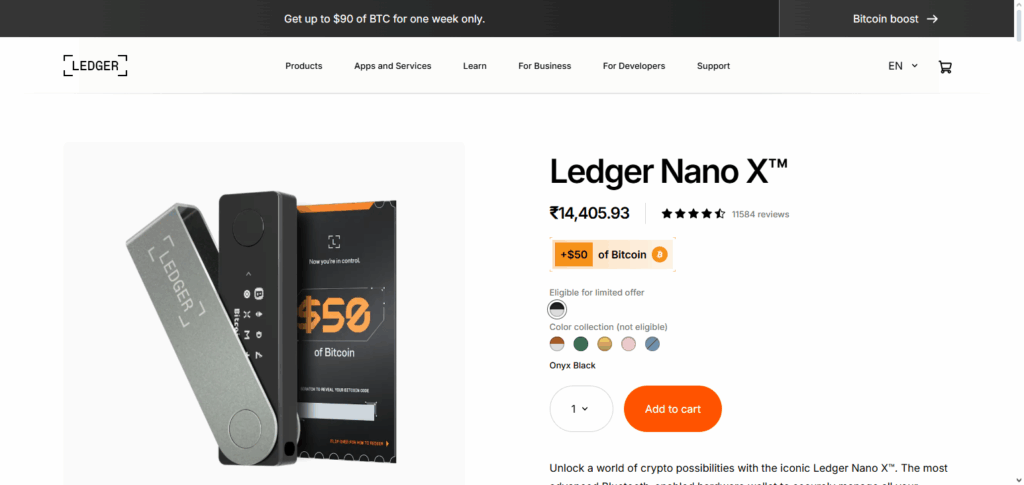
The wallets security is covered by using a variety of security features including, a passphrase, PIN codes, and two-factor authentication. Bluetooth technology allows for secure wallet access on the go.
Regularly uploaded firmware coupled with the company’s prestige in the cryptocurrency world gives both non-experienced and seasoned investors confidence in the Ledger Nano X, as both a highly secure and user friendly product.
2. Trezor Model T
The Trezor Model T was one of the first secure crypto wallets in the world, alongside its founded in the year 2014, for its transparency and advanced safety features. Its touchscreen interface facilitates the addition of passphrase protection and supports entry of passphrases directly on the device.
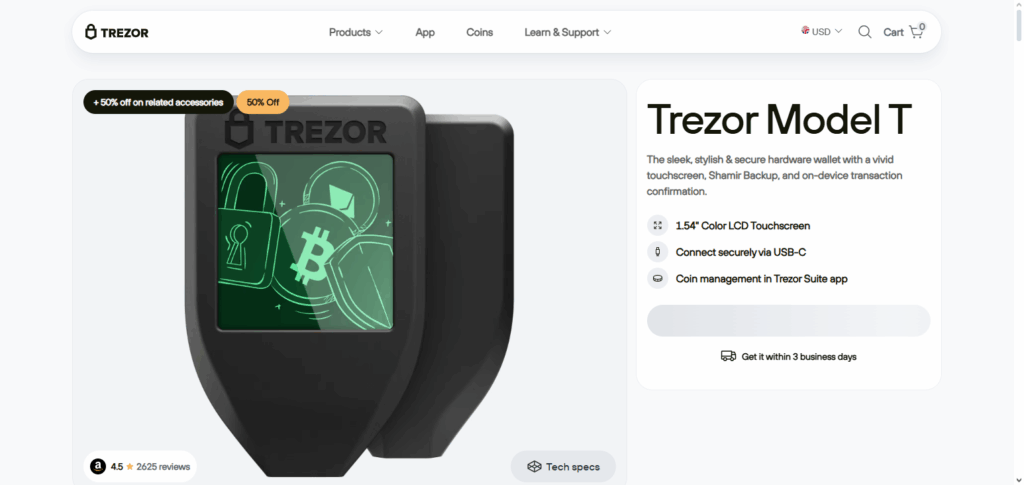
Model T offers hundreds of supported cryptocurrencies and multi-signature capabilities with hundreds. Transactions with multi-signature capabilities require multiple approvals for added protection.
Trusted and verified audits are enabled with the open source firmware, increasing trust and transparency. Backup options combined with regular updates further strengthen Trezor Model T sclusive offers for secure and precise protection for your digital assets.
3. Exodus Wallet
Founded in 2015, the Exodus Wallet is one of the easiest to use software wallets on the market, combining a sleek design with exceptional security for both novice and seasoned crypto investors.
Exodus is the only wallet that provides 100% decentralized customer wallet control, as Exodus’s mobile and desktop applications saves private keys locally on the user’s device. In addition, sensitive data is also encrypted to prevent unauthorized access.
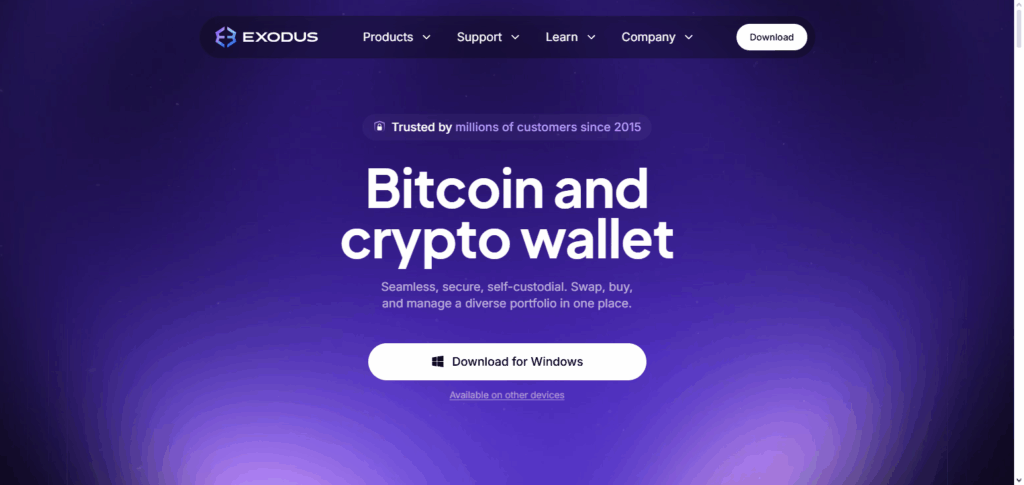
Users can trade effortlessly with the in-feature exchange and Exodus’s wallet security is unchallenged. There are also no compromises with user experience as Exodus’s user interface is designed to simplify and speed up portfolio management.
Backups and device loss recovery options are also part of the Exodus wallet design. With frequent updates and consistent customer feedback, Exodus is one of the few secure crypto wallets that exude maximum user convenience.
4. Trust Wallet
Founded in 2017, Trust Wallet has gained popularity as a highly secure wallet thanks to its ease of use. The private keys are stored on the user’s device mitigating exposure to online dangers. Users don’t have to worry about inadequate internet protection. Trust Wallet’s compatibility to crypto assets like dApps makes it quintessential for crypto portfolio holders.
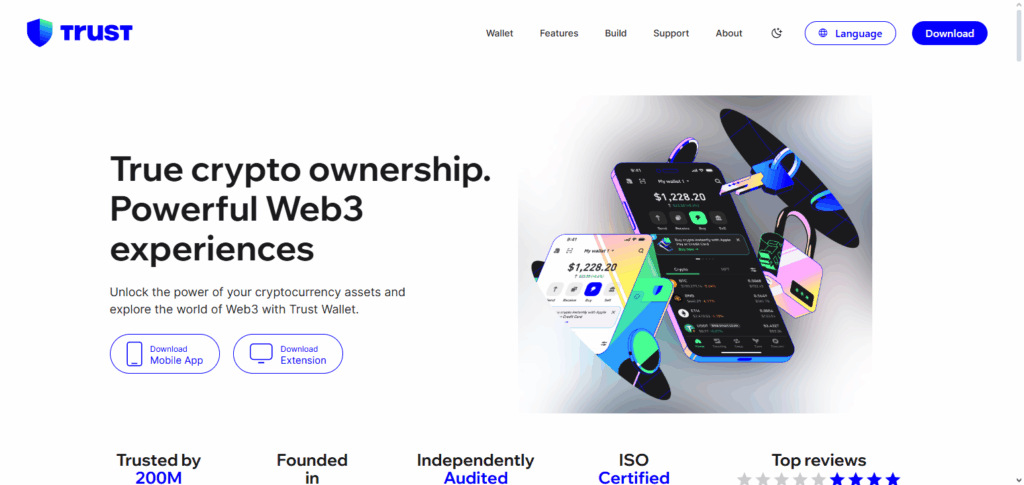
Software protection like biometric tools serves as additional security. The rest of the security is provided by updates to the Trust Wallet itself. Users are provided freedom with constant updates, for Trust Wallet is compromised of DeFi platform. Backup and recovery options makes Trust Wallet efficient and safe for daily crypto transactions.
5. MetaMask
Founded in 2016, MetaMask is among the top crypto wallets which is also used on mobiles. It is popular for its web browser compatibility, especially in the Ethereum ecosystem and other EVM-compatible blockchains.
The software program encrypts the private keys on the user’s local device, thus ensuring that the funds remain under the the owner’s control and no unauthorized access is possible.

MetaMask also supports crypto transactions to dApps and DeFi systems which allows for anonymous communication without the risk of identity theft. Its code is open-source, which means it can be examined for security breaches, and the optional integration with hardware wallets gives an additional protection for users’ large balances.
MetaMask’s reputation for balance between security and convenience is aided by its timely updates and device-friendly interface.
Tips For Safe Crypto Wallet Is Most Secure
Utilize Hardware Wallets For Large Holdings
In online hacks, significant amounts of crypto online are highly vulnerable, so store them offline.
Activate Two-Factor Authentication (2FA) Deliberately
Access to a user’s account or funds without permission can be minimized by adding additional verification steps for logins or transactions.
Keep Secure Backup & Recovery Phrases
Never post your seed phrases online; lose the offline copy in a secure location.
Regularly Improve the Wallet Software Or Firmware
Improvement to wallet performance and patching of security vulnerabilities happen during updates.
Utilize Passwords That are Very Strong and Unique
Passwords for multiple accounts should not be used. A password manager can be used to store passwords safely.
Exercise Caution with Phishing Attacks
Wallets, sites, apps and, along with emails should be verified for sensitive information.
Think About Multi-signature Wallets
Additional security is assumed by transactions that require multiple approvals.
Set Limits to Exposure on Exchange Wallets
For trading purposes, funds are kept on exchange wallets; personal wallets are for long storage.
Best Practices for Crypto Wallet Security
Use Hardware Wallets for Long-term Storage
Store big volumes of crypto securely offline to protect against hacks and malicious downloads.
Control Your Private Keys
Make sure you can access your private keys entirely; avoid wallets where keys are custodial.
Set Up and Enable Two-Factor Authentication (2FA)
Provides added layers of security for wallet use and transactions.
Generate Strong and Unique Passwords
Configure advanced passwords and a password manager so they’re not reused across sites.
Backup Recovery Phrases Safely
Never describe them online; keep offline in a guarded and indexed facility.
Maintain up to Date Software and Firmware
Stale versions can contain security flaws and access issues for the wallet’s owner.
Adopt Multi-signature Wallets Wherever Practicable
Multi-signature wallets require more than one signatory to a transaction, thus increasing friction to potential theft.
Pay Attention to Phishing Attacks
Only use cryptocurrencies from authorized apps or sites. Always check URLs or email addresses.
Set a Limit on Exchange Wallet Funds
Only keep the amounts for trading on exchanges. Store whatever remains in your personal wallets.
Regularly Monitor the Activity on Wallets
Regularly check for unauthorized transactions or suspected fraud.
Pros & Cons
Pros of Secure Crypto Wallets
- Offline protection of private keys – Protective measures will avert online hacking.
- Multiple layers of security – Use of PINs, passphrases, 2FA, and multi-sign Authorization signatures.
- Users control their private keys– Total user ownership of crypto.
- Recovery and backup – Restoration is possible and available through the seed phrase if the device is misplaced.
- Auditable Open-source crypto wallets – Wallet transparency promotes confidence in security.
Cons of Secure Crypto Wallets
- Price of hardware wallets is high – The primary purchase cost is expensive.
- More difficult for regular transactions – Fund Transfers require online connection and storage.
- Vulnerable online software wallets – Exposure to hacking, phishing, malware, and other cybersecurity attacks.
- Advanced set up for novices – Recovery and multi-signature setups can be overwhelming.
- Vulnerable personal security measures – Funds can be misplaced due to poor password management or reckless behavior.
Conclusion
Selecting a crypto wallet comes down to one’s priorities – functionality, security, and personal considerations. For example, Ledger Nano X and Trezor Model T provide unparalleled convenience in private key storage.
This is made possible by offline storage, multi-signature, and offline key storage. These features make the device ideal for long-term crypto holdings. Exodus, Trust Wallet, and MetaMask offer limited crypto wallet functionality, but users enjoy everyday crypto transactions.
These online mobile applications eliminate the granularity and multi-layer security for everyday users. Advanced security features that local users enjoy include local key storage and encryption. Trust wallets, proper security methods, and private key management will guarantee maximum protection for your digital property.
FAQ
Can software wallets be secure?
Yes, software wallets like Exodus, Trust Wallet, and MetaMask can be secure if you follow best practices, including strong passwords, 2FA, and keeping backups safe.
What is the difference between hardware and software wallets?
Hardware wallets store keys offline and are ideal for long-term security, while software wallets are online or device-based, offering convenience for daily transactions but slightly higher risk.
How do I recover a lost wallet?
Most wallets provide a seed phrase or recovery phrase during setup. Keep it secure offline; it allows you to restore your wallet if the device is lost or damaged.