


This article will cover the DeFi Aggregator vs Dex Aggregator, their main differences, advantages, and application.
Although both are important in the decentralized finance space, DeFi aggregators primarily center on yield optimization and investment management,
While DEX aggregators focus on efficient token swaps and trading. Recognizing these differences will allow users to make better-informed decisions in crypto.
What is a DeFi Aggregator?
A DeFi aggregator is a platform within the decentralized finance (DeFi) space that streamlines the aggregation of liquidity, yield, and trading options from numerous DeFi protocols into a unified platform, enabling users to pursue the best rates and returns passively, without the need to interface with each individual platform.
It functions as an intermediary for users and various decentralized protocols, assessing numerous protocols in real time for the best yield, least slippage trading, and lending opportunities.
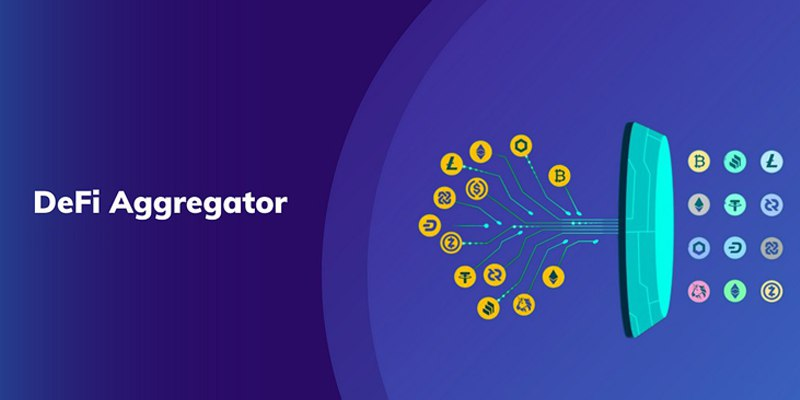
With DeFi aggregators a user can, among other things, yield farm, optimize a portfolio, set and profit from an automated strategy, and lower the risk associated with profitability.
It operates, as directly mentioned, within the liquidity pools, lending clearners, and staking protocols, thus saving users on time and transaction costs, and the operational risk of DeFi while increasing the operational scope possible from the blockchain, which both novice and experienced users of DeFi find compelling.
What is a Dex Aggregator?
The DEX aggregator serves the function of an aggregator for multiple DEXs. They react and add to the liquidity from the DEXs and thus can provide better prices than most places.
They are better than traditional DEXs because they lower slippage and better prices for larger trades. Slippage and prices are better than most DEXs because they can split orders and use multiple pathways to get to the most efficient price and the best ratio for the users.

DEXs can take and modify custom orders, keep and provide data for a price prediction feature, and provide multiple graphs and data points for analysis. Handsome DEXs can provide gas fee and slippage fee estimations and take multiple chain/ blockchain token swapping.
WAPs can provide analysis and DEXs can be linked to multiple DEXs to use the less manual effort. DEXs can be linked to multiple DEXs to use less manual effort. They make the use of the liquidity better and allow the trading to be performed faster.
Key Differences Between DeFi Aggregator vs Dex Aggregator
| Feature | DeFi Aggregator | DEX Aggregator |
|---|---|---|
| Primary Purpose | Optimizes yield, lending, staking, and other DeFi opportunities across multiple protocols. | Optimizes token swaps and trading by sourcing liquidity from multiple decentralized exchanges. |
| Liquidity Sources | Connects to DeFi platforms like lending protocols, staking pools, and yield farms. | Connects to multiple DEXs such as Uniswap, SushiSwap, PancakeSwap, and others. |
| Trade Optimization | Focuses on maximizing returns, minimizing risk, and automating yield strategies. | Focuses on finding the best token prices, reducing slippage, and minimizing transaction fees. |
| Use Cases | Yield farming, staking, lending, borrowing, and portfolio management. | Token swaps, cross-chain trading, and efficient execution of large trades. |
| User Interaction | Often includes automated strategies and dashboards for tracking portfolio performance. | Primarily transaction-oriented with features like split orders, routing optimization, and gas fee calculations. |
| Fees | May include protocol fees, performance fees, or gas costs depending on the strategy. | Mainly involves transaction fees on DEXs and minimal aggregator service fees. |
| Target Users | Investors seeking passive income or optimized DeFi returns. | Traders seeking the best prices and lowest slippage for token swaps. |
Benefits Of DeFi Aggregator vs Dex Aggregator
Benefits of DeFi Aggregators
- Optimized Yield: Automatically seeks out the highest returns on several DeFi protocols.
- Time-Saving: Customers do not need to manually verify several platforms to find the best rates.
- Portfolio Management: A few DAPs come with portfolio management systems to monitor investments, lending, and staking.
- Automated Strategies: Systems allow unmanaged auto-compounding, yield farming, and risk management.
- Lower Costs: Gas fees are saved by batching or picking protocols that are cost-efficient.
Benefits of DEX Aggregators
- Best Trade Prices: Looks for best rates for token swaps cross multiple DEXs.
- Reduced Slippage: Orders are split cross DEXs to minimize slippage. This is applicable for big trades.
- Cross-Chain Support: This enables token swaps of different blockchains on a single interface.
- Efficiency: Use of several DEXs for price comparisons is eliminated.
- User Friendly Interface: Provided real time analytics, gas fee estimation and easy swap execution.
Use Cases DeFi Aggregator vs Dex Aggregator
Use Cases of DeFi Aggregators
- Yield Farming Optimization: Analyzes and invests in the most profitable yield liquidity pools.
- Stake and Reward Management: Streamlines staking across several ecosystems for higher profitability.
- Lending and Borrowing: Identifies the most competitive crypto asset borrowing and lending interest rates.
- Portfolio Tracking: Keeps a centralized dashboard for tracking several DeFi investments.
- Automated Investment Strategies: Handles risk managed strategies or auto-compounds for passive income.
Use Cases of DEX Aggregators
- Crypto Token Swap: Swaps crypto tokens paying the lowest possible price across multiple DEXs.
- Cross Trade Large Execution: Divides multiple rounds of a single trade for easier execution.
- Cross-Chain Transactions: Directly exchanges data on separate blockchains.
- Optimizes Gas Fees: Identifies and uses the cheapest route for the transaction.
- Trade Analytic: Having liquid and price data offers immediate trading actions.
Pros and Cons DeFi Aggregator vs Dex Aggregator
Pros & Cons DeFi Aggregator
Pros:
- Optimized Returns – Identifies the highest yields and staking opportunities available.
- Time-Saving – Automates complex tasks in DeFi such as yield farming and tracking portfolios.
- Risk Management – Some platforms take steps to reduce exposure to volatile assets.
- Consolidated Dashboard – Offers easy monitoring of all your DeFi investments.
Cons:
- Smart Contract Risks – Risks from bugs or exploits in the underlying protocols.
- Higher Fees – Some of these DEXs charge performance fees or transaction gas costs.
- Complexity for Beginners – Overwhelming to users who are new to DeFi concepts.
Pros & Cons DEX Aggregator
Pros:
- Best Token Prices – Identifies and utilizes the lowest slippage and best route options across DEXs.
- Efficient Large Trades – Splits orders to reduce price impacts during a trade.
- Cross-Chain Capability – Swap assets over several Blockchains.
- User-Friendly Trading – Automated trading through aggregation of funds from multiple sources.
Cons:
- Dependence on DEX Liquidity – Lower limits and high exposure due to liquidity on DEXs.
- Transaction Fees – Users pay gas fees along with transaction costs which are high during congestion.
- No Profit Features: This service is purely for trading – no lending or staking perks are offered.
Conclusion
DeFi aggregators and DEX aggregators serve different functions and cater to different needs in the crypto world. For instance, DeFi aggregators help investors looking for higher, optimized, automated yield returns in lending, staking, and farming because it simplifies the management of these opportunities.
DEX aggregators, on the other hand, cater to traders interested in the best token swap rates, low slippage and fast transaction times across numerous decentralized exchanges. Hence, the choice really comes down to your objectives.
If your aim is to maximize returns while automating the investment process, use a DeFi aggregator. To make smart, low-cost trades, use a DEX aggregator.
Each is, of course, important in their own way and to different people. Together, they make the decentralized finance market more efficient, accessible and profitable.
FAQ
Which aggregator is better for beginners?
DEX aggregators are generally simpler for beginners who want to trade tokens efficiently, whereas DeFi aggregators may require a deeper understanding of yield farming, staking, and lending strategies.
What is the main difference between a DeFi aggregator and a DEX aggregator?
A DeFi aggregator focuses on optimizing yield, lending, and staking across multiple DeFi protocols, while a DEX aggregator focuses on executing token swaps at the best rates across multiple decentralized exchanges.
Are DeFi and DEX aggregators safe to use?
While both are designed to be secure, they rely on smart contracts, which may have vulnerabilities. Always research the platform, use reputable aggregators, and start with small amounts.
Can I use both DeFi and DEX aggregators together?
Yes, many users combine both to maximize returns: use DeFi aggregators for yield and staking, and DEX aggregators for optimal token swaps and trading.
Can DEX aggregators support cross-chain trading?
Many modern DEX aggregators offer cross-chain swaps, enabling token exchanges between different blockchains efficiently.