


I’ll go over how blockchain oracles are developing and changing how smart contracts work with actual data in this post.
Oracles are connecting on-chain and off-chain data, from early centralized systems to contemporary decentralized and AI-integrated solutions. We will examine important developments, obstacles, cutting-edge fixes, and prospects for these crucial elements of the blockchain ecosystem.
What is Blockchain Oracles?
A third-party service known as a blockchain oracle links blockchain networks with outside data sources so that smart contracts can run based on actual facts.
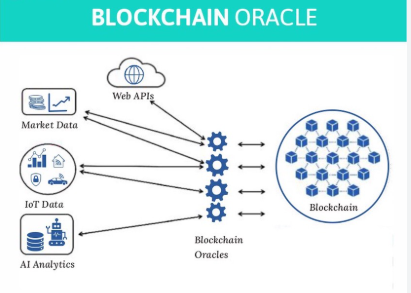
Oracles serve as a bridge, supplying dependable inputs like market prices, weather updates, IoT sensor data, or sports outcomes, as blockchains are unable to directly access off-chain data. Software, hardware, inbound, outbound, and cross-chain oracles are among the several kinds of oracles, each with a distinct function.
Although oracles improve blockchain functionality and make it possible for sophisticated decentralized applications (dApps), they also pose hazards like data manipulation and latency, therefore security and decentralization are crucial to their design.
How Blockchain Oracles Are Evolving
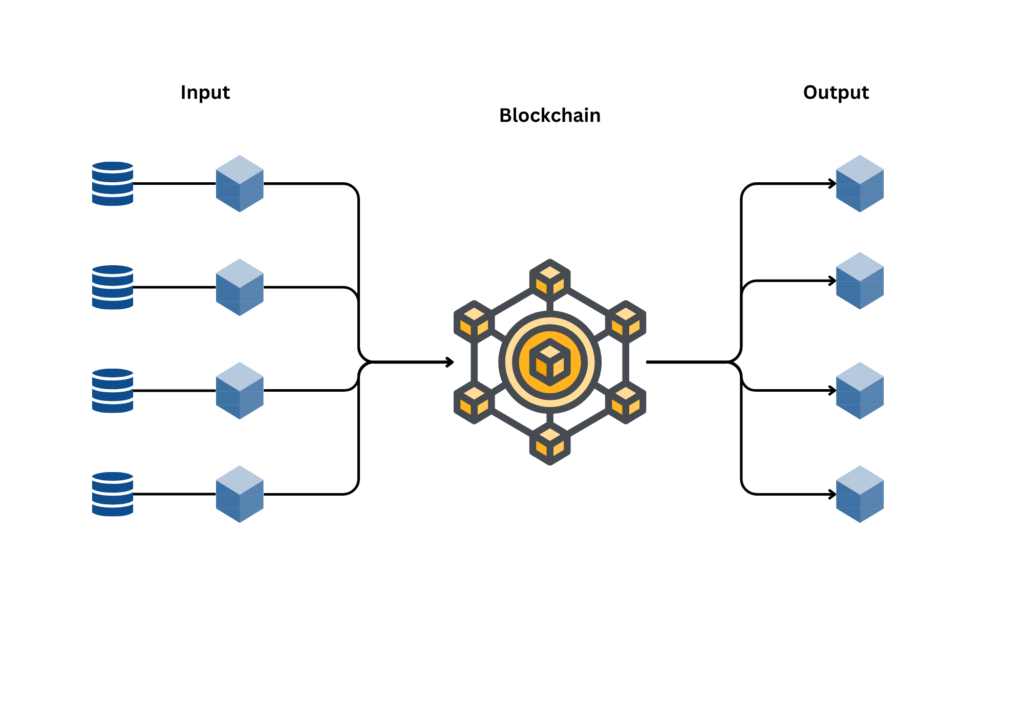
Movement Toward Decentralized Oracles
- Earlier oracle systems streamlined data from a central source, which created a centralized failure potential.
- Current Decentralized oracle systems lower source manipulation risk and increase confidence with the data used in DeFi systems as well as other applications.
Decentralized Cross-Chain Oracles
- Considerable development and integration on blockchain oracles supports cross-chain functionality, which allows data to flow across various independent blockchains.
- The Decentralized Cross-Chain Oracle functionality enables smart contracts on different blockchains to utilize the same data.
Data Verification & Aggregation
- Aggregated data sources provide a foundation decoupled from a single build, thus an enhanced environment of reduction for the impact of faulty information, and an increase in the overall system accuracy.
- The Ethereum data oracle uses consensus mechanisms which aids in the increased confidence and enhanced overall accuracy of the system.
The Internet of Things and Oracle Innovations
- Risk analysis and data volume reduction in smart contracts are primary functions of automated trading.
- Artificial Intelligence supports Autonomous Smart Contracts through Predictive Oracles which is a current trend.
Custom Oracles and Enterprise Adoption
- Industry-specific Custom Oracles are developed for Supply Chain, Insurance, and IoT.
- Custom Oracles are valuable to enterprises to enable on-chain automated smart contracts and to provide a secure mechanism to capture off-chain information.
Emphasis on Security and Incentive Structures
- Contemporary oracles use staking, reputational systems, and other economic mechanisms to promote truthful reporting of data.
- This improvement attempts to resolve issues such as the oracle manipulation attacks that characterized earlier implementations.
Why are oracles important for blockchain?
Relay on-chain and off-chain data
- Blockchains lack the ability to directly access outside data. Oracles function as the necessary connectors to get off-chain data onto the chain.
Automate execution of smart contracts
- Oracles allow real-time data, like the current price of an asset, the data on how hot it is, or if a game went into extra innings, to control when a smart contract executes.
Bring Financial Tools and Services to Blockchain
- Oracles are critical for lending, trading, derivatives, and other DeFi protocols since they provide the price data necessary for these services.
Bring Value to Businesses
- Businesses can use oracles to provide automated and legally verifiable data for their supply chain, IOT, and insurance claims processes.
Improve Accuracy and Reliability
- Data from multiple sources is used by decentralized oracles to improve the accuracy of their data and their resistance to manipulation. This improves the trust placed in their use in blockchain.
Cross-chain smart contract data
- Oracles enable smart contracts on different chains to access the same data so they can work together to use multiple blockchains.
Key Trends in Oracle Development
Emergence of Decentralized Oracles
- Aggregation of information from various providers.
- Builds more trust in DeFi and dApps by lowering susceptibility to manipulations.
Cross-Chain Compatibility
- Growing number of oracles that link various blockchain networks.
- Allows transfer and access of data for multi-chain applications.
Real-Time Data Feeds
- Demand for instant and dependable data is ever-increasing.
- Crucial for DeFi protocols, trading, and smart contracts that need constant updating.
AI and Predictive Oracles
- Incorporation of AI enhances predictive and more intelligent decision-making.
- Beneficial for automated trading, predictive analytics, and execution of smart contracts that are dynamic.
Enterprise-Oriented Oracles
- Custom-tailored oracles for finance, supply chain, and IoT.
- Empowers enterprises to automate contracts, auditing, and seamless integration of real-world data.
Enhanced Security & Incentive Mechanisms
- Stake systems, reputation-based systems, and cryptographic validations.
- Secure data, lowers risk to manipulations, and incentivizes oracle participants.
Challenges and Risks
Security Issues
- Data manipulation and false data feeding pose a threat to the reliability of every oracle.
- Hacks and data manipulation are especially feasible in the case of single source oracles.
Truth and Trust of Data
- Oracles depend on the reliability of third parties which can provide incomplete or outdated data to the oracle.
- Data which is not current can execute incorrect functions of a smart contract, thus causing the owner of the contract to incur a loss.
Internet-based Control
- Several oracles are still dependent on a single data provider or a small set of data nodes.
- Control due to concentration contradicts the faithless integration of a blockchain and activates inherent systemic dangers.
Data Delay
- Time critical smart contracts in the case of trading or decentralized finance (DeFi) can be disrupted by the delays due to the stream of data to the oracle.
- Inefficiency and distrust can result due to delayed response times.
Data Cost and Stretchability
- Operational costs increase in the case of decentralized networks and multiple matrixes.
- Increased costs can dissuade micro transaction-data dependent services.
Legal Issues and Regulation
- Legal frameworks may govern the activities of an oracle that utilizes raw-data from the real world.
- Regulation and compliance in finance, health care, and supply chain services comprise the legal issues of oracle.
Leading Oracle Solutions
Chainlink
- Overview: Chainlink is the largest decentralized oracle network, which integrates smart contracts with the outside world.
- Features: Chainlink provides decentralized data feeds, provides verifiable randomness, and offers cross-chain capabilities.
- Strengths: Chainlink has a large diverse ecosystem and is most securely adopted DeFi with the highest number of use cases.
- Use Cases: Chainlink is used for insurance contracts, gaming, NFT metadata, and DeFi pricing.
Band Protocol
- Overview: Band Protocol focuses on smart contracts with cross-chain oracles that aggregate and validate external data.
- Features: Band Protocol is fast and has scalable cross-chain applications.
- Strengths: Band Protocol has the most flexible integration and the lowest data aggregation latency.
- Use Cases: Band Protocol is used for cross-chain applications, prediction markets, and DeFi applications.
Tellor
- Overview: Tellor is a decentralized oracle on which miners submit data available for smart contracts to pull.
- Features: Tellor has a secure data verification system similar to an incentive system.
- Strengths: Tellor is resistant to manipulation and is community driven.
- Use Cases: Tellor provides pricing feeds and decentralized finance services.
API3
- Overview: API3 allows smart contracts to receive data directly from APIs without using a third party.
- Features: API3 offers first-party oracles and easy integration with Airnode technology.
- Strengths: API3’s services are more trusted and transparent than services that use third parties.
- Use Cases: API3 is used in DeFi services, insurance contracts, and enterprise data feeds.
DIA(Decentralized Information Asset)
- Overview: DIA, is an open-source oracle providing verified data on finance and cryptocurrency.
- Features: Data verified by the community, customizable news feeds, and clear method disclosure.
- Strengths: Clear methods, dependable financial information, and multi-chain support.
- Use Cases: DeFi pricing, tracking assets, and analytic platforms.
Future Outlook
Blockchain oracles have a bright future ahead of them as they continue to develop in tandem with the expansion of decentralized technology. It is anticipated that oracles will become more secure, decentralized, and AI-integrated, allowing for faster and more intelligent data feeds for intricate smart contracts.
Enterprise use will surge in industries including finance, supply chain, insurance, and IoT, and cross-chain interoperability will increase, enabling smooth communication between various blockchains.
On-chain decision-making will be further improved by advancements in real-time data verification and predictive analytics. As oracles develop, they will be essential for scaling Web3 apps and effectively and securely connecting real-world data with blockchain ecosystems.
Pros & Cons
| Pros | Cons |
|---|---|
| Enable smart contracts to interact with real-world data | Vulnerable to data manipulation and security attacks |
| Facilitate decentralized applications (dApps) across industries | Reliant on external sources, risking inaccurate or delayed data |
| Support DeFi, NFTs, supply chain, and IoT applications | Centralized or single-source oracles can create trust issues |
| Improve automation and efficiency in contracts | Latency in data delivery can impact time-sensitive operations |
| Promote transparency and verifiable data through cryptography | Operational and integration costs can be high |
| Foster innovation with AI and predictive analytics integration | Regulatory and compliance challenges in certain sectors |
Conclusion
Blockchain oracles, which link on-chain smart contracts with real-world data, have quickly developed from basic data bridges to complex, decentralized, and secure networks.
Oracles are becoming more dependable, adaptable, and crucial for DeFi, NFTs, supply chains, and IoT applications due to trends including cross-chain interoperability, AI integration, and enterprise acceptance.
Innovations in decentralized architectures, data verification, and incentive mechanisms are boosting efficiency and trust despite obstacles like security risks, latency, and regulatory concerns.
Oracles will continue to be essential for enabling intelligent, automated, and data-driven decentralized applications as the blockchain ecosystem grows.
FAQ
What is a blockchain oracle?
A blockchain oracle is a service that connects smart contracts with real-world data, enabling contracts to execute automatically based on verified external information.
Why are oracles important for blockchain?
Oracles provide essential off-chain data that blockchains cannot access directly, making smart contracts functional for finance, supply chain, IoT, NFTs, and other applications.
How are blockchain oracles evolving?
They are moving toward decentralization, cross-chain compatibility, AI integration, real-time data feeds, and enterprise-focused solutions, improving security, reliability, and versatility.
What are the main risks of using oracles?
Risks include data manipulation, latency issues, reliance on centralized sources, operational costs, and regulatory challenges, which can affect smart contract execution.
What are some leading oracle solutions?
Popular solutions include Chainlink, Band Protocol, API3, Tellor, and DIA, offering decentralized, secure, and verified data feeds for various blockchain applications.