


This article will detail the Best Web3 APIs dedicated to supporting developers engaged in the design of innovatively secure and scalable blockchain applications.
Analyzing several tools such as Infura, Moralis, Chainstack, among others, there will be an emphasis placed on the ease with which these APIs are able to engage dApp construction, multi-chain integration, and analytics.
Web3 APIs are foundational to the dispersed development of decentralized finance (DeFi), non-fungible tokens (NFTs), as well as enterprise incorporation projects.
What is Web3 APIs?
A Web3 API provides a collection of methods that developers can use to communicate with blockchains and dApps. Developers typically need to run full nodes to access a lot of the functionality that blockchains have to offer.
Web3 APIs allow developers to send requests to get the information they need about the blockchain, submit transactions, create and manage wallets, and interact with smart contracts. Web3 APIs are a way to build on blockchains and provide developers with the ability to build on a secure and decentralized system of their own design.
How To Select Web3 APIs for Blockchain Developers
Supported Blockchains
Does the API cover the chains you wish to use (e.g., Ethereum, Solana, Polygon)? For multi‑chain APIs, consider using Tatum or Chainstack for cross‑chain projects.
Scalability & Reliability
Uptime and proven scalability should be the standard. Infura and Blockdaemon are good examples of enterprise‑grade APIs.
Easy Integration
Look for SDKs and/or plugins. Also check for good documentation and support. Moralis has great support with tutorials and easy to use tools.
Data & Analytics
If your project would benefit from detailed insights into the blockchain, consider APIs like Covalent and Helius which offer indexing and analytics.
Decentralized & Secure
Ankr provides a decentralized solution with its node infrastructure across 40+ blockchains.
Enterprise Features
If your use case demands APIs that can support enterprise compliance, governance, and monitoring needs, then consider Blockdaemon and Figment DataHub.
Cost & Free Tier
APIs that consider cost efficiency for the user like BlockCypher and Moralis (which offer free tiers) to enterprise APIs that require a hefty investment should be evaluated.
Key Features Of Web3 APIs
| Feature | Description |
|---|---|
| Multi‑Chain Support | Ability to interact with multiple blockchains from one API. |
| Node Infrastructure | Managed or decentralized nodes to avoid running your own. |
| Smart Contract Interaction | Deploy, execute, and query smart contracts easily. |
| Data & Analytics | Access to blockchain insights, transaction history, NFT metadata. |
| Wallet & Transaction Management | Tools for wallet creation, broadcasting transactions, multisig support. |
| Staking & Governance | APIs offering staking services, governance tools, compliance features. |
| Developer Tools & SDKs | SDKs, plugins, and tutorials for faster onboarding. |
Best Web3 APIs List
- Infura Web3 API
- Moralis Web3 API
- Chainstack Web3 API
- BlockCypher Web3 API
- Ankr Web3 API
- Figment DataHub Web3 API
- Helius Web3 API
- Blockdaemon Web3 API
- Tatum Web3 API
- Covalent Web3 API
10 Best Web3 APIs for Blockchain Developers
1. Infura Web3 API
Infura, as one of the most popular Web3 APIs, provides developers with easy access to Ethereum and IPFS, and the convenience of not having to run their own nodes. Scalable frameworks, knowledgeable support staff, and high uptime contribute to Infura’s dominance in dApp, wallet, and DeFi development.
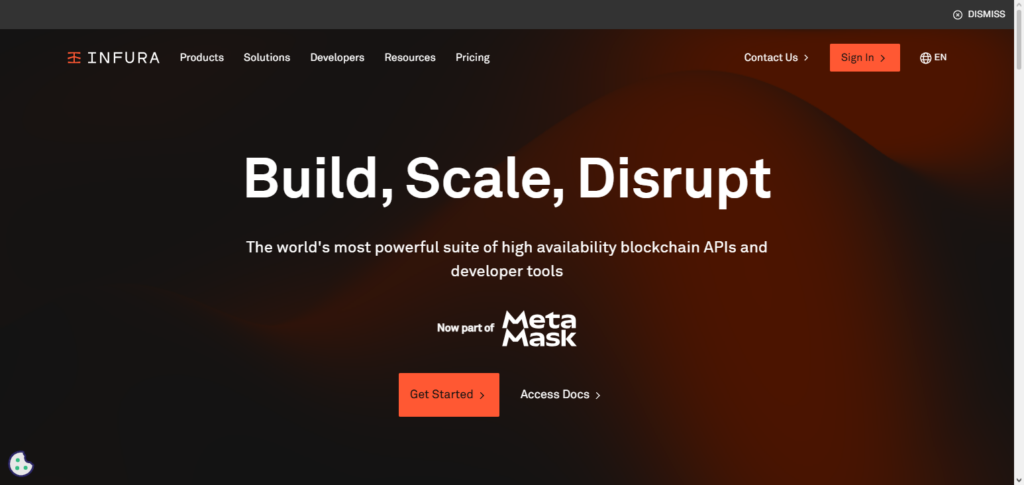
Using Infura Web3 APIs, developers can retrieve on-chain data, submit transactions, and call smart contracts with ease.
Infura provides several pricing models promoting flexibility for early stage and established companies. Considering how many leading blockchain applications are built using Infura, speed, security, and scalability for decentralized development have contributed to Infura’s dominance.
Infura Web3 API
| Traits | Benefits | Drawbacks |
|---|---|---|
| Ethereum-focused Web3 infrastructure | Provides reliable RPC access for Ethereum and other supported networks | Strongly associated with Ethereum, limiting some multi-chain use cases |
| Scalable blockchain connectivity | Developers can build dApps without managing blockchain nodes | High usage may require expensive plans |
| IPFS integration support | Enables decentralized storage solutions for Web3 applications | Advanced features may require technical knowledge |
| Developer-friendly APIs | Simplifies blockchain data access and smart contract interaction | Free-tier limits can affect large applications |
| Enterprise-grade reliability | Offers stable uptime and secure infrastructure | Less control compared with self-managed nodes |
| Trusted Web3 ecosystem provider | Used by many blockchain developers and companies | Some users prefer more decentralized infrastructure options |
| Monitoring and analytics tools | Helps developers track application performance | Limited customization for specialized requirements |
2. Moralis Web3 API
Moralis is a comprehensive Web3 API solution built to speed up the dApp development lifecycle. Their platform was built with the needs of developers in mind and so includes instantaneous blockchain info, built-in user authentication, and cross-chain capabilities.
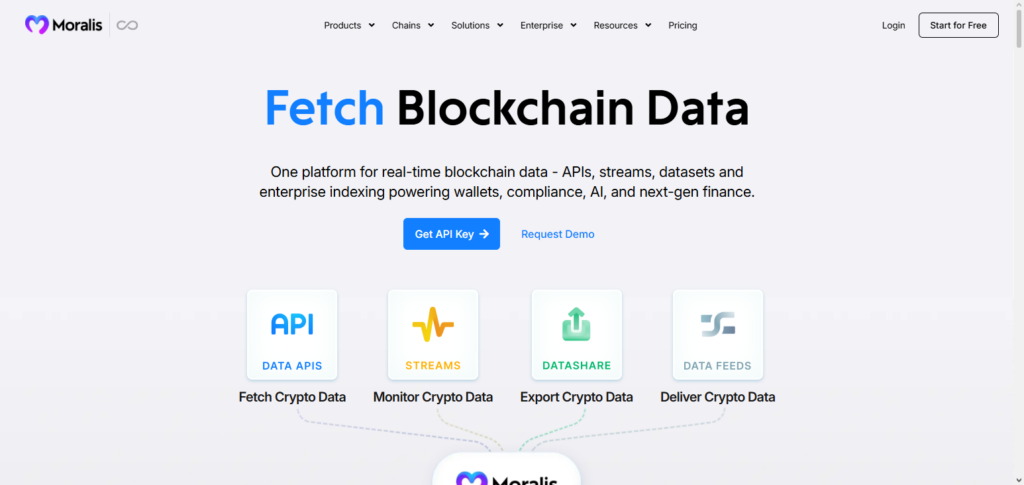
Unsurprisingly, toolkits for developing Web3 games as well as NFT and DeFi applications show increasing integration with Moralis. There is probably no other API with the usage of Moralis that so easily provides backend functionality for working with user balances, transactions, and smart contracts.
There are also numerous Software Development Kits (SDKs) and tutorials for rapid onboarding and cross-chain functionality. With Moralis, developers can bring their ideas to the market sooner, and with little overhead. Moralis is a developers’ favorite.
Moralis Web3 API
| Traits | Benefits | Drawbacks |
|---|---|---|
| Complete Web3 development platform | Provides APIs for tokens, NFTs, wallets, and blockchain data | Pricing increases with higher API usage |
| Multi-chain support | Helps developers create cross-chain applications easily | Some advanced features require premium plans |
| NFT data infrastructure | Simplifies NFT marketplace development and ownership tracking | Less flexibility than custom blockchain solutions |
| Wallet and token APIs | Provides ready-to-use blockchain information | Depends on Moralis-managed infrastructure |
| Web3 authentication tools | Makes wallet login integration easier | May be excessive for simple blockchain projects |
| Developer-friendly dashboard | Reduces development time and complexity | Requires learning the platform ecosystem |
| Real-time blockchain data access | Improves user experience in Web3 applications | Limited control over backend infrastructure |
3. Chainstack Web3 API
Chainstack concentrates on accommodating advanced enterprises by providing scalable and resilient blockchains infrastructures. Their Web3 API is multi-protocol. From Ethereum to Polygon, BNB Chain, and even Hyperledger, REST APIs on nodes have rapidly been deployed and workloads managed.
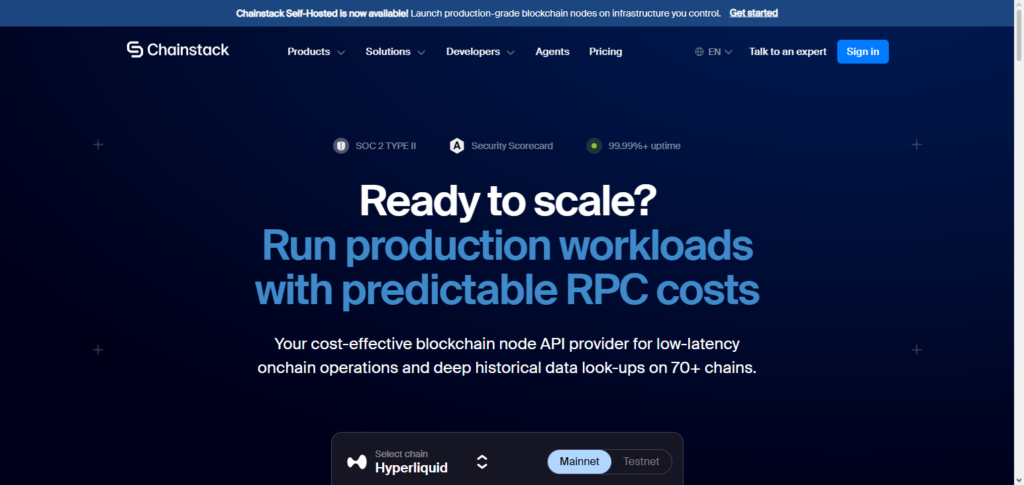
Chainstack’s Web3 API demonstrates a degree of proficiency in Network Analytics, so many companies looking to integrate blockchains in their projects can benefit from the service.
Contingent upon the degree of activity, Chainstack eases the burden of managing distributed infrastructure. A blockchain development API that is deployed across the globe enhances latency and optimizes the performance for developers looking to build resilient and safe DApps.
Chainstack Web3 API
| Traits | Benefits | Drawbacks |
|---|---|---|
| Managed blockchain node infrastructure | Eliminates the need to maintain blockchain nodes | Can become costly for high-demand applications |
| Multi-chain blockchain support | Supports various networks for flexible development | Requires technical blockchain knowledge |
| Enterprise-ready infrastructure | Provides secure and scalable blockchain connectivity | Beginners may find setup complex |
| Dedicated node options | Offers better performance and reliability | Dedicated services may require higher budgets |
| Monitoring and analytics features | Helps manage blockchain performance efficiently | Some advanced tools are available only on paid plans |
| Private blockchain support | Useful for enterprise blockchain projects | Less focused on consumer Web3 features |
| Secure RPC endpoints | Provides dependable blockchain communication | Customization options may be limited |
4. BlockCypher Web3 API
BlockCypher ensures convenience of chaining APIs with Bitcoin, Ethereum, Litecoin and Dogecoin. APIs manage transactions, wallets, and blockchain queries. BlockCypher web3 APIs cater best to developers of payment solutions, crypto wallet, and analytic platforms.
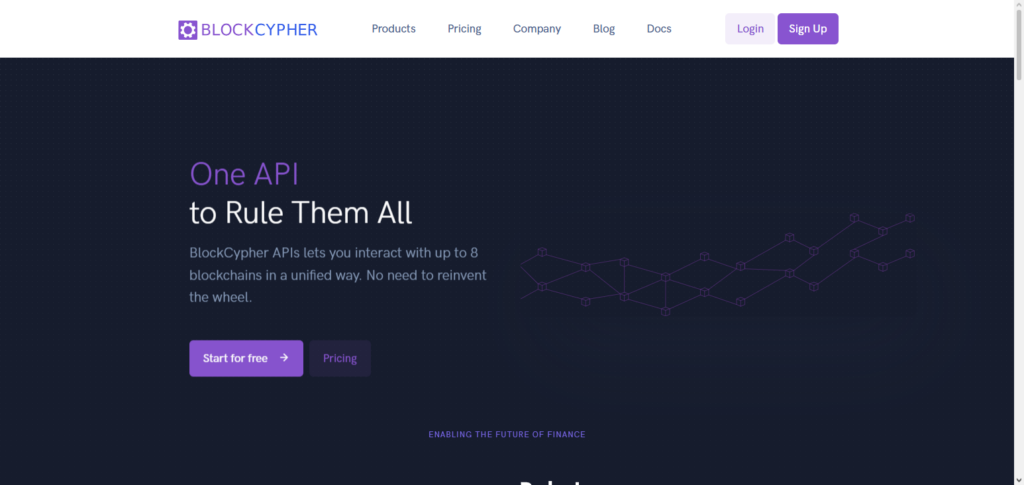
Microtransactions, multi-signatures, and simplicity of REST architecture are the highlights of BlockCypher. BlockCypher has an added edge over its competitors with advanced documentation and outreach to developers of varying skill levels. It is a reliable choice for fast, multi-chain, and easy integration.
BlockCypher Web3 API
| Traits | Benefits | Drawbacks |
|---|---|---|
| Cryptocurrency-focused API platform | Supports Bitcoin and other cryptocurrency networks | Limited support for advanced Web3 ecosystems |
| Transaction management tools | Helps create, monitor, and verify blockchain transactions | Not ideal for complex DeFi applications |
| Multi-chain cryptocurrency support | Enables crypto payment and wallet development | Fewer developer tools compared with competitors |
| Simple API structure | Easy integration for blockchain beginners | Limited smart contract functionality |
| Fast blockchain data access | Provides quick transaction and address information | Less suitable for enterprise Web3 platforms |
| Wallet management features | Simplifies cryptocurrency application development | Focuses more on crypto than broader Web3 |
| Blockchain monitoring capabilities | Helps track transaction activities | Limited NFT and token analytics features |
5. Ankr Web3 API
Ankr provides decentralized APIs and node infrastructure, covering over 40 blockchains. Developers can use Ankr to gain instant access to blockchain data and staking services.
Developers can also use Ankr to gain access to RPC end points. Ankr is frequently used to create decentralized finance applications, NFT marketplaces, and applications that rely on multiple blockchain protocols.
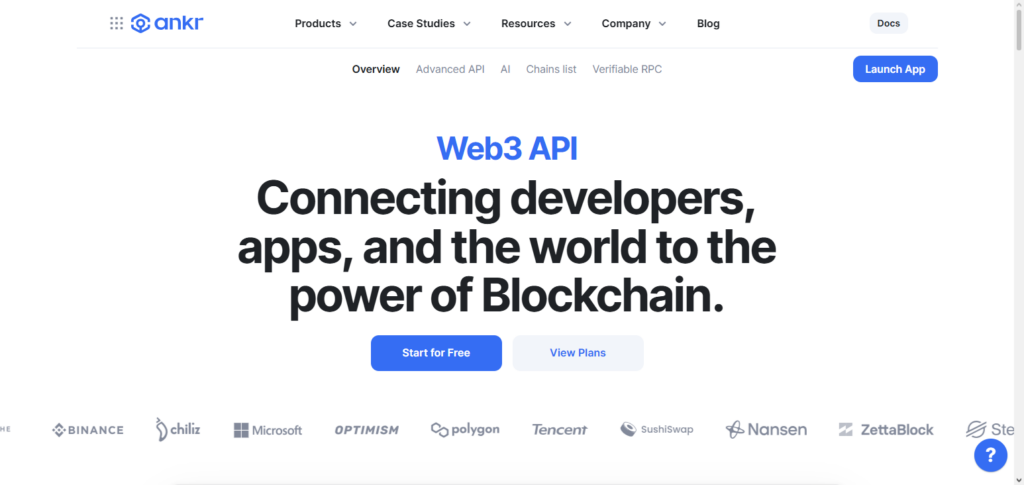
Ankr relies on decentralized nodes, leading to improvements in scalability and resilience. It also leads to less of a dependence on other centralized providers.
Developers gain the benefits of lower latency connections, better prices, and global coverage. Ankr is a reliable infrastructure provider that focuses on further decentralization, which is a philosophy that is favored in Web3, compared to others.
Ankr Web3 API
| Traits | Benefits | Drawbacks |
|---|---|---|
| Decentralized Web3 infrastructure | Provides distributed blockchain access and improved reliability | Performance can vary across networks |
| Multi-chain RPC services | Supports many blockchain ecosystems | Documentation may require technical understanding |
| Affordable blockchain access | Suitable for startups and smaller developers | Enterprise support may be limited |
| Developer-focused APIs | Helps build DeFi, gaming, and dApp solutions | Advanced features may need configuration |
| Staking infrastructure support | Provides validator and staking solutions | Less mature tools compared with larger providers |
| Scalable Web3 services | Handles growing application requirements | Limited customization options |
| Decentralized node network | Reduces dependence on centralized infrastructure | Network performance depends on node availability |
6. Figment DataHub Web3 API
Figment’s DataHub focuses on providing tools and APIs for developers to make use of blockchains like Ethereum, Solana, and Cosmos. DataHub manages a lot of tedious node management and offers features for staking, governance, and analytics.
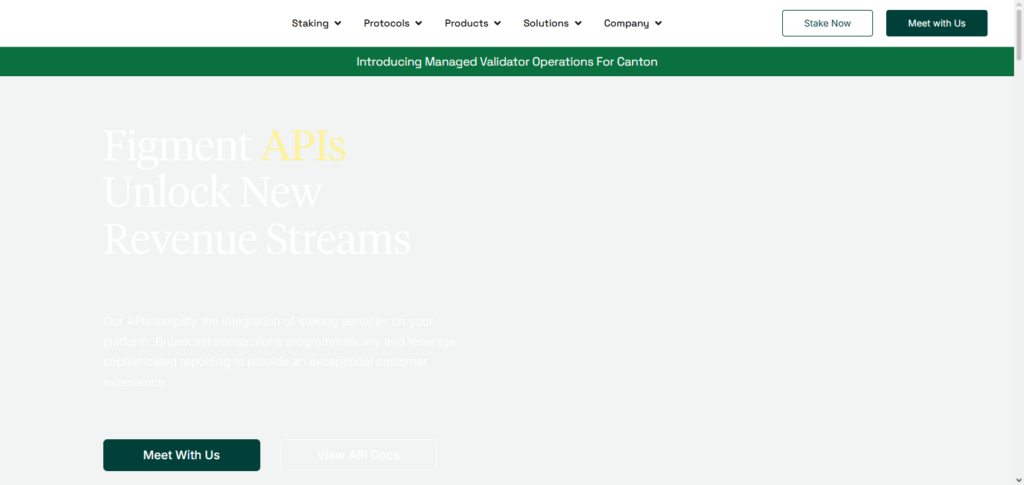
The Figment DataHub Web3 API provides easy mechanisms for developers to scrape data, submit transactions, and listen for changes to network activity.
Developers love the dashboard, and it offers great guides and documentation to make onboarding less of a chore. Figment offers a lot for developers to help them learn about blockchain ecosystems, but they also strengthen their infrastructure with their tools.
Figment DataHub Web3 API
| Traits | Benefits | Drawbacks |
|---|---|---|
| Institutional blockchain infrastructure | Provides professional-grade blockchain services | Less suitable for beginner developers |
| Staking and validator expertise | Helps organizations participate in proof-of-stake networks | Mainly focused on staking-related solutions |
| Enterprise security standards | Provides secure blockchain connectivity | Limited consumer-focused features |
| Support for PoS blockchains | Enables staking across multiple networks | Not designed for NFT marketplace development |
| Reliable blockchain data access | Supports institutional blockchain operations | Pricing may be less transparent |
| Validator management solutions | Helps businesses manage staking activities | Requires blockchain infrastructure knowledge |
| Professional infrastructure services | Suitable for large organizations | Limited general-purpose Web3 APIs |
7. Helius Web3 API
Helius has built its business model around infrastructures that run on Solana. One of their APIs provides real-time data from Solana’s blockchain as well as tools for indexing and analytics.
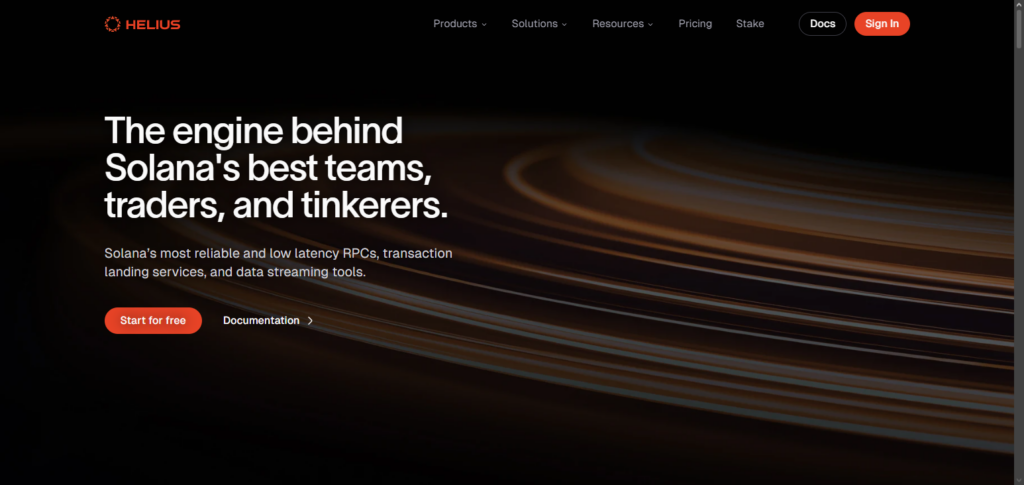
Built for developers on the Solana blockchain, the Helius Web3 API makes fetching queries about transactions, accounts, and NFTs easier. Helius’s indexing helps developers create their own data pipelines to help build their dApps.
Helius is known for its speed and reliability, especially with the low-latency access to the Solana blockchain. With developers and its innovative features, Helius helps builders the most with the Solana ecosystem, easily making it the best option for Web3 projects on Solana.
Helius Web3 API
| Traits | Benefits | Drawbacks |
|---|---|---|
| Solana-focused Web3 infrastructure | Provides specialized Solana development tools | Limited mainly to Solana ecosystem |
| Enhanced Solana RPC services | Improves speed and efficiency of Solana applications | Not suitable for multi-chain projects |
| NFT data APIs | Helps build Solana NFT marketplaces | Limited support outside Solana |
| Transaction parsing tools | Converts complex blockchain data into readable formats | Advanced features require paid plans |
| Real-time blockchain notifications | Enables instant event tracking | Smaller ecosystem compared with Ethereum providers |
| Developer-friendly Solana tools | Simplifies Solana application development | Not ideal for non-Solana developers |
| High-performance data access | Provides fast blockchain information retrieval | Ecosystem dependency on Solana growth |
8. Blockdaemon Web3 API
Blockdaemon provides APIs, node management, and staking services, building sophisticated blockchain infrastructure. Their Web3 API includes Ethereum, Bitcoin, and Polkadot. Developers can access and manage blockchain and staking data through the Blockdaemon Web3 API.
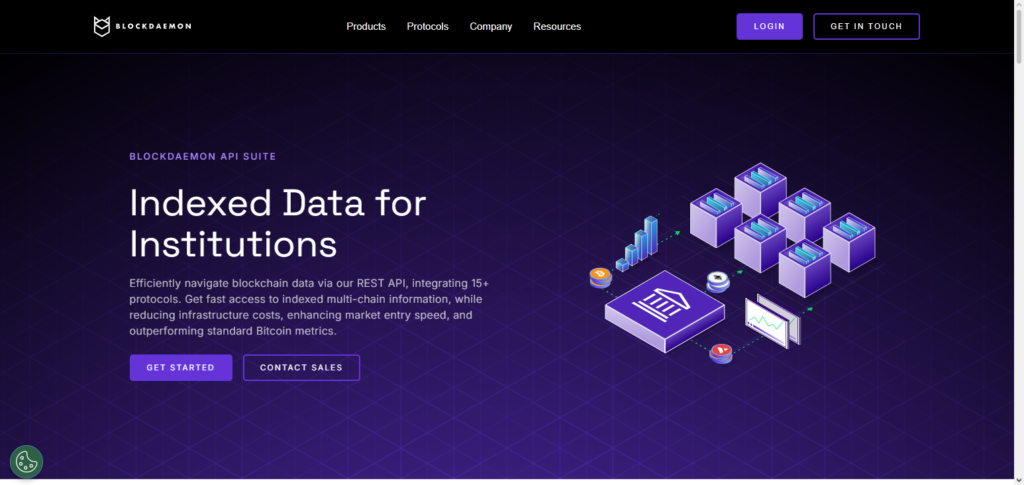
Their enterprise-grade architecture balances reliability and scalability with compliance. Blockdaemon’s infrastructure is likely safe for Financial Institutions and large projects.
They provide performance analytics, frameworks, and advanced enterprise-grade infrastructure that are secure and scalable. They block large-scale applications, like a secure and safe construction firm using blockchain technology.
Blockdaemon Web3 API
| Traits | Benefits | Drawbacks |
|---|---|---|
| Enterprise blockchain infrastructure | Supports large-scale blockchain operations | More expensive than developer-focused APIs |
| Institutional-grade security | Provides secure blockchain connectivity | Overpowered for small projects |
| Multi-chain support | Enables applications across different networks | Requires technical expertise |
| Node management services | Reduces infrastructure maintenance requirements | Pricing may be complex |
| Staking infrastructure | Supports institutional staking operations | Limited beginner-friendly resources |
| High scalability | Handles enterprise-level blockchain workloads | Not focused on simple dApp development |
| Compliance-focused solutions | Suitable for regulated businesses | Less flexible for experimental projects |
9. Tatum Web3 API
Tatum provides creation of custom dApps with only a few lines of code needed per feature, with a focus on making the implementation of Web3 functionality for dApps as simple as possible. Some features the API provides are customizable dash wallets, cross platform dApp transactions, the ability to mint NFTs and deploy smart contracts, and Web3 user and app transaction management.
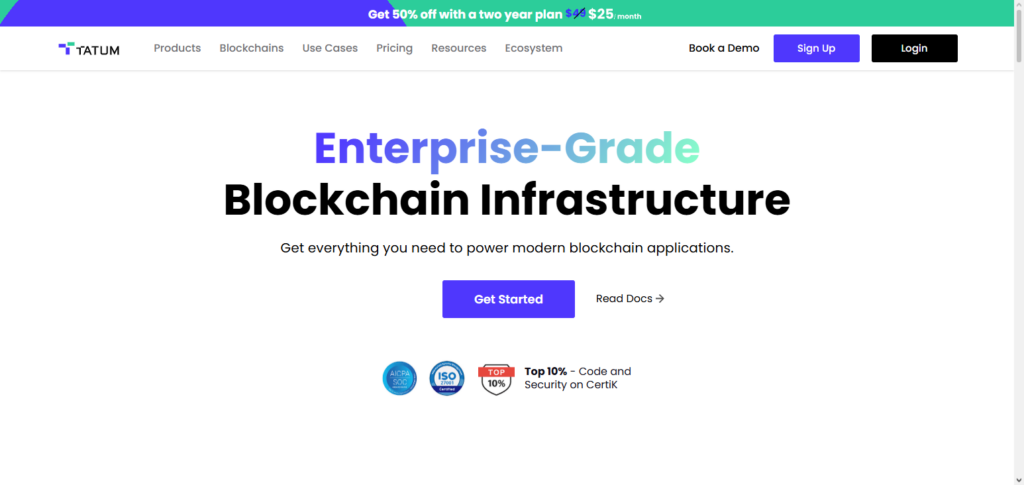
The API supports 60 different blockchains and aims to support the entire digital ecosystem. Tatum believes that through comprehensive documentation and active participation, the community will spur the most advancement in Web3.
Tatum Web3 API
| Traits | Benefits | Drawbacks |
|---|---|---|
| Unified blockchain API platform | Provides access to multiple blockchains through one API | Advanced usage may increase costs |
| Wallet management features | Helps create and manage crypto wallets easily | Less control than running personal nodes |
| Payment processing APIs | Simplifies crypto payment integration | Some features require additional setup |
| Smart contract support | Enables blockchain application development | Complex contracts may need custom development |
| Multi-chain compatibility | Supports many blockchain networks | Performance depends on external networks |
| Developer-friendly documentation | Makes blockchain integration easier | Enterprise customization may be limited |
| NFT and token support | Helps build token-based applications | High-volume projects may need dedicated solutions |
10. Covalent Web3 API
Covalent gives you simple access to blockchain data across multiple networks via a single API. Using its API, developers can access Ethereum, Polygon, and Avalanche data. Their Web3 API gives developers access to user balances, transactions, NFTs, and all things DeFi with a single endpoint! Analytics platforms and dashboards will particularly appreciate the power of the Covalent Web3 API.

With Covalent, you can build a ton of unique insights and experiences for your users thanks to the extensive data available to you. Users appreciate the simplicity and ease of use of the API, and developers love the extensive data available. If you need blockchain data, Covalent is the answer.
Covalent Web3 API
| Traits | Benefits | Drawbacks |
|---|---|---|
| Blockchain data indexing platform | Provides organized blockchain data through APIs | Depends on supported networks |
| Multi-chain data access | Helps developers build cross-chain applications | Advanced queries may require optimization |
| Wallet and transaction analytics | Provides detailed blockchain insights | Pricing can increase with large data usage |
| Token and NFT data support | Simplifies Web3 analytics development | Less focused on node infrastructure |
| Developer-friendly API structure | Reduces blockchain data complexity | Requires understanding of blockchain data models |
| Historical blockchain data access | Useful for analytics and reporting applications | Real-time capabilities may vary |
| Enterprise data solutions | Supports Web3 analytics platforms | Not a complete blockchain infrastructure provider |
Comparison table
| API | Supported Chains | Key Strengths | Limitations |
|---|---|---|---|
| Infura | Ethereum, IPFS | Enterprise‑grade reliability, high uptime, easy dApp integration | Limited free tier, focused mainly on Ethereum/IPFS |
| Moralis | Ethereum, Polygon, BNB, more | Real‑time data, SDKs, fast onboarding, ideal for NFTs/gaming | Pricing can be high, less enterprise compliance |
| Chainstack | Ethereum, Polygon, BNB, Hyperledger | Managed nodes, analytics, enterprise‑grade infrastructure | Subscription needed for advanced features |
| BlockCypher | Bitcoin, Ethereum, Litecoin, Dogecoin | RESTful design, microtransactions, wallet/payment tools | Limited smart contract support, fewer chains |
| Ankr | 40+ blockchains | Decentralized nodes, RPC endpoints, staking, global coverage | Less compliance focus, smaller ecosystem |
| Figment DataHub | Ethereum, Solana, Cosmos, more | Staking, governance, advanced analytics, strong education | Higher pricing, geared toward institutions |
| Helius | Solana | Real‑time Solana data, indexing, analytics, custom pipelines | Solana‑only, smaller user base |
| Blockdaemon | Ethereum, Bitcoin, Polkadot, more | Enterprise‑grade, compliance, staking, monitoring | Higher cost, complex for small projects |
| Tatum | 60+ blockchains | Wallet/NFT tools, smart contracts, SDKs, versatile | Can overwhelm beginners, scaling requires paid tiers |
| Covalent | Ethereum, Polygon, Avalanche, more | Unified data API, rich analytics, historical blockchain data | Focused on data, limited transaction management |
Conclusion
The way you pick the ideal Web3 API is determined by the scale of your project, which blockchains you prefer, and the requirements of your infrastructure. Developer friendly options, like Infura Web3 API and Moralis Web3 API, and extremely well developed multi-chain options, like Chainstack Web3 API and BlockCypher Web3 API, are great places to start.
Consider Ankr Web3 API and Figment DataHub Web3 API for decentralized infrastructures, and Helius Web3 API for all things Solana.
Blockdaemon Web3 API provides an enterprise level experience that you will appreciate, and Tatum Web3 API and Covalent Web3 API really shine when you need options that are rich in blockchain data. The functionalities of all these APIs combined create an infrastructure that allows for building secure, scalable and innovative decentralized applications.
FAQ
What is a Web3 API?
A Web3 API is a set of tools that allows developers to interact with blockchain networks. It enables querying data, managing transactions, and building decentralized applications without running full nodes.
Which Web3 API is best for Ethereum?
The Infura Web3 API is widely considered the best for Ethereum due to its scalability, reliability, and seamless integration with dApps, wallets, and DeFi platforms.
Which Web3 API supports multiple blockchains?
Tatum Web3 API and Chainstack Web3 API stand out for multi‑chain support, enabling developers to build across Ethereum, Polygon, BNB Chain, and dozens of other networks.
Which Web3 API is best for Solana?
The Helius Web3 API is optimized for Solana, offering real‑time blockchain data, indexing, and analytics tailored for Solana‑based dApps and NFT projects.
Which Web3 API is best for enterprise projects?
Blockdaemon Web3 API provides enterprise‑grade infrastructure, compliance, and scalability, making it ideal for financial institutions and large‑scale blockchain applications.