

In this article, I will cover the Top Blockchain APIs available to developers to create advanced Web3 applications, decentralized systems, crypto wallets, NFT marketplaces, and other Blockchain related offerings.
These APIs offer secure Blockchain access, real-time data, smart contract access and multi-chain support. We will analyze the features, advantages, disadvantages to help you select the perfect Blockchain API.
What is Blockchain APIs?
Blockchain APIs simplify access to blockchain data by letting developers build apps without the headache of dealing with blockchain infrastructure. These APIs are convenient for developers as they allow easy access to all relevant data regarding transactions, wallets, tokens, NFTs, smart contracts, and even real-time data.
Because Blockchain APIs improve the ease and scalability of Web3, dApps, crypto-related apps, decentralized payment apps, and all other blockchain-related apps are developed and deployed much faster with these APIs. These APIs work with multiple blockchain networks and improve development even further by allowing the apps to work with different chains at once.
Criteria of Best Blockchain APIs for Developers
Multi-Blockchain Support
- The best Blockchain APIs must support multiple blockchain networks such asEthereum,Bitcoin,Solana,Polygon,BNB Chain, Avalanche, etc.
- Multi-chain support gives developers the ability to build flexible Web3 applications without being locked to a single blockchain.
API Performance and Speed
- Blockchain APIs must have low latency and fast retrieval of data.
- Quick access to a blockchain is vital to the user experience of blockchain-based wallet, exchange, and DeFi applications.
Reliability and Uptime
- A reliable Blockchain API must have a well-built, highly available, and low downtime infrastructure.
- Consistent uptime means that the application will be able to access and process blockchain transactions and data without any issues.
Developer-Friendly Documentation
- APIs that have documentation, SDKs, and a variety of tutorials and code snippets are easier to integrate for developers.
- Developer resources greatly reduce the time to develop and implement a blockchain solution.
Security Features
- Encrypted connections, authentication systems, protecting API keys, and securing nodes are the minimum APIs must have good security.
- Secure APIs protect blockchain applications and the data therein.
Scalability
- APIs must be able to scale as requirements of the application such as the number of users or transactions grow.
- Highly-scalable infrastructure is important for all level Web3 projects — from startup to enterprise.
Real-Time Blockchain Data Access
- APIs must be able to give developers real-time data on transactions, blocks, tokens, wallets, and smart contracts.
- Immediate data access is critical for trading platforms, analytics, and DApps.
Smart Contract Support
- Advanced Blockchain APIs must give developers the ability to interact with, track, and manipulate smart contracts.
- Smart contract support is essential in DeFi, NFT, gaming, and automated Blockchain.
NFT and Token Data Support
- The optimum API supports requests for NFT data and history, along with token balances and ownership.
- These are necessary for the development of NFT marketplaces and token-centric apps.
Pricing and Cost Efficiency
- Developers must consider the API’s pricing model, the availability of a free tier, request limits, and the availability of plans for enterprises.
- Lower costs allow startups and small teams to develop blockchain apps.
Easy Integration and SDK Availability
- The availability of SDKs with APIs for languages such as JavaScript, Python, and Java, facilitates development.
- Simple integration enables developers to create and launch blockchain products more quickly.
Enterprise Support and Monitoring
- High professional services support, analytics dashboards, and monitoring and managing the infrastructure are required for large scale projects.
- Enterprise Blockchain APIs support ensures project performance and aid in troubleshooting.
Key Point & Best Blockchain APIs
- Alchemy API – Enterprise-grade blockchain API platform for building Web3 applications, NFTs, DeFi platforms, and decentralized applications with reliable blockchain data access.
- Infura API – Popular Ethereum and Web3 infrastructure API providing scalable node access, blockchain connectivity, and developer tools for decentralized applications.
- QuickNode API – High-performance blockchain API provider offering fast node infrastructure, multi-chain support, and real-time blockchain data for Web3 developers.
- Moralis API – Complete Web3 API suite providing blockchain data, NFT APIs, wallet tracking, token information, and authentication solutions.
- Chainstack API – Multi-chain blockchain infrastructure platform offering managed nodes, RPC endpoints, and enterprise-level Web3 development tools.
- BlockCypher API – Blockchain API service supporting Bitcoin, Litecoin, Dogecoin, and other networks with transaction monitoring and wallet management features.
- Ankr API – Decentralized Web3 infrastructure API providing blockchain RPC access, staking solutions, and multi-chain development services.
- Figment DataHub API – Blockchain infrastructure API focused on staking, validator services, and secure blockchain network access for institutions.
- Helius API – Solana-focused blockchain API platform offering enhanced RPC, NFT data, transaction parsing, and developer tools for Solana applications.
- Tatum API – Unified blockchain API platform enabling developers to build crypto applications with wallet management, payments, smart contracts, and blockchain data services.
10 Best Blockchain APIs
1. Alchemy API
Alchemy API is one of the top APIs for developers who need blockchain infrastructure for Web3, dApps, NFT, and DeFi. It has node infrastructure, enriched APIs, and real-time data.
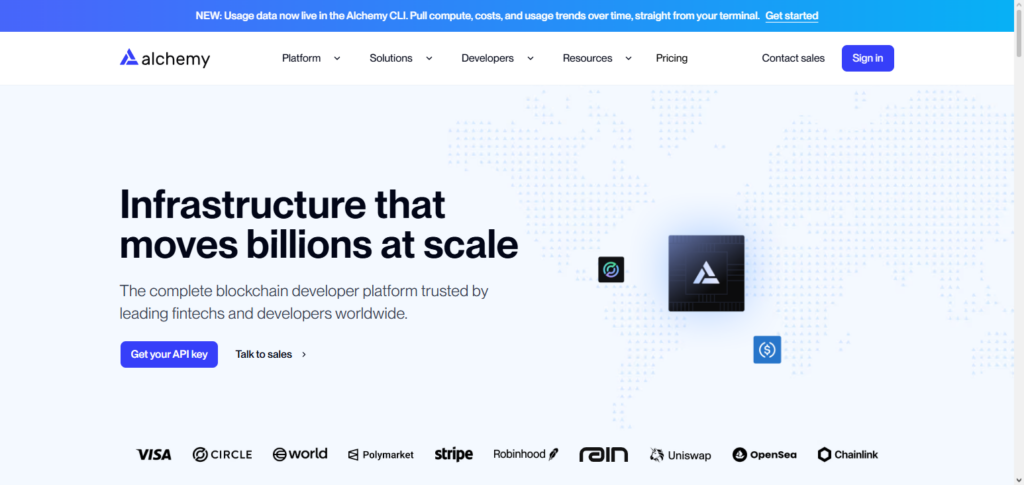
Alchemy has APIs for Ethereum, Polygon, Arbitrum, Optimism, and Solana, and has tools for NFT, token and transaction APIs, smart contract and transactions, and debugging.
Many startups and enterprises choose Alchemy because of its scalability and high infrastructure and service uptime and because their developers appreciate the documentation.
Alchemy API Features
- Multi-Chain Blockchain Support – Supports major blockchains like Ethereum, Polygon, Arbitrum, Optimism, Solana, and more.
- Advanced Blockchain APIs – Includes powerful APIs for NFTs, tokens, transactions, contracts, and wallets.
- Dependable Node Infrastructure – Provides high-performance, scalable blockchain nodes with excellent uptime.
- Developer & Monitoring Tools – Contains debugging tools and dashboards with analytics and live monitoring of blockchain activity.
- Enterprise Security – Infrastructure is secure and built for developers and startups as well as large-scale Web3 applications.
Alchemy API Pros & Cons
| Pros | Cons |
|---|---|
| Powerful blockchain infrastructure with high reliability and scalability | Pricing can become expensive for high-volume applications |
| Supports multiple networks including Ethereum, Polygon, and Solana | Some advanced features require premium plans |
| Provides advanced NFT, token, and transaction APIs | Mainly focused on popular blockchain ecosystems |
| Excellent developer tools and debugging features | Beginners may need time to understand advanced tools |
| Strong enterprise support and documentation | Limited customization compared to self-hosted solutions |
2. Infura API
Infura API is one of the best blockchain APIs. It is a Consensys product. With Infura, users have scalable infrastructure built on Ethereum and Web3. With that, users will be able to build wallets, build exchanges, build DeFi apps, and build decentralized services.
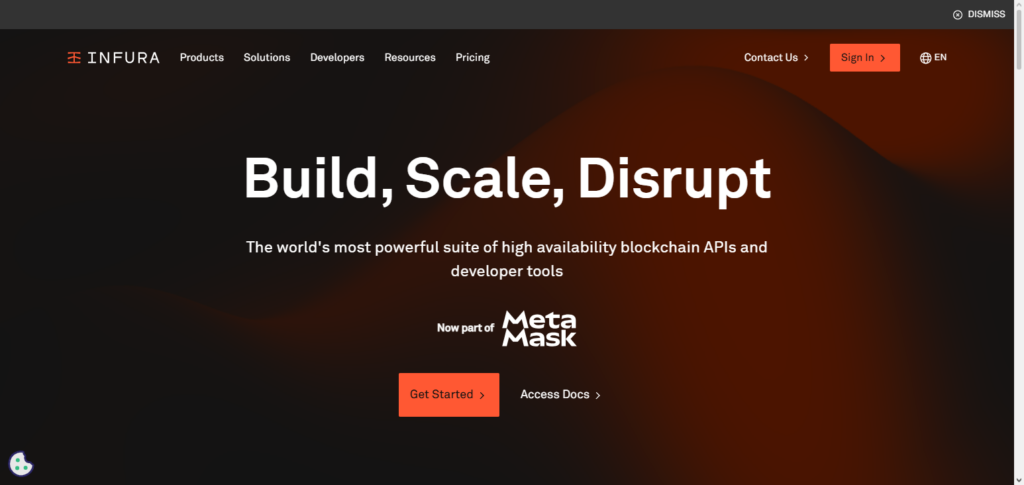
Infura has many RPC endpoints, supports IPFS, and has broadcasting and access features for blockchain and Infura supports Ethereum and its many siblings (Polygon, Arbitrum, Optimism) and many other Web3 tools.
It is a tool that simplifies developer infrastructure and puts an emphasis on safe and fast performance. It also has reliability that appeals to enterprise customers, a global infrastructure that developers gain immediate access to and also easy integration.
Infura API Features
- Ethereum & Web3 Infrastructure – Provides reliable RPC for Ethereum and other blockchains.
- Easy Node Access – Developers wishing to connect their applications to a blockchain can do so without the need to manage nodes.
- IPFS Support – Integrates decentralized storage and Web3 file systems.
- Developer Centric APIs – Offers easy to use APIs for transaction and contract interactions with the blockchain.
- Robust Network – Secure and reliable infrastructure for decentralized applications.
Infura API Pros & Cons
| Pros | Cons |
|---|---|
| Provides reliable Ethereum and Web3 infrastructure | Heavy focus on Ethereum ecosystem |
| Easy integration with decentralized applications | Free-tier limitations for high API usage |
| Supports IPFS and blockchain connectivity solutions | Requires external tools for some advanced features |
| Trusted by many Web3 developers and enterprises | Can experience rate limits during high demand |
| Strong security and uptime performance | Less suitable for projects requiring full node control |
3. QuickNode API
QuickNode API is an excellent option among Blockchain APIs. For developers requiring quick and efficient scaling blockchain infrastructure, QuickNode is an excellent option. QuickNode builds on high-level performance RPC endpoints and Blockchain data APIs and builder tools for Web3 app development.
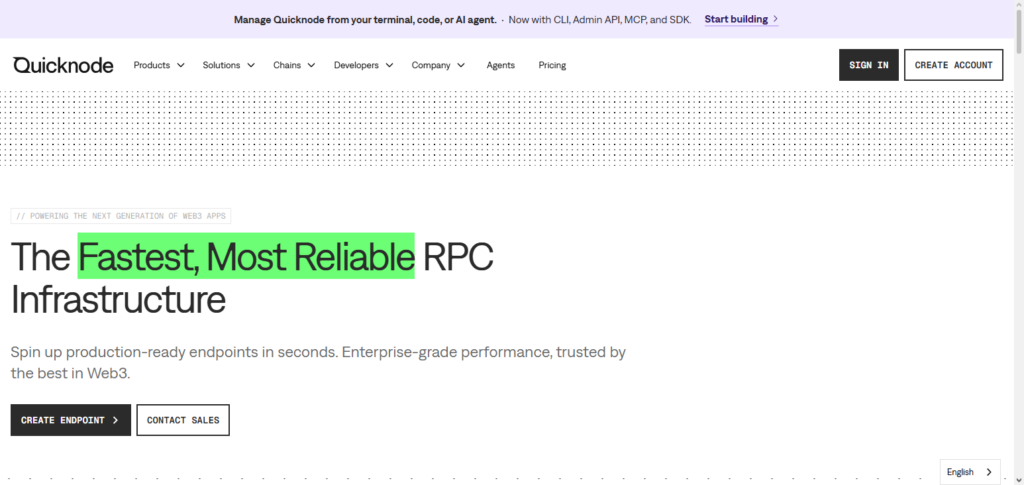
This solution is multi-chain, as QuickNode supports Ethereum, Bitcoin, Solana, Polygon, BNB Chain, Avalanche, and many more. QuickNode builds on infrastructure to support the development of Wallets, Gaming Projects, NFTs, and DeFi.
They also supply Continuous Data Streaming, API Enhancements, Analytics, and a Dedicated Node. Speed, Security, and Multi-Chain support makes QuickNode an excellent option for many Web3 companies.
QuickNode API Features
- Fast Blockchain RPCs – Provides high-speed connectivity to blockchains for Web3.
- Multi-Chain Support – Supports a variety of blockchains including Bitcoin, Ethereum, Solana, Polygon, BNB Chain, Avalanche, etc.
- Timely Blockchain Data – Delivers current information on transactions, blocks, tokens, and more.
- Developer Tools – Advanced analytics, streams, APIs, and monitoring.
- Dynamic Infrastructure – Caters to large volume blockchain applications.
QuickNode API Pros & Cons
| Pros | Cons |
|---|---|
| High-speed RPC infrastructure with low latency | Premium plans can be costly for large-scale usage |
| Supports many blockchain networks | Advanced features may require technical knowledge |
| Provides powerful developer tools and analytics | Free plan has limited resources |
| Excellent performance for Web3 applications | Too many options can be overwhelming for beginners |
| Reliable scaling for enterprise applications | Some niche blockchain support may vary |
4. Moralis API
The Moralis API is one of the Best Blockchain APIs offering all-in-one Web3 development solutions. Developers get Web3 ready APIs with resources for blockchain, NFTs, tokens, wallets, and smart contracts. Moralis works with many chains, such as Ethereum, Polygon, BNB Chain, Solana, and Avalanche. This makes the development of cross-chain applications a breeze.
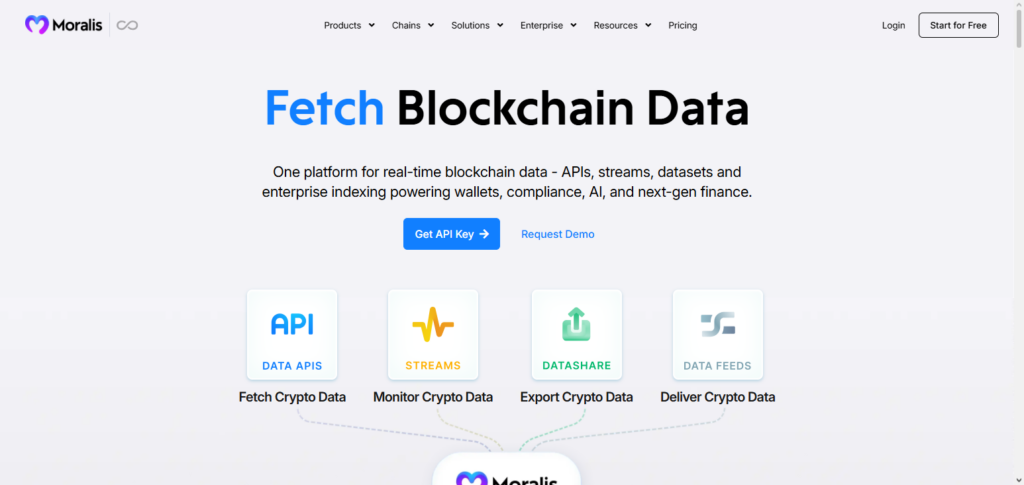
With its APIs, retrieving the balance of a wallet, transaction history, ownership of NFTs, and tokens is no complex blockchain coding. Moralis makes logging in and wallet connection easier with its Web3 authentication APIs. Due to its developer-centric resources, Moralis is widely approved for the development of modern blockchain apps.
Moralis API Features
- All-Inclusive Web3 Data APIs – Accesses blockchain data regarding tokens, wallets, NFTs, and transactions.
- Multi-Chain Support – Works on Ethereum, Polygon, BNB Chain, Avalanche, Solana, and additional chains.
- NFT APIs – Retrieve NFT’s metadata, trace NFT ownership, and build NFT marketplaces.
- Web3 App Authentication – Wallet authentication for DApp users.
- Easy Blockchain Coding – APIs and developer tools available to simplify code.
Moralis API Pros & Cons
| Pros | Cons |
|---|---|
| Provides complete Web3 APIs for faster development | Higher usage may increase subscription costs |
| Supports multiple blockchains and cross-chain applications | Some advanced features require paid plans |
| Excellent NFT, wallet, and token data services | Less control compared to managing personal nodes |
| Beginner-friendly developer experience | Dependent on Moralis infrastructure |
| Reduces complexity of blockchain development | Limited customization for highly specialized needs |
5. Chainstack API
Chainstack API offers one of the Best Blockchain APIs for enterprise-level blockchain API systems and infrastructure management. It provides managed blockchain nodes, RPC endpoints, and scalable options for public and private blockchain networks.
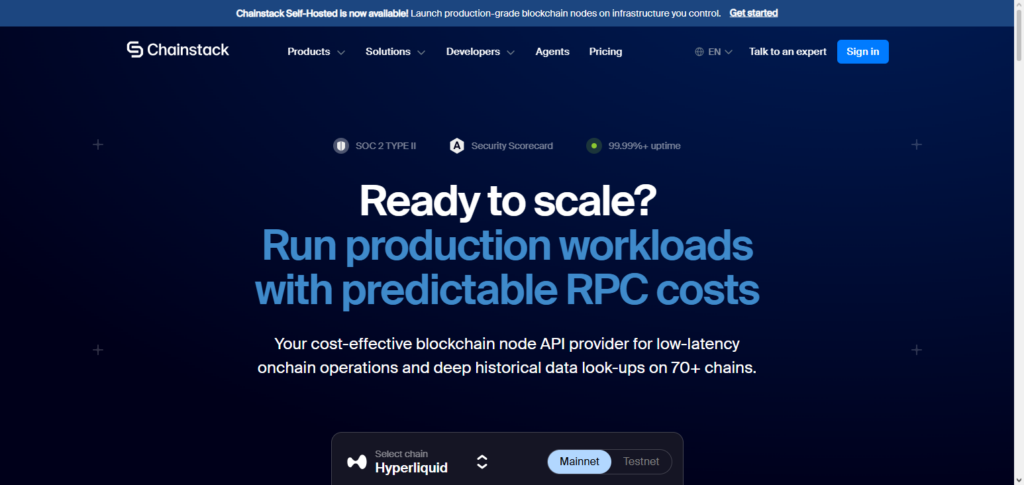
The managed blockchain systems of Chainstack cover Ethereum, Polygon, Solana, Avalanche, BNB Chain, and Hyperledger. Chainstack is used by developers for the construction of DApps, enterprise blockchain solutions, and Web3 development, all while avoiding complex node operations.
The system provides high availability and monitoring features and secure, flexible access and deployments. Multi-chain support and strong security and performance makes Chainstack an appropriate solution for the blockchain systems of enterprises.
Chainstack API Features
- Automated Blockchain Nodes – Simple setup and management of blockchain nodes.
- Multi-Chain Support – Compatible with Ethereum, Polygon, Solana, Avalanche, BNB Chain, and enterprise networks.
- Secure RPC Endpoints – Safe access to blockchain networks.
- Enterprise Blockchain Ready – Infrastructure for large scale business operations.
- Monitoring & Analytics – Tools to keep track of node performance and management.
Chainstack API Pros & Cons
| Pros | Cons |
|---|---|
| Easy deployment and management of blockchain nodes | Pricing may be high for enterprise-level usage |
| Supports public and private blockchain networks | Requires blockchain infrastructure knowledge |
| Provides reliable RPC endpoints and monitoring tools | User interface may feel complex for beginners |
| Good security and enterprise features | Limited features compared with specialized APIs |
| Flexible infrastructure options | Some advanced services require additional configuration |
6. BlockCypher API
One of the best blockchain APIs for developers is BlockCypher API. This API is best for developers working with cryptocurrency-related applications, payment APIs, and APIs for monitoring blockchain transactions.
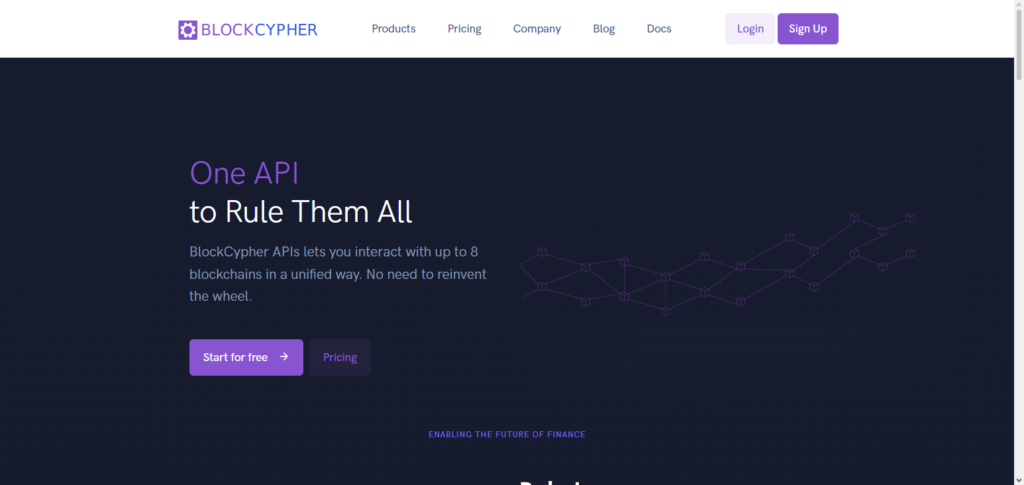
BlockCypher provides simple APIs for accessing blockchain data, transaction management, address generation, and payment tracking. BlockCypher API supports various networks like Bitcoin, Litecoin, Dogecoin, Dash, etc. A few of the APIs transaction confidence monitoring, wallet management tools, custom blockchain explorers, and instant API responses.
The flexibility of BlockCypher makes it easy to integrate with other blockchain technology and eliminate the need to maintain dedicated nodes. The fact BlockCypher API is flexible and supports several cryptocurrencies makes it a good option for crypto-based applications.
BlockCypher API Features
- All-Inclusive Crypto Support – APIs that spans various blockchains such as Bitcoin, Litecoin, Dogecoin, Dash, and many others.
- Transaction Services – APIs to facilitate the creation, tracking, and confirmation of transactions.
- Blockchain API Services – APIs for blocks, addresses, wallets, and blockchain transactions.
- Real-Time Blockchain API Services – APIs that respond quickly with the latest data.
- Easy Crypto API Development – Simplifies the creation of cryptocurrency APIs.
BlockCypher API Pros & Cons
| Pros | Cons |
|---|---|
| Supports multiple cryptocurrencies including Bitcoin and Litecoin | Limited support for newer blockchain networks |
| Simple APIs for blockchain transactions and wallets | Advanced Web3 features are limited |
| Fast transaction monitoring and blockchain data access | Not ideal for complex DeFi applications |
| Easy integration for crypto payment solutions | Documentation may require technical understanding |
| Reliable infrastructure for cryptocurrency applications | Fewer developer tools compared with competitors |
7. Ankr API
Ankr API is one of the Best Blockchain APIs. It provides RPC blockchain services, node access, and staking solutions to developers looking for scalable and decentralized infrastructures for Web3.
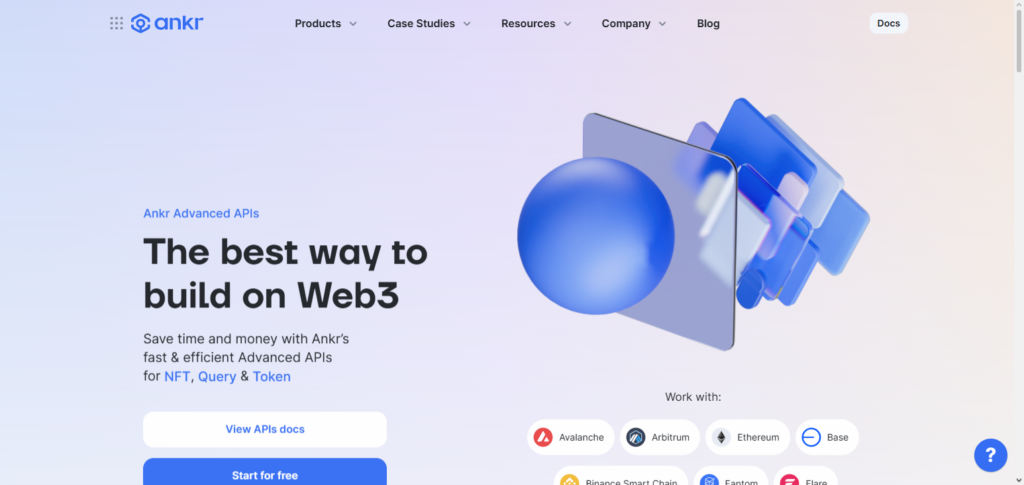
Networks covered by Ankr include Ethereum, BNB Chain, Polygon, Avalanche, Fantom, Solana, among several others. Developers can use Ankr to get blockchain data and connect their decentralized applications.
Ankr provides a decentralized node infrastructure, which helps developers compared to centralized infrastructures. Ankr is used by several DeFi applications and gaming, NFT, and Web3 projects. It is highly favored by developers due to its low cost and multi-chain features.
Ankr API Features
- Decentralized RPC Services – Access to blockchain nodes made secure by a network of decentralized nodes.
- Multi-Chain Support – Compatible with a variety of blockchains including Ethereum, Polygon, Solana, and BNB Chain.
- Web3 Development Tools – Designed for decentralized applications, DeFi, and gaming; tools include APIs.
- Staking Infrastructure – Covers blockchain staking and provides validator services.
- High Performance & Scalability – Fast, simple linking of blockchain for widening applications.
Ankr API Pros & Cons
| Pros | Cons |
|---|---|
| Decentralized blockchain infrastructure improves reliability | Some advanced features require technical expertise |
| Supports multiple blockchain networks | Performance can vary depending on network conditions |
| Affordable Web3 infrastructure solutions | Enterprise support may be limited compared to larger providers |
| Provides RPC access and staking services | Documentation may not cover every use case |
| Good option for DeFi, gaming, and Web3 projects | Less mature tooling compared with established providers |
8. Figment DataHub API
Figment DataHub API is an excellent option for institution-focused APIs. Block chain infrastructure, staking, and validator services can all be found together here. With enterprise-grade APIs, Figment gives customers secure infrastructure solutions for access to blockchain networks.
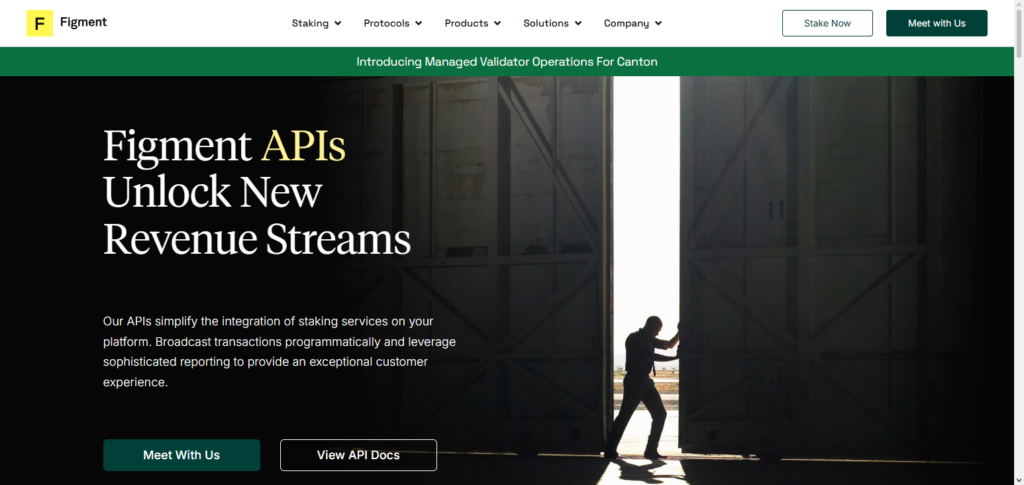
Their focus on proof-of-stake networks means Figment uses Ethereum, Solana, Cosmos, Polygon, and more networks. This platform allows developers and businesses to control their staking, access requested blockchain information, and interact with a decentralized network.
With their high standards of security and infrastructure, along with their validator expertise, Figment is chosen by institutions. Organizations needing high-grade professional connectively will benefit from Figments services and staking solutions.
Figment DataHub API Features
- Institutional Blockchain Infrastructure – Private blockchain access for enterprises and institutions.
- Staking API Solutions – Covers staking and provides services for validator operations.
- Proof-of-Stake Network Support – Works with Ethereum, Solana, Cosmos, Polygon, and other PoS networks.
- Secure Data Access – Reliable data access from blockchain and reliable network connections.
- Enterprise-Level Reliability – Professional blockchain infrastructure for organizations.
Figment DataHub API Pros & Cons
| Pros | Cons |
|---|---|
| Strong institutional-grade blockchain infrastructure | Mainly focused on staking and validator services |
| Provides secure access to proof-of-stake networks | Less suitable for general Web3 application development |
| Trusted validator and staking ecosystem | Limited consumer-focused APIs |
| Enterprise-level security and reliability | Pricing information may be less transparent |
| Supports major blockchain networks | Requires technical blockchain knowledge |
9. Helius API
Helius API is one of the top tier blockchain APIs for constructing applications on the Solana Blockchain. It features advanced APIs for enhanced RPC, transaction parsing, NFT data, wallet tracking, token analytics, and more.
Thanks to Helius, Solana development has become more streamlined. The complicated data structures provided by blockchain technology are converted to more simplistic and easy to interpret by Helius.
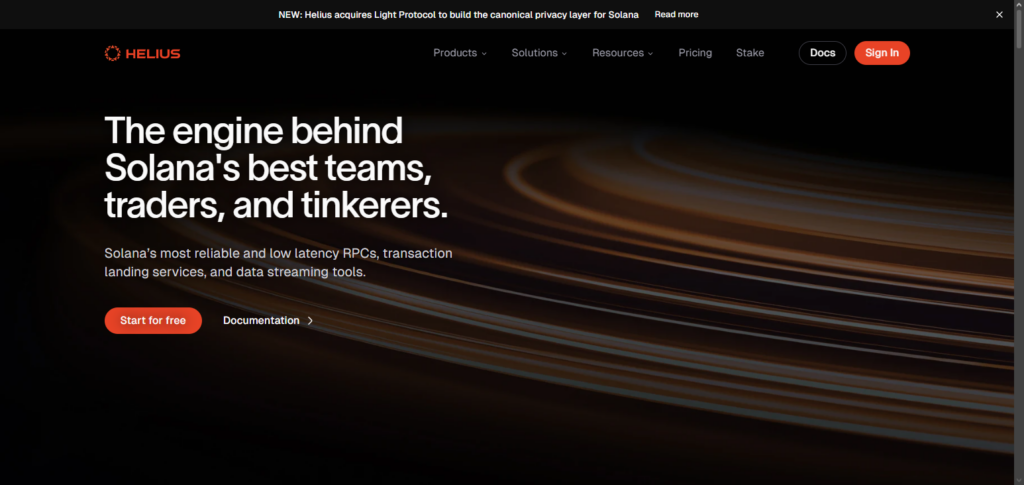
Helius is a popular choice amongst developers building NFT marketplaces, DeFi applications, Games, and Web3 projects.
Helious’ advanced features include webhooks, alerting users to changes in the blockchain in real-time as well as rapid data fetching. The combination of Solana ecosystem support, developer oriented products, and advanced features make Helius a very popular infrastructure choice for Solana projects.
Helius API Features
- Solana Blockchain Support – APIs catering to Solana applications.
- Enhanced RPC Services – Optimized Solana data and rapid blockchain access.
- NFT Data APIs – NFT metadata and ownership and marketplace data.
- Transaction Parsing – Simplifies complex Solana transaction data.
- Real-Time Webhooks – Notifications of blockchain operations and events are immediate.
Helius API Pros & Cons
| Pros | Cons |
|---|---|
| Specialized infrastructure for Solana developers | Primarily focused on Solana ecosystem |
| Provides powerful Solana RPC and data APIs | Limited multi-chain support |
| Excellent NFT and transaction parsing capabilities | Not suitable for non-Solana projects |
| Developer-friendly tools and documentation | Advanced features require paid plans |
| Fast real-time blockchain data access | Smaller ecosystem compared with Ethereum-focused providers |
10. Tatum API
The Tatum API is another top example of the best blockchain APIs to integrate with. This API is great because it provides a seamless way to build cryptocurrencies and blockchain applications for multiple networks.
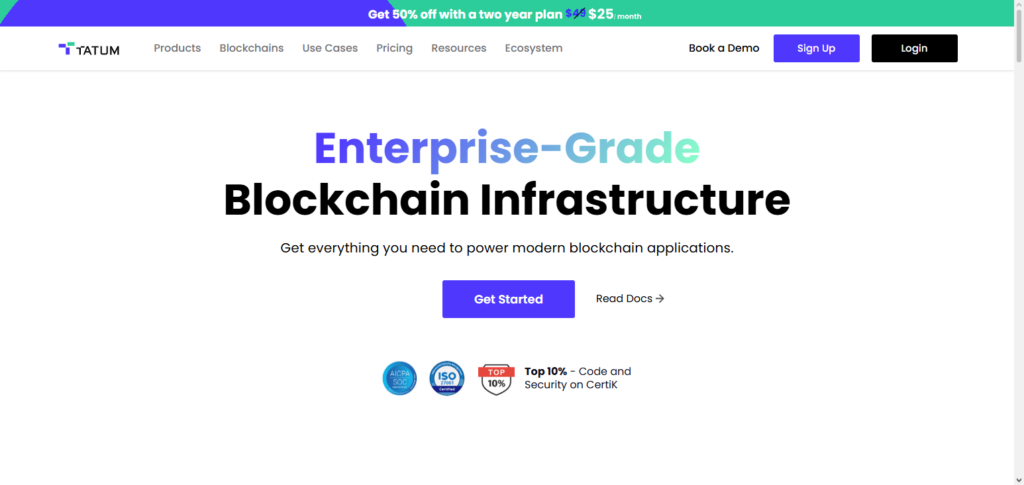
Tatum supports lots of blockchains like Ethereum, Bitcoin, Polygon, BNB Chain, Solana and many more. Some features of Tatum’s APIs include wallet management, payments, NFTs, smart contracts, token creation and blockchain data.
Developers can build awesome things like crypto wallets, payment processors, gateways, exchanges, enterprise blockchain solutions and more. Tatum makes building on the blockchain quick and easy. Tatum is a favorite amongst most startups and businesses building scalable Web3 solutions.
Tatum API Features
- Unified Blockchain API Platform – One API to multiple blockchain networks.
- Crypto Wallet Management – Built and managed wallets with transaction oversight.
- Smart Contract Support – Contract interaction and deployment assistance.
- Payment & Transaction APIs – Crypto transaction and payment APIs.
- Multi-Chain Development Support – Ethereum, Bitcoin, Polygon, BNB Chain, Solana, and more.
Tatum API Pros & Cons
| Pros | Cons |
|---|---|
| Supports multiple blockchain networks through one API | Pricing can increase with higher usage |
| Provides wallets, payments, NFTs, and smart contract tools | Some advanced blockchain features may require additional setup |
| Simplifies crypto application development | Less flexibility than direct blockchain node management |
| Good documentation and developer experience | Performance depends on external blockchain networks |
| Suitable for startups and enterprise applications | Large-scale projects may need customized infrastructure solutions |
Conclusion
The ideal Blockchain APIs will vary based on developers, businesses, and Web3 projects. Alchemy, Infura, and QuickNode get high marks for robust blockchain infrastructure. Moralis and Tatum provide the tools necessary to build advanced Web3 applications.
For multi-chain solutions, consider Chainstack or Ankr. Helius is great for Solana projects, BlockCypher offers excellent support for cryptocurrency transactions, and Figment DataHub is focused on enterprise-level infrastructure and blockchain staking.
With increased adoption in 2026, picking the right API means developers can create more advanced dApps with security and scalability in mind, but also rapidly improve and optimize the user experience of the dApps.
FAQ
What are Blockchain APIs?
Blockchain APIs are software interfaces that allow developers to connect applications with blockchain networks and access blockchain data without managing their own nodes. They provide features such as transaction tracking, wallet information, smart contract interaction, NFT data, token details, and blockchain network connectivity.
Why should developers use Blockchain APIs?
Developers use Blockchain APIs to simplify Web3 development, reduce infrastructure costs, and quickly build decentralized applications. These APIs eliminate the need to maintain blockchain nodes while providing reliable access to real-time blockchain data, transactions, and network services.
Which are the Best Blockchain APIs in 2026?
Some of the Best Blockchain APIs in 2026 include Alchemy API, Infura API, QuickNode API, Moralis API, Chainstack API, BlockCypher API, Ankr API, Figment DataHub API, Helius API, and Tatum API. Each platform offers different features based on blockchain support, scalability, and development requirements.
Which Blockchain API is best for Ethereum development?
Alchemy API and Infura API are among the best choices for Ethereum development. They provide reliable Ethereum RPC access, smart contract interaction, transaction monitoring, NFT support, and developer tools for building decentralized applications.
Which Blockchain API is best for Solana projects?
Helius API is one of the best Blockchain APIs for Solana development. It provides enhanced Solana RPC services, NFT data, transaction parsing, wallet tracking, and real-time blockchain activity monitoring designed specifically for Solana applications.