


The Growth of Decentralized Compute Networks and the reasons this technology is receiving a lot of attention in today’s digital world will be covered in this article.
By providing scalable, distributed, and affordable computing resources, decentralized networks are becoming a potent alternative to traditional cloud systems as the demand for computing power rises due to AI, big data, and Web3 advances.
What Are Decentralized Compute Networks?
Instead of depending on centralized data centers, decentralized compute networks are distributed systems that leverage a global network of independent computers to supply processing capacity.
These networks enable people and companies to contribute underutilized processing resources, which are then pooled to manage sophisticated computing activities including scientific simulations, data analysis, rendering, and artificial intelligence training.

Decentralized compute networks, which are based on blockchain and peer-to-peer protocols, use smart contracts and token incentives to guarantee security, transparency, and trust.
They increase resilience, lower costs, and remove single points of failure by spreading workloads across numerous nodes, which makes computing more accessible, scalable, and effective globally.
The Growth of Decentralized Compute Networks
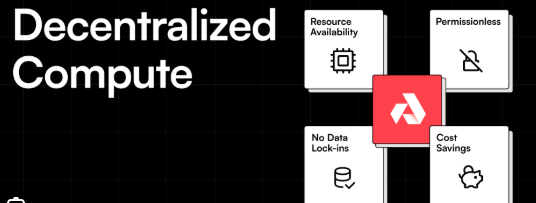
The last couple of years have seen a massive growth in the development of decentralized compute networks. This spans numerous technological markets. The decentralized compute networks give us the opportunity to have limitless computing that maintains the safety and affordability for the user.
Increasing Need for Computing Power
New technologies such as artificial intelligence, machine learning, big data analytics, and complex simulations have created a significant need for computing resources. Decentralized networks address this need by aggregating computing resources from numerous distributed nodes.
Disadvantages of Traditional Cloud Providers
Decentralized networks paint a picture of the future freedom from dependency and the big costs associated along with large cloud digital providers. Decentralized compute networks allow for the freedom to address an independent participant’s need to utilize a portion of their computing resources by alleviating them of the large cloud burden and allowing them to freely address the independent role in a decentralized compute network.
Increased Interest in Decentralized Infrastructure
The growth of Web3 technologies increases the interest in decentralized networks. Blockchain technologies create trust, transparency, and automatic payment systems to the network members.
Better Resource Utilization
There are countless computers that are underutilized. Decentralized computing networks allow for the better use of these underutilized resources.
Affordability
Compute decentralized solutions are more affordable as they utilize distributed resources instead of the more centralized data provider solutions.
Enhanced Reliability and Resilience
Decentralized networks have better reliability and resilience as they are susceptible to fewer outages and single points of failure.
Worldwide Participation
Decentralized networks are open to anyone with a computer and access to the internet, greatly expanding the availability of usable computing power.
How Decentralized Compute Networks Work
Decentralized compute networks work through the formation of thousands of independent computers (called nodes) that are dispersed across the internet and share the ability to perform virtual work. Rather than relying on one centralized data center, work is done across many computers which promotes a more efficient and\n flexible system.
Resource Contribution
Individuals or businesses volunteer their underutilized computing capabilities (CPU, GPU, storage or bandwidth) to the network.
Task Distribution
Upon the completion of a computing task (such as artificial intelligence (AI) training or data processing), the network segments the task and sends the segments to different nodes.
Parallel Processing
Several nodes work on different components of the task at the same time. The added speed of simultaneous task completion exponentially increases the speed of calculation.
Verification and Security
The transparency and trust in the network is guaranteed by the blockchain technology or distributed ledgers that confirm the completion of the task by each node.
Incentive Mechanism
Computation resource providers are given money or tokens as a way to compensate them for their computing resources contribution.
Major Benefits of Decentralized Computing
Reliability
Systems that incorporate distributed network systems are less likely to fail as an outcome of one or several nodes being taken offline. Decentralized computing systems are known to provide greater overall system reliability as well.
Security
The development of decentralized networks has resulted in decreased likelihood of a system being compromised, as the data and processes involved are distributed across several separate locations as opposed to one single location.
Cost Saving
With distributed computing, users of the system are able to access shared computing resources drained from the worldwide participants, as opposed to being forced to pay for centralized cloud systems. Distributing the cost of computing resources minimizes cost expense.
Improved Resource Utilization
Many computers are known to have redundant processing capabilities that have previously gone unutilized or utilized. Distributed networks have the potential to utilized previously unutilized resources resulting in a systems overall improved performance.
Improved Scalability
Upon the addition of new users to the system, the decentralized computing system naturally expands. It then has the ability to handle greater computing resource demands.
Greater Censorship Resistance
As the control of an entire network is not held by one entity, decentralized systems are inherently of greater resistance to censorship or shutdown.
Challenges and Limitations
Network Latency
Real-time apps may be negatively impacted by delays during the transfer of applicable data as those data are broken into task segments and distributed across nodes housed in distinct geographic locations.
Performance Variability
As dictated by the hardware and online connection used by participants, the nodes may differ in processing capabilities and reliability.
Security Risks
Though decentralized networks may be more resilient, if balancing nodes are not suitably verified, security policies may still be challenged.
Complex Infrastructure
The incorporation of advanced technology (e.g. smart contracts, distributed networks, and blockchains) may substantially increase the difficulty of constructing and operating decentralized networks.
Regulatory and Legal Issues
Decentralized networks pose unique challenges and uncertainties of regulation, especially in the areas of data privacy, digital assets, and cross border data flow.
Adoption Barriers
Decentralized networks may require additional effort to provide trust in technology, endure organizational changes, and technological adaptations.
Real-World Use Cases
Artificial Intelligence and Machine Learning
Training AI models and processing the related data requires extensive computation. Networks that use decentralization allow developers to distribute GPU resources resulting in faster model training.
3D Rendering and Media Production
Decentralized computing is used by film and game production companies to render complex graphics, animations, and visual effects.
Scientific Research and Simulations
Researchers utilize distributed computing in order to conduct complex simulations across a wide range of disciplines, including the modeling of the climate, the discovery of new drugs, and physics.
Big Data Processing
Decentralized compute networks enable organizations to process large data sets more efficiently.
Blockchain and Web3 Applications
Decentralized applications (dApps) require the use of distributed computing resources to run the underlying network, process and validate transactions, and execute smart contracts.
Edge Computing and IoT
Decentralized networks process the data generated by IoT devices, resulting in reduced latency and improved overall device performance.
Decentralized Cloud Services
Businesses can implement decentralized computing networks as a substitute for conventional cloud systems for hosting applications and services.
Popular Decentralized Compute Projects
Render Network (RNDR)
Render Network is a decentralized GPU computing service that allows users to earn money by offering their GPU processing power to individuals and businesses that require advanced graphics rendering. It is commonly used for Artificial Intelligence (AI) workloads, 3D rendering, and digital content creation.
Golem Network (GLM)
Golem is a distributed networking model that allows users to sell their processing power. Developers can leverage this network to execute code, analyze large amounts of data, and carry out intricate calculations through a collection of interconnected computers.
Akash Network (AKT)
Akash offers a distributed marketplace for cloud computing that allows users to lease computing resources (including GPUs and servers) and offers an alternative to traditional cloud service providers by allowing users to use cloud infrastructure that is less expensive and more flexible.
Bittensor (TAO)
Bittensor is a decentralized network for machine learning that incentivizes participants to provide useful AI models and computing resources. It is an open marketplace for AI and cognitive computing. (
Gensyn
Gensyn concentrates on decentralized machine learning. It allocates AI training tasks to different nodes worldwide and utilizes blockchain for task verification.
NodeGoAI
NodeGoAI allows users to monetize their idle computing resources and utilize them for a decentralized network that supports AI workloads, spatial computing, and other high-performance computing tasks.
Future of Decentralized Compute Networks
Decentralized compute networks appear to have a bright future as the need for high-performance computing in fields like artificial intelligence, machine learning, big data analytics, and scientific research keeps expanding.
These networks are anticipated to develop into a potent substitute for conventional cloud services by providing dispersed, scalable, and affordable computing resources.
Decentralized systems will probably combine with new technologies to build more effective digital ecosystems as Web3 infrastructure, edge computing, and blockchain technology continue to advance.
Participation from more people and companies throughout the world will increase the amount of computing power available, enhancing network accessibility and performance.
Decentralized compute networks have the potential to significantly alter global cloud architecture in the long run by increasing the accessibility, resilience, and openness of computing resources.
Conclusion
Global computing resource sharing and utilization is changing due to the expansion of decentralized compute networks. These systems offer a more scalable, resilient, and affordable substitute for conventional centralized cloud infrastructure by distributing workloads throughout a global network of independent nodes.
The demand for decentralized processing capacity is anticipated to rise even more as technologies like blockchain, Web3, and artificial intelligence continue to grow. Ongoing innovation is assisting in overcoming obstacles like performance, adoption, and regulation.
All things considered, decentralized compute networks have the potential to transform digital infrastructure in the future by increasing computing’s accessibility, efficiency, and openness on a global scale.
FAQ
What are decentralized compute networks?
Decentralized compute networks are distributed systems that use a global network of independent computers to provide computing power. Instead of relying on centralized data centers, these networks share resources across many nodes to process tasks more efficiently.
Why are decentralized compute networks growing rapidly?
Their growth is driven by the increasing demand for computing power in areas like artificial intelligence, machine learning, big data processing, and Web3 applications.
How do decentralized compute networks work?
They divide computing tasks into smaller parts and distribute them across multiple nodes. Each node processes a portion of the task, and the results are combined to produce the final output.