

This article will examine the Best Digital Asset RegTech Platforms that will define compliance and governance in 2026. These emerging technologies develop services for custody, AML/KYC, blockchain forensics, and other platforms that make audit readiness easier.
From the likes of PwC and IBM Consulting to Anchorage Digital, Fidelity Digital Assets, Chainalysis, TRM Labs, Elliptic, NYDIG, Gemini, and Kraken, each of these companies plays its part in assisting the development of safe, compliant, and scalable digital asset services across the world.
What Are Digital Asset RegTech Platforms?
Automation of compliance and regulatory frameworks for speeding up customer onboarding and transactions is crucial for crypto financial services. Regulatory Technology (RegTech) platforms automate counterparty screening, customer onboarding (KYC and KYB), transaction monitoring (KYT), sanctions checks, and travel rule compliance. These frameworks leverage AI and real-time blockchain data processing to track and verify transactions and generate reports.
These tools are critical since digital currencies transact at the speed of light with transactions settling in mere seconds. There is no way to maintain compliance through manual checks and processes. Regulatory tools, and solutions provided by companies like Chainalysis, TRM Labs, Elliptic, and others, help regulators, banks, and crypto exchanges comply with regulations and protect the integrity of the financial system.
By 2032, it is expected that the crypto RegTech market will have grown from the 2025 estimate of $2.5-$4.4 billion to reach a market value of more than $10 billion. The growth will be attributed to regulations like MiCA and the FATF travel rule that will be enacted in the European Union. Expectations are that compliance stacks that integrate all five of these services will dominate the market:
- Customer onboarding (KYC and KYB)
- Transaction monitoring (KYT)
- Sanctions checks and wallet screening
- Travel rule
- Regulatory reporting and audit frameworks
Key Points
| Platform | Core Strengths | Best For |
|---|---|---|
| PwC | Governance-first consulting, assurance-ready documentation, tax & regulatory strategy | Enterprises needing compliance mapping & audit alignment |
| Anchorage Digital | Federally chartered custody, governed transfer automation, API-first workflows | Institutions requiring regulated custody + automated transfers |
| Fidelity Digital Assets | Governance-led custody, approval & limit controls, reconciliation | Institutional investors needing audit-friendly custody |
| Chainalysis | AML/KYC monitoring, blockchain forensics, sanctions screening | Compliance teams needing deep transaction intelligence |
| TRM Labs | Risk monitoring, fraud detection, cross-chain analytics | Regulators & banks requiring proactive risk management |
| Elliptic | Crypto compliance, wallet screening, illicit flow detection | Exchanges & fintechs needing AML/KYC integration |
| NYDIG | Custody + execution with compliance-first workflows | Finance & compliance teams needing turnkey crypto operations |
| Gemini | Exchange + custody with regulated oversight | Teams needing exchange-linked custody with compliance |
| Kraken | Exchange with institutional custody, staking, futures | Smaller teams needing centralized workflows with compliance |
| IBM Consulting | Enterprise-grade reporting, controls, and compliance frameworks | Large institutions needing scalable digital asset governance |
1. PwC
Founded in 1849, PwC has developed into one of the world’s most reputable and trusted professional services firms. Its digital asset services license provides assurance and compliance for digital asset instruments including custody, trading, and tokenized instruments, helping enterprises fulfill their audit and tax obligations.

PwC’s use of blockchain analytics and reporting technology furthers its compliance commitments to global regulatory frameworks. Its focus is primarily on governance, audit readiness, and the formation of tax strategies. This focus makes it a necessity for the institutions dealing with the fragmentation of regulatory environments.
PwC’s RegTech solutions enable seamless integration with a client’s enterprise systems and provide risk assessments, transaction monitoring, and assurance-ready documentation. In the middle of its offerings, PwC places a significant focus on digital asset coverage as a key component of compliance.
Features
- Digital Asset Regulatory Advisory – Advises companies on the evaluation of digital asset licenses, regulatory frameworks, compliance, and market entry.
- AML & Sanctions Compliance – Supports digital asset AML risk assessments, sanctions, transaction monitoring, and operating models and investigations.
- Enterprise Risk Management – Integrates digital asset risks within a company’s enterprise risk and control framework.
- Regulatory Change Management – Converts regulations into compliance requirements for changing digital asset risks.
- Audit & Exam Readiness – Assists in preparing for regulatory examinations, audits, and remediation as well as retention of requested evidence and documentation.
Pros
- An excellent combination of regulatory, risk, audit, and digital asset experience and service offerings.
- Works well for companies spanning multiple countries.
- Can address the complexities of large, multi-location enterprises.
- Covers the entire spectrum of offerings and services from strategy development to implementation to regulatory readiness.
- A good fit for traditional financial services firms that serve banking clients.
Cons
- Offers primarily professional-services and consulting, but not as a standalone SaaS RegTech product.
- Enterprise-level engagements are usually more significant.
- Requires a substantial consulting services engagements for solution implementation.
- Not ideally suited for small businesses.
- Price and scope can vary significantly depending on location and assurance requirements.
2. Anchorage Digital
Launched in 2017, Anchorage Digital is the first crypto bank in the US to receive a federal charter. It focuses on automated compliance and custodial services for digital assets. Anchorage Digital has built compliance workflows and automates asset transfers with its API.
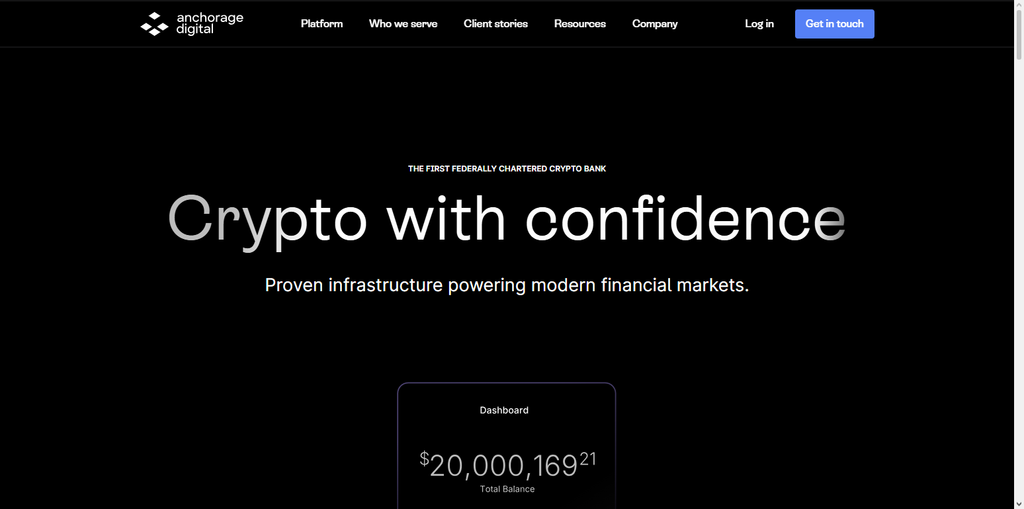
The primary focus of the Anchorage Digital platform is to automate digital asset custody and transfer compliance in an efficient manner for clients. Anchorage Digital offers compliance automation for digital asset custody integration. Mid-framework, Anchorage Digital highlights coverage of digital assets as the foundation of its regulated custody service.
Features
- Institutional Digital-Asset Custody – Offers secure custody solutions designed to meet institutional security, governance, and regulatory concerns.
- Qualified Custody – Offers custody services designed to meet the needs of regulated institutions and institutional investment mandates.
- Trading & Portfolio Infrastructure – Combines custody with trading, portfolio-management, client billing, and reporting services to provide a comprehensive solution.
- Governance Controls – Provides controls for audit and financial governance for institutions.
- Institutional Security Architecture – Employs institutional security frameworks and control architecture with audited controls.
Pros
- Focus on institutional custody.
- Created for regulated financial institutions.
- Consolidates several digital asset operational functions.
- Strong focus on governance and auditability.
- Appropriate for banks, asset managers, family offices, and corporate treasuries.
Cons
- Primarily built for institutional clients.
- Is not a pure blockchain-analytics or AML-monitoring platform.
- Met the needs of some institutional clients but may be overbuilt for smaller organizations
- Custody-focused services may be less relevant to clients who only need operational compliance services.
- Product feasibility based on regulatory constraints can be tricky.
3. Fidelity Digital Assets
Fidelity Digital Assets was established in 2018 as an extension of Fidelity to provide digital asset custody and compliance execution services to institutions. Fidelity Digital Assets provides coverage of major digital assets, stablecoins and assets. Fidelity Digital Assets’ technology prioritizes custody which incorporates a workflow approval system and audit-focused reconciliation.
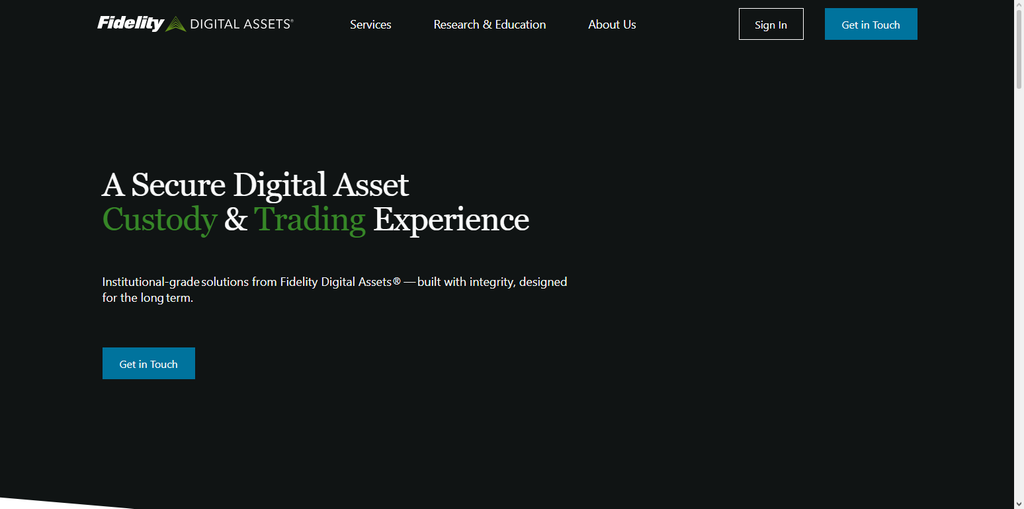
Fidelity Digital Assets’ primary focus is compliance automation for institutional custody and audit assurance. Fidelity Digital Assets’ custody platforms give asset managers a fully integrated compliance platform, from approval to reconciliation. Fidelity Digital Assets provides compliance services integrated with custody. The service prioritizes coverage of digital assets.
Features
- Institutional Custody – Offers secure custody and transfer services for institutional digital assets.
- Cold Storage – Utilizes custody architecture based on offline cold-vaulted storage.
- Integrated Trading – Executes multi-venue liquidity orders without removing client assets from cold storage.
- Multi-Tier Approval – Implements a structured approval framework for institutional asset operations.
- Stablecoin Infrastructure – Provides Fidelity Digital Dollar along with its digital asset solutions for institutions. [(Fidelity Digital Assets)(https://www.fdamin.com/)]
Pros
- Solid background in traditional finance.
- Strong institutional custody offering.
- Integrated custody and trading can increase efficiency.
- Security, liquidity, and control offerings are institutional-grade.
- Suited for asset managers, hedge funds, family offices, banks, and wealth managers.
Cons
- Better fit for institutions rather than smaller crypto businesses.
- More of a custody/trading infrastructure offering versus a dedicated blockchain offering.
- Requires an institutional onboarding process.
- Regulatory differences may exist between Fidelity entities and jurisdictions.
- Companies requiring special on-chain AML analytics may need to integrate other solutions.
4. Chainalysis
Chainalysis was founded in 2014 and is based in the United States. It has become a forensics and compliance intelligence blockchain service that has grown to cover thousands of cryptocurrencies and has an emphasis on monitoring and analyzing transactions.
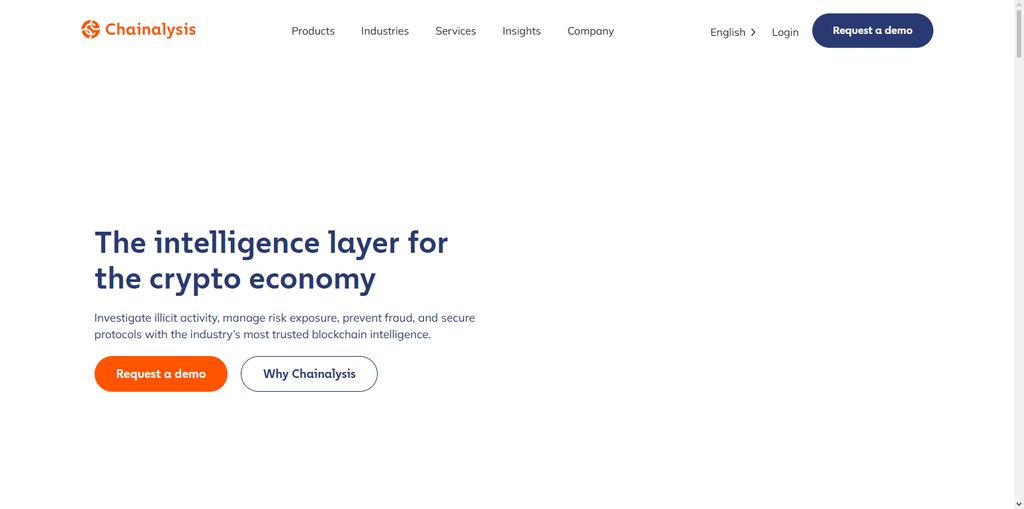
The technology built by Chainalysis is used by regulators and exchanges to help them with AML/ KYC monitoring, sanctions checking, and transaction forensics. Chainalysis focuses on compliance by offering solutions, tools, and services for its clients to help detect illegal transactions and comply with anti-money laundering and financing of terrorism laws.
Chainalysis provide a range of solutions and services to compliance teams and integrates dashboards and alert systems. Within its compliance suite, Chainalysis emphasizes the importance of digital asset coverage as the foundation of its forensic monitoring.
Features
- Blockchain Risk Monitoring – Continuously monitors blockchain activity and entity exposure.
- Transaction Risk Detection – Helps identify potentially illicit or high-risk crypto activity.
- AI-Powered Fraud Detection – Uses AI capabilities to support fraud and risk detection.
- Investigations & Due Diligence – Supports enhanced due diligence and investigations into crypto activity.
- Compliance Workflows – Helps organizations prevent, monitor, investigate, and respond to digital-asset risks.
Pros
- Strong focus on blockchain intelligence and crypto compliance.
- Useful for exchanges, financial institutions, and government organizations.
- Supports continuous monitoring rather than one-time screening.
- Combines risk detection with investigative capabilities.
- Broad applicability across crypto-related compliance workflows.
Cons
- Primarily focused on blockchain intelligence rather than general corporate compliance.
- Advanced enterprise capabilities may be more than smaller companies require.
- Requires trained compliance/investigation teams for maximum value.
- Blockchain analytics may need to be integrated with existing KYC systems.
- Pricing may be less accessible for small organizations.
5. TRM Labs
TRM Labs was started in 2018 and has a focus on digital asset risk monitoring and fraud prevention. TRM’s line of products provides coverage for cryptocurrency, stable coins and even some DeFi protocols. Regulators and Banks utilize TRM Labs service to implement cross chain analytics. TRM’s stack includes fraud detection and proactive risk monitoring.
The compliance focus for TRM Labs is on risk management and fraud and enabling institutions to identify potential threats. TRM integrates with existing compliance workflows to provide real time alerts and risk dashboards. Within its offering, TRM Labs emphasizes the importance of digital asset coverage as a core element of its cross-chain risk intelligence.
Features
- Wallet Screening – Screens wallets for sanctions, AML risks, and other high-risk exposure.
- Entity Attribution – Connects blockchain wallets to real-world entities using threat intelligence and attribution data.
- Transaction Monitoring – Supports pre- and post-transaction risk monitoring.
- Sanctions Screening – Rapidly screens transactions and wallets against changing sanctions designations.
- Multichain Intelligence – Covers digital assets across a large number of blockchain networks and tokens.
Pros
- Strong wallet-risk intelligence.
- Useful for AML and sanctions compliance.
- Combines wallet screening with transaction monitoring.
- Real-time API capabilities support automated workflows.
- Broad blockchain and digital-asset coverage.
Cons
- Primarily targeted at compliance and risk teams.
- Requires integration into broader compliance infrastructure for full coverage.
- Advanced capabilities may be unnecessary for small crypto businesses.
- Effective use requires knowledgeable compliance analysts.
- Not designed as a complete custody or trading platform.
6. Elliptic
Elliptic was founded in 2013 and was an early innovator for crypto compliance and wallet screening. Its proprietary blockchain analytic technologies offer its institutional clients the ability to screen and detect potentially illicit flows for a variety of major cryptocurrencies, stablecoins, and privacy coins. Wallet screening and transaction monitoring are some of the technology offerings.
Because Elliptic prioritizes AML/KYC integration and illicit flow detection, it is an important technology solution for cryptocurrency exchanges and fintechs. Elliptic provides APIs and dashboards, allowing for real-time integration with compliance systems. Digital asset coverage is a priority in Elliptic’s AML/KYC solution suite.
Features
- Wallet Screening – Detects exposure to sanctions, illicit finance, and high-risk persons and entities.
- Real-time Transaction Monitoring – Analyzes crypto transactions and generates risk signals.
- Continuous Monitoring – Continuously rescreens wallets and alerts users if exposure risk changes.
- Cross-Chain Intelligence – Supports wallet tracing across multiple blockchains and bridges.
- Configurable Risk Rules – allows corporates to create custom risk categories and adjust threshold levels for risk alerts.
Pros
- Solid focused crypto-compliance services.
- Bundles wallet screening and transaction monitoring.
- Useful for digital asset exchanges.
- Good cross-chain risk visibility.
- User-friendly risk scoring with case management capabilities.
Cons
- More blockchain intelligence focus than general regulatory services.
- May require separate KYC/KYB services.
- Requires compliance knowledge to respond to alerts.
- Enterprise-level functionalities may be unnecessary/overkill for smaller users.
- Higher costs may be incurred due to scale/coverage.
7. NYDIG
NYDIG was formed in 2017 and offers custody and trade execution solutions with a prioritization for compliance. Digital asset coverage is restricted to major cryptocurrencies of Bitcoin and Ethereum as well as stablecoins which are backed by custodial services. NYDIG offers an end-to-end platform to bridge the gap between custody and trade execution for institutional clients.
The predominant compliance focus is on custody and execution control, to ensure institutions remain compliant in the management of digital assets. Compliance is integrated throughout NYDIG’s custody and trade execution solutions and is prioritized in digital asset coverage.
Features
- Regulated Bitcoin Custody – Supply institutional-grade custody technology.
- Bitcoin Spot Trading – Offers regulated spot trading for institutional customers.
- Bitcoin Derivatives – Supplies institutional customers with capabilities for trading and management of Bitcoin risk.
- Bitcoin Lending – Offers lending services secured by Bitcoin.
- Audited & Insured Infrastructure – NYDIG offers custodial services. Its custody solution is regulated, audited, and insured.
Pros
- Focuses on Bitcoin custody, trading, and financing for institutional customers.
- Provides integrated custody, trading, derivatives, and financing.
- Strong regulatory and operational services.
- Suited for institutional customers and corporate users.
- Can assist corporate customers in their treasury and balance-sheet Bitcoin strategies.
Cons
- More Bitcoin-centric than other multi-asset RegTech services.
- Not a blockchain AML analytics solution.
- Has limited relevance for organizations seeking significant multi-chain analytics.
- Institutional focus may exclude small businesses.
- Separate compliance analytics services may be necessary for other organizations.
8. Gemini
Launched in 2014, Gemini is a licensed crypto exchange and custodian for compliant crypto trading and custody. Gemini supports various digital assets like cryptocurrencies, stablecoins, and NFTs. Gemini provides assets under regulated oversight. Gemini integrates technology across the on and off ramps workflows and provides services with compliance enabled APIs and reports.

Gemini seeks to integrate compliance-based exchange-linked custody. Therefore, Gemini’s offering appeals to customers who are looking to combine trading and custody services. Gemini strives for transparency and regulation coordination. When providing their services, Gemini focuses on digital asset coverage to support regulated exchange and custody services.
Features
- Institutional Crypto Trading – Spot and derivatives trading for professionals and institutions.
- Custody – Institutional crypto custody with cold storage.
- APIs – Institutional trading and platform integration APIs.
- Regulatory Infrastructure – Gemini spotlights its regulated and licensed institutional platform.
- Security Controls – Gemini’s controls and certifications include encryption, hot and cold storage, MFA, DDoS protection, and security audits.
Pros
- Comprehensive institutional crypto infrastructure.
- Integrates trading and custody.
- Offers scalable API connectivity.
- Emphasizes compliance certifications.
- Designed for professionals, institutions, fintech, and banking.
Cons
- More of an exchange/custody ecosystem compared to a dedicated RegTech analytics platform.
- Businesses requiring in-depth blockchain analysis might need other alternatives.
- Its institutional features may be redundant for smaller businesses.
- Product and regulatory offerings may be different based on the geographic location.
- Compliance departments may still need supplemental tools for AML monitoring.
9. Kraken
Founded in 2011, Kraken is a global crypto exchange that includes analytical custody, staking, and futures trading. Kraken’s digital asset coverage extends to cryptocurrencies, stablecoins, and derivatives, and is supported by compliance based workflows. Integrating the exchange, custody, and staking, Kraken provides compliance based APIs.
The primary compliance emphasis is on the exchange and custody compliance, through which institutions are able to conduct advanced trading. Kraken supports compliance dashboards and reporting tools for its institutional customers. When providing their services, Kraken also focuses on digital asset coverage in providing compliance based offerings.
Features
- Institutional Custody – Provides custody through regulated Kraken entities.
- Institutional Trading – Supports corporate and institutional digital-asset trading.
- Staking Infrastructure – Offers institutional staking capabilities.
- Treasury Management – Supports corporate treasury teams with liquidity and digital-asset infrastructure.
- Governance & Permissions – Provides subaccounts, configurable permissions, and reporting for institutional operations.
Pros
- Strong institutional trading and custody combination.
- Useful for corporate treasury operations.
- Provides governance and account-management controls.
- Supports institutional liquidity requirements.
- Offers multiple digital-asset services through an integrated ecosystem.
Cons
- Not primarily a standalone regulatory-analytics platform.
- Businesses seeking deep blockchain forensics may need specialized tools.
- Institutional products can be more complex than needed for smaller businesses.
- Compliance capabilities are closely connected to its trading/custody ecosystem.
- Regulatory product availability can differ across markets.
10. IBM Consulting
IBM Consulting, started in 1911, creates enterprise-grade compliance frameworks for digital assets. These frameworks cover crypto, tokenized assets, and instruments of blockchain-based financial markets. IBM’s technology stack focuses on reporting, controls, and governance frameworks. The primary focus of the compliance is on enterprise-level governance and audit frameworks.
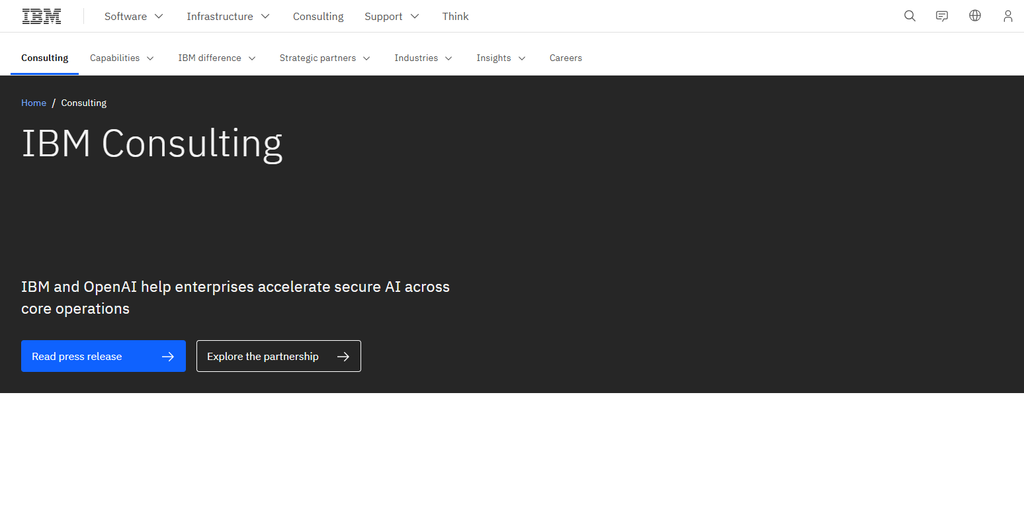
This makes it most suitable for multi-national/global/international corporations/organizations. IBM Consulting offers scalable compliance frameworks that are aligned to different regulatory frameworks across multiple jurisdictions. Around mid-service, IBM highlights that its enterprise compliance frameworks have a foundation around digital assets.
Features
- Digital Asset Compliance Strategy – combines collaborative consulting, technology, risk, and regulatory services.
- Digital Asset Infrastructure – IBM has external services that encompass custody, exchange, token issuance, and other permissioned blockchain structures.
- Digital Asset Protection – uses various technologies such as MPC, HSMs, and confidential computing.
- Digital Asset Haven – provides the visibility and control of policy over the lifecycle of transactions.
- Regulatory & Risk Consulting – IBM Promontory supports the key regulatory services and the risk governance of a business.
Pros
- Offers highly integrated enterprise technology and regulatory consulting services.
- Largely tends to support large financial markets.
- Integrates digital-asset infrastructure and compliance offerings.
- Concerned with security and governance.
- Highly appropriate for large and complex undertakings.
Cons
- Focuses primarily on consulting and technology.
- Implementation may be overly complex for some types of standalone RegTech tools.
- More expensive for small businesses.
- Requires a lot of enterprise integration.
- May not be appropriate for companies looking for only an AML screening tool.
Comparison Table – Best Digital Asset RegTech Platforms 2026
| Platform | Founded Year | Digital Asset Coverage | Technology Stack | Primary Compliance Focus |
|---|---|---|---|---|
| PwC | 1849 | Custody, trading, tokenized assets | Blockchain analytics, audit-ready reporting | Governance, audit, tax compliance |
| Anchorage Digital | 2017 | Bitcoin, Ethereum, stablecoins, tokenized securities | API-first custody automation | Custody governance & transfer automation |
| Fidelity Digital Assets | 1946 (Digital Assets 2018) | Major cryptocurrencies, stablecoins, tokenized assets | Governance-led custody, reconciliation tools | Institutional custody & audit assurance |
| Chainalysis | 2014 | Thousands of cryptocurrencies & tokens | AML/KYC monitoring, forensic analytics | AML/KYC enforcement & blockchain intelligence |
| TRM Labs | 2018 | Cryptocurrencies, stablecoins, DeFi protocols | Risk scoring, fraud detection, cross-chain analytics | Risk management & fraud prevention |
| Elliptic | 2013 | Cryptocurrencies, stablecoins, privacy coins | Wallet screening, transaction monitoring | AML/KYC integration & illicit flow detection |
| NYDIG | 2017 | Bitcoin, Ethereum, stablecoins | Custody + trading integration | Custody & execution governance |
| Gemini | 2014 | Cryptocurrencies, stablecoins, NFTs | Exchange + custody APIs, reporting | Exchange-linked custody & regulated oversight |
| Kraken | 2011 | Cryptocurrencies, stablecoins, derivatives | Exchange, custody, staking APIs | Exchange compliance & custody governance |
| IBM Consulting | 1911 | Cryptocurrencies, tokenized assets, blockchain instruments | Enterprise reporting, controls, governance frameworks | Enterprise-scale governance & audit frameworks |
Conclusion
Digital asset regulatory technology in 2026 shows a developed ecosystem as compliance, custody, and governance come together to serve institutional investment. PwC and IBM provide enterprise-level tools along with audit-ready governance, while custodians Anchorage Digital, Fidelity Digital, and NYDIG provide custody that aligns with compliance with security.
In the intelligence space, Chainalysis, TRM Labs, and Elliptic dominate blockchain forensics, setting up regulations and forensic agencies to identify illicit movements of funds.
Gemini and Kraken incorporate compliance-driven custody with mature exchanges to serve institutional and retail investment. These services set a precedent for advanced technology and primary compliance as essential functions for digital asset investment in the digital economy.
FAQ
What is PwC’s role in digital asset compliance?
PwC, founded in 1849, provides governance-first frameworks, audit readiness, and tax strategy for enterprises. Its digital asset coverage spans custody, trading, and tokenized instruments, with technology focused on blockchain analytics and assurance-ready documentation.
How does Anchorage Digital ensure regulated custody?
Anchorage Digital, founded in 2017, is the first federally chartered crypto bank. It covers Bitcoin, Ethereum, stablecoins, and tokenized securities, using API-first technology for automated transfers. Its compliance focus is custody governance and transfer automation.
What makes Fidelity Digital Assets unique?
Fidelity, founded in 1946, launched Fidelity Digital Assets in 2018. It covers major cryptocurrencies and tokenized assets, with governance-led custody and reconciliation technology. Its compliance focus is institutional custody and audit assurance.
Why is Chainalysis important for regulators?
Chainalysis, founded in 2014, covers thousands of cryptocurrencies with forensic monitoring. Its technology includes AML/KYC enforcement, sanctions screening, and blockchain intelligence. Compliance focus: anti-money laundering and illicit flow detection.
What does TRM Labs specialize in?
TRM Labs, founded in 2018, covers cryptocurrencies, stablecoins, and DeFi protocols. Its technology stack includes fraud detection, risk scoring, and cross-chain analytics. Compliance focus: proactive risk management and fraud prevention.