

In this article, I will cover the Benefits Of Bridging Avalanche And Polygon, analyzing how users can effortlessly transfer assets between these two powerful blockchains.
Bridging allows access to more dApps and has quicker transactions with lower fees and more liquidity.
It also has multi-chain flexibility and risk diversification, along with the ability to capture many incentives, making it useful for maximizing asset utility and global crypto efficiency.
What is Bridging Avalanche And Polygon?
Bridging Polygon and Avalanche refers to transferring crypto assets like cryptocurrencies or tokens to and from Avalanche and Polygon blockchains.
Although both networks have unique fundamental ecosystems as independent systems, user can leverage use an adapted payment system to unlock access to different DeFi platforms, staking, and even NFT marketplaces on both chains.
This interoperability is through specialized bridging protocols or smart contracts ensuring the bridging’s integrity and security through the avoided double-spending of the transferred assets.
Moreover, bridging Avalanche and Polygon enhances the user’s ability to leverage unique attributes from both blockchains, maximizes liquidity, and diversifies investments within the Avalanche and Polygon networks.
Key Point & Benefits Of Bridging Avalanche And Polygon List
| Key Point | Description |
|---|---|
| Access to dApps | Enables users to interact with decentralized applications across chains. |
| Lower fees | Reduces transaction and bridging costs compared to single-chain operations. |
| Faster confirmations | Speeds up transaction settlement across networks. |
| Capital efficiency | Maximizes the use of assets without unnecessary locking or duplication. |
| Interoperability | Allows seamless interaction between different blockchain ecosystems. |
| Risk diversification | Spreads assets and exposure across multiple chains to reduce risk. |
| Larger liquidity | Increases available liquidity pools for trading and swaps. |
| Arbitrage routes | Opens opportunities for price differences across chains for profit. |
| Incentive eligibility | Qualifies users for rewards, staking, or yield programs across chains. |
| Multi-chain flexibility | Supports asset movement and management across several blockchains. |
1. Access to dApps
One of the main benefits of bridging Avalanche and Polygon is access to decentralized applications (dApps) across both ecosystems.
By moving assets between these blockchains, users can leverage a wider range of financial tools, NFT marketplaces, and DeFi platforms that would otherwise be unavailable on a single network.
This interoperability allows users to participate in staking, lending, yield farming, and gaming opportunities without being limited by the native blockchain.
Bridging thus empowers users to maximize the utility of their assets, explore innovative applications, and fully engage with the growing multi-chain landscape, making it a strategic advantage for crypto investors and enthusiasts.
Access to dApps Features
- Users can take advantage of more DeFi platforms, NFT marketplaces, and staking protocols.
- Allows for interaction with chain-specific applications that are otherwise not available on a single network.
- Increases the scope of yield farming, governance voting, and even cross-chain gaming activities.
2. Lower fees
One of the talked-about advantages of bridging Avalanche and Polygon is the reduction in transaction fees—with a positive impact on the cost of cross-chain activity.
Users can select the most cost-effective chain for transactions since both Avalanche and Polygon are recognized for their scalability and lower gas fees when compared to other networks like Ethereum.

Users can also save on transfer fees, trading costs, and other DeFi interactions for efficient and more frequent operations.
Such decrease in costs opens doors to increased participation in NFT trading, decentralized finance and staking, thus making bridging a practical financial strategy in optimizing returns and avoiding unnecessary costs.
Lower Fees Features
- Bridges give the option to choose a blockchain that has the lowest gas costs for the transactions.
- Lower fees for the entire trading, staking or swapping activities.
- Increases profitability for smaller transactions where the fees are usually disproportionately high.
3. Faster confirmations
One of the advantages of bridging Avalanche and Polygon is the quicker transaction confirmations which improves the overall efficiency and experience of the end user.
Both blockchains are capable of high-speed processing So bridging assets between Polygon and Avalanche improves the efficiency of transfers, trades, and other DeFi operations.

Reduction in the confirmation time minimizes the chances of any delays in executing trades or staking which helps the users take advantage of the market opportunities.
This feature is quite beneficial in case of arbitrage, yield farming, or other transactions that are time sensitive. As a result of bridging, users are able to interact in near real time with a multitude of networks which makes their crypto operations more seamless, reliable, and tactically advantageous.
Faster Confirmations Features
- Tighter block confirmation intervals on both Avalanche and Polygon translates to lower wait times on operations.
- Increased speed on the trading, liquidity provisioning, and staking activities.
- Allows users to act faster on market/trading opportunities or arbitrage opportunities.
4. Capital efficiency
A Mervent is bridging Avalanche and Polygon to overcome capital inefficiency when digital assets are used over different networks.
Investors don’t have to have their assets sit on one chain as fund can be allocated across different liquidity pools, staking opportunities, and yield-generating activities, all| within different blockchains.
This cross-chain is advantageous as it optimally ensures that every token is working and maximizes out unused capital.
Bridging solves enhanced portfolio management and cross ecosystem engagement within multiple DeFi, and is therefore, strategically useful for user that are trying to improve resource structuring and spend efficiency.
Capital Efficiency Features
- Assets can be diversified to multiple ecosystems for enhanced yields.
- Provides no idle capital as the DeFi, NFT, and staking platforms can be used simultaneously.
- Enhances portfolio performance and asset utilization.
5. Interoperability
The bridging of Avalanche and Polygon enables interoperability which in turn enhances the interaction of two separate blockchain ecosystems Avalon and Polygon. With bridging, assets, smart contracts, and data are able to transfer freely across the network with users utilizing multiple applications and services.
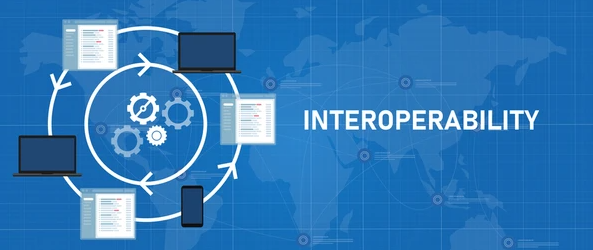
This interoperability enhances collaboration among DeFi protocols, NFT services, and other decentralized services, resulting in an integrated cross-chain ecosystem.
This interoperability motivates developers to create more improved and innovative products utilizing features from both Avalanche and Polygon. This bridging allows users to have an easily accessible, interconnected, and flexible blockchain ecosystem with unlimited room for engagement and growth.
Interoperability Features
- Allows for seamless transfer of assets and information between Avalanche and Polygon.
- Enables collaboration between different protocols and applications on cross-chain.
- Helps developers manage the progress and integration of multi-chain projects.
6. Risk diversification
By bridging Avalanche and Polygon, users gain improved risk diversification as they can allocate their assets to a number of blockchain networks.
As users hold and operate tokens on both Avalanche and Polygon, their reliance on a single platform is eschewed, reducing the chances of getting locked into an ecosystem’s congestion, failures, or security issues.

Such a portfolio is designed to protect more effectively against the disparity of market volatility.
Bridging offers users the capability of strategically distributing their assets across ecosystems, takes advantage of different DeFi services while maintaining cross-bridge operational continuity, and, optimally positions users to mitigate multi-chain financial risk.
Risk Diversification Features
- Splits the assets over many networks to avoid reliance on just one chain.
- Reduces potential damage from network-centric technical issues and traffic jams.
- Helps cushion the effects of a divergent market affecting one blockchain more than the other.
7. Larger liquidity
The cross-chain bridging of Polygon and Avalanche has added benefit of larger and strengthened liquidity for trade, DeFi and staking opportunities for both networks.

Avalanche and Polygon have shared liquidity for swaps, lending and yield farming, which enhances the overall available liquidity and user funds across blockchains. Total slippage loss is reduced, trade cost is better, and capital more efficiently tied up.
Bridging also gives users access to cross-chain liquidity programs and other networks, which would otherwise not be accessible on a standalone chain. It greatly improves the infrastructure across multiple networks while also enhancing market investors returns.
Larger Liquidity Features
- Aggregates the liquidity from the two networks for trading, lending, and yield farming.
- Helps reduce slippage when users swap, hence the users enjoy better prices.
- Helps larger trades to be settled without upsetting the market.
8. Arbitrage routes
The bridging of Avalanche and Polygon creates quoted arbitrage routes and allows traders to take advantage of price differences between the two networks.
Users, on the other hand, are able to transfer assets across different chains to take advantage of profit opportunities that would have otherwise been impossible to achieve on a single blockchain.

Profit opportunities are generated from differences in token prices, liquidity pools, or trading pairs. Bridging allows users to move assets between blockchains in order to take advantage of inefficiencies faster which in turn, lower fees increase profit and transaction times on both Avalanche and Polygon.
This cross-chain approach maximizes profit and improves market efficiencies by equilibrating prices across ecosystems.
Arbitrage Routes Features
- Pockets the price difference between Avalanche and Polygon for easy profits.
- Allows users to move assets quickly to take advantage of the markets.
- Promotes better balance and pricing across many chains.
9. Incentive eligibility
Bridging Avalanche and Polygon has incentive eligibility as a major upside, which means that users can partake in airdrops and yield programs for free in both networks.
There are numerous DeFi protocols, NFT projects, and liquidity pools which have incentivized programs that are chains specific, which means that certain assets, confined to a single blockchain, might not avail themselves certain benefits.

Users can bridge tokens and partake in numerous reward programs at the same time, which leads to much better earning opportunities, and higher returns. This flexibility means that investors will not lose out on time-sensitive promotions or staking bonuses.
Bridging incentive eligibility allows users to interact with different Avalanche and Polygon ecosystems in a multi strategic manner, maximizing the financial benefits offered from both networks.
Incentive Eligibility Features
- Provides staking, airdrops, and DeFi incentives on both chains.
- Allows users to take advantage of chain-focused programs to increase earnings.
- Promotes participation and activity across many networks without asset barriers.
10. Multi-chain flexibility
Avalanche and Polygon have a bridge that is beneficial due to flexible multi-chain access. It enables its users to interact and operate with different blockchain ecosystems effortlessly.
Investors and developers who bridge their assets can take full advantage of various DeFi protocols, NFT platforms, and staking services without having to remain on a single blockchain.
This flexibility facilitates resource allocation, engagement with distinct governance frameworks, and the cost and time efficient transactions.
Multi-chain functionalities foster the prototyping of novel financial instruments and applications, improving the portfolio’s performance. Versatile frameworks that bridging unlocks is advantageous due to synergies in opportunity, flexibility, and the fast pacing borderless.
Multi-Chain Flexibility Features
- Works across multiple blockchains simultaneously.
- Lets users enhance strategies such as trading, staking, and participating in governance.
- Allows users to utilize both Avalanche and Polygon networks for their unique advantages.
Pros & Cons
| Pros | Cons |
|---|---|
| Access to dApps: Use a wider range of DeFi apps, NFTs, and staking platforms. | Bridge Fees: Some bridges may charge fees, reducing overall profits. |
| Lower Fees: Save on gas and transaction costs by choosing the optimal chain. | Security Risks: Bridges can be vulnerable to hacks or smart contract bugs. |
| Faster Confirmations: High-speed transfers for efficient trading and DeFi operations. | Complexity: Managing assets across multiple chains can be confusing for beginners. |
| Capital Efficiency: Optimize asset usage across multiple ecosystems. | Slippage Risk: Cross-chain swaps may face price differences during transfers. |
| Interoperability: Seamless interaction between Avalanche and Polygon protocols. | Network Downtime: Technical issues on either chain can temporarily halt transfers. |
| Risk Diversification: Spread assets to reduce exposure to a single network. | Limited Asset Support: Not all tokens are supported on every bridge. |
| Larger Liquidity: Increased liquidity for trading, lending, and farming. | |
| Arbitrage Routes: Exploit price differences across chains for profit. | |
| Incentive Eligibility: Access rewards, staking, and airdrops on both chains. | |
| Multi-Chain Flexibility: Operate and invest across multiple networks. |
Conclusion
To summarize the key strategic benefits of bridging Avalanche and Polygon for the crypto experience. It enables easy access to a variety of dApps and captures increased capital efficiency due to lower fees and faster confirmations.
It also advances interoperability and multi-chain elasticity. Users of Para also stand to gain risk diversification, access to enlarged liquidity, arbitrage opportunities, and the potential to earn attractive yields due to fruitful cross ecosystem integrations.
Some risks are also present, for instance, cross-chain bridge fees and security risks. Regardless, the ability to operate seamlessly across chains is, cybernetically, a bridge that, once crossed, serves numerous purposes with respect to capital optimization, retrun maximization, and the overall engagement with the growing multi-chain blockchain ecosystem.
FAQ
It provides access to more dApps, lower fees, faster transactions, capital efficiency, and multi-chain flexibility, helping users maximize asset utilization and explore diverse opportunities.
By combining assets across chains, bridging increases the total liquidity available for trading, lending, and yield farming, reducing slippage and improving market efficiency.
Yes, it allows users to diversify assets across Avalanche and Polygon, reducing exposure to network-specific issues and market volatility.
Many protocols offer staking rewards, airdrops, or yield farming incentives that become accessible when assets are bridged between chains.