


I’ll go over the Top Crypto Wallets with Compliance Automation Tools in this post. These wallets are made to let organizations and companies store digital assets safely while automating regulatory compliance.
These platforms assist businesses in managing cryptocurrency safely, effectively, and in compliance with changing international standards. They offer everything from multi-signature and MPC security to AML monitoring and audit-ready reporting.
Why Compliance Automation Matters in Crypto Custody
Regulatory Adherence: Compliance automation via the integration of digital assets helps institutions automatically satisfy the requirements of AML, KYC, and the travel rule without having to do so incrementally.
Risk Reduction: With the use of policy-based approval automation, fraud, human error, and unauthorized movements of assets are out of the equation. The integration of digital assets also ensures the execution of transaction limits and whitelists.
Audit-Ready Reporting: Compliance automation records and logs all activities and outcomes. These records can be used to satisfy audit requirements from a regulator’s perspective.
Operational Efficiency: The automation of compliance and governance saves time and allows the focus to be on the more important aspects of asset management.
Key Features to Look for in Compliance-Enabled Crypto Wallets
Robust Security Features
- Security against hacks and key compromise through multi-party computation (MPC), multi-signature wallets, and hardware-backed security.
Governance and Role-Based Controls
- Transaction limits, role-based approvals, and policy enforcement to alleviate internal risk and provide proper oversight.
Automated Compliance Features
- Meeting legal obligations through the integration of AML/KYC, automated compliance, transaction monitoring, sanctions list screening, and regulatory check automation.
Audit Trails and Reporting
- For audits, detailed logs, transaction histories, and real-time reporting furnish regulators with reports to simplify verifiable records.
Support for Multiple Assets and Platform Compliance
- With compliance controls in place, support for various cryptocurrencies and tokens while providing integration with DeFi platforms or trading venues.
Key Management and Recovery
- Compliance features coupled with key management systems and secure recovery options to prevent loss of assets.
Custody and Insurance Coverage
- Additional risk mitigation through institutional-grade insurance for digitally stored assets.
Key Point & Best Crypto Wallets with Compliance Automation Tools List
| Platform | Key Point |
|---|---|
| Fireblocks | Enterprise-grade MPC wallet with secure asset transfers, DeFi access, and automated policy controls for institutions. |
| BitGo | Regulated, insured custody with multi-signature security, governance controls, and strong compliance support. |
| Ledger Enterprise | Hardware-backed institutional custody combining HSM security, governance workflows, and self-custody control. |
| Coinbase Custody | Fully regulated, insured cold-storage custody trusted by institutions and compliant with global regulations. |
| Anchorage Digital | Federally chartered digital bank offering secure custody, staking, and compliance-first infrastructure. |
| Copper ClearLoop | Off-exchange settlement solution reducing counterparty risk while enabling fast trading liquidity. |
| Qredo | Decentralized MPC-based custody with Layer-2 blockchain, enabling cross-chain transfers without private keys. |
| Zengo Business | Keyless MPC wallet designed for businesses, eliminating private key risk with enterprise access controls. |
| Gemini Custody | SOC-certified, regulated custody platform with cold storage and strong institutional compliance. |
| Kraken Custody | Qualified custody service offering segregated cold storage, security audits, and regulatory compliance. |
1. Fireblocks
Leading institutional digital asset platform Fireblocks is renowned for its automated compliance operations and sophisticated MPC-based protection. Secure asset transfer infrastructure, real-time policy enforcement, and transaction monitoring are its main advantages.
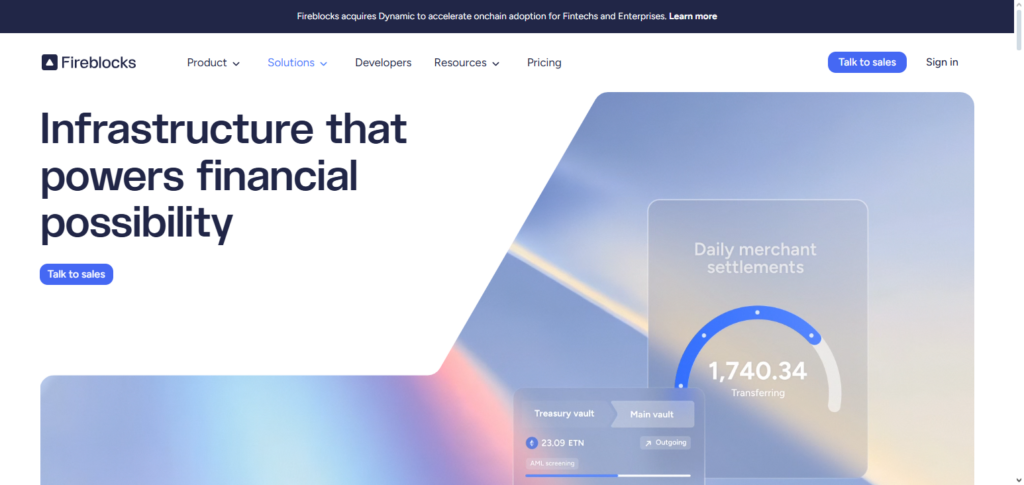
Exchanges, banks, hedge funds, and businesses handling large transaction volumes across CeFi and DeFi are the greatest candidates for Fireblocks. MPC key management, whitelisting, AML screening, role-based approvals, support for travel rules, and smart contract interaction controls are some of the features.
Fireblocks is one of the Best Crypto Wallets with Compliance Automation Tools because it combines security, governance, and regulatory automation into one enterprise-grade platform.
Fireblocks Features, Pros & Cons
Features
- No single point of failure cryptographic key wallet uses multi-party computation.
- Safe transfer of assets between centralized exchanges and decentralized finance.
- Fully automated compliance and whitelisting features.
- Monitoring of transactions and anti-money laundering (AML) in real-time.
- Workflow automation for approvals and roles.
Pros
- Enterprise-level security with fast multiparty computation (MPC) architecture.
- Quick and uninterrupted asset transfers between financial platforms.
- Exceptional automation of compliance processes and control of policies.
- Comprehensive audit trails and reports.
- Supports centralized and decentralized finance (CeFi and DeFi) ecosystems.
Cons
- Expensive for small teams.
- Initial setup may be difficult and require expertise.
- Advanced features may need additional training.
- Not suitable for basic self-custody requirements.
- Less offline cold storage capabilities when compared to hardware wallets.
2. BitGo
BitGo is a regulated digital asset custodian offering insured custody and institutional wallet services built on strong compliance. Its primary strength lies in multi-signature wallet architecture coupled with regulatory-grade controls and insurance.
BitGo is optimal for asset managers, custodians, and funds needing qualified custody and compliance reporting. Features include policy-based approvals, integrated AML and transaction monitoring, audit logs, duty segregation, and SOC-certified infrastructure.
Among the Best Crypto Wallets with Compliance Automation Tools, BitGo is at the forefront of streamlining regulatory compliance while allowing customers to retain control over their assets and manage governance workflows.
BitGo Features, Pros & Cons
Features
- Infrastructure for multi-signature wallets
- Custody of insurance coverage with the institution
- Governance of transactions and policy-based approvals
- Integration of AML and Compliance reporting
- Transparency operational and audit logs
Pros
- Provider of institutional custody is trusted
- Insurance adds strong support
- Compliance tools are documented nicely
- Rules of governance are flexible
- Infrastructure is SOC certified
Cons
- New users will find the UI less intuitive
- Not as DeFi-friendly as some competitors
- Extra fees for the more advanced compliance modules
- Onboarding may be necessary for more complicated workflows
- Mobile options are limited
3. Ledger Enterprise
Ledger Enterprise provides institutional self-custody backed by hardware-backed security and enterprise governance. Its primary strength lies in the combination of secure HSM technology with adaptable compliance and approval workflows.
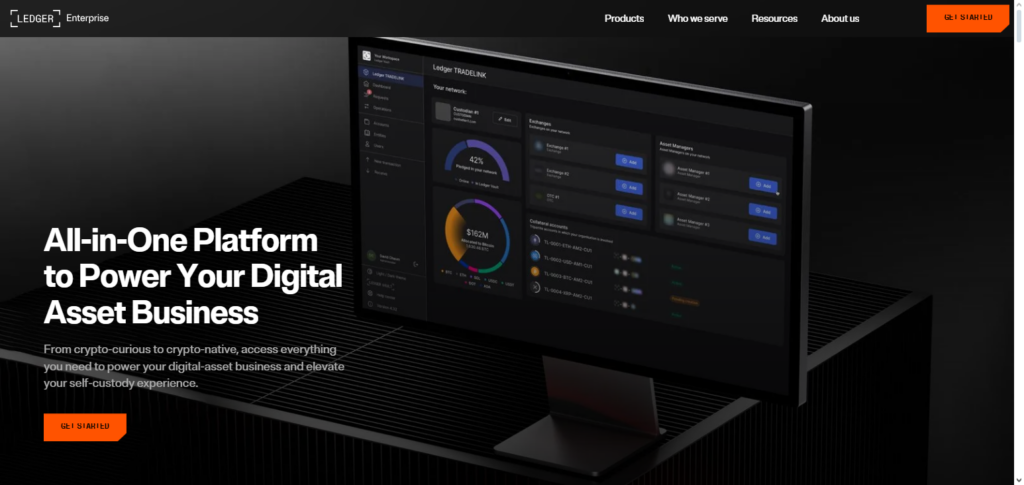
Ledger Enterprise is optimal for companies seeking to have complete control of the private keys while ensuring compliance. Features include multi-tier approvals, role-based access, transaction limitations, secure firmware, audit trails, and integration with compliance monitoring.
Among the Best Crypto Wallets with Compliance Automation Tools, Ledger Enterprise allows enterprises to balance self-custody with their internal controls, risk management policies, and compliance requirements.
Ledger Enterprise Features, Pros & Cons
Features
- Self-custody hardware-backed keys (HSM)
- Multi-role approval workflows
- Automation integration with compliance
- Secure firmware and hardware modules
- Access logs and audit trail
Pros
- Industry-leading hardware security
- Self-custody control: Excellent
- Configurable governance protocols
- Are strong audit capabilities
- Support for offline signing
Cons
- Self-custody requires internal know-how
- Not centralized custody: more of a DIY setup
- Compliance automation might need third-party add-ons
- Manual onboarding of hardware for enterprise teams
- No built-in insurance
4. Coinbase Custody
A great option for Custody solutions is Coinbase Custody, which has earned the trust of countless institutions, Coinbase custody provides cold storage, with regulation, protection, and compliance.
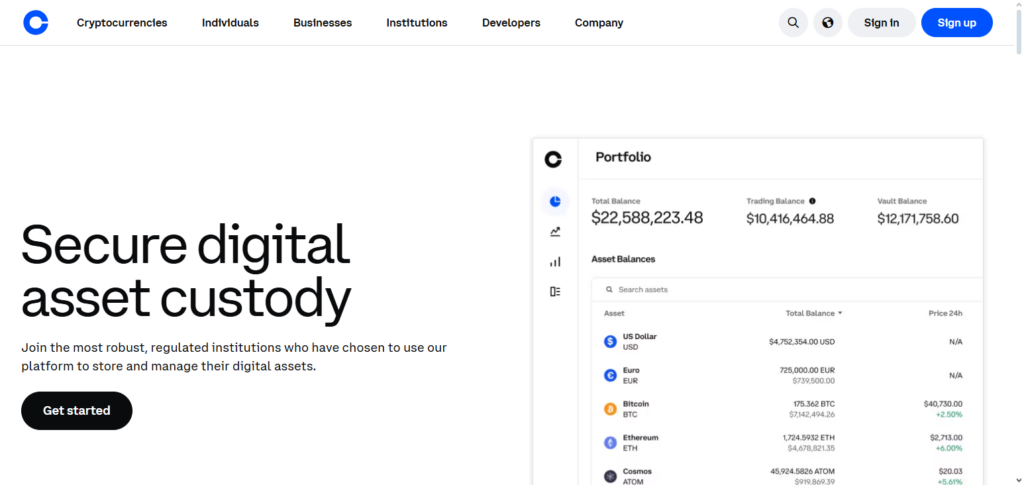
This company cryptocurrency storage solutions are excellent for Asset Managers, ETFs, and institutions, with features such as cold storage derivatives, SOC certifications, and insurance, as well as compliance preset, and governance Reporting.
Coinbase custody is ranked as one of the Best Crypto Wallets with Compliance Automation Tools, and is committed to the regulation, and the custody of assets in the hand of the most evolved jurisdiction custodians.
Coinbase Custody Features, Pros & Cons
Features
- Regulated cold storage custody
- Your digital assets are insured
- Automation compliance and reporting tools
- Monitoring of transactions and AML
- Governance and enterprise approval
Pros
- High level of the regulatory credibility
- Security posture is trusted
- Compliance automation is simplified
- Customer support is strong
- Access to deep liquidity through the Coinbase markets
Cons
- Only custody (no DeFi integrations)
- Institutional tiers fee is higher
- Policy engines customization is limited
- Cross-chain operations not optimized
- Difficult onboarding requirements
5. Anchorage Digital
Anchorage Digital is a federally regulated and chartered digital asset bank, offering custody with deep regulatory integration. The company describes their greatest steals as compliance-first architecture.
This describes their entire institution, and their amalgamation of custody and staking services. As such, Anchorage Digital is most defined for institutions as is prudent to representing bank grade systems with ancillary automated systems.
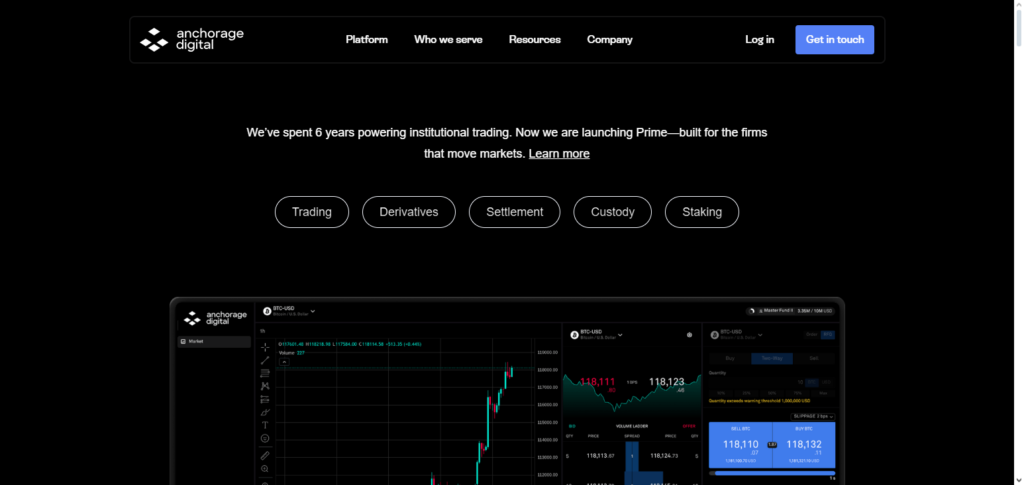
Their systems, such as automated policy systems, on-chain governance, compliance audit and policy systems, and other risk systems afford the institution real peace of mind spanning regulations.
International regulatory systems integrated with other systems in digital asset systems located Anchorage Digital within this classification as one of the Best Crypto Wallets with Compliance Automation Tools.
Anchorage Digital Features, Pros & Cons
Features
- Custody of fractional ownership shares via banks chartered by the federal government
- Participation in governance via blockchain
- Automated compliance and transaction monitoring
- Anti-money Laundering (AML) / Know Your Customers (KYC) integration and reporting
- Automated risk approval and monitoring
Pros
- Regulation and compliance at the level of a bank
- Automation of governance is sophisticated
- Participation in staking and DeFi is enabled
- Reporting on regulations is thorough
- Architecture of secure MPC
Cons
- Smaller teams find it difficult to enter
- Governance is complex for newcomers
- A great deal of onboarding is needed for some capabilities
- For minimal volumes, costs can be excessive
- Limited flexibility regarding self-custody
6. Copper ClearLoop
Copper ClearLoop is one of the few companies focused on off-exchange settlement while also offering institutional custody and compliance.
The company’s strongest area is settlement and trading risk. Copper ClearLoop is the optimal solution for participants and institutions trading on numerous exchanges and requiring off balance sheet settlement.
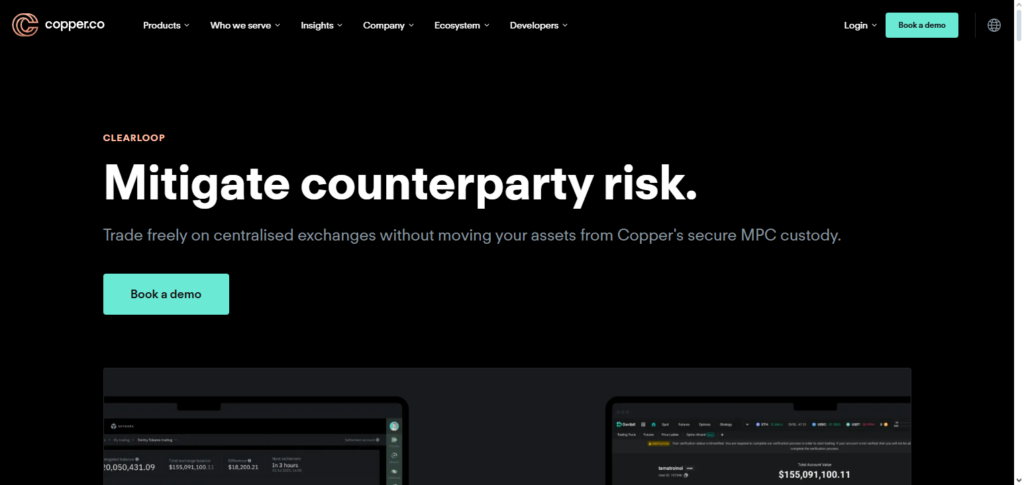
Notable features include: segregated custody, real-time settlement, settlement compliance monitoring, and transaction control features with integrated access to regulated exchanges.
Of the Best Crypto Wallets with Compliance Automation Tools, Copper ClearLoop is the strongest in integrated custody, compliance, and capital utilization in hybrid trading channels.
Copper ClearLoop Features, Pros & Cons
Features
- A solution for off-exchange settlements
- Custody and segregation of accounts at the institutional level
- Controls for real-time settlement
- Automation and monitoring of compliance
- Connectivity to primary trading venues
Pros
- Potential for counterparty risk is reduced
- Exchange settlement in real-time
- Automation of compliance is effective
- Interfaces with trading platforms
- Custody is safe and accounts are segregated
Cons
- Primary focus is on settlement
- Less effective for trade without custody
- Multiple venue combination can be complex
- Limited institutional awareness
- Need for a partner could arise
7. Qredo
Qredo provides decentralized institutional custody built on an MPC and Layer-2 blockchain. The primary use case for Qredo is supply chain management for programmable compliance, policy enforcement frameworks, and removing single points of failure.

Qredo is also the optimal solution for institutions that need cross-chain programmable governance. Notable features include policy-controlled transaction approvals, decentralized custodial MPC, access and activity audit, compliance, and cross-chain settlement.
Among the Best Crypto Wallets with Compliance Automation Tools, Qredo offers a unique construct of compliance, safety, and decentralization in an enterprise-grade custody solution.
Qredo Features, Pros & Cons
Features
- Custody via MPC (Multi-Party Computation) and a decentralized system.
- Cross-chain transactions and settlement on layer-2.
- Transaction approvals based on policies
- Automation of compliance workflows
- Governance logs and audit trails
Pros
- Management of keys in a decentralized manner
- Movement of assets across multiple chains
- Solid compliance toolset
- Settlement on Layer 2 is fast
- No risks of a single custodian
Cons
- Performance dependency of Layer 2
- Lesser adoption than old custodians
- Learning curves for new users with the UI
- The need for ecosystem knowledge for integration
- Maturing audit processes
8. Zengo Business
Zengo Business gives enterprises and teams access to innovative MPC wallets. With fully integrated compliance, eliminating private key risk is their strongest competitive advantage. For companies simplifying their asset management, Zengo Business is ideal for startups and Web3 enterprises.
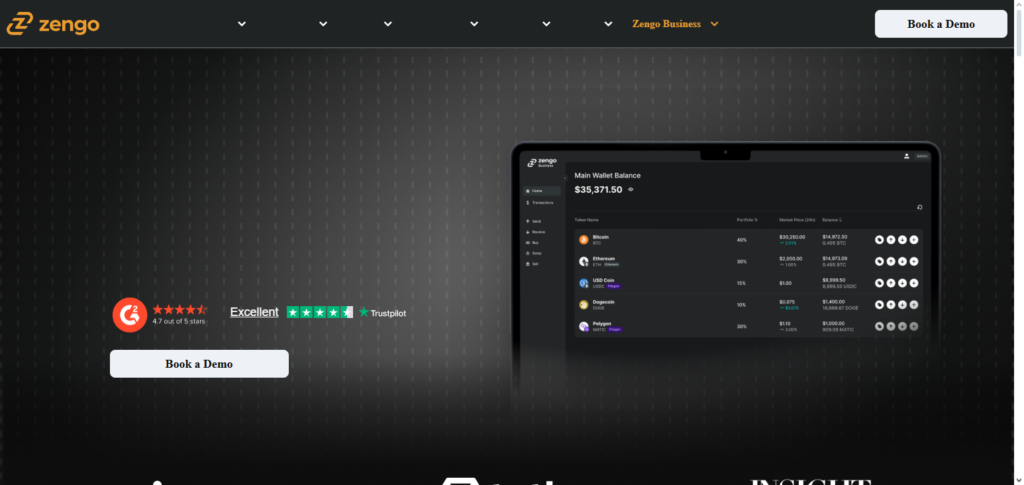
Zengo Business offers role-based access, transaction approval, audit logging, workflow automation, and compliance Recovery and risk management are integrated. Zengo Business is user-friendly, and offers institutional-grade security and governance, which earns it the distinction of the Best Crypto Wallets with Compliance Automation Tools.
Zengo Business Features, Pros & Cons
Features
- Design of MPC wallets without keys
- Access and approvals based on roles
- Automation of recovery and compliance
- Activity logs and audit trails
- Dashboards for enterprises
Pros
- Removal of risks associated with private keys
- Onboarding is easy for new teams
- Snapshots of compliance are robust
- Business functions can add on easily
- Supports mobile use
Cons
- Custodians may have more features
- Institutional adoption is still lacking
- Limited support for DeFi and staking
- Limited options for insurance
- Custom setups for advanced governance are needed
9. Gemini Custody
Gemini is a regulated digital asset custody platform that has built a solid reputation for the compliance and security of its assets. Their key strengths include regulatory clarity and operational controls upheld through SOC certification.
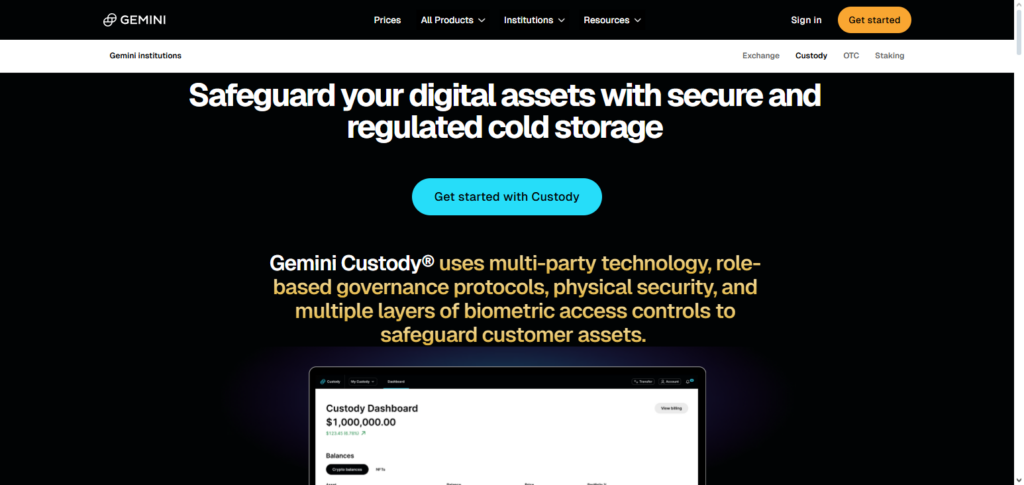
This makes Gemini ideal for businesses that need regulatory assurance, along with the protection of their assets. Key features include compliance reporting, transaction monitoring, governance approvals, and insured cold-asset custody, along with segregated assets.
Gemini remains one of the Best Crypto Wallets with Compliance Automation Tools thanks to their technology and Operational Compliance, making them a solid choice for institutional clients and Digital Enterprises.
Gemini Custody Features, Pros & Cons
Features
- Custody that is SOC-certified and regulated
- Holders of wallets with cold storage and hot control
- Asset insurance
- Automation of compliance and reporting
- Workflows of governance and approvals
Pros
- Brand trust with regulation
- Insurance and Security
- Integrated compliance is automated
- Seamless onboarding for institutions
- Straightforward Reporting
Cons
- Deficient features in DeFi and cross-chain
- Policy customization is limited
- Fees tend to be considerable at scale
- Less adaptable for complex workflows
- Support is more focused on not-so-alt assets
10. Kraken Custody
Kraken Custody has professional custodial services that blend Kraken’s expertise in security and compliance. Kraken’s strengths are operational security, regulatory compliance, and institutional transparency.
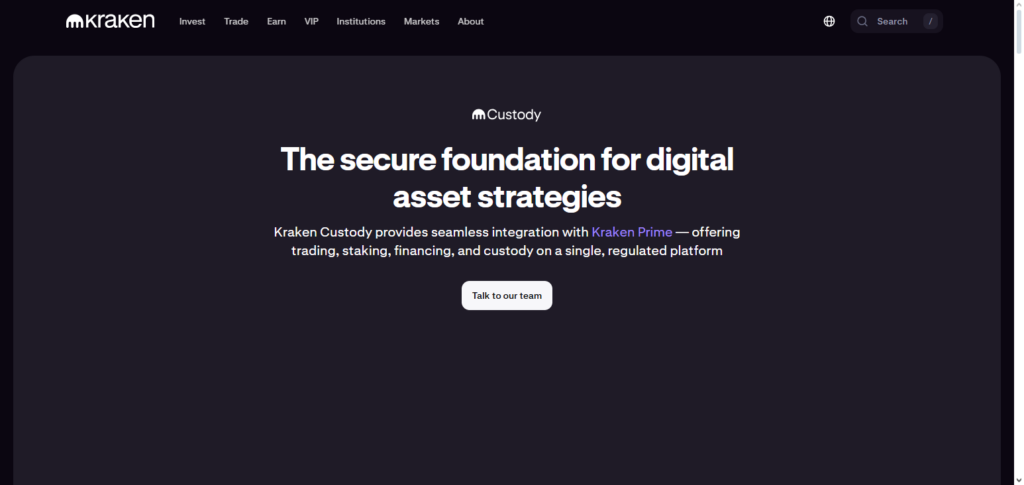
Kraken Custody suits institutions that desire separate cold storage with strengthened governance. Some features include policy-driven approvals, compliance reporting, asset segregation, security audits, and institutional control.
Kraken Custody is among the Best Crypto Wallets with Compliance Automation Tools and offers a unique balanced solution that combines trust, regulatory compliance, and the safe management of assets for the long term.
Kraken Custody Features, Pros & Cons
Features
- Qualified institutional custody
- Policy-based approvals and compliance
- Cold storage with segregation
- Security audits and logs
- Reporting and risk controls
Pros
- Solid compliance
- Simple custody transparency and services
- Reporting is comprehensive
- Reasonable (to moderate) price
Cons
- Onboarding is very strict
- No emphasis on DeFi accessibility
- Governance customization is limited
- Less integrations compared to more premium competitors
- Less support tools for enterprise
Conclusion
In order to help institutions securely handle digital assets while adhering to changing regulatory standards, the finest cryptocurrency wallets with compliance automation solutions are essential.
The seamless integration of automated policy enforcement, AML monitoring, audit trails, and governance procedures into custody infrastructure is exemplified by platforms like as Fireblocks, BitGo, Coinbase Custody, and Anchorage Digital.
These solutions promote scalable expansion in international markets, lower operational risk, and increase transparency. For organizations looking for security, effectiveness, and long-term trust in digital asset management, selecting a cryptocurrency wallet with integrated compliance automation is now crucial as regulatory scrutiny grows.
FAQ
Compliance automation tools are features integrated into crypto wallets that enforce regulatory requirements automatically, such as AML/KYC screening, transaction monitoring, audit trails, and policy-based approvals. These tools help institutions maintain compliance without manual intervention, reducing risk and operational overhead.
Institutions managing large volumes of digital assets face regulatory scrutiny. Wallets with compliance automation ensure transactions meet legal standards, prevent fraud, and provide audit-ready reporting for regulators, making them essential for secure and compliant operations.
Some of the top wallets include Fireblocks, BitGo, Ledger Enterprise, Coinbase Custody, Anchorage Digital, Copper ClearLoop, Qredo, Zengo Business, Gemini Custody, and Kraken Custody. Each combines secure custody with automated compliance workflows, governance controls, and audit features.
Key features include multi-signature or MPC security, cold and hot storage options, automated transaction monitoring, AML/KYC compliance, policy-based approvals, audit trails, insurance coverage, and integration with regulatory reporting systems.
Yes. Many wallets, such as Fireblocks and Qredo, provide secure connectivity to DeFi protocols, trading platforms, and cross-chain operations, all while maintaining compliance and governance controls.