

In this article, I will discuss the Flash Stake vs Time-Locked Staking so you can make informed decisions towards your crypto investments.
Each method has its distinct advantages: with Flash Stake, you earn rewards immediately, and with Time-Locked Staking, the returns are predictable and stable over time. We will study the primary differences, their advantages and disadvantages, and who should adopt each strategy.
Overview
Staking is gaining traction as a simpler way of making money in the cryptocurrency realm. All staking models are not, however, created equally. The Flash Stake and Time Locked Staking approaches are perhaps the most talked about today.
Both of them seek to compensate participants for the commitment of their crypto assets, but they differ in reward allocation, user governance, and the overall convenience of participation. Knowing these differences is essential in optimizing the use of your digital assets.
Flash Stake vs Time-Locked Staking
What is Flash Staking?
Flash staking is a new mechanism in DeFi that enables users to claim their rewards instantly, unlike traditional staking that has a fixed waiting period. Users mint time-bound synthetic assets representing their stake which can be exchanged for immediate rewards.
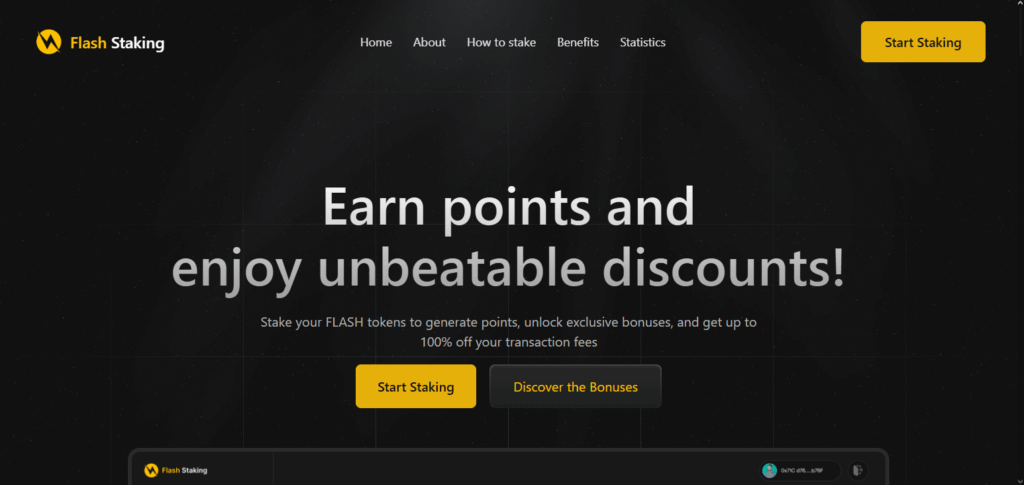
Unlike traditional staking which rewards users gradually, flash staking rewards users upfront and helps in faster reinvestment. Users looking for instant earnings and flexible returns in DeFi platforms find this mechanism useful.
What is Time-Locked Staking?
Time-Locked Staking, or fixed-term staking, is the oldest form of staking. It involves locking your crypto assets for a set period—anything from 7 days to 30 days, 1-year durations—and receiving your predefined rewards after the staking period ends.
This approach can be seen in Ethereum staking on DeFi platforms, or with crypto stored on exchanges like Binance and Coinbase. Your tokens become inaccessible for withdrawal during the lock period. Rewards are calculated and distributed based on the terms set by the platform in intervals of their choosing—daily, weekly, or monthly.
Key Differences Between Flash Stake and Time-Locked Staking
| Criteria | Flash Stake | Time-Locked Staking |
|---|---|---|
| Reward Timing | Rewards are given instantly at the beginning of the staking period. | Rewards are distributed gradually or at the end of the term. |
| Liquidity & Flexibility | Users cannot withdraw staked tokens early, but upfront rewards can be used or reinvested immediately. | Tokens are fully locked for the duration; rewards are inaccessible until released. |
| Risk Profile | Higher risk due to smart contracts and synthetic asset mechanisms. | Lower risk; generally simpler and safer, especially on centralized or established platforms. |
| Use Cases & Strategies | Best for users needing immediate funds, dynamic DeFi strategies, or quick reinvestment. | Ideal for long-term investors comfortable with holding through volatility. |
| Earning Potential | Fixed reward upfront; potentially lower than long-term compounded gains. | Higher earning potential if rewards are restaked and held over time. |
| Complexity | More complex to understand and use; involves DeFi protocols and tokenized time assets. | Simple and accessible; widely supported on most exchanges and wallets. |
Which method gives better returns – flash staking or time-locked staking?
Which method provides better returns—Flash Stake or Time-Locked Staking—depends on your investment strategy. Generally, Time-Locked Staking provides stronger returns over a long period of time due to the compounding potential of rewards. However, it completely locks the principal and rewards until a predetermined date.
On the other hand, Flash Stake offers immediate fixed rewards upfront. These rewards may be reinvested immediately which provides a quicker pace of reward generation, but usually at a lower total return. Flash Stake may appeal more to those who prioritize liquidity and fast access to capital. Time-Locked Staking is usually better for long term investors seeking maximum yield.
Pros and Cons
Flash Stake
| Pros | Cons |
|---|---|
| Instant reward payout | Cannot access the staked principal early |
| Enables fast reinvestment and capital efficiency | More complex—requires understanding DeFi and smart contracts |
| Ideal for dynamic strategies like flash loans or yield farming | May involve higher smart contract risks |
| Predictable, fixed reward upfront | Rewards may be lower than long-term compounding |
| Supports short-term liquidity needs | Limited platform support compared to traditional staking |
Time-Locked Staking
| Pros | Cons |
|---|---|
| Simple and beginner-friendly | Funds are fully locked for the entire period |
| Widely supported on exchanges and wallets | Cannot reinvest rewards until they are received |
| Lower risk, especially on centralized platforms | Less flexible—rewards and capital are inaccessible during lock period |
| Potential for compounding over time | Market volatility may affect value during the lock |
| Encourages long-term holding and network stability | No instant access to staking rewards |
Conclusion
Each of the types of staking has their distinct advantages in the crypto ecosystem. Flash Stake is best for those who value liquidity since it comes with instant reward access. In contrast, Time-Locked Staking caters to users focused on long-term value accumulation and those uncomfortable with risk.
Pick between the two depending on your investment goals, risk appetite, and strategic plan. Knowing how each of the models work will help you whether you are looking for quick returns or passive income over time.