


I’ll talk about how cryptocurrency empowers people in sanctioned economies in this post. Where traditional banking is limited, cryptocurrencies offer financial access, facilitating international market participation, wealth preservation, and cross-border transfers.
Crypto gives people economic freedom and resilience, enabling them to overcome financial isolation brought on by global sanctions and local currency volatility, from assisting freelancers to facilitating humanitarian aid.
Understanding Sanctions Economies
Countries that are subject to trade embargoes or international restrictions, frequently as a result of political unrest, human rights abuses, or security concerns, are known as sanctioned economies. Economic isolation results from these sanctions, which restrict access to international trade, foreign investment, and worldwide banking.
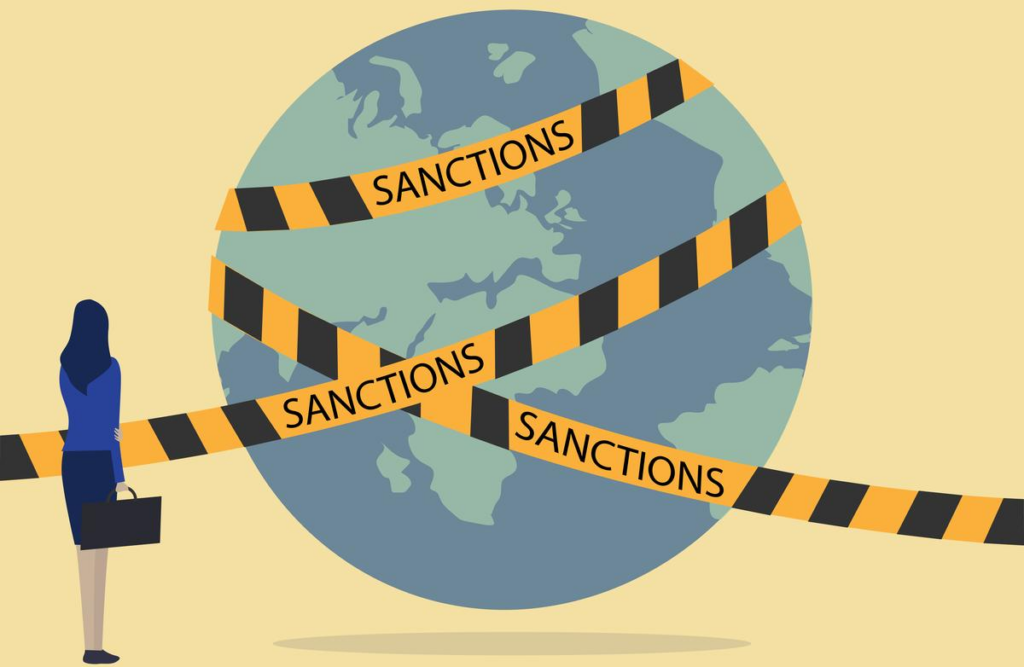
Access to foreign currency, financial services, and necessities is restricted for citizens, which frequently results in inflation, joblessness, and a decline in purchasing power. Imports, exports, and international transactions are difficult for businesses. People become financially vulnerable when traditional financial systems fail.
Despite the logistical and legal obstacles imposed by sanctions, alternative alternatives such as cryptocurrencies arise in this scenario, providing peer-to-peer transactions, cross-border payments, and economic engagement.
How Crypto Empowers People in Sanctioned Economies

Step 1: Financial Services
- Traditional banks don’t offer services to the customers of sanctioned countries.
- Customers of sanctioned countries can use crypto to set up digital wallets in place of banks.
Step 2: Payments Without an Intermediary
- Customers of sanctioned countries can process payments to and from other customers without an intermediary.
- Payments within a country are subject to the sanctions and restrictions, but people can get around those.
Step 3: Payments Across Borders
- Payment for services like education is possible.
- Crypto allows payments to be made to workers from any country, regardless of borders.
Step 4: Storing Wealth in a Stable Asset
- Crypto is more stable than the local currency in countries that are experiencing rapid deflation.
- With hyperinflation, stablecoins provide people with a means to preserve purchasing power.
Step 5: Participation in Global Market
- Crypto provides people with the means to participate in international trade via the digital economy.
- Crypto provides people with access to digital goods, licenses, and other consumables that governments have restricted them from purchasing.
Step 6: Aid to Humanitarian Initiatives
- Humanitarian organizations can use crypto to send money to people in sanctioned countries without restrictions.
- Faster and safer processing of direct donations to those in need.
Step 7: Supporting Economic Independence
- Increased financial freedom with decreased reliance on government-controlled systems.
- Enhanced privacy and control over funds with the ability to resist censorship.
Step 8: Encouraging New Ideas
- Blockchain solutions can be integrated with local startups and businesses.
- Economic opportunities are available such as crypto freelance jobs, decentralized lending, and remittance services.
Benefits of Using Crypto Empowers People in Sanctioned Economies
Financial Inclusion
- Opening new frontiers to previously unbanked people.
- People can access their money, and send and receive money.
Cross-Border Transactions
- Send and receive money internationally, and send and receive remittance.
- Sanction or local financial laws do not apply.
Protection Against Inflation
- Loss of value of money in one’s own country is countered by crypto and stablecoins.
- Crypto acts as a hedge against hyperinflation.
Privacy and Censorship Resistance
- Transaction peer-to-peer means less government or intermediary involvement.
- Control your financial activities and remain private.
Reach of Global Markets
- Purchase anything internationally, including services and subscriptions.
- Access to global economy, if economic sanctions previously prevented you.
Local Businesses are Strengthened
- Crypto payments can be received by entrepreneurs and freelancers, and can be sent to any country.
- Economic self-sufficiency is directly proportional to ingenuity.
Aid is Faster
- Humanitarian organizations can send money to where it is needed with little delay.
- Aid money is no longer delayed by traditional banks or sanctions.
Crypto as a Financial Lifeline
Traditional financial channels are frequently unavailable, unstable, or severely restricted in sanctioned economies. By allowing people to transmit, receive, and hold money without depending on banks or middlemen, cryptocurrencies offer a lifeline. Peer-to-peer transactions remove financial barriers by enabling people to pay directly for necessities, services, and international trade.
Cryptocurrencies and stablecoins protect wealth and purchasing power for citizens who are subject to currency devaluation or hyperinflation. Crypto helps families that rely on money from overseas by facilitating cross-border transfers. Essentially, it connects people to the global economy, guarantees economic involvement, and empowers financial independence in spite of sanctions.
Use Cases in Sanctioned Economies
Cross-border Remittances
- Family members or temporary work migrants earn some money and send it back home.
- Crypto works as a way to send money overseas as it does not consider the blocked accounts of banks and gives a fast service with cheap commission fees.
Transactions and Services over the Internet
- They can obtain programs, membership subscriptions, and necessary products over the internet.
- Crypto gives the opportunity to create and to obtain products that are not available in the region because of the obstruction of trading.
Inflation Protection
- They can keep their wealth by using crypto, or a type of crypto called stable coins.
- In some countries, due to the broken and inconsistent financial systems, they can keep their wealth by using crypto, or a type of crypto called stable coins.
Donation of Humanitarian Aid
- Communities can use the money to give aid to the communities that they need it.
- By using crypto, they can give the aid without considering the obstacles that are placed by the banks and the government due to the sanctions.
Support of Freelancers and Entrepreneurs
- Freelancers can receive money for the work that they do from other countries in crypto.
- It gives the opportunity for small businesses to grow and to create jobs for other people.
Disabled Global Financing
- They gain the opportunity to use the decentralized financing system (DeFi) for spending, getting loans, or saving money.
- It creates a the opportunity to use the system for earning that they do not have because of the sanctions.
Protection of Privacy and Security
- They retain their financial sovereignty.
- Minimizes the risk of government censorship or surveillance of financial transactions.
Risks and Challenges
Regulatory Crackdown
- Governments can choose to ban or place heavy restrictions on the ability to use crypto.
- Users can face fines, seized goods, and imprisonment.
Volatility
- The value of Bitcoin and Ethereum can change rapidly (and without warning).
- Losing money due to a sudden change in value is a very real possibility.
Limited Infrastructure
- Adopting cryptocurrency can also be difficult due to the lack of internet, exchange locations, or services in the local area.
- People may find it difficult to convert their cryptocurrency to the local currency.
Security Threats
- The threat of theft is very real.
- To prevent (and protect) yourself from walking away from crypto without any money, the privacy key should be kept in a safe location.
Fraud and Scams
- Markets without rules on how to use them have the potential to be the target of those who are looking to promote fraudulent schemes or projects.
- Some of the most common illegal activities are fake cryptocurrency exchanges, Ponzi schemes, and fraudulent investment platforms.
Knowledge and Accessibility Barriers
- Some individuals may not possess any kind of knowledge cryptocurrency or have any kind of knowledge in the area of technology.
- Money can be lost or abused if the person is not very skilled in the area of management.
Legal and Ethical Dilemmas
- The use of cryptocurrency to go around any of the mentioned borders may be against the law in the applicable country or set of countries.
- There are ethical implications regarding sanction evasion and collateral damage that may arise.
Future Outlook

As blockchain technology advances and broadens access to international finance, the future of cryptocurrency in sanctioned economies is bright. Growing use of decentralized finance (DeFi) platforms and stablecoins may offer quicker, safer, and more dependable substitutes for conventional banking.
Advances in cross-border payment systems and privacy-focused cryptocurrencies could provide people even more control to protect their wealth, access global marketplaces, and effectively accept humanitarian help.
Governments may, however, react by enacting more stringent laws, which would lead to a dynamic conflict between legal compliance and financial independence. All things considered, cryptocurrency is positioned to become increasingly important in improving citizens’ economic inclusion and resilience in economies with restrictions.
Is using crypto in sanctioned economies legal?
The intricacies involved with the legality of cryptocurrency in sanctioned economies depend on a combination of local and international regulations.
Local Laws– There is a wide variety of governmental approaches towards the regulation of cryptocurrency, with some banning it entirely. For example, personal usage of cryptocurrency is illegal in North Korea, while Venezuela facilitates cryptocurrency use in order to bypass restrictions on the banking system.
International Sanctions– The use of cryptocurrency to bypass international sanctions leads to a multitude of legal issues. Depending on circumstances, the act of crossing borders digitally may be illegal in terms of UN, US, or EU sanctions.
Gray Areas– There are a multitude of remittances or purchases made online with cryptocurrency on a loose, informal basis. Even though this practice is often tolerated, it is still legally ambiguous.
Pros & Cons
| Pros | Cons |
|---|---|
| Financial Inclusion – Provides access to banking-like services for unbanked populations. | Regulatory Risks – Governments may ban or restrict crypto use, risking fines or legal issues. |
| Cross-Border Payments – Enables remittances and international transactions despite sanctions. | Volatility – Cryptocurrency prices fluctuate, potentially reducing savings and purchasing power. |
| Wealth Preservation – Stablecoins and major cryptos help hedge against local currency inflation. | Limited Infrastructure – Poor internet access, few exchanges, or lack of local crypto services can hinder usage. |
| Privacy & Censorship Resistance – Peer-to-peer transactions protect financial autonomy. | Security Threats – Risk of hacks, phishing, and loss of private keys. |
| Global Market Access – Allows purchases of goods and services unavailable locally. | Fraud & Scams – Unregulated platforms may exploit users through fake exchanges or Ponzi schemes. |
| Empowers Local Businesses – Freelancers and entrepreneurs can receive global payments in crypto. | Knowledge Barrier – Lack of crypto literacy may lead to mistakes or misuse. |
| Supports Humanitarian Aid – NGOs can deliver funds efficiently and directly. | Legal/Ethical Concerns – Using crypto to bypass sanctions may carry international legal risks. |
Conclusion
For people living under economic sanctions, cryptocurrencies have grown to be an effective instrument for wealth preservation, cross-border remittances, and financial access.
Crypto allows residents to receive remittances, engage in international trade, and protect their investments from inflation by avoiding the limitations of traditional banking.
The technology has the potential to improve financial independence, economic resilience, and individual sovereignty in sanctioned economies, despite concerns including volatility and regulatory difficulties.
FAQ
What does it mean for an economy to be sanctioned?
A sanctioned economy faces international restrictions on trade, banking, and investment, often due to political or security reasons. Citizens may struggle with limited access to financial services and global markets.
How can crypto help people in sanctioned countries?
Cryptocurrencies allow peer-to-peer transactions, cross-border payments, and wealth preservation without relying on banks. They enable access to international marketplaces, freelance income, and humanitarian aid.
Is using crypto in sanctioned economies legal?
It depends on the country and international regulations. Some governments ban or heavily regulate crypto use, while others have no clear rules. Users must understand local and international laws to avoid legal risks.
How does crypto protect against inflation?
Stablecoins and major cryptocurrencies like Bitcoin can preserve value when local currencies rapidly lose purchasing power, helping citizens maintain savings and economic stability.
What are the main risks of using crypto in these regions?
Key risks include regulatory crackdowns, volatility, scams, hacking, limited local infrastructure, and a lack of technical knowledge among users.