


I’ll talk about how tokenized assets are transforming contemporary finance in this piece. Tokenization allows for fractional ownership, quicker transactions, and worldwide access by converting physical and financial assets into digital tokens on blockchain.
Tokenized assets are transforming conventional financial systems and creating new opportunities for institutions and individual investors globally by boosting liquidity, transparency, and investment prospects.
What Are Tokenized Assets?
On a blockchain, tokenized assets are digital copies of tangible or monetary items. They transform ownership of commodities, equities, bonds, real estate, and art into safe, exchangeable digital tokens.
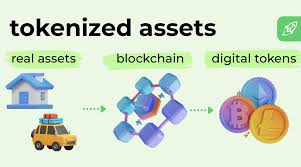
Fractional ownership and simpler transfer are made possible by each token’s representation of either all or a portion of the underlying asset. Blockchain minimizes dependency on middlemen by guaranteeing transparency, immutability, and verifiable ownership.
By enabling assets that were previously illiquid, such as expensive real estate or rare collectibles, to be bought, sold, or traded globally around-the-clock, tokenization also improves liquidity and opens up investment options to a wider audience.
How Tokenized Assets Are Revolutionizing Modern Finance
Greater Fluidity
Tokenized assets can be bought and sold in fractions. This creates a more liquid market as inequitable assets such as real estate, art, or private equity can now be invested in.
Worldwide Access
Restricted by geography or currency, previously inequitable asset markets have now become tokenized.
Shared Ownership
Low-cost ownership of fractional assets is made possible. This lowers barriers of ownership and allows for greater investment diversity.
Ownership and Transaction Records
Secure records of ownership and transactions recorded on a blockchain system reduce fraudulent ownership disputes. This also increases transparency.
Cost and Time Efficiency
Transaction fees and settlement time are reduced by the removal of the role of middleman.
Smart Contracts and Decentralized Finance
Tokenized financial markets provide access to decentralized finance (DeFi) assets through the provision of smart contracts.
Tokenization of New Markets
Traditionally unmarketed assets such as collectibles, intellectual properties and financial worth NFTs can now be tokenized.
Key Advantages of Tokenized Assets
Increased Liquidity: Tokenized assets are easy to trade on platforms like the stock exchange, making them easier to buy or sell.
Worldwide Access: Breaking geographical boundaries, all investors can trade assets, regardless of location.
Tokenized Fractional Ownership: Value of an asset is broken down into smaller value tokens, making ownership easier.
Increased Security: Blockchain records lessen ownership fraud.
Reduced Transaction Cost: There are no intermediaries to speed up the buying/selling process of the assets.
Portfolio Diversification: Alternative assets such as art, real estate, or collectibles can be added.
Smart Contract and DeFi Sense: Automated financial processes can include lending, and other decentralized finance applications on the Tokenized assets.
Use Cases in Modern Finance
Tokenized Real Estate
Due to investment prices decreasing in the tokenized real estate market, investors can now participate in the global real estate market.
Digital Securities & Stocks
When equities, bonds, and additional financial derivatives are tokenized, they are able to be traded instantaneously, at lower costs, and 24/7.
Commodities and Other Alternative Assets Classes
Investments in gold, oil, rare collectibles, even intellectual property are able to be tokenized and traded instantly.
NFTs as Financial Instruments
NFTs can now be considered as a form of digital investment as they can provide ownership of an asset, a license, or the rights to royalties.
Integration with DeFi
Within decentralized finance, tokenized assets can be used as collateral to lend, borrow, stake, or provide liquidity.
Challenges and Risks
Regulatory Uncertainty
Investors and platforms face legal compliance issues because laws surrounding tokenized assets are different and ever-changing in each country.
Market Volatility
Investment risk is heightened due to the severe fluctuations in the market value of recently created tokenized assets, and those classified in the niche token category.
Security Risks
Fraud and hacks can happen on platforms, and wallets. While secure, the blockchain can face technical issues.
Liquidity Limitations
The tokenization process can yield tokenized assets that are simply unable to be sold because there is no one interested in buying them.
Technology Adoption Barriers
The process of trading and tokenized assets can be very complex for those who are inexperienced with blockchain technology.
Legal and Ownership Issues
Real world tokenized ownership can create ambiguity with legal claims, and ownership disputes are very likely to occur.
Future of Tokenized Assets

Tokenized assets have the potential to revolutionize international finance by increasing the efficiency, transparency, and inclusivity of investing. We may anticipate a broader use of tokenization in commodities, stocks, real estate, and even non-traditional assets like intellectual property and art as blockchain technology develops.
Automated lending, borrowing, and trading will be made possible by integration with decentralized finance (DeFi), and fractional ownership will keep lowering investment barriers.
It is anticipated that regulatory frameworks would change, giving investors greater protection and certainty. All things considered, tokenized assets promise a more liquid and democratic financial environment that smoothly connects traditional and digital finance.
Pros & Cons
| Pros | Cons |
|---|---|
| Enhanced Liquidity – Buy, sell, and trade assets 24/7, even illiquid ones | Regulatory Uncertainty – Laws vary by country and are still evolving |
| Global Accessibility – Investors worldwide can participate | Market Volatility – Token prices can fluctuate significantly |
| Fractional Ownership – Invest in high-value assets with smaller capital | Security Risks – Platforms and wallets can be vulnerable to hacks or fraud |
| Transparency & Security – Blockchain ensures immutable records | Liquidity Limitations – Not all tokens have active markets |
| Faster & Cheaper Transactions – Eliminates intermediaries | Technology Barriers – Investors may struggle with blockchain adoption |
| Portfolio Diversification – Access unconventional assets like art, collectibles | Legal & Ownership Issues – Disputes may arise over tokenized asset rights |
| DeFi Integration – Use tokens for lending, borrowing, or staking | Dependence on Platforms – Trust in digital platforms is essential |
Conclusion
In conclusion, tokenized assets are radically changing contemporary finance by improving the efficiency, accessibility, and transparency of investing. They connect traditional and digital financial institutions and offer fractional ownership, access to global markets, and quicker, more affordable transactions.
Tokenized assets are expected to become a common instrument as technology and legislation advance, enabling individual and institutional investors globally.
FAQ
What are tokenized assets?
Tokenized assets are digital representations of real-world or financial assets on a blockchain, allowing secure, tradable ownership.
How do tokenized assets differ from traditional assets?
Unlike traditional assets, tokenized assets can be fractionally owned, traded 24/7 globally, and verified transparently via blockchain.
What are the benefits of tokenized assets?
They provide enhanced liquidity, fractional ownership, global access, lower transaction costs, and integration with decentralized finance (DeFi).
What types of assets can be tokenized?
Real estate, stocks, bonds, commodities, collectibles, art, and even intellectual property can be tokenized.
Are there risks associated with tokenized assets?
Yes—risks include regulatory uncertainty, market volatility, security vulnerabilities, and liquidity limitations for certain tokens.