

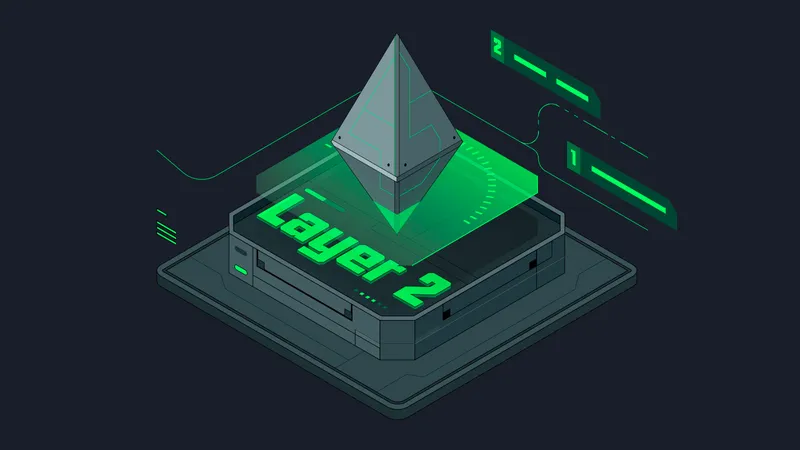
In this piece, I will examine Leading Layer-2 Networks and The Revolution of Ethereum Scalability.
Transformative solutions, including Arbitrum One, Optimism, zkSync Era, Starknet, Linea, Polygon zkEVM, and Mantle Network, improving Ethereum gas costs, transaction speeds, and scalability, and provide a quicker, more effective, and accessible blockchain experience.
What is Layer-2 Networks?
Layer-2 networks are built on top of a blockchain’s main network (Layer-1) to improve Layer-1 scalability, speed, and efficiency. Layer-2 networks conduct transactions off the main chain while still upholding the same security and decentralization.
Less congestion on Layer-1 translates to lower costs and higher transaction throughput. Examples are Optimistic Rollups, zk-Rollups, and state channels.
These technologies provide faster payments, lower transaction costs, and better overall experience on decentralized applications (dApps) while the underlying blockchain remains unchanged.
Why Use Layer-2 Networks Revolutionizing Ethereum Scalability
Scalability and Speed – Layer-2 solutions perform off-chain Ethereum transactions, unrivaled times, and pulling Ethereum network congestion.
Lower Transaction Fees – Steps most operations off-chain, users save significantly on transactions compared with Layer-1 and subsequent on-chain transactions.
Improved User Experience – Gaps between transactions on DeFi, NFTs, and gaming dApps are closed cheaper gas most operations off-chain.
Optimized Performance – Data storage and retrieval on Ethereum mainnet are improved with ethnic Layer-2 Optimistic Rollups and zk-Rollups.
Security Remains Intact – Off-chain operations are doubly guaranteed Layer-2 secured Ethereum’s trust and reliability.
Promotes Mainstream Acceptance – Layer-2 Ethereum advancements are applicable in real world- finance, gaming, social, and utility applications.
Key Point & Top Layer-2 Networks Revolutionizing Ethereum Scalability List
| Layer-2 Network | Key Features |
|---|---|
| Arbitrum One | High throughput, EVM compatibility, active ecosystem |
| Optimism | Simple architecture, EVM equivalent, strong community governance |
| zkSync Era | Zero-knowledge proofs, EVM compatibility, high security |
| Starknet | Built with Cairo language, strong scalability, robust cryptography |
| Linea | Consistent developer tools, seamless Ethereum integration |
| Polygon zkEVM | Full EVM equivalence, interoperability with Polygon ecosystem |
| Mantle Network | Hybrid rollup design, decentralized data availability, high efficiency |
| Scroll | Scroll uses zero-knowledge proofs to bundle multiple transactions off-chain into a single proof, reducing gas fees while maintaining Ethereum’s security. |
| Boba Network | Boba executes transactions off-chain while allowing smart contracts to perform additional off-chain computations, reducing on-chain congestion and gas costs. |
| Immutable X | Immutable X eliminates gas fees for minting, trading, and transferring NFTs, making it ideal for gaming and marketplace applications. |
1. Arbitrum One
Optimism is one of the top Layer-2 networks revolutionizing Ethereum scalability by combining simplicity, security, and efficiency through its Optimistic Rollup technology. It enhances Ethereum’s capacity by processing transactions off-chain while ensuring trust through fraud-proof verification.
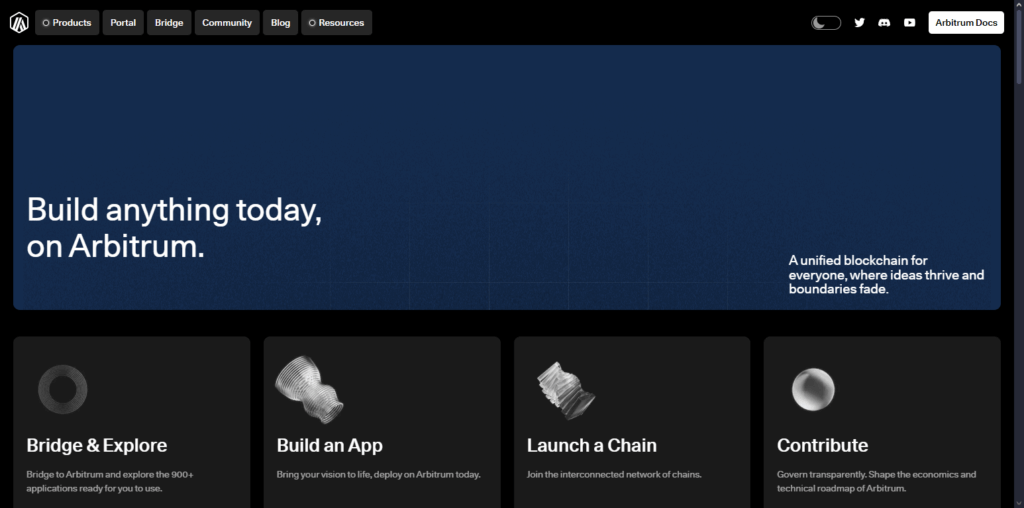
What makes Optimism unique is its “Superchain” vision, enabling seamless communication between multiple Layer-2 networks. This innovative architecture not only boosts scalability but also fosters a unified ecosystem of interoperable chains.
Its architecture’s full EVM equivalence ensures developers can easily deploy existing Ethereum smart contracts. Sustained growth for Ethereum’s future is being shaped through Optimism’s lower gas fees, fast confirmations, and strong public goods funding.
Arbitrum One Features
- Optimistic Rollup Technology: Handles transactions off-chain while maintaining Ethereum-grade security.
- High EVM Compatibility: Allows Ethereum smart contracts to transfer to the network without any modifications.
- Low Fees & Fast Transactions: Allows gas costs to be minimized and transactions to be confirmed almost instantly.
2. Optimism
Optimism stands out among Layer-2 networks and is pioneering new ways to improve Ethereum’s scalability. Optimism uses Optimistic Rollup technology and focuses on security, efficiency, and simplicity.
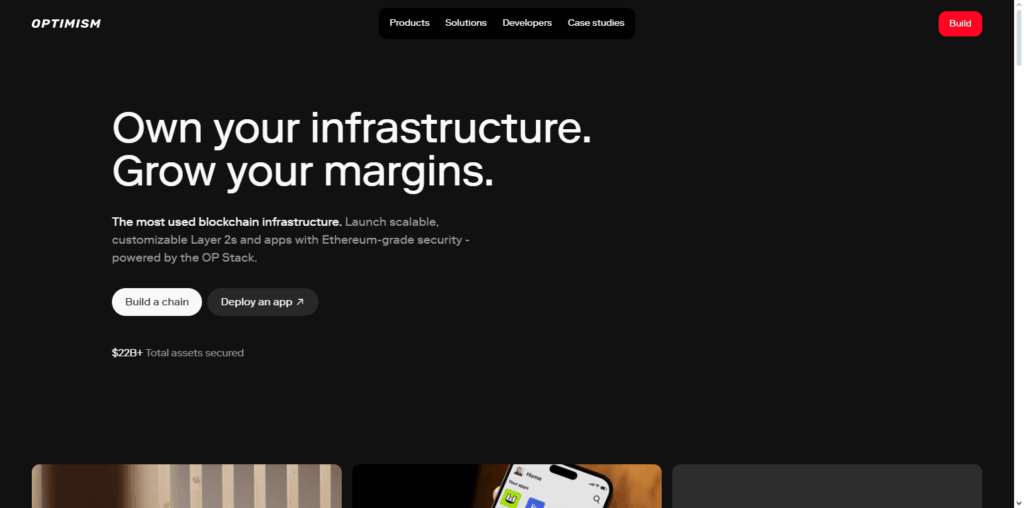
Optimism enhances Ethereum’s capabilities by processing off-chain transactions and employing fraud proof for on-chain transactions. Optimism’s “Superchain” vision is an exciting new innovation that allows Layer-2 Networks to communicate and work together. This increases the value of Optimism’s architecture.
It also creates an ecosystem of multiple chains that work together. Optimism’s flexibility and full EVM equivalence means that developers can shift their Ethereum smart contracts to Ethereum Layer-2 with minimal work. With Optimism’s strong emphasis on public goods to sustain growth for Ethereum and Ethereum Layer-2, users can expect less expensive gas fees and faster transaction confirmations.
Optimism Features
- Superchain Vision: Focuses on linking many Layer-2s to form an interconnected network and ecosystem.
- Full EVM Equivalence: Ethereum dApps can be deployed directly without any modifications.
- Public Goods Funding: Ethereum’s sustainability is enhanced, thanks to community governance and funding. Optimism’s protocol allows Ethereum’s sustainability to be enhanced.
3. zkSync Era
zkSync Era is among the first of the new wave of Layer-2s making Ethereum scalable. Using the most cutting-edge zk-Rollup implementation of zk-SNARKs, zero knowledge proofs technology, zkSync Era attains the highest possible speeds on the Ethereum blockchain whilst also ensuring transaction security and validation.
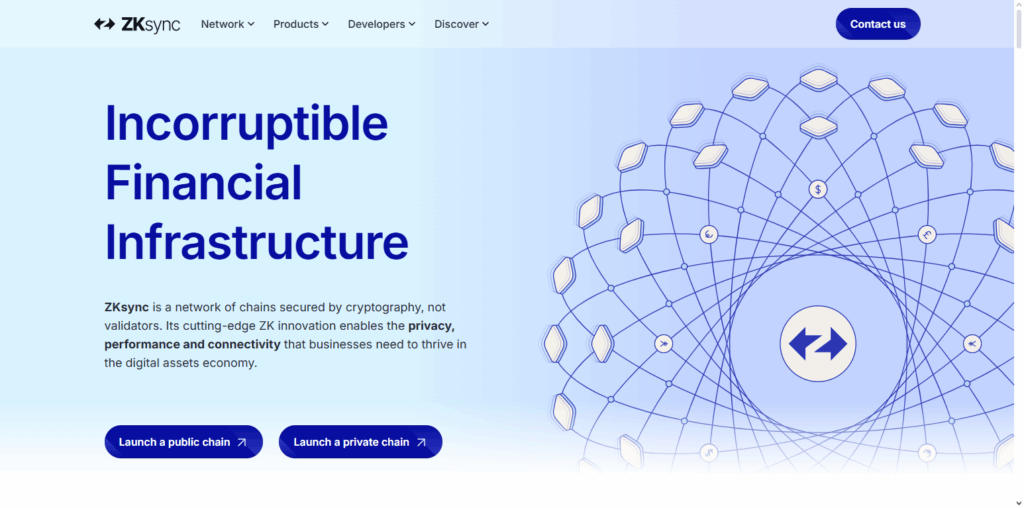
Unlike most zk-Rollup systems, zkSync Era offers Ethereum instant finality, low gas fees, and decentralization. Supporting the native Ethereum environment is also a first for zkSync. In addition, withdrawal and payment interoperability; instant, and privacy features; ensure a positive end-user experience.
Unlike most of its competitors, zkSync Era combines Ethereum instant finality with a sustainable architectural system; therefore, enhancing its blockchain experience. All these features will most likely bring Ethereum rapid mass adoption and zkSync Era is the most likely contender to make this a reality.
zkSync Era Features
- Zero-Knowledge Rollups: Combines privacy, speed, and security to validate transactions using cryptographic proofs.
- EVM Compatible: Ethereum contracts can be directly deployed.
- Low Latency & Gas Efficiency: Near-instant finality offers speed and gas efficiency.
4. Starknet
Starknet is one of the top Layer-2 networks improving the Ethereum scalability ecosystem, thanks to its cutting-edge STARK-based zk-Rollup technology, which delivers unparalleled security, scalability, and decentralization.
Starknet was built using the Cairo programming language, and this has allowed its developers to craft highly advanced decentralized applications alongside exceptional execution efficiency. Its competitive edge is the employment of STARK proofs—transparent, quantum-resistant cryptographic proofs of evidence that validate transactions in a matter of seconds.
With these innovations, Starknet provides Ethereum-level trust while processing thousands of transactions and charging negligible gas fees. With mathematical precision, flexible development, and unparalleled scalability, Starknet is an Ethereum performance enhancer for broader adoption.
Starknet Features
- STARK-Based Proofs: Employs quantum resistant and transparent cryptographic proofs.
- Cairo Programming Language: Foster complex calculations and scalable dApps.
- Massive Throughput: Decentralization is not compromised while serving thousands of transactions.
5. Linea
Linea is an advanced zk-Rollup Layer-2 network created by ConsenSys. Linea is redefining Ethereum scalability by processing high volumes of transactions at low fees while still taking advantage of Ethereum’s high security.
Linea’s developer Environment is fully EVM equivalence which means developers building on Linea do not have to rewrite their code to to migrate their existing Ethereum projects. Linea’s advanced proof of zero-knowledge technology allows the system to consolidate transaction information and gas fees.
Linea’s partnership with MetaMask and Infura is an added advantage to developers and users operating within the Ethereum ecosystem. Linea’s unrivaled combination of security, scalability and affordability accelerates the adoption of Ethereum.
Linea Features
- zk-Rollup Framework: Combines low-cost and high transaction speeds while using zero-knowledge proofs.
- EVM Equivalent Environment: Seamless developer experience with Ethereum-compatible tools.
- MetaMask & Infura Integration: Access simplified user and developer experience within the Consensys’ ecosystem.
6. Polygon zkEVM
Among the leading Layer-2 networks, Polygon zkEVM is changing how Ethereum manages its scalability challenges, offering zero-knowledge proof technology and full EVM equivalence.
Developers can now deploy their existing Ethereum Smart Contracts with faster transactions and much cheaper gas fees. One of zkEVM’s most unique features is the combination of zk-Rollup security and Polygon’s vast ecosystems, allowing for near seamless cross-chain interoperability.
Polygon zkEVM is performance optimized, offering cryptographically secure trustless proof of verification to Ethereum while offering zkEVM boosted performance. Greater Ethereum network scalability and Polygon zkEVM developer focus delivers efficient Ethereum network powered innovation to the DeFi, gaming and enterprise application sectors.
Polygon zkEVM Features
- Zero-Knowledge Proofs: Off-chain transaction verification with strong cryptographic proof.
- Complete EVM Equivalence: Ethereum dApps and developers migrating can frictionlessly do so.
- Polygon Ecosystem Integration: Join Polygon’s strong multi-chain ecosystem available for interoperability and scalability.
7. Mantle Network
Mantle Network is a revolutionary Layer-2 Solution for Ethereum scalability with its innovative modular architecture decoupling transaction execution, data availability, and consensus.
By being a Layer-2 Ethereum Optimistic Rollup with EigenDA’s decentrialized data availability Layer , it delivers superior speed, cost, and security. Its modular design offers more flexibility and efficiency when compared to other Layer-2s.
Mantle enhances EVM compatibility, aiding developers to effortlessly transition Ethereum dApps. DeFi, gaming and enterprise use cases are built on Mantle’s network for it’s no compromising approach to scalability and decentralization, solidifying Mantle Network as one of the top Ethereum solutions and one of the first as it moves towards mass adoption.
Mantle Network Features
- Modular Architecture: For optimal efficiency, assigned execution, consensus and data availability are separated.
- Optimistic Rollup + EigenDA: Rollup scalability and decentralized data availability are intertwined.
- Developer-Friendly Design: High performance and low-cost dApp deployment are within the ease of design.
8. Scroll
Because it uses zero-knowledge rollup (ZK-Rollup) technology to process transactions off-chain while preserving Ethereum’s security and decentralization, Scroll is one of the greatest Layer-2 networks transforming Ethereum scalability.

Scroll greatly lowers gas costs and boosts throughput by combining several transactions into a single proof, enabling quicker and more economical processes. It guarantees easy adoption for dApps, DeFi platforms, and NFT applications without changing code thanks to its interoperability with current Ethereum smart contracts.
Scroll is a top option for developers and users looking to get around Ethereum’s congestion and fee issues because of its special blend of high scalability, inexpensive execution, and safe settlement.
Scroll Features
- ZK-Rollup Technology: ZK-Rollup refers to the technology that Scroll employs to bundle transactions off the main chain and then prove them all at once to the chain while securing Ethereum’s security and lowering gas costs.
- High Throughput: The network is less congested and capable of executing numerous transactions within a second. This means that operations within dApps and DeFi systems operate at a faster rate which is a win.
- Seamless Ethereum Compatibility: Developers tend to love Scroll since it is able to support all smart contracts that were created within the Ethereum network, meaning that contracts do not need to be modified for every scale that the application encounters.
9. Boba Network
Because it combines Optimistic Rollup technology with hybrid computation capabilities, Boba Network is regarded as one of the greatest Layer-2 networks redefining Ethereum scalability. This allows for faster and less expensive transactions without sacrificing Ethereum’s security.
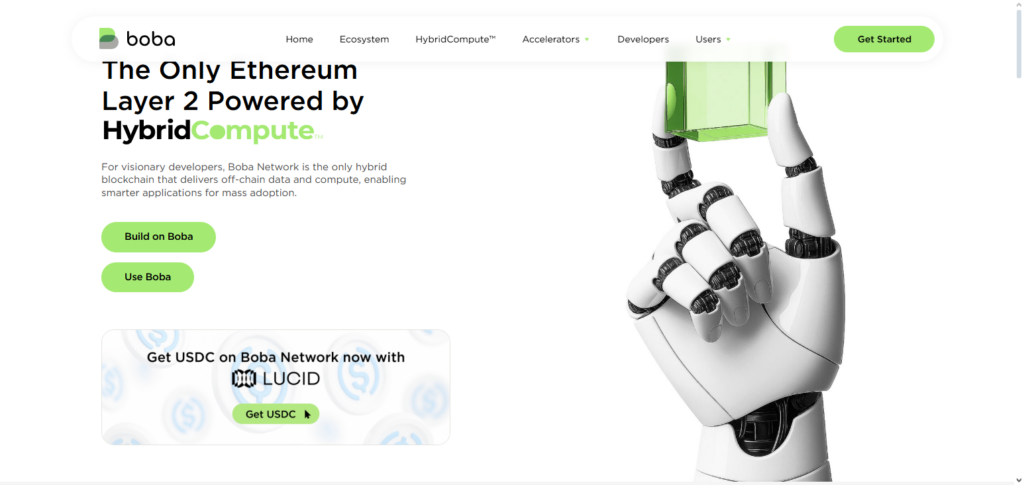
Because of its special architecture, smart contracts can carry out off-chain calculations, which lessens on-chain congestion and lowers user gas expenses. Additionally, Boba offers Ethereum-compatible dApps and smooth cross-chain transfers, giving consumers and developers a great deal of flexibility.
Boba Network solves Ethereum’s constraints while maintaining decentralization with scalable, effective, and affordable execution, making it a top option for projects looking to optimize performance and enhance user experience.
Boba Network Features
- Optimistic Rollup with Hybrid Compute: Boba is able to decrease gas fees and congestion on the main Ethereum chain by executing off-chain transactions, while also executing smart contracts on the chain.
- Cross-Chain Transfers: This feature adds value to other DeFi and NFT projects, as Boba now enables the movement of assets on Ethereum and other chains without the usual complexities.
- Ethereum Compatibility: Ethereum dApps are fully compatible with Boba, meaning developers can deploy and still enjoy scalability, along with decreased gas fees on transactions without changing the code.
10. Immutable X
Because Immutable X offers high-speed, gas-free transactions tailored for NFTs and gaming applications, it is one of the greatest Layer-2 networks transforming Ethereum scalability. Immutable X, which is based on a ZK-Rollup architecture, ensures security remains anchored to Ethereum’s mainnet despite processing massive amounts of transactions off-chain.
One of Ethereum’s main obstacles for consumers and developers is eliminated by its exclusive focus on zero gas expenses for minting, trading, and transferring NFTs. Immutable X offers a scalable, environmentally sustainable, and economical system that enables seamless interaction between creators, players, and marketplaces without sacrificing security or decentralization when combined with fast transaction finality and carbon-neutral operations.
Immutable X Features
- Gas-Free Transactions for NFTs: Immutable X is a Layer-2 Ethereum network created particularly for projects with NFTs in need of gaming and marketplaces, since it eliminates gas fees associated with minting, trading and transferring NFTs.
- ZK-Rollup Security: Utilizes zero knowledge proofs for keeping the data secure while doing the computationally heavy lifting off the Ethereum mainet, completing transactions off chain and while keeping final settlement and security on the Ethereum mainet.
- Carbon Neutral & Scalable: Offers transaction finality, instantaneously, while keeping the operation for the system environmentally responsible, finality, instantaneously, while keeping the operation for the system environmentally responsible for high throughput enabling deployers and users to scale without compromising security or sustainability.
Pros & Cons Layer-2 Networks Revolutionizing Ethereum Scalability
Pros
- Improved Scalability: Layer 2 solutions scale Ethereum’s network while processing transactions off-chain. This significantly makes congested Ethereum networks more manageable.
- Reduced Costs: Users experience a significant decrease in gas fees when using Layer 2 networks. This reduction makes services related to DeFi, NFTs, and gaming considerably cheaper.
- Speed: Most Layer 2 solutions provide instant transaction confirmations, making them far more efficient for routine transactions on the blockchain.
- Robust Security: Transactions on Layer 2 networks are secured by Ethereum. Fraud-proof and trustless transactions provide added peace of mind.
- Convenient for Developers: Layer 2 networks are designed for complete EVM compatibility, so developers have an easy time deploying Ethereum dApps.
- Less Energy Use: Sustainable blockchain innovation is supported by the lower energy usage of off-chain transactions compared to Layer 1.
Cons
- Integration Issues: Developers and users face significant challenges when integrating and managing these Layer 2 solutions.
- Liquidity Issues: The distribution of capital and assets across Layer 2 solutions creates poorly utilized liquidity.
- Bridge Hacks: The bridges that secure asset transfers between Layer 1 and Layer 2 are often poorly secured.
- Low Interoperability: The communication between different Layer 2 solutions tends to be complex and disorganized.
- Reliance on Ethereum: Layer 2 solutions depend on Ethereum for settlement, so any issues at Layer 1 will certainly spill over to Layer 2.
- Evolving Ecosystem: Numerous Layer-2 networks continue to evolve because early liquidity, infrastructure, and tooling development has been constrained.
Conclusion
Layer-2 networks are revolutionizing the Ethereum ecosystem by providing fast, cost effective, and efficient blockchain services. Arbitrum One, Optimism, zkSync Era, Starknet, Linea, Polygon zkEVM, and Mantle Network are each demonstrating different strategies to achieve Ethereum security and gain remarkable performance.
These networks improve accessibility for users and offer developers the opportunity to design advanced and powerful decentralized applications unfettered by elevated gas costs and sluggish transaction speeds.
With growing adoption of Layer-2 technology, these advanced networks will scale the Ethereum ecosystem. Evidence of Ethereum’s evolution will be the development of a fully functional, sustainable global Web3 environment.
FAQ
Layer-2 networks are secondary frameworks built on top of Ethereum’s main blockchain (Layer-1) that process transactions off-chain to improve speed, scalability, and cost efficiency while maintaining Ethereum’s security.
They help reduce congestion and gas fees on the Ethereum mainnet, allowing users to enjoy faster transactions and making decentralized applications (dApps) more accessible to a wider audience.
Leading Layer-2 solutions include Arbitrum One, Optimism, zkSync Era, Starknet, Linea, Polygon zkEVM, and Mantle Network, each offering unique approaches to scalability through Optimistic or Zero-Knowledge Rollups.
They rely on Ethereum’s underlying consensus and settlement mechanisms, ensuring that transactions processed off-chain remain verifiable and secure on the main chain.
Optimistic Rollups assume transactions are valid by default and use fraud proofs for verification, while zk-Rollups use cryptographic proofs to instantly verify transaction validity with higher efficiency.