

For investors who wish to know how their portfolios might perform during market volatility or financial crises, portfolio stress testing is crucial.
In order to help asset managers, hedge funds, and financial institutions make better and more informed investment decisions, I will go over the Best Portfolio Stress Testing Platforms.
Key Point & Best Portfolio Stress Testing Platforms
| Platform | Key Point |
|---|---|
| MSCI RiskMetrics | Institutional-grade portfolio risk analytics platform widely used by asset managers for factor risk, stress testing, and portfolio exposure analysis. |
| Bloomberg PORT + MARS | Integrated portfolio and market risk system within the Bloomberg ecosystem offering real-time risk monitoring, scenario analysis, and derivatives risk modeling. |
| FactSet Risk & Stress Testing | Provides portfolio risk decomposition, scenario testing, and factor modeling tools for investment managers and research teams. |
| Refinitiv Risk Analytics | Delivers market risk measurement, value-at-risk (VaR) modeling, and financial risk analytics for banks and investment firms. |
| BlackRock Aladdin Risk | Enterprise risk management platform used by large institutions for portfolio risk monitoring, scenario analysis, and asset-level risk insights. |
| Morningstar Direct Risk Tools | Portfolio analysis and risk reporting tools focused on fund analytics, performance attribution, and risk evaluation. |
| Numerix Risk Analytics | Advanced derivatives pricing and risk management platform widely used by banks for counterparty risk, market risk, and valuation analytics. |
| RiskVal RVX | Multi-asset portfolio risk and valuation system designed for institutional asset managers and hedge funds. |
| Kensho Analytics | AI-driven analytics platform that uses machine learning and NLP to analyze financial data, macro events, and market risk insights. |
| FinCad Risk Analytics | Specialized derivatives pricing and risk analytics software widely used for structured products, interest rate models, and financial engineering. |
1. MSCI RiskMetrics
One of the most popular institutional risk analytics tools for risk management and portfolio stress testing is MSCI RiskMetrics. Value-at-Risk (VaR), factor exposure analysis, liquidity risk assessment, and scenario modeling across many asset classes are among the sophisticated tools it offers.
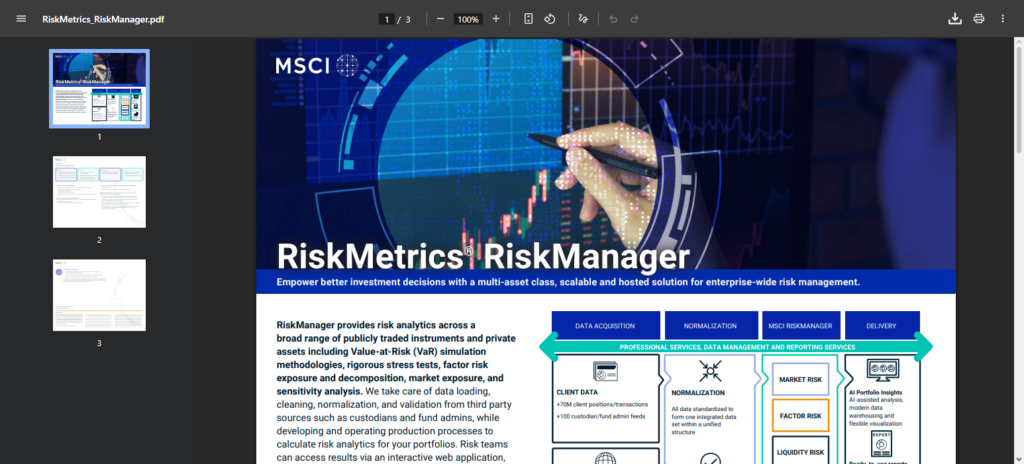
Portfolio managers can assess possible losses in extreme market scenarios thanks to the system’s support for historical, parametric, and Monte Carlo simulations. Additionally, it has a sizable collection of historical occurrences and fictitious scenarios that assist investors in simulating crises like market crashes or interest rate shocks.
MSCI RiskMetrics stands out in the Best Portfolio Stress Testing Platforms category because to its extensive factor modeling, scalability for big institutional portfolios, and worldwide data coverage.
MSCI RiskMetrics Features, Pros & Cons
Features
- Portfolio risk analysis for multiple assets across equities, fixed income, derivatives, and private assets.
- Advanced Value-at-Risk (VaR) simulations using the parametric, historical, and Monte Carlo methodologies.
- Comprehensive stress-testing + scenario analysis for both historical and potential future market events.
- Risk modeling and portfolio exposure decomposition.
- Large market dataset integration covering millions of securities and risk factors.
Pros
- Most Trustworthy risk analysis for global asset managers and institutions.
- Comprehensive factor-risk + scenario modeling.
- Supports regulatory risk reporting + compliance.
- Large portfolio scalability with range.
- Global market data coverage.
Cons
- Enterprise license costs are high.
- Features require a high level of quantitative skill.
- Small companies can find implementation complex.
- Retail investors can find limited usability.
- Institutional data feeds create reliance.
2. Bloomberg PORT + MARS
The Multi-Asset Risk System (MARS) and Bloomberg PORT together create a potent portfolio risk management environment that is integrated within the Bloomberg ecosystem. Investment professionals can use the platform to conduct scenario simulations, stress testing, and portfolio exposure analysis for stocks, fixed income, foreign exchange, and derivatives.
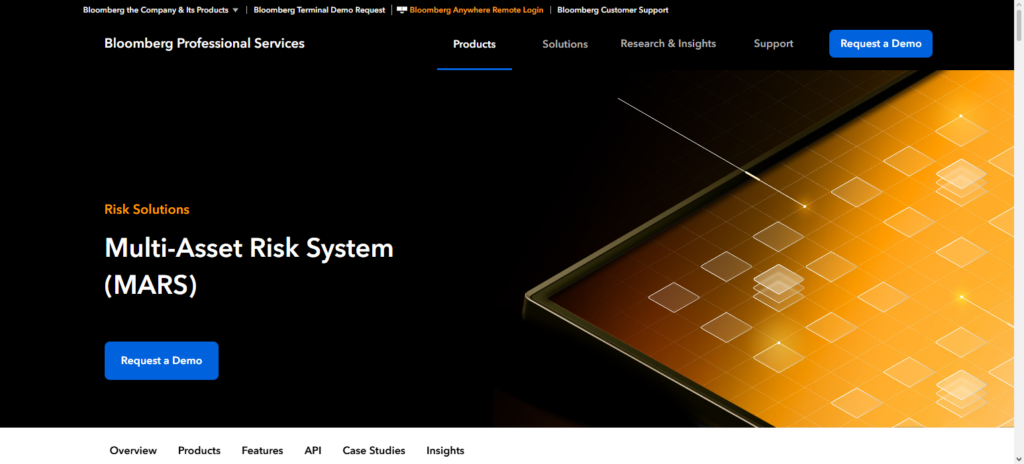
MARS provides consistent risk assessments and portfolio analytics using Bloomberg’s pricing algorithms and market data. It helps asset managers assess how macroeconomic or market events can affect portfolio performance by enabling both pre-trade and post-trade risk assessments.
Bloomberg PORT + MARS is regarded as one of the Best Portfolio Stress Testing Platforms because of its smooth workflow within the Bloomberg Terminal environment, cross-asset coverage, and real-time data integration.
Bloomberg PORT + MARS Features, Pros & Cons
Features
- Multi-asset risk analysis including equities, FX, fixed income, credit, + derivatives.
- Integrated portfolio scenario analysis and stress testing.
- Proprietary pricing + real-time market data access.4. Tools for monitoring risk before and after a trade.
- Risk calculation and analytical API integration.
Pros
- Integration and coordination with the entire Bloomberg Terminal.
- Access to ongoing and continuous analytical insights.
- Advanced analytical insights for derivatives and cross-asset risk
- Access to many and a wide range of global financial institutions.
- Advanced analytical insights for reporting and visualization.
Cons
- Extremely and excessively expensive.
- Access to the Bloomberg Terminal is needed.
- New users experience a significant learning challenge.
- Customization may be needed.
- Not recommended for small investment firms.
3. FactSet Risk & Stress Testing
Asset managers, hedge funds, and institutional investors use FactSet Risk & Stress Testing’s extensive array of portfolio risk analytics tools. Users of the tool can examine possible losses under different market conditions, factor sensitivities, and portfolio risk exposures.
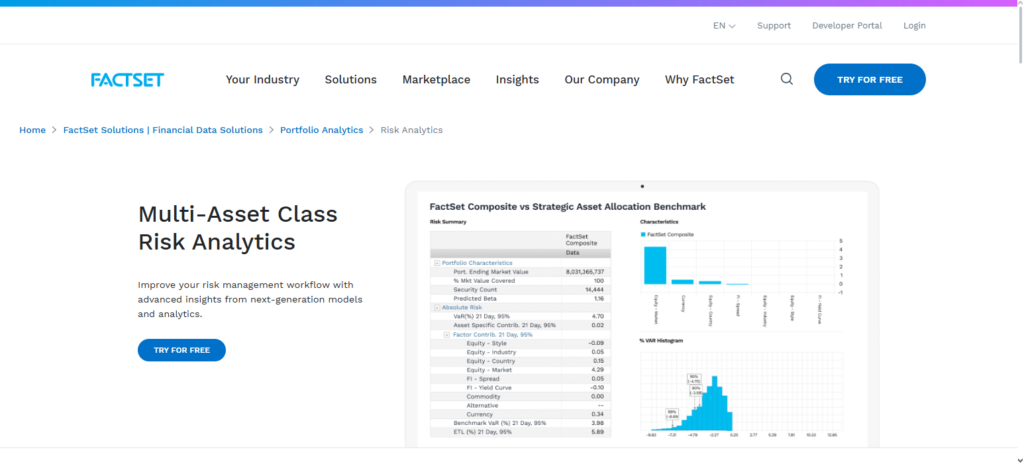
To determine how macroeconomic shocks can impact portfolio returns, investors can use multi-factor risk modeling, scenario analysis, and tailored stress tests.
Additionally, FactSet combines analytics, reporting, and market data into a single workflow. FactSet, one of the Best Portfolio Stress Testing Platforms, is especially well-known for its robust data integration, tools for portfolio transparency, and adaptable risk dashboards that assist investors in making better risk-adjusted investment choices.
FactSet Risk & Stress Testing Features, Pros & Cons
Features
- Decomposition and analysis of risk for portfolios.
- Stress-testing simulations
- Professionally integrated financial data and portfolio analytics.
- Multi asset risk modeling.
- Custom dashboards.
Pros
- Good integration among FactSet’s research and analytics.
- Portfolio managers have risk analytics.
- Analytics can be customized.
- Extensive data coverage for institutions.
- Good for investment firms on the buy-side.
Cons
- Pricing is enterprise levels.
- Individual investors have limited access.
- Features that are more advanced need training.
- Not all analytics are free.
- FactSet is a dependent ecosystem.
4. Refinitiv Risk Analytics
Financial institutions can analyze market risk, portfolio volatility, and possible stress scenarios with the help of Refinitiv Risk Analytics’ sophisticated tools. Value-at-Risk computations, stress testing, and portfolio exposure assessments are supported by the platform’s integration of pricing models, market data, and analytics.
Portfolio managers are able to model the potential impact of certain economic events, shifts in interest rates, or geopolitical shocks on asset prices. Investors may combine news, analytics, and portfolio monitoring in a single interface thanks to Refinitiv’s integration of its risk solutions with the larger Refinitiv data ecosystem.
Refinitiv Risk Analytics is well-known for its robust data coverage and interaction with institutional trading and research workflows in the Best Portfolio Stress Testing Platforms market.
Refinitiv Risk Analytics Features, Pros & Cons
Features
- Portfolio risk modeling & market exposure analysis
- Value-at-Risk & scenario-based stress testing
- Analytics for financial market data & news
- Multi-asset portfolio monitoring
- Risk reporting & compliance analytics
Pros
- Strong coverage for global financial data
- Research & market intelligence integration
- Analytical tools for institutions are credible
- Real-time portfolio risk monitoring is supported
- Integration with Refinitiv financial ecosystem is good
Cons
- Enterprise pricing model
- Complexity for new users
- Customization is limited
- Integration requires some technical setup
- Limited for small firms
5. BlackRock Aladdin Risk
Banks, pension funds, and international asset managers all use BlackRock Aladdin Risk, an enterprise-level investment management platform. It offers extensive capabilities for building portfolios, keeping an eye on risks, conducting stress tests, and analyzing various asset classes.
Using sophisticated analytics and historical event modeling, Aladdin enables portfolio managers to estimate how portfolios would respond to market shocks, interest rate fluctuations, or economic disasters.
Additionally, the system unifies risk reporting, trading procedures, and portfolio data on a single platform. Aladdin is regarded as one of the most advanced options among the Best Portfolio Stress Testing Platforms since it integrates risk analytics with trading, portfolio management, and operational infrastructure.
BlackRock Aladdin Risk Features, Pros & Cons
Features
- Analytics & monitoring of risk for enterprise-level portfolios
- Tools for advanced scenario & stress testing
- Workflows for portfolio management & trading are integrated
- Risk modeling for multiple assets with market simulations
- Portfolio exposure monitoring is real-time
Pros
- Some of the largest asset managers in the world are clients
- Ecosystem for investment management is comprehensive
- The infrastructure is highly scalable
- The level of analytics & automation is advanced
- Tools for risk governance are strong
Cons
- The enterprise solution is extremely expensive
- Months is the minimum time required to implement the solution
- Institutional infrastructure is required
- The user interface is complex for beginners
- The user interface is complex for beginners
6. Morningstar Direct Risk Tools
The Morningstar Financial advisers and portfolio managers can assess portfolio volatility, risk exposures, and scenario consequences with the use of Direct Risk Tools. Investors can use the platform to conduct stress tests based on hypothetical economic scenarios and past market happenings.
In order to better understand potential downside risks, users can examine portfolio performance under a variety of macroeconomic scenarios. The Morningstar Investment professionals can compare portfolios with pertinent market indexes thanks to Direct’s performance attribution, factor analysis, and risk benchmarking features.
Because of its robust fund analytics database and user-friendly portfolio analysis tools, Morningstar Direct is especially well-liked by wealth managers and advisers among the Best Portfolio Stress Testing Platforms.
Morningstar Direct Risk Tools Features, Pros & Cons
Features
- Analysis of portfolio risk and volatility.
- Analysis of scenarios of market events.
- Tools and analytics for funds and benchmarking.
- Risk metrics and attribution of performance.
- Visual and integrated portfolio reporting.
Pros
- Robust database for funds and ETFs.
- More intuitive interface than most institutional tools.
- Beneficial for advisors and wealth managers.
- Solid investment and research analytics.
- Refined portfolio reporting.
Cons
- Derivative analysis is less sophisticated.
- Stress testing on less institutional levels.
- Subscription license is needed.
- Alternative assets have weaker data coverage.
- Less flexibility in advanced customization.
7. Numerix Risk Analytics
Derivatives pricing, counterparty risk, and complicated financial instrument analytics are the main areas of concentration for Numerix Risk Analytics, a specialist financial risk management platform.
It offers sophisticated modeling tools that enable banks and asset managers to do risk assessment, scenario analysis, and stress testing on interest-rate, credit, stock, and foreign exchange derivatives.
Numerix estimates possible portfolio losses in severe situations and simulates market shocks using complex quantitative models. Additionally, the system complies with capital management and regulatory risk reporting standards.
Numerix’s sophisticated quantitative modeling framework and robust derivatives analytics capabilities make it stand out in the Best Portfolio Stress Testing Platforms category.
Numerix Risk Analytics Features, Pros & Cons
Features
- Risk modeling and pricing of derivatives.
- Testing portfolios and scenarios.
- Tools for exposure and valuation in real-time.
- Analytics for derivatives of interest rates, credit, and Others.
- Integration in management and trading systems.
Pros
- Derivatives analytics is excellent.
- Tools for advanced quantitative modeling.
- Supports sophisticated financial instruments.
- Great use in banks and trading desks.
- Integration and flexibility of the API.
Cons
- Expertise is needed for sophisticated models.
- Licensing is expensive.
- Special focus on derivative markets.
- Implementation can be very involved.
- Less suited for fundamental portfolio management.
8. RiskVal RVX
Asset managers and hedge funds are the main users of RiskVal RVX, a multi-asset portfolio risk and valuation platform.
The system offers capabilities for risk decomposition, scenario analysis, and portfolio stress testing across various asset classes. Investors can measure portfolio susceptibility by simulating market shocks and evaluating exposure to macroeconomic risk variables.
Additionally, RiskVal RVX incorporates analytics and valuation methods to assess risk at the securities and portfolio levels. RiskVal RVX is regarded as one of the Best Portfolio Stress Testing Platforms because of its adaptability, multi-asset coverage, and capacity to support intricate portfolio strategies employed by institutional investors.
RiskVal RVX Features, Pros & Cons
Features
- Risk analytics and valuation for multi-asset portfolios.
- Stress testing and analysis of macroeconomic scenarios.
- Monitoring and decomposition of portfolio exposure.
- Risk reporting dashboards and analytic tools.
- Integration with institutional trading platforms.
Pros
- Built for institutional portfolio managers.
- Handles sophisticated multi-asset portfolios.
- Excellent tools for risk and valuation modeling.
- Flexible analytic tools.
- A high level of transparency regarding risk at the portfolio level.
Cons
- Smaller ecosystem than most big competitors.
- Pricing is set at the enterprise level.
- Public documentation is limited.
- Implementation is technical.
- The community is small.
9. Kensho Analytics (S&P Global)
S&P Global’s Kensho Analytics uses machine learning and artificial intelligence to evaluate risk occurrences and monitor financial markets. The platform links macroeconomic events, geopolitical developments, and financial data with possible market repercussions using natural language processing and sophisticated data analytics.

Using Kensho, portfolio managers can assess the impact of past events on markets, such as policy changes or international crises, and apply comparable scenarios to their own portfolios.
Kensho stands out as one of the Best Portfolio Stress Testing Platforms because of its AI-driven event analysis features, which enable investors to promptly discover possible risk exposures in international financial markets.
Kensho Analytics Features, Pros & Cons
Features
- Analysis of financial data and event recognition through AI.
- Market analytics via natural language processing.
- Analysis of financial markets affected by macroeconomic events.
- Analytics related to investing and risk for data.
- Additional data from S&P Global financial datasets.
Pros
- Analytics with advanced AI is available.
- Analysis of macroeconomic events is robust.
- The financial data ecosystem is very large.
- Research and market intelligence will find this useful.
- Fast results from extensive datasets.
Cons
- Traditional portfolio risk modeling is not the focus.
- Cost of enterprise licensing.
- Requires additional systems to be integrated.
- There is a learning curve associated with the AI analytics tools.
- Risk platforms are more suited to data analysis than full risk platforms.
10. FinCad Risk Analytics
A financial engineering tool called FinCad Risk Analytics is used to manage portfolio risk and price complicated derivatives. It provides sophisticated quantitative models for credit instruments, structured products, and interest-rate derivatives, allowing for thorough scenario analysis and stress testing.
FinCad is used by financial organizations to undertake regulatory risk reporting, assess portfolio sensitivity, and compute possible losses in extreme market scenarios. The platform connects with trading and portfolio management systems and offers configurable risk models. Because of its robust mathematical modeling skills and broad support for complex financial instruments, FinCad is especially valued by banks and derivatives desks among the Best Portfolio Stress Testing Platforms.
FinCad Risk Analytics Features, Pros & Cons
Features
- Pricing and analytics library for advanced derivatives.
- Tools for stress testing portfolios and scenario simulations.
- Analytics for the modeling of fixed income and interest rates.
- Analytics for the monitoring and valuation of risks.
- Links with Python, API, Excel, and Enterprise systems.
Pros
- Powerful library for quantitative analysis.
- Excellent modeling for fixed income and derivatives.
- Quantitative teams may find it highly customizable.
- Globally recognized by financial institution.
- Development environments are supported.
Cons
- Strong quantitative skills are required.
- Technical integration may be necessary for the installation.
- Cost of enterprise licensing is high.
- Less user-friendly for non-technical users.
- Institutional environments are primarily designed for these.
Conclusion
A crucial component of contemporary investment risk management is portfolio stress testing. The best platforms for portfolio stress testing, like MSCI RiskMetrics, Bloomberg PORT + MARS, FactSet Risk & Stress Testing, and BlackRock Aladdin Risk, offer sophisticated analytics to assist investors in assessing possible losses in the event of severe market conditions. To assist banks in comprehending portfolio weaknesses, these platforms integrate robust data, quantitative models, and scenario analysis.
Furthermore, specialist features like AI-driven event analysis, derivatives risk modeling, and multi-asset portfolio evaluation are provided by programs like Refinitiv Risk Analytics, Morningstar Direct Risk Tools, Numerix Risk Analytics, RiskVal RVX, Kensho Analytics, and FinCad Risk Analytics.
The organization’s size, asset classes, and risk management needs all play a role in selecting the best platform. In an increasingly complicated global market, these technologies enable asset managers, hedge funds, and financial institutions to make better decisions, efficiently manage volatility, and increase portfolio resilience.
FAQ
What are portfolio stress testing platforms?
Portfolio stress testing platforms are financial risk management tools that simulate how investment portfolios might perform under extreme or unfavorable market conditions. These systems model scenarios such as market crashes, interest-rate spikes, geopolitical shocks, or economic recessions to estimate potential losses. Many platforms use advanced analytics like Value-at-Risk (VaR), Monte Carlo simulations, and scenario modeling to evaluate risk exposure and portfolio stability.
Why are portfolio stress testing platforms important for investors?
Stress testing platforms help investors understand how their portfolios may behave during market volatility. By analyzing different economic scenarios, investors can identify vulnerabilities, reduce downside risk, and improve asset allocation decisions. These tools also support regulatory compliance and institutional risk management processes. Stress testing and scenario analysis allow firms to evaluate the impact of extreme events on portfolio performance before they occur.
What are the best portfolio stress testing platforms available today?
Some of the most widely used platforms include MSCI RiskMetrics, Bloomberg PORT + MARS, FactSet Risk & Stress Testing, Refinitiv Risk Analytics, and BlackRock Aladdin Risk. These systems provide institutional-grade analytics, scenario modeling, and risk factor analysis across multiple asset classes, helping investment firms monitor portfolio exposure and prepare for potential market disruptions.