

I will now discuss RWA vs DeFi and how these segments in crypto finance will look like in 2026. We will look at their differences, consumption scenarios, major trends, risks, regulations, and the convergence they will experience. This article will examine the opportunities and challenges brought about in the expanding blockchain ecosystem by the use of the tokenisation of real world assets and open financial applications.
What Are Real-World Assets (RWA)?
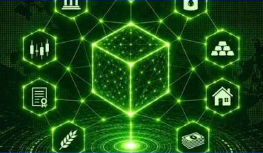
Real-world assets (RWA) are physical or financial assets that are cryptographically recorded on a blockchain. Examples are corporates, government, and private credit, real estate, commodities, funds, and assets with intrinsic value that can be easily measured.
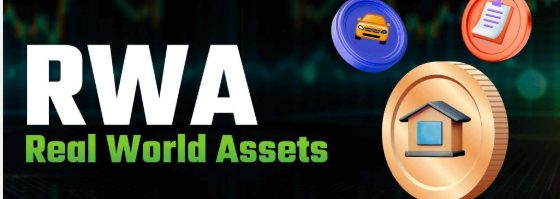
Tokenization of these assets creates digitized representations of these assets and allows for the digital facilitation of ownership transactions, transfers, settlement, and digital record-keeping. RWA platforms provide a range of services including the use of custodians, legal contracts, smart contracts, and other compliance-related activities to connect blockchain tokens to real-world assets.
As of 2026, the main focus of RWA is on institutional financing, blockchain-based applications of Treasury tokens, private credit, and DeFi. RWA is advancing to allow access to traditional financial markets.
What Is DeFi?
Decentralized Finance (DeFi) offers financial tools executed automatically through code on blockchains. These services remove the need for middlemen such as traditional banks and financial services. Examples of DeFi services include decentralized exchanges (DEXs), lending and borrowing protocols, stablecoins, derivatives, staking, liquidity pools, and other tools that aggregrate yield for users.
Access to DeFi is relatively user-friendly and requires no bank account; users only need blockchain wallets to interact with DeFi services. As financial transactions on a blockchain are automated through the logic embedded in the code, and can be tracked publicly by anyone on the network,
DeFi can provide on-chain financial services with global access and varied financial products. However, as is typically the case with new technologies, DeFi has issues with smart contract risks, liquidity, volatility, and regulatory ambiguity.
RWA vs DeFi: Key Differences
| Criteria | RWA (Real-World Assets) | DeFi (Decentralized Finance) |
|---|---|---|
| Core Concept | Brings traditional assets onto blockchain | Provides financial services directly on blockchain |
| Underlying Assets | Bonds, real estate, private credit, commodities, funds | Crypto assets, stablecoins, liquidity tokens and other digital assets |
| Main Purpose | Tokenize and manage real-world financial assets | Enable decentralized trading, lending, borrowing and investing |
| Asset Connection | Linked to off-chain assets or legal claims | Primarily based on on-chain assets and smart contracts |
| Access | May require KYC, eligibility or regulated access | Often permissionless, depending on the protocol |
| Key Users | Institutions, businesses and investors | Crypto users, traders, liquidity providers and investors |
| Yield Sources | Interest, bonds, credit and income-producing assets | Lending, liquidity provision, staking and trading |
| Regulation | Usually stronger regulatory and compliance requirements | Regulatory treatment varies by protocol and jurisdiction |
| Custody | Often involves custodians or asset managers | Usually controlled through wallets and smart contracts |
| Transparency | Blockchain records can improve transaction visibility, while underlying assets may require external verification | On-chain transactions and protocol activity are generally transparent |
| Main Risks | Counterparty, custody, legal, liquidity and regulatory risks | Smart-contract, oracle, liquidity, market and protocol risks |
| 2026 Direction | Greater institutional tokenization and integration with traditional finance | Continued development of open, programmable on-chain financial services |
| Relationship | Can use DeFi infrastructure for liquidity, lending and collateral | Can incorporate tokenized RWAs as collateral or investment assets |
How RWA and DeFi Are Converging
Tokenizing real-world assets, commonly called RWA, is bringing DeFi and RWA closer together. RWA can expand proof-of-collateral within DeFi by introducing tokenized government bonds, credit, funds, and other assets. In return, DeFi infrastructure adds trading, lending, liquidity, and settlement capabilities to RWA tokens.
Stablecoins play a similar role in joining on-chain and off-chain value. The combination of these systems makes a new interface for public financing using on-chain automated smart contracts and settlement systems within regulated finance. The merging of these sectors can increase institutional investment and financing while retaining the benefits of blockchain technology like transparency and automation.
Major RWA vs DeFi Trends in 2026
Major RWA Trends
Tokenized Government Securities – Greater adoption of tokenized Treasuries and government-sponsored securities on blockchain technology platforms.
Institutional Tokenization – Blockchain-enabled securities, assets, and banking services are being studied by banks and asset managers.
Private Credit On-Chain – Private credit and private lending entities are opting to issue capital market instruments.
Tokenized Funds – Investment funds and other financial assets will be issued on a blockchain.
RWA-Based DeFi – Tokenized real-world assets (RWA) are being studied for usage as on-chain collateral for lending.
Stablecoin Integration – tokenized assets will be settled using stablecoins.
Regulated RWA Infrastructure – Increasing interest in investor compliance for RWA custody and tokenization.
Cross-Chain RWA Infrastructure – Providing access to tokenized RWA assets across multiple blockchain networks.
Major DeFi Trends
Institutional DeFi – Banks and asset managers are studying how to legally participate in trading markets in a decentralized manner.
RWA DeFi Lending Growth – On chain lending and borrowing are the focal points of financial markets.
Decentralized Derivatives – Perpetuals, options, and other derivatives continue expanding within DeFi ecosystems.
Stablecoin-Based Finance – Stablecoins are becoming prevalent in trading, lending, payments, and settlement.
Liquid Staking – DeFi staking protocols allow staked assets to be used.
Cross-Chain Liquidity – Increasing interoperability of blockchain ecosystems to enable the movement of liquidity.
DeFi Security Enhancements – Incremental improvements in security for DeFi including improvements for auditing, monitoring, controls, and smart contract security.
AI and DeFi Integration – Automation of portfolio management, analysis and trading of markets, and detection and management of risk is being pursued through AI and DeFi.
Convergence Trend
RWA + DeFi Financial Products – Increasingly, real world assets can be used for collateral and can yield returns, even in liquidity pools, resulting in more crossover between traditional finance and crypto finance.
Where Is the Capital Moving?
Crypto finance’s capital allocation in 2026 will favor products spanning the efficiency of on-chain transactions, and cash flows secured by tangible assets and more compliant structures. Make note of:
Tokenized Treasuries – Funds are now focused on securities on the blockchain that provide exposure to the fixed-income market in a more efficient manner.
Private Credit – Given their connection of blockchain technology to real-world lending that is income producing, the private credit markets are attracting capital.
Stablecoins – Stablecoins remain important connecting bridges for money in the traditional world and the crypto markets for payments, transfers, and trades.
RWA-Backed DeFi – DeFi is examining tokenized real-world assets, and their use as collateral in lending and borrowing financial services.
Institutional DeFi – Participation of institutions is more focused on regulated or permissioned environments that offer blockchain facilitated settlement and automation of financial transactions.
DeFi Lending – Capitals are still allocating to lending markets that are decentralized, where users can provide liquidity or jump cryptoprotocols to borrow cash against digitized assets.
Tokenized Funds – Funds loyalty is being tested to blocks to improve the issuance and trading of tokens, as well as improving access for investors.
On-Chain Settlement – Financial transactions are being built on blockchain settlement where there is a need for faster transfers and transactions that can be more programmable.
Hybrid Financial Products – The strongest structural trend to note is the combination of traditional assets with DeFi and the integration of RWA.
Risk-Adjusted Capital Allocation – With a greater understanding of liquidity, custody, counterparty exposure, smart-contract risk, regulation, and quality of underlying assets, investors and institutions are now evaluating more than just headline yields.
RWA and DeFi Use Cases in 2026
RWA Use Cases
Tokenized Government Bonds – Digital ownership, transfer, and settlement of government securities can be achieved by representing them as blockchain tokens.
Private Credit – Improving access to private credit and loan instruments as well as their record keeping and settlement can be made possible by tokenizing them.
Tokenized Investment Funds – Funds can utilize blockchain technology to simplify issuance and automate settlement and ownership record keeping.
Real Estate Tokenization – Tokenization can give digitized representation to property interests, resulting in easier fractional ownership and transference.
Tokenized Commodities – Commodities like gold can be represented by blockchain tokens and be tethered to an underlying asset.
DeFi Use Cases
Decentralized Lending – Users can lend tokens to a protocol, post collateral tokens, and receive a loan.
Decentralized Exchanges – Users can trade crypto assets via liquidity pools or order book systems.
Stablecoin Payments – Support for on-chain payments, transfers, settlements, and other financial transactions can be provided by stablecoins.
Derivatives Trading – DeFi protocols can create access for users to trade derivatives without traditional exchange control.
Liquidity Provision – Users can provide a liquidity pool and earn fees or rewards.
Regulation: RWA vs DeFi
Classification – Jurisdiction and the nature of the underlyings establish the regulatory framework applicable to RWA tokens the same way for DeFi tokens and activities. This includes the securities, funds, debt, commodities, or property-related laws and regulations.
KYC and AML – RWA platforms tend to require more robust AML and identity verification when connecting blockchain technology with financial assets. For DeFi, requirements vary by protocol and jurisdiction.
Investor Participation – DeFi is generally more open than many RWA services restricted to qualified and/or accredited investors.
Custody – RWA arrangements ultimately may use custody arrangements with regulated service providers for the underlying assets. In DeFi, self-custody and smart contracts are more prevalent.
Legal Ownership – Clear legal ownership has to exist on blockchain for the token and the associated asset.
Disclosures and Transparency – RWA issuers may need to provide information and transparency regarding the underlying and issuer of the asset, risks, valuation, and the rights associated with the asset. DeFi tends to rely on blockchain smart contracts and the associated data.
Stablecoin Regulation – Regulation for stablecoins can have importance for both RWA and DeFi for reserve management, issuance, redemption, and consumer protection.
Cross-Border Rules – When Tokenized assets cross borders, theDeFi ecosystem can touch on licensing, taxation, sanctions, restrictions levied on investors, and local financial rules.
Smart Contract Risk – Regulators and institutions are concerned about possible smart contract vulnerabilities, governance, oracle dependencies, and operational controls.
Predicted Regulatory Changes in 2026 – The primary regulatory consideration will be creating more accessible frameworks for tokenization, stablecoins, and other digital assets in addition to decentralized finance, although requirements remain fragmented across several jurisdictions.
Risks and Challenges
RWA Risks and Challenges
Counterparty Risk – Entities such as issuers, custodians, asset managers, etc., have a connection or part of the process between the RWA tokens and the underlying asset.
Legal Ownership Risk – Investors must have clearly defined legal rights to enforce the right to redeem or transfer the underlying asset.
Custody Risk – There is potential operational and counterparty risk exposure to third-party custodians of either physical or financial assets.
Liquidity Risk – Tokenization of an asset does not guarantee the asset will have a continuously active secondary market.
Valuation Risk – It can be challenging to price some assets that are considered private or illiquid.
Regulatory Risk – There can be new rules pertaining to securities, taxation, AML, custody, or tokenization that can impact the RWA platforms and investors.
DeFi Risks and Challenges
Smart Contract Risk – Financial losses or disrupting the protocol can occur if an exploit is done due to a coding vulnerability or error.
Oracle Risk – DeFi applications that rely on price feeds can be negatively impacted due to inaccurate data, delayed data or data that has been manipulated.
Market Volatility – Rapid changes in the price of crypto can cause large changes to a protocol and can result in liquidations and the loss of collateral.
Liquidity Risk – Low liquidity can result in a large amount of slippage when users attempt to trade.
Protocol and Governance Risk – Changes in a protocol’s parameters or governance, upgrades, or the administrative control of a protocol can negatively impact both users and markets.
RWA vs DeFi: Which Model Fits Which Investor?
Rather than treating RWA or DeFi as universally suitable, investors can compare the two based on their objectives, access requirements, risk exposure, and preferred financial structure. The right fit can differ depending on the investor and product.
| Investor Consideration | RWA May Fit When | DeFi May Fit When |
|---|---|---|
| Investment Objective | Seeking exposure to tokenized traditional assets | Seeking blockchain-native financial opportunities |
| Risk Preference | Prefers assets with identifiable underlying value | Accepts higher technology and market-related risks |
| Yield Source | Interested in bonds, private credit, or other income-producing assets | Interested in lending, liquidity provision, staking, or trading |
| Liquidity Needs | Comfortable with potentially limited secondary-market liquidity | Wants access to actively traded on-chain markets |
| Regulatory Preference | Prefers regulated or compliance-focused investment structures | Comfortable using decentralized protocols with varying regulatory frameworks |
| Access Requirements | Willing to complete KYC or meet eligibility requirements where applicable | Prefers wallet-based access where protocols permit it |
| Technology Preference | Wants blockchain benefits while maintaining links to traditional finance | Comfortable interacting directly with smart contracts and Web3 infrastructure |
| Institutional Use | Suitable for institutions exploring tokenized securities and treasury products | Suitable for institutions exploring on-chain lending, trading, and settlement |
| Key Risks to Evaluate | Custody, counterparty, legal ownership, valuation, and regulatory risks | Smart-contract, oracle, liquidity, protocol, and market risks |
| Main Attraction | Connecting traditional financial assets with blockchain infrastructure | Creating programmable and decentralized financial services |
Pros & Cons
RWA — Pros & Cons
Pros
Connectivity: Blockchain connectivity to credit, funds, private credit, bonds, and commodities.
Path for TradFi: Creation of a conducted pathway for traditional finance into blockchain.
Income Generation: Potential for exposure to income-generating assets with tokenized bonds and credit.
Efficiency: Use of blockchain for digital record, transfer, and settlement with tokenization.
Transparency: Greater visibility to transactions and token ownership with the use of blockchain.
Cons
Intermediary & Issuer Reliance: Dependence on custodians, intermediaries, and issuers.
Complex Legal Structures: Regulations for securities, taxes, custody, anti-money laundering, and the protection of investors.
Limited Liquidity: Secondary market liquidity may be constrained for some tokenized assets.
Legal Issues: Token ownership may not provide the same rights and privileges as direct ownership of an underlying asset.
Valuation: Private or illiquid assets may be difficult to value.
DeFi — Pros & Cons
Pros
Open Finance: Many DeFi protocols allow users to connect easily to financial applications through a crypto wallet without the use of a traditional bank account.
Automation: Financial automation through the use of smart contracts to facilitate lending, trading, settlement, and other financial activities.
Transparency: Public blockchain technology can be used to view transactions and financial activities within a given protocol.
Global Finance: Access to financial services worldwide.
Financial Innovation – DeFi offers new alternatives to lending, liquidity, derivatives, staking, and decentralized trading.
Cons
Smart-Contract Vulnerabilities – Security breaches caused by coding flaws can drain a protocol’s funds and user assets.
High Market Volatility – Due to the high volatility of cryptocurrency, significant price changes can happen rapidly.
Oracle Risk – Certain protocols carry the risk of either faulty or manipulated external data.
Liquidity Risk – Low liquidity leads to large price movements.
Regulatory Uncertainty – Rules governing decentralized protocols and digital assets vary around the world.
Conclusion
Two important directions expected in crypto finance by 2026 are RWA and DeFi. RWA intends to bring traditional assets onto blockchains. Private equity, credit, funds, commodities, and bonds are examples of such traditional assets.
DeFi provides financial services that are decentralized and programmable. Both are anticipated to grow side by side, but continue to have noticeable differences. These differences include risk, custody, regulation, and liquidity.
However, these growing differences are modeling new financial systems. Tokenized assets can transact more frequently with DeFi lending, stablecoins, collateral, and settlement.
Since tokenized assets can increasingly transact with DeFi lending, stablecoins, collateral, and settlement. Their adoption and integration will prompt a more critical assessment of quality, liquidity, regulation, technology, and associated risks within each infrastructure and market.
FAQ
What is RWA in crypto?
RWA stands for Real-World Assets. It refers to traditional assets such as bonds, real estate, private credit, commodities, and funds represented on blockchain networks through tokenization.
What is DeFi?
DeFi, or Decentralized Finance, uses blockchain networks and smart contracts to provide financial services such as lending, borrowing, trading, staking, and liquidity provision.
What is the main difference between RWA and DeFi?
RWA focuses on bringing traditional assets onto blockchain infrastructure, while DeFi focuses on creating decentralized financial services using blockchain-based protocols.
Can RWA be used in DeFi?
Yes. Tokenized real-world assets can potentially be used as collateral, yield-generating assets, or liquidity sources within DeFi applications.
Why are institutions interested in RWA?
RWA can provide institutions with blockchain-based issuance, settlement, recordkeeping, and transfer infrastructure while maintaining connections to traditional financial assets.