

Tokenized real estate uses blockchain technology to trade ownership rights to physical properties through tokens. Tokenization of real estate offers various benefits through fractional ownership. It allows more investors to participate, increases liquidity, and offers more worldwide participation. As regulations and institutional adoption continue to develop, tokenized real estate will begin changing conventional real estate markets by creating a more efficient and global market for a real estate asset that is accessible to everyone.
What Is Tokenized Real Estate?
Tokenized real estate encompasses the use of blockchain technology to digitally mint tokens that represent property ownership. These tokens can be bought and sold as parts of a property and can be used to ease traditional barriers in the real estate market.
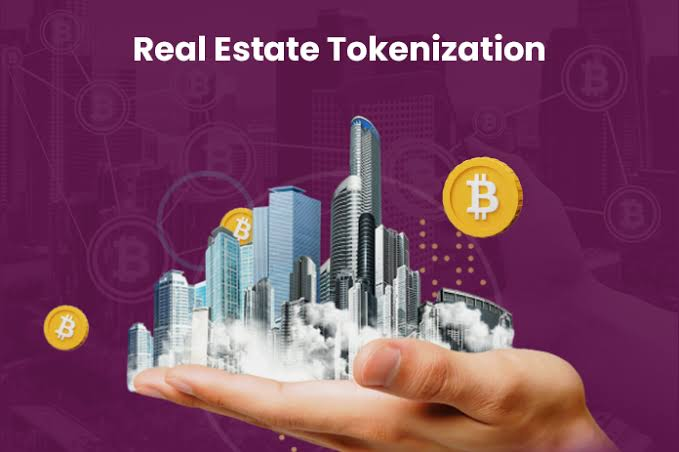
Tokenization enhances transparency and real-time liquidity of a market that was once accessible to large players only. Tokenization utilizes special purpose vehicles (SPV) and custodial legal structures that allow traditional finance to interact with the decentralized technologies of tokenization.
This not only improves the time value and administration costs of assets, but also potentially allows the asset to be liquid to a broader segment of market participants. Tokenization of real estate will change the world of capital markets through combining property ownership with the technology of blockchain and the legal world.
How RWA Markets Are Growing in 2026
Institutional investment: BlackRock, Franklin Templeton, Apollo and other major asset managers create credibility and drive investment into their tokenized funds.
Clarity in legal frameworks: Regulators and governments have introduced more extensive legal frameworks diminishing uncertainties to allow broad participation.
The blockchain innovations: BNB Chain, Solana, and Stellar are the fastest growing blockchains and large network size with Ethereum maintaining the larger market share.
Thorough list of tokenized assets: Tokenized treasuries, private credit, gold, real estate, and equity all have a value exceeding $1 billion.
Market Highlights
| Blockchain | Growth in 2026 | Key Strength |
|---|---|---|
| BNB Chain | +$3.62B | Fastest-growing RWA network |
| Solana | +$2.6B | Strong DEX volume & app revenues |
| Stellar | +$2.5B | Expanding institutional adoption |
| Ethereum | +$1.6B | Largest overall RWA market share |
How Real Estate Tokenization Works
Property Selection: Real estate is purchased. It is placed in a trust or special purpose transaction vehicle.
Token Creation: The real estate is converted to digital tokens with each fraction of a token representing a fractional ownership stake of the real estate.
Automated Financing & Dividend Stream: Smart contracts are structured to take the place of traditional underwriting, finance, and dividend distribution.
Real Estate Purchase: Real estate is bought and ownership is transferred to the purchaser. The buyer also becomes the beneficiary of the stream of rental income and capital appreciation.
Fractional Real EstateAs a tradable asset: Real estate is tokenized and traded in real-time trading markets. Like traded financial assets, tokenized real estate becomes a liquid market.
Regulation: Real estate is tokenized in accordance with current securities and property laws. This has the added benefit of improving transparency and security for real estate investments.
Why Real Estate Is Moving Toward Tokenization
Fractional investments: Tokenization breaks down real estate investments into smaller factions and increases a buyer’s access to high-end properties.
Faster transactions: Unlike other investments, tokenized assets can be acquired and sold quickly without the concerns of long “lock-in” periods.
Wider investment: Blockchain makes real estate available to a greater audience around the world and regardless of financial or geographic barriers.
Lower investment costs: Intermediaries are rendered obsolete with smart contracts, lowering the costs of transactions.
Validation of ownership: Transactions become more trustworthy with the blockchain recording new ownership of the real world asset.
Speed of transactions: Unlike before, transactions that used to take weeks can now be completed in a few minutes.
Better regulations: Regulations are being established to help claim the safe institutional ownership of tokenized properties.
Diversifying investments: Tokenized properties make real estate investments more flexible, so a buyer can now own properties in different countries.
Tokenized Real Estate vs. Traditional Real Estate
| Aspect | Tokenized Real Estate | Traditional Real Estate |
|---|---|---|
| Ownership | Fractional ownership via blockchain tokens | Full property ownership or shares |
| Liquidity | High — tokens can be traded on exchanges | Low — selling property takes weeks/months |
| Accessibility | Global participation with small investments | Limited to local buyers with large capital |
| Transaction Speed | Fast — settlements in minutes via smart contracts | Slow — requires paperwork, legal checks |
| Costs | Lower — fewer intermediaries, reduced fees | Higher — agents, lawyers, banks involved |
| Transparency | Blockchain provides immutable records | Records depend on local registries |
| Regulation | Emerging frameworks aligning with securities laws | Established property and land laws |
| Diversification | Easy to spread across multiple properties | Difficult due to high entry costs |
What Is New in Tokenized Real Estate in 2026?
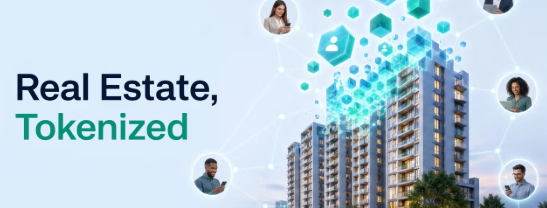
In 2026, property investing through blockchain changed the landscape through the stage of maturity known as tokenized real estate. Assets get represented as fractional tokens, in which investors can buy as little as owning a few percent of a high-value property previously available to institutions only.
Tokens companies backed by large funds have attract more investors, thereby increasing liquidity. During this period, Europe passed the MiCA, and India passed the Asset Tokenization Bill to provide more regulatory clarity on the safety of property tokenization globally.
Smart contracts have advanced to the point where they can distribute compliance rent income to investors, driving costs and speed of compliance down. Due to the creation of global markets for the trading of tokenized real estate, this asset class has connected the property market to digital finance.
Key Use Cases for Tokenized Real Estate
Fractional ownership: Lower capital investments grant small investments the right to title a portion of high valued real estate.
International real estate investing: Tokenization eliminates the barriers associated with international real estate investing.
Passive rental income: Smart contracts used for tokenization automatically distribute dividends from rental income.
Secondary market liquidity: Once tokens are issued, they can be traded on official stock exchanges.
Lower investment risk: Since tokenization requires less capital, it allows investors to diversify their holdings more easily.
Real estate crowdsourcing: Developers can fund their projects more widely and cheaply.
Institutional adaptation: Funds and asset managers adapt to the current market by tokenizing real estate.
Regulatory concession: Real estate tokenization and legal protection change traditional barriers in the property market.
Major Benefits of Tokenized Real Estate
Fractional ownership: Tokenization enables potential investors to own a piece of real estate that, without tokenization, would otherwise be out of reach due to high costs.
Increased liquidity: It is easier for investors to liquidate real estate. Before tokenization, the liquidation of real estate was slow and cumbersome.
Investment opportunity globally: Tokenization real estate makes it possible for individuals around the world to participate in the real estate market.
Reduced costs: Tokenization of real estate properties makes it possible to decrease the number of intermediaries and administrative costs involved in the process.
Quicker settlement: Real estate transaction time is reduced from weeks to minutes because of the tokenization process.
Blockchain provides an unprecedented level of security in real estate transactions because of immutable records.
Portfolio diversification: Because real estate markets differ, tokenization provides an unprecedented opportunity for portfolio diversification.
Increased credibility: Investments funds and asset managers are beginning to tokenize real estate and the benefits of real estate have begun to be recognized.
Regulation of Tokenized Real Estate in 2026
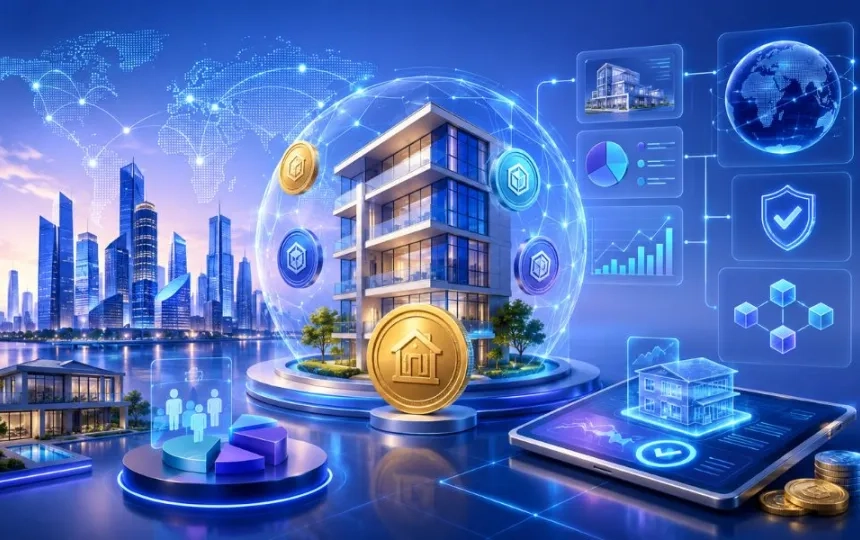
India – Asset Tokenisation Bill 2026
The Asset Tokenisation Bill 2026 drafted in March 2026 gives ‘legal recognition’ to ‘asset tokens’ including real estate. It frames a ‘multi-regulatory oversight model’ for the issuance, trading, custody and settlement. This model provides for ‘investor protection’ and prescribes ‘disclosure standards’ and ‘penalty for fraud’. sansad.in agrudpartners.com India Corporate Law
Europe – MiCA Framework
The EU’s Markets in Crypto-Assets (MiCA) regulation includes tokenised securities under the DLT Pilot Regime.
US – SEC Digital Asset Framework
Sets out the SEC’s views on when tokenised property would be classified as a security requiring registration, or an exemption from registration, along with providing ‘sandbox’ opportunities to test the innovation.
Asia-Pacific
Singapore, Hong Kong and Japan have licensed tokenised real estate platforms, making this region a Real Estate Tokenisation Innovation Hub.
Technology Behind Tokenized Real Estate
| Technology | Role in Tokenization |
|---|---|
| Blockchain | Provides immutable records of ownership, enabling secure and transparent transactions. |
| Smart contracts | Automate rental income distribution, compliance checks, and property transfers without intermediaries. |
| Token standards | ERC‑20 and ERC‑721 tokens represent fractional ownership or unique property rights. |
| Custody solutions | Securely store digital tokens and ensure compliance with investor protection laws. |
| KYC/AML systems | Integrated identity verification ensures regulatory compliance and prevents fraud. |
| Digital exchanges | Platforms where property tokens are traded, providing liquidity and global accessibility. |
| Oracles | Connect blockchain with real‑world data such as property valuations, rental yields, and legal records. |
| DLT frameworks | Distributed ledger technology supports scalability, interoperability, and cross‑border transactions. |
Risks and Challenges
Regulatory Uncertainty: Compliance with laws is not the same across all jurisdictions and impacts cross-border adoption.
Liquidity Fragmentation: While tokenization of real estate is expected to increase liquidity, trading is still uneven across different platforms and asset classes.
Valuation Reliability: Integration of blockchain systems to allow for the valuations of real estate is currently difficult and puts real estate at risk of being arbitrarily priced.
Technology Risk: Any failure in ownership or real estate transaction systems exposes real estate to smart contract risks, cyberattacks, and system outages.
Investor Risks: Lack of adequate regulation means retail investors are at risk of loss from real estate market scams and/or mis-selling.
Market Acceptance: Investor adoption is slower due to cautious investment by large financial players.
Legal Rights and Remedies: Property rights enforcement is still being developed in most jurisdictions worldwide.
Complexity and Integration: The integration of blockchain and traditional real estate transaction systems is complex.
Future Outlook for Tokenized Real Estate
The outlook for tokenized real estate looks bright for 2026 and beyond as more analysts agree on there being rapid expansion as the implementation of blockchain technology speeds up.
With the adoption of institutions, legal clarity, and the automation of smart contracts, tokenized real estate will likely become a standard means of investment by the year 2030 where tokenized assets could value in the trillions, reshaping real estate to become a investable, liquid, and transparent real estate market.
Tokenized real estate will likely remove barriers in investment as each tokenized real estate will become more liquid, and highly likely be legislated globally. No doubt the more integrated technology becomes with the real estate market, the more peoples access to it will be removed as legal barriers and barriers to ownership each become more legislated.
Conclusion
In summary, tokenized real estate is modernizing real estate investment with liquidity, accessibility, and efficient global markets. With blockchain and smart contracts, tokenized real estate connects the traditional real estate market with digital finance.
Tokenized real estate improves real estate investment by increasing liquidity with fractional real estate ownership and international participation. Tokenized real estate also decreases the cost and time of transactions.
While there are still regulatory concerns and challenges of market adoption and valuation approximation, tokenized real estate will dominate the real estate investment as an innovative way to own property and revolutionize market participation in high value real estate.
Frequently Asked Questions
What is tokenized real estate?
It is the process of representing property ownership through blockchain‑based digital tokens, enabling fractional investment and global accessibility.
How does tokenization work?
Properties are structured via SPVs or trusts, divided into tokens, and managed through smart contracts for ownership, income distribution, and compliance.
What are the benefits?
Liquidity, fractional ownership, lower costs, faster settlement, transparency, and global participation.
What risks are involved?
Regulatory uncertainty, valuation challenges, liquidity fragmentation, and technology risks such as smart contract bugs.