

In this piece, I will review the quickest blockchain networks that are revolutionizing worldwide payment systems: Solana, Algorand, Stellar, and Avalanche. These networks enable near-instant payment settlement, at scale, and for a fraction of the cost.
These systems are designed for micro payment systems, real-time, and cross-border payment applications and pair novel consensus mechanisms with smart contract functionality to deliver seamless, secure, and affordable payments.
Why Use Fastest Blockchain Networks for Instant Payments
Near-Instant Settlement– Facilitates instantaneous payments to users and instant access to merchant accounts.
Low Transaction Fees– Micropayments and cross-borders transactions are economical.
High Scalability– NEAR, Harmony, and Solana networks can perform thousands of unencumbered transactions each second.
Smart Contract Support– Automated payments, DeFi programs, and financial systems enable programs for payments.
Cross Border Accessibility– International payments are executed quickly without third party or stopped interuption.
Secirity and Transparency– Safe and auditable transactions are ensured from the consensus mechanisms and cryptographic protocols.
Energy Efficiency– Compared to PoW networks, many fast blockchains use PoS or sharding, thus lowering energy consumption.
Key Point & Fastest Blockchain Networks for Instant Payments List
| Blockchain | Key Points / Features |
|---|---|
| Solana (SOL) | High-speed, low-cost transactions; proof-of-history consensus; supports DeFi, NFTs, and scalable apps. |
| Algorand (ALGO) | Pure proof-of-stake, fast finality, minimal transaction fees, strong focus on decentralized finance and tokenization. |
| Stellar (XLM) | Optimized for cross-border payments and remittances; low fees; connects fiat and crypto seamlessly. |
| NEAR Protocol | Sharded, developer-friendly blockchain; fast and scalable; supports smart contracts and DApps. |
| Avalanche (AVAX) | High throughput, low latency; supports multiple chains and DeFi applications; energy-efficient consensus. |
| Celo | Mobile-first blockchain; supports stablecoins; easy crypto access for unbanked populations. |
| Tron (TRX) | High transaction speed; supports DApps, DeFi, and token issuance; low fees. |
| Harmony (ONE) | Sharding-based scalability; fast and secure; energy-efficient and suitable for cross-chain applications. |
| Flow | Built for NFTs, gaming, and digital collectibles; developer-friendly and high throughput for consumer apps. |
1. Solana (SOL)
SOLANA (SOL) is hailed as one of the Fastest Blockchain Networks for Instant Payments with regards to real-time settlements, having one of the highest throughputs, as well as having extremely low latencies on transactions.
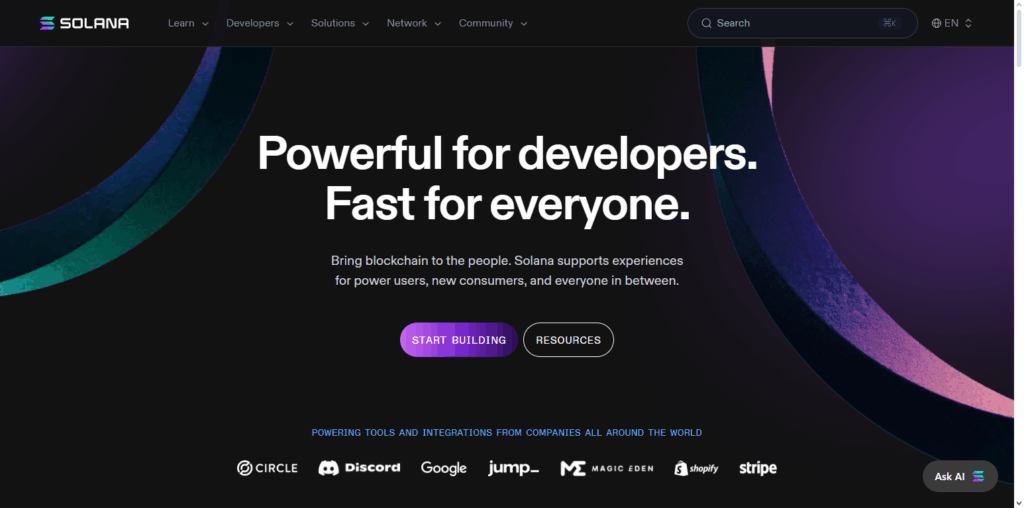
through the hybrid model of Proof-of-stake (PHoS) Solana is able to perform 65k transactions/second with confirmations taking no more than a few seconds. Solana’s architecture is such that it minimizes congestion on the network while lowering transaction costs.
It is therefore appropriate for real-time settlements, micro payments and high frequency trading. Moreover, for smart contracts and decentralized applications, Solana provides access to a valuable and robust ecosystem to developers and businesses looking for a fast, reliable and cost efficient blockchain payments infrastructure.
Solana (SOL) Features
- Ultra-High Throughput: With the ability to finalize 65,000 transactions per second, it is best suited for real-time payments.
- Proof-of-History Consensus: Achieves quick finality of transactions and alleviates congestion on the network.
- Low Transaction Fees: Makes it affordable for micropayments and large-volume applications.
2. Algorand (ALGO)
Algorand (ALGO) is one of the quickest blockchain networks and is capable of instant payments because of its unique Pure Proof-of-Stake (PPoS) consensus mechanism. Instant finality is achieved and transactions are secured and decentralized.
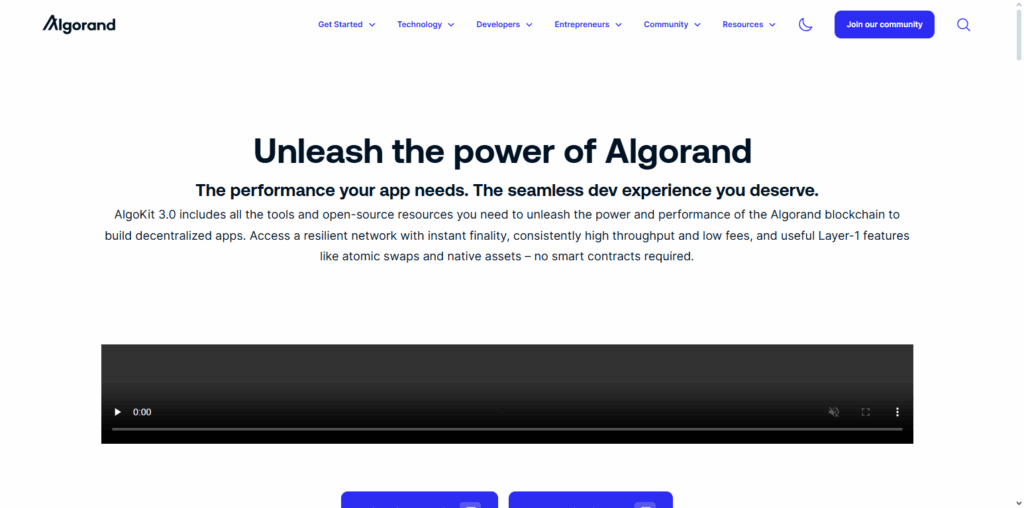
The network’s low costs and high scalability make the network ideal for micropayments and global financial applications and remittances.
Algorand also supports and unencumbered the network’s perforance smart contracts and tokenized assets. The network’s speed and efficiency creates an ideal and reliable platform for seamless and instant payments across the globe.
Algorand (ALGO) Features
- Pure Proof-of-Stake (PPoS): Transactions are finalized within a few seconds with the proof-of-stake consensus mechanism.
- Scalability: Absorbs thousands of transactions every second with no congestion.
- Low-Cost Transfers: Effective for global remittances and transactions with tokenized assets.
3. Stellar (XLM)
XLM (Stellar) is also one of the Fastest Blockchain Networks for Instant Payments. Thanks to Stellar’s consensus protocols, transaction finality can occur within 3–5 seconds.
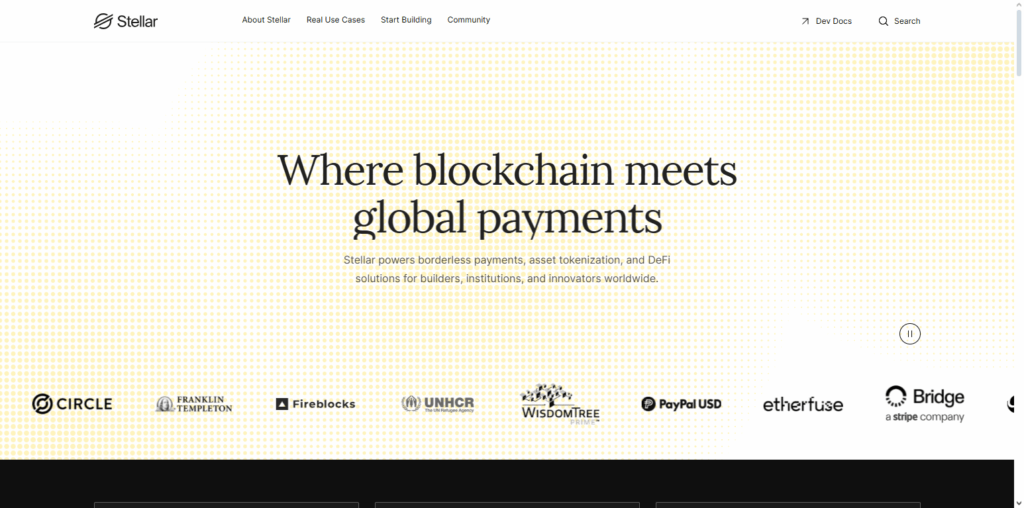
Because of this, the Stellar network is ideal for both large payments as well as micropayments as transaction fees are negligible. Stellar is uniquely able to connect both traditional and digital payments, enabling seamless payments and transfers across the banking systems, payment providers, and users worldwide.
Furthermore, Stellar’s systems are extremely lightweight, meaning that they can scale to a large number of users while consuming very little energy. Stellar excels in offering reliable fast transactions in the very low cost payments market.
Stellar (XLM) Features
- Optimized for Cross-Border Payments: Transfers are completed and finalized in internationally in 3–5 seconds.
- Fiat and Crypto Integration: Crosses the traditional financial systems with blockchain technology.
- Minimal Fees: Costs for transactions are exceedingly low whether it is a large or small payments.
4. NEAR Protocol
NEAR Protocol is a Fastest Blockchain Networks for Instant Payments made for immediacy of payments, lowest costs, and truncations in transactions due to sharding. The Nightshade sharding process breaks the blockchain into network pieces, so a greater number of transactions are processed in parallel growing the main compressible network.

NEAR architecture is developer-friendly, Heavily supported in smart contracts, and serves vertically diverse, highly elastic applications and their ecosystems, as micropayments, DeFi, and financial payments made realtime active services.
NEAR cross-order payments are at short countless settlement times and very green. Accessibility, coupled with its high speed and rapid settlement periods, means it is one of the most effective networks for quality, cross-border payments.
NEAR Protocol Features
- Sharded Architecture: Allows interchain parallelism for great scalability.
- Fast Transaction Finality: Instant payments with low-latency confirmations.
- Developer-Friendly: Allows smart contracts to be written for payments and DApps.
5. Avalanche (AVAX)
Avalanche (AVAX) is one of the fastest blockchain networks for instant payments due to its unique Avalanche consensus protocol which allows for near-instant transaction finality of under two seconds.
This fast and secure blockchain design allows for thousands of transactions per second while maintaining decentralization. Avalanche supports multiple ark-teched, accessible and scalable blockchains, allowing flexible payment solutions for diverse consumers.
Its energy-efficient architecture and low transaction fees allow it to excel at micropayments, DeFi products, and cross-border remittances. Unsurpassed in speed and reliability, the Avalanche blockchain enables cost-effective and secure instant payments in crypto and tokenized assets around the world.
Avalanche (AVAX) Features
- Avalanche Consensus: Provides rapid finality with transaction settlement in under 2 seconds.
- Interoperable Chains: Payment systems are flexible with the support of multiple blockchains.
- High Throughput with Low Fees: 110–4500 TPS with affordable transactions. Ideal for DeFi, micropayments, and payments across countries.
6. Celo
Celo is a mobile-optimized blockchain network engineered for instant payments. It aims at financially inclusive user bases such as mobile and unbanked users. It is designed and built to facilitate payments and remittance transactions by settling payments in seconds with few fees incurred.

Celo uses proof-of-stake with a network of validators to maintain decentralization, security, and throughput. One of the main modern features is the ability to send and receive value instantly to and from almost any country with no concerns regarding volatility tied to the asset as Celo is built for assets such as stablecoins and is integrated with several fiat-pegged assets. Because of low costs, speed, and true accessibility of the platform, Celo is a great network for instant and secure payments.
Celo Features
- Mobile-First Blockchain: Designed specifically for use by mobile users and the unbanked.
- Stablecoin Integration: Instant payments and volatility reduction.
- Fast and Cost-Effective: Global payments settled quickly at low costs.
7. Tron (TRX)
Tron (TRX) is a lightning-fast blockchain network that facilitates payments and meets the demands of large-scale distributed applications. Tron’s blockchain uses a unique delegate proof-of-stake (DPoS) consensus mechanism which enables the network to conduct thousands of transactions in seconds with almost zero fees and instantaneous transfers. This makes it optimal for micropayments and for payments that require currency to be transferred overseas.
This rapidly shifts digital currency contents. It is unique in that its network architecture is scalable, meaning that it can seamlessly add additional nodes to the network without compromising decentralization and security.
Tron’s blockchain can create and manage smart contracts which can be integrated into multi-platform applications. This makes the Tron network flexible. Tron has the best of all worlds in that it is fast and efficient which helps make payments more flexible and reliable.
Tron (TRX) Features
- Delegated Proof-of-Stake (DPoS): Thousands of transactions a second.
- Near-Zero Fees: Micropayments and the transfer of digital content is efficient.
- Smart Contract Support: Programmable payments and decentralized applications.
8. Harmony (ONE)
Harmony (ONE) is one of the Fastest Blockchain Networks for Instant Payments in the world, and the most scalable for instant global micropayments.
This is due to the network being able to partition itself into smaller pieces for easier processing of concurrent transactions called sharding. This way processing thousands of transactions simultaneously with little to no latency.

This is made even better with Harmony’s proof-of-stake model to ensure fast and secure decentralization.
What sets Harmony apart from the rest of the fastest blockchains is its cross-chain interoperability and its unique pathways to instant integrations of other blockchains to its adaptable smart contracts deployed in decentralized applications.
Harmony (ONE) Features
- Sharding-Based Scalability: Improvement of network speed and parallel processing of transactions.
- Instant Finality: Global payments quickly at low costs.
- Cross-Chain Compatibility: Scalable DApps and transactions across multiple chains.
9. Flow
Flow is a rapid and elevated blockchain network built for blockchain to provide instant payments and programmed for gaming and trade in NFTs. Its is a multi-role architecture that creates a dichotomy in the system for consensus, execution, and verification.
This allows the network to process thousands of transactions with no congestion for instant and final resolution. The unique architecture of Flow allows for expansion adaptable architecture that scales with demand, growing demand for easy reliable micropfee and high-frequency transactions.
Flow creates a developer-friendly assist for the seamless encapsulation of payment systems in consumer apps designed to assist payments and transactions in apps, creating flow. The balance of immense speed creation low transaction fees and expansion adaptable architecture creates a blockchain with a range of expansion that is fully operational to provided real-time instant payments.
Flow Features
- Multi-Role Architecture: High throughput is achieved by separating consensus, execution and verification.
- Optimized for Consumer Applications: Micropayments, gaming, and NFTs with instant settlement.
- Low Fees and Smart Contract Support: Programmable transactions for users and developers that are cost-effective.
Pros & Cons Fastest Blockchain Networks for Instant Payments
| Pros | Cons |
|---|---|
| High Transaction Speed – Networks like Solana, Avalanche, and Tron can process thousands of transactions per second, enabling near-instant payments. | Network Congestion Risks – Some blockchains can experience occasional slowdowns or downtime under extremely high loads (e.g., Solana). |
| Low Transaction Fees – Fast blockchains often have minimal fees, making micropayments and cross-border transfers cost-effective. | Centralization Risks – Some fast blockchains rely on fewer validators or DPoS mechanisms, which may compromise decentralization. |
| Scalability – Sharding and Layer-1 optimizations (NEAR, Harmony) allow high throughput for global payment networks. | Technical Complexity – Advanced architectures like Flow’s multi-role system or NEAR’s sharding can be harder for developers to implement correctly. |
| Instant Finality – Transactions settle within seconds, ideal for real-time payments and merchant adoption. | Ecosystem Limitations – Some networks may have fewer supported apps or fiat bridges compared to older blockchains like Ethereum. |
| Smart Contract Support – Most fast blockchains (Algorand, Avalanche, Solana) allow programmable payments and DeFi applications. | Volatility Risk – Payments in native crypto assets can be affected by price fluctuations unless using stablecoins. |
| Energy Efficient – Networks using PoS or variants (Algorand, Harmony, Celo) consume far less energy than traditional PoW blockchains. | Regulatory Uncertainty – Some fast blockcha |
Conclusion
To conclude, the most rapid blockchain networks like Solana, Algorand, Stellar, NEAR Protocol, Avalanche, Celo, Tron, Harmony and Flow have lightning speed, low transaction costs, and almost immediate transaction confirmations. this makes these blockchains very effective micropayments, cross-border remittances, and other time sensitive financial services.
Each of these networks has invested in various differentiating technologies to achieve the necessary scalability and security required for the network like sharding, proof of stake, and multi-role architecture.
Some have to make do with slight trade-offs in decentralization and with less than ideal throughput, but these technologies blockchains are a represent the future of reliable and instantaneous cross-border value transfer.
FAQ
What are the fastest blockchain networks for instant payments?
These are blockchains designed to process transactions quickly with minimal fees and near-instant finality. Leading examples include Solana, Algorand, Stellar, NEAR Protocol, Avalanche, Celo, Tron, Harmony, and Flow.
Why are these blockchains suitable for instant payments?
They offer high throughput, low latency, and minimal transaction costs, making them ideal for micropayments, cross-border transfers, DeFi applications, and real-time merchant payments.
Which consensus mechanisms allow such high speed?
Fast blockchains typically use Proof-of-Stake (PoS), Delegated Proof-of-Stake (DPoS), or unique hybrid models like Proof-of-History (Solana) and sharding (NEAR, Harmony) to process thousands of transactions per second efficiently.
Are transactions on these networks secure?
Yes, despite their high speed, these networks maintain security and decentralization through PoS validators, multi-role architectures, and cryptographic protocols to prevent fraud or double-spending.
Can these blockchains handle large-scale adoption?
Most of them are highly scalable, supporting thousands of transactions per second while enabling smart contracts, DApps, and cross-chain integrations for global payment systems.