


In this piece, I’ll talk about blockchain and artificial intelligence and how its combination is changing industries all around the world. Innovative solutions in supply chains, healthcare, banking, and other areas are being developed by fusing blockchain’s secure, transparent,
and decentralized infrastructure with artificial intelligence’s capacity for prediction and decision-making. AI-blockchain is positioned as a potential trillion-dollar technological revolution thanks to this synergy, which is boosting automation, efficiency, and trust.
What is Artificial Intelligence (AI)?
A subfield of computer science called artificial intelligence (AI) makes it possible for machines to simulate human intelligence, including learning, reasoning, problem-solving, and decision-making.
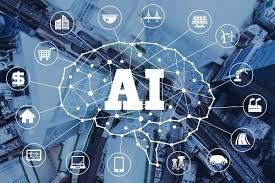
Without the need for explicit programming, AI systems analyze vast amounts of data to find patterns, forecast outcomes, and automate difficult operations. Natural language processing (NLP), computer vision, deep learning, and machine learning are examples of core technologies.
AI is widely used in a variety of industries, including retail for tailored suggestions, healthcare for diagnostics, finance for fraud detection, and autonomous cars for navigation. AI continuously improves through data, boosting productivity, accuracy, and creativity across industries and bringing about revolutionary change on a global scale.
What is Blockchain Technology?
Blockchain technology is a distributed, decentralized ledger system that safely and openly records digital transactions via a computer network. An unchangeable chain is created by grouping each transaction into a “block” and connecting it chronologically to the one before it.
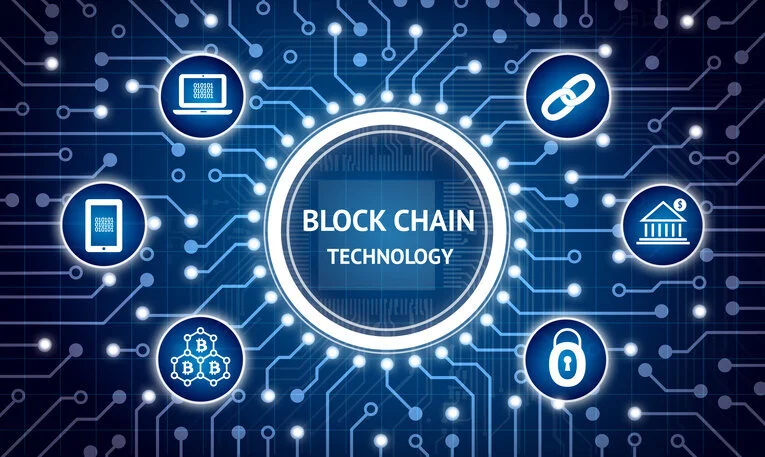
This arrangement removes the need for middlemen, lowers fraud, and guarantees data integrity. Decentralization, cryptographic security, consensus techniques, and transparency are important characteristics.
Decentralized finance (DeFi), supply chain tracking, smart contracts, and cryptocurrencies like Bitcoin and Ethereum are all built on blockchain. Blockchain is transforming industries and enabling safe, effective, and automated digital interactions globally by offering trustless, tamper-proof platforms.
Why Choose AI & Blockchain
Improved Security
Blockchain technology offers a more secure approach with its decentralized system ensured with integrity and AI technology that offers defense against internal and external threats in real-time.
Automation and Efficiency
Smart contracts with AI technology reduce needed manual labor and operational costs through the automation of more complex tasks.
Insight through Data analysis
Blockchain technology coupled with Artificial Intelligence offers more in-depth analysis and reporting to enhance better trade decisions.
Confidence in Transparency and Trust
Artificial intelligence in reporting and auditing technology in the industry coupled with blockchain technology offers more tamper-proof auditing and reporting.
Future Innovation in Various Domains
Integrating Artificial technology with blockchain offers more advancements in the various domains of finance, healthcare, supply chain, and others.
Key Industries Impacted
Finance & Banking
In this industry, finance and banking, the deployment of AI and Blockchain technologies improves the efficiency of operations, cost, and trust in the system. While AI identifies fraudulent activity, scores credit, and identifies trading algorithms, Blockchain provides automated contracts, transparent transactions, and offers decentralized finance solutions.
Healthcare
Healthcare departments use AI and Blockchain technologies to improve the health of their patients. AI helps to personalize the treatment of patients by analyzing and interpreting the data of the patients, whereas Blockchain helps patients to keep their information secured and private.
Supply Chains & Logistics
AI and Blockchain technologies help to enhance the value of supply chain and logistical operations. AI helps to predict demand and structures and builds the most efficient routes, while Blockchain helps to enhances the chain’s transparency by tracking the products.
Energy & Sustainability
Blockchain technology helps to create a better future by providing decentralized energy, trading of renewable resources, and carbon credits. Furthermore, AI helps to optimize the energy used in the system and to predict the demand of the energy.
Emerging Sectors
Several industries, such as media, IoT, gaming, and autonomous systems use technologies such as AI and Blockchain to create value. The use of Blockchain technologies provides the decentralized and safe infrastructure, while AI provides the intelligent implementations and automated services.
Benefits of AI-Blockchain Integration
Enhanced Security and Privacy
The integrated system of AI and Blockchain would use the decentralized and immutably secure structure of the Blockchain in conjunction with AI’s capabilities of anomaly detection and cyber-attacks monitoring to encapsulate sensitive information in a secure AI-powered system.
Automated Decision Making
The AI smart contracts that operate on the Blockchain would carry out operational tasks autonomously, irrespective of human involvement. Automated verification of transactions and rule enforcement as an operational cost reduction measure would be a significant increase in organizational efficiency.
Data Transparency and Trust
Trust by regulators, consumers and businesses is vested in the Blockchain’s provision of auditable and unchangeable records. The AI incorporated in the integrated system would process the unchangeable records of the Blockchain and provide the accurate insights.
Cost Efficiency
AI and Blockchain act as integrated system that reduce operational and administrative costs through process automation, reduction of errors and reduction of the number of intermediaries.
Innovation and Scalability
Advanced Technology and Growth as a result of Innovation and Scalability are the result of the integrated system that makes AI powered predictive dApps and new decentralized business models.
Challenges and Risks
Scalability Issues
Blockchain and AI tech can take up a lot of storage and computational power. Combining these two sets of technologies can result in high resource consumption and low overall speed to process transactions, causing a roadblock to adoption on a larger scale.
Regulatory and Legal Compliance
Politicians worldwide are still combating the legal and regulatory requirements of each technology. This leads to a large area of legal compliance concern, especially in relation to border-crossing country companies.
Data Privacy Issues
Blockchains are naturally transparent, which can be a problem because public blockchains can store sensitive data and because AI can process sensitive unconsented data. This can also be used to control the potentially sensitive information of others.
Cost and Energy Consumption
Blockchains are used to mine generally used energy, and AI generally reduces the energy to process data used, which creates a large concern financially, socially and environmentally.
Complexity of Integration
Adding or merging AI with Blockchain requires high-level technical knowledge, and this can cause issues like high ineffective or even unsafe systems.
Case Studies / Real-World Applications
SingularityNET
This project is an example of a decentralized marketplace for AI based on blockchain technology. Developers can offer and make money from their AI services. AI agents can collaborate with each other securely, and because of that, they can also promote more AI innovations.
Fetch.ai
This platform combined AI and blockchain technology to create autonomous so-called “digital agents” that can improve the efficiency of supply chains, energy grid systems, and transportation systems. Intelligent agents can perform tasks on the decentralized system without third parties, and, therefor, reduce operational costs.
Velas
This example of a high speed blockchain makes use of AI based transaction validation to improve the use of security, speed, and scalability of blockchains. It is used for decentralized finance (DeFi) services and nonfungible tokens (NFT) markets, and proves the beneficial impact of AI on blockchain.
Ocean Protocol
This platform uses Artificial Intelligence to monetize data on a blockchain. It also enables secure analysis of data. Businesses and researchers are offered high-tenable data, and they can keep ownership of it. This way, the platform closes the gap between decentralized data and AI analytics.
Applications in finance and the healthcare services
Some banks make use of the AI-blockchain combination for fraud detection and also apply smart contracts, on the other hand, healthcare systems apply AI for diagnostics and use blockchain to secure patient files. All of the mentioned applications improve the efficiency and the trust of the different systems.
Future Outlook
AI and blockchain integration are expected to increase exponentially in the future, maybe reaching trillion-dollar status.
As blockchain develops with scalable, energy-efficient solutions and AI advances in machine learning, natural language processing, and predictive analytics, its combined potential will revolutionize sectors like supply chain, energy, healthcare, and finance.
AI-driven smart contracts, autonomous systems, and decentralized AI networks will make decision-making quicker, safer, and more transparent.
AI-blockchain solutions are anticipated to propel global economic growth, generate new business models, and transform how enterprises handle data, trust, and automation with growing adoption, innovation, and regulatory clarity.
Pros & Cons
| Pros | Cons |
|---|---|
| Enhanced Security – Blockchain’s immutable ledger combined with AI anomaly detection ensures robust data protection. | High Costs – AI models and blockchain operations require significant computational power and energy, increasing expenses. |
| Automation & Efficiency – AI-powered smart contracts automate tasks, reducing manual effort and operational delays. | Scalability Challenges – Integrating AI with blockchain can slow transaction speeds and strain resources. |
| Data Transparency & Trust – Blockchain ensures tamper-proof records, while AI provides actionable insights. | Regulatory Uncertainty – Evolving laws for AI and blockchain create compliance risks. |
| Innovation & New Business Models – Enables decentralized applications (dApps) and AI-driven predictive solutions. | Integration Complexity – Technical expertise is needed, and poor implementation can lead to inefficiencies or vulnerabilities. |
| Cost Reduction Over Time – Reduces intermediaries, errors, and manual processes, lowering operational expenses. | Privacy Concerns – Public blockchains may expose sensitive data; AI processing can unintentionally leak information. |
Conclusion
Together, blockchain and AI are a revolutionary force that has the potential to completely change sectors and generate previously unheard-of economic value.
Businesses can automate procedures, improve trust, and find useful insights by fusing blockchain’s openness, security, and decentralization with AI’s intelligence and predictive powers. The potential advantages—innovation, efficiency, and new business models—far outweigh the risks, even while issues like scalability, regulatory uncertainty, and integration complexity still exist.
AI-blockchain integration is set to become a trillion-dollar revolution, influencing the future of technology, business, and international digital ecosystems as adoption spreads throughout the financial, healthcare, supply chain, and developing industries.
FAQ
What is AI and blockchain integration?
AI and blockchain integration combines artificial intelligence’s data analysis and decision-making capabilities with blockchain’s secure, decentralized ledger, creating efficient, transparent, and automated systems across industries.
Which industries benefit most from AI-blockchain?
Finance, healthcare, supply chain, energy, IoT, gaming, and media are among the primary sectors leveraging AI-blockchain to improve security, efficiency, and innovation.
What are the main benefits of combining AI and blockchain?
Key benefits include enhanced security, automated decision-making, transparency, cost reduction, and enabling new business models and decentralized applications (dApps).
What challenges does AI-blockchain face?
Challenges include high costs, scalability issues, regulatory uncertainty, data privacy concerns, and integration complexity.
Is AI-blockchain a trillion-dollar opportunity?
Yes. With growing adoption, technological advancements, and cross-industry applications, AI-blockchain is expected to create massive economic value and reshape global digital ecosystems.