


This article highlights leaders in the Best Payments‑as‑a‑Service Companies rankings including Stripe, PayPal, Adyen and others. These companies have the capability to build and maintain global payments networks, variety of payments methods, and solutions for small, mid-sized businesses and large enterprises. This makes them essential components of the financial ecosystem of today.
What is Payments-as-a-Service Companies?
Payments‑as‑a‑Service (PaaS) companies provide cloud‑based APIs for payment processing, settlement, fraud detection, and compliance.
As payment systems are complicated and expensive to develop and maintain, using PaaS companies helps businesses avoid these costs and handle transactions securely and efficiently. Stripe, PayPal, Adyen, and many others offer services such as multi‑currency payments, real‑time reporting, and digital wallets.
This model greatly helps small and medium businesses, as well as startups, as investing in payment systems is costly. The addition of payment systems is easier and much less time consuming due to outsourcing, and there are several added benefits, such as improved compliance and the ability to increase payment options worldwide.
Key Point
| Company | Best For | Key Strengths |
|---|---|---|
| Stripe | Rapid international expansion | Developer‑first APIs, fraud prevention (Radar), global rails coverage |
| PayPal | Global merchant acceptance | Ecosystem with Venmo & Braintree, strong consumer trust |
| Adyen | Enterprise omnichannel | Unified commerce, reconciliation‑grade reporting, dispute datasets |
| Braintree | Value & reporting | Deep settlement traceability, refund lifecycle visibility |
| Worldpay | Large merchants | Global acquiring, compliance‑ready integrations |
| Square (Block Inc.) | Retail POS ecosystems | Hardware + Cash App + Afterpay, strong SMB presence |
| Fiserv | Enterprise integrations | Core banking links, large‑scale reconciliation |
| Shopify Payments | Ecommerce storefronts | Seamless Shopify integration, subscription billing |
| Paymentus | Bill presentment automation | Utility & telecom billing, automated workflows |
| Billtrust | Invoice‑to‑cash | AR automation, visibility into receivables |
1. Stripe
Founded in 2010, Stripe offers Payments‑as‑a‑Service in San Francisco. As a developer-first choice, Stripe supports instant payouts in multiple regions and offers flexible settlement schedules.
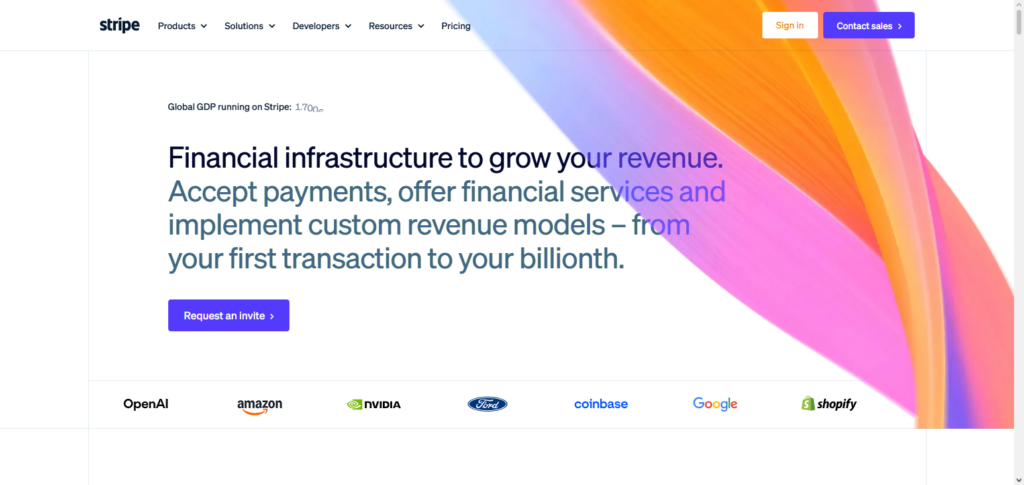
For typical transactions, Stripe charges 2.9% + $0.30 with volume-based discounts for enterprises. Payment options include 135+ currencies and a broad range of digital payment types, card, wallet, ACH, and local payment rails. Fraud is addressed through Stripe Radar.
In addition, Stripe expands into banking services via Stripe Atlas and Stripe Treasury. With a focus on international scaling across regions in North America, Europe, Asia, and emerging markets for startups and tech companies, Stripe is a top choice.
| Feature | Details |
|---|---|
| Founded | 2010, San Francisco |
| Payout Support | Instant payouts in supported regions |
| Pricing Model | 2.9% + $0.30 per transaction |
| Currencies | 135+ |
| Payment Methods | Cards, wallets, ACH, local rails |
| Global Coverage | North America, Europe, Asia, emerging markets |
Stripe Pros & Cons
Pros
- User-friendly integrations
- 135+ currency support
- 2.9% + $0.30 pricing for most
- Radar for fraud detection
- Comprehensive ecosystem
Cons
- Fees increase for international cards
- Complicated regional compliance
- Limited support via phone
- Longer settlements for more countries
- Startups may experience lock-in effect
2. PayPal
Founded in 1998, PayPal is a payment processing service and one of the earliest payment platforms. PayPal supports instant payouts to banking accounts and debit cards for a fee of 2.9%+ (depending on the currency, fixed fees may be applicable). PayPal serves 200+ markets and 25+ currencies, and enjoys unparalleled market dominance.
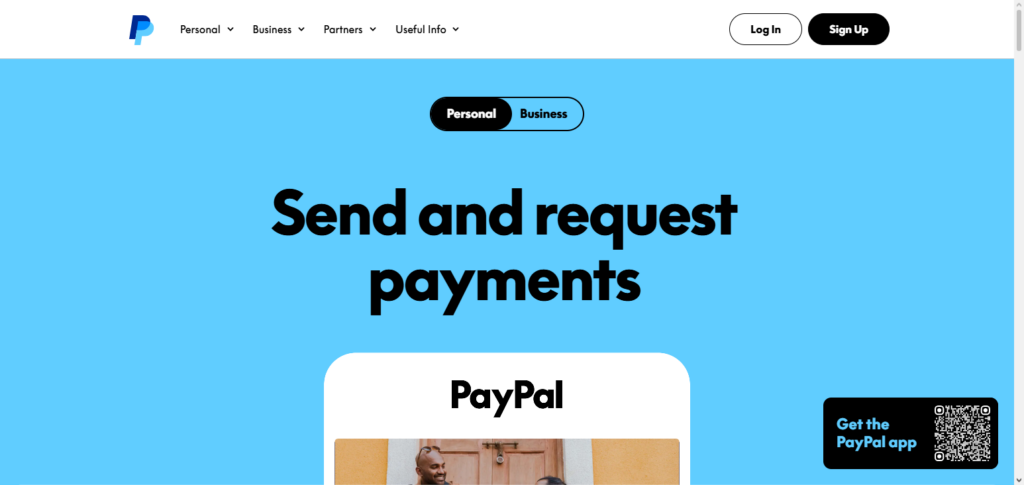
PayPal payment methods include PayPal balance, credit/debit cards, and Braintree integrations. PayPal offers PayPal Credit and PayPal Working Capital, in addition to their highly trusted payment/fraud protection systems. This payment processing option is ideal for vendors that need to expand their customer base and payment acceptance.
| Feature | Details |
|---|---|
| Founded | 1998, California |
| Payout Support | Instant to bank/debit card |
| Pricing Model | 2.9% + fixed fee (currency‑based) |
| Currencies | 25+ |
| Payment Methods | PayPal balance, cards, Venmo, Braintree |
| Global Coverage | 200+ markets worldwide |
PayPal Pros & Cons
Pros
- Global consumer trust
- 200+ markets and 25+ currencies support
- Instant fund transfers
- Venmo and Braintree
- Excellent buyer protections
Cons
- Higher fees for most transactions
- Merchant disruptions via account freezes
- Low developer customization
- Dispute resolution for buyer advantage
- Not a good fit for high volume businesses
3. Adyen
Founded in 2006, Adyen in the Netherlands,is a leading enterprise Payments‑as‑a‑Service provider. Fast settlement reports and direct integrations with PayPal vaults for fast payout processing make Adyen attractive to large merchants.
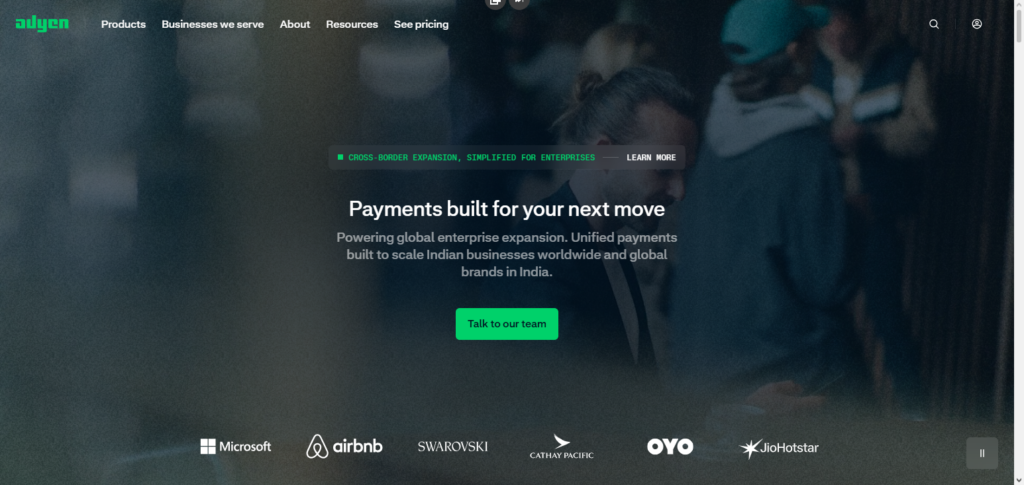
Adyen’s pricing model is card payment based on the interchange++ model, with a mark up for alternative payment methods. Adyen supports 150+ currencies and 250+ payment methods, including cards, wallets, and bank transfers. Adyen’s unified commerce platform helps merchants settle online and offline payments.
With a presence across Europe, North America, Africa, and South America, Adyen is a preferred partner for large enterprises like Spotify, Uber, and McDonald’s. Adyen stands out for compliance, scalability, and omnichannel flexibility.
| Feature | Details |
|---|---|
| Founded | 2006, Netherlands |
| Payout Support | Fast enterprise settlements |
| Pricing Model | Interchange++ |
| Currencies | 150+ |
| Payment Methods | 250+ (cards, wallets, local transfers) |
| Global Coverage | Europe, North America, Asia, Latin America |
Adyen Pros & Cons
Pros
- Seamless integration for large enterprises
- 250+ supported payment methods
- Clear pricing with interchange++
- Ideal analytics with unified reporting
- Excellent compliance with flexible scale
Cons
- Complicated for small businesses
- Higher cost of doing business
- Micro-businesses have limited options
- Pricing is less clear for small businesses
- Focus more on enterprise businesses
4. Braintree
Founded in 2007, Braintree is an easy to use Payments-as-a-Service platform acquired by PayPal in 2013. It has a business model similar to PayPal, offering quick payouts at a cost of 2.9% + $0.30 per transaction with discounts for high-volume transactions.
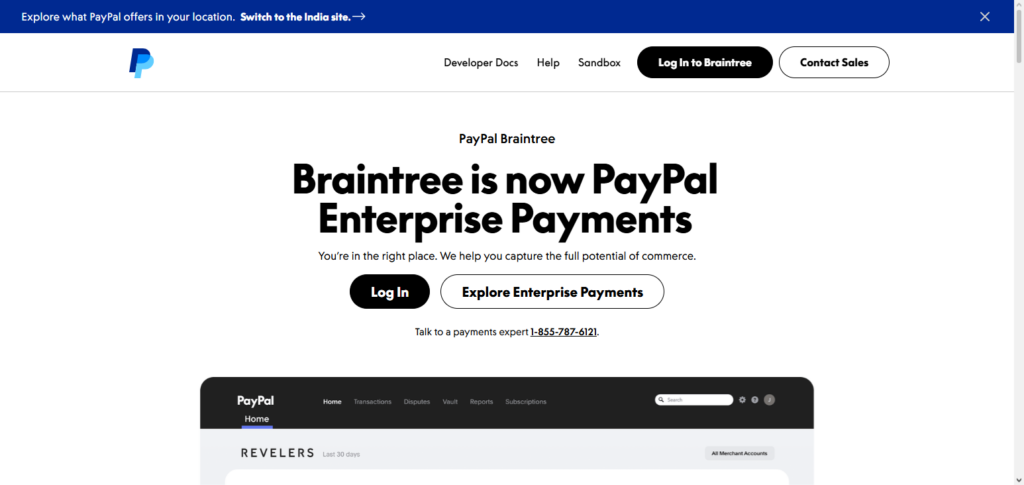
Braintree supports 130+ currencies and multiple payment methods like cards, PayPal, Venmo, and digital wallets. Braintree’s global reach spans North America, Australia, Asia, and Europe.
Braintree is known for advanced reporting and settlement transparency, which makes it ideal for businesses needing visibility and reconciliation of refunds or disputes. It’s a popular choice amongst large businesses like Uber and Airbnb for secure and scalable payments.
| Feature | Details |
|---|---|
| Founded | 2007, acquired by PayPal in 2013 |
| Payout Support | Quick payouts via PayPal rails |
| Pricing Model | 2.9% + $0.30 per transaction |
| Currencies | 130+ |
| Payment Methods | Cards, PayPal, Venmo, Apple Pay, Google Pay |
| Global Coverage | North America, Europe, Asia, Australia |
Braintree Pros & Cons
Pros
- Good integration options
- Payment methods support plus cards with Venmo
- Clear pricing with 2.9% + $0.30
- Notable reporting and visibility on settlements
- Service in all major world regions
Cons
- Less support than PayPal
- Higher fees for international
- Complicated process for refunds
- PayPal ecosystem dependency
- Not great for offline commerce
5. Worldpay Large merchants
Worldpay, founded in the UK in 1989 as a merchant acquirer, specializes in enterprise-level direct integrations and settlements with the ability to customize payment processing schedules. Pricing varies by merchant size with enterprise pricing models set often at interchange++ or blended pricing. Worldpay accepts 120+ international currencies along with 300+ payment methods, namely cards, wallets, and bank transfers.
It serves 146 countries, making Worldpay a top choice for large merchants. Worldpay has earned the trust of airlines, retailers, and financial services firms with its capabilities for compliance readiness, fraud prevention, and large-scale integrations. Enterprises with a focus on reconciliation and global acquiring consider Worldpay a leading Player for Payments-as-a-Service.
| Feature | Details |
|---|---|
| Founded | 1989, UK |
| Payout Support | Enterprise‑grade customizable schedules |
| Pricing Model | Interchange++ or blended rates |
| Currencies | 120+ |
| Payment Methods | 300+ (cards, wallets, bank transfers) |
| Global Coverage | 146 countries |
Worldpay Pros & Cons
Pros
- Acquiring in 146 countries
- 120+ currencies supported
- Compliance tools for enterprises
- Scalable fraud prevention
- Airlines and retailers are customers
Cons
- Pricing complexity
- Long merchant onboarding
- APIs that are less developer friendly
- Focuses on large enterprises
- Small business support is limited
6. Square (Block Inc.)
Square, now Block, Inc., was founded in 2009 by Jack Dorsey to transform SMB payments with POS hardware and its ecosystem. Block Inc. charges standard pricing of 2.6% + $0.10 for each transaction and offers instant payouts for an additional small fee.
Square supports major currencies across US, Canada, Japan, Australia, and the UK. Payment options include cards, Cash App, Afterpay, and other contactless wallets.
Square’s ecosystem integrates POS hardware, payroll, invoicing, and lending. Square is a good fit for SMBs who need a full retail solution and integrated hardware for digital payments.
| Feature | Details |
|---|---|
| Founded | 2009, USA |
| Payout Support | Instant payouts (fee‑based) |
| Pricing Model | 2.6% + $0.10 per transaction |
| Currencies | USD + select major currencies |
| Payment Methods | Cards, Cash App, Afterpay, wallets |
| Global Coverage | US, Canada, UK, Australia, Japan |
Square (Block Inc.) Pros & Cons
Pros
- POS with card and cash payment options
- Integrated hardware
- Instant payment at a cost of 2.6% and 10¢
- High small business market share
Cons
- Limited transaction options outside of US, UK, CA, AU and JP
- Costly transactions outside of ecosystem
- Integrated hardware means vendor lock-in
- Limited features for large business transactions
- Payment settlement delays outside of US
7. Fiserv
Founded in 1984 in Wisconsin, Fiserv is a global payments-as-a-service provider. Enterprise clients are able to negotiate flexible payout schedules and settlement reporting. Pricing models are defined by enterprise contracts and are often interchange++ with negotiated fees.
Fiserv supports 100+ currencies and numerous payment types including cards, ACH, and local rails. Its global coverage spans North America, Europe, Asia, and Latin America. Deep integrations with core banking systems, fraud and compliance prevention are hallmarks of Fiserv.
It is one of the payment service providers for banks and large corporations. For businesses needing scale, compliance, and integration with legacy systems, Fiserv is a top choice.
| Feature | Details |
|---|---|
| Founded | 1984, Wisconsin |
| Payout Support | Flexible enterprise schedules |
| Pricing Model | Enterprise contracts (interchange++) |
| Currencies | 100+ |
| Payment Methods | Cards, ACH, local rails |
| Global Coverage | North America, Europe, Asia, Latin America |
Fiserv Pros & Cons
Pros
- Strong integration with banking
- 100+ currencies supported
- Enterprise fraud and compliance tools
- Flexible payout options
- Large financial institution client base
Cons
- Enterprise contracts that are hard to navigate
- Limited small business support
- High rates for small businesses
- Dependent on old systems
- Limited advancement compared to rivals with fintech
8. Shopify Payments
Shopify Payments, launched in 2013, is the payment solution built for merchants using Shopify. It offers fast payouts to merchants’ bank accounts. Shopify Payments’ pricing comes in at 2.9% + $0.30 per transaction, but can go as low as 1.9% + $0.30 per transaction, depending on Shopify’s tier.
Shopify Payments offers multiple currencies and supports various payment methods, including card-based payments, Apple Pay, Google Pay, and wallet payments. Shopify Payments offers its payment solution across North America, Europe, Asia-Pacific, and several other regions.
Shopify Payments is integrated with the Shopify platform allowing for subscription management, fraud analysis, and reconciliation. For merchants on Shopify, it eliminates the need for a payment gateway and simplifies payment management, making it the best payment solution for e-commerce.
| Feature | Details |
|---|---|
| Founded | 2013, Canada |
| Payout Support | Fast payouts to merchant accounts |
| Pricing Model | 2.9% + $0.30 (tier‑based discounts) |
| Currencies | Multiple supported currencies |
| Payment Methods | Cards, Apple Pay, Google Pay, wallets |
| Global Coverage | North America, Europe, Asia‑Pacific |
Shopify Payments Pros & Cons
Pros
- Integrated with Shopify
- Cost of 2.9% and 30¢
- Payment options with cards, Apple and Google
- Integrated subscription support
- Integrated fraud prevention
Cons
- Support only for merchants using Shopify
- Integrated means vendor lock-in
- Less coverage globally than Stripe and PayPal
- High costs for transactions for lower Shopify plans
- Not great for businesses that are not ecommerce
9. Paymentus
Paymentus was founded in 2004 and specializes in bill presentment and payment automation. It offers fast payouts for utilities, telecom, and government clients. Paymentus offers pricing on a contract basis, either on a per transaction or per bill presentment basis.
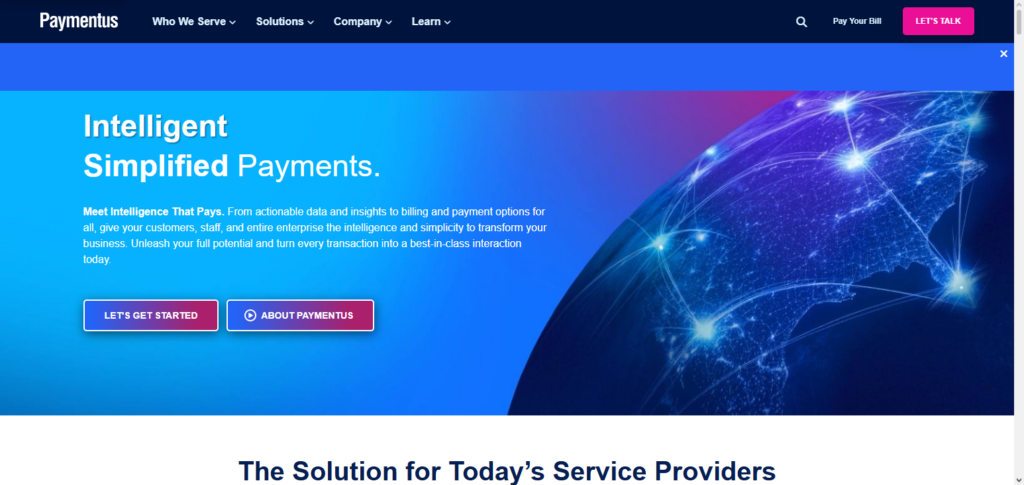
Paymentus supports multiple currencies and payment methods such as card payments, ACH, and digital wallet payments. Its focus is primarily North America, but it has been expanding to other regions. Paymentus is well known for its automation of billing workflows, customer portals, and ERP system integrations.
For organizations looking for automation that includes recurring billing and customer engagement, Paymentus is a leading provider of Payments-as-a-Service, with strong utility and telecom sector clients.
| Feature | Details |
|---|---|
| Founded | 2004, USA |
| Payout Support | Fast payouts for utilities/telecoms |
| Pricing Model | Contract‑based (per transaction/bill) |
| Currencies | Multiple |
| Payment Methods | Cards, ACH, wallets |
| Global Coverage | Primarily North America, expanding globally |
Paymentus Pros & Cons
Pros
- Stresses bill presentment automation
- Accommodates cards, ACH, and wallets
- High utility and telecom usage
- Client billing portals
- ERP cloud connectors
Cons
- Limited coverage outside North America
- Narrow focus on billing processes
- Less API developer friendly
- Enterprise deals set pricing within contracts
- Not meant for retail/ecommerce
10. Billtrust
Founded in 2001, Billtrust has a focus on automating accounts receivable and invoice-to-cash solutions. It supports payouts through integrated AR workflow automation. Pricing for Billtrust is based on transaction volume and enterprise contracts.
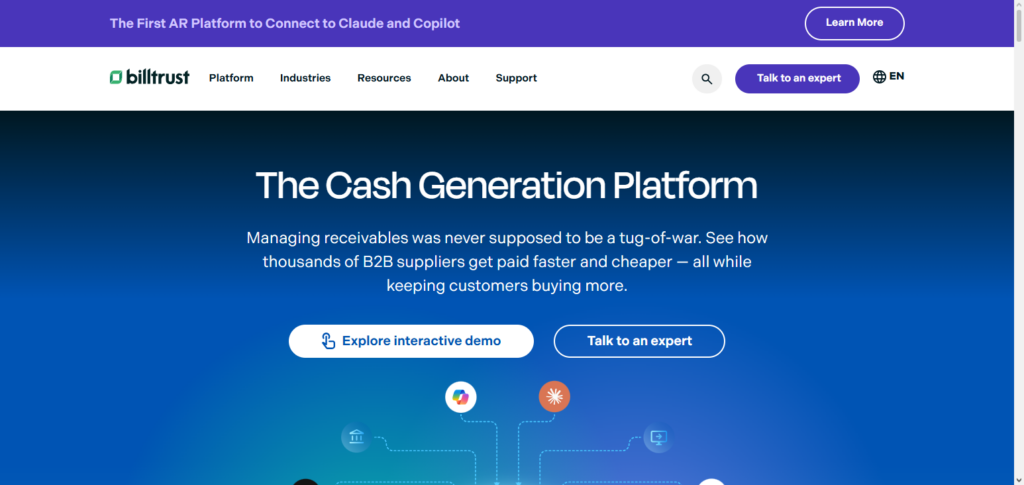
Billtrust supports multiple currencies and payment types like cards, ACH, and local transfers. It provides coverage in North America and other developing international markets. Billtrust has good receivables visibility, phone and email based invoice reminders, and reconciliation.
It connects to ERP systems and offers cash flow report and analysis tools. Billtrust is one of the top Payment-Service Providers for companies that need AR automation and payment visibility as it simplifies the invoice-to-cash process.
| Feature | Details |
|---|---|
| Founded | 2001, USA |
| Payout Support | Integrated AR workflows |
| Pricing Model | Volume‑based enterprise contracts |
| Currencies | Multiple |
| Payment Methods | Cards, ACH, local transfers |
| Global Coverage | North America, expanding internationally |
Billtrust Pros & Cons
Pros
- Specializes in AR automation and invoice-to-cash
- Accommodates cards, ACH, and domestic transfers
- Strong ERP integrations
- Receivables visibility
- Cash flow analytics
Cons
- Limited global coverage of Stripe and PayPal
- Narrow specialization in AR processes
- Enterprise deals set pricing within contracts
- Less appropriate for SMBs
- Not suitable for consumer-facing payments
Conclusion
Payments-as-a-Service has created a system of flexible payment solutions for businesses of all sizes and around the world. Stripe leads the market with its developer API solutions and currency flexibility, while PayPal is the most recognized brand, with the most far and wide reach of anyone in the industry.
Enterprise level companies, like Adyen, dominate the omnichannel, large merchant sector, while Braintree takes the cake for settlement and visibility.
For small to medium businesses (SMBs), Square (Block Inc.) has the most complete business retail system, and Shopify Payments makes it convenient to control ecommerce transactions.
On an enterprise level, Fiserv makes the banking system its primary focus, allowing for both compliance and structuring. Paymentus and Billtrust are more streamline oriented for their specific services, focused on automation and management of accounts receivable.
Your “best” choice of provider depends on the needs of your given business. If you’re just starting out, expect Stripe will enhance your business. If you have a global focus, PayPal or Adyen will work for you. Expect SMBs to lean towards Square. If you’re looking for stability in enterprise solutions, choose Fiserv or Worldpay. Paymentus and Billtrust will help you with their specialized focus.
FAQ
What is Payments‑as‑a‑Service (PaaS)?
Payments‑as‑a‑Service is a cloud‑based model that allows businesses to integrate payment processing, settlement, and compliance tools via APIs. Providers like Stripe, PayPal, and Adyen offer scalable solutions for startups, SMBs, and enterprises.
Which company is best for startups?
Stripe is the most developer‑friendly, offering 135+ currencies, transparent pricing, and advanced APIs. Startups benefit from its ease of integration and global reach.
Which provider is most trusted by consumers?
PayPal remains the most recognized and trusted brand worldwide, with 200+ markets and strong buyer protection policies.
Which platform is best for enterprise merchants?
Adyen and Worldpay dominate enterprise commerce, offering omnichannel solutions, compliance, and reconciliation tools for large merchants.