


In this article, I will highlight the Best Exchange-as-a-Service Companies providing white-label crypto exchange software to fintechs, enterprises, and web3 startups. The most reliable services offer liquidity, fair pricing, scalability, and top-tier KYC/AML compliance to build powerful and safe trading platforms for their customers worldwide.
What is Exchange-as-a-Service Companies?
Exchange-as-a-Service companies offer specialized products needed to set up and manage a trading platform. By using such services, businesses do not have to design and build the necessary IT systems, tools, and solutions from scratch. Instead, they can use existing products to open an exchange in a matter of time while delivering a high level of security and performance.
EaaS providers usually offer multi-asset exchange solutions for BTC, ETH, stablecoins, altcoins, etc. They also allow implementing a fair and transparent pricing model, provide highly scalable systems that can process several million transactions per second, and help achieve KYC/AML compliance.
Overall, EaaS is a great option for organizations that want to launch an exchange service as it allows reducing costs, time-to-market, and legal risks while ensuring institutional-level security for both startups and established players.
Why Choose Exchange-as-a-Service Companies
There are several advantages of utilizing Exchange-as-a-Service (EaaS) companies, as it provides businesses with ready-to-launch trading infrastructure to establish a crypto exchange platform. Here are some of the main benefits of using such services:
Faster Time-to-Market – Exchanges can be launched quicker since the software infrastructure, trading tools, APIs, liquidity access, wallets, and admin panel are already available ready to use.
Reduced Complexity – The crypto exchange technology stack has many interconnected elements, such as matching engines, blockchain connectivity, custody infrastructure, security tools, compliance tech, and trading APIs. An EaaS provider takes care of at least some of these components, thus reducing the scope of work for a business.
Trading Infrastructure – An exchange-as-a-service provider offers the required tools for order processing and execution, including order books, matching engines, trading APIs, order management systems, and market data feeds.
Liquidity Connections – Liquidity is crucial for a crypto exchange, as it determines the quality of order execution and affects user experience. Some providers offer access to liquidity aggregation platforms, market makers, crypto liquidity providers, and other sources of liquidity instead of building a marketplace solution from scratch.
Compliance Tools – Some providers offer KYC and AML solutions, transaction monitoring, screening tools, sanctions list checks, and other compliance technologies. In any case, it is vital to remember that a business is responsible for ensuring that all compliance-related aspects are properly regulated in its jurisdiction.
Multichain & Multi-Asset Support – EaaS solutions offer businesses the ability to natively support a wide range of crypto assets and blockchains.
APIs – API-based EaaS solutions are a great fit for fintechs, brokers, custodians, banks, and Web3 platforms that want to embed crypto trading into their existing interface instead of building a standalone exchange solution.
Security Infrastructure – An exchange-as-a-service provider usually takes care of some elements of security infrastructure, such as wallet custody, access control mechanisms, monitoring tools, hosting services, and more. It is vital to pay close attention to what security-related aspects are handled by the provider and what responsibilities fall under the client’s jurisdiction. This information is usually outlined in the SLA (Service Level Agreement) and technical documentation.
Branding & UX – It depends on the particular EaaS solution, but in many cases, businesses launch their branded crypto exchange with a custom interface, tokenomics, client onboarding process, fee schedules, trading instruments, and other elements of the user experience.
Reduced Maintenance & Upgrades – Instead of maintaining and upgrading the entire technology stack for trading, order processing, settlements, and more, a company can rely on the EaaS provider’s maintenance practices and technological upgrades.
Key Points
| Company | Strengths | Best For |
|---|---|---|
| B2Broker | White-label crypto exchange, deep liquidity | Fintechs & brokers |
| AlphaPoint | Institutional-grade exchange infrastructure | Enterprises needing scalable platforms |
| Binance Cloud | Liquidity + trading engine, global reach | Startups leveraging Binance ecosystem |
| Kraken Exchange Services | Regulated exchange APIs, custody integration | Institutions needing compliance |
| Coinbase Exchange-as-a-Service | Fiat on/off ramps, custody-grade APIs | Enterprises in regulated markets |
| OKX Exchange Solutions | Multi-chain support, DeFi integration | Web3-native exchanges |
| BitGo Exchange Infrastructure | Custody + liquidity, institutional focus | Banks & asset managers |
| Fireblocks Exchange Network | MPC-secured exchange APIs | Institutions needing secure settlement |
| LMAX Digital | Institutional-grade matching engine | Hedge funds & trading firms |
| Huobi Tech Exchange Services | Asia-focused liquidity + APIs | Firms targeting APAC markets |
1. B2Broker
B2Broker is a turnkey solution provider that offers exchange infrastructure with significant liquidity aggregation and multi-currency support. The company enables top-level KYC/AML processes for institutional and retail exchanges with the required security level.
B2Broker provides white-label brokerage, exchange, and wallet services that offer a wide range of digital assets, including major cryptocurrencies like Bitcoin and Ethereum, stablecoins, and other tokens. In terms of pricing, the company offers a transparent tariff system with various plans for brokerage, exchange, and wallet services.
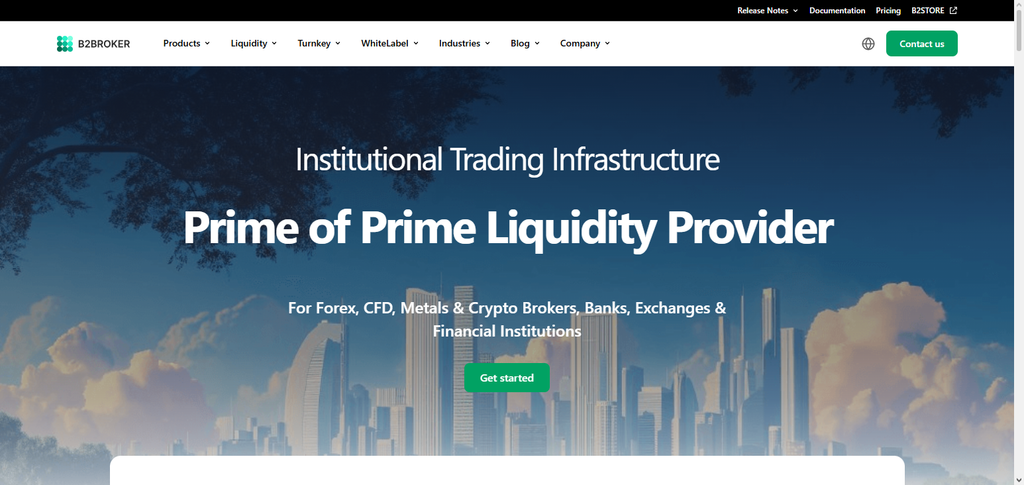
The platform is highly scalable because of its API-based design that allows easy connection to a trading engine and liquidity aggregators. Additionally, B2Broker offers KYC/AML compliance and transaction monitoring tools that help in achieving top-level operational security.
Overall, B2Broker is a great option for companies that want to launch a reliable exchange platform with a wide range of financial instruments and services.
B2Broker Features
• Supports BTC, ETH, stablecoins, and altcoins.
• Transparent modular pricing packages.
• Scalable API‑driven architecture with deep liquidity.
• Automated KYC/AML compliance workflows.
• Turnkey deployment for brokers and institutions.
| Advantages | Disadvantages |
|---|---|
| Wide cryptocurrency support including BTC, ETH, stablecoins | Licensing costs may be high for startups |
| Transparent modular pricing packages | Requires strong technical integration |
| Scalable API-driven architecture | Limited brand recognition compared to giants |
| Strong KYC/AML automation | Focused more on institutional clients |
2. AlphaPoint
AlphaPoint provides white-label exchange software that allows its clients to open crypto exchanges of different sizes and levels of complexity. The products support major cryptocurrencies such as Bitcoin and Ethereum, ERC20 tokens, and offer options to add listings.
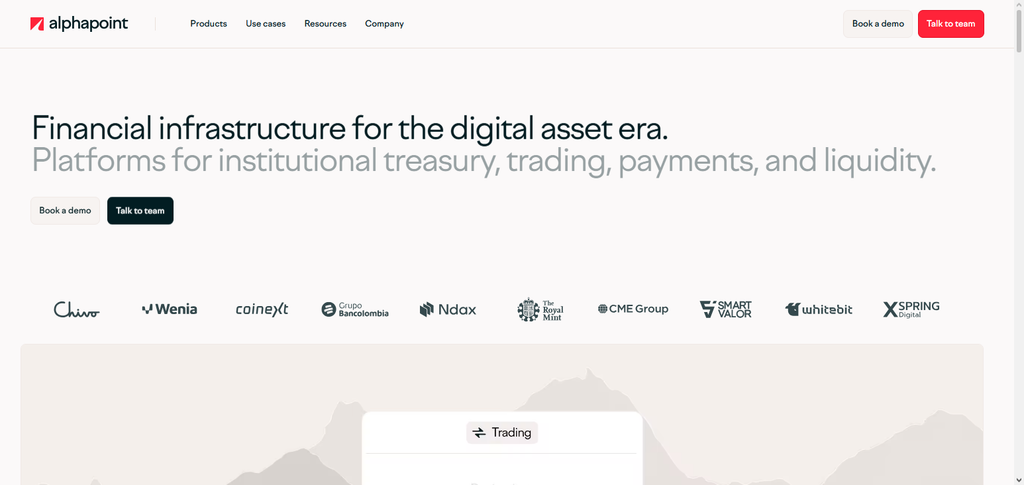
The company also offers flexible billing options and transaction volumes, which appeal to startups and established multi-billion-dollar companies. In terms of performance, the AlphaPoint matching engine can process several thousands of transactions per second, which ensures scalability.
The solution also stands out on the market due to its KYC/AML solutions that are embedded in the platform, offering reconciliation and audit capabilities. Overall, AlphaPoint attracts users with its exchange-as-a-service, execution traceability, and deep integration capabilities for exchanges of various sizes.
AlphaPoint Features
• Multi-crypto support for BTC, ETH, and ERC-20 tokens
• Clear licensing-based pricing
• High-performance matching engine
• Built-in KYC/AML procedures
• White-labeled exchange options
| Advantages | Disadvantages |
|---|---|
| Fast deployment of white-label exchanges | Smaller ecosystem compared to Binance/OKX |
| Supports BTC, ETH, ERC-20 tokens | Licensing fees may be restrictive |
| High scalability with strong matching engine | Limited liquidity compared to larger providers |
| Integrated KYC/AML workflows | Less global presence |
3. Binance Cloud
Binance Cloud offers an exchange-as-a-service product that provides access to Binance’s liquidity, security, and infrastructure. The cryptocurrencies offered are hundreds of assets available on the Binance platform, which is characterized by good market depth.
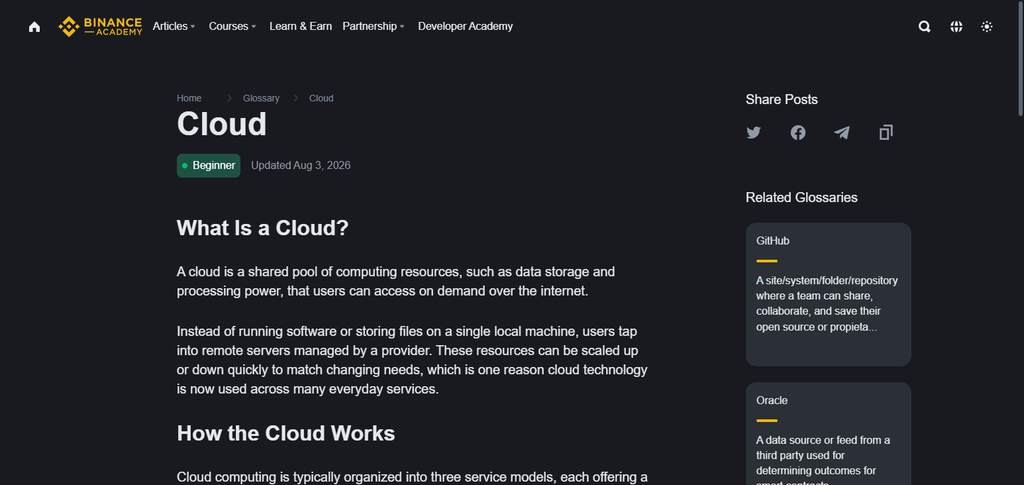
The cost is competitive since it is based on revenue sharing and not on direct cost-plus-margin licensing. Furthermore, the exchange can scale since it has the underlying infrastructure that can process millions of transactions daily. Finally, there is an option of KYC/AML compliance because Binance offers third-party identity verification checks and monitoring.
This service would be useful to entities that want to offer exchange services while benefiting from Binance’s market infrastructure and liquidity. Additionally, it would reduce costs due to the absence of direct licensing fees and provide compliance with KYC/AML standards.
Binance Cloud Features
• Full Binance token exchange access
• Revenue-based pricing model
• High-performance infrastructure
• Binance KYC/AML procedures
• Immediate liquidity access to Binance markets
| Advantages | Disadvantages |
|---|---|
| Access to Binance’s deep liquidity | Revenue-sharing may reduce profits |
| Supports hundreds of cryptocurrencies | Heavy reliance on Binance ecosystem |
| Scalable global infrastructure | Regulatory scrutiny in some regions |
| Built-in KYC/AML compliance | Less customization flexibility |
4. Kraken Exchange Services
Kraken Exchange services provide with institutional-grade infrastructure to make sure of the most efficient trade execution while maintaining compliance and custody infrastructure. BTC, ETH, LTC, and the largest alternative coins are supported on the platform.
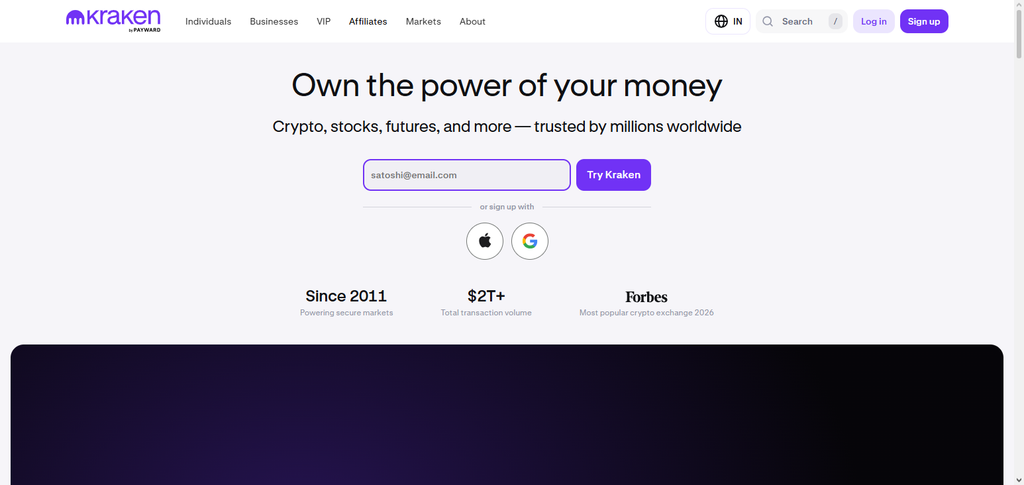
The company offers transparent pricing policy, which is presented on the official website in the Fees section or Enterprise page. It also has the capability to scale, which is ensured by Kraken’s high-end matching engine and API.
Advanced KYC/AML procedures allow meeting the US and EU regulations and other requirements. These features help institutional traders to choose Kraken as an exchange platform, as they are able to comply with regulators while executing trades efficiently and taking care of custody.
Kraken Exchange Services Features
• BTC, ETH, LTC, and altcoin support
• Transparent fee schedules
• Advanced order book technology
• Strong US/EU KYC/AML procedures
• Institutional custody solutions
| Advantages | Disadvantages |
|---|---|
| Strong compliance with U.S./EU regulations | Limited token listings compared to Binance |
| Transparent fee schedules | Higher fees for smaller operators |
| Institutional-grade scalability | Complex onboarding for startups |
| Robust KYC/AML integrations | Focused mainly on institutional clients |
5. Coinbase Exchange-
Coinbase Exchange provides a regulated infrastructure that ensures custody and compliance, which is especially important for institutional clients. Assets available on the platform include BTC, ETH, USDC, and many other ERC-20 tokens.
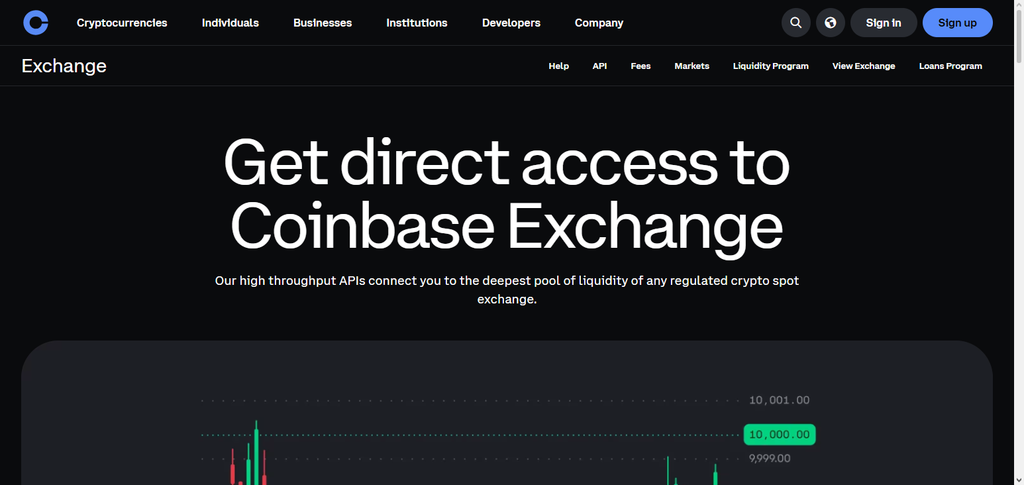
The exchange has transparent pricing that details all trading fees and institutional packages available. Additionally, Coinbase Exchange offers seamless scalability through its FIX and API trading connections and custody workflow in Coinbase Prime.
The exchange can also provide KYC/AML compliance integrations, which helps meet the regulatory requirements of the U.S. financial system. Overall, Coinbase is the preferred choice among institutional investors due to its adherence to compliance and custody principles and transparent operations.
Coinbase Exchange Features
• BTC, ETH, USDC, and ERC-20 token support
• Clear institutional pricing and fees
• FIX/API connectivity
• Comprehensive KYC/AML procedures
• Coinbase Prime custody integration
| Advantages | Disadvantages |
|---|---|
| Regulated U.S. infrastructure | Limited global coverage compared to OKX |
| Supports BTC, ETH, USDC, ERC-20 tokens | Higher transaction fees |
| Transparent pricing and custody integration | Less flexibility for customization |
| Strong KYC/AML compliance | Focused heavily on U.S. market |
6. OKX Exchange
OKX Exchange offers exchange infrastructure with increased liquidity and multi-asset support. Among the supported crypto assets are Bitcoin, Ethereum, stablecoins, and DeFi tokens. The platform ensures transparent pricing through publicly available fee schedules and enterprise solutions.
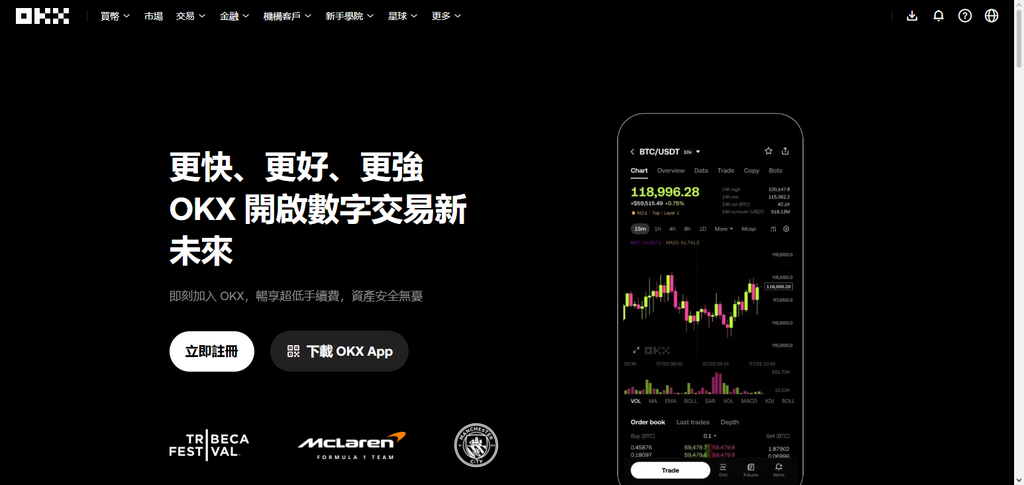
Moreover, OKX has an efficient matching engine that can process millions of orders per second, thus providing scalability. The exchange also offers KYC/AML integrations to help verify identities, monitor transactions, and ensure regulatory compliance. In general, OKX is the right choice for operators that want to provide their clients with an exchange that has global reach and liquidity.
OKX Exchange Features
• BTC, ETH, stablecoins, and DeFi token support
• Transparent fee schedules and enterprise plans
• High-frequency trading infrastructure
• Built-in KYC/AML procedures
• Global market reach and liquidity
| Advantages | Disadvantages |
|---|---|
| Supports BTC, ETH, DeFi tokens | Regulatory challenges in some regions |
| Scalable matching engine | Less transparent pricing in enterprise deals |
| Deep liquidity pools | Complex compliance requirements |
| Integrated KYC/AML tools | Focused more on retail than institutions |
7. BitGo Exchange Infrastructure
BitGo offers custody-governed exchange infrastructure, including custody of assets such as BTC, ETH, and many other ERC-20 tokens. It has excellent price transparency for the custody infrastructure and products. It also allows scaling of operations through API-driven provisioning and custody-controlled automation.
The BitGo exchange infrastructure comes with great KYC/AML integration, including audit logging and compliance processes built into custody functions.
The BitGo exchange infrastructure is appropriate for organizations looking to provide custody services in an exchange environment. Its custody governance makes it perfect for institutional clients due to the significant reduction in operational risks it provides.
BitGo Exchange Infrastructure Features
• Custody-focused infrastructure for BTC, ETH, and ERC-20
• Transparent custody and infrastructure pricing
• API-driven scalability
• Auditable KYC/AML procedures
• Institutional custody integration
| Advantages | Disadvantages |
|---|---|
| Custody-governed infrastructure | Limited token support compared to Binance |
| Transparent custody pricing | Higher costs for small exchanges |
| Strong compliance workflows | Focused mainly on institutions |
| Secure custody alignment | Less liquidity depth |
8. Fireblocks Exchange Network
Fireblocks Exchange Network provides secure transfer and settlement infrastructure. The supported cryptocurrencies include BTC, ETH, stablecoins, and DeFi tokens. The enterprise subscription model ensures transparent pricing. The security of the platform is ensured by its multi-party computation (MPC) technology, which allows for fast settlement of large volumes of transactions.
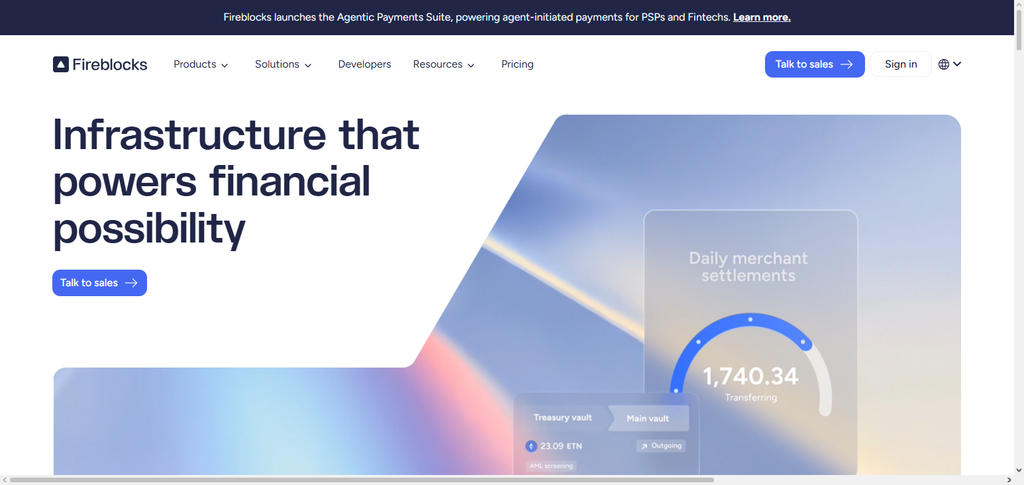
In addition, KYC/AML procedures are integrated into the settlement process. Fireblocks are used by exchanges that require custody-aligned settlement and operational transparency. The technology is useful in minimizing counterpart risk and enabling rapid transfers of assets between exchanges and custodians while maintaining compliance.
Fireblocks Exchange Network Features
• BTC, ETH, stablecoin, and DeFi exchange support
• Enterprise subscription-based pricing
• MPC-based security infrastructure
• Built-in KYC/AML procedures
• Custody-centric settlement approach
| Advantages | Disadvantages |
|---|---|
| Secure MPC technology for transfers | Subscription pricing may be costly |
| Supports BTC, ETH, stablecoins, DeFi | Focused on settlement, not full exchange |
| Scalable high-volume settlement | Limited trading features |
| Strong KYC/AML compliance | Requires integration with other platforms |
9. LMAX Digital
LMAX Digital Exchange is a platform that provides institutional-grade crypto exchange infrastructure. The exchange supports institutional trading in digital assets such as BTC, ETH, and other liquid crypto assets.
Transaction costs are explicit in the published LMAX Digital Exchange fees, and their institutional sales team works closely with partners to design reliable trading solutions.
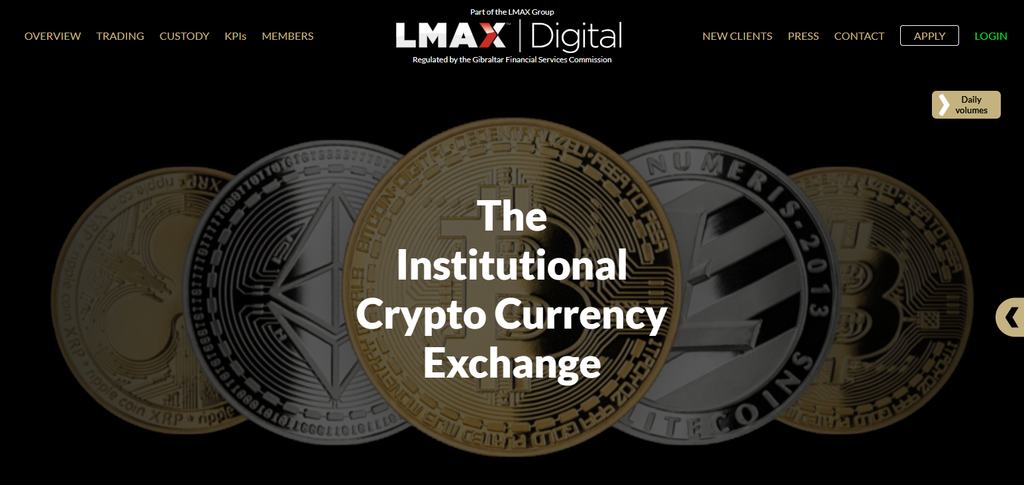
The platform’s matching engine was built to deliver high-performance trading solutions characterized by low-latency execution. In addition, KYC/AML protocols are institutional-grade and support end-to-end transaction monitoring and surveillance while adhering to global regulatory requirements.
Therefore, the exchange is a popular choice among hedge funds and institutional traders due to its reliability, significant liquidity, and transparent pricing. It is considered superior in terms of execution while being fully regulated for institutional investors.
LMAX Digital Features
• Institutional-grade BTC, ETH, and liquid crypto support
• Transparent fee schedules for institutions
• High-performance matching engine
• Comprehensive KYC/AML procedures
• Liquidity pooling infrastructure
| Advantages | Disadvantages |
|---|---|
| Institutional-grade infrastructure | Limited token listings (BTC, ETH mainly) |
| Transparent fee schedules | Not ideal for retail exchanges |
| High-frequency trading scalability | Focused only on institutional clients |
| Strong KYC/AML compliance | Narrow asset coverage |
10. Huobi Tech Exchange Services
Huobi Tech Exchange Services have an infrastructure that ensures liquidity and compliance. The supported currencies include BTC, ETH, stablecoins, and many alternative coins. The pricing is transparent as a result of publicly available fee schedules and enterprise pricing.
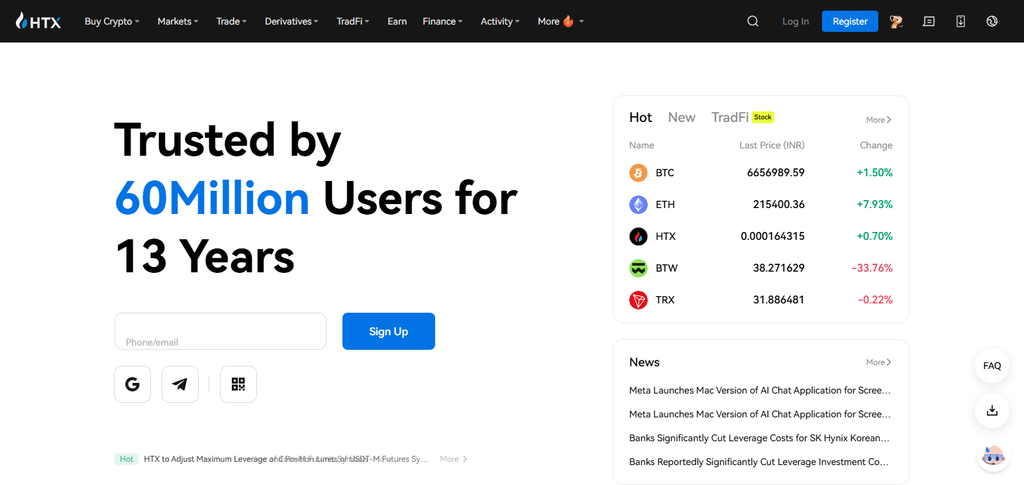
The exchanges are easily scalable by leveraging the technology of Huobi Global which processes millions of transactions on a daily basis. Furthermore, the services offer KYC, and AML solutions that facilitate transaction screening, identity verification, and reporting for compliance.
Huobi Tech is the preferred choice for operators looking to deal with the Asian market while providing high liquidity and compliance solutions for crypto exchanges. The company provides infrastructure that supports both institutional and retail exchanges with its enterprise products, which include compliance and scalable liquidity solutions.
Huobi Tech Exchange Services Features
• Supports BTC, ETH, stablecoins, and altcoins.
• Transparent fee schedules and enterprise pricing.
• Global infrastructure for millions of trades.
• Embedded KYC/AML verification and monitoring.
• Strong Asian market penetration with compliance.
| Advantages | Disadvantages |
|---|---|
| Supports BTC, ETH, stablecoins, altcoins | Regulatory challenges in Western markets |
| Transparent enterprise pricing | Less institutional adoption compared to Coinbase |
| Scalable global infrastructure | Heavy focus on Asian markets |
| Integrated KYC/AML tools | Liquidity depth varies regionally |
Conclusion
In conclusion, the major Exchange-as-a-Service providers that offer cloud-based cryptocurrency exchange platforms to organizations are B2Broker, AlphaPoint, Binance Cloud, Kraken, Coinbase, OKX, BitGo, Fireblocks, LMAX Digital, and Huobi Tech.
All the companies offer their clients various features and benefits in terms of supported coins, cost, and ease of use. It is also important to note that all the platforms are integrated with know-your-customer (KYC), anti-money laundering (AML), and overall trustworthy services for their customers.
In addition, most of them are focused on providing exchanges with high liquidity and scalability. In general, each provider ensures that businesses can create the most advanced crypto exchanges that will suit the needs of their clients and the market.
FAQ
What is Exchange-as-a-Service?
Exchange-as-a-Service (EaaS) is a turnkey solution allowing businesses to launch cryptocurrency exchanges without building infrastructure from scratch. Providers like B2Broker, AlphaPoint, and Binance Cloud deliver liquidity, compliance, and scalability in ready-made packages.
Which cryptocurrencies are supported?
Most providers support major assets like Bitcoin (BTC), Ethereum (ETH), and stablecoins. Platforms such as Kraken, Coinbase, and OKX also integrate ERC-20 tokens and DeFi assets, while LMAX Digital focuses on high-liquidity coins for institutional trading.
How transparent is pricing?
Pricing varies by provider. Binance Cloud uses revenue-sharing, while Coinbase and Kraken publish fee schedules. B2Broker and AlphaPoint offer modular licensing, ensuring clarity for startups and enterprises.
Are these platforms scalable?
Yes. Scalability is a core feature. OKX and Binance Cloud handle millions of trades daily, while AlphaPoint and LMAX Digital provide high-frequency matching engines. This ensures exchanges can grow without performance bottlenecks.