


In this article, I will be highlighting the Best Tokenization-as-a-Service Companies that offer enterprise-grade solutions for enterprises, banks and governments looking to tokenize real-world assets. From Ripple Labs to R3 and Fireblocks there are several innovative companies developing infrastructure that enables financial institutions to bridge traditional finance with crypto assets.
What Is Tokenization-as-a-Service?
Tokenization-as-a-Service is an innovative Cloud platform allowing organizations, banks, and governments to tokenize real-world assets on the blockchain. This technology allows tokenizing anything from a security or property to a commodity, stablecoin, CBDCs (central bank digital currencies), and payment instruments.
The key advantage of Tokenization-as-a-Service is that it provides companies with an end-to-end infrastructure for the issuance, custody, and lifecycle of digital tokens. Such a cloud-based solution also eliminates the need for time-consuming and complicated blockchain development and allows you to create a product meeting all regulatory requirements.
In addition, by integrating essential functions such as KYC/AML, compliance, and multi-chain interoperability solutions, Tokenization-as-a-Service aims to connect traditional finance and blockchain ecosystems.
Benefits Of Tokenization-as-a-Service Companies
Below are the benefits that companies that offer tokenization-as-a service to enterprises, banks, and governments provide:
Asset Digitization – Securitization of real-world assets such as securities, property, commodities, and cash into tokens on a blockchain platform facilitates their management and transaction.
Compliance Integration – The integration of KYC/AML, FATF recommendations, and jurisdiction-specific regulations into the companies’ software ensures that the process satisfies regulatory requirements.
Scalability – The services scale to accommodate the needs of financial institutions worldwide, including R3, Ripple Labs, and Fireblocks, which host billions of digital assets.
Security Infrastructure – The use of advanced encryption technologies such as Multi-party computing (MPC), Hardware Security Modules (HSM), and Quantum-resistant algorithms to secure tokenized assets.
Interoperability – The services have been designed to operate on multiple blockchain networks including Ethereum, XRP Ledger, Corda, Polymesh, and Polygon among others allowing permissionless transfers of tokens between different blockchains.
Cost Reduction – The companies offer cost-effective solutions regarding the creation and management of digital assets as compared to traditional methods.
Liquidity – Creation of liquid markets by enabling the tokenization of illiquid assets.
Institutional Adoption – The companies have the reputation of dealing with institutional entities including banks, governments, and enterprises involved in the development of central bank digital currencies (CBDCs), securities, and payment solutions.
Innovation – The products and services enable the traditional financial industry to experiment with decentralized finance (DeFi) applications, assets, and services.
Key Points
| Company | Strengths | Best For |
|---|---|---|
| R3 | Corda-based asset tokenization, enterprise-grade | Banks & financial institutions |
| IBM Blockchain | Hybrid cloud + tokenization frameworks | Enterprises needing compliance-ready solutions |
| Microsoft Azure Confidential Ledger | Secure tokenization APIs, enterprise integration | Corporates using Azure ecosystem |
| Consensys Codefi | Ethereum-based tokenization, DeFi-ready | Web3 startups & fintechs |
| Fireblocks | MPC-secured tokenization, custody-grade | Institutions needing secure asset issuance |
| Tokeny Solutions | Regulated asset tokenization, compliance modules | STOs & regulated token issuers |
| Polymath | Security token issuance, compliance automation | Enterprises issuing regulated securities |
| Securitize | SEC-registered platform, tokenized securities | US-regulated token offerings |
| Bitbond | Tokenized bonds, fintech integration | Financial institutions & SMEs |
| Ripple Labs | Tokenization for CBDCs & payments | Governments & central banks |
1. R3
Founded in 2015 and headquartered in London, R3 is a company that provides enterprise blockchain solutions. The company’s co-founder is David Rutter, and its blockchain platform, Corda, is used to tokenize real-world assets (RWA), digital assets, and currencies.
The company’s platform also offers interoperability and has more than 400+ CorDapps and over $10B in corded assets. R3’s platform is used by banks, corporations, and central banks to tokenize different assets while also working to ensure that the process is compliant with the relevant regulations.
R3’s permissioned DLT platform ensures confidentiality and compliance with pertinent regulations. The company’s network has more than 60 banks and over 100 industry participants, making it one of the largest permissioned blockchain platforms globally.
R3 works to provide interoperability between different assets and DeFi applications, making it a preferred provider of tokenization services to corporations, banks, and other approved entities.
| Feature | Pros | Cons |
|---|---|---|
| Founded 2015, London | Strong enterprise adoption via Corda | Limited retail use cases |
| Corda blockchain | Permissioned, privacy-focused | Less open-source flexibility |
| Supported Assets | Bonds, RWAs, CBDCs | Smaller DeFi integration |
| Compliance | Built-in regulatory workflows | Complex onboarding |
| Interoperability | Bridges TradFi & DeFi | Slower innovation pace |
| Ecosystem | 400+ CorDapps | Niche developer base |
| Scalability | Handles institutional volumes | Higher cost of deployment |
| Security | Permissioned DLT | Less decentralized |
| Market Reach | 60+ banks globally | Regional dominance in Europe |
2. IBM Blockchain
IBM announced the launch of Digital Asset Haven in 2025, based in New York, Armonk. This integrated platform facilitates tokenized asset transactions on over 40 public and private blockchains.
The software enables financial institutions to create wallets, execute transactions, and design frameworks that satisfy KYC/AML regulations, relying on Dfns custody technology. IBM utilizes MPC and HSM signing technologies for its cutting-edge cryptographic security, together with advisory services on quantum-resistant cryptography.
The firm also offers compliance infrastructure designed for policy governance, approvals, and cold storage orchestration. IBM’s compliance solutions are applicable to financial institutions, governments, and corporations, considering their capacity to address diverse regulatory requirements.
Additionally, the company’s platform deploys confidential computing platforms, including enterprise-level workflows, to gain the trust of clients interested in executing significant transactions and volumes in tokens or stablecoins.
| Feature | Pros | Cons |
|---|---|---|
| Founded Armonk HQ | Enterprise credibility | Less agile than startups |
| Multi-chain support | 40+ blockchains integrated | Complex governance layers |
| Custody | MPC/HSM cryptography | Expensive infrastructure |
| Compliance | Strong KYC/AML frameworks | Slower adaptation to new rules |
| Confidential Computing | Advanced privacy | Requires enterprise expertise |
| Scalability | Global enterprise reach | High operational overhead |
| Security | Quantum-safe roadmap | Limited DeFi integration |
| Partnerships | Governments & banks | Less focus on SMEs |
| Market Position | Trusted enterprise provider | Innovation speed slower |
3. Microsoft Azure
Microsoft Azure offers Wibmo Areion Token Hub as a Tokenization solution provided in partnership with various fintech companies. Based in Redmond, Washington, Microsoft’s cloud computing service enables tokenization for Visa, Mastercard, Amex, RuPay, and Diners.
It provides an innovative approach to card-on-file, recurring payments, and device tokenization while conforming to EMVCo. The tokenization solution highlights its compliance with Payment Card Industry Data Security Standard (PCI-DSS) and Payment Application Data Security Standard (PA-DSS) to ensure global acceptance of tokenized data.
Microsoft also offers region-specific data privacy compliance to guarantee that data privacy laws are adequately complied with across different geographical regions.
Microsoft Azure is designed to work seamlessly with various existing payment gateways, three-domain secure systems, and Access Control Systems (ACS) to ensure that processing payments is done without complications.
Moreover, the company provides an extensible platform for enabling future payments solutions such as UPI, net-banking, and wallets, making it an essential component of the financial ecosystem.
| Feature | Pros | Cons |
|---|---|---|
| Founded Redmond HQ | Cloud scalability | Heavy reliance on partners |
| Token Hub | Supports Visa, Mastercard | Focused on payments only |
| Supported Assets | Cards, recurring payments | Limited RWA tokenization |
| Compliance | PCI-DSS, EMVCo | Narrow compliance scope |
| Integration | Seamless with gateways | Less blockchain-native |
| Scalability | Global cloud reach | Dependent on Azure ecosystem |
| Security | Certified infrastructure | Less customizable |
| Extensibility | Future UPI/wallet support | Slow rollout timelines |
| Market Position | Payment tokenization leader | Not versatile for securities |
4. Consensys Codefi
Founded in 2014 by Ethereum co-founder Joseph Lubin, Consensys is a Switzerland-based company with offices across the globe.
The company’s Codefi platform provides tools for tokenization, payments, compliance, and staking on the most popular programmable blockchain. Codefi products offer to build, operate, and govern tokenized securities, real estate, and DeFi assets.
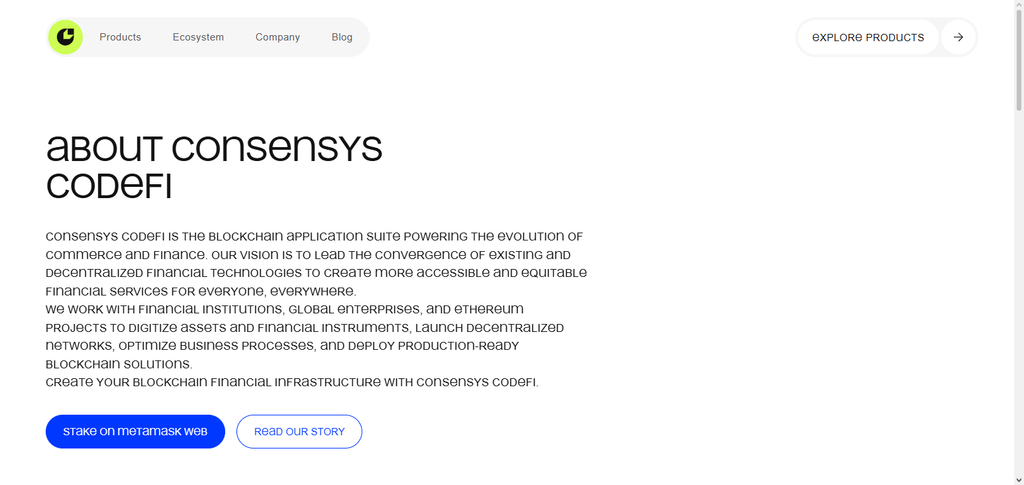
Codefi Assets provides asset tokenization solutions, while Codefi Data offers data and analytics. Codefi Payments is built for institutional-grade tokenized securities settlement, and Codefi Networks is developing modular blockchain infrastructure.
Codefi Compliance offers KYC/AML, KYT frameworks, and real-time reporting dashboards. Recently, the company has tokenized real-estate investment funds for Mata Capital, enabling investors to get exposure to a€1 deals.
With seven hundred fifty-seven employees, Consensys has become one of the largest companies in terms of enterprise Ethereum development and adoption while providing critical infrastructure for institutional finance.
| Feature | Pros | Cons |
|---|---|---|
| Founded 2014, Zug | Ethereum pioneer | Gas fees on Ethereum |
| Codefi Suite | Modular tokenization tools | Complex for beginners |
| Supported Assets | Securities, RWAs, DeFi | Limited permissioned support |
| Compliance | KYC/AML, KYT | Jurisdictional challenges |
| Blockchain | Ethereum-native | Scalability issues |
| Partnerships | Real estate funds | Less enterprise focus |
| Ecosystem | 757 employees globally | Competition from L2s |
| Security | Smart contract audits | Vulnerable to DeFi exploits |
| Market Position | DeFi + TradFi bridge | Less suited for banks |
5. Fireblocks
Founded back in 2018 in New York by Michael Shaulov, Pavel Berengoltz, and Idan Ofrat, Fireblocks is a fintech company valued at $8B with $1.04B raised and offering custodianship, tokenization, wallet-as-a-service, and stablecoin infrastructure.
The firm provides custody and settlement solutions for more than 3500 crypto assets on 150+blockchains, having facilitated over $6T transactions and minted 550M+ crypto wallets for 2,400+ institutions, including BNY Mellon and Revolut.
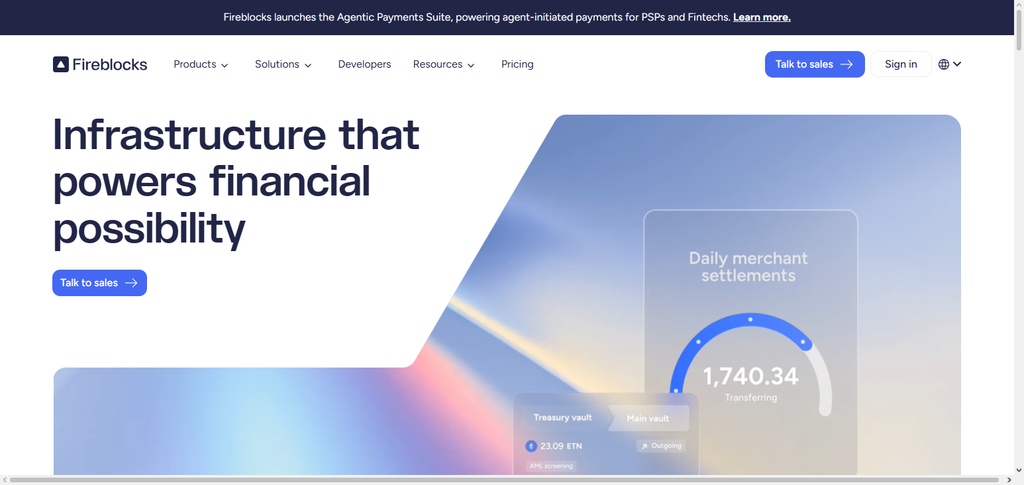
Additionally, Fireblocks offers compliance infrastructure, including its standard tokenization platform and MPC cryptography-based solutions, and DORA-compliant crypto asset custody packages, as well as cold storage orchestration middleware.
Fireblocks enables banks to issue tokenized bonds and has pioneered cross-border stablecoin payments. The firm’s treasury management platforms offer access to DeFi, wallets, and AI-agent payments, making Fireblocks one of the most sophisticated institutional enablers of tokenization infrastructure in the world.
| Feature | Pros | Cons |
|---|---|---|
| Founded 2018, New York | $8B valuation | Premium pricing |
| Custody | MPC cryptography | Complex integration |
| Supported Assets | Stablecoins, RWAs | Focused on institutions |
| Compliance | DORA packages | Limited retail adoption |
| Blockchain | 150+ supported | Fragmented ecosystem |
| Scalability | $6T+ processed | High enterprise dependency |
| Security | Cold storage orchestration | Requires advanced ops |
| Partnerships | BNY Mellon, Revolut | Less SME focus |
| Market Position | Institutional leader | Niche enterprise market |
6. Tokeny Solutions
Tokenization Platforms Companies: About Tokeny Report
The company was founded in 2017 by Luc Falempin and Daniel Coheur in Luxembourg and specializes in developing compliant tokenization platforms for securities.
The company has been acquired by Apex Group in 2025, and it pioneered the ERC-3643 open standard for compliant tokenization of financial instruments. The product enables multi-chain operations including Ethereum, Polygon, and Hedera and has been used to tokenize over 32 billion dollars in digital assets across more than a hundred different use cases.
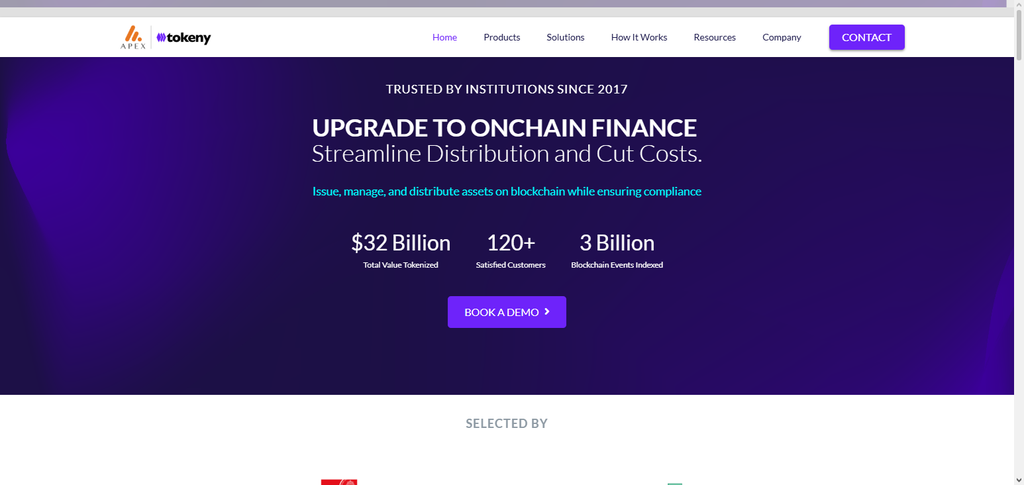
Additionally, KYC/AML onboarding procedures, digital identity infrastructure, and automation of corporate actions are among other compliance enablers that the company offers. Overall, Tokeny’s platform allows issuing and managing tokenized securities throughout their life cycle while distributing them across DeFi applications while also ensuring compliance with relevant regulations. The company’s products have been adopted by Euronext and PwC, while its offerings have enabled the creation of the BMEX tokens and the first tokenized fund in Luxembourg.
| Feature | Pros | Cons |
|---|---|---|
| Founded 2017, Luxembourg | ERC-3643 pioneer | Smaller global footprint |
| Supported Assets | Securities, funds | Limited stablecoin support |
| Compliance | KYC/AML onboarding | Regional regulation focus |
| Blockchain | Ethereum, Polygon, Hedera | Less multi-chain diversity |
| Ecosystem | $32B tokenized | Limited developer base |
| Partnerships | Apex Group, PwC | Less U.S. presence |
| Security | Identity integration | Dependent on standards |
| Scalability | 120+ use cases | Slower adoption globally |
| Market Position | European leader | Less global dominance |
7. Polymath
Polymath was founded in 2017 and is based in Toronto, Canada. The company has developed Polymesh, a blockchain platform designed to facilitate the launch of regulated digital securities. Polymath allows issuers to control their tokens through partnerships with law firms, KYC/AML providers, and custodians.
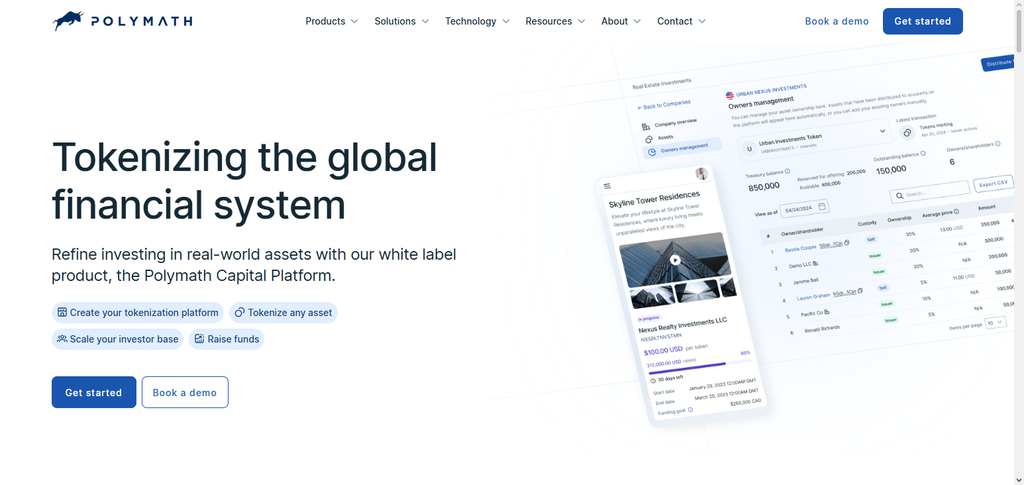
The platform enables the creation of regulated tokens representing various assets such as equities, debt instruments, real estate, and funds. Polymath’s specifications are based on the ERC-1400 standard for issuing tokens on the Ethereum blockchain. The company was acquired in 2026; however, it continues to operate as a subsidiary serving 44 employees.
Polymath provides compliance infrastructure, which includes identity management, regulatory know-how, and corporate action automation to brokers, dealers, custodians, and asset managers. Additionally, Polymath offers white-label solutions enabling asset managers and broker-dealers to provide their clients with tokenized securities.
| Feature | Pros | Cons |
|---|---|---|
| Founded 2017, Toronto | Polymesh blockchain | Niche securities focus |
| Supported Assets | Equity, debt, funds | Limited stablecoin support |
| Compliance | ERC-1400 standard | Complex regulatory workflows |
| Blockchain | Polymesh optimized | Smaller ecosystem |
| Partnerships | Broker-dealers | Limited global reach |
| Security | Identity verification | Less DeFi integration |
| Scalability | Institutional-grade | Smaller adoption base |
| Ecosystem | 44 employees | Limited resources |
| Market Position | Regulated securities leader | Narrow specialization |
8. Securitize
Securitize was founded in 2017 by Carlos Domingo in San Francisco.
It has an office in Miami and is registered with the SEC as a transfer agent, broker-dealer, and operator of an alternative trading system.
The firm has tokenized more than 4 billion dollars in assets and provides services to 1.2 million investors. It has developed DS Protocol, or ERC-1400, which is built into smart contracts and ensures that only compliant transfers are made in real time. Additionally, the protocol verifies the identity of the recipient of the securities.
The assets secured by Securitize include Treasuries, private equity, funds, and corporate securities. BlackRock and VanEck are among the company’s partners, and the firm offers compliance solutions for KYC/AML, Reg D, Reg A+, Reg S, and Rule 144A offerings. It is the most vertically integrated securities platform in the United States and the EU.
| Feature | Pros | Cons |
|---|---|---|
| Founded 2017, San Francisco | SEC-registered | U.S.-centric |
| Supported Assets | Treasuries, PE, funds | Limited global reach |
| Compliance | Reg D, Reg A+, Reg S | Complex legal frameworks |
| Blockchain | Ethereum-native | Gas fee challenges |
| Ecosystem | 1.2M investors | Limited retail expansion |
| Partnerships | BlackRock, VanEck | Focused on institutions |
| Security | DS Protocol | Smart contract risks |
| Scalability | $4B tokenized | Smaller compared to Fireblocks |
| Market Position | U.S. compliance leader | Less multi-chain support |
9. Bitbond
Bitbond was founded in Berlin in 2013 by Radoslav Albrecht. Initially focused on blockchain lending, the company shifted its emphasis to tokenization. Bitbond issued Europe’s first security token bond (BB1) that was approved by BaFin in 2019.
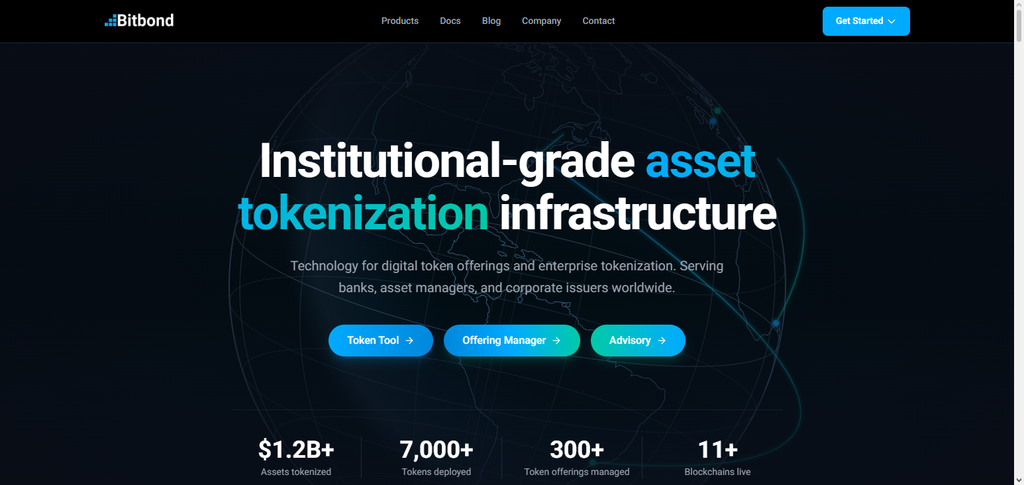
The company provides access to more than 11 blockchain platforms and has already tokenized more than $1.2 billion in 300+ offers. Bitbond’s products include a no-code tool for smart contract deployment called Token Tool, Offering Manager, and Advisory.
The company has compliance infrastructure future-proof for regulations such as MiCA and eWpG and offers native KYC/AML and multi-currency support. Bitbond has partnered with ABN AMRO, UniCredit, and Siemens to offer institutional-grade tokenization rails to banks and corporations. Bitbond aims to standardize the issuance of digital securities in regulated markets worldwide.
| Feature | Pros | Cons |
|---|---|---|
| Founded 2013, Berlin | BaFin-approved | Regional focus |
| Supported Assets | Bonds, securities | Limited DeFi assets |
| Compliance | MiCA, eWpG | EU-centric compliance |
| Blockchain | 11+ supported | Smaller ecosystem |
| Ecosystem | $1.2B tokenized | Limited global scale |
| Partnerships | ABN AMRO, Siemens | Less U.S. presence |
| Security | Multi-currency support | Less advanced custody |
| Scalability | 300+ offerings | Smaller adoption base |
| Market Position | European pioneer | Narrow market reach |
10. Ripple Labs
Ripple is a blockchain infrastructure company with a presence in San Francisco, California. It was founded in 2012 and provides institutional payment, custody, and real-world asset tokenization solutions. The company utilizes the XRP Ledger (XRPL) to tokenize different assets, including securities, stablecoins, funds, bonds, real estate, commodities, and others.
In other words, Ripple allows institutions to issueRWAs, tokenize them using XRPL’s fast settlement speed and low-cost transactions, trade with the help of XRPL’s native trading infrastructure, and employ metadata, escrow, and asset-control features, among other things.
Moreover, the company’s tokenization infrastructure enables issuing, compliance, lifecycle management, redemption, and multi-chain distribution of tokens.
The compliance framework offered by Ripple covers KYC/KYT checks, sanctions screening, transfer restrictions, freezes, and clawbacks with the aid of Chainalysis and Elliptic. Finally, its newer Multi-Purpose Token (MPT) standard offers built-in compliance, metadata, authorization, and control solutions for institutional-grade tokenization.
| Feature | Pros | Cons |
|---|---|---|
| Founded 2012, San Francisco | Early blockchain pioneer | Regulatory challenges (SEC) |
| Supported Assets | Stablecoins, CBDCs, RWAs | Limited DeFi integration |
| Compliance | KYC/AML, FATF | Ongoing legal disputes |
| Blockchain | XRP Ledger | Less developer adoption vs Ethereum |
| Ecosystem | 1,100 employees | Narrow developer base |
| Partnerships | Central banks | Limited retail focus |
| Security | Smart contract restrictions | Less open-source flexibility |
| Scalability | 50+ countries | Regional adoption variance |
| Market Position | CBDC & payments leader | Legal uncertainty |
Conclusion
The development of the industry of tokenization-as-a-service concept is changing the way financial institutions, enterprises, and governments engage in digitizing real-world assets. Some of the most notable companies active in the market include Ripple Labs, R3, IBM Blockchain, Microsoft Azure, Consensys Codefi, Fireblocks, Tokeny Solutions, Polymath, Securitize, and Bitbond.
The companies are known for their innovative approaches to blockchain-based tokenization services, compliance infrastructure, and underlying technological solutions for creating and issuing tokens. All these companies are considered the most progressive and attractive for investors due to their ability to offer end-to-end digitization solutions and support future markets.
FAQ
What is Tokenization-as-a-Service?
It’s a platform that allows enterprises, banks, and governments to digitize real-world assets (RWAs) like securities, real estate, or currencies into blockchain-based tokens.
Who are the top providers?
Leading companies include Ripple Labs, R3, IBM Blockchain, Microsoft Azure, Consensys Codefi, Fireblocks, Tokeny Solutions, Polymath, Securitize, and Bitbond.
What assets can be tokenized?
Assets range from stablecoins, CBDCs, securities, real estate, commodities, and funds depending on the provider.
Which blockchains are supported?
Platforms support Ethereum, XRP Ledger, Corda, Polymesh, Polygon, Hedera, and multi-chain interoperability.