

I’ll go into great length about Binance’s security infrastructure, regulatory compliance, hazards, and general dependability in my post on whether it’s safe for US users.
We will look at Binance.US’s protections, how it complies with US regulations, and whether or not US traders may utilize the platform with confidence in 2026.
What Is Binance?
Changpeng Zhao created Binance, one of the biggest cryptocurrency exchanges in the world, in 2017. Digital assets like Bitcoin, Ethereum, and hundreds of other cryptocurrencies can be bought, sold, traded, and stored by users.
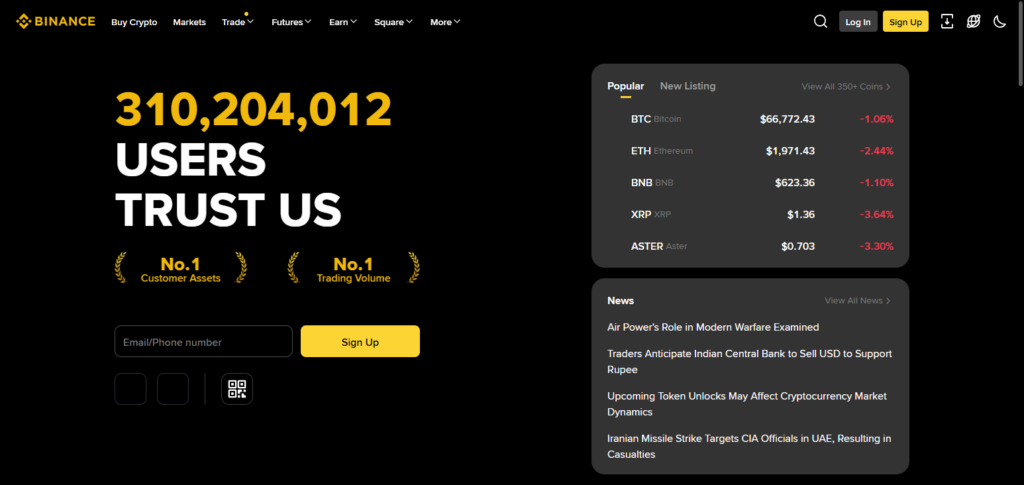
Spot trading, futures and margin trading, staking, savings products, NFTs, and cryptocurrency wallets are among the services that Binance provides. Binance is a different platform for people living in the United States.The US operates in accordance with US regulations.
Binance, which serves millions of customers worldwide and places a strong emphasis on security, compliance, and blockchain innovation, is well-known for its low trading costs, sophisticated tools, and high liquidity.
Is Binance Safe for US Users?
For Americans, using Binance is essential to safety.US instead of the international Binance platform, which does not have a license for users in the US. Binance.In addition to adhering to Know Your Customer (KYC) and Anti-Money Laundering (AML) regulations, the US employs industry-standard safeguards like encryption, withdrawal whitelisting, cold wallet storage, and two-factor authentication (2FA).
Users still have to deal with market and custodial risks because bitcoin holdings are not covered by the FDIC. Regulators including the U.S. Securities and Exchange Commission have previously taken regulatory action against Binance’s parent business, raising questions regarding compliance.
Though customers should activate all security settings and refrain from keeping sizable long-term holdings on any exchange, Binance.US can be regarded as generally secure overall.
Binance Security Infrastructure in 2026
In 2026, the following are the main security mechanisms and features that safeguard users, particularly on Binance.US and the larger Binance ecosystem:
Advanced Encryption Protocols
To safeguard user information and transactions, data and communications are encrypted using robust, industry-standard encryption.
Cold Wallet Storage
To reduce vulnerability to online hacks, most digital assets are kept offline in cold wallets.
Two-Factor Authentication (2FA)
Required 2FA (email, SMS, or authenticator applications) adds an additional layer of authentication for withdrawals and account access.
Multi-Tier Access Controls
Access limitations and role-based permissions lower the risk of internal or external threats.
Anti-Phishing and Security alarms
Users may identify malicious emails and login attempts with the aid of built-in alarms and anti-phishing codes.
Real-Time Monitoring & AI Detection
Machine learning systems keep an eye out for questionable activities and highlight possible fraudulent conduct.
Withdrawal Whitelisting
Users can limit withdrawals to wallet addresses that have been pre-approved.
Tips for Staying Safe on Binance
Turn on two-factor authentication (2FA
For better defense against SIM-swap attacks, use a hardware security key or Google Authenticator in place of SMS.
Turn on the Withdrawal Whitelisting feature.
Limit withdrawals to wallet addresses that have been pre-approved to stop illegal transfers in the event that your account is compromised.
Make Use of a Secure, Distinct Password
Make a complicated password that is unique to this platform. Think about utilizing a trustworthy password manager.
Activate the Phishing Code
To ensure that official emails actually originate from Binance, set up the anti-phishing code.
Steer clear of public Wi-Fi when trading.
Hacking dangers are increased by public networks. Always use a private, secure internet connection when trading.
Keep Large Amounts in a Cold Wallet
Rather than leaving long-term cryptocurrency investments on an exchange, keep them in a private hardware wallet.
Continually Track Account Activity
Examine withdrawal records, device management, and login history to spot questionable activities fast.
Watch Out for Fraudulent Apps and Scams
You should only download the official Binance app, and you should never give anyone your verification codes or private keys.
Past Security Incidents & Lessons Learned
The Global Binance Hack of 2019
Due to a significant security compromise, Binance’s global platform lost 7,000 BTC. Increased monitoring and wallet segregation resulted from the incident, which brought attention to the dangers of centralized exchanges.
Actions for Regulatory Enforcement
Stronger compliance procedures have resulted from authorities such as the U.S. Securities and Exchange Commission scrutinizing and fining Binance businesses.
Enhanced Openness Procedures
In order to foster trust after the event, Binance expanded its reporting on security procedures, system audits, and user education materials.
Enhanced Guidelines for Cold Storage
To lessen vulnerability to internet threats, more assets are being kept offline.
Risks of Using Binance for US Users
Uncertainty in Regulation
The laws governing cryptocurrencies in the US are still being developed. The operations of the platform or the services that are offered may be impacted by ongoing oversight by authorities such as the U.S. Securities and Exchange Commission.
Restricted Functionalities in Comparison to Global Binance
Binance.Because of regulatory limitations, the US platform provides fewer trading pairs, goods, and advanced capabilities than the global Binance site.
Custodial Exchange Risk
The platform has control over the private keys when users store cryptocurrency on an exchange. User funds may be impacted if the exchange encounters technical difficulties or security breaches.
Concerns about Customer Service
Some users complain about poor response times or trouble fixing account problems, which can be annoying in crucial circumstances like delayed withdrawals.
Comparison With Other US Crypto Exchanges
| Feature | Binance.US | Coinbase | Kraken |
|---|---|---|---|
| Regulatory Compliance | Complies with U.S. rules but limited state availability | Licensed & regulated in all U.S. states | US-compliant, strong oversight and legal standing |
| Security | Cold storage, SAFU fund, 2FA | ~98% cold storage, FDIC protection (USD), audits | Cold storage, proof-of-reserves audits, long security track record |
| Trading Fees (Maker/Taker) | ~0.10%/0.10% — low fees | ~0.40%/0.60% on Advanced | ~0.16%/0.26% |
| Supported Cryptos | ~150+ | ~200+ | ~600+ (more altcoins) |
| User Experience | Better for fee-savvy, advanced traders | Simplest for beginners | Strong for security-focused traders |
| Insurance & Protection | SAFU fund; no FDIC on crypto | FDIC on USD; insurance for some crypto | Insurance varies; emphasizes proof of reserves |
| Advanced/Extra Features | Spot trading, staking, APIs | Staking, crypto wallet, fiat rails | Staking, margin & futures (varies) |
Conclusion
Binance.If the US is used appropriately and with the right security measures, it can be regarded as reasonably safe for US users in 2026. The platform maintains compliance standards, adheres to U.S. regulatory regulations, and employs robust security mechanisms like cold storage, two-factor authentication, encryption, and withdrawal protections.
Like all cryptocurrency exchanges, it does, however, come with dangers, such as market volatility, regulatory uncertainty, custodial risk, and the lack of FDIC insurance for crypto assets.
Furthermore, user confidence may be impacted by regulatory scrutiny that its parent company, Binance, has already undergone. In general, Binance.Active traders can use the US, but long-term investors might think about keeping sizable holdings in private wallets for optimal protection.
FAQ
Is Binance allowed for US users?
No — U.S. residents should use Binance.US, the sanctioned American version of the platform. The global Binance site is not licensed for use in the United States.
Does Binance.US follow U.S. regulations?
Yes, Binance.US operates under U.S. compliance rules, including Know Your Customer (KYC) and Anti-Money Laundering (AML) requirements, and adheres to state licensing where applicable.
How secure is my crypto on Binance.US?
Binance.US uses industry standards like cold wallet storage, two-factor authentication (2FA), encryption, anti-phishing tools, and real-time monitoring. However, crypto assets are not insured by the FDIC.
Are my funds insured?
While USD fiat funds may be FDIC-insured in qualifying bank accounts, cryptocurrencies held on the exchange are not.
Has Binance had security issues?
The parent company has faced regulatory actions in the past, which has led to stronger compliance and security upgrades. Binance.US’s own track record has been generally stable with no major U.S. hacks.