


I’ll talk about whether the dollar is losing ground to stablecoins in this post. Although the US dollar has long dominated global exchange rates, stablecoins—digital currencies based on fiat—are becoming more and more popular.
Stablecoins are progressively undermining the dollar’s monopoly in the changing digital financial landscape thanks to quicker transactions, less fees, and increasing usage in international payments and DeFi systems.
Understanding Stablecoins
As opposed to more conventional cryptocurrencies like Bitcoin, stablecoins are meant to have a constant value and are usually based on a fiat currency, such as the US dollar.

They are classified into three primary categories: algorithmic, crypto-backed, and fiat-backed. Crypto-backed stablecoins are backed by other digital assets, fiat-backed stablecoins contain reserves of real money, and algorithmic stablecoins employ smart contracts to manage supply. USDT, USDC, and BUSD are common examples.
They are becoming more and more well-liked for trading, payments, and involvement in decentralized finance (DeFi) systems due to their dependability, quick transaction rates, and reduced fees.
Is the Dollar Losing Ground to Stablecoins?
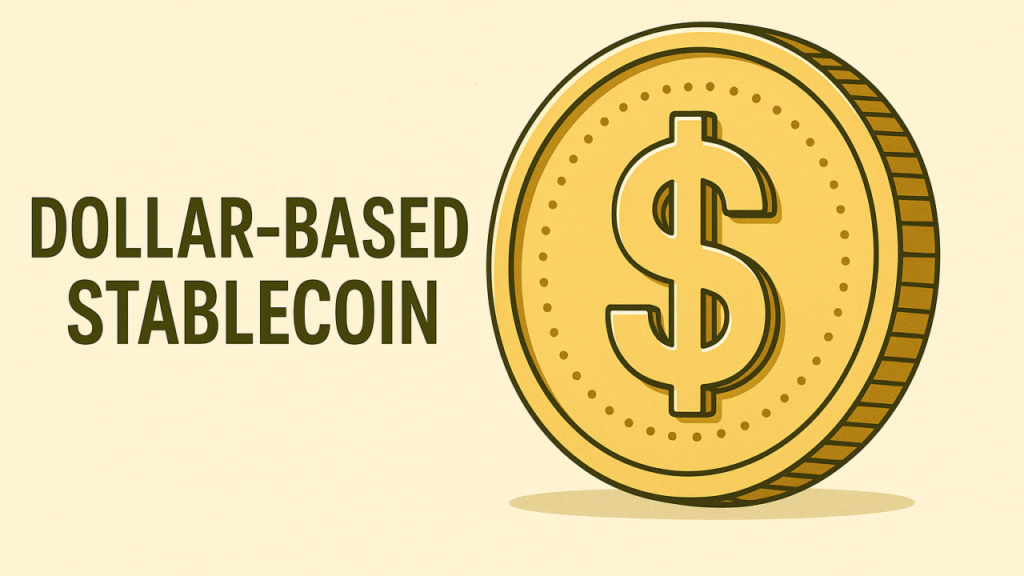
The US dollar has long been the most widely used reserve currency in the world, and it is trusted for international finance, savings, and trade.
Stablecoins, or cryptocurrencies linked to fiat currencies like the dollar, are progressively undermining that hegemony, though. Businesses, investors, and individuals from all around the world find these digital coins—like USDT, USDC, and BUSD—appealing because they provide quicker transactions, less fees, and simpler cross-border transfers.
Stablecoins are gaining traction, especially in decentralized finance (DeFi) and international remittances, even though the dollar continues to serve as the foundation of the global financial system. The dollar’s monopoly may be subtly eroding, but it isn’t going away.
Factors Driving Stablecoin Adoption
Quick and Cheap Transactions
Transferring funds using stablecoins is much cheaper than using a bank.
Use in DeFi Applications
Stablecoins are widely used in DeFi for lending, borrowing, and yield farming.
Protection Against Inflation
Stablecoins are a good option for preserving value in countries with high inflation.
Available Anytime
Stablecoins are always available, unlike banks, which allows for easier digital trade.
Safe and Clear Transactions
Transactions on a blockchain are clear and eliminate many counterparty risks.
Simple Conversion Process
Converting stablecoins into fiat or other cryptocurrencies is a straightforward process.
Challenges Facing the US Dollar
Global Debt and Inflation Risks
- Limitations a recession and a rising US national debt can put on the US dollar’s current and future value can cause people to lose confidence in the US dollar.
Less Confidence in Conventional Banking
- Economic downturns and financial crises in the past have caused some people and businesses to look for other options, such as stablecoins.
Competition with Digital Currencies
- Stablecoins and CBDCs provide users with a more efficient, less expensive, and more convenient way to transact.
Changes in Politics and Economics
- Countries are diversifying reserves away from the dollar to less US dependent alternatives, thus reducing the US’s hold on the global economy.
Emerging Digital Economy
- The dollar lags behind in the fast growing and crypto inclusive regions.
Case Studies / Real-World Examples
Cross Border Remittances
- Traditionally remittances are sent via banks or remittance providers which take days and charge fees. Now many migrant workers are using stablecoins such as USDT or USDC for remittances as it is faster and cheaper.
Adoption on the Business Side
- Firms, particularly in the technology and e-commerce sectors, are accepting stablecoins for payments. This fosters international trade as it eliminates the need for currency exchange and banking delays.
DeFi and Lending Platforms
- The Case of Aave and Compound illustrates the emergence of stablecoins as an active means of exchange.
CBDCs
- The Digital Yuan in China and the Digital Euro and Dollar in the pipeline showcase the competition Digital Dollars face from government issued digital currencies.
Crypto Exchanges
- With the increased volatility of the crypto market, stablecoins offer a safe place for traders and add liquidity.
Risks and Limitations of Stablecoins
Uncertainty of Regulations
- Stablecoins are new assets so laws regarding them are still being developed. This means regulations are subject to sudden changes, which can include stablecoins being banned and exchanges being required to remove them.
Risks of Backing and Collateral
- Reserves of assets are used to keep fiat-backed stablecoins pegged, which means they can lose their value if their reserves are poorly managed or if the assets are not valuable enough. The underlying assets of crypto-backed stable coins are subject to volatility too.
Lack of Liquidity
- When markets are volatile, stress can result in unstable and increased costs to convert stablecoins to fiat.
Vulnerable Smart Contracts
- This means that crypto-backed and algorithmic stablecoins are subject to exploitation coding bugs or hacks that may occur in the underlying code.
Acceptance is Limited
- Stablecoins can not yet be used to obtain everyday items in the retail market, which means they do not have a large practical use.
Market Volatility
- Algorithmic stablecoins are subject to market volatility and unstable markets, which are typically caused by market crashes like the crash of TerraUSD (UST).
Will stablecoins affect global finance?
Yes, stablecoins are beginning to impact global finance, and their effects are anticipated to grow tremendously in the next few years. Here’s how:
Cross-Border Payments – Stablecoins are making money transfers and payments instantaneous, and at a lower cost than traditional banking, and traditional remittance service companies, and are disrupting payments as a whole.
Decentralized Finance (DeFi) – Stablecoins integrated with DeFi allow people to lend, borrow, and trade on the blockchain without a bank. DeFi provides financial services to people that otherwise wouldn’t have access.
Dollar Dominance – The dollar is still the primary global reserve currency, but stablecoins are providing newer options for trade and savings in more economically challenged and currency unstable countries.
Digital Currency Regulation – In response to stablecoins, central banks are looking to digitally regulate the financial systems through borderline digital controlled currency (dCBDC).
Global Economy – Financial services through stablecoins become available to the previously unbanked, making money management services available to more people.
Future Outlook
Stablecoins and the US dollar are probably going to coexist in the future rather than completely replace one another.
Because of its speed, low fees, and integration with digital finance and decentralized platforms—particularly in cross-border payments and remittances—stablecoins are predicted to become more widely used. Digital currencies (CBDCs), which governments and central banks are investigating, have the potential to further legitimize digital alternatives while preserving regulatory supervision.
The US dollar will probably continue to be the world’s reserve currency, but as stablecoins and digital currencies provide more easily accessible, effective, and transparent financial solutions, its monopoly may erode. Businesses and investors need to be flexible in this changing environment.
Conclusion
Stablecoins are gradually gaining popularity as quicker, less expensive, and easier options for payments, remittances, and decentralized finance, even if the US dollar is still the most widely used currency in the world.
Although they are not yet ready to completely replace the dollar, they are undermining its monopoly and changing the way that money is transferred around the world.
Traditional currency and digital stablecoins will probably coexist in the financial environment as acceptance, regulation, and technology advance. Investors, companies, and individuals managing this transition to a more digital and decentralized monetary system will need to be knowledgeable and flexible.
FAQ
What are stablecoins?
Stablecoins are cryptocurrencies designed to maintain a stable value, usually pegged to fiat currencies like the US dollar. Examples include USDT, USDC, and BUSD.
Are stablecoins replacing the US dollar?
Not yet. The US dollar remains the world’s dominant reserve currency, but stablecoins are gaining traction in digital payments, remittances, and decentralized finance.
Why are stablecoins growing in popularity?
They offer faster, cheaper transactions, 24/7 accessibility, integration with DeFi platforms, and a hedge against inflation in unstable currencies.
What risks do stablecoins carry?
Stablecoins face regulatory uncertainty, liquidity issues, backing vulnerabilities, and potential technical failures, particularly for crypto-backed or algorithmic types.
Will stablecoins affect global finance?
Yes, they are changing how money moves, challenging traditional banking systems, and encouraging governments to explore digital currencies (CBDCs).