

In this article, I will discuss the Why Use Stablecoins for Trading and outline the main advantages that crypto users gain from using them.
Stablecoins provide price stability, quick transaction times, and low fees which are advantageous for traders. In terms of hedging, fund transfer, or quick market entry, stablecoins ensure a reliable and effective solution for contemporary trading techniques.
What Are Stablecoins?
Stablecoins are a category of cryptocurrency intended to have a constant value, with comparisons made to reserve assets like a fiat currency (the US dollar) or a commodity (gold). Stablecoins provide tremendous consistency in their price as opposed to traditional cryptocurrencies which tend to be significantly volatile.
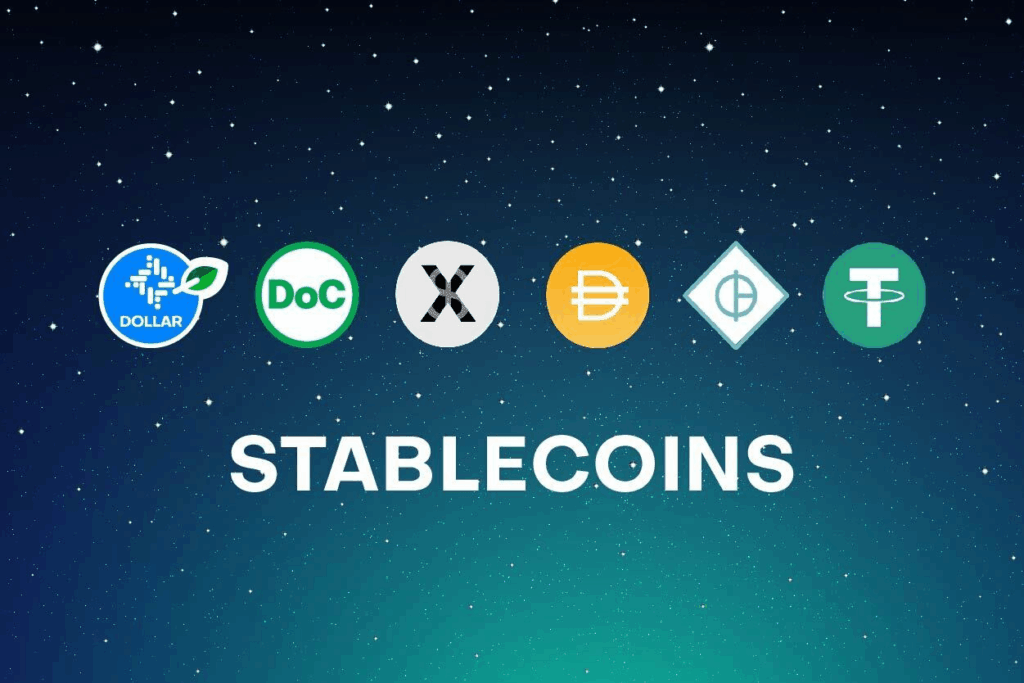
This makes stablecoins ideal for trading, payments, and even saving. They provide the benefits of digital assets, including rapid transaction speeds and minimal fees, along with the stability of traditional money. Stablecoins can be classified into fiat-backed (like USDT and USDC), crypto-backed, and algorithmic. Their stability makes them a key component in the crypto economy, especially for traders and investors.
Why Use Stablecoins for Trading

Reduced Volatility Risk
Having stablecoins helps traders mitigate crypto market risks, which helps in safeguarding their capital.
Quick Settlement Times
Transfers through stablecoins linked to the blockchain are nearly instantaneous, applicable for both exchange and wallet transfers.
Lower Transaction Costs
Payments completed with stablecoins tend to have lower fees in comparison to credit card and fiat currency payments.
Market Flexibility
Traders are able to swiftly shift into and out of their crypto positions without the need to convert to fiat.
Heightened Trading Activity
The prevalence of stablecoins across exchanges improves the overall trading activity as traders can easily shift assets.
Protective Measure
During market downturns, traders can mitigate losses by parking their funds in stablecoins.
Accessible for Everyone
Stablecoins can be accessed and used by any person with an internet connection, irrespective of their region’s banking systems.
Participation in DeFi and Yield Farming
Through stablecoins, users can pay interest or partake in decentralized finance protocols.
How Get started Stablecoins for Trading
Pick An Exchange: Set up an account on a reputable exchange like Binance, Coinbase, Kraken, or KuCoin which offers stablecoins USDT, USDC, or DAI.
Complete KYC Verification: Identity verification by document submission is needed for KYC on most exchanges. This is done for user verification and compliance purposes.
Add Funds: Fund your account using fiat currency USD, EUR, credit/debit cards, or M-Pesa where applicable.
Purchase Stablecoins: Use the exchange’s trading or buy/sell feature to trade your fiat deposit for stablecoins such as USDT or USDC.
Start Trading: Trade in stablecoins on pairs like BTC/USDT or ETH/USDC. HODL, buy and sell crypto as per your trading strategy.
Secure Your Assets: Protect your assets against exchange risks by storing them in a software or hardware wallets when you are not actively trading.
Explore DeFi and Earning Options: If interested, earning options like lending, staking, or yield farming on decentralized platforms are available to explore.
Use Cases in Trading
Due to their liquidity and stability, stablecoins serve an indispensable function in a variety of trading activities. One of the most popular use cases is serving as a trading pair, enabling traders to purchase and exchange cryptocurrencies without the need for fiat conversion.
They also assist in protecting traders against market volatility, providing a safe asset during downturns. In arbitrage trading, stablecoins are critical in moving value across exchanges quickly to take advantage of price discrepancies.
Moreover, in margin and futures trading, they are used as collateral or settlement assets. The seamless and low-cost transactions further bolster automated and high-frequency trading strategies.
Risks and Considerations
Centralization Risk
Stablecoins such as USDT and USDC are issued by centralized entities, which means they can regulate accounts as well as be subjected to account regulation freezes.
Regulatory Uncertainty
Governments can place restrictions or new regulations concerning stablecoins covering their issuance, usage, or legality.
Lack of Transparency
Some issuers of stablecoins may fail to perform periodic and transparent audits for their reserves which may raise trust issues regarding the backing.
Smart Contract Vulnerabilities
Vulnerabilities, bugs or exploits may be present in algorithmic stablecoins or those integrated into DeFi, leading to losses for users.
Peg Stability Issues
Certain stablecoins may have temporarily depegged during times of market stress, meaning not all stablecoins will maintain their 1:1 peg perfectly.
Counterparty Risk
The users exposed to staking rely heavily on the issuer or reserve custodian to safeguard the underlying assets.
Limited Use Outside Crypto
While stablecoins would be useful in trading ventures, they might not be broadly accepted or used in the physical world for spending.
Conclusion
To wrap things up, stablecoins combine the benefits of price stability, rapid transaction speeds, low fees, and high liquidity.
As a cryptocurrency trading tool, stablecoins are indispensable. In the context of trading, stablecoins enable seamless conversions during hedge trades, provide agility in moving assets across exchanges, and serve alongside DeFi participation.
Unlike fiat or conventional cryptocurrencies, stablecoins offer a dependable and effective substitute. The growing importance of stablecoins in devising secure and adaptable trading tactics highlights their significance in the evolving digital economy.