


In this article, I will discuss the best layer-2 payment solutions that are revolutionizing web3 commerce, emphasizing technologies that make blockchain payment systems faster, cheaper, and more scalable.
These solutions facilitate web3 adoption by enabling instant payments, lower transaction costs, and efficient smart contract execution.
From the Lightning Network to zkEVM networks, users and businesses’ interactions in the decentralized ecosystem are being transformed by layer-2 solutions.
What are Layer-2 Payment Solutions?
Layer-2 payment solutions are technologies built on established blockchains such as Bitcoin or Ethereum, enabling faster, more affordable, and more scalable transactions.
Rather than directly documenting every transaction on the Layer-1 blockchain, off-chain transactions are settled, with only the final results recorded on the primary blockchain.
This method minimizes congestion and improves transaction speed. Consequently, this makes blockchain payments more efficient and convenient for everyday activities, including retail purchases, micro-payments, and international transfers. Notable examples are Bitcoin’s Lightning Network and Ethereum’s Optimistic Rollups.
Why Use Layer-2 Payment Solutions Revolutionizing Web3 Commerce
Efficiency of Transactions – Layer-2 solutions enjoy the ability to handle payments outside the main blockchain. Consequently, the time required to get approvals on transactions decreases significantly. In addition, users and merchants can complete their transactions in a matter of seconds, making Web3 commerce viable and practical.
Less Fees Charged on Transactions – Layer 2 solutions process transactions on a secondary layer to blockchain technology. As a result, this strategy yields lower, even more gas-free transactions. This shifts the paradigm of the payment on the blockchain to become more economically viable.
Handling More Transactions – Layer 2 networks can process thousands of transactions on the blockchain. This leaves the main blockchain running smoothly and does not get over burdened. This allows more and more users to able to participate in Web3 commerce efficiently.
Better User Experience – An array of fast, reliable payments, scalable to thousands of transactions, can result in a much better user experience. In fact, a much smoother process can even lead to immediate reconciliation, thereby making a lasting, better user experience.
Improved Security and Decentralization – In systems that use Layer 2 solutions, the underlying Layer 1 blockchain is secured while enjoying the benefits of Layer 2 decentralization. This ensures complete and trustless transactions.
Key Point & Best Layer-2 Payment Solutions Revolutionizing Web3 Commerce List
| Layer-2 Solution | Key Points / Features |
|---|---|
| Lightning Network (Bitcoin L2) | Enables instant, low-fee Bitcoin payments; ideal for microtransactions and retail payments; operates off-chain while securing final settlement on Bitcoin. |
| Polygon PoS + zkEVM | Provides scalable Ethereum transactions; low gas fees; zkEVM ensures Ethereum-compatible smart contract execution with enhanced privacy and security. |
| Arbitrum One | Optimistic Rollup for Ethereum; reduces congestion and fees; supports high-speed smart contract execution while inheriting Ethereum’s security. |
| StarkNet | Uses ZK-Rollups for Ethereum; offers high throughput, low costs, and strong cryptographic security; ideal for DeFi and NFT applications. |
| zkSync Era | Zero-knowledge rollup scaling solution; fast, cheap Ethereum transactions; supports Ethereum-native smart contracts with minimal gas fees. |
| Immutable zkEVM | Focused on NFT scalability; uses ZK-Rollups for gas-free minting and trading; highly efficient for gaming and NFT marketplaces. |
| Scroll zkEVM | Ethereum-compatible zk-Rollup; improves transaction speed and lowers costs; supports complex smart contracts while maintaining Layer-1 security. |
| Mantle Network | Layer-2 network for Ethereum; Optimistic Rollup technology; fast, low-cost transactions with EVM compatibility for dApps and DeFi platforms. |
1. Lightning Network (Bitcoin L2)
The Lightning Network is a pioneering, top-tier layer 2 payment system that has opened the door to Web3 commerce by enabling immediate, inexpensive Bitcoin payments. The convenience of the Lightning Network is a stark contrast to Bitcoin payments, which que and sit on a layer 1 chain until they are confirmed.
Payments are executed and settled off-chain until the end of a payment channel, making Lightning Bitcoin payments a great solution to micropayments.
Lightning Bitcoin payments are extremely scalable due to the costs being off-chain and are only settled on chain. Lightning Payments is making Web3 commerce easy and practical.
Lightning Network (Bitcoin L2) Features
- Instant Micropayments – Processes Bitcoin payments with near instantaneous loading times, and eliminates waiting times for blockchain confirmations.
- Low Transaction Fees – Is great for microtransactions because it eliminates congestion on the Bitcoin blockchain, and inhibits costs of transactions due to the reduction of Bitcoin network congestion.
- Scalability – Settles on the Bitcoin blockchain, while processing thousands of transactions per second on layer 2.
2. Polygon PoS + zkEVM
Polygon PoS + zkEVM is a leading Layer-2 payment solution that enhances Web3 commerce with the flexibility of Ethereum, low-cost transactions, and high scalability. PoS chains provide fast and eco-friendly transactions, while zkEVM utilizes zero-knowledge proofs to transact Ethereum smart contracts more cheaply and securely.
Developers can build sophisticated dApps without worrying about network congestion or high gas fees. Fully Ethereum-compatible and cost-effective, it is perfectly suited for DeFi frameworks and NFT marketplaces, as well as routine crypto transactions. Polygon PoS + zkEVM seamlessly combines the efficiency, security, and ease of use required for widespread adoption in Web3 commerce.
Polygon PoS + zkEVM Features
- High Throughput – Allows thousands of transactions to be processed per second with minimal delays, enhancing the performance of Web3 commerce solutions.
- EVM Compatibility – Complete Ethereum Virtual Machine equivalence enables the effortless transition of smart contracts based on Ethereum.
- Cost Efficiency – Uses zk-rollups and proof of stake validation to decrease gas costs while announcing robust security.
3. Arbitrum One
Arbitrum One is among the most important Layer-2 payment solutions revolutionizing Web3 commerce. What gives the firm a competitive edge is its ability to provide fast, low-cost Ethereum transactions via Optimistic Rollup technology.
The technology enables off-chain transactions and computations while maintaining the security of the Ethereum mainnet. Therefore, it relieves congestion on the Ethereum network and lowers transaction fees.
Seamless Ethereum integration enables developers to rapidly use and deploy existing smart contracts without changing a line of code, which is why the technology has seen quick uptake among dApps, DeFi platforms, and NFT marketplaces.
A combination of Ethereum-level security, near-instant transaction finality, and very low transaction fees makes it a top in providing scaling and efficient solutions targeted to pragmatic Web3 commerce.
Arbitrum One Features
- Optimistic Rollups – Incorporates optimistic rollups to bundle several transactions, thereby lightening the load on Ethereum’s main blockchain.
- Fast & Secure – Utilizes Ethereum’s blockchain for processing, providing users with faster and secured transactions.
- Wide Adoption – Availability on various NFT and DeFi platforms increases the ecosystem integration.
4. StarkNet
StarkNet is a layer 2 payment provider for the Web3 sector using ZK-Rollup technology to create low-latency and low-cost Ether transactions.
StarkNet is able to process a multitude of transactions through an off-chain approach and settles transactions on the Ethereum network, which lowers gas fees and congestion on the Stream network. StarkNet’s cryptographic security and scalability make it a strong competitor for Defi, NFT, and large-scale Apps.
Payement speed and the ability to easily implement complex smart contracts also makes these platforms attractive to users and developers. The ability to maintain Trust on the Ethereum network while enabling low-cost transactions makes StarkNet a viable competitor in Web3.
StarkNet Features
- zk-Rollup Technology – Processes and secures transactions in large batches using zk proofs and has a high efficiency with security.
- Scalable Smart Contracts – Processes complex smart contracts with high throughput for minimal gas costs.
- Ethereum Interoperability – Able to work completely with Ethereum which allows ease of transferring assets and integrating dApps.
5. zkSync Era
zkSync Era is a leading Layer-2 zk-rollup payment solution revolutionizing Web3 commerce by enabling instant, secure, and ultra-low-cost payments on Ethereum. Unlike Layer-1 solutions, zkSync Era keeps Ethereum secure and verifiable off-chain with zk rollups while processing transactions instantaneously.
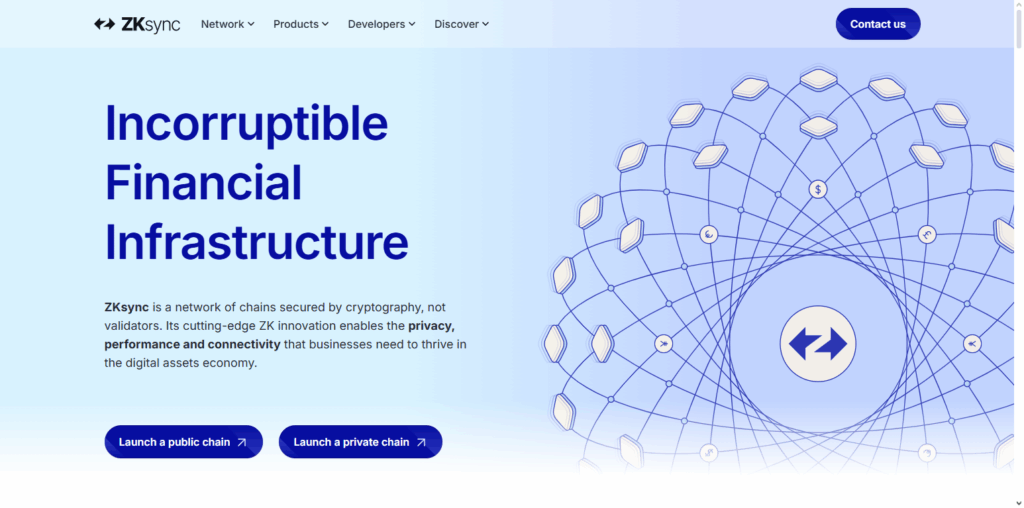
What allows developers to build complex and sophisticated dApps, DeFi solutions, and NFT marketplaces on Ethereum is the ability to use zkSync Era with arbitrarily complex smart contracts while paying only a fraction of Ethereum’s gas fees.
Users also benefit from instantaneous payments and low cost transactions, making zkSync Era productive for everyday usage. Bridging the gaps of scalability, security, and usability, zkSync Era has positioned itself as a leader in Web3 payment solutions.
zkSync Era Features
- Zero-Knowledge Proofs – Privacy and security are provided while transactions are compressed to allow for quicker processing.
- Low-Cost Transactions – Gas fees are much lower than those on the Ethereum mainnet.
- EVM-Compatible – Ethereum smart contracts are supported, making it easy for developers to transfer dApps.
6. Immutable zkEVM
Immutable zkEVM is an industry frontrunner with automatic zero-knowledge rollup technology integrated with NFTs and gaming. zkEVM is a layer two payment solution. Web3 commerce is changing because of this partnership. zkEVM allows smart contract operations to be completed off-chain.
Gas fees drop but security is still tight like Ethier security. Developers can create more sophisticated applications with no transactional issues or with a clogged or congested network. What zkEVM offers is an optimized mint and trade on NFTs.
Gaming ecosystems benefit from this with instant payments without elevated fees- and interact with no gaps. zkEVM is the most efficient and secure. This is why Immutable zkEVM is changing Web3 for the mass consumer.
Immutable zkEVM Features
- NFT Optimization – Uniquely designed for NFT marketplaces featuring gasless minting and trading.
- High Throughput – Makes mass adoption possible with the ability to handle thousands of transactions every second.
- Secure & Decentralized – Maintains security while crypto decentralization through the use of zk-rollup proofs.
7. Scroll zkEVM
Scroll zkEVM is a top-tier Layer-2 payment solution revolutionizing Web3 commerce by leveraging zero-knowledge rollups to scale Ethereum.
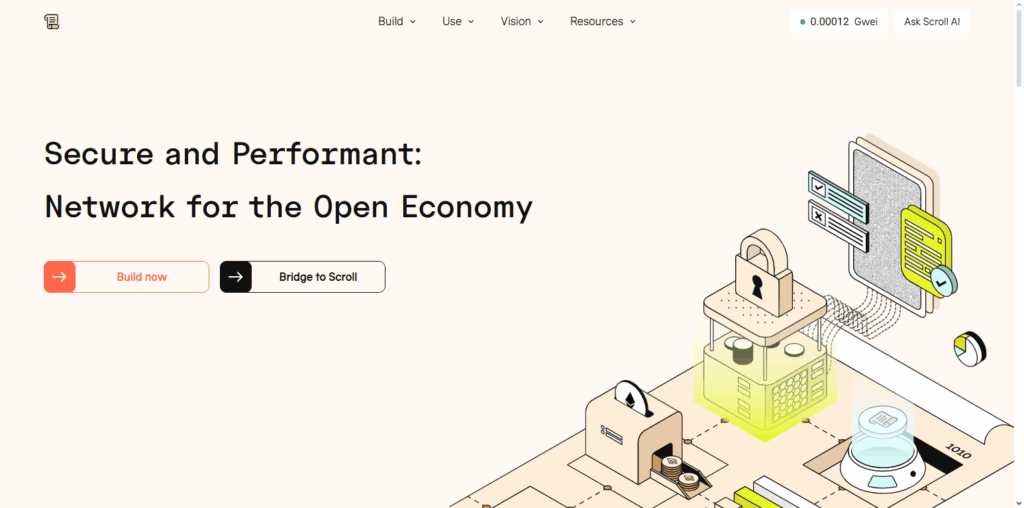
It enables off-chain transaction execution and smart contract execution, preserving Ethereum’s safety, and lowering gas fees. Scroll zkEVM’s full EVM compatibility and high throughput are powerful advantages, letting developers duplicate existing Ethereum dApps without code alterations and effortlessly accommodate large audiences.
This is useful for DeFi, NFT trading, and daily use of cryptocurrencies. Scroll zkEVM offers fast, affordable, and secure transactions, making Web3 commerce practical and accessible, aiding the mainstream.
Scroll zkEVM Features
- Ethereum-Equivalent Execution – Full EVM compatibility allows for the effortless deployment of Ethereum smart contracts.
- Layer-2 Efficiency – Gas costs are decreased while the network security provided through zk-rollups is maintained.
- Scalable Infrastructure – Built to efficiently handle the significant volumes of transactions that come with Web3 commerce.
8. Mantle Network
Mantle Network equals innovative Layer-2 payment solutions designed specifically for the Web3 environment enabled through Optimistic Rollups technology while compatible with Ethereum for quick transactions that are inexpensive.
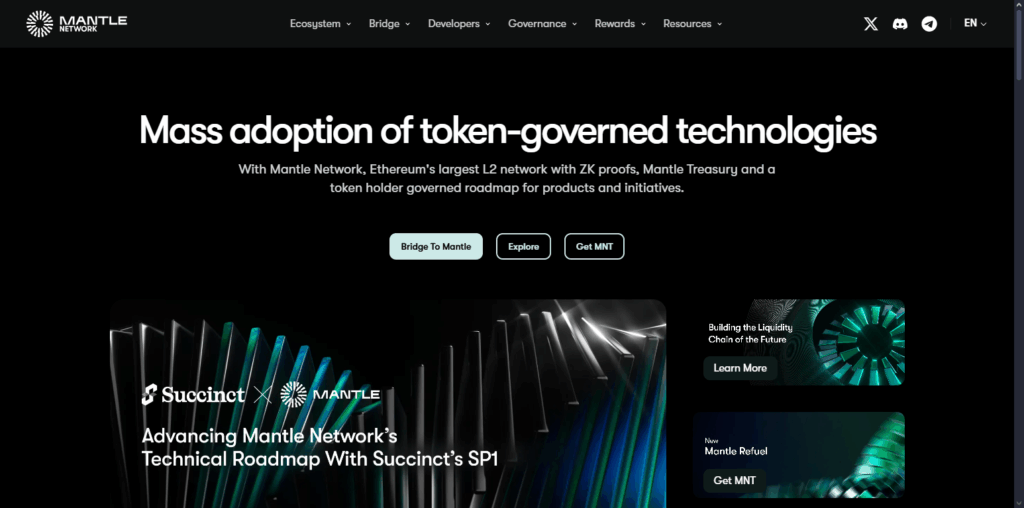
It filters off most transactions to alleviate fees and bridge Ethereum every so often to maintain security and trustlessness. The Edge of Mantle Network is its exclusivity in focusing on the scalability of both dApps and everyday transactions allowing for the easy deployment of intricate smart contracts for users to experience real-time settlement.
Mantle to strike Ethereum-level security while being competitive of price range and speed is what making Web3 commerce appealing for retail and NFT users and provide a bridge for mass interaction.
Mantle Network Features
- High-Speed Transactions – Within Web3 applications, users are able to enjoy a better experience as a result of enhanced transaction processing and transaction latency.
- EVM-Compatible Layer-2 – Makes it possible to deploy Ethereum dApps in a straightforward manner and without the need for any modifications.
- Low Gas Costs – Ample security features for economic activities, but costs are optimized for efficiency.
Conclusion
To summarize, Lightning Network, Polygon PoS + zkEVM, Arbitrum One, StarkNet, zkSync Era, Immutable zkEVM, Scroll zkEVM, and Mantle Network are Layer-2 payment networks which are going to change the course of Web3 commerce thanks to lower costs, enhanced speed, and greater scalability when compared to Layer-1 payment networks (while preserving the security of the base blockchains).
Their capacity to support microtransactions, optimize for NFTs, and retention of Ethereum full nodes aid creating payment structures which accommodate the payment streams of every day users, retail, DeFi, and gaming. Massed Layer-2 adoption will merge the W3 ecosystem and provide seamless transitions across the space.
FAQ
What are Layer-2 payment solutions?
Layer-2 payment solutions are networks built on top of existing blockchains, like Bitcoin or Ethereum, designed to process transactions off-chain. They offer faster, cheaper, and more scalable payments while maintaining the security of the main blockchain.
Why are Layer-2 solutions important for Web3 commerce?
They solve critical blockchain limitations, such as high gas fees, slow transaction times, and network congestion, making crypto payments practical for retail, DeFi, NFTs, and everyday use.
How do Layer-2 solutions benefit users and businesses?
They enable near-instant transactions, minimal fees, and seamless smart contract execution, improving user experience and allowing businesses to adopt blockchain payments at scale.