


The Best Alternative Investment Platforms for Digital Assets covers how investors, both institutions and retail, can expand their portfolios beyond digital currency exchanges. These investment platforms offer significant opportunities for portfolios and fund growth while offering investment tools for risk management.
Additional offerings may include tokenized securities, real estate, or staking and yield-related investment vehicles. As such, this article elaborates on digital assets custody, how these markets achieve liquidity, and the broad range of investment portfolios in order to offer guidelines to investors on how best to optimize their digital asset portfolios.
Why Alternative Investment Platforms for Digital Assets Matter
Portfolio Diversification: Investors rely on these platforms to diversify their portfolios beyond traditional stocks and bonds.
Access to New Investments: Investors may gain exposure to digital assets, tokenized securities, real world assets (RWAs), and other blockchain-based investment opportunities.
More Available Investments: Depending on the platform, investors may access multi-asset class investments that may otherwise be unavailable to them.
Sophisticated Features: Some platforms incorporate custodial, reporting, compliance, and investment management services designed for institutional investors.
Allowing More Investors to Participate: Tokenization allows usually unavailable assets to be traded using digital investment infrastructure.
New Ways of Investing: Digital investments allow for innovation of investment approaches and/or portfolio construction.
More Transparency: Digital investment systems based on blockchain can make certain types of traditionally more opaque investments more transparent.
More Options for Investors: Depending on a platform’s offerings, digital investment structures can allow investors to choose investing in assets, funds, or yields.
Emerging Digital Asset Opportunities: blockchain based infrastructure and markets allow investors to participate in new financial markets.
Making Better Decisions: An integrated platform provides the data needed to compare and contrast the available products in terms of costs, custody, regulations, risks, and liquidity, thus helping investors make better decisions.
Key Points
| Platform | Core Focus | Key Features | Best For |
|---|---|---|---|
| Coinbase Institutional | Tokenized assets + custody | Regulated custody, staking yields | Enterprises & HNW investors |
| Binance Earn | Yield products | Flexible savings, DeFi integration | Retail investors |
| Kraken Pro | Staking + futures | Transparent staking rewards | Traders + long‑term holders |
| Gemini Earn | Interest accounts | Regulated US platform | Conservative investors |
| Bitfinex Securities | Tokenized equities/bonds | Regulated investment marketplace | Institutional investors |
| Securitize | Tokenized private equity | SEC‑registered, fractional shares | VC‑style investors |
| INX Digital | Security tokens | Regulated trading of tokenized securities | Compliance‑focused investors |
| Yield App | DeFi yield aggregator | Managed portfolios, insurance cover | Passive investors |
| Matrixport | Structured products | Dual‑currency investments, lending | Advanced yield seekers |
| RealT | Tokenized real estate | Fractional property ownership | Real estate investors |
1. Coinbase Institutional
Coinbase Institutional has a range of high-quality crypto services at transparent fees, which tend to be in the 0.1% to 0.5% range, depending on the volume traded. Coinbase’s deep liquidity means trades execute at low price impact. Institutions looking for custody solutions will appreciate Coinbase’s offering which includes cold storage with insurance.
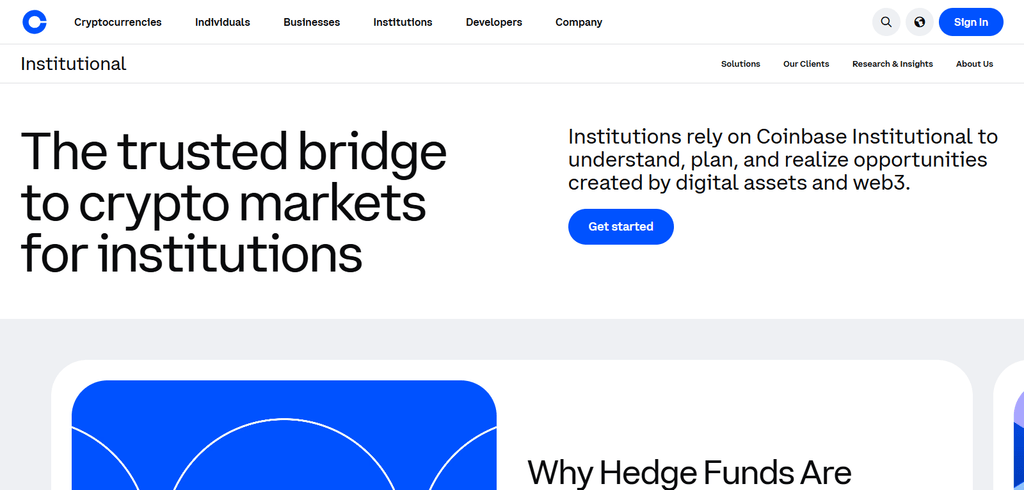
As a public, SEC-regulated company in the US, Coinbase’s trust is high. Coinbase Institutional offers Spot trading, custody, and staking. Coinbase Institutional offers a high score for compliance and reliability, but fees are relatively high in the industry. Coinbase Institutional balances robust security and ease of access which makes it attractive to most regulated institutions.
Coinbase Institutional Features, Pros & Cons
| Feature | Pros | Cons |
|---|---|---|
| Fee Structure | Transparent tiered fees | Higher than Binance |
| Liquidity | Deep U.S. liquidity | Limited in smaller markets |
| Custody Model | Cold storage + insurance | Centralized custody |
| Regulation | SEC oversight, public company | Subject to U.S. enforcement |
| Security | Strong audits, SOC certifications | Costs passed to users |
| Investment Type | Spot, custody, staking | Limited derivatives |
| Accessibility | Institutional onboarding | Complex KYC |
| Reliability | High uptime | Occasional outages |
| Reputation | Trusted brand | Regulatory disputes |
| Overall Score | Strong compliance | Less yield diversity |
2. Binance Earn
Binance Earn lets customers choose from a variety of high-yield products with low, embedded fees. Binance, being the world’s largest exchange, has deep liquidity and so ease of execution. Though Binance has centralized custody with user funds, there have been concerns. Regulation varies by location, with institutional confidence suffering in the US and EU. Investment products include savings, staking, liquidity farming, and dual investments.
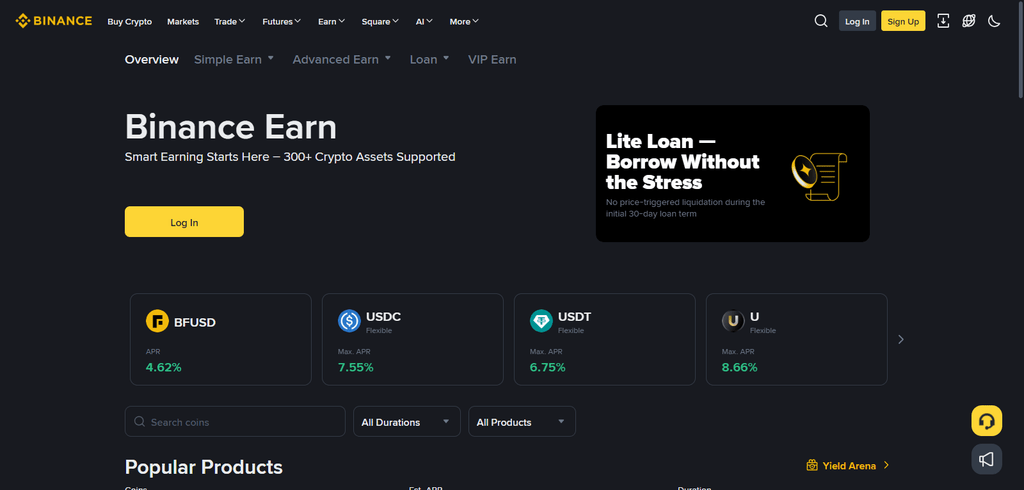
Binance Earn takes a clear, positive stance on yield and liquidity and takes a clear, negative stance on regulation. Despite the regulatory uncertainty, Binance Earn may still bring in retail customers looking for high returns and various product offerings. However, this uncertainty makes the product a tough sell to institutions.
Binance Earn Features, Pros & Cons
| Feature | Pros | Cons |
|---|---|---|
| Fee Structure | Low embedded fees | Hidden spreads |
| Liquidity | Largest global pool | Regional restrictions |
| Custody Model | Centralized | Regulatory scrutiny |
| Regulation | Global reach | Banned in U.S. |
| Security | SAFU fund | Past hacks |
| Investment Type | Staking, savings, farming | No securities |
| Accessibility | Wide product range | Complex UI |
| Yield | High returns | Risk of volatility |
| Innovation | Dual investment products | Regulatory uncertainty |
| Overall Score | Strong liquidity | Weak compliance |
3. Kraken Pro
Kraken Pro offers professionals features for advanced trading with a known fee schedule of 0.16% maker fee and 0.26% taker fee. This rate decreases for high taker volumes. Fiat pairs boast lots of liquidity, which brings in more professional traders.
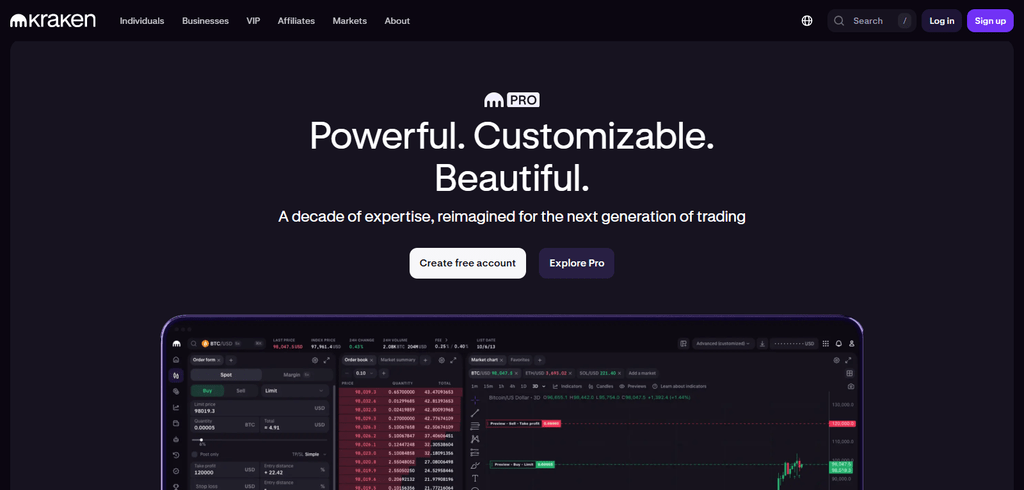
Kraken Pro’s custody model integrates cold storage and further bolsters client trust by conducting an audit of its proof-of-reserves. In general terms, Kraken Pro has solid regulatory status. Having a compliant U.S. and EU program in place has been a solid foundation for Kraken Pro.
However, it has faced some enforcement actions. Kraken Pro also offers margin trading and staking. Its overall transparency, security, compliance and regulatory scores are high. Kraken Pro is preferred by institutions because of its compliance and deep liquidity, though Binance has a better products offering.
Kraken Pro Features, Pros & Cons
| Feature | Pros | Cons |
|---|---|---|
| Fee Structure | Transparent maker/taker | Slightly higher |
| Liquidity | Strong fiat pairs | Smaller altcoin pool |
| Custody Model | Cold storage + audits | Centralized |
| Regulation | U.S. + EU compliance | Enforcement actions |
| Security | Proof-of-reserves | Limited insurance |
| Investment Type | Spot, futures, staking | No securities |
| Accessibility | Pro trading tools | Less retail-friendly |
| Reliability | High uptime | Limited mobile features |
| Reputation | Long-standing exchange | Less innovation |
| Overall Score | Strong compliance | Narrow product range |
4. Gemini Earn
Gemini Earn allows users to lend crypto, where interest spreads cover the cost. Borrow demand determines liquidity, which is stable due to Gemini’s regulated framework. Gemini Trust Company offers custody, with insured cold storage and solid compliance.
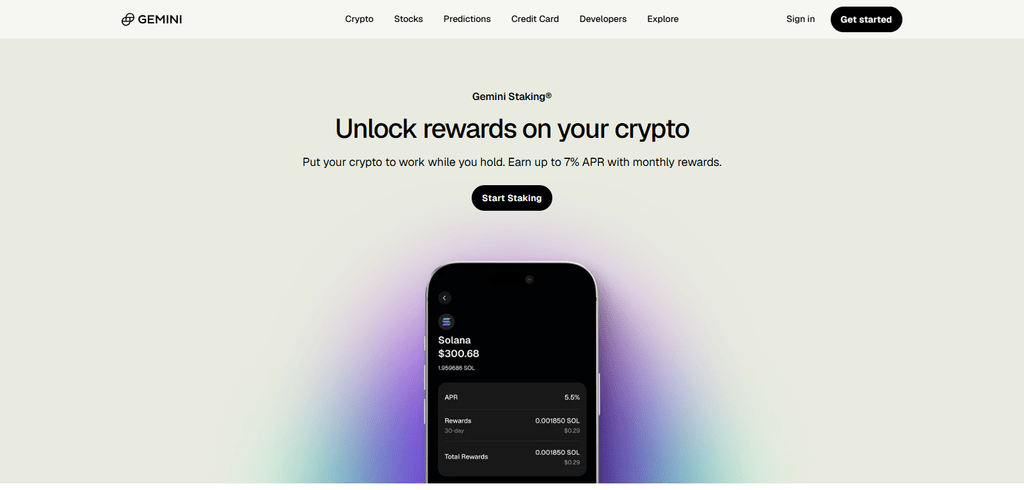
Gemini has an excellent regulatory status as they are a New York trust company under the supervision of NYDFS. As an institutional-grade trust company, NYDFS offers assurance. The investment type is yield generation by lending, a distinct approach from staking.
The compliance and custody scores are strong, while the liquidity score is moderate relative to larger exchanges. Gemini Earn is well suited to institutions focused on having strong regulatory assurance and custody; however, yields may be on the lower end of the spectrum.
Gemini Earn Features, Pros & Cons
| Feature | Pros | Cons |
|---|---|---|
| Fee Structure | Spread-based | Lower yields |
| Liquidity | Stable borrower demand | Smaller pool |
| Custody Model | Insured cold storage | Centralized |
| Regulation | NYDFS oversight | Limited global reach |
| Security | SOC certifications | Conservative yields |
| Investment Type | Lending | No derivatives |
| Accessibility | Simple interface | Limited product range |
| Reliability | Strong compliance | Lower liquidity |
| Reputation | Trusted U.S. brand | Less innovation |
| Overall Score | Strong custody | Moderate returns |
5. Bitfinex Securities
Bitfinex Securities is a user-friendly tokenized securities trading platform that charges around 0.1%-0.2% per transaction. While liquidity is building, it is still limited compared to most major crypto exchanges, due to tokenized securities being a niche product.
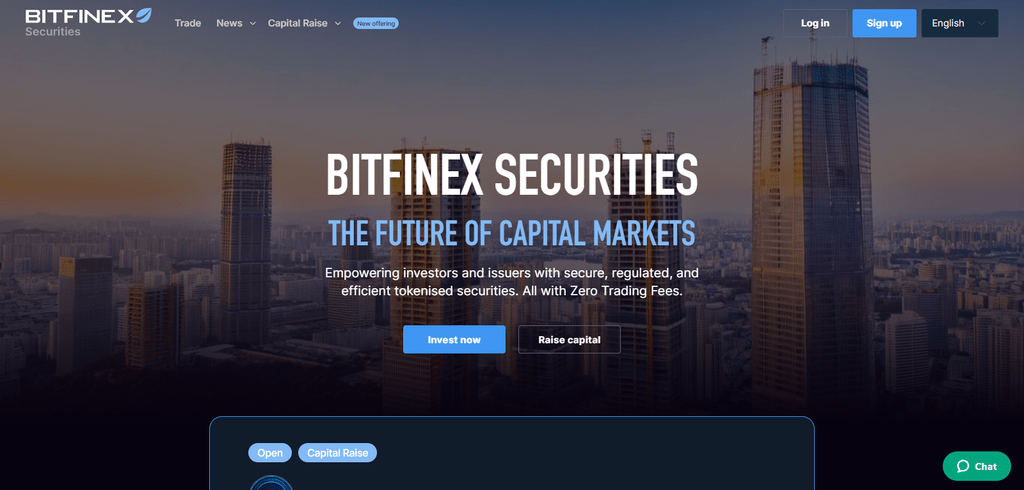
Unlike most custodians, Bitfinex Securities is a custodian, too, which means they also manage assets. For some, transparency is less important compared to custodians who are regulated. Bitfinex Securities provides investors the opportunity to trade tokenized equities, bonds, and securities, despite the mixed regulatory environment.
The overall score is moderate, as Bitfinex Securities is innovative in tokenization, but there is still uncertainty surrounding their regulation. Bitfinex Securities attracts investors who are interested in digital securities but may not satisfy the compliance standards of conventional finance.
Bitfinex Securities Features, Pros & Cons
| Feature | Pros | Cons |
|---|---|---|
| Fee Structure | Low trading fees | Limited transparency |
| Liquidity | Growing | Niche market |
| Custody Model | Centralized | Less robust |
| Regulation | Kazakhstan/El Salvador | Weak global recognition |
| Security | Exchange-grade | Limited audits |
| Investment Type | Tokenized securities | Small adoption |
| Accessibility | Innovative | Complex onboarding |
| Reliability | Expanding | Limited scale |
| Reputation | Known brand | Regulatory risk |
| Overall Score | Innovative | Compliance concerns |
6. Securitize
Securitize provides services for both primary and secondary market digital securities. Fees depend on the services selected. Liquidity is low because the main securities the platform supports are private market securities.
Their regulated partners offer custody services and help Securitize meet investor protection requirements. Securitize has a strong regulatory status as they operate within the U.S. under SEC jurisdiction. Supported securities include tokenized private equity, funds, and other alternative investments.
Compliance and innovation are strong, though limited by early stage liquidity. Securitize is most applicable for institutions looking for compliant access to tokenized private markets as opposed to high volume crypto.
Securitize Features, Pros & Cons
| Feature | Pros | Cons |
|---|---|---|
| Fee Structure | Issuance-based | Higher costs |
| Liquidity | Private market | Limited trading |
| Custody Model | Partner custodians | Less direct control |
| Regulation | SEC-registered | Narrow focus |
| Security | Strong compliance | Smaller scale |
| Investment Type | Tokenized private equity | No mainstream crypto |
| Accessibility | Institutional onboarding | Limited retail |
| Reliability | Compliant | Lower liquidity |
| Reputation | Trusted in tokenization | Niche appeal |
| Overall Score | Strong compliance | Weak liquidity |
7. INX Digital
INX Digital has begun regulated trading of digital assets and tokenized securities and charges 0.1% – 0.2% per trade. Although INX Digital is currently scaling and therefore has lesser liquidity than its competitors, it has moderate liquidity for a start-up. INX Digital also has centralized, compliant custody that is secure.
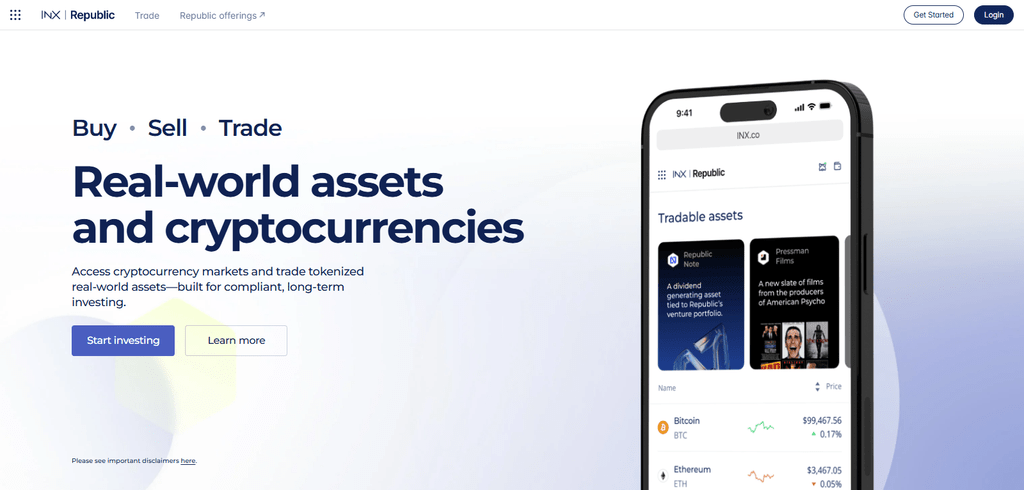
INX Digital’s robust regulatory status stems from the fact that they are SEC-registered and prioritize compliance. This is also attractive to institutions. They have cryptocurrencies, tokenized securities, and even IPO-style token offerings as investment options.
For regulatory assurance, this scores them strong, and they have moderate liquidity. INX Digital is a good option for investors who prioritize compliance with innovative tokenized offerings, yet will most likely not have the volume of Binance or Coinbase.
INX Digital Features, Pros & Cons
| Feature | Pros | Cons |
|---|---|---|
| Fee Structure | Low trading fees | Smaller scale |
| Liquidity | Moderate | Less than Binance |
| Custody Model | Centralized secure | Limited transparency |
| Regulation | SEC-registered | Still scaling |
| Security | Strong protocols | Limited insurance |
| Investment Type | Crypto + securities | Smaller product range |
| Accessibility | Institutional focus | Less retail |
| Reliability | Compliant | Lower liquidity |
| Reputation | Innovative | Less adoption |
| Overall Score | Strong compliance | Moderate liquidity |
8. Yield App
Yield App embeds fees into performance spreads to collect a service fee on crypto yield solutions. Smaller liquidity and custody within Yield App’s control may constrain its growth from competition. Centralized custody and fund management may tire investors due to poor transparency, but improved status may hasten regulatory progress.
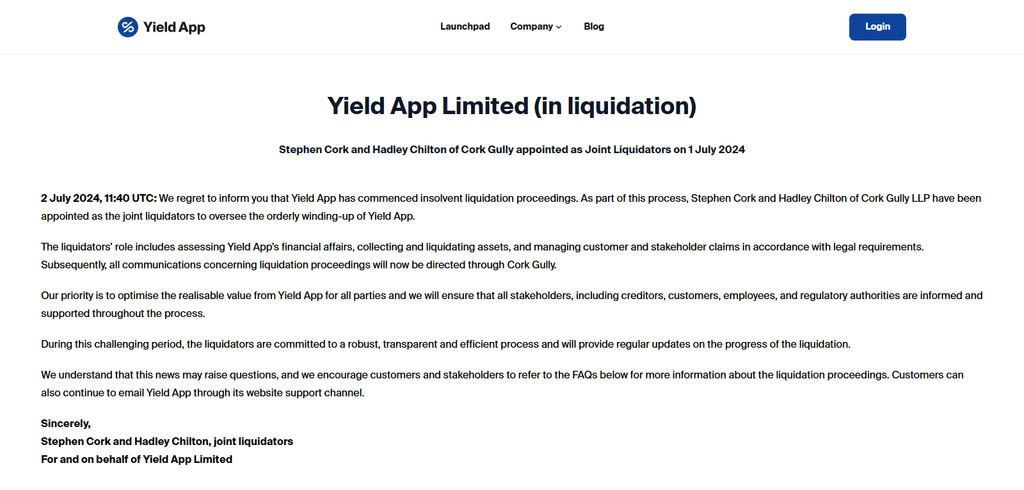
Licenses in some regions do not amount to global coverage, but yield farming, staking and other crypto investments draw investors. The overall score is moderate to good.
Strong yield opportunities still draw investors, but poor regulatory status is a concern. Yield App appeals to individuals seeking a low barrier passive source of income, but institutions may ignore Yield App due to the custody and compliance concerns.
Yield App Features, Pros & Cons
| Feature | Pros | Cons |
|---|---|---|
| Fee Structure | Embedded spreads | Less transparent |
| Liquidity | Dependent on pool | Smaller scale |
| Custody Model | Centralized | Limited audits |
| Regulation | Select licenses | Not global |
| Security | Improving | Limited insurance |
| Investment Type | Yield farming, staking | No securities |
| Accessibility | Easy app | Limited institutional |
| Reliability | Growing | Less proven |
| Reputation | Emerging | Regulatory risk |
| Overall Score | Strong yields | Weak compliance |
9. Matrixport
Matrixport offers various services related to institutional crypto finance. They charge different fees for lending, trading, and structured products. Matrixport has built a solid liquidity network with a large number of clients and partnerships.
Matrixport uses a centralized custody model. Safety is enhanced by the insurance coverage of the assets. Matrixport has a conflicting status with authorities. Matrixport provides various opportunities for investment. Lending, structured yield products, trading services, and more are available. Investors are satisfied with Matrixport’s overall scores.
Matrixport is a good option for institutions looking for innovative ways to improve liquidity and get more out of their money. There are compliance risks that stem from client concerns, which could slow the expansion of Matrixport into stricter markets.
Matrixport Features, Pros & Cons
| Feature | Pros | Cons |
|---|---|---|
| Fee Structure | Varies by product | Complex |
| Liquidity | Strong client base | Regional limits |
| Custody Model | Centralized + insurance | Regulatory scrutiny |
| Regulation | Mixed | Not fully global |
| Security | Strong | Limited transparency |
| Investment Type | Lending, structured yield | No securities |
| Accessibility | Institutional focus | Complex onboarding |
| Reliability | Large scale | Regulatory risk |
| Reputation | Innovative | Compliance concerns |
| Overall Score | Strong liquidity | Mixed regulation |
10. RealT
RealT works within tokenized real estate investments and manages properties. Investors face limited liquidity as real estate tokens exchange infrequently when compared to cryptocurrency. RealT manages custody using blockchain smart contracts which provides transparency, but introduces a trust layer related to RealT’s framework.
Investments are made into fractionalized real estate, which is a new investment format when compared to traditional crypto trading. The overall risk is moderate, but the tokenization technology used is disruptive, even though the liquidity and regulatory oversight remain primitive.
RealT is well suited for investors who wish to access real estate investing through blockchain technology, but may not be appropriate for more sophisticated investors who require more liquidity.
RealT Features, Pros & Cons
| Feature | Pros | Cons |
|---|---|---|
| Fee Structure | Property + transaction | Higher costs |
| Liquidity | Limited | Illiquid assets |
| Custody Model | Smart contracts | Platform reliance |
| Regulation | U.S. securities | Limited global |
| Security | Blockchain transparency | Smart contract risk |
| Investment Type | Tokenized real estate | No crypto trading |
| Accessibility | Fractional ownership | Complex onboarding |
| Reliability | Innovative | Limited scale |
| Reputation | Niche appeal | Illiquidity |
| Overall Score | Innovative | Weak liquidity |
How To Choose Alternative Investment Platforms for Digital Assets
Regulated Status
Ensure the company is licensed or registered with reputable regulators, e.g., SEC, NYDFS, SEBI.
- Coinbase Institutional; Gemini Earn; INX Digital; Securitize
- These companies offer stronger investor protection unlike unregulated companies.
Fees
Compare trading, custody and performance fees.
- Coinbase Institutional, Bitfinex Securities, Kraken Pro
- Better for institutions
- Clarity is reduced with hidden fees, e.g., spreads, Binance Earn, Yield App.
Liquidity
Compare trading volumes of each platform.
- Kraken Pro, Binance Earn
- Tokenized real estate (RealT) and securities (Securitate, Bitfinex Securities) may have slower exit options.
Custody Model
Insured offline storage (Coinbase, Gemini) is safer than centralized custody (Binance, Yield App) and smart contract custody (RealT).
Investment Instruments
Real T, Bitfinex Securities, Securitize, and INX Digital offer tokenized securities.
- Yield focused: Binance Earn, Yield App, Matrixport.
- Regulated securities: RealT, Securitate, INX Digital, Bitfinex Securities.
- Tokenized real estate: RealT
- Institutional custody + trading: Coinbase Institutional, Gemini Earn, Kraken Pro.
Overall
- High compliance: Coinbase, Gemini, INX
- High yield: Binance, Matrixport, Yield App
- Innovation: RealT, Securitize
Conclusion
Each of Coinbase Institutional, Binance Earn, Kraken Pro, Gemini Earn, Bitfinex Securities, Securitize, INX Digital, Yield App, Matrixport, and RealT appeals to a specific market segment in the crypto industry. Coinbase Institutional and Gemini Earn have a strong reputation for security and regulatory compliance and work on the institutional side of custody.
Binance and Matrixport have high liquidity and a broad selection of products. Others, like Securitize, INX, and RealT offer novel securities for tokenized equity and real estate products but struggle with compliance and global liquidity. Yield App scales yet attractive yields.
Coinbase, Gemini, and INX Digital, position themselves for security and regulations. The rest of the platforms appeal to portfolio yields. The selection depends on whether regulatory assurance, fees, or product offerings are most important to the client.
FAQ
What is Coinbase Institutional?
Coinbase Institutional is the professional arm of Coinbase, offering secure custody, deep liquidity, and regulated trading services for institutions. It emphasizes compliance and insurance-backed cold storage.
How does Binance Earn generate returns?
Binance Earn provides yield through savings, staking, liquidity farming, and dual investment products. Returns vary depending on market conditions and product choice.
What makes Kraken Pro different from regular Kraken?
Kraken Pro is designed for advanced traders, offering lower fees, deeper fiat liquidity, and professional-grade tools like futures and margin trading.
Is Gemini Earn safe for institutions?
Yes, Gemini Earn operates under NYDFS oversight, with insured custody. It focuses on lending crypto to vetted institutional borrowers, though yields are more conservative.
What does Bitfinex Securities offer?
Bitfinex Securities enables trading of tokenized equities and bonds. It’s innovative but operates under less globally recognized regulatory frameworks.