

In this article, I will discuss the Best Zero-Knowledge Infrastructure Platforms for Developers that are leading the way in blockchain scalability, privacy, and verifiable computation. From zkVMs and ZK rollups to privacy-first development frameworks, these platforms enable developers to build secure, efficient and scalable decentralized applications while taking advantage of zero knowledge proofs.
What Is Zero-Knowledge Infrastructure?
Zero-knowledge infrastructure is becoming a key building block for developers developing scalable, private and verifiable blockchain applications.
All these platforms serve different needs — ZK Rollups, zkVMs, Privacy, Proving, Verification, Programmable ZK applications — among them Polygon zkEVM, zkSync, Starknet, Aztec, Aleo, RISC Zero, Succinct SP1, Scroll, Mina, zkVerify.
Ultimately the right platform will depend on your programming language, VM or circuit requirements, blockchain integration, deployment model, proving needs and application goals. Developers should carefully consider these factors before deciding on the infrastructure that best suits their project.
Key Points
| Platform | Category | Why Developers Use It |
|---|---|---|
| Polygon zkEVM | ZK Rollup Infrastructure | Ethereum-compatible zkEVM with familiar Solidity tooling, making ZK application development easier for existing Ethereum developers. |
| zkSync | ZK Rollup Infrastructure | Developer-focused ZK scaling platform offering smart contracts, account abstraction, and high-performance Ethereum scaling. |
| StarkWare / Starknet | ZK-STARK Infrastructure | Leading ZK-STARK ecosystem providing scalable proving systems and advanced application development capabilities. |
| Aztec Network | Privacy-Focused ZK Platform | Enables private smart contracts and confidential application logic within the Ethereum ecosystem. |
| Aleo | ZK Application Layer | Built specifically for private applications using off-chain execution and zero-knowledge proof verification. |
| RISC Zero | zkVM Infrastructure | Allows developers to prove arbitrary computations using a general-purpose zkVM based on RISC-V architecture. |
| Succinct SP1 | zkVM Infrastructure | One of the most widely adopted zkVM frameworks for generating proofs for general-purpose software execution. |
| Scroll | ZK Rollup Infrastructure | Ethereum-focused zkEVM emphasizing compatibility with existing Ethereum applications and tooling. |
| Mina Protocol | ZK Infrastructure Layer | Provides lightweight blockchain infrastructure and zkApps powered by recursive zero-knowledge proofs. |
| zkVerify | ZK Verification Infrastructure | Dedicated proof-verification infrastructure designed to simplify cross-chain ZK proof validation. |
1. Polygon zkEVM
Polygon zkEVM is an EVM-compatible ZK Rollup infrastructure built from the ground up for Ethereum so that developers could build on top of existing Solidity and Ethereum tooling. Its VM/Circuit Model mimics the EVM execution using special circuits to prove the execution.
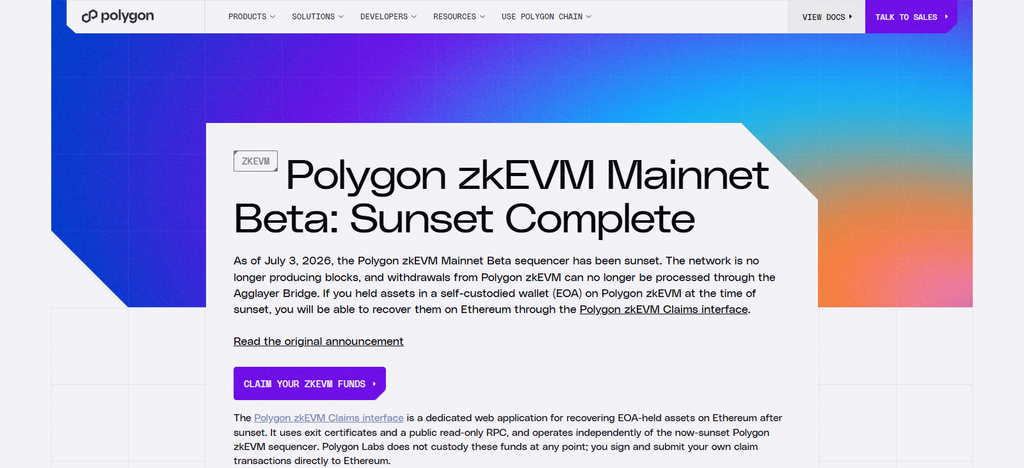
Its Language Support is mainly focused on Solidity and Ethereum-compatible development environments. Blockchain Integration is all about Ethereum, the flow of smart contract data and assets through L2 infrastructure.
For Deployment Developers are able to leverage the familiar Ethereum development tools. ## Proof Generation The proof generation employs a recursive and aggregate STARK-based proving architecture for scalable validity proofs.
Polygon zkEVM Best For
- Ethereum-compatible dApps — Building apps with familiar EVM tools.
- ZK Rollups – Developing Ethereum Layer-2 scaling solutions.
- Solidity Developers – Deploying existing Solidity smart contract functionality.
DeFi Applications — Delivering scalable decentralized finance workloads. - Scaling Ethereum — Reducing transaction costs while maintaining Ethereum settlement.
| Key Strength | Details |
|---|---|
| EVM Compatibility | Enables developers to work with familiar Ethereum-compatible smart contracts and tooling. |
| Ethereum Scaling | Uses ZK technology to improve transaction scalability while maintaining Ethereum-based settlement. |
| Developer Familiarity | Solidity developers can leverage established Ethereum development workflows. |
| ZK Rollup Architecture | Provides validity-proof-based Layer-2 infrastructure for scalable dApps. |
| Ecosystem Integration | Benefits from compatibility with the broader Ethereum and Polygon ecosystem. |
2. zkSync
zkSync offers ZK Rollup and modular ZK infrastructure for developing Ethereum-compatible apps and custom ZK-based chains. Its VM/Circuit Model EraVM for Ethereum-oriented execution. The newer ZKsync infrastructure also features a RISC-V-based proving architecture.
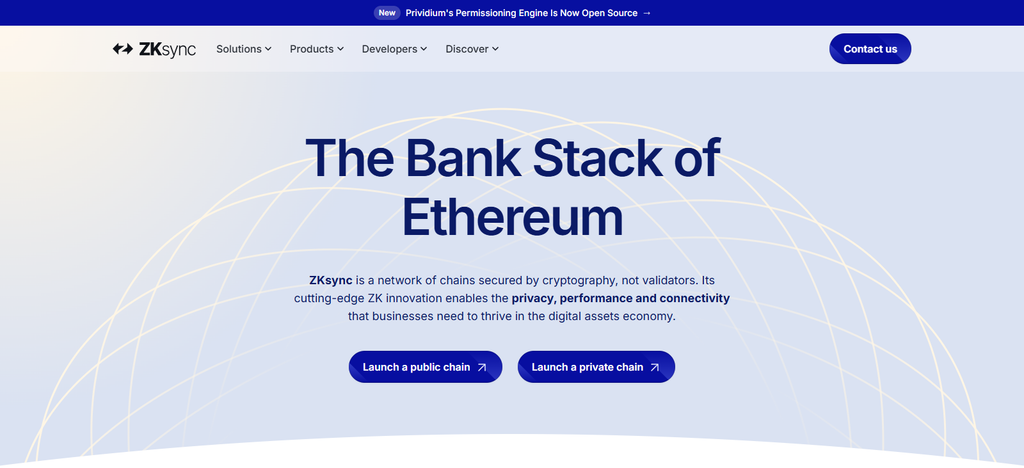
Language Support includes Solidity and Vyper for EVM-based apps, and Rust for infrastructure development. Blockchain integration is closely related to the combined operation of the Ethereum and ZKsync chains.
For Deployment developers are able to use ZK Stack tooling to deploy custom chains. Proof Generation execution through witnesses, circuits, provers, and validity-proof infrastructure.
zkSync: Best For
- EVM Developers – Building on Ethereum compatible smart contract technology and tooling.
- Ethereum Scaling — Building scalable ZK-powered layer-2 apps.
- Custom ZK Chains Create chains specific to applications using modular infrastructure.
- DeFi & Web3 Apps — Deploying high throughput dApps .
- ZK Rollup Development — Building scaling infrastructure on top of validity proofs.
| Key Strength | Details |
|---|---|
| Ethereum Compatibility | Provides an Ethereum-oriented environment for deploying smart contracts and applications. |
| ZK Scaling | Uses zero-knowledge proofs to support scalable Layer-2 execution. |
| Modular Infrastructure | ZK Stack enables developers to build customized ZK-powered chains. |
| Developer Tooling | Supports familiar Ethereum development workflows and infrastructure. |
| Ecosystem Connectivity | Designed to support interconnected ZK-powered chains and applications. |
3. StarkWare / Starknet
StarkWare and Starknet offer ZK Rollup infrastructure based on STARK proofs and the Cairo programming environment. Language Support is Cairo-centric, which is designed for verifiable computation and Starknet intelligent contracts.
Its VM/Circuit Model executes programs and generates proofs of computation with the Cairo Virtual Machine. Blockchain Integration is mostly about Starknet and Ethereum settlement.
For Deployment: Developers are able to build and deploy Cairo-based contracts and applications on Starknet. Proof Generation uses STARK-based proving rather than the more traditional SNARK-based systems, allowing for scalable and transparent proof generation.
Starknet / StarkWare Best For
- ZK Rollups — Building scalable blockchain apps with STARK proofs.
- Cairo Developers — Developing apps with the Cairo programming language.
High-Throughput dApps – For intensive computation blockchain applications. - DeFi & Gaming — Building scalable apps with complex on-chain logic.
STARK Based Applications — Developers interested in transparent STARK proving technology.
| Key Strength | Details |
|---|---|
| STARK Technology | Uses STARK proofs for scalable and transparent verifiable computation. |
| Cairo Language | Provides Cairo specifically designed for ZK application development. |
| Scalable Execution | Handles complex computations while reducing the amount of work required for verification. |
| ZK Rollup Infrastructure | Provides a dedicated ZK scaling environment connected to Ethereum. |
| Developer Ecosystem | Offers specialized infrastructure for building sophisticated ZK applications. |
4. Aztec Network
Aztec Network is a privacy-first ZK infrastructure platform for private intelligent contracts and applications. Its development environment is based on Noir, a domain-specific language for writing zero-knowledge programs. Its underlying architecture is that of a combination of programmable execution and ZK proving.
Language Support is therefore centered on Noir, not on standard Solidity-only development. We are built on privacy infrastructure connected to Ethereum.
Deployment: Developers are able to create private apps and contracts on the Aztec environment. With Proof Generation applications can prove conditions of computation and private state without revealing the underlying confidential data.
The Aztec Network Best For
- Private Intelligent Contracts — Privacy based programmable applications.
- Privacy-Preserving dApps — Safeguarding sensitive transaction and application data.
- Private DeFi — Building financial applications with private transaction information.
ZK Application Building — Creating applications with zero-knowledge programs written in Noir. - Confidential Web3 – Enabling privacy for blockchain applications without compromising on verifiability.
| Key Strength | Details |
|---|---|
| Programmable Privacy | Enables developers to build applications where selected computations and data remain private. |
| Noir Language | Provides a ZK-focused programming language for developing privacy applications. |
| Private Smart Contracts | Supports smart-contract functionality with privacy built into the application architecture. |
| Ethereum Connectivity | Designed to bring privacy-focused applications into an Ethereum-oriented environment. |
| Confidential Applications | Particularly useful for applications requiring private transactions or sensitive data handling. |
5. Aleo
Aleo is a ** privacy-first Layer-1 and ZK app platform ** that enables developers to build applications where computation can be verified without revealing private inputs. Language Support Mostly Leo, a programming language for building zero-knowledge applications.
Its VM/Circuit Model turns application logic into verifiable computations that run on Aleo’s ZK infrastructure. Blockchain Integration Aleo network provides native integration instead of only Ethereum. Deployment Developers compile and deploy Leo programs to Aleo. Aleo’s proving architecture handles Proof Generation, allowing for private and verifiable execution of applications.
Aleo Best For
- ZK dApps — Building apps that are natively built with zero-knowledge proofs.
- Privacy Applications — Building blockchain apps around private computation.
- Private Identity — Building applications that authenticate information without leaking unnecessary data.
Confidential DeFi— Enabling privacy-preserving financial applications.
Leo Developers — Developing ZK applications using Aleo’s developer-friendly programming environment.
| Key Strength | Details |
|---|---|
| Privacy by Design | Built specifically for applications requiring private and verifiable computation. |
| Leo Language | Provides a developer-focused language for creating zero-knowledge applications. |
| Native ZK Infrastructure | Zero-knowledge proving is integrated into the platform rather than added as an external layer. |
| Private Applications | Supports privacy-focused Web3, identity, and financial applications. |
| Programmable Blockchain | Allows developers to create applications around private, verifiable state and computation. |
6. RISC Zero
RISC Zero offers a general-purpose zkVM infrastructure that allows developers to prove computations written in a RISC-V environment, instead of having to manually design every cryptographic circuit. Language Support is very Rust-centric and supports also other languages that can target the supported execution environment.
The VM/Circuit Model is based on RISC-V instruction architecture for verifiable computation. Blockchain Integration is flexible since the generated proofs can be verified by compatible smart contract protocols and applications.
Developers are able to deploy the proving infrastructure locally or embed it into applications. Proof Generation is about turning the execution of a program into ZK proofs.
RISC Zero Best For
- Rust Developers — Build verifiable apps with Rust-centric workflows.
- Verifiable Computation — Prove computations without manually designing complex circuits.
- ZK Coprocessors — Enabling applications that require provable off-chain computation.
- Cross-Platform Proofs — Creating proofs to be validated by external applications and blockchains.
| Key Strength | Details |
|---|---|
| General-Purpose zkVM | Lets developers prove program execution without manually constructing individual circuits. |
| RISC-V Architecture | Uses RISC-V as the foundation for its verifiable execution environment. |
| Rust-Friendly Development | Provides a practical environment for developers working with Rust-based programs. |
| Flexible Computation | Suitable for proving a broad range of computational workloads. |
| Verifiable Off-Chain Compute | Enables applications to perform computation off-chain while producing cryptographic proof of execution. |
7. Succinct SP1
Succinct SP1 is a general-purpose zkVM and proving infrastructure that allows developers to generate zero-knowledge proofs for programs running on RISC-V. Language Support is particularly developer-friendly for Rust applications, and its architecture makes it possible to represent broader software workloads through the supported instruction environment.
Its VM/Circuit Model runs on a RISC-V based zkVM instead of requiring developers to build circuits manually. Blockchain Integration is suitable for applications requiring verifiable computation and on-chain proof verification. Deployment SP1 can be deployed into application infrastructure. Proof Generation translates program execution into short cryptographic proofs.
Succinct SP1 Best For
- Rust Developers — Building ZK applications using familiar Rust development workflows.
- General-Purpose Proving — Proving programs without creating circuits from scratch.
- ZK Rollups — Supporting scalable proving requirements for blockchain infrastructure.
- Verifiable Off-Chain Computation — Moving computation off-chain while retaining cryptographic verifiability.
- RISC-V Applications — Developing applications around a RISC-V-based zkVM architecture.
| Key Strength | Details |
|---|---|
| General-Purpose zkVM | Allows developers to prove programs rather than designing custom ZK circuits for every application. |
| RISC-V Based | Uses a RISC-V execution model for general-purpose verifiable computation. |
| Developer Accessibility | Makes ZK proving more approachable for developers familiar with conventional programming. |
| High-Performance Proving | Designed for demanding proving workloads and production-oriented ZK applications. |
| Blockchain Integration | Proofs can be used by blockchain applications requiring verifiable computation. |
8. Scroll
Scroll is a ZK Rollup infrastructure for Ethereum offering EVM-compatible execution with zero-knowledge proof verification. Its Language Support focuses on Solidity and standard Ethereum development tools.

The VM/Circuit Model mirrors the EVM execution in a proving-friendly architecture. The current proving infrastructure uses a general-purpose RISC-V zkVM approach. Blockchain Integration connects Scroll to Ethereum for settlement and proof verification.
Developers are able to deploy familiar Ethereum smart contract functionality with minimal changes for Deployment. Proof Generation generates L2 execution and state transitions and sends validity information to be verified by Ethereum.
Scroll Best For
- Ethereum Scaling — Building a ZK-based Ethereum Layer-2.
- Solidity Developers — Deploying Ethereum-compatible smart contracts.
- EVM Applications — Migrating existing Ethereum applications with familiar tooling.
- DeFi dApps — Supporting scalable decentralized finance applications.
- ZK Rollup Development — Building applications that benefit from validity-proof-based scaling.
| Key Strength | Details |
|---|---|
| EVM Compatibility | Allows Ethereum developers to use familiar smart contracts and development tools. |
| Ethereum Scaling | Provides ZK-based Layer-2 infrastructure for improving Ethereum transaction scalability. |
| Solidity Support | Works well with existing Solidity-based application development. |
| ZK Rollup Design | Uses validity proofs to demonstrate correct Layer-2 execution. |
| Ethereum Settlement | Leverages Ethereum for settlement and security while processing transactions on Layer 2. |
9. Mina Protocol (MINA)
Mina Protocol is a ZK-powered blockchain infrastructure that aims to keep a minimal blockchain state using recursive zero-knowledge proofs. Language Support is provided through the development of zkApps in TypeScript with the o1js framework that enables developers to write programmable ZK applications.
Instead of a traditional EVM model, its VM/Circuit Model is based on programmable cryptographic circuits and recursive proof composition. Native to Mina’s own Layer 1 blockchain integration. Deployment Developers build and deploy zkApps on Mina’s ecosystem. Proof Generation compresses application and blockchain computations recursively into succinct proofs that can be efficiently verified.
Mina Protocol Best For
- ZK Apps (zkApps) — Building applications around zero-knowledge proofs.
- Privacy Applications — Verifying information while minimizing data exposure.
- TypeScript Developers — Creating applications through Mina’s developer tooling.
- Lightweight Blockchain Applications — Working with Mina’s compact blockchain architecture.
- Programmable ZK Applications — Developing applications that use recursive proofs and ZK computation.
| Key Strength | Details |
|---|---|
| Compact Blockchain | Uses recursive zero-knowledge proofs to maintain a lightweight blockchain state. |
| zkApps | Provides infrastructure for applications built around zero-knowledge proofs. |
| Recursive Proofs | Enables proofs to represent and compress complex computation and blockchain state. |
| Developer Tooling | Supports application development through Mina’s ZK-focused tooling and frameworks. |
| Privacy & Verification | Enables applications to prove information or computation without unnecessarily exposing underlying data. |
10. zkVerify
zkVerify is a ZK proof verification infrastructure platform mainly built for the verification and aggregation of proofs from different proving systems. It differs from a traditional zkVM in that its fundamental VM/Circuit Model is focused on proof verification, not application code execution.
Language Support is therefore very much dependent on the proving systems and integrations that developers use. Blockchain Integration allows connected blockchain applications and intelligent contracts to consume verified proof results.
Deployment involves developers integrating proof-verification into their existing ZK workflows. Proof Generation is usually done by external ZK systems, whereas zkVerify offers infrastructure for efficient proof verification and aggregation.
zkVerify Best For
- ZK Proof Verification — Verifying proofs produced by different ZK proving systems.
- Proof Aggregation — Combining verification workflows to improve efficiency.
- Multi-Proof Applications — Supporting applications that work with multiple proof systems.
- Blockchain Verification — Connecting verified proof results with blockchain applications.
- ZK Infrastructure Integration — Adding a dedicated verification layer to existing ZK workflows.
| Key Strength | Details |
|---|---|
| Proof Verification | Specializes in efficiently verifying ZK proofs generated by external proving systems. |
| Multi-System Support | Designed to work with proofs from different ZK technologies and proving environments. |
| Proof Aggregation | Can help consolidate proof-verification workflows for applications handling many proofs. |
| Blockchain Infrastructure | Provides a verification layer that can connect ZK proofs with blockchain applications. |
| Developer Integration | Useful for teams that need dedicated proof verification without building the entire verification infrastructure themselves. |
Conclusion
Zero-knowledge infrastructure is becoming a key building block for developers developing scalable, private and verifiable blockchain applications.
All these platforms serve different needs — ZK Rollups, zkVMs, Privacy, Proving, Verification, Programmable ZK applications — among them Polygon zkEVM, zkSync, Starknet, Aztec, Aleo, RISC Zero, Succinct SP1, Scroll, Mina, zkVerify.
Ultimately the right platform will depend on your programming language, VM or circuit requirements, blockchain integration, deployment model, proving needs and application goals. Developers should carefully consider these factors before deciding on the infrastructure that best suits their project.
FAQ
What is zero-knowledge infrastructure?
Zero-knowledge infrastructure provides the tools, virtual machines, proving systems, circuits, and verification layers developers need to build applications that can prove computations or statements without revealing the underlying private information.
Which zero-knowledge platform is best for developers?
There is no single best platform for every developer. RISC Zero and Succinct SP1 are useful for general-purpose verifiable computation, while Polygon zkEVM, zkSync, Starknet, and Scroll focus strongly on ZK-based blockchain scaling and Ethereum compatibility.
What is the difference between a zkVM and a ZK circuit?
A zkVM allows developers to prove the execution of programs inside a virtual machine, often using familiar programming languages. A ZK circuit represents computation as cryptographic constraints and generally requires more specialized ZK development.
Which ZK platforms support Ethereum?
Polygon zkEVM, zkSync, Starknet, Scroll, Aztec, and zkVerify can be used within Ethereum-oriented ZK infrastructure in different ways. Their integration models vary, including rollup settlement, privacy applications, and proof verification.
Which platforms are suitable for Rust developers?
RISC Zero and Succinct SP1 are particularly relevant for Rust developers because their zkVM architectures are designed around RISC-V-based program execution and support Rust-oriented development workflows.